Automation has become easier, but your pipeline has not grown at the same pace.
You can now automate prospecting, outreach, and follow-ups, yet meetings still depend on when buyers choose to engage.
Tools like 11x.ai promise fully automated SDR workflows, but automation alone does not guarantee results.
Buyers today ignore most outbound because they already research independently before speaking to sales teams.
The gap is clear. Most tools focus on sending more messages, not engaging at the right moment.
Automation is easy.
Converting attention is not.
In this guide, you will explore the best 11x alternatives in 2026 based on how they actually generate pipeline.
At A Glance
What separates high-performing 11x alternatives from the rest:
Tools like 11x.ai automate outbound workflows, but automation alone does not guarantee pipeline or consistent meeting generation.
High-volume outreach often leads to declining response rates, since buyers ignore messages that reach them outside active intent windows.
Most alternatives improve one layer, such as data, messaging, or deliverability, but still depend on outbound timing to drive results.
Platforms like Apollo.io, Artisan and Instantly.ai help scale outreach, but results still depend on replies and campaign timing.
Breakout stands out by engaging buyers during and after their website visit, qualifying them in real time, and following up automatically.
The shift is moving from automating outreach to capturing and converting buyer intent when it actually happens, which directly impacts pipeline creation.
5 Reasons Why Teams Are Looking For 11x Alternatives
Automation solves efficiency, but it does not solve conversion, especially when timing and context determine buyer engagement.
Here are the main reasons teams start evaluating alternatives:
1. Automation Without Control
You lose visibility into messaging, targeting, and sequencing when workflows run autonomously, which makes it harder to adjust strategy based on performance and buyer behavior.
2. Generic Personalization At Scale
AI-generated outreach improves speed, but messages often feel repetitive, which reduces engagement and makes it harder to stand out in crowded inboxes.
3. Deliverability Challenges Increase
High-volume sending can impact inbox placement and domain reputation, which directly affects response rates and long-term outbound performance.
4. Timing Is Often Misaligned
Outbound outreach reaches buyers before they are ready or after they have already made decisions, which limits conversion potential.
5. There Is No Inbound Execution Layer
The platform does not engage or convert buyers who are already visiting your website and actively evaluating solutions.
What To Look For In An 11x Alternative
Choosing the right alternative requires focusing on how well the tool converts intent into meetings instead of how much it automates outreach.
Here are the key criteria you should evaluate:
1. Context-Aware Engagement Improves Outcomes
You need tools that respond to real buyer behavior and signals instead of relying only on pre-defined sequences and workflows.
2. Balance Between Automation And Control Matters
Effective tools allow automation while still giving you visibility and control over messaging, targeting, and execution.
3. Deliverability And Safeguards Protect Performance
You should prioritize tools that maintain domain health and message quality instead of relying on aggressive sending strategies.
4. Multi-Channel Flexibility Increases Reach
Buyers engage across channels, so tools should support multiple touchpoints without adding complexity to your workflows.
5. Capturing Inbound Demand Is Critical
The best tools do not just generate demand but also convert buyers when they are actively researching on your website.
6 Best 11x Alternatives In 2026
These tools approach pipeline generation differently, so understanding their role in your workflow helps you choose the right one. Here’s a detailed breakdown:
1. Breakout
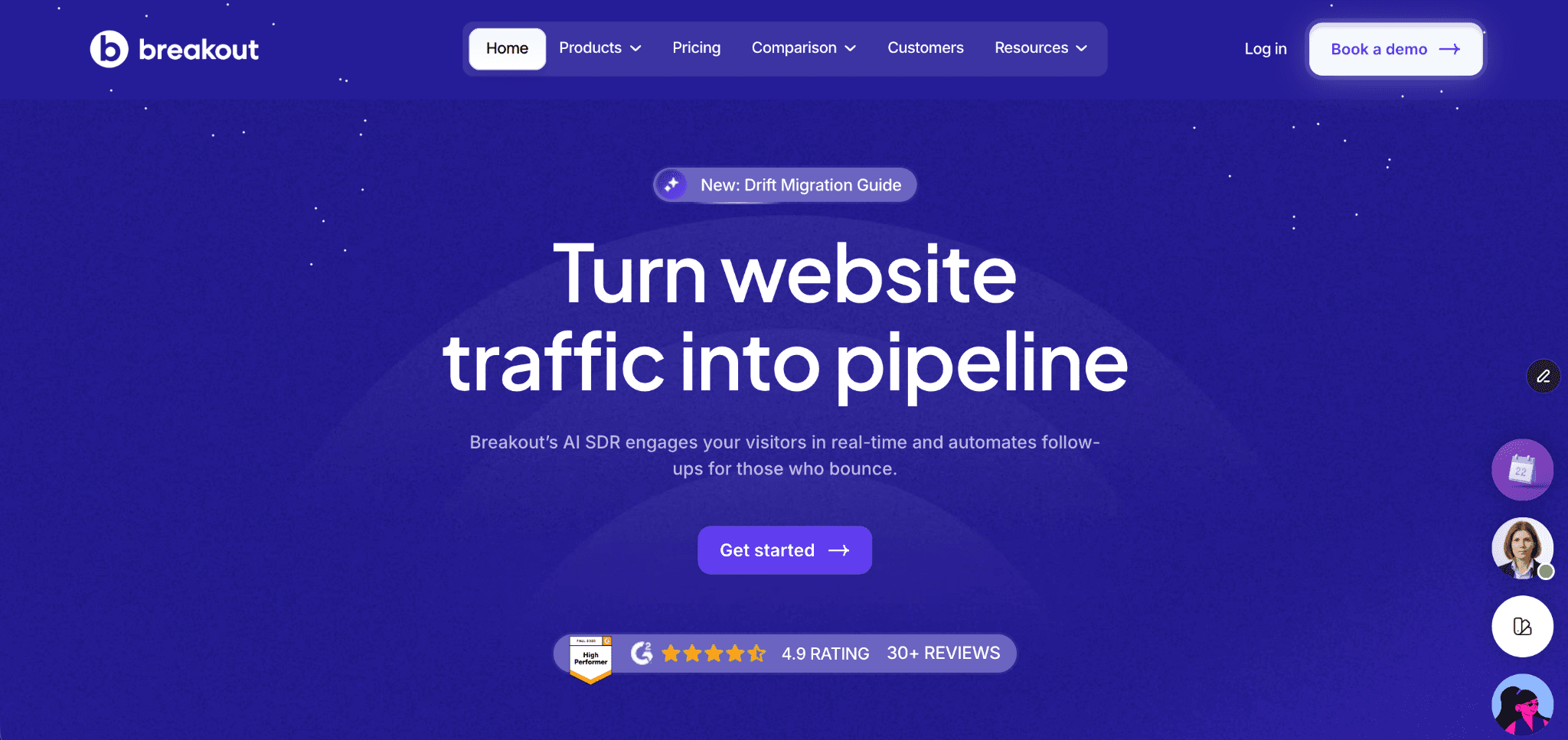
Breakout focuses on converting inbound traffic instead of generating outbound activity. It engages visitors while they are actively researching and continues the conversation after they leave.
This approach removes delays between intent and action, helping you capture demand without relying on cold outreach or manual SDR follow-ups.
Breakout vs 11x
Breakout focuses on inbound execution, while 11x focuses on outbound automation workflows:
11x sends messages at scale across outbound channels
Breakout engages buyers during and after their website visit
Pros
Real-time engagement: Engage visitors instantly when intent is highest
Autonomous qualification: Qualify leads without manual workflows
After-visit follow-up: Continue conversations after buyers leave
Reduced SDR dependency: Automate repetitive qualification tasks
Faster time to value: Start converting traffic without long setup cycles
CRM flexibility: Works across systems without complex dependencies
Cons
Inbound dependency: Requires website traffic to generate pipeline
New category: Less familiar compared to traditional outbound tools
Final Verdict
Use Breakout if your goal is to convert inbound traffic into qualified meetings without relying on manual SDR follow-ups. It works best when you want to engage buyers during and after their visit and capture demand in real time.
2. Artisan
Artisan runs outbound campaigns end to end through an AI BDR called Ava, which builds lead lists, enriches them, writes and sends sequences, and books meetings. Artisan draws on 250M+ verified B2B contacts enriched from a wide range of data sources and prioritizes leads showing intent signals.
Beyond cold outbound, Artisan covers website visitor de-anonymization, intent-triggered outreach, CRM lead reactivation, closed-lost and event follow-up, and upsell and cross-sell. It's suitable for all sizes of companies, from startups to enterprises.
Artisan vs 11x
Artisan automates the workflow end to end like 11x, while also covering warm pipeline and inbound intent:
11x automates cold outbound workflows
Artisan runs cold, CRM, intent, and website visitor campaigns
Pros
End-to-end execution: Source, write, send, and book
Built-in data: 250M+ contacts from a wide range of sources
Approval mode: Review messages before they send
Multi-channel reach: Email, social, and native dialer
Intent monitoring: Trigger outreach on visitor and buying signals
Warm-lead motions: Reactivation, closed-lost, and upsell campaigns
Cons
Outbound dependency: Results hinge on reply rates
Regional identity gap: Person-level visitor ID is US-only
Credit consumption: Identification and calls draw credits
Final verdict
Use Artisan if you want 11x-style automation across the whole outbound workflow but need deeper control over what goes out. It fits teams and enterprises that run outbound as a primary motion and want data, intent monitoring, warm-lead campaigns, and reply handling in one platform, with two-way sync back to Salesforce or HubSpot.
3. Regie.ai
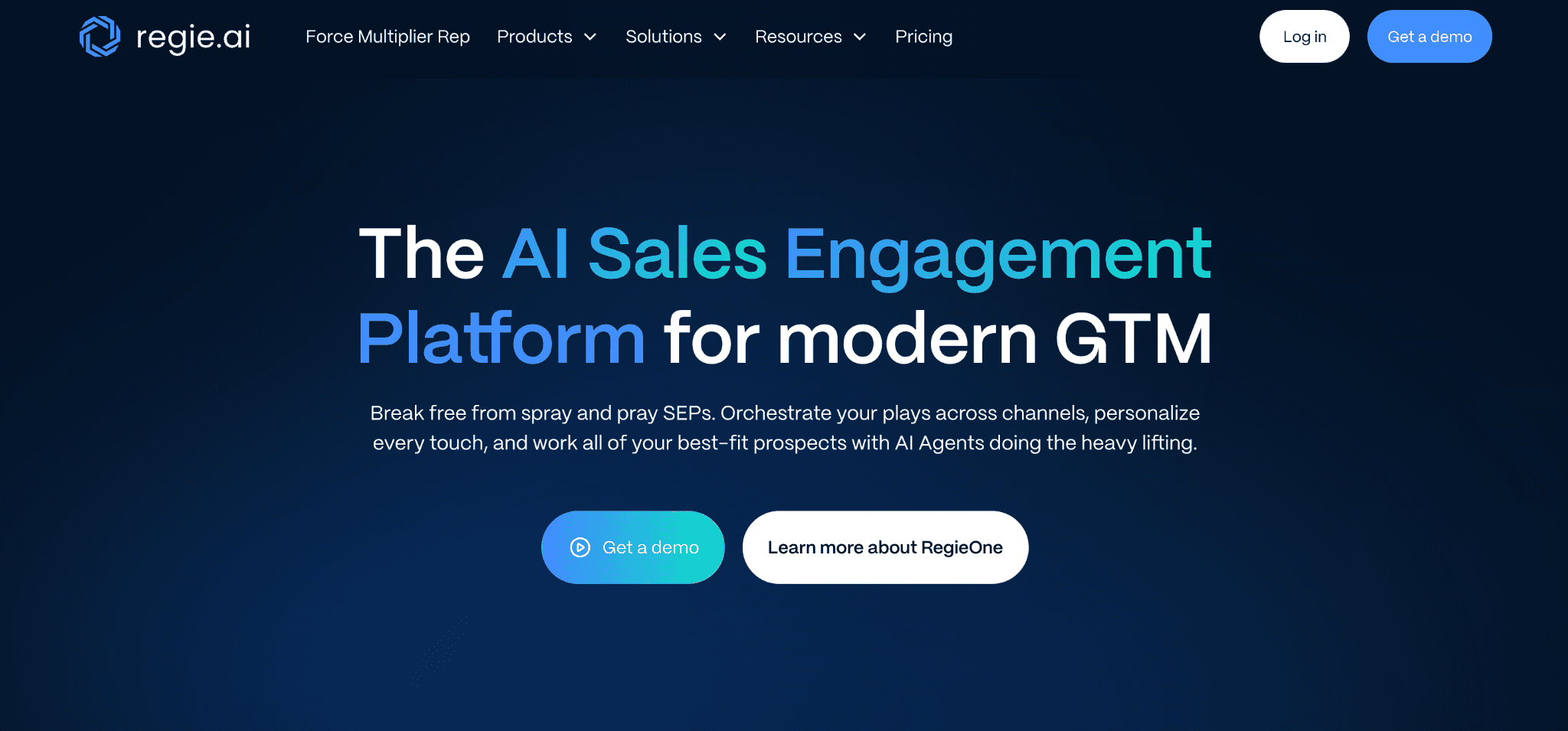
Regie focuses on improving outbound messaging quality through AI-generated sequences and content. It helps teams scale personalized outreach while maintaining consistency across campaigns.
Nevertheless, it does not influence when buyers are contacted, which means pipeline outcomes still depend on timing and execution outside the platform.
Regie.ai vs 11x
Regie improves messaging quality, while 11x automates outreach workflows:
11x focuses on execution
Regie focuses on content creation
Pros
AI messaging: Generate personalized sequences
Multi-channel campaigns: Email and LinkedIn support
Content consistency: Maintain messaging standards
Faster creation: Reduce time spent on writing
Playbook templates: Pre-built campaign structures
Performance tracking: Monitor engagement metrics
Cons
Timing limitation: Does not control engagement timing
Outbound dependency: Relies on outreach workflows
No pipeline ownership: Does not convert leads directly
Final Verdict
Use Regie.ai if your main challenge is improving outbound messaging quality and scaling content creation. It works best for teams that want consistent, high-quality communication across campaigns.
4. Instantly.ai
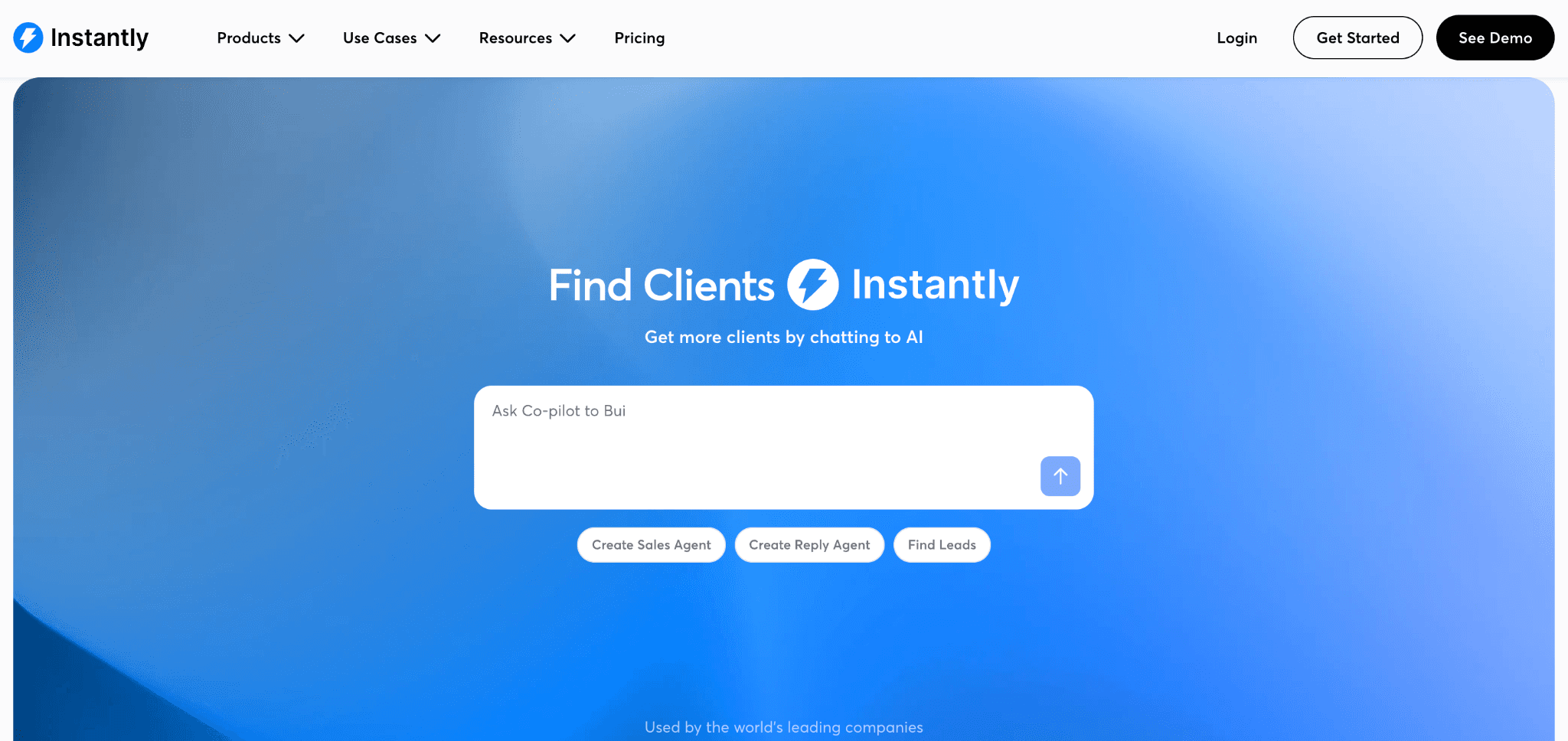
Instantly focuses on scaling email infrastructure and improving deliverability for high-volume campaigns. It helps teams send large numbers of emails without damaging domain reputation.
However, it does not improve conversion beyond ensuring messages reach inboxes, which means results still depend on outreach timing and relevance.
Instantly.ai vs 11x
Instantly focuses on infrastructure, while 11x focuses on automation:
11x manages outreach workflows
Instantly ensures deliverability at scale
Pros
Inbox rotation: Protect domain reputation
High-volume sending: Scale outreach campaigns
Deliverability focus: Improve inbox placement
Campaign analytics: Track performance
Lead organization: Manage outreach lists
Automation support: Run campaigns efficiently
Cons
No engagement layer: Does not convert leads
Volume reliance: Depends on outreach scale
Timing gap: Does not address intent
Final Verdict
Use Instantly.ai if your priority is scaling cold email outreach while maintaining deliverability. It is a strong fit for teams running high-volume campaigns across multiple inboxes.
5. Qualified
Qualified focuses on engaging website visitors through chat-based conversations within Salesforce environments. It supports routing, scheduling, and real-time engagement with prospects.
But it requires structured workflows and human involvement, which can slow execution compared to AI-driven systems that operate autonomously.
Qualified vs 11x
Qualified focuses on inbound conversations, while 11x focuses on outbound automation:
11x handles outbound workflows
Qualified engages visitors through chat
Pros
Live chat engagement: Interact with visitors instantly
Salesforce integration: Native CRM connection
Routing logic: Direct leads efficiently
Meeting booking: Schedule calls quickly
Reporting tools: Track engagement performance
Enterprise readiness: Built for large teams
Cons
Human dependency: Requires SDR involvement
Setup complexity: Needs structured workflows
Slower execution: Compared to AI-driven systems
Final Verdict
Use Qualified if you rely on Salesforce and want to engage website visitors through chat-based conversations. It works best for teams with structured SDR workflows and routing processes.
6. Common Room
Common Room tracks buying signals across product usage, community activity, and social engagement to help teams identify high-intent accounts. It is useful for prioritizing outreach based on real behavior.
It does not execute engagement or conversion, which means teams still rely on outbound workflows to generate pipeline.
Platform vs 11x
Common Room focuses on signal identification, while 11x focuses on execution:
11x runs outreach workflows
Common Room surfaces intent signals
Pros
Multi-signal tracking: Capture behavior across channels
Account prioritization: Identify high-intent prospects
PLG alignment: Works well with product-led growth
Community insights: Track engagement signals
Data enrichment: Add context to accounts
Integration support: Connect with GTM tools
Cons
No execution layer: Does not engage prospects
Manual follow-up: Requires outbound workflows
Limited conversion: Focuses on insights
Final Verdict
Use Common Room if your focus is identifying high-intent accounts based on product, community, or social signals. It is best suited for teams that prioritize signal-driven targeting before executing outreach.
Choosing The Right 11x Alternative For Your Motion
If your focus is outbound automation at scale, Apollo and Instantly help you execute campaigns, but results still depend on replies and timing.
If your goal is improving messaging, Regie helps refine communication, but it does not solve when buyers engage.
If you rely on conversational engagement, Qualified supports inbound chat workflows but requires structured processes and human involvement.
Breakout engages buyers while they are actively researching, qualifies them through real-time conversations, and continues follow-ups even after they leave your website.
It does not wait for form fills or manual routing. It identifies visitors early, adapts conversations based on behavior, and moves qualified buyers toward meetings instantly.
When a visitor shows interest but does not convert, Breakout captures that signal and triggers personalized follow-ups, turning missed sessions into pipeline opportunities.
This means you are not just generating demand or tracking activity. You are capturing and converting intent across the entire journey, during and after the visit.
Conclusion
11x works well for automating outbound workflows, but automation alone does not guarantee pipeline or consistent conversion.
The market is shifting toward tools that engage buyers in real time instead of relying only on outbound outreach.
Stop automating noise. Start converting intent.
See how Breakout turns inbound traffic into a pipeline. Request a demo now.
FAQs
Q. What are the best 11x alternatives in 2026?
Breakout is a strong alternative if your goal is to convert inbound demand in real time. Tools like Artisan and Instantly.ai support outbound scale, while Regie.ai improves messaging quality.
Q. Is 11x only for outbound sales?
Yes, 11x.ai focuses primarily on automating outbound SDR workflows. It helps scale prospecting and outreach, but does not engage or convert inbound website traffic.
Q. What is better than 11x for inbound conversion?
Breakout is a strong option if you want to convert inbound visitors into meetings. It engages buyers during their visit and continues follow-ups after they leave your website.
Q. Are AI SDR tools replacing SDRs?
AI SDR tools are not replacing SDRs, but they are changing how work gets done. They handle repetitive tasks like outreach and qualification so teams can focus on higher-value conversations.
Q. Should I focus on outbound or inbound tools?
Outbound tools help you generate demand through outreach, but results depend on timing and response rates. Inbound tools help you capture and convert demand when buyers are already evaluating solutions.