All Blogs
A simple breakdown of 1mind pricing without the confusing fine print.

Evan Marshall
Senior Growth AI Strategist
Published On
AI SDR platforms promise automation, but your team still ends up handling qualification, routing, follow-ups, and meeting conversion manually.
The software starts conversations, yet your SDRs continue doing the operational work required to turn those conversations into revenue.
1mind helps automate engagement workflows and conversational experiences, but pricing discussions rarely include the additional costs tied to SDR execution and pipeline coordination.
You still invest time managing workflows, monitoring conversations, and ensuring leads move through the funnel correctly.
Revenue teams in 2026 care less about whether AI can chat with visitors and more about whether it can create a qualified pipeline consistently.
In this guide, you will explore:
1mind pricing
hidden operational costs, and
whether the platform actually reduces manual work or simply shifts it elsewhere.
How Much Does 1mind Cost In 2026?
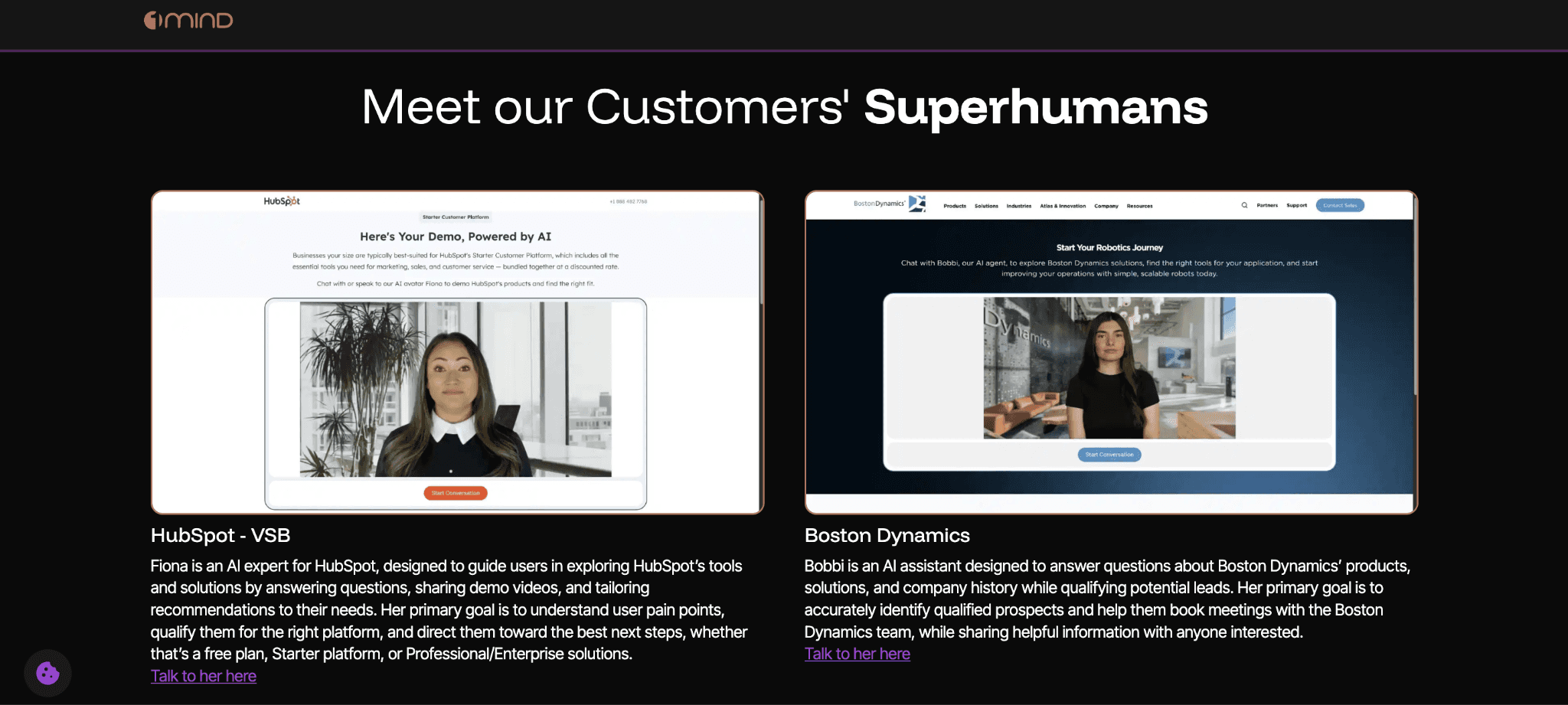
1mind does not publicly disclose complete pricing details, which suggests the platform follows a custom sales-led pricing model based on workflows, integrations, usage, and implementation scope.
Since 1mind positioned itself as a modern alternative to Drift, you can expect pricing to follow a similar enterprise-style structure.
Drift’s pricing ranges from $2,500 per month to $60k+ annually for premium conversational sales features, with enterprise plans scaling significantly higher depending on seats, routing complexity, and support requirements.
You should also expect onboarding fees, workflow setup costs, and operational overhead beyond the platform subscription itself.
For a closer breakdown of enterprise conversational pricing benchmarks, refer to this Drift pricing article.
Included Features
AI-led conversations: The platform automates visitor interactions through conversational workflows and engagement prompts.
Visitor engagement workflows: You create workflows designed to capture and respond to website visitor activity.
Lead qualification logic: The platform helps filter and prioritize leads based on predefined qualification criteria.
CRM synchronization: Visitor and lead data sync across connected CRM systems and workflow tools.
Routing automation: Leads and meetings route automatically based on territory or assignment logic.
Analytics and reporting: Teams can monitor workflow performance, engagement metrics, and conversation activity.
Limitations
Meeting conversion consistency: Conversations do not always translate into qualified meetings without additional SDR involvement.
Follow-up execution: Your team still handles outreach and relationship management after initial engagement workflows finish.
Buying committee outreach: The platform does not fully orchestrate engagement across broader decision-making groups automatically.
Pipeline orchestration: Revenue coordination across inbound and outbound workflows still requires operational oversight.
Outbound coordination: Teams often rely on separate outbound tools to maintain multi-channel engagement strategies.
Real-time qualification depth: Qualification quality depends heavily on workflow design and operational setup.
6 Hidden Costs Teams Often Ignore
The largest expenses usually appear after implementation rather than during the purchasing process itself. Workflow maintenance, SDR involvement, and delayed response times create operational costs that pricing pages rarely mention clearly.
Here are the hidden costs teams should evaluate before purchasing 1mind:
SDR follow-up time: Your team still spends time managing conversations and converting interest into actual meetings.
Workflow maintenance: AI workflows require ongoing updates, testing, and optimization to maintain performance quality.
CRM cleanup and routing: Inconsistent routing and duplicate records create additional operational management requirements.
Delayed speed-to-lead: Manual intervention slows response times and increases the risk of losing inbound interest.
Missed inbound opportunities: Visitors often leave before SDR teams respond or workflows trigger effectively.
Additional outbound tooling: Teams frequently purchase separate sequencing and outreach platforms to support pipeline generation.
5 Reasons Teams Question 1mind Pricing
Revenue teams increasingly evaluate AI SDR platforms based on pipeline impact instead of workflow activity or conversation volume alone. Buyers want platforms that reduce operational complexity while improving conversion outcomes directly.
Here are the biggest concerns revenue teams have when evaluating 1mind pricing:
Conversations Do Not Guarantee Meetings
AI conversations help engage visitors, but engagement alone does not create a qualified pipeline consistently. Your team still handles conversion, qualification refinement, and scheduling responsibilities after interactions begin.
SDRs Still Handle Critical Steps Manually
Sales representatives often remain responsible for follow-ups, meeting coordination, and pipeline progression after initial qualification workflows finish. This limits the overall operational efficiency AI platforms promise.
Automation Depth Varies By Workflow
Workflow automation quality depends heavily on setup complexity and operational management. Simpler workflows perform differently than advanced qualification and routing processes across enterprise sales environments.
Pipeline Attribution Remains Difficult
Revenue attribution becomes difficult when multiple workflows, SDR actions, and outbound systems influence conversion outcomes throughout the buyer journey. Teams struggle connecting conversations directly to revenue impact.
Time-To-Value Depends On Implementation Quality
Platforms requiring heavy setup and workflow customization often delay measurable results significantly. Teams spend weeks configuring systems before seeing consistent pipeline generation outcomes.
Breakout: A Better Alternative For 1mind
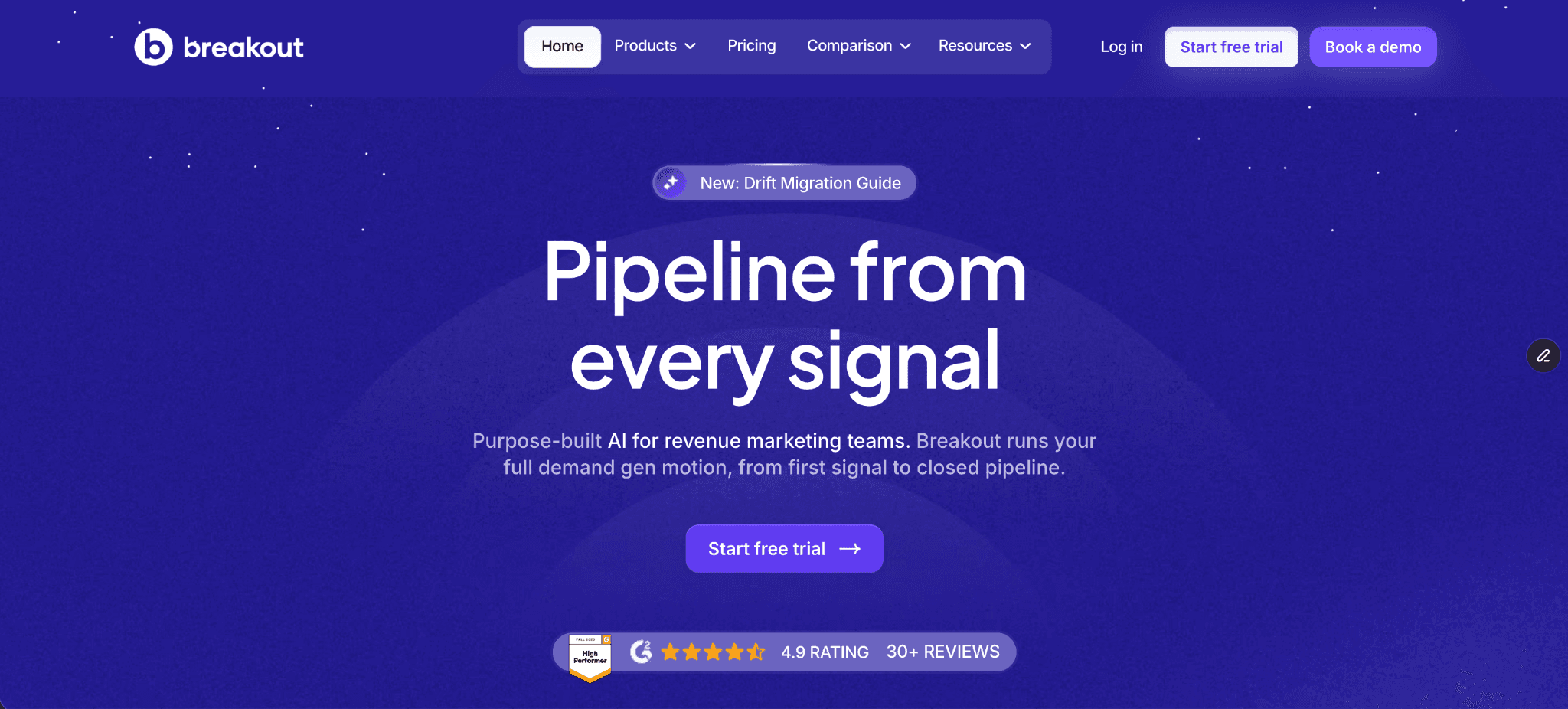
Both platforms focus on AI-led engagement, but they approach pipeline generation differently to help your team hit their annual revenue targets.
One focuses heavily on conversational workflows, while the other focuses on converting intent into meetings automatically without any human rep involvement.
Feature | 1mind | Breakout |
Core Focus | Video Agent | Conversion (on-site and off-site) |
Engagement | Video | Chat, demos, artefacts, videos (no avatar) and email |
Meeting Booking | Partial automation | Instant autonomous booking |
SDR Dependency | Often still required for progression and scheduling | Reduced because the qualification and booking happen automatically |
Setup Complexity | Workflow-heavy | Faster deployment |
Why Teams Choose Breakout Instead
Revenue teams increasingly prioritize platforms that reduce manual effort while increasing meeting volume from the website traffic they already have today. You want a tool that acts as a force multiplier for your SDRs rather than a new project for them to manage.
Here is why teams often choose Breakout over workflow-heavy conversational platforms:
Real-time qualification and booking: Breakout qualifies the visitor and books the demo in a single session, so no high-intent lead ever goes cold.
Faster speed-to-lead: By removing the human handoff, you engage buyers at the peak of their interest before they leave to check a competitor.
Reduced SDR workload: Your reps stop wasting time on manual qualification and start spending their day having meaningful conversations with pre-booked prospects.
Inbound-to-outbound orchestration: The platform can find the entire buying committee and prospect into an account to ensure your deals move forward faster.
CRM flexibility: You get a tool that works with your existing stack without forcing you into a specific ecosystem or complex custom setup.
Direct pipeline generation: Focus on the only metric that matters by choosing a tool built to put meetings on your calendar automatically.
Pricing
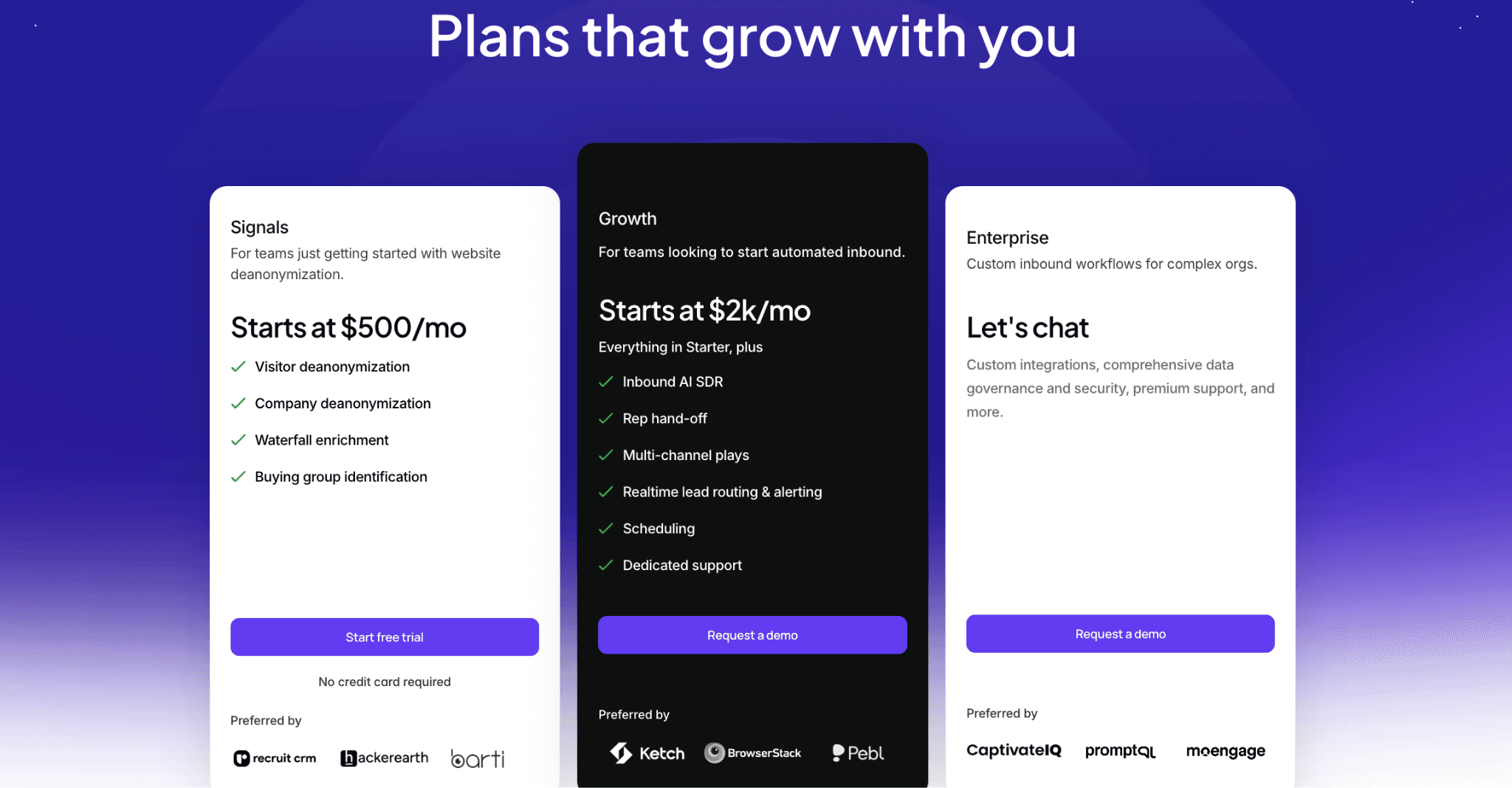
Breakout offers a free trial, which lowers the barrier compared to enterprise-heavy conversational platforms.
Conclusion
AI conversations alone don't create revenue; the real pipeline comes from perfect qualification, timing, and flawless conversion execution for every visitor. You should not settle for a platform that just starts chats when you can have one that actually closes the meeting.
Evaluate your options based on how much work they take off your plate rather than how many messages they send.
Breakout offers a faster way to turn your existing website traffic into a consistent stream of qualified pipeline for your sales team. You can stop managing complex workflows and start seeing booked meetings appear on your calendar within hours of a simple setup.
Do not let your best prospects slip through the cracks of a manual follow-up process that is slow and inefficient.
Replace delayed follow-ups with real-time qualification and meeting booking. Start your free trial with Breakout today.
FAQs
Q. How much does 1mind cost?
1mind does not publicly disclose full pricing details, which suggests pricing varies based on usage, workflows, integrations, and your team size. You will likely face a sales-led process where the final cost is determined by the complexity of your implementation.
Q. Does 1mind offer a free trial?
Public information around free trials remains limited, so most teams likely need to speak with a sales representative before evaluating the platform. You should ask about trial availability during your initial consultation to see if it fits your evaluation timeline.
Q. What affects 1mind pricing the most?
Conversation volume, automation complexity, integrations, and onboarding requirements likely have the biggest impact on the total platform cost you will pay. Custom requirements for your specific CRM or unique routing rules can also drive up the initial investment significantly.
Q. Is 1mind an AI SDR platform?
Yes, 1mind positions itself as an AI SDR and conversational automation platform focused on visitor engagement and various lead qualification workflows. It is designed to help revenue teams scale their initial outreach and manage conversations at a much larger scale.
Q. What is the best alternative to 1mind?
Breakout is a strong alternative for teams that want automated qualification and instant meeting booking instead of workflow-heavy conversational automation tools. It focuses on the direct outcome of booked meetings to ensure your website traffic translates into actual revenue.
Q. Does 1mind replace SDR teams completely?
1mind reduces repetitive tasks, but many teams still rely on human SDRs for follow-ups, qualification refinement, and moving the pipeline forward. It is best viewed as a tool to help your existing team be more productive rather than a replacement.