
You already know which accounts are in-market, yet your pipeline still depends on timely follow-ups.
Tools like 6sense show you who is researching and how close they are to making a decision.
But you have likely seen the gap. High-intent accounts visit your website and leave without booking a meeting.
By the time your team reaches out, the momentum is gone.
Your website is no longer just a touchpoint. It is your conversion moment.
That visit is not just traffic.
If you are evaluating tools like this, you already know it is a real buying signal.
Yet most setups rely on static pages and delayed outreach, creating a gap between interest and action.
That gap is where the pipeline disappears.
In this guide, you will explore the best 6sense alternatives in 2026, focusing on platforms that turn inbound traffic into qualified meetings.
Key Takeaways
At a high level, here’s what matters:
6sense focuses on identifying in-market accounts, but it does not help you convert visitors during high-intent website moments.
Most alternatives still prioritize data visibility, while only a few focus on real-time engagement and pipeline creation.
Tools like Warmly improve visibility into anonymous traffic but require additional layers for conversion and follow-up.
Breakout stands out by combining deanonymization, real-time engagement, and automated follow-up into a single inbound workflow.
Enterprise platforms like Demandbase remain powerful but require longer setup cycles and strong data infrastructure to deliver results.
The shift is moving from tracking buyer intent to acting on it instantly while visitors are actively researching on your website.
5 Reasons Why Teams Are Moving Away From 6sense
6sense delivers strong intent data, but many teams realize that insights alone do not directly create pipeline or booked meetings. The main reasons teams evaluate alternatives include:
1. Heavy Setup Slows Down Time To Value
You often need months of onboarding, integrations, and data cleanup before 6sense starts delivering consistent and usable insights.
2. Focus On Signals Instead Of Conversion
The platform identifies intent signals effectively, but it does not engage visitors or convert them during their highest intent moments.
More importantly, this creates a bigger issue.
3. Dependence On CRM And Data Quality
Your results depend heavily on clean CRM data and structured workflows, which increases operational overhead for revenue teams.
4. High Cost For Growing Teams
Mid-market companies often find the pricing difficult to justify when the direct pipeline impact remains unclear or delayed.
But the biggest problem shows up here.
5. Delayed Action On Buyer Intent
There is a gap between identifying interest and acting on it, which leads to missed opportunities when buyers move quickly.
What To Look For In A 6sense Alternative
Choosing an alternative requires focusing on how well the tool converts intent into meetings rather than just tracking signals. The key evaluation criteria should include:
1. Real-Time Engagement Instead Of Delayed Outreach
You need tools that interact with visitors instantly while they are active on your website instead of relying on later follow-ups.
Speed alone is not enough.
2. Faster Time To Value
Look for platforms that start delivering results within days rather than requiring long onboarding cycles and complex configurations.
3. AI-Driven Workflows Over Rigid Rules
AI-based systems can adapt to buyer behavior dynamically, while rule-based workflows often miss context and nuance.
4. Flexible CRM Integrations
You should avoid tools that lock you into a single CRM ecosystem and instead choose platforms that adapt to your existing stack.
5. Direct Pipeline Impact
The most important factor is whether the tool helps you book meetings and create pipeline, not just provide insights or reports.
Let’s break down the top 6sense alternatives and where each one fits.
5 Best 6sense Alternatives In 2026
These tools solve different parts of the revenue workflow, so your choice depends on your priorities.
Let’s break down the top 6sense alternatives and where each one fits.
1. Demandbase
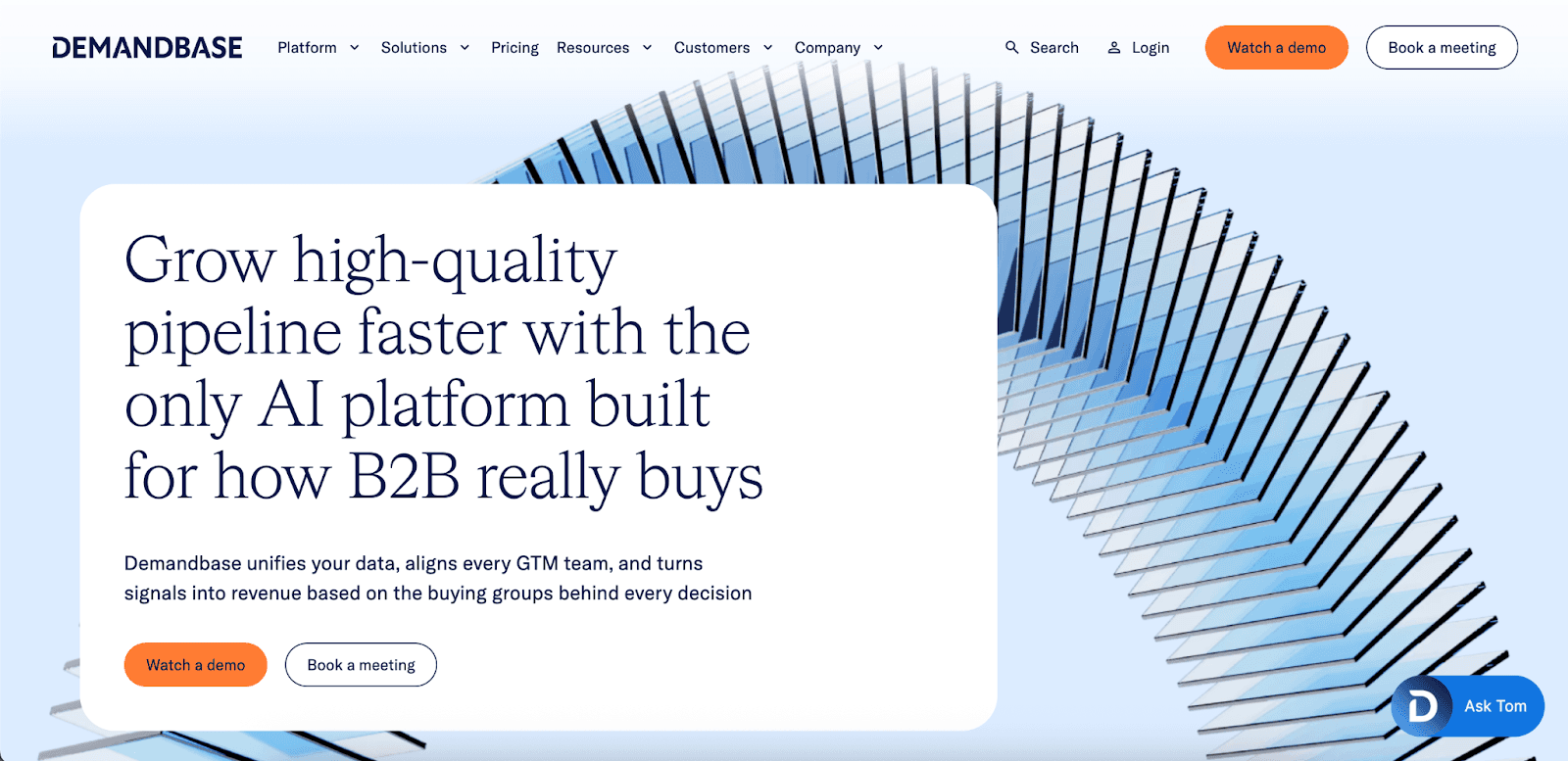
Demandbase sits closest to 6sense in the enterprise ABM and intent data space. It combines account identification, intent signals, and advertising activation in one platform. Teams choose Demandbase when they want 6sense capabilities with different data sources.
It remains enterprise-first with similar complexity but stronger advertising integration options. This makes it ideal for large teams running coordinated ABM campaigns across channels.
Features:
Account-Based Targeting: Identify and prioritize high-value accounts using intent signals and firmographic data.
Advertising Integration: Run targeted campaigns across channels based on account behavior and engagement.
Intent Data Insights: Track buying signals across multiple sources to understand account readiness.
Sales Alignment: Align marketing and sales teams around shared account intelligence and workflows.
G2 Rating: 4.4/5
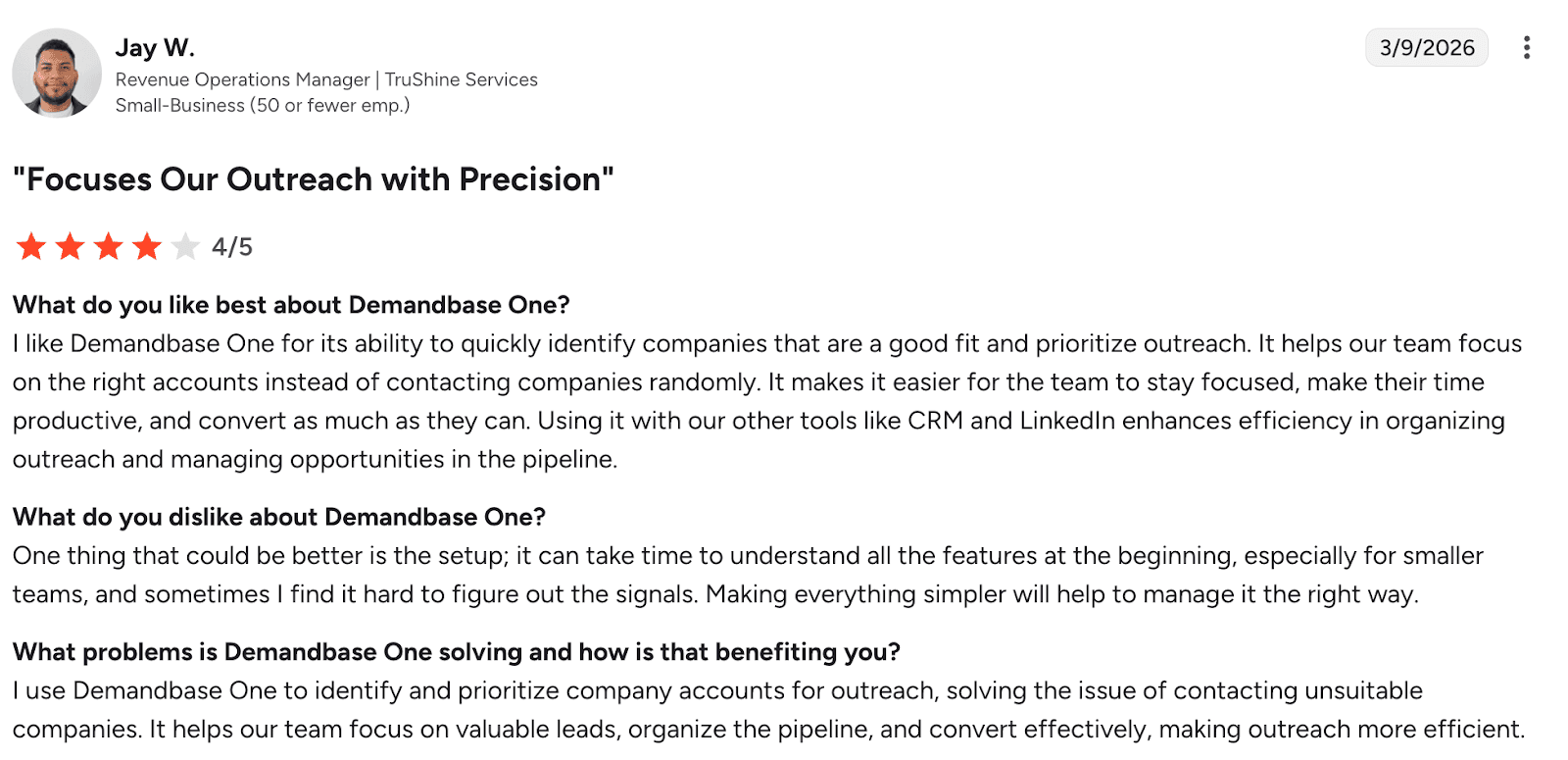
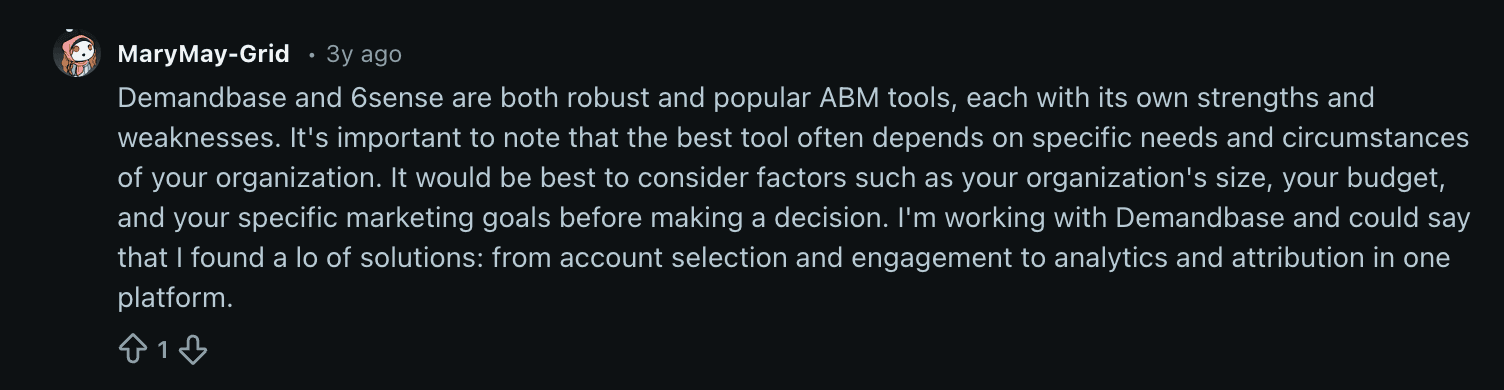
Real User Reviews:
Next up, let’s look at a lighter, more inbound-focused option.
2. Warmly
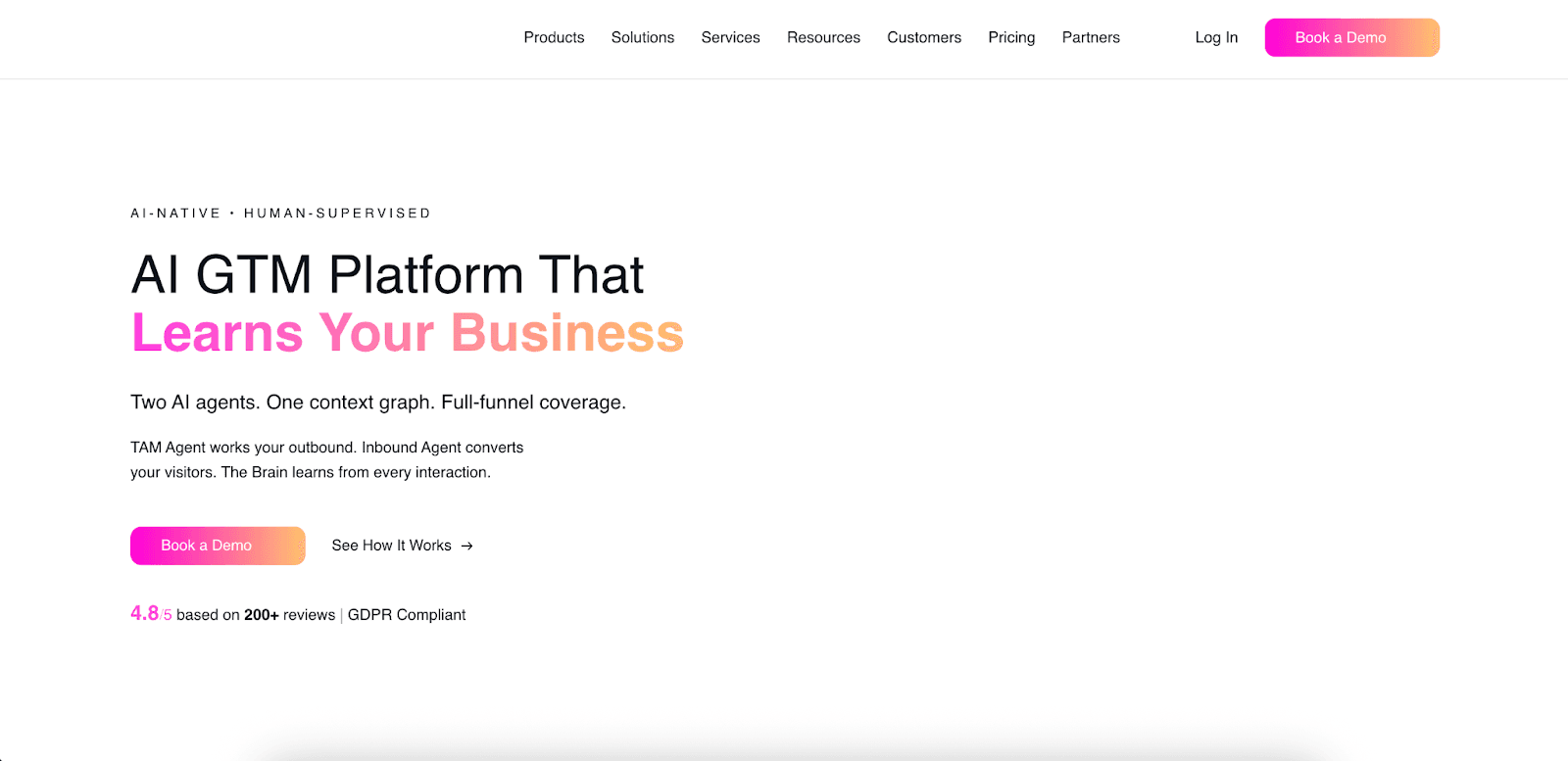
Warmly focuses on deanonymizing website visitors and sending real-time Slack alerts to sales. It identifies companies behind anonymous traffic with basic enrichment and contact matching.
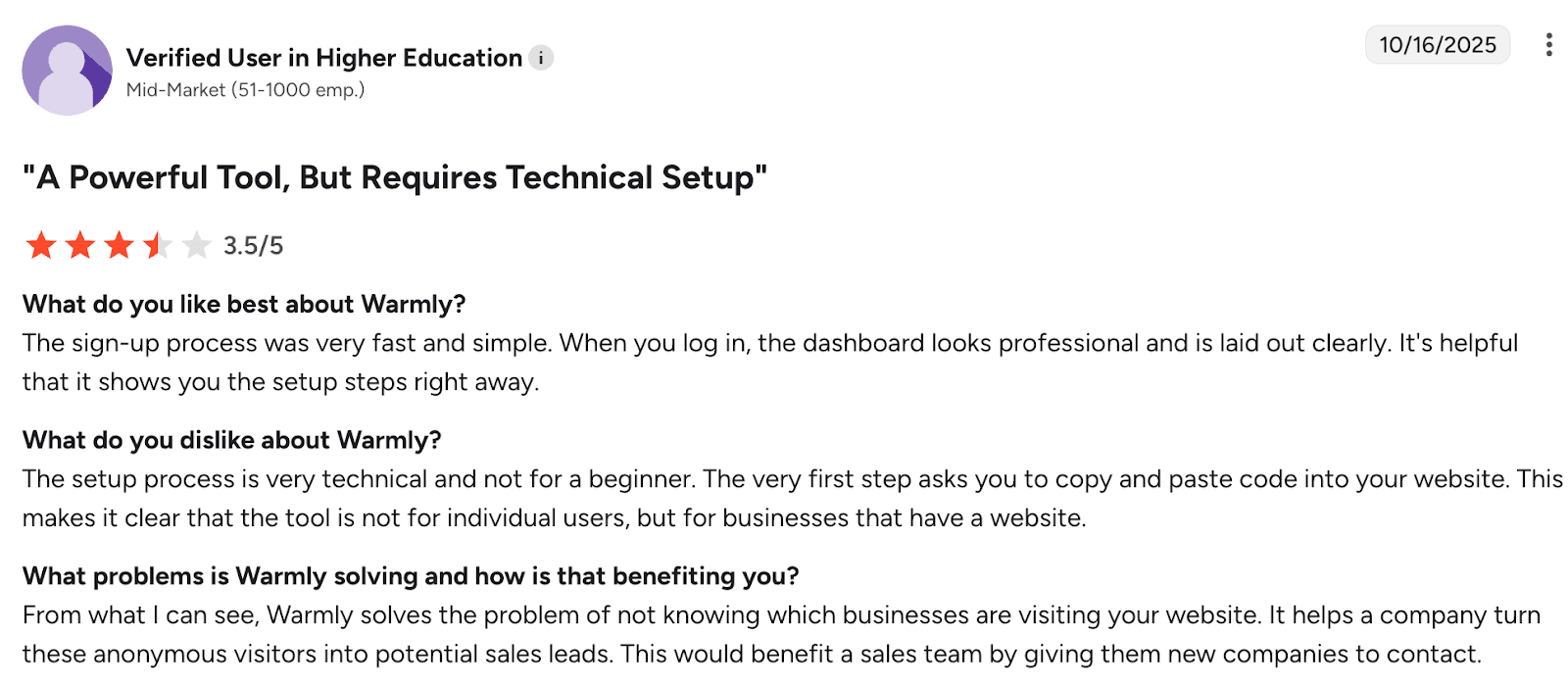
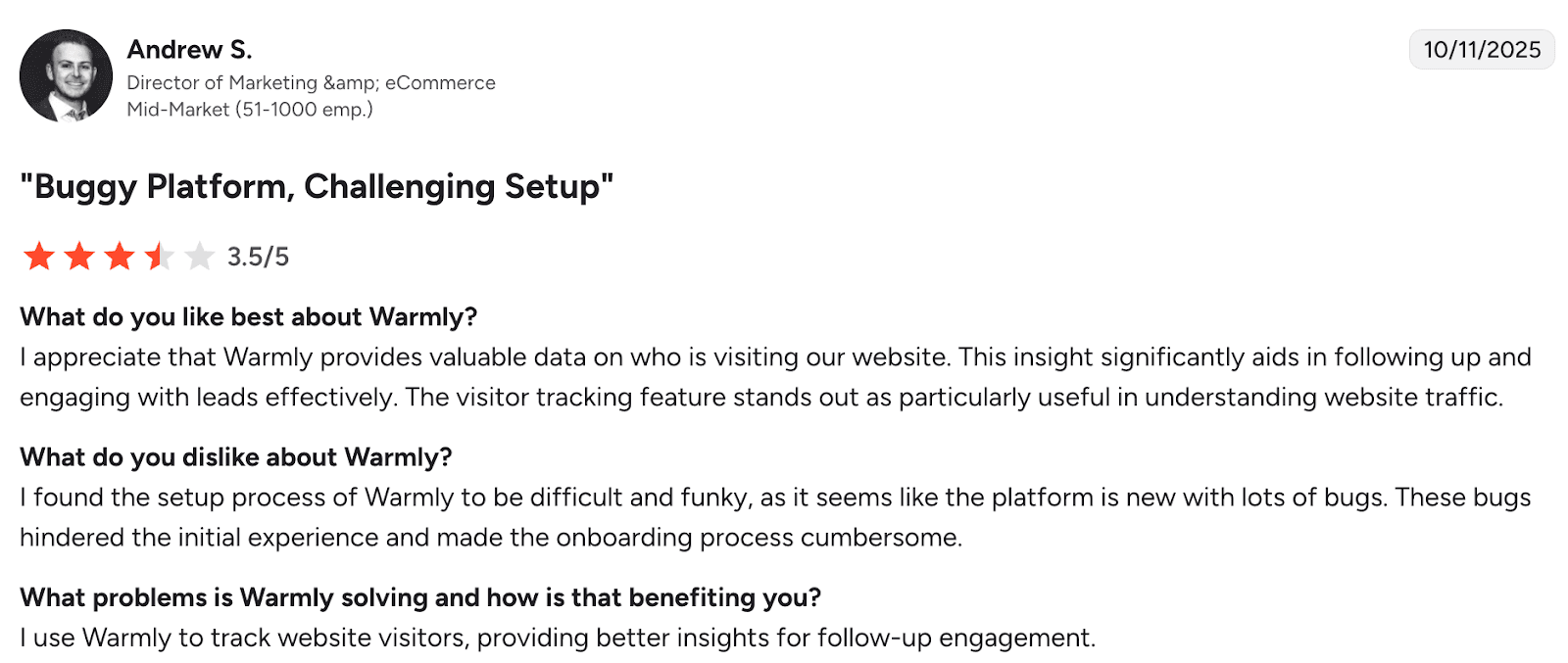
The engagement layer stays light with simple chat widgets and notification workflows. Teams use Warmly to see who's visiting but still handle conversion manually or elsewhere. It's a strong identification tool that stops short of full automated pipeline creation.
Features:
Visitor Identification: Reveal anonymous companies visiting your website in real time.
Slack Alerts: Notify your team when high-value accounts are actively browsing your pages.
Basic Enrichment: Add firmographic data to visitor profiles for better context.
Light Engagement Tools: Enable simple interactions without complex workflows.
G2 Rating: 4.6/5
Real User Reviews:
Now let’s look at a tool built for what happens during the visit, not before it.
3. Breakout
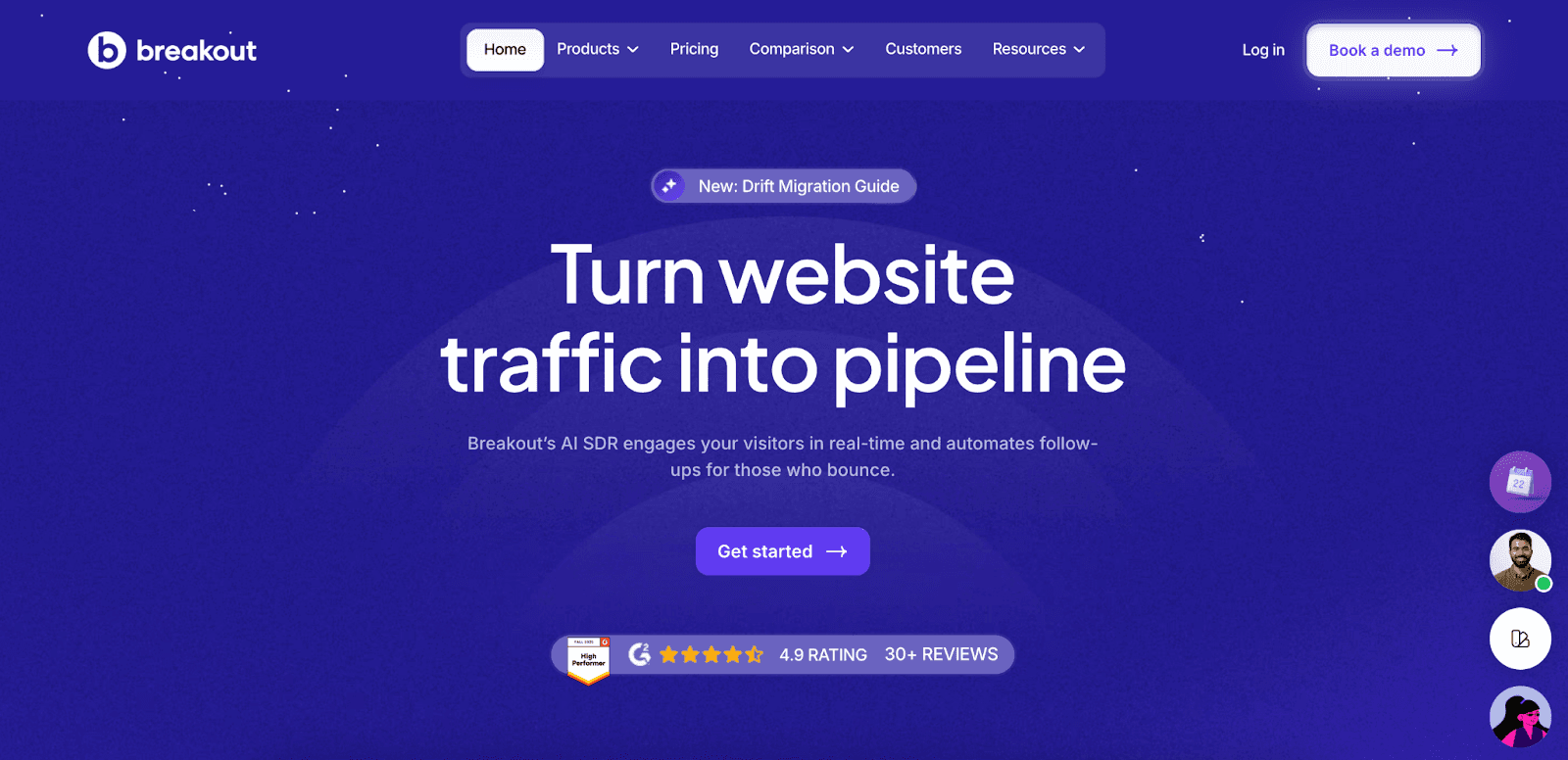
Breakout turns your website into an AI SDR that qualifies and books meetings instantly. It deanonymizes visitors in real time, then engages them with AI-led conversations.
Unlike 6sense, which tells you who's interested, Breakout converts that interest immediately. The AI SDR handles discovery, qualification, routing, and booking without human intervention.
This makes it the only tool that operates during the visit, not just before or after.
Features:
Deanonymization: Identify high-intent visitors in real time without requiring form submissions.
AI SDR Conversations: Engage visitors instantly through conversational interactions instead of static forms.
Instant Qualification and Routing: Qualify leads dynamically and route them to the right sales representatives without delays.
AI Follow-Up Emails: Continue conversations with personalized outreach after visitors leave your website.
G2 Rating: 5/5
Why Breakout Stands Out (vs 6sense And Others)
1. It operates during the moment of intent, not before it: 6sense identifies accounts before they visit. Breakout engages them while they are actively researching and continues the conversation after they leave, ensuring no high-intent visitor is lost.
2. It replaces forms with conversations that qualify in real time: Most tools still depend on form fills or predefined workflows. Breakout starts conversations instantly, asks contextual questions, and qualifies buyers using real-time behavior and responses.
3. It doesn’t stop at identification; it follows through: Tools like Warmly stop at showing you who visited. Breakout continues the workflow: Engages the visitor on-site, Qualifies them automatically, Books meetings instantly, and sends AI follow-ups after they leave.
4. It runs without manual playbooks or constant tuning: Traditional tools require routing logic, workflows, and ongoing optimization. Breakout operates with zero manual playbooks, reducing operational overhead and dependency on RevOps teams.
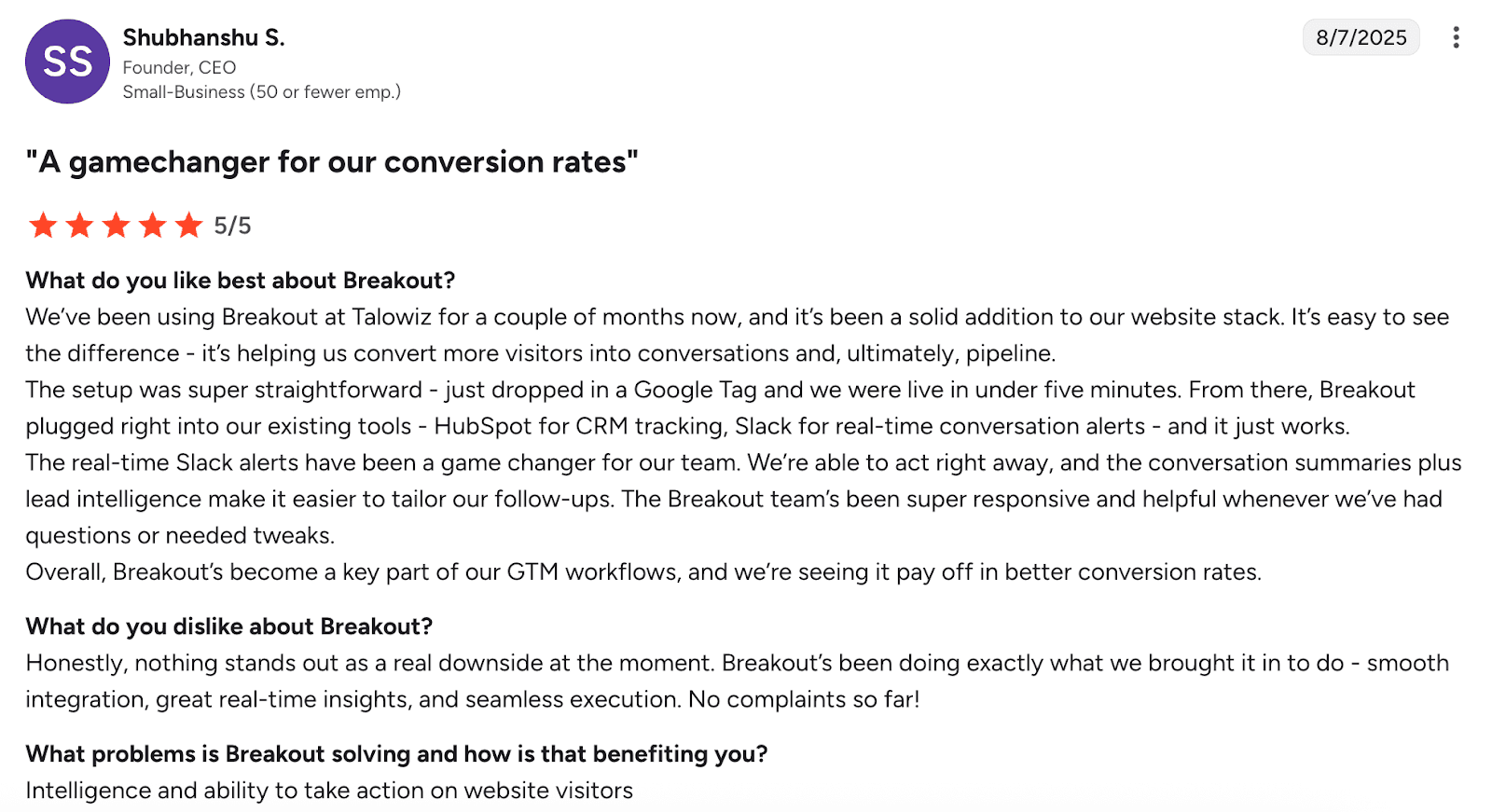
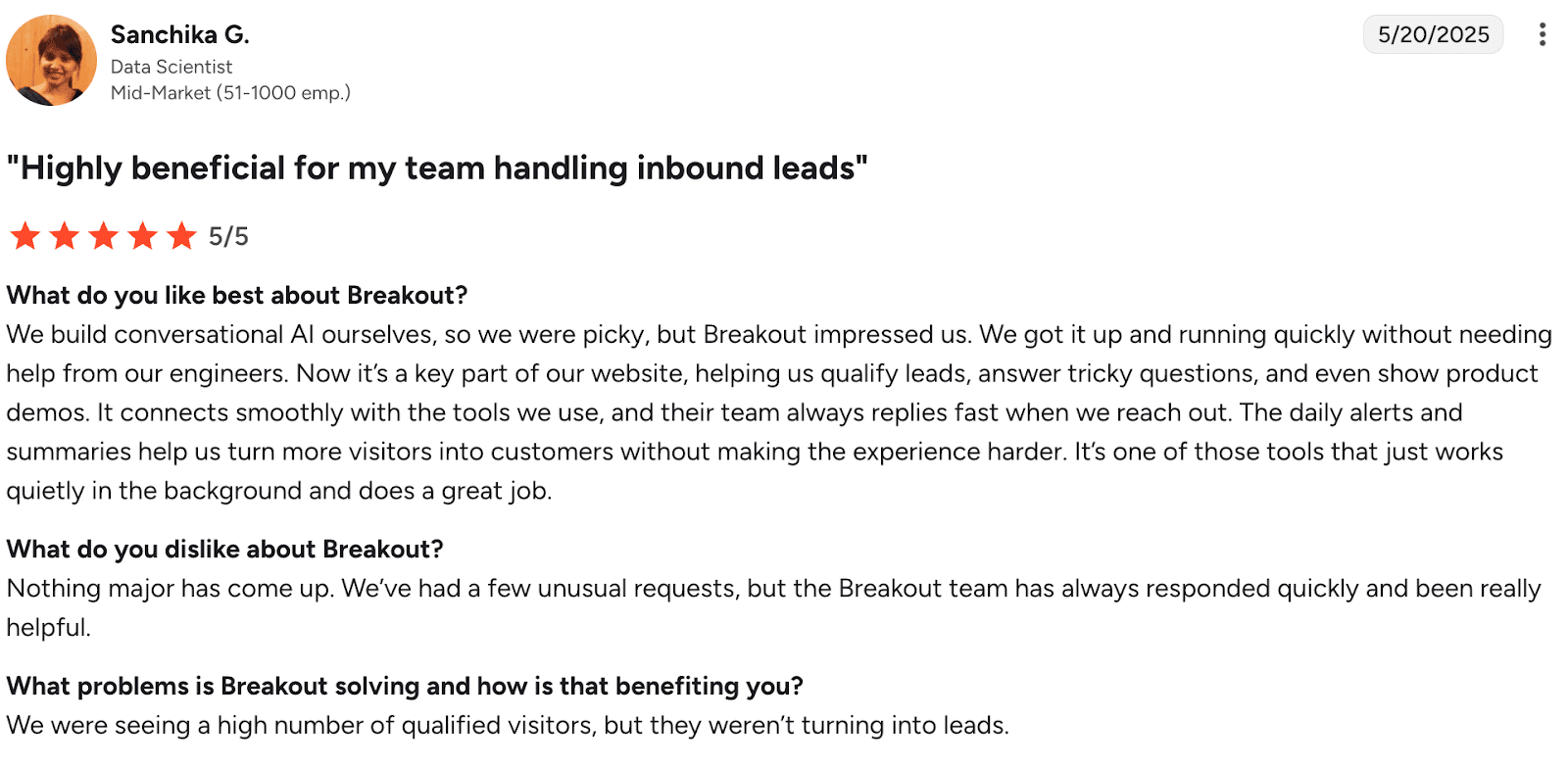
Real User Reviews:
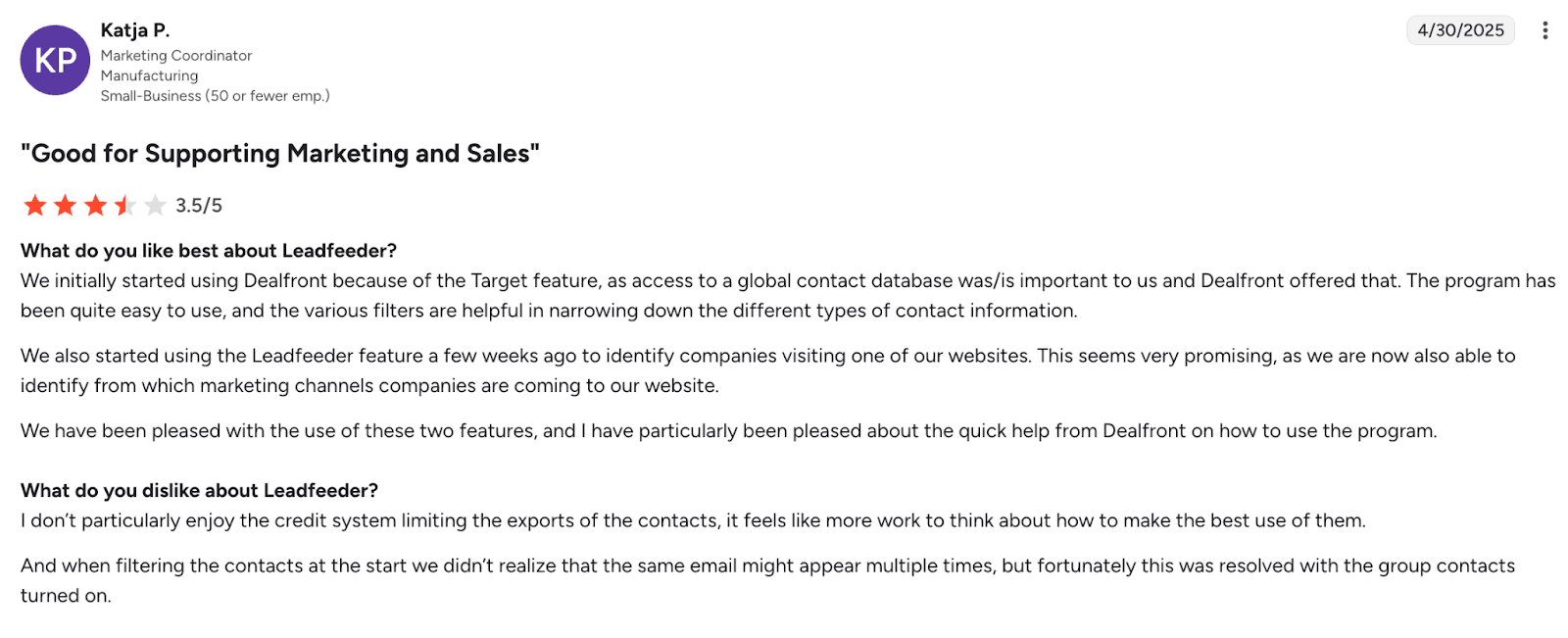
4. Dealfront
Dealfront combines European intent data, visitor identification, and enrichment in one platform. It grew from Leadfeeder's strong EU data coverage into a full GTM intelligence suite.
Teams prioritize Dealfront when GDPR compliance and regional data accuracy matter most. The platform offers solid identification but requires manual follow-up for conversion workflows.
It's the best choice for European teams needing compliant, localized intent signals.
Features:
Intent Data Tracking: Monitor buyer behavior and identify accounts showing purchase signals.
Data Enrichment: Enhance lead profiles with accurate firmographic and contact information.
GDPR Compliance: Ensure data handling aligns with European privacy regulations.
Market Intelligence: Gain insights into regional trends and account activity.
G2 Rating: 4.3/5
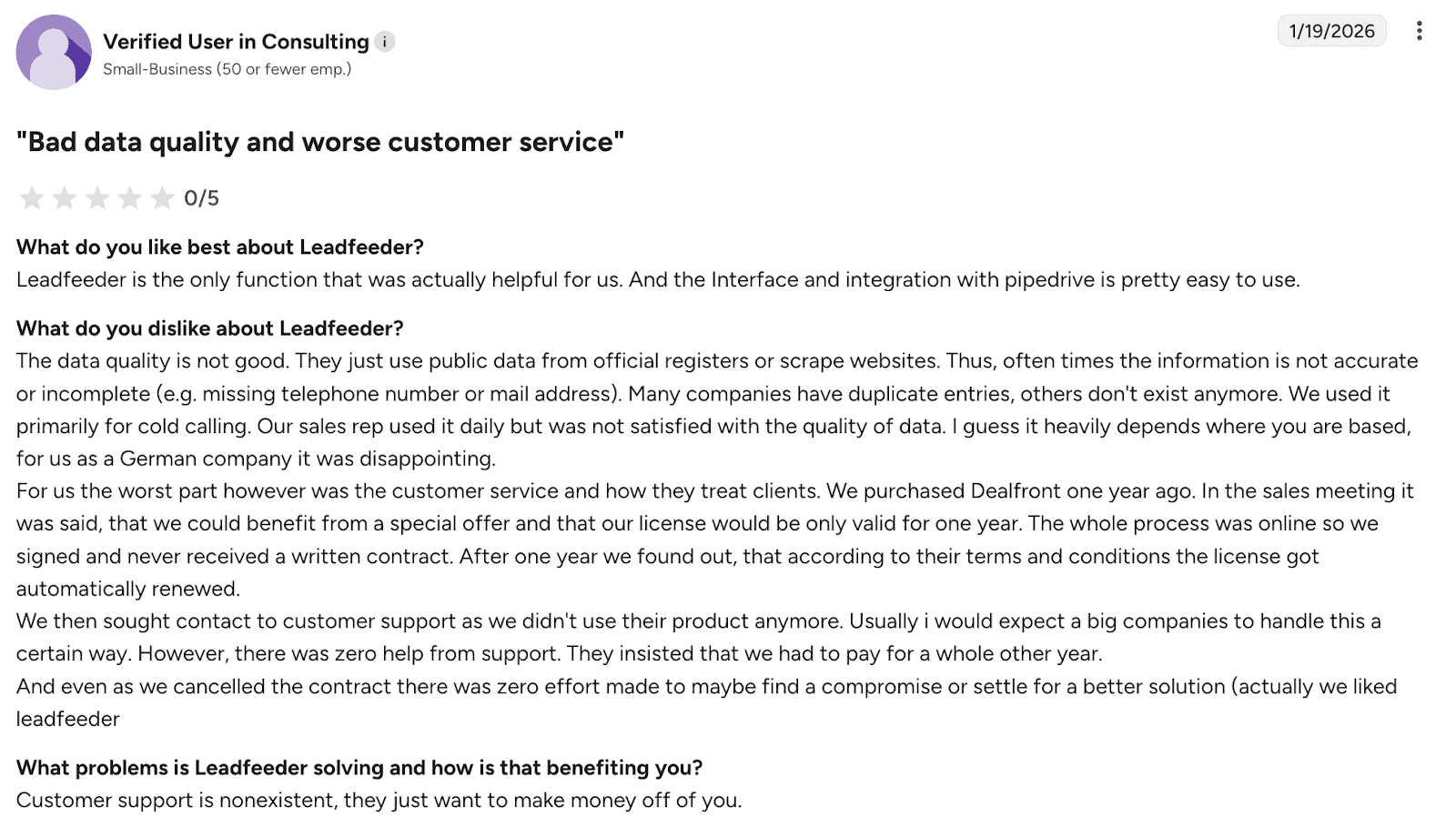
Real User Reviews:
5. Qualified
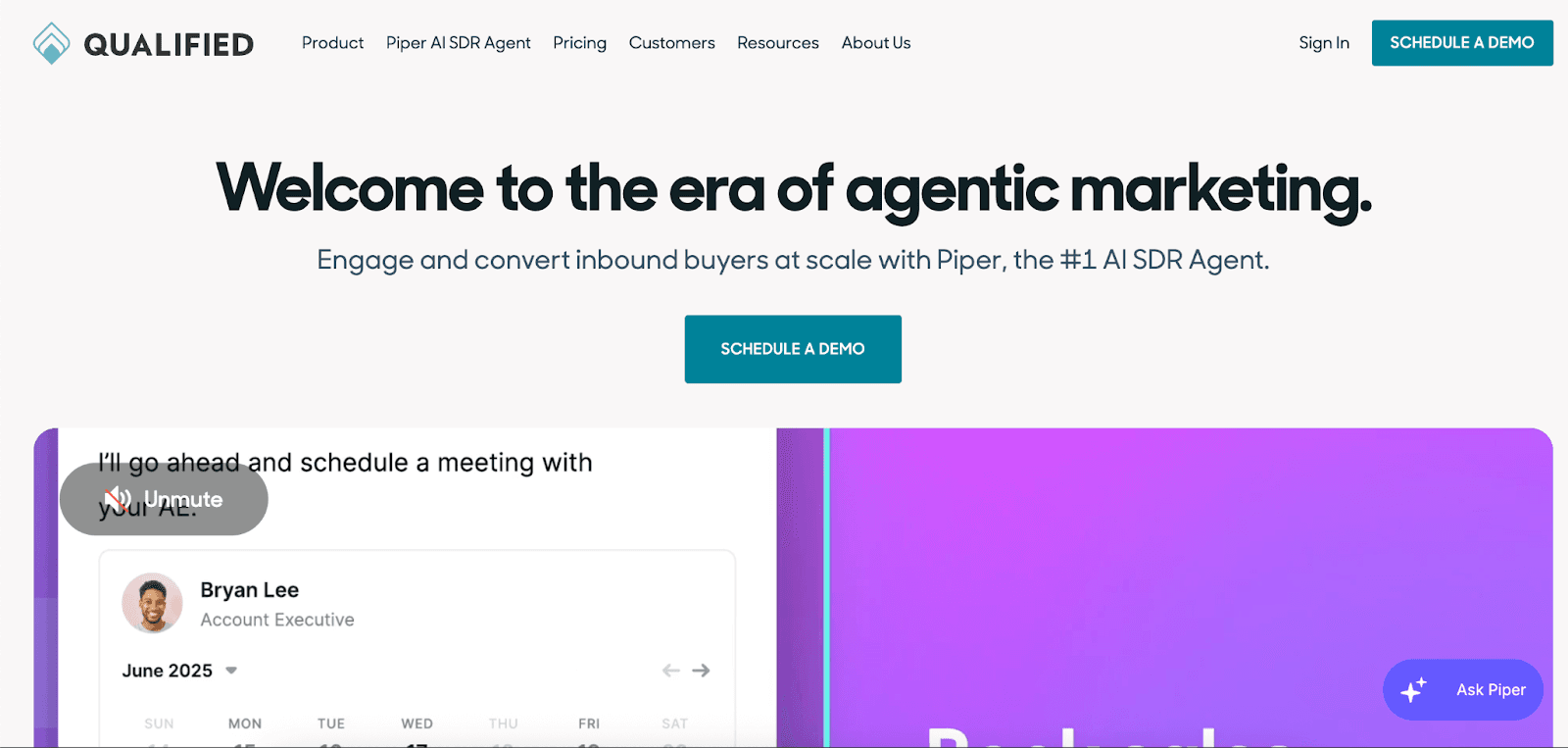
Qualified brings conversational marketing to Salesforce-native teams with strong routing logic. Its AI agent, Piper handles chat conversations and books meetings with qualified visitors.
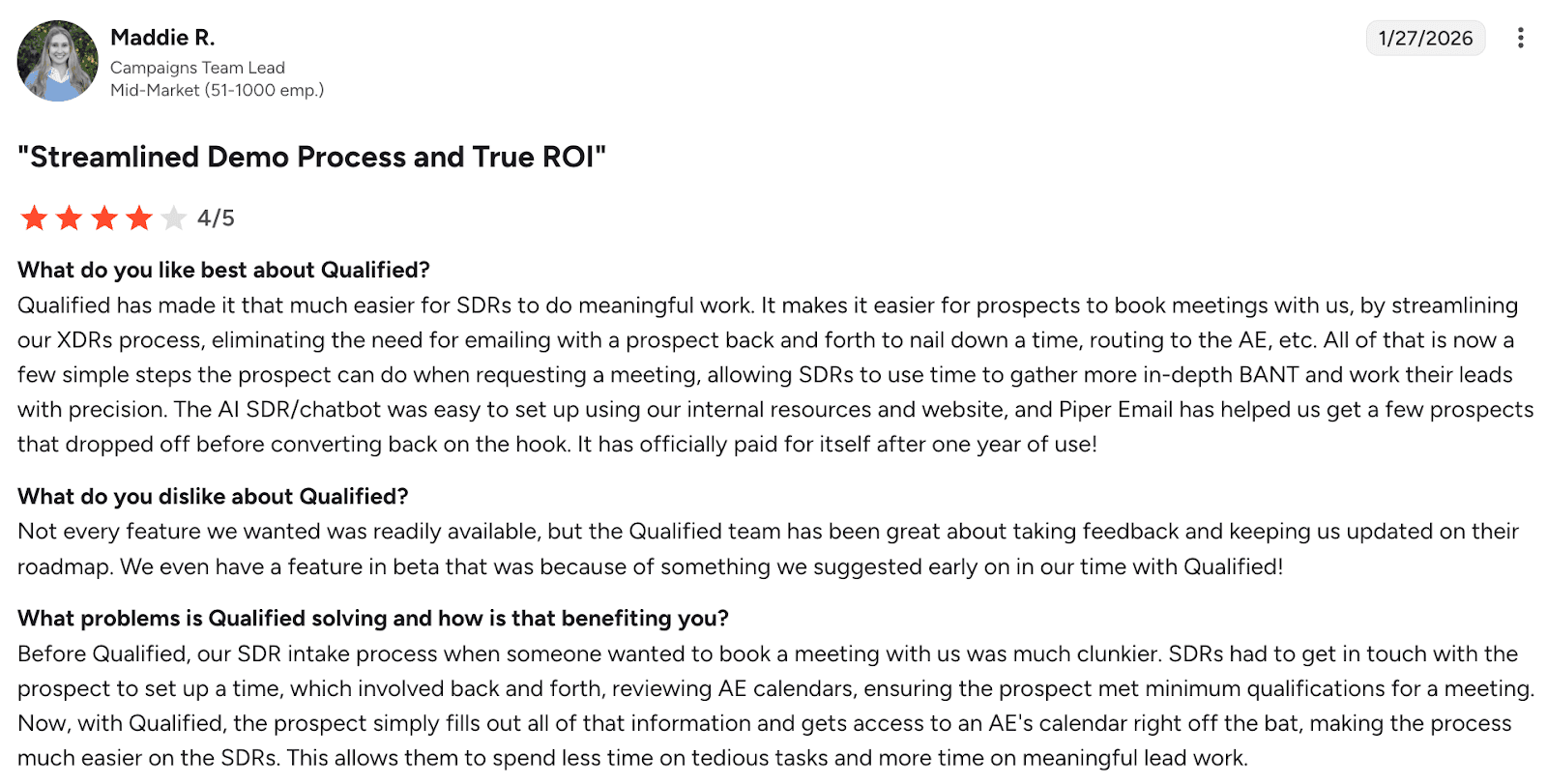
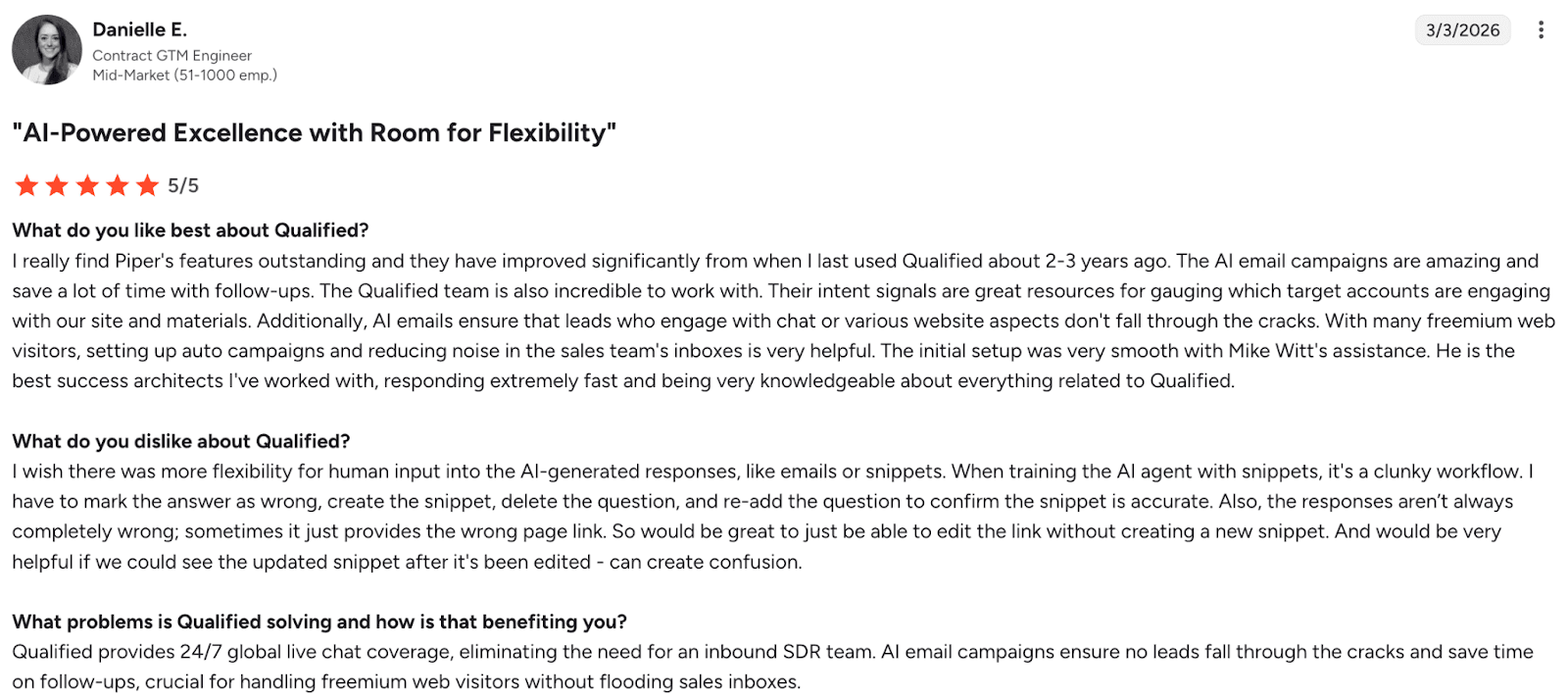
The platform excels when you have mature Salesforce ops and dedicated success architects. Trade-offs include high pricing, human-heavy setup, and slower deployment vs AI-first tools.
It's ideal for enterprise teams already deep in the Salesforce ecosystem.
Features:
Live Chat Engagement: Interact with website visitors through chat-based conversations.
Salesforce Integration: Sync conversations and data directly with Salesforce.
Routing Logic: Direct leads to appropriate representatives based on predefined rules.
Meeting Scheduling: Allow visitors to book meetings through chat interactions.
G2 Rating: 4.9/5
Real User Reviews:
So which one should you actually choose?
Tool | Best For | Strength | Limitation |
Demandbase | Enterprise ABM | Deep intent data | Complex setup |
Warmly | Visitor identification | Real-time visibility | Limited conversion |
Breakout | Inbound conversion | Full-funnel engagement | Newer category |
Dealfront | EU intent data | GDPR-friendly enrichment | No real-time engagement |
Qualified | Salesforce chat | Conversational workflows | Human-heavy and slower |
How To Choose The Right 6sense Alternative
You have seen how each 6sense alternative solves a different part of the revenue workflow, but the right choice depends on how your pipeline actually gets created.
If your motion is account-based and outbound-heavy, platforms like Demandbase or Dealfront will fit better. They give you strong intent signals and account visibility, but still depend on outbound execution to convert the pipeline.
If your goal is to identify who is visiting your website and alert your team, Warmly gives you that visibility. It shows you which accounts are active, but your team still needs to step in to engage and convert them.
If you run a Salesforce-native motion with dedicated SDR coverage, Qualified can support chat-based engagement and routing. It works best when you have the resources to manage conversations and workflows manually.
If your motion is inbound-led and you want to convert demand while it is active, Breakout is built for that. It deanonymizes visitors, engages them instantly, qualifies them through AI conversations, and follows up automatically with personalized emails after they leave.
The difference comes down to this. Most tools help you understand demand or surface activity. Breakout helps you act on it in real time, without adding headcount or waiting on manual follow-ups.
Let your inbound work like a pipeline engine, not just a traffic source. Click here to book your Breakout demo now.
FAQs
Q. What are the best 6sense alternatives in 2026?
Top alternatives include Breakout, Demandbase, Warmly, Dealfront, and Qualified, each addressing different parts of the revenue workflow.
Q. Why do companies switch from 6sense?
Most teams switch due to high cost, complexity, and the gap between intent data insights and actual pipeline generation.
Q. Is 6sense only for enterprise companies?
6sense works best for organizations with strong data infrastructure and longer sales cycles, which are often enterprise-level companies.
Q. What is better than 6sense for inbound conversion?
Breakout is a strong option because it engages visitors in real time and follows up automatically after they leave.
Q. Do I need intent data tools or AI SDR tools?
Intent data tools help you identify demand, while AI SDR tools help you convert that demand into meetings and pipeline.