All Blogs
A quick look at better options than 2026.

Evan Marshall
Senior Growth AI Strategist
Published On

Most marketing teams collect thousands of buyer signals every month but struggle to turn those alerts into actual revenue for the business. Signals are only valuable if you act on them in time before the buyer moves on to a different solution or competitor.
UserGems tells you when something changes in your market, but your sales team still needs to act on every single notification manually. Most organizations continue to struggle with converting these signals into booked meetings because their manual follow-up processes are too slow for buyers.
You need a system that focuses on creating outcomes rather than just sending more alerts to your already overwhelmed sales development representatives.
In this guide, you will explore the best usergems alternatives in 2026, focusing on tools that do more than track signals and actually turn them into a pipeline.
An Overview
How to turn buyer signals into meetings, not just alerts:
UserGems tells you who might be ready, but not when they actually are. That gap is where most opportunities go cold.
Signals like job changes or account activity are delayed indicators, which means you often reach buyers after momentum has already shifted.
Tools like Common Room and Warmly improve visibility, but they still leave execution to your team.
Even when you act on signals using Apollo.io or Clay, conversion depends on timing you cannot control.
Breakout changes this by engaging buyers during and after active evaluation, when intent is already clear and actionable.
The real shift is not from signals to automation, but from delayed signals to real-time engagement that captures demand before it disappears.
What Is Usergems And Who Is It For
UserGems focuses on tracking buyer signals and alerting sales teams about potential opportunities.
Tracks job changes and identifies when champions move across companies
Sends alerts to sales teams based on signal activity
Supports outbound workflows triggered by these signals
Helps prioritize accounts based on change events
Here’s what discussions on Reddit say about usergems:
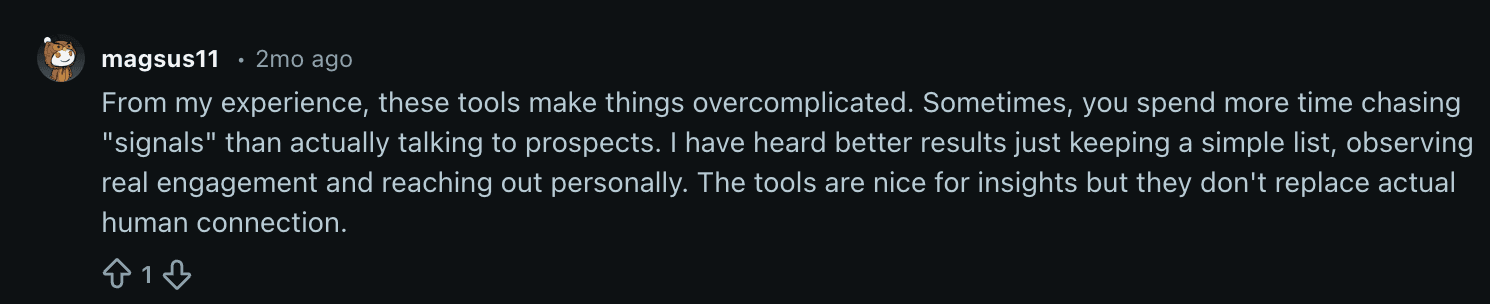
It works well for identifying opportunities, but it does not convert those signals into meetings without manual execution.
5 Reasons Why You Should Explore Usergems Alternatives
Signals alone do not create a pipeline, especially when execution determines whether opportunities convert into meetings.
Here are the main reasons teams start evaluating alternatives:
1. Signals Without Execution Create Gaps
You receive alerts about job changes or account activity, but your team still needs to act manually, which delays engagement and reduces conversion potential.
2. Delayed Action Reduces Impact
By the time outreach happens, the buyer may have already evaluated options or moved forward, which makes timing a critical limitation.
3. Limited Scope Restricts Insights
The platform focuses heavily on job changes, which means you miss broader signals such as website behavior or product engagement.
4. Outbound Dependency Limits Results
Even with strong signals, your pipeline still depends on cold outreach, which is harder to convert when buyers are not actively engaging.
5. No Inbound Conversion Layer Exists
The platform does not capture or convert buyers who are already visiting your website and evaluating solutions in real time.
7 UserGems Alternatives That Don’t Just Send Alerts
If you want a quick comparison, here is how these tools differ:
Tool | G2 Rating | Best For | Pricing |
Common Room | 4.5/5 | Multi-signal intelligence | Custom |
Apollo.io | 4.7/5 | Outbound + data | Free to Custom plans |
Clay | 4.7/5 | Data workflows | Free to Custom plans |
6sense | 4/5 | Predictive intent | Free to Custom plans |
Warmly | 4.6/5 | Visitor signals | Subscription based plans |
Demandbase | 4.4/5 | ABM + intent | Enterprise |
Breakout | 5/5 | Inbound conversion | Custom |
These tools solve different parts of the revenue workflow, so your choice depends on whether you prioritize signals, execution, or conversion.
1. Common Room
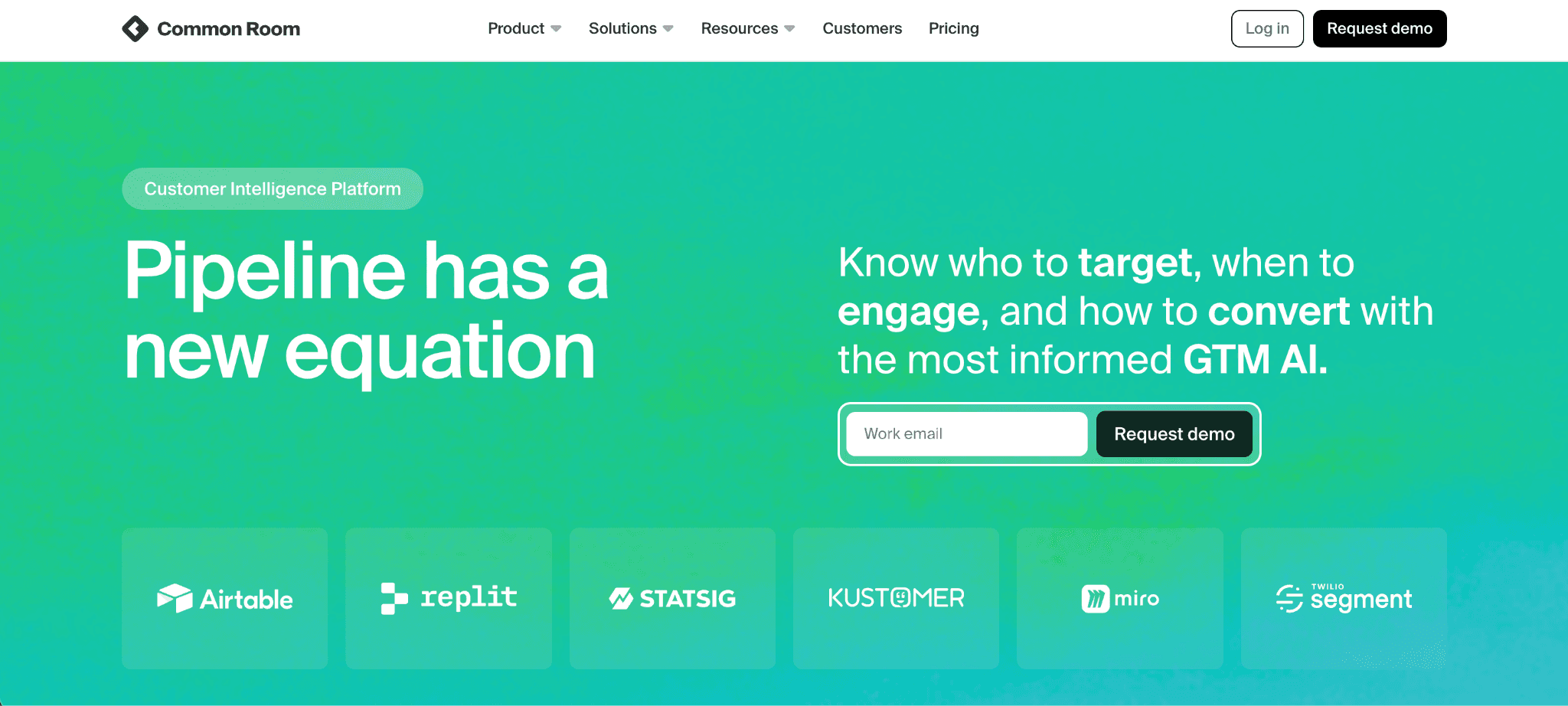
Common Room aggregates signals across product usage, community engagement, and social activity, helping you identify high-intent accounts beyond job changes.
It works well for PLG teams that rely on behavioral signals, but it does not execute engagement or conversion, which means your team still needs to act on insights manually.
Where It Wins Over Usergems
Goes beyond job changes → captures engagement signals
Great for identifying hidden influencers
Key Features
Multi-source signals: Track activity across product, social, and community channels. This gives you broader visibility into account behavior.
Account prioritization: Identify high-intent accounts based on engagement signals. This helps you focus on accounts more likely to convert.
PLG alignment: Supports product-led growth strategies effectively. This works well for companies with active user bases.
Data enrichment: Adds context to accounts through integrations. This improves targeting and segmentation.
Workflow integrations: Connect with CRM and GTM tools. This ensures signals are actionable within your stack.
Common Room Limitations
The platform is very insight-heavy and requires your sales team to spend significant time analyzing data before they can start taking action.
It does not offer an automated conversation layer to engage with buyers in real time when they are actually visiting your corporate website.
Pricing can become quite expensive for smaller teams that do not have the resources to fully utilize all the complex data features provided.
Integrating data from every single community and social channel can be a very time-consuming process for your revenue operations team to manage.
The platform does not focus on inbound conversion, which means you still need another tool to turn your website visitors into booked meetings.
2. Apollo.io
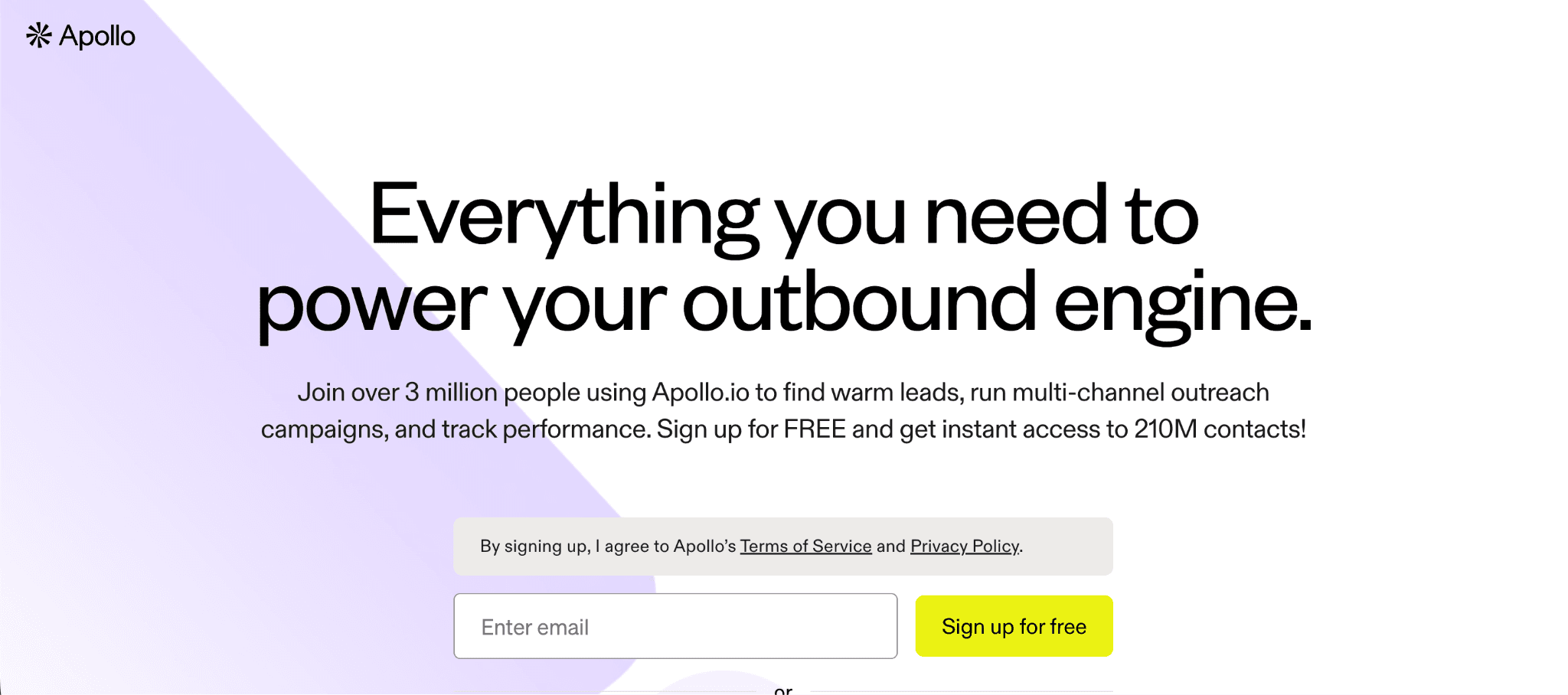
Apollo combines data, signals, and outbound execution into one platform, making it useful for teams running structured prospecting strategies.
It enables targeting, sequencing, and engagement, but results still depend on response rates and timing, which limits conversion when buyers are not actively engaging.
Where It Wins Over Usergems
Focuses more on broad prospecting than relationship signals
Less specialized in job-change tracking
Key Features
Contact database: Access large datasets of verified prospects. This supports outbound targeting at scale.
Email sequencing: Run multi-step campaigns across accounts. This helps structure outreach workflows.
Lead scoring: Prioritize accounts based on signals and data. This improves targeting efficiency.
Multi-channel outreach: Combine email and calling workflows. This increases engagement opportunities.
CRM sync: Integrate with existing systems. This keeps data aligned across teams.
Apollo.io Limitations
High-volume outreach can lead to your domain being marked as spam if your team does not carefully manage its sending limits every day.
The data accuracy for international markets outside of North America and Europe is sometimes lower than what is provided for domestic United States companies.
The user interface can feel very cluttered and overwhelming because the company tries to pack too many different features into a single screen view.
It does not provide a way to engage with anonymous website visitors in real time while they are actively researching your product or service.
Automated sequences can often feel robotic to high-value executive buyers who expect a more personal and thoughtful approach during the sales process.
3. Clay
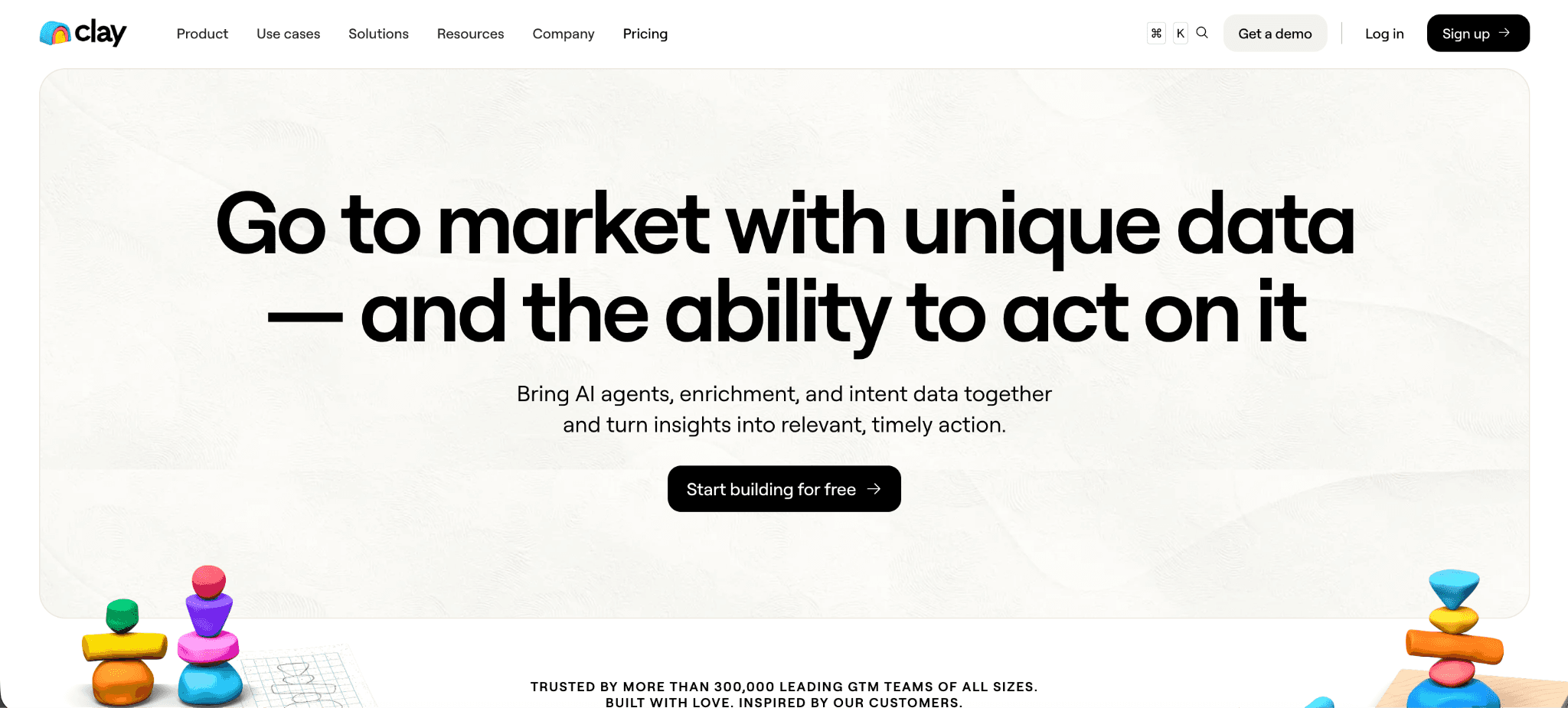
Clay aggregates signals and enriches data across multiple sources, helping teams build targeted workflows. It works well for automating research and segmentation, but it requires manual setup and does not handle engagement or conversion directly.
Where It Wins Over Usergems
Lets you build your own “UserGems-like” workflows
Extremely flexible
Key Features
Data enrichment: Pull data from multiple sources. This improves lead quality.
Workflow automation: Build custom GTM workflows. This reduces manual research effort.
Signal aggregation: Combine multiple signals into one view. This enhances targeting accuracy.
Custom logic: Create tailored workflows. This gives flexibility in execution.
Integrations: Connect with external tools. This expands functionality.
Clay Limitations
The platform has a steep learning curve and usually requires a dedicated person to manage the complex data workflows and API connections needed.
It is primarily a data tool, which means it does not provide the actual communication layer to talk to your buyers in real time.
Credit-based pricing can become very expensive if you are running large lists through multiple enrichment steps every single day of the month.
You still need to find another solution to handle the outbound sending or inbound conversion parts of your overall sales and marketing strategy.
Setting up the initial workflows can take several weeks of testing to ensure the data is being mapped correctly to your existing internal systems.
4. 6sense
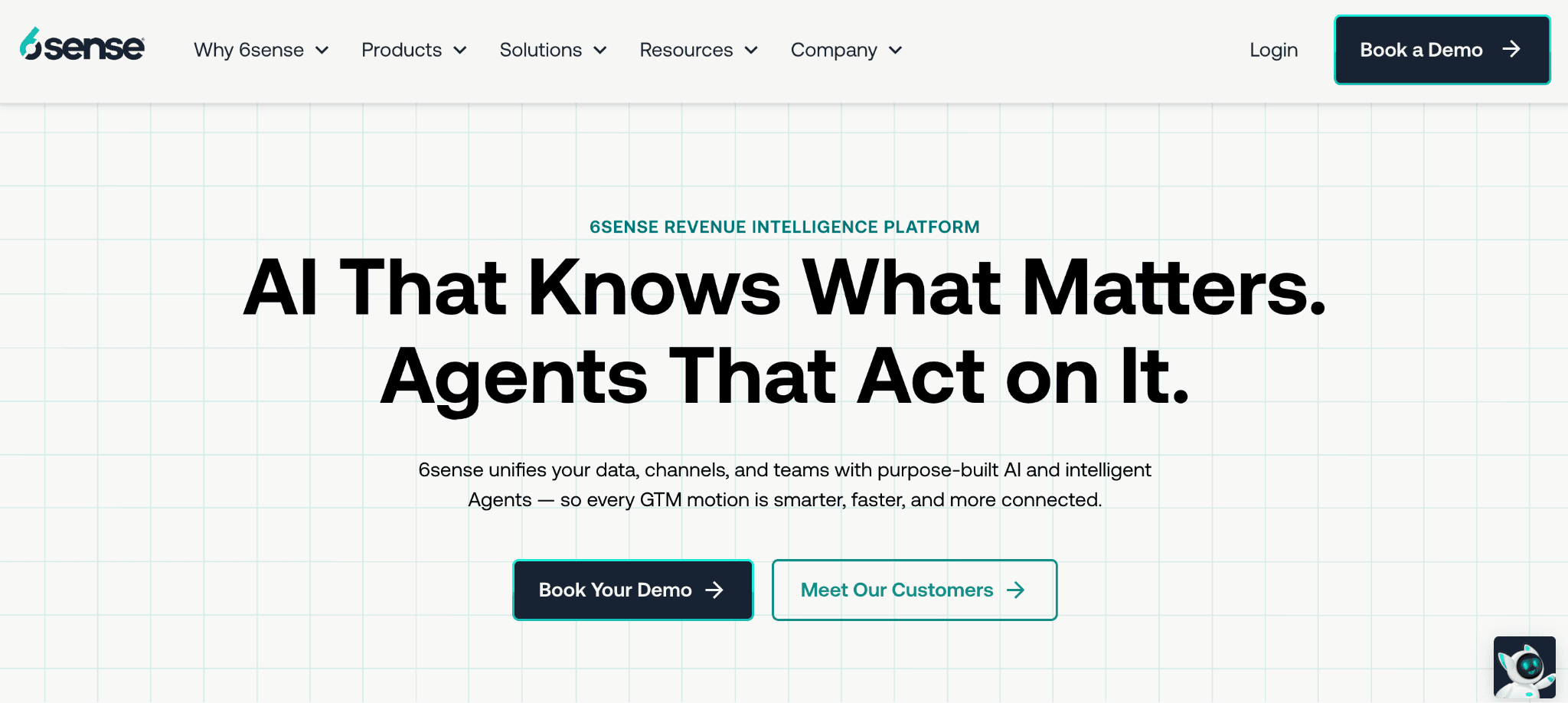
6sense focuses on identifying in-market accounts using predictive intent data and scoring models. It helps teams prioritize accounts before outreach, but it does not engage or convert buyers during active intent moments.
Where It Wins Over Usergems
Identifies accounts before they convert
Great for enterprise sales cycles
Key Features
Intent data: Identify accounts showing buying signals. This helps prioritize outreach.
Predictive scoring: Rank accounts based on likelihood to convert. This improves targeting decisions.
ABM workflows: Support account-based strategies. This aligns marketing and sales.
Data insights: Provide account intelligence. This improves planning.
Integrations: Connect with CRM systems. This supports execution workflows.
6sense Limitations
The platform is designed for large enterprises and usually requires a significant financial investment that is out of reach for most mid-market companies.
Implementation is often a long and complex process that requires several months of data gathering before the predictive models become highly accurate for you.
It identifies that an account is interested, but does not provide a way to instantly engage with the specific individual who is visiting.
Small and mid-market companies might find that the platform does not have enough data to provide accurate predictions for their specific niche industries.
You still need an additional tool to handle the actual sales outreach or to manage the real-time conversations on your own website.
5. Warmly
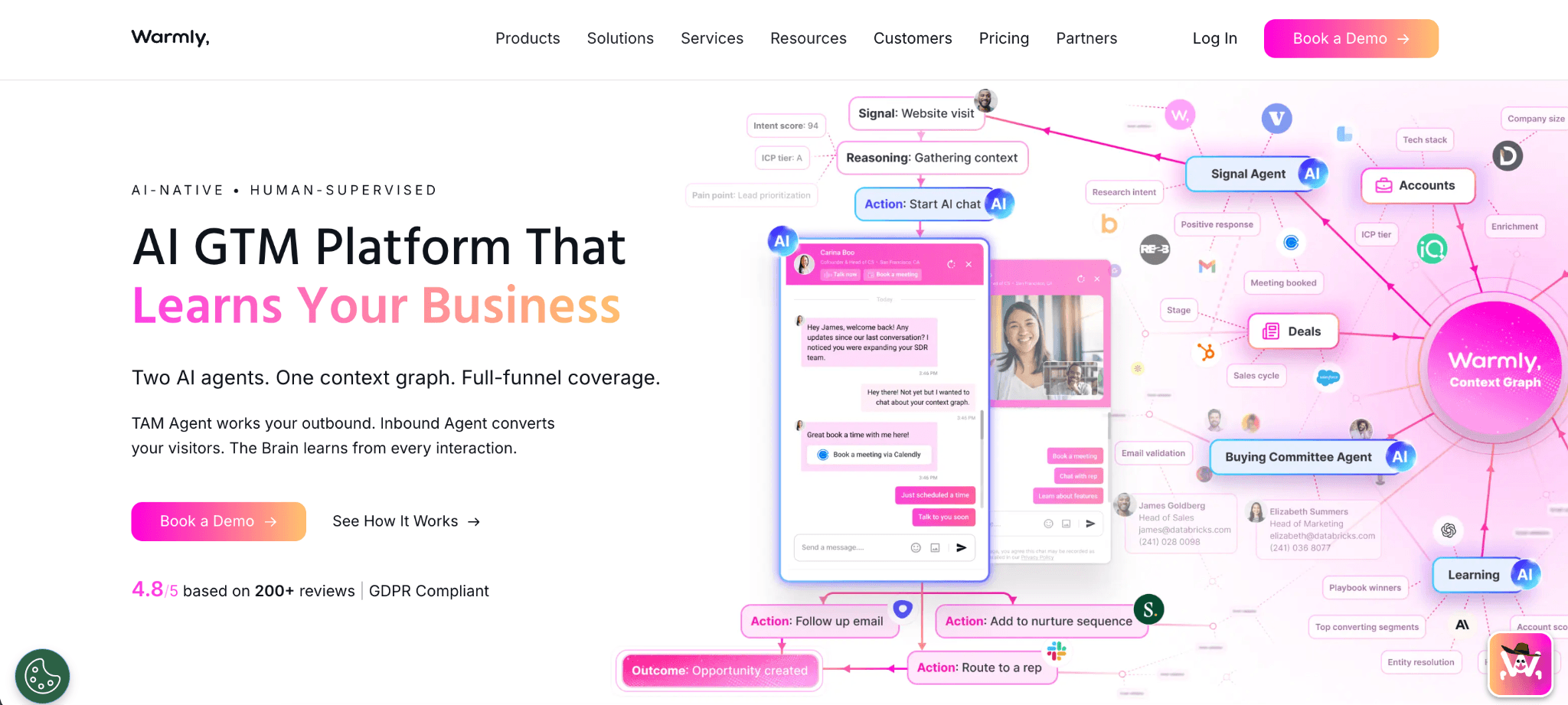
Warmly identifies anonymous website visitors and alerts your team in real time, helping you understand who is showing interest. It improves visibility, but your team still needs to engage and convert those visitors manually.
Where It Wins Over Usergems
Captures real-time buying intent, not just lifecycle triggers like job changes
Combines multiple signal types (behavioral + external + CRM) into one view
Key Features
Visitor identification: Reveal companies visiting your site. This improves visibility.
Real-time alerts: Notify teams instantly. This helps prioritize outreach.
Enrichment: Add company-level data. This improves context.
CRM integration: Sync with systems. This keeps workflows aligned.
Slack notifications: Enable instant alerts. This improves responsiveness.
Warmly Limitations
The platform identifies that a company is visiting, but does not always identify the specific individual who is looking at your website pages.
It relies heavily on manual intervention from your sales reps to turn a website visit into a real conversation or a booked meeting.
There is no AI layer that can handle the entire qualification and booking process for you while your sales team is busy or offline.
Many visitors will leave your site before a human sales rep has the chance to see the alert and send a manual message.
It functions more as a signal tool than a conversion platform, which means you may still experience a low website conversion rate overall.
6. Demandbase
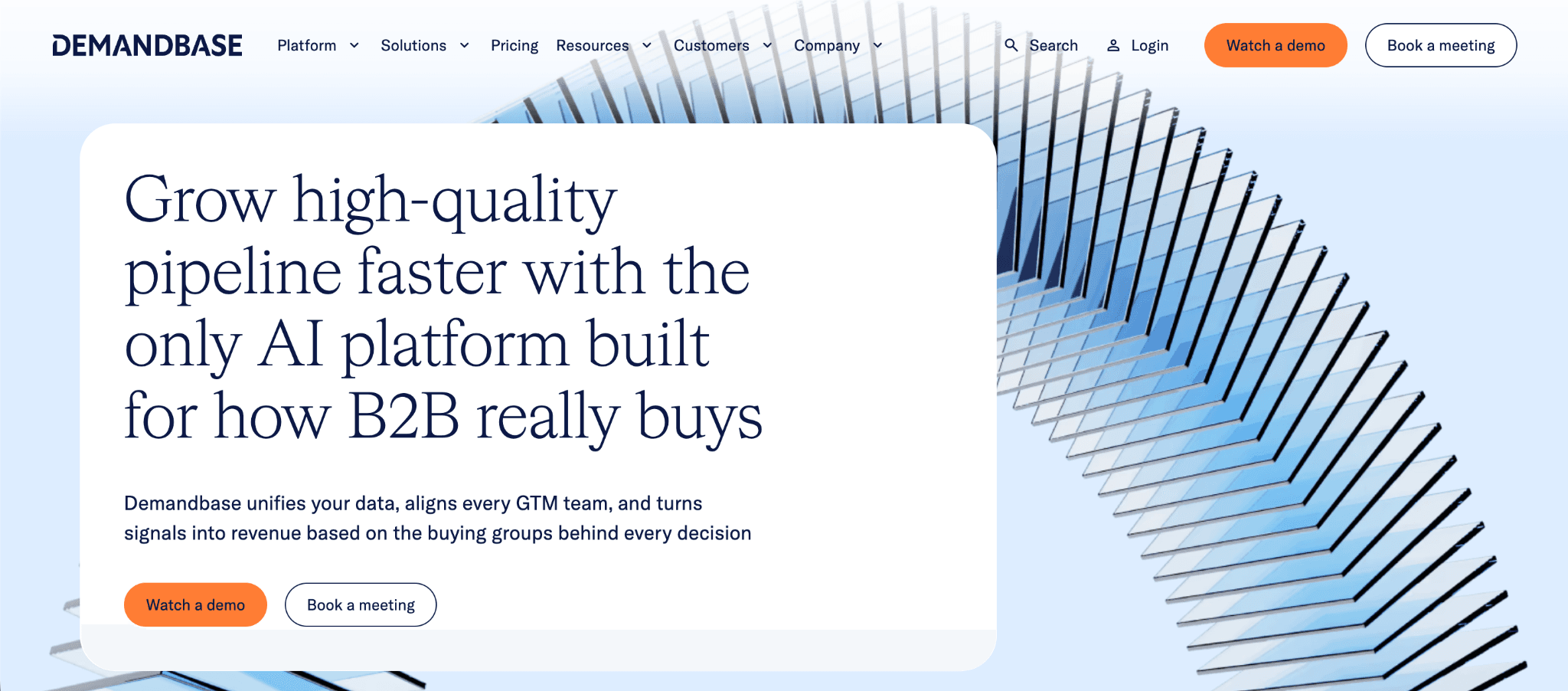
Demandbase combines intent data, account identification, and advertising capabilities to support enterprise ABM strategies. It helps teams understand account behavior, but it requires structured workflows and does not directly convert signals into meetings.
Where It Wins Over Usergems
Captures real-time buying intent, not just lifecycle triggers like job changes
Combines multiple signal types (behavioral + external + CRM) into one view
Key Features
Account targeting: Identify high-value accounts. This supports ABM campaigns.
Intent signals: Track buying behavior. This improves prioritization.
Advertising integration: Run targeted campaigns. This supports engagement.
Data insights: Provide account intelligence. This improves planning.
CRM integration: Sync workflows. This supports execution.
Demandbase Limitations
The platform is designed for large enterprises and usually requires a significant financial investment that is out of reach for most mid-market companies.
Implementation is often a long and complex process that requires several months of data gathering before the predictive models become highly accurate for you.
It identifies that an account is interested, but does not always provide a way to instantly engage with the specific individual who is visiting.
Small and mid-market companies might find that the platform does not have enough data to provide accurate predictions for their specific niche industries.
You still need an additional tool to handle the actual sales outreach or to manage the real-time conversations on your own website.
7. Breakout
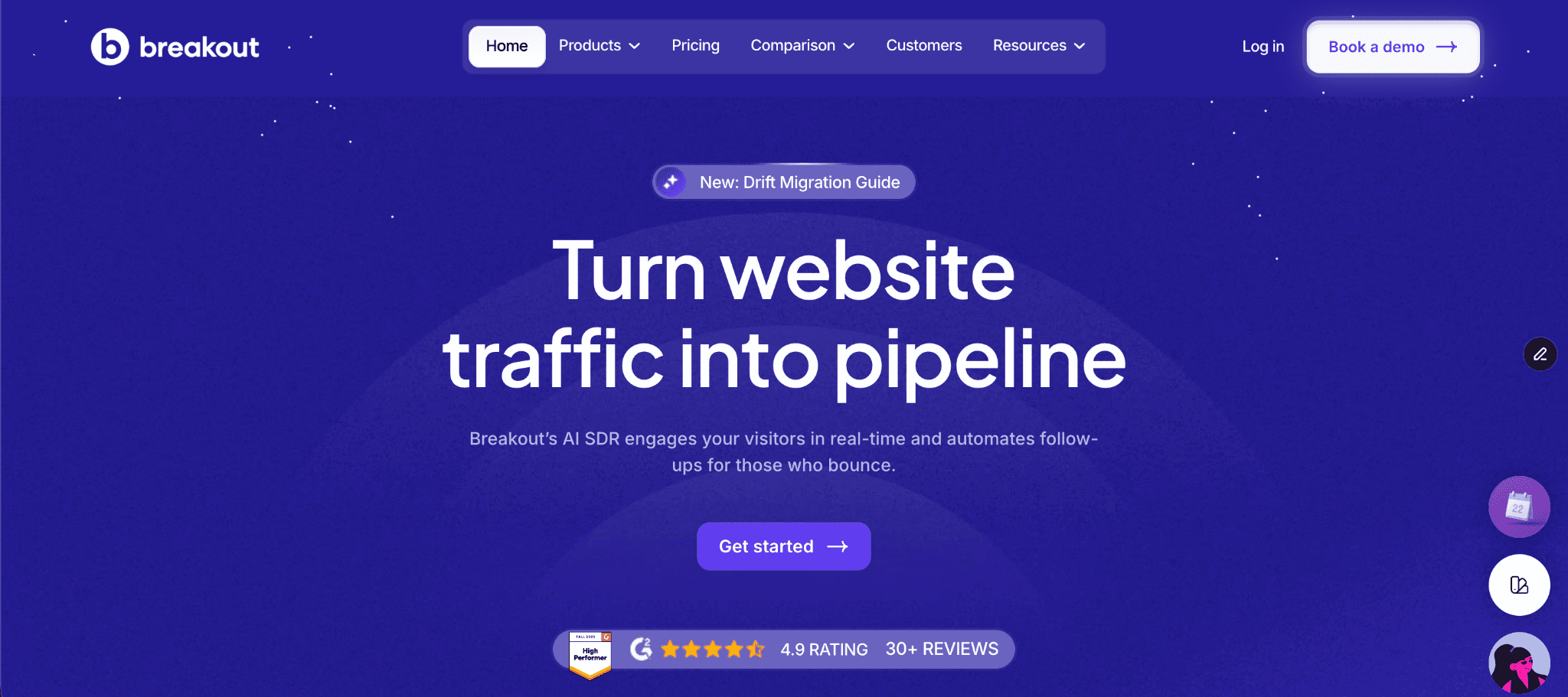
Breakout focuses on converting buyer intent instead of just identifying signals. It engages visitors while they are actively researching, qualifies them instantly, and continues follow-ups after they leave. This removes delays between signal and action, helping you capture demand without relying on manual outreach or SDR bandwidth.
Where It Wins Over Usergems
AI identifies anonymous visitors and maps them to accounts
Builds outbound workflows based on real-time activity
Focuses on in-market buyers, not just job changes
Key Features
Breakout provides a complete AI-led conversion layer for your website:
Instant De-anonymization: The platform identifies the companies and specific individuals visiting your site so you can treat every high-value prospect with a personalized experience.
AI SDR Conversations: Our AI agents can handle the entire qualification process by asking the right questions and answering prospect inquiries in real time without human help.
Real-Time Qualification: Breakout uses your specific criteria to determine if a visitor is a good fit for your product before passing them to a rep. This prevents your sales team from wasting their valuable time on irrelevant leads.
Instant Meeting Booking: The AI SDR can check your team's calendars and book meetings directly within the chat interface, the moment a prospect is qualified as a lead.
AI Follow-up Emails: If a visitor leaves before a meeting is booked, the platform can send personalized follow-up emails to keep the conversation moving forward automatically.
Breakout Limitations
The platform requires a consistent flow of website traffic to maximize the effectiveness of the AI SDR agents during the business day.
Large enterprise teams might need additional time to configure complex routing rules for their specific global sales territories and specialized account owners.
You must spend time training the AI on your specific product documentation to ensure the conversations reflect your unique brand voice correctly.
Choosing The Right Usergems Alternative For Your Motion
UserGems is strong for identifying opportunities, but identification alone does not drive pipeline or meetings. The market is shifting toward tools that act on buyer intent in real time instead of relying only on alerts.
If your goal is signal visibility, tools like Common Room and Warmly help you understand buyer behavior, but they do not convert it.
If you want signal and outbound execution, Apollo and Clay help you act on data, but results still depend on outreach timing.
If your focus is predictive intent, 6sense helps identify accounts, but it does not engage them in real time.
If you want to act on intent as it happens, Breakout identifies, engages, qualifies, and follows up automatically during and after the visit.
Signals do not create pipelines. Execution does. Click here to schedule your demo with Breakout.
FAQs
Q. What are the best UserGems alternatives in 2026?
Breakout, Common Room, Apollo, Clay, 6sense, Warmly, and Demandbase are strong alternatives that help you manage your buyer signals and build a pipeline. Choose a tool based on whether you need better data visibility for your team or a more automated conversion process. Breakout is particularly effective because it uses AI to engage with your website visitors and book meetings without any manual sales intervention.
Q. What does UserGems do?
UserGems tracks job changes for your previous customers and alerts your sales team when those people move to new companies or organizations. It provides a way for sellers to find warm leads within their existing network of people who have already used your products.
Q. What is better than UserGems for pipeline generation?
Breakout is a strong alternative because it acts on buyer intent in real time rather than just providing alerts for your sales team. Our AI SDRs engage with visitors on your website to qualify them and book meetings immediately without waiting for a human rep.
Q. Are buyer signals enough to generate a pipeline?
No, signals are simply a notification that someone might be interested in your product, but they require timely execution to convert into meetings. Your team must have a process for following up with every alert or an automated system that handles the engagement for them. Without a fast way to act on intent, most of the buyer signals you collect will never turn into actual revenue.
Q. Should I use signal tools or AI SDR tools?
Signal tools like UserGems or 6sense are great for identifying potential opportunities, while AI SDR tools like Breakout are designed to convert them. You often need both types of software to build a complete revenue engine that finds new prospects and turns them into customers. Most modern sales teams are now prioritizing AI SDR tools to handle the high-volume tasks of qualifying leads and booking meetings.