All Blogs
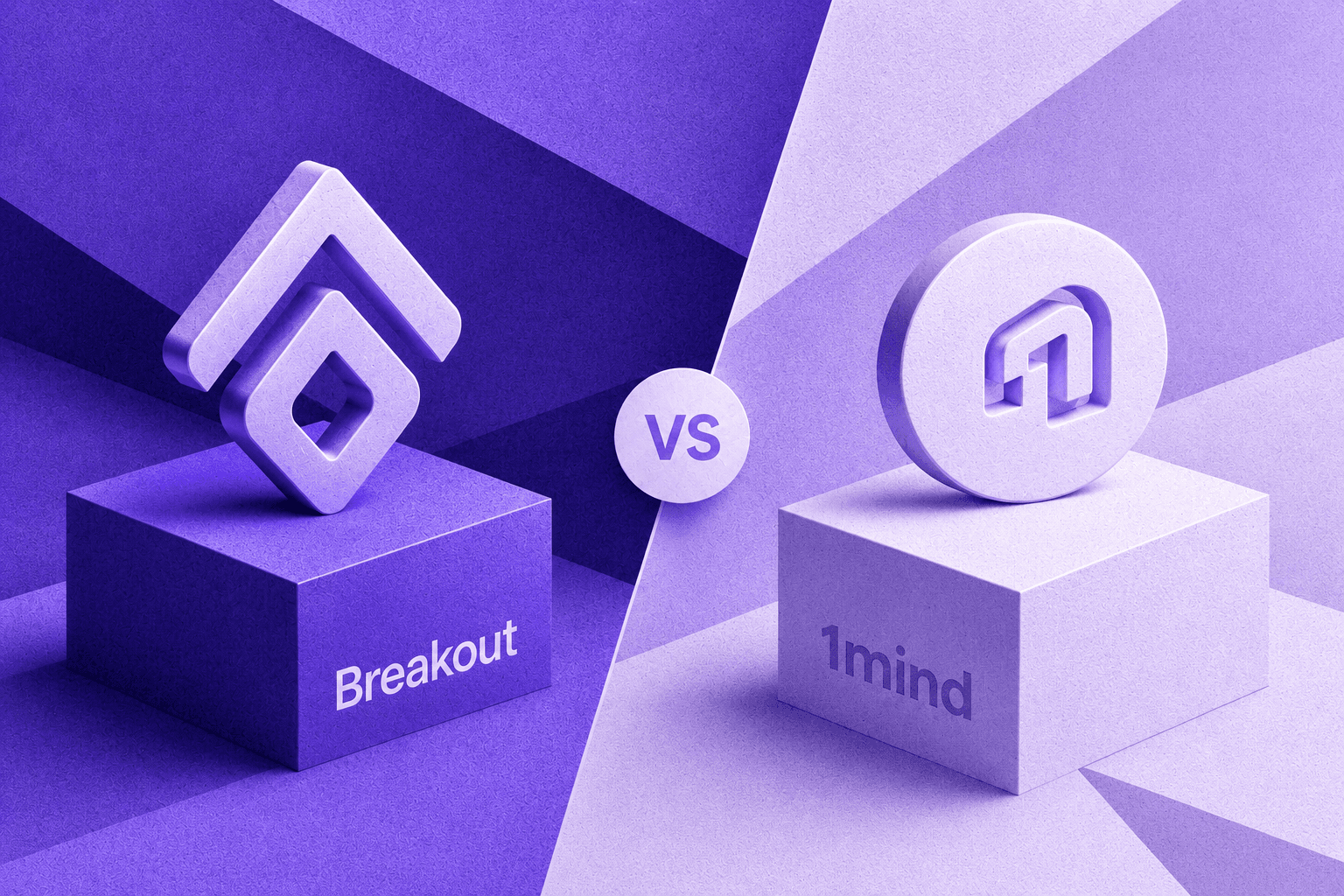
A plain-English look at Breakout and 1mind so you can see which one fits better.

Evan Marshall
Senior AI Growth Strategist
Published On
If you're on Drift right now, you've probably seen the notice.
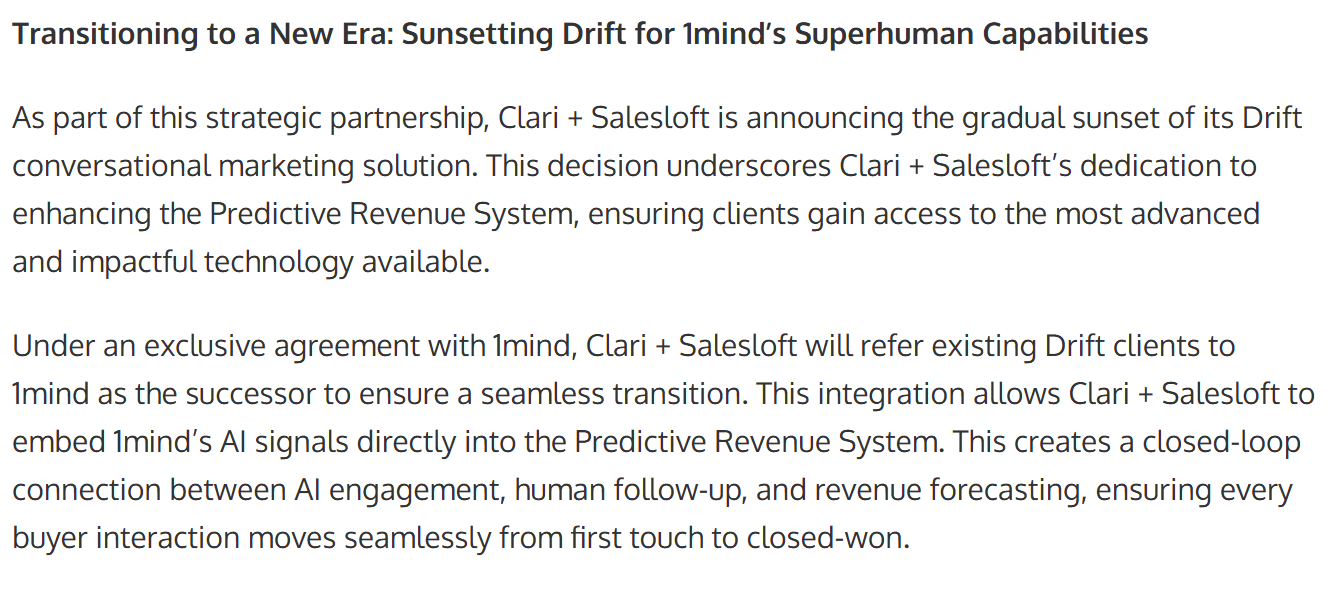
Salesloft has sunset Drift — one of the tools that effectively invented conversational marketing — and named 1mind as its exclusive AI successor.
But before you add this new tool to your tech stack, it's worth asking what you actually used Drift for and whether 1mind is genuinely the right replacement, or just the convenient one.
Why? Because 1mind and Drift are not the same product. Drift was a conversation tool. 1mind is a photorealistic AI avatar designed to run your entire sales motion from first website visit to closed deal — qualify leads, run demos, handle objections, onboard customers — without a human involved unless the deal demands it.
That's a significant upgrade in ambition. It's also a significant increase in complexity, cost, and a bet on buyer behaviour that the data doesn't fully support yet.
Breakout is the other option on the table. If what you valued about Drift was inbound conversion — getting a qualified conversation started before a visitor left your site — Breakout is the more direct replacement for that specific job.
This article is about what you're actually choosing between.
What happened to Drift
Drift pioneered conversational marketing. The idea was to engage website visitors in real time before they fill out a form and disappear. Genuinely pathbreaking when it launched, Drift helped thousands of B2B companies build their inbound motion.
Salesloft acquired Drift in 2023. In March 2026, they announced it was being sunset and named 1mind as the official successor. The framing was generous: Drift changed the industry, 1mind is the next chapter, here's how to migrate.
What that framing doesn't address is that Drift and 1mind are solving meaningfully different problems.
If you used Drift as a routing tool — start the conversation, qualify the lead, get a human on the phone — you are not automatically better served by 1mind. You may be significantly overserved at a significantly higher price, in exchange for a capability you didn't ask for and may not be ready for.
What 1mind actually is
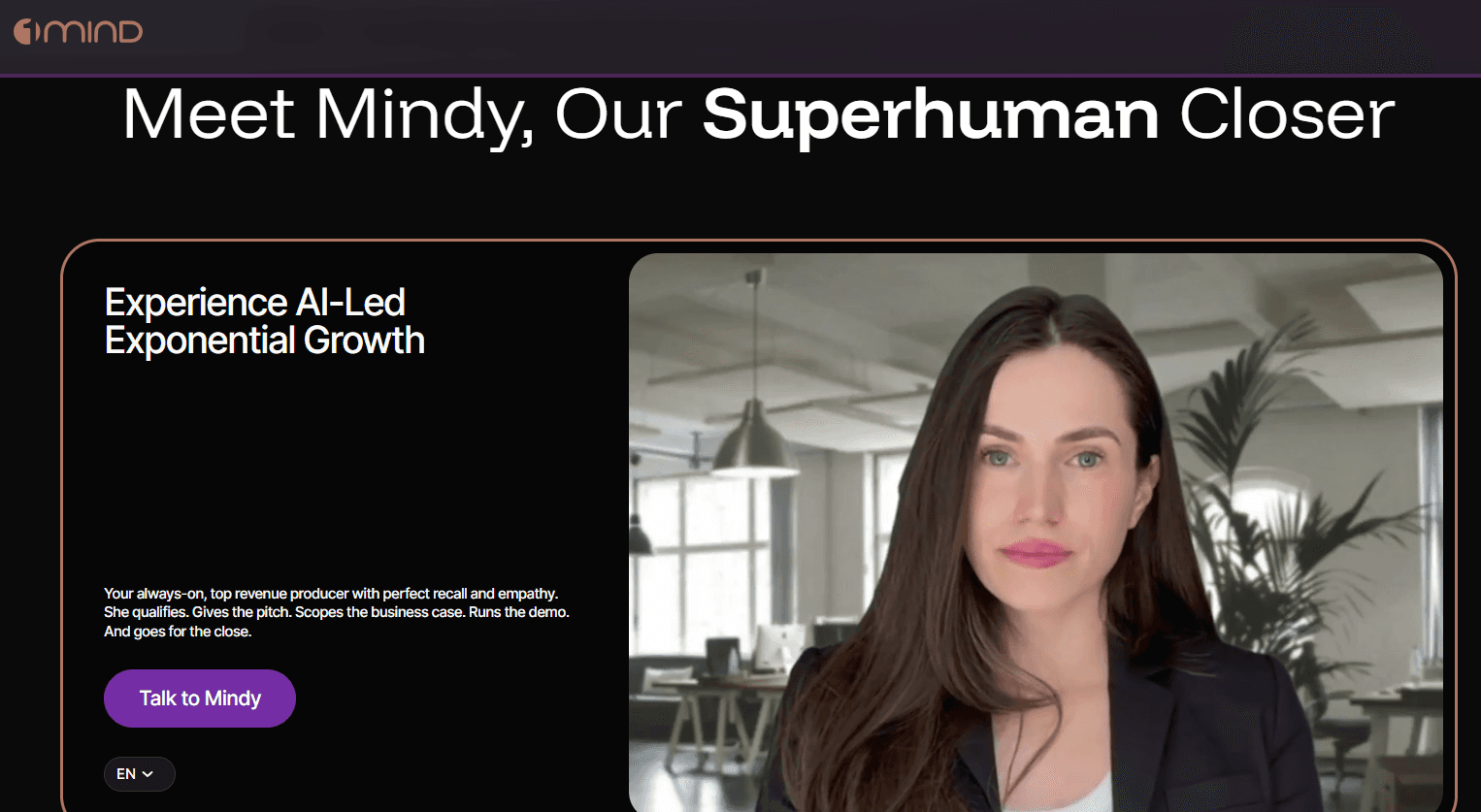
1mind builds what it calls 'Superhumans', i.e., photorealistic AI avatars with a face, a voice, and deep product knowledge. They sit on your website, join video calls, run demos, handle objections, and close deals. The founder, Amanda Kahlow, previously founded 6sense. The technology is serious. The funding is real, with a $30 million Series A led by Battery Ventures. The platform has already acquired well-known customers, including HubSpot, Nutanix, and ZoomInfo.
The ambition is to replace the SDR and AE function for the top of the funnel entirely with a Superhuman that never sleeps, never misses a lead, never loses context, and scales to unlimited simultaneous conversations.
Pricing
1mind starts at approximately $100,000+/year before configuration. That number is what you pay just to use the platform. Features like avatar production, persona workshops, and content ingestion are additional costs. Implementation typically takes 1–2 months. CEO Amanda Kahlow confirmed in a November 2025 TechCrunch interview that all customer contracts are six-figure and annual. There is no self-serve entry point, no trial, and no published rate card.
What Breakout actually is
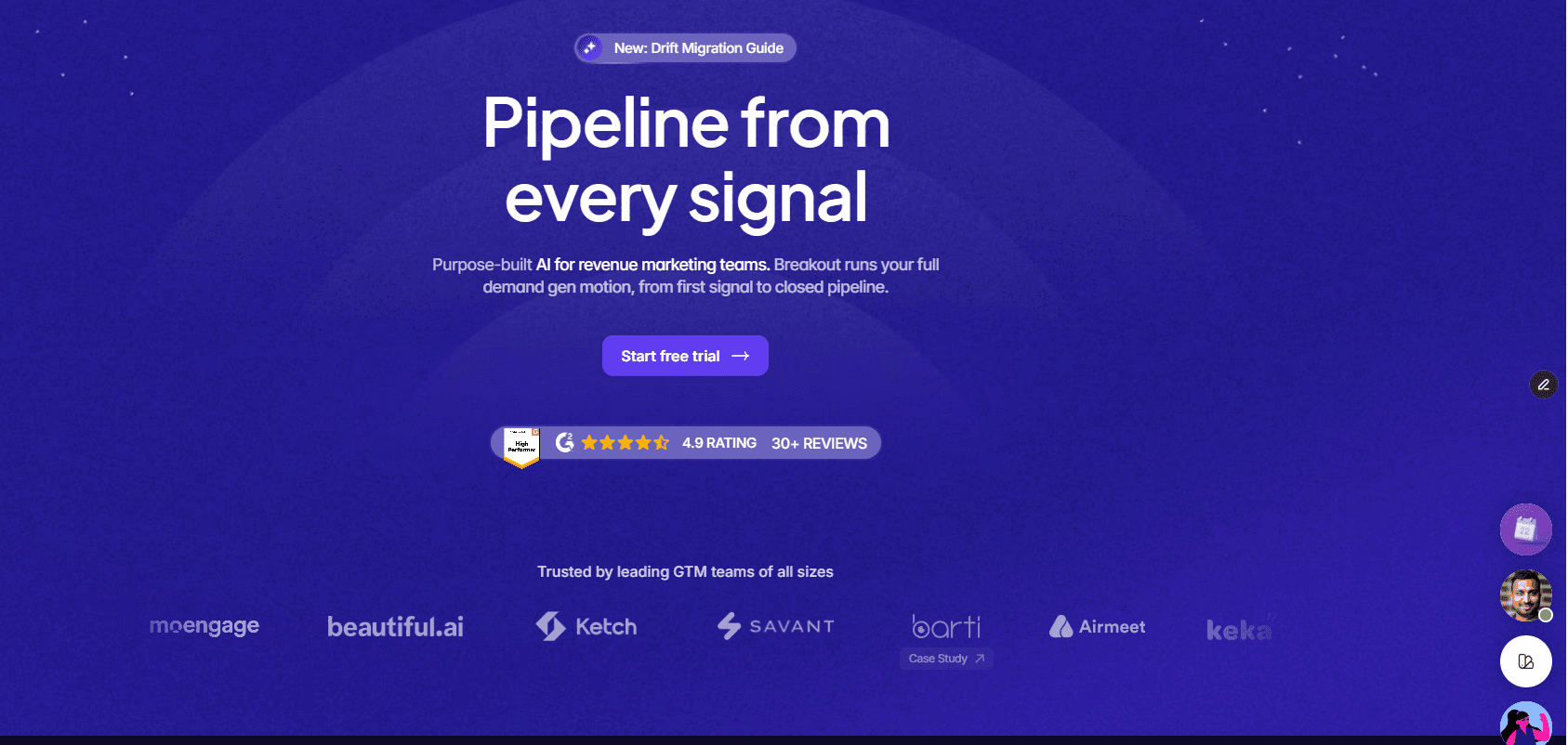
Breakout is an inbound AI SDR. When a high-intent visitor lands on your site after completing a product tour, spending time on your pricing page, or returning for the third visit this week, Breakout engages them in a real conversation, qualifies them against your ICP, and books a meeting directly into a rep's calendar.
The human rep takes the meeting. Breakout creates it.
Breakout is not trying to replace the sales conversation with an automaton. It's trying to ensure the sales conversation happens quickly, while intent is live, and before the visitor closes the tab and opens a competitor's site.
Pricing
Growth plan at $2,500/month. No six-figure commitment, no multi-month implementation, and no avatar production workshops.
The same problem. Two very different solutions.
Both tools exist because of the same underlying reality: 78% of B2B buyers purchase from the first vendor to respond, and the average B2B lead response time is 47 hours.
The gap between when a buyer is interested and when a human talks to them is where the pipeline dies. Both tools are trying to close it. Where they diverge is in what they think should happen inside that gap.
1mind's answer: Put a photorealistic AI in the gap that can do everything a human SDR and AE can do — qualify, demo, handle objections, close — indefinitely, at scale, without the human ever needing to be involved unless needed.
Breakout's answer: Put an AI in the gap that qualifies the buyer and gets a human into the conversation as fast as possible, while the intent is still live.
1mind is a replacement model. Breakout is an acceleration model. For Drift users specifically, the question is which model actually matches how you used Drift and how your buyers experienced it.
The Uncanny Valley problem 1mind is still solving
There's a reason Gartner projects that 75% of B2B buyers will prefer sales experiences that prioritise human interaction over AI by 2030.
It's not technophobia. It's the psychological phenomenon known as the 'uncanny valley', where something becomes realistic enough to seem almost human, triggering unease rather than comfort. A cartoon doesn't bother us. A photorealistic avatar that's slightly off does. Academic research confirms the pattern — increasing the human-likeness of an AI agent increases feelings of eeriness, which reduces trust and purchase intention.
For lower-ACV, high-volume, simple-product motions, the avatar probably works. The buyer needs answers, and Mindy gives them exactly that. Done.
For complex enterprise deals where you are looking at six-figure balance sheets, 12-person buying committees, and CFO approval for 79% of purchases, the dynamic is different. The champion going back to their leadership team saying "I had a great conversation with an AI avatar and I think we should buy" is in a harder position than the champion who says "I spoke to their team and they understood our problem."
Amidst all this, what does the buyer want?
61% of B2B buyers prefer a rep-free buying experience while they are doing their research (shorthand for the phase where they're building a shortlist).
81% of buyers already have a preferred vendor before they make first contact. The moment they engage on your site — especially after completing a product tour or spending time on your pricing page — they are not in research mode anymore. They're in evaluation mode, and they usually want to talk to someone.
An AI avatar can simulate that conversation. Whether it can build the trust that underpins an enterprise purchase is the open question 1mind still needs to answer.
Our bet is that the answer, for most B2B teams selling above $15K ACV today, is 'not enough trust'. The right move is to get a qualified human into that conversation fast while the intent is live, with enough context to make the first exchange worth having.
The trade-offs; side by side
Breakout | 1mind | |
What it does | AI qualifies, human closes | AI qualifies and closes |
Replaces | The response time gap | The SDR and AE function |
Best for | Teams accelerating human sales | Teams replacing human SDRs at scale |
Deal complexity | All deal sizes | Works best at lower ACV today |
Buyer experience | Conversation → human rep → meeting | Conversation → avatar → close or handoff |
Pricing | $2,500/month | $100,000+/year before configuration |
Time to live | Fast | 1–2 month implementation |
The bet | Human + AI beats AI alone, today | AI alone is good enough, now and increasingly |
Drift comparison | Replaces what Drift did, faster | Replaces Drift and the humans behind it |
Choose Breakout if:
You used Drift as a conversation-starter and handoff tool. Your deals require a human relationship to close. Your ACV is above $15,000. Your buying committee has more than two people. You want to close the response time gap without a six-figure annual commitment and a two-month implementation.
Choose 1mind if:
You have high inbound volume and genuinely not enough humans to cover it. Your product is relatively simple to demo. Your deals are lower ACV and typically single decision-maker. You're ready to commit $100,000+ to find out whether your buyers will trust an avatar with a meaningful purchasing decision.
The honest answer for most Drift users:
You used Drift because you wanted to start conversations with high-intent buyers before they left your site. That's Breakout's exact job description. At $2,500/month versus $100,000+/year, the question of which one to try first answers itself.
The bottom line
1mind is a serious company making a serious bet on where B2B sales is going. The technology is impressive. The Salesloft partnership is real distribution. The founder's track record at 6sense is genuinely credentialed.
But the Drift migration path it's been handed is not automatically a match. Drift users who want a smarter, faster version of what Drift did — engage buyers, start the conversation, get a human involved while intent is live — are not the same buyers as enterprise sales organisations ready to replace their SDR team with a $100,000 photorealistic avatar.
Gartner says the market is heading toward more human interaction in sales, not less. The uncanny valley is a real and researched psychological phenomenon. Enterprise buyers staking professional credibility on a recommendation still want to tell their CFO they spoke to a human.
Breakout doesn't replace that trust. It accelerates the moment it forms.
The conversation still needs a human. Breakout gets there faster →
Frequently Asked Questions
Is 1mind replacing Drift?
Salesloft officially named 1mind the exclusive AI successor to Drift in March 2026. However, the two products are not equivalent. Drift was a conversation and routing tool. 1mind is a photorealistic AI Superhuman designed to run the full sales motion from qualification through close. Drift users evaluating 1mind as a direct replacement should assess whether that expanded scope matches what they actually need.
How much does 1mind cost?
1mind starts at approximately $100,000+/year, with all contracts annual and enterprise-structured. That figure is the platform fee before avatar production, persona workshops, and content ingestion. There is no self-serve tier, no trial, and no published rate card. Implementation typically takes 1–2 months.
How much does Breakout cost?
Breakout's Growth plan starts at $2,500/month, covering the full inbound AI SDR workflow — qualification, routing, and calendar booking.
What's the difference between Breakout and 1mind?
Both tools address the gap between buyer intent and the first sales conversation. Breakout qualifies inbound visitors and books meetings for human reps — the human closes. 1mind deploys photorealistic AI Superhumans that run the full sales motion, with humans involved only for complex deal escalations. Breakout accelerates human sales. 1mind replaces it.
Do B2B buyers trust AI avatars for sales conversations?
The research is cautious. Gartner projects 75% of B2B buyers will prefer human-led sales experiences by 2030. Academic research on the uncanny valley confirms that highly realistic AI agents can trigger unease and reduce trust. For lower-ACV, simple products, the avatar model works. For complex enterprise deals, the jury is still out.
What should Drift users do right now?
Evaluate what you actually used Drift for. If it was for routing and qualification, then Breakout is the more direct functional replacement at a fraction of the price. If you want to replace your inbound SDR function entirely with an AI that never sleeps and scales infinitely, 1mind is the more ambitious option, with a price tag and implementation timeline to match.