


Calendly changed the way businesses schedule meetings. Today, the platform serves more than 20 million users across 230 countries, making it one of the most widely adopted scheduling tools available.
Sharing a booking link is now easier than coordinating calendars over endless email chains. Yet one challenge remains unchanged. Someone still has to decide they want to meet with you before Calendly becomes useful.
That gap matters more than ever. Buyers now spend weeks researching vendors independently before speaking with sales. Many visit pricing pages, compare competitors, and consume content without ever clicking a booking link.
Scheduling software manages availability after interest exists, but it does not create conversations, qualify buyers, or generate pipeline. Teams increasingly need platforms that influence buying decisions before scheduling enters the picture.
In this guide, you will compare the best Calendly alternatives for teams in 2026. You will learn where each platform excels and which workflows it supports. You will also discover which solution best fits your revenue strategy, whether your priority is scheduling, routing, qualification, or creating more qualified meetings.
Quick Comparison
Here's a quick comparison of the best Calendly alternatives for different use cases:
Platform | Best For | Core Focus |
Breakout | Pipeline Generation | Inbound AI SDR orchestration |
Chili Piper | Revenue Routing | Advanced form routing and inbound qualification |
HubSpot Meetings | HubSpot Users | Native CRM scheduling and marketing workflows |
Cal.com | Open-Source Alternative | White-label developer customization and self-hosting |
Microsoft Bookings | Microsoft 365 Users | Internal team coordination within the Office ecosystem |
Doodle | Group Scheduling | Multi-person availability voting and event planning |
Why Calendly Falls Short For Teams
Calendly remains one of the easiest scheduling platforms to adopt, but modern revenue teams often need much more than calendar automation. Buyers rarely move directly from discovering your company to booking a meeting.
They compare solutions, evaluate pricing, involve multiple stakeholders, and leave your website long before scheduling enters the conversation. Managing calendars alone cannot solve those challenges.
Here are the biggest reasons teams replace Calendly:
1. Scheduling Starts Too Late
Calendly only becomes valuable after someone decides to schedule time with your team. It cannot engage anonymous visitors, answer buying questions, or encourage hesitant prospects to begin conversations before leaving your website. By the time someone opens your booking page, much of the buying journey has already happened.
2. No Lead Qualification
Every meeting request looks identical until your sales team reviews it manually. Calendly does not evaluate visitor intent, company fit, buying stage, or qualification criteria before someone books time. This often leaves sales representatives spending valuable hours on meetings that never become meaningful opportunities.
3. No Pipeline Creation
Calendly helps organize meetings once demand already exists, but it does not generate that demand itself. Marketing campaigns, outbound prospecting, paid acquisition, and SDR outreach still carry the responsibility of creating opportunities that eventually reach your scheduling page.
4. Limited Revenue Automation
Scheduling represents only one step inside a much larger revenue process. Teams often purchase additional software for visitor identification, qualification, routing, enrichment, CRM automation, and outbound engagement because Calendly focuses exclusively on coordinating calendars rather than accelerating the pipeline.
6 Best Calendly Alternatives Ranked
Not every Calendly alternative solves the same problem. Some improve scheduling, while others strengthen routing, CRM automation, or buyer qualification.
A new category of platforms goes one step further by creating qualified meetings before scheduling ever begins. Here are the strongest Calendly alternatives for modern revenue teams:
1. Breakout
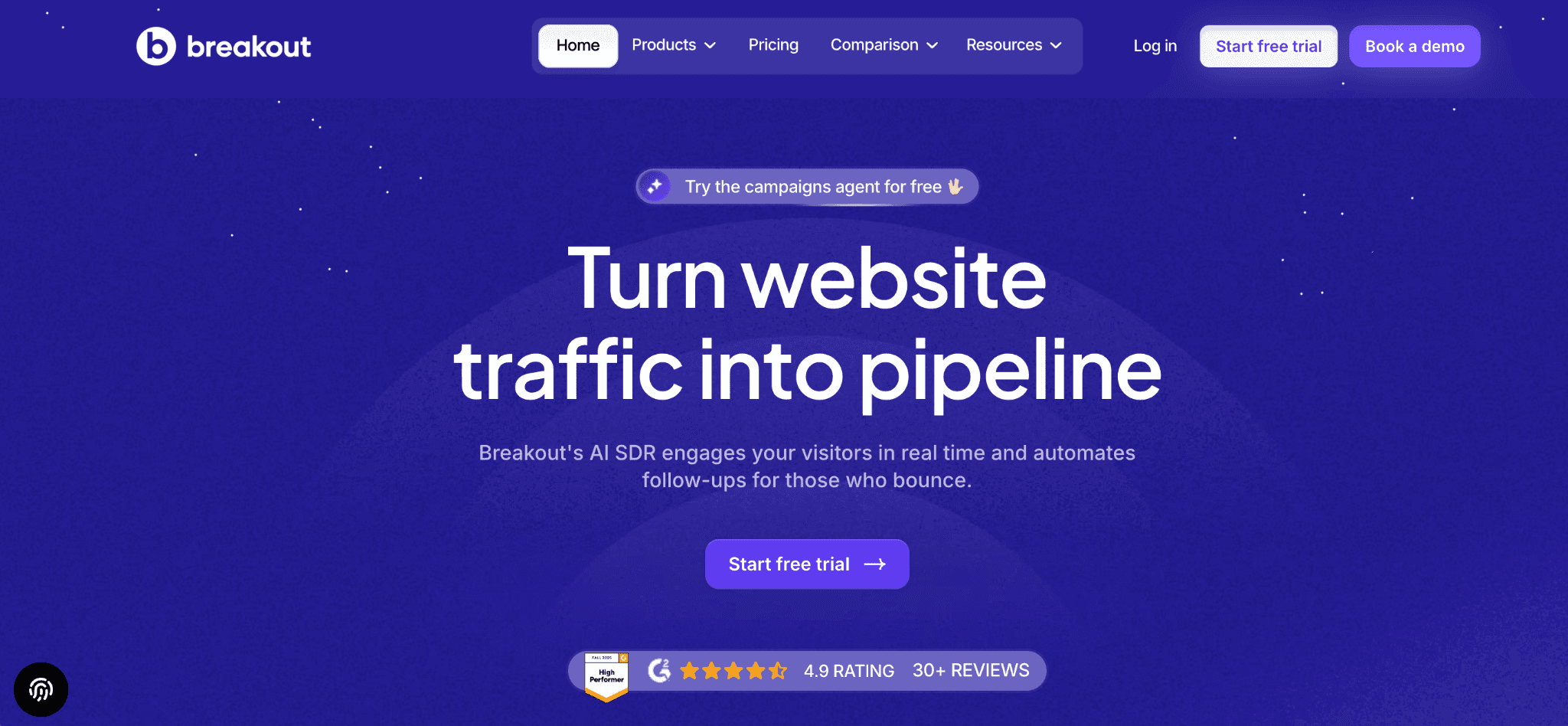
Calendly makes scheduling simple after someone decides to book a meeting. Breakout addresses the much larger challenge by creating those booking opportunities in the first place.
As an inbound AI SDR, Breakout identifies high-intent website visitors, starts contextual conversations, qualifies buyers against your ICP, and books meetings automatically. Instead of filling calendars with every prospect, it fills them with buyers who are ready to have meaningful sales conversations.
Calendly schedules meetings. Breakout creates them, and here’s what you need to know about it:
1. Works Alongside Calendly
You do not need to replace your existing scheduling workflow to use Breakout. The platform complements Calendly by identifying qualified buyers before they reach your booking page.
Once visitors meet your qualification criteria, Breakout can direct them into your existing scheduling flow, allowing Calendly to continue managing availability while Breakout focuses on generating demand.
2. Books Meetings Automatically
Scheduling links only work when buyers actively look for them. Breakout removes that dependency by engaging visitors while they are already exploring your website.
Instead of waiting for someone to click "Book a Demo," the platform starts relevant conversations, answers product questions, and guides qualified prospects toward scheduling without requiring manual intervention.
3. AI Qualification
Not every visitor deserves immediate attention from your sales team. Breakout evaluates buyers against your ideal customer profile using real-time conversations and behavioral signals.
High-intent prospects move forward quickly, while lower-fit visitors receive appropriate guidance without consuming valuable SDR time. Your team spends more time closing opportunities instead of filtering them.
4. CRM Integrations
Breakout fits naturally into your existing revenue stack. Qualified conversations, meeting outcomes, buyer information, and engagement history automatically synchronize with your CRM, ensuring every sales representative receives complete context before their first conversation.
Your existing workflows remain intact while qualification becomes significantly more intelligent.
5. Apollo Integration
Breakout also works alongside Apollo to strengthen your outbound strategy. After qualifying inbound visitors, the platform can enrich buyer information and support personalized outbound sequences through Apollo.
Instead of treating inbound and outbound as separate motions, your team creates one connected revenue workflow driven by real buying intent.
6. Inbound-to-Outbound Orchestration
Modern buyers rarely follow a straight purchasing journey. Someone may visit your pricing page today, read customer stories tomorrow, and respond to an outbound email next week.
Breakout connects those touchpoints into one coordinated motion by combining visitor intelligence, AI conversations, meeting booking, CRM synchronization, and outbound engagement. Your revenue team responds to buyer behavior instead of relying on disconnected tools.
Unlike traditional scheduling tools, Breakout focuses on generating qualified pipelines rather than just managing calendars. By engaging website visitors in real-time, it creates buying interest and books meetings automatically, turning your site into an active revenue engine without needing more SDRs.
2. Chili Piper

Chili Piper is built for revenue teams that want to reduce the delay between form submission and sales engagement. Instead of sending prospects into a queue, it routes qualified leads to the right representative instantly and allows them to book meetings immediately. The platform is particularly popular among enterprise sales organizations using Salesforce and complex routing rules to improve speed-to-lead.
Pros
Instant meeting scheduling: Qualified prospects can book meetings immediately after submitting a form, reducing response times and minimizing the risk of losing interested buyers.
Advanced routing capabilities: The platform supports territory management, round-robin assignment, account ownership, and custom routing logic for large revenue teams.
Cons
Dependent on form submissions: Chili Piper only works after visitors submit a form. Anonymous website visitors who leave without converting remain outside its workflow.
Complex implementation: Advanced routing rules require thoughtful configuration and ongoing maintenance, especially for organizations with evolving sales territories and ownership structures.
Verdict: Best for Revenue Routing
Chili Piper excels when your biggest challenge is assigning qualified inbound leads to the correct sales representative quickly. It combines instant scheduling, qualification forms, Salesforce integration, round-robin routing, and calendar automation into one workflow that improves operational efficiency after a lead converts.
If your sales process already generates strong inbound demand, Chili Piper helps ensure those opportunities reach the right people without unnecessary delays.
3. HubSpot Meetings
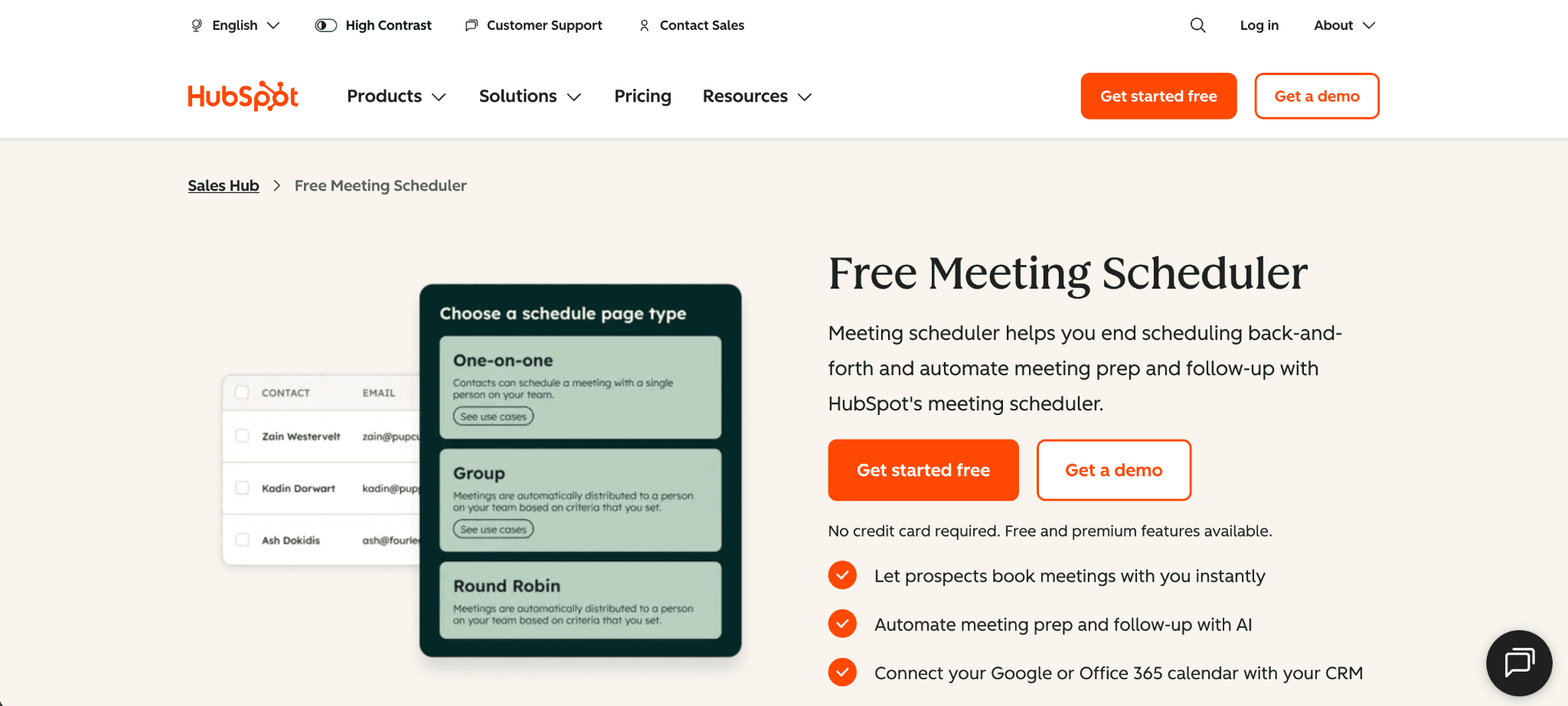
HubSpot Meetings gives businesses a simple scheduling experience that integrates directly with HubSpot CRM. Sales and marketing teams can share booking links, coordinate calendars, and automate meeting workflows without leaving the HubSpot ecosystem.
For organizations already invested in HubSpot, the platform removes the need for separate scheduling software while keeping customer data centralized.
Pros
Native CRM integration: Meeting activity automatically syncs with HubSpot CRM, giving sales teams complete visibility into every booking and customer interaction.
Marketing automation compatibility: Scheduling works alongside HubSpot forms, workflows, email marketing, reporting, and lifecycle automation to support connected customer journeys.
Cons
Best inside the HubSpot ecosystem: Organizations using multiple CRMs or non-HubSpot workflows may not experience the same level of integration and automation.
Limited qualification capabilities: HubSpot Meetings focuses on scheduling efficiency rather than evaluating buyer intent before meetings reach your sales team.
Verdict: Best for HubSpot Users
HubSpot Meetings is an excellent choice if your CRM, marketing automation, and customer data already live inside HubSpot. Native reporting, team scheduling, meeting links, automation, and CRM synchronization simplify operations while reducing the need for additional scheduling software.
Teams looking for one connected HubSpot experience will find it both familiar and easy to manage.
4. Cal.com

Cal.com approaches scheduling differently by giving businesses complete control over their booking infrastructure. As an open-source platform, it allows organizations to self-host, customize workflows, and build scheduling experiences around their own requirements.
It appeals to engineering teams and businesses that value flexibility over managed software.
Pros
Complete customization: Businesses can modify the platform, create custom workflows, and extend scheduling functionality without relying on vendor limitations.
Open-source ownership: Self-hosting gives organizations greater control over infrastructure, security, integrations, and long-term product direction.
Cons
Requires technical resources: Getting the most value from Cal.com often requires engineering support for deployment, customization, and maintenance.
Less turnkey than SaaS alternatives: Companies seeking immediate deployment may find managed scheduling platforms easier to implement and maintain.
Verdict: Best Open-Source Alternative
Cal.com is designed for organizations that want scheduling software they can fully control. Open-source architecture, APIs, workflow automation, white-label capabilities, routing support, and self-hosting make it highly flexible for technical teams.
If customization matters more than simplicity, Cal.com offers capabilities that proprietary scheduling platforms cannot easily match.
5. Microsoft Bookings

Microsoft Bookings helps businesses manage appointments inside the Microsoft ecosystem. It integrates directly with Outlook calendars, Microsoft Teams, and Microsoft 365 applications, making it a natural fit for organizations already relying on Microsoft's productivity suite.
Teams can coordinate appointments without introducing another scheduling platform into their technology stack.
Pros
Deep Microsoft integration: Bookings works naturally with Outlook, Teams, Exchange, and Microsoft 365, reducing friction for existing users.
Easy staff scheduling: Shared calendars and centralized availability simplify appointment management across customer-facing teams.
Cons
Limited advanced routing: The platform focuses on appointment management rather than sophisticated qualification or sales routing capabilities.
Less flexible outside Microsoft: Organizations using Google Workspace or mixed productivity environments may encounter integration limitations.
Verdict: Best for Microsoft 365 Users
Microsoft Bookings is ideal for businesses already operating within Microsoft's ecosystem. Outlook synchronization, Teams meetings, customer reminders, staff scheduling, shared calendars, and Office integration create a familiar scheduling experience without requiring additional software.
It works particularly well for service teams, consultants, and organizations managing internal and external appointments.
6. Doodle

Doodle specializes in coordinating meetings involving multiple participants. Instead of exchanging dozens of emails, organizers create scheduling polls that allow participants to vote on preferred meeting times.
This approach simplifies group scheduling across departments, customers, partners, and distributed teams without requiring everyone to share the same calendar platform.
Pros
Excellent for large groups: Scheduling polls reduces coordination effort when multiple participants need to agree on a meeting time.
Simple user experience: Participants can vote on availability quickly without creating accounts or navigating complicated scheduling workflows.
Cons
Designed for coordination, not sales: Doodle focuses on organizing meetings rather than supporting qualification, routing, or revenue generation.
Limited automation: Advanced CRM integration, buyer qualification, and revenue workflows are outside the platform's primary focus.
Verdict: Best for Group Scheduling
Doodle remains one of the strongest options for coordinating meetings involving multiple stakeholders. Poll scheduling, availability voting, calendar synchronization, event planning, and team coordination remove the friction associated with finding mutually convenient meeting times.
Organizations managing workshops, board meetings, customer sessions, or cross-functional planning often benefit most from its collaborative scheduling model.
Which Is the Right Calendly Alternative For You?
Calendly remains one of the simplest scheduling platforms available, but scheduling represents only the final step of your buyer journey. Before someone books time with your team, they must discover your product, evaluate alternatives, build internal consensus, and decide you are worth speaking with.
Calendar automation improves operations, but it cannot create demand or influence those earlier buying decisions. The right alternative depends on the problem you want to solve. If your team already generates plenty of qualified inbound leads, a scheduling or routing platform may be enough.
If your biggest challenge is filling sales calendars with qualified buyers instead of simply managing availability, you need a platform that works before scheduling begins. Breakout closes that gap by engaging visitors in real time, qualifying them against your ICP, and booking meetings automatically while they are still evaluating your product.
Don’t wait for buyers to find your booking link. See how Breakout turns existing website traffic into qualified meetings without adding SDR headcount. Start your free trial today.
FAQs
Q. What is the best alternative to Calendly?
The best alternative depends on what you want to improve. Breakout is the strongest choice if your priority is generating more qualified meetings from existing website traffic. Chili Piper is better for revenue routing, while HubSpot Meetings and Cal.com suit organizations looking for scheduling flexibility and CRM integration.
Q. Why do companies switch from Calendly?
Many companies outgrow basic scheduling because booking meetings solves only one part of the sales process. Teams eventually need buyer qualification, lead routing, CRM automation, visitor engagement, and pipeline generation before prospects ever reach a scheduling page.
Q. Is there a free Calendly alternative?
Yes. Several platforms offer free or entry-level plans. Some provide an open-source scheduling option, while others include scheduling within their CRM. Breakout allows teams to get started without a significant upfront investment.
Q. What is better than Calendly for sales teams?
Sales teams often need more than calendar management. Breakout helps generate qualified meetings by identifying buying intent, engaging visitors automatically, and qualifying prospects before scheduling. Chili Piper is another strong choice for organizations prioritizing routing, territory management, and instant scheduling after form submissions.
Q. Does Calendly qualify leads?
No. Calendly schedules meetings after someone chooses an available time slot, but it does not determine whether that person matches your ideal customer profile or purchasing intent. Sales representatives must still review and qualify every meeting request before deciding where to invest their time.
Q. How is Breakout different from Calendly?
Calendly manages calendars after buyers decide they want to meet. Breakout influences that decision much earlier by identifying high-intent visitors, starting AI-led conversations, qualifying prospects automatically, and booking meetings while buyers are still actively researching your product. Instead of simply organizing meetings, Breakout helps create them.