
All Blogs
Conversica starts at ~$2,999/month. Compare 7 AI SDR alternatives in September 2026 to find the best fit for pipeline generation and meeting

Evan Marshall
Senior Growth AI Strategist
Published On

AI follow-up has become easier than ever. Generating qualified pipelines has not. Sales teams can automate emails, schedule follow-ups, and keep conversations moving without much manual effort.
Yet many still struggle to turn buying intent into booked meetings. The problem rarely starts after a conversation begins. It starts before sales ever knows a serious buyer has arrived.
Conversica built its reputation by automating email conversations and lead nurturing at scale. That approach helped revenue teams reduce repetitive follow-up work, but modern buying journeys demand more than email automation alone.
Organizations still need additional platforms for visitor identification, qualification, outbound execution, CRM orchestration, and meeting booking. Pricing also adds another layer of complexity.
In this guide, you will learn how Conversica’s pricing works, what contributes to its total cost, and which alternatives offer stronger value in 2026.
You will also compare the leading AI SDR platforms and discover which solution best fits your revenue strategy, whether your priority is outbound automation, inbound pipeline generation, or autonomous meeting booking.
A Summary
Here is a quick overview of how the top Conversica alternatives compare on focus and entry-level pricing:
Platform | Core Focus | Starting Pricing |
Breakout | Inbound AI SDR & Pipeline Generation | Free to start |
Warmly | Intent-based visitor identification | Custom enterprise pricing |
Qualified | Salesforce-native pipeline orchestration | Paid plans require annual contracts |
Intercom | Customer messaging and ticket resolution | Usage-based pricing tiers |
1mind | AI video avatar sales conversations | Custom enterprise quotes |
Apollo.io | B2B database and cold email sequencing | Tiered monthly plans available |
Artisan | Outbound cold outreach automation | Annual enterprise contracts |
What Is Conversica Pricing In 2026?
Conversica follows a custom pricing model instead of publishing transparent subscription plans. That means your total investment depends on your organization’s size, conversation volume, CRM environment, and implementation requirements.
Although the platform positions itself as an enterprise AI assistant, budgeting becomes more difficult because buyers cannot compare plans before speaking with sales.
Independent pricing directories consistently estimate that Conversica starts at approximately $2,999 per month, although your actual investment can increase considerably depending on onboarding requirements, integrations, customization, and ongoing optimization.
Before evaluating alternatives, it helps to understand what contributes to the overall cost.
Here is what buyers should know before requesting a quote:
Starting Price
Conversica does not publicly publish pricing tiers on its website. Multiple third-party sources estimate pricing begins around $2,999 per month, typically under annual contracts rather than monthly subscriptions.
Pricing generally scales according to conversation volume, business size, deployment complexity, and enterprise requirements instead of user seats alone.
Additional Costs
Your subscription rarely represents the entire investment. Enterprise implementation, onboarding, CRM customization, conversation tuning, and ongoing optimization frequently increase total ownership costs.
Organizations with multiple business units or complex sales processes should also account for integration work and internal resources required to deploy the platform successfully.
Hidden Costs
Many revenue teams purchase additional software alongside Conversica because conversation automation addresses only one stage of pipeline creation. Visitor identification platforms, outbound sales engagement tools, LinkedIn prospecting software, dialers, and manual SDR execution often remain essential for generating consistent opportunities.
These operational expenses can significantly increase your total go-to-market technology budget beyond the initial subscription.
Is Conversica’s Pricing Worth It?
Conversica automates lead nurturing, but conversation automation alone doesn’t equate to a qualified pipeline. Because teams often rely on separate tools and manual effort to identify, qualify, and book meetings, costs and complexity rise.
Revenue teams now prioritize AI that autonomously identifies and qualifies buyers, shifting focus from simple email automation to direct pipeline generation.
7 Conversica Alternatives Teams Should Invest In 2026
Conversica remains a capable platform for AI-led lead nurturing, but it is no longer the only option for revenue teams exploring AI SDR software.
Some alternatives focus on outbound automation, while others prioritize visitor identification, conversational engagement, or inbound pipeline generation.
The right choice depends on where your revenue process slows down and which activities you want AI to automate. Here are the strongest Conversica alternatives available today:
1. Breakout
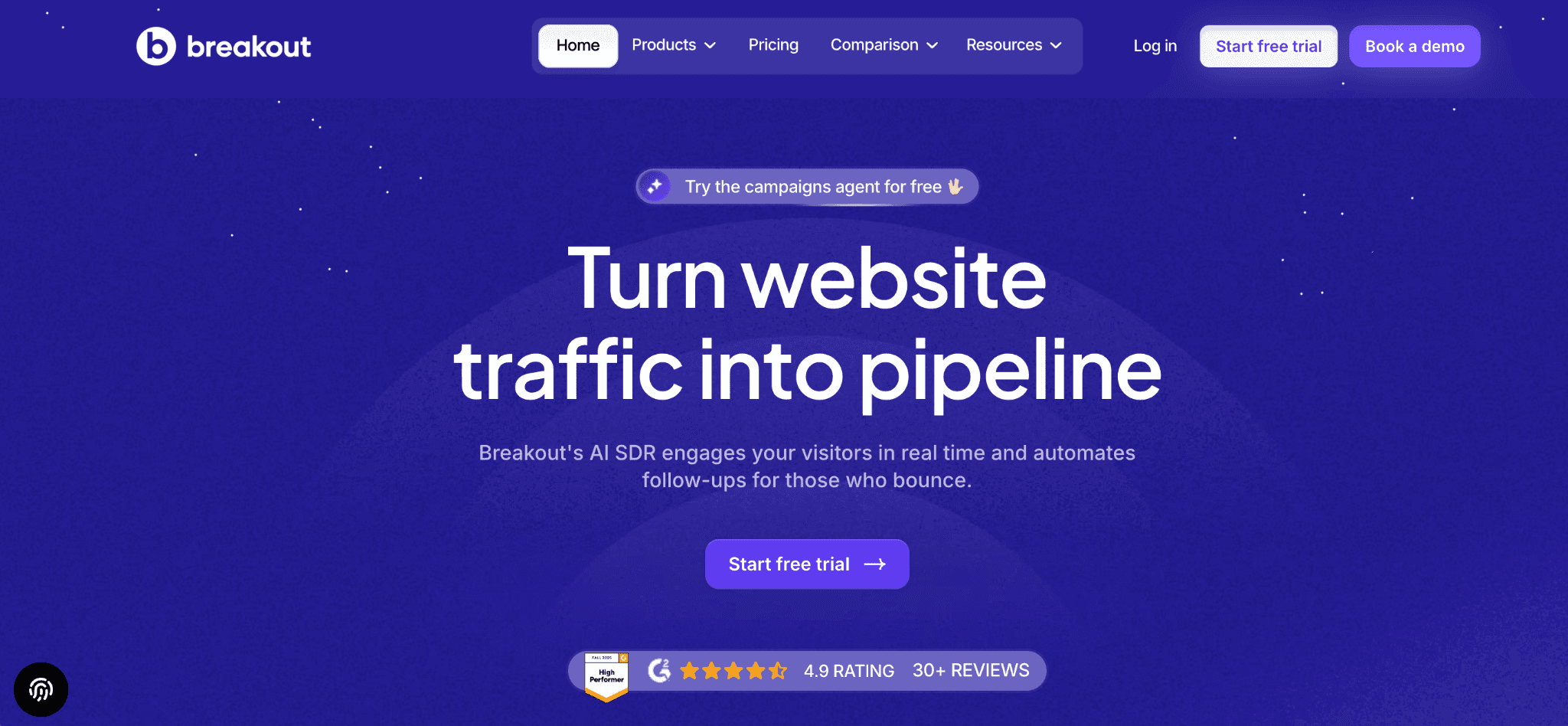
Conversica automates conversations. Breakout automates pipeline. Instead of waiting for leads to enter nurture sequences, Breakout identifies high-intent website visitors, starts contextual AI conversations, qualifies buyers against your ICP, and books meetings automatically.
It also identifies anonymous visitors, synchronizes with your CRM, works alongside Apollo, and coordinates inbound and outbound motions through specialized AI agents. Your team spends less time chasing interest and more time closing qualified opportunities.
Core Capabilities
AI SDR: Acts as an always-on inbound SDR that engages buyers while they actively evaluate your website.
Website conversion: Converts anonymous website traffic into qualified sales opportunities through contextual conversations instead of static forms.
Visitor identification: Uses multiple data providers to identify companies and buyers before conversations begin.
AI qualification: Qualifies prospects against your ICP using buying behavior, company attributes, and real-time conversations.
Autonomous meeting booking: Books meetings directly on the correct sales representative’s calendar without manual coordination.
CRM synchronization: Automatically updates buyer activity, qualification data, and conversations across your CRM.
Primary Focus
Pipeline generation: Focuses on increasing qualified meetings instead of simply automating conversations.
Speed-to-lead: Engages buyers immediately instead of waiting for SDR follow-up.
Revenue orchestration: Connects website engagement, qualification, routing, CRM updates, and outbound campaigns inside one workflow.
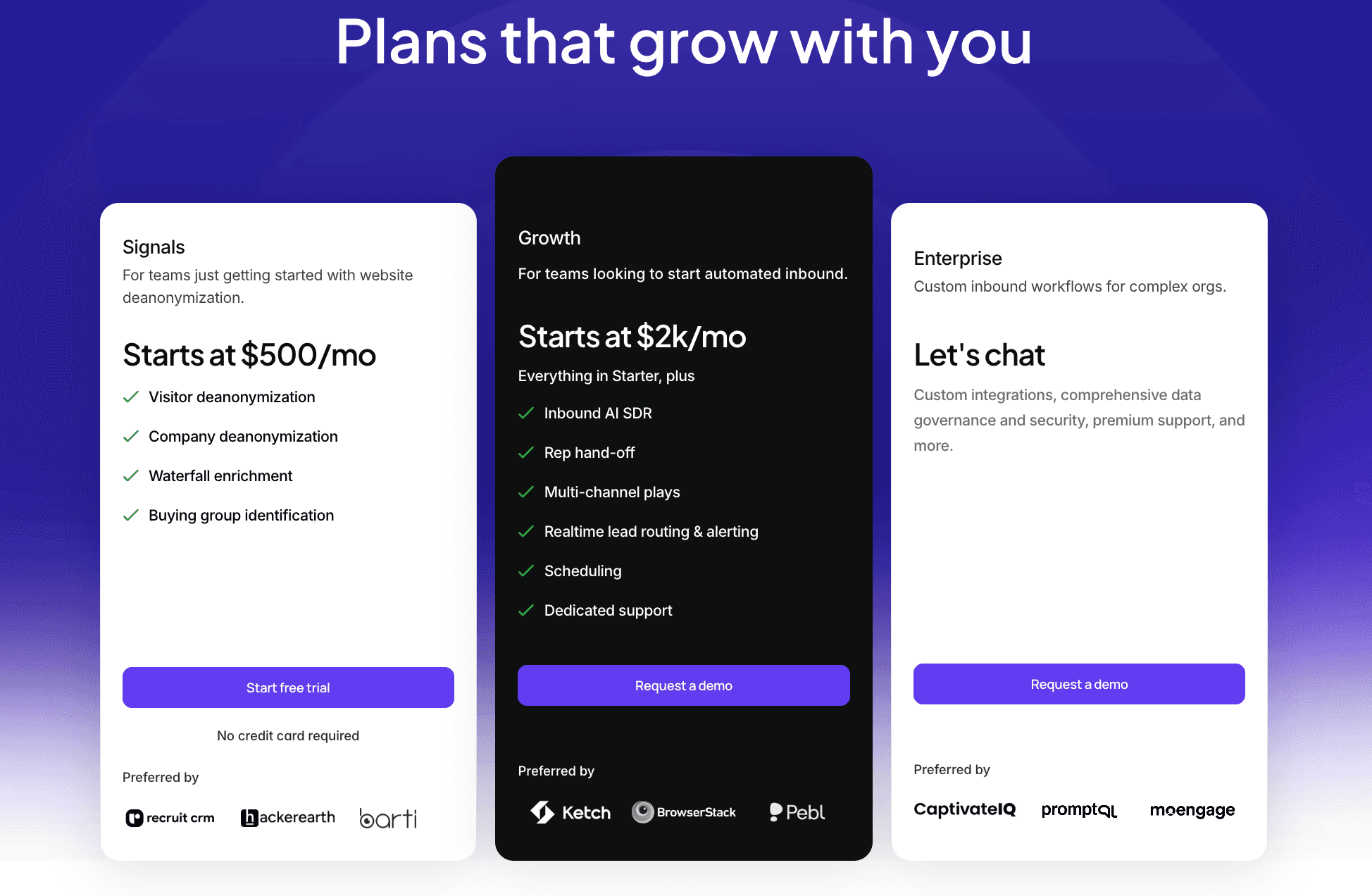
Pricing: Custom pricing and free to start.
2. Warmly
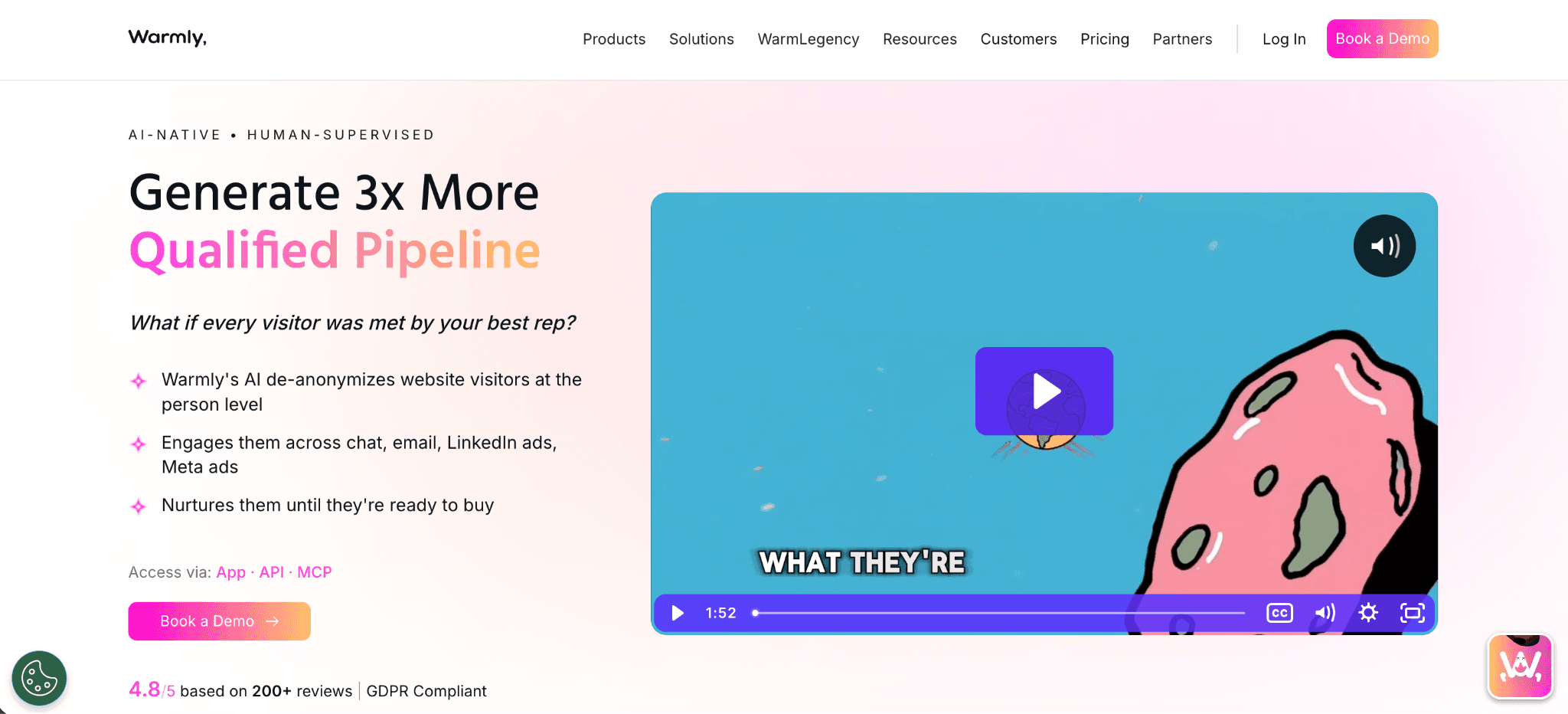
Warmly helps revenue teams identify anonymous website visitors and prioritize outreach based on buying signals. Instead of engaging visitors directly, it surfaces account intelligence, enriches contact information, and alerts sales teams when high-value companies show buying intent.
Organizations looking to improve outbound timing often choose Warmly to complement existing sales engagement platforms rather than replace them.
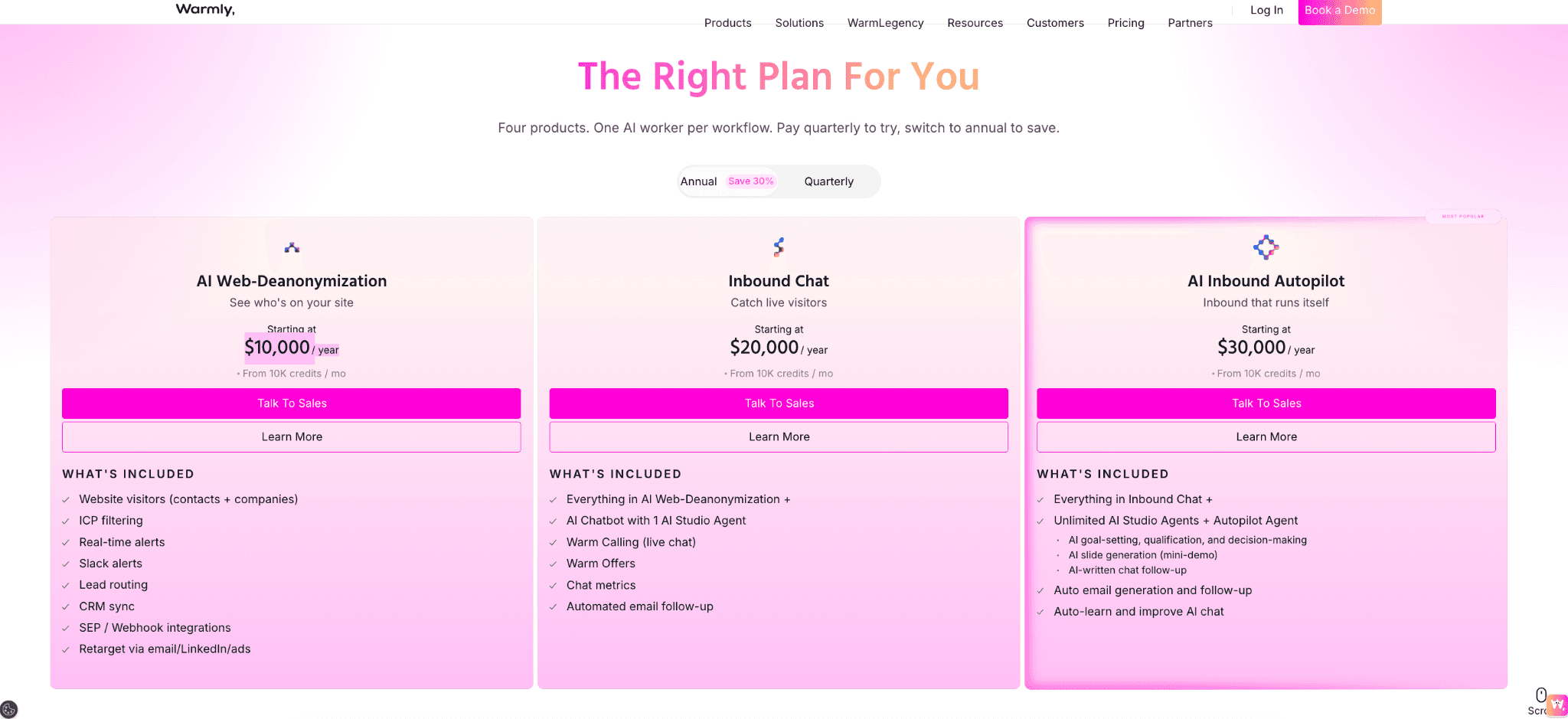
Pricing: Custom pricing. Starts from $10,000/ year
3. Qualified
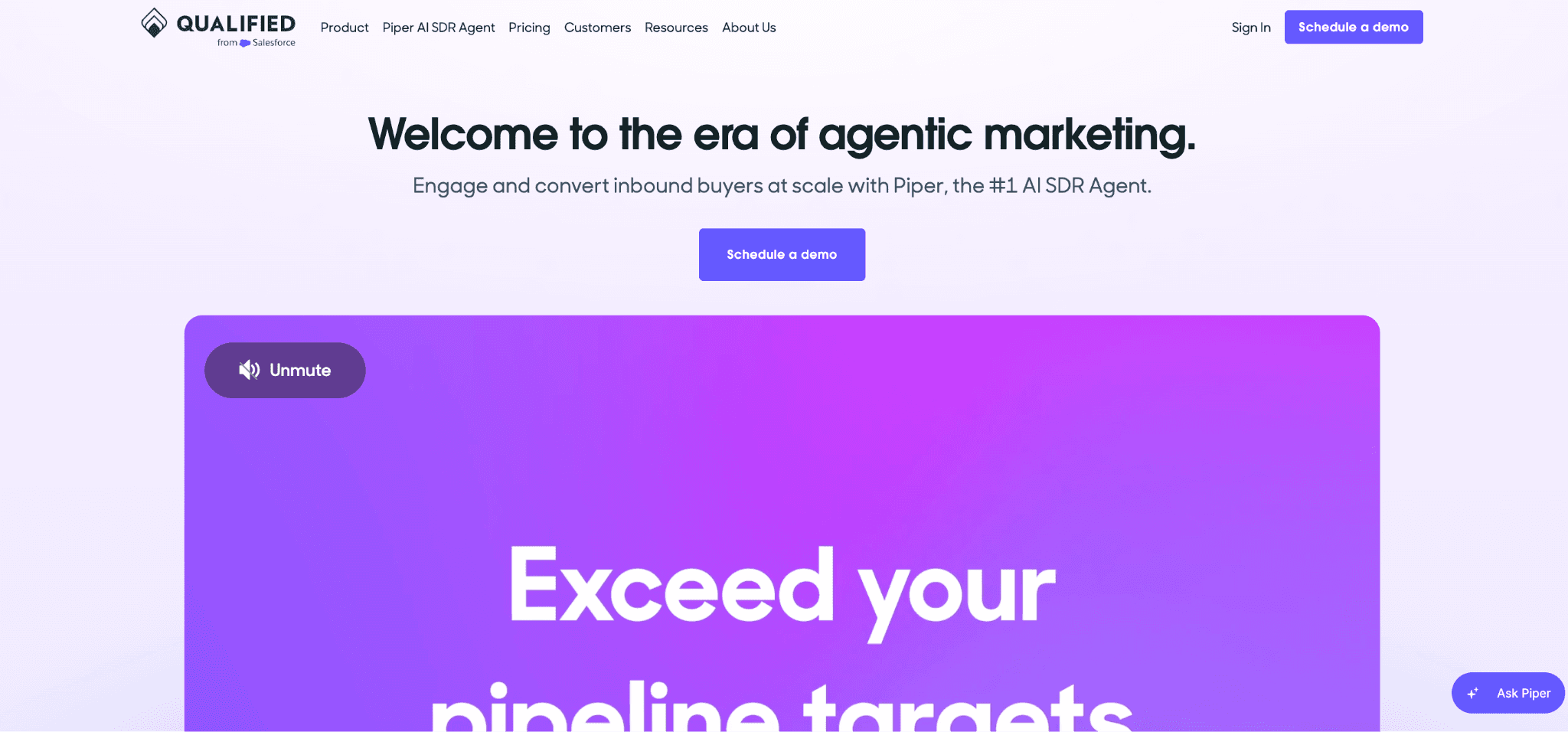
Qualified is a conversational marketing platform built primarily for Salesforce organizations. It enables businesses to engage website visitors through live chat and AI-powered conversations while routing qualified opportunities to sales teams.
The platform performs well inside Salesforce environments but still depends on SDR involvement for many qualification and meeting booking workflows.
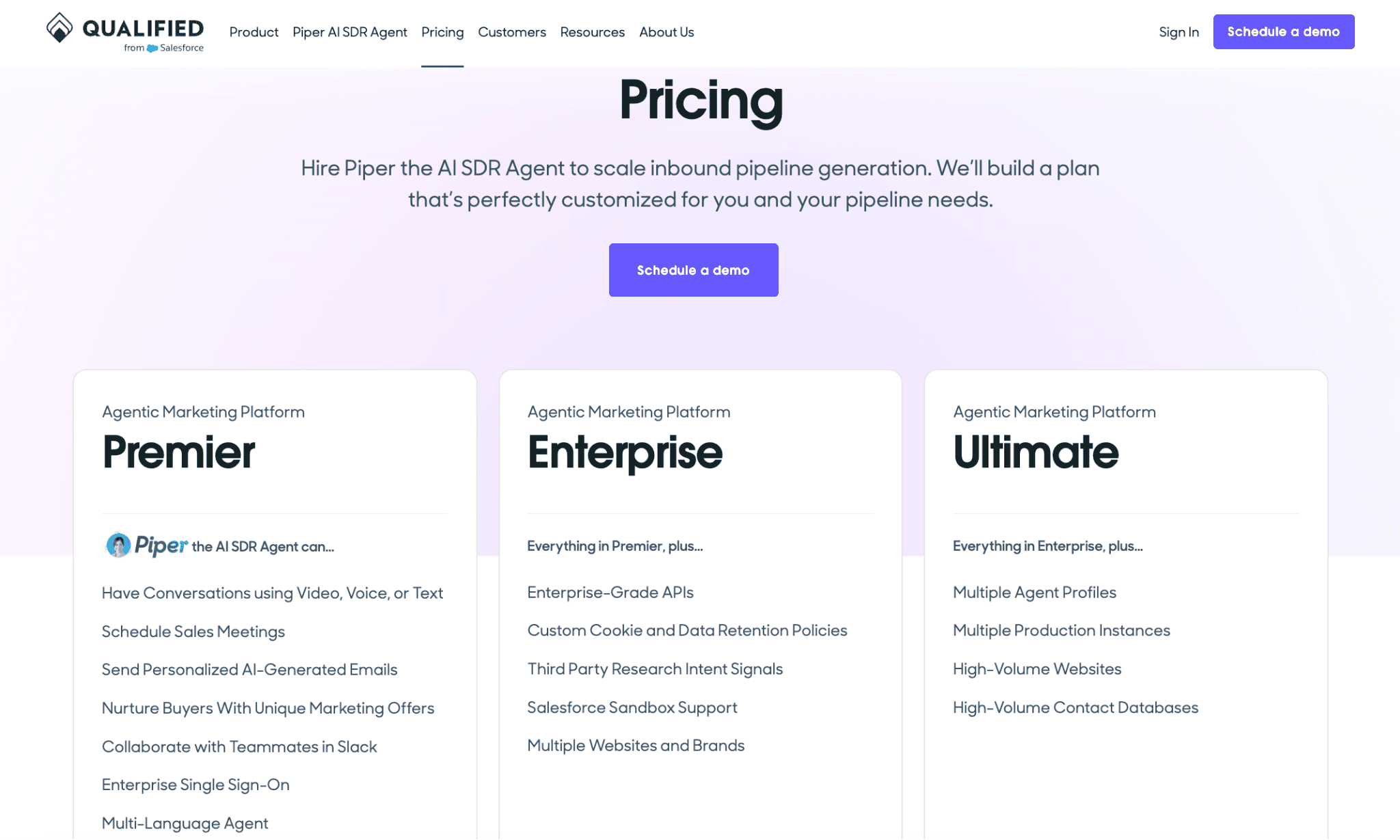
Pricing: Custom enterprise pricing
4. Intercom
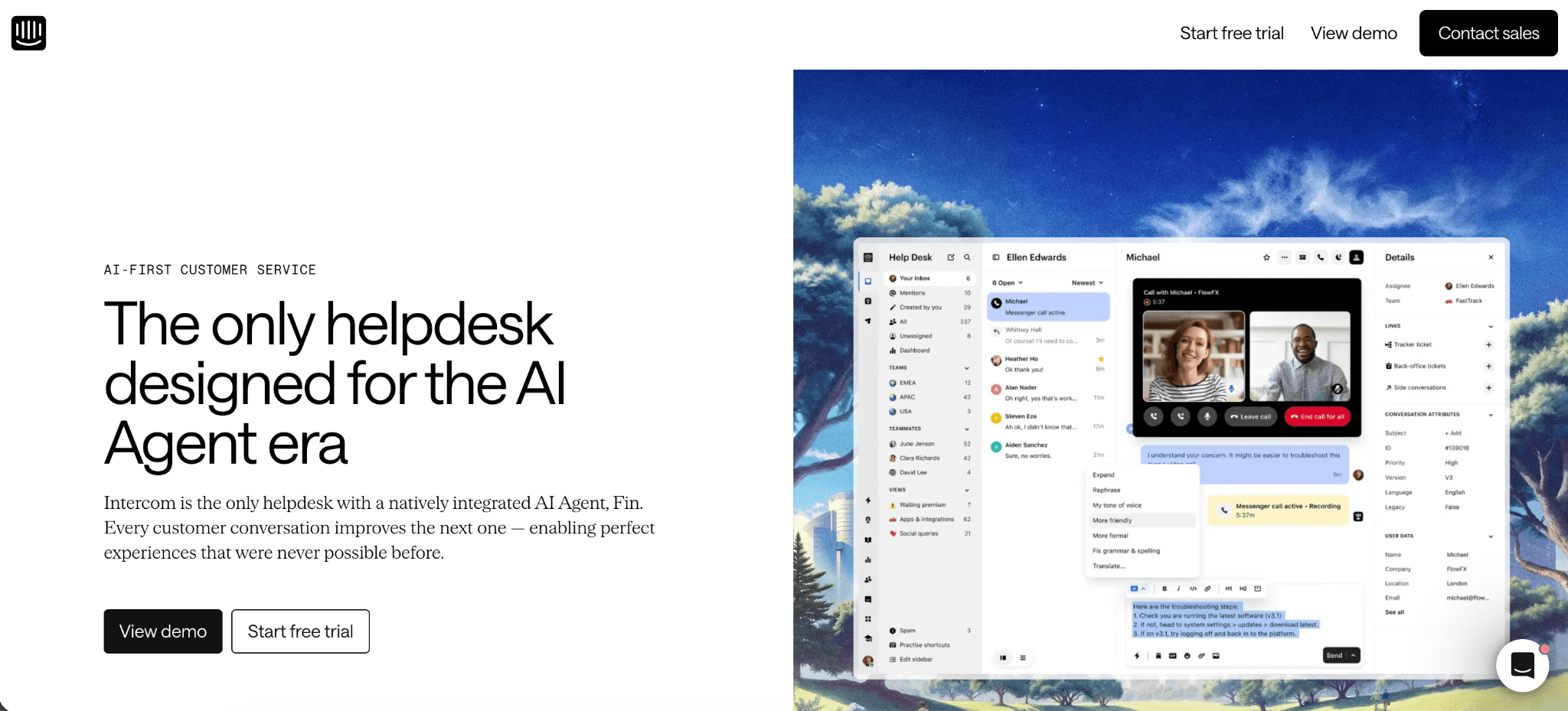
Intercom combines customer messaging, AI assistants, automation, and support workflows inside one communication platform. Revenue teams often use it to answer product questions, engage visitors, and manage conversations across multiple channels.
While it improves customer engagement significantly, organizations usually require additional tools for visitor identification, sales qualification, and consistent pipeline generation.
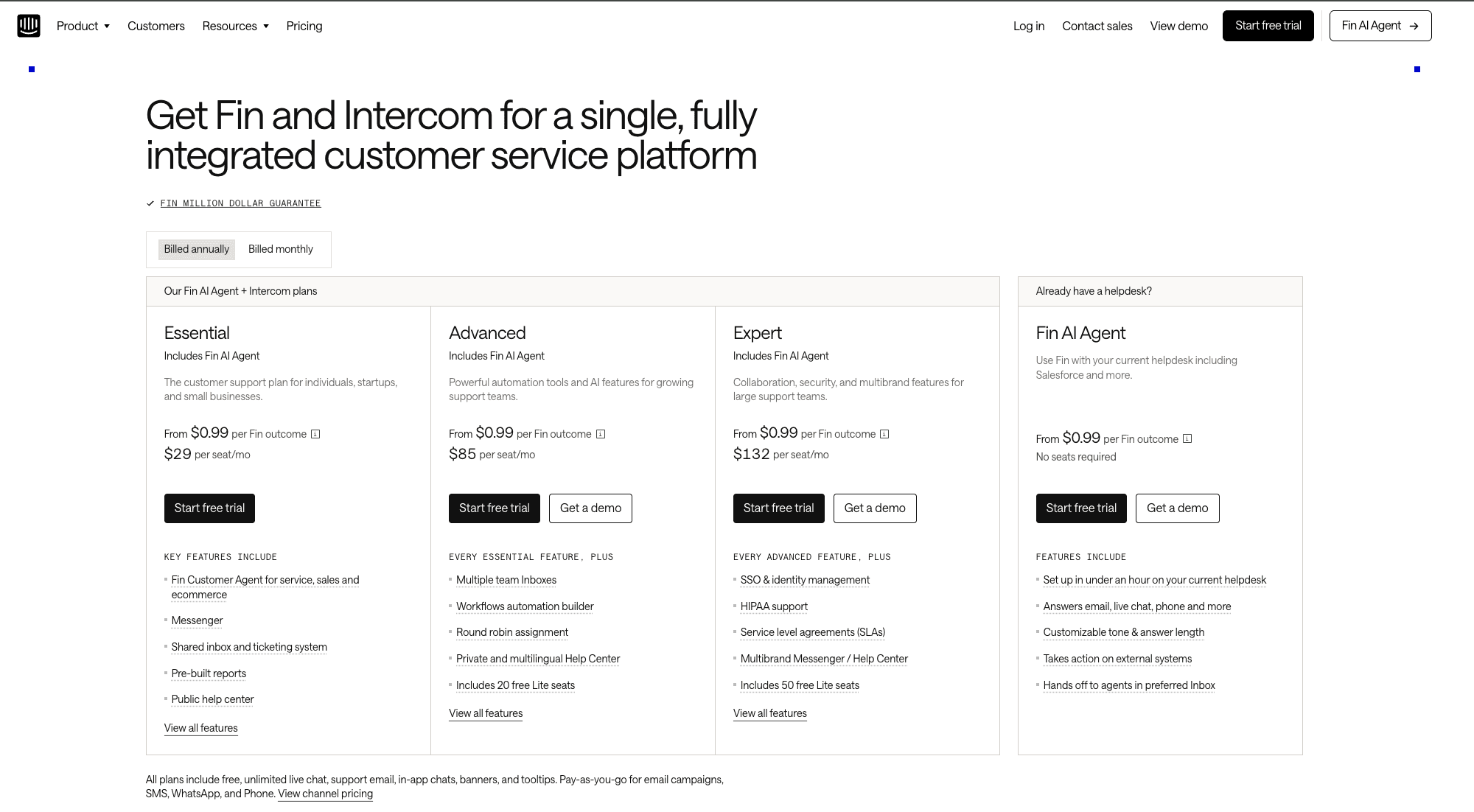
Pricing: Tiered pricing with add-ons
5. 1mind
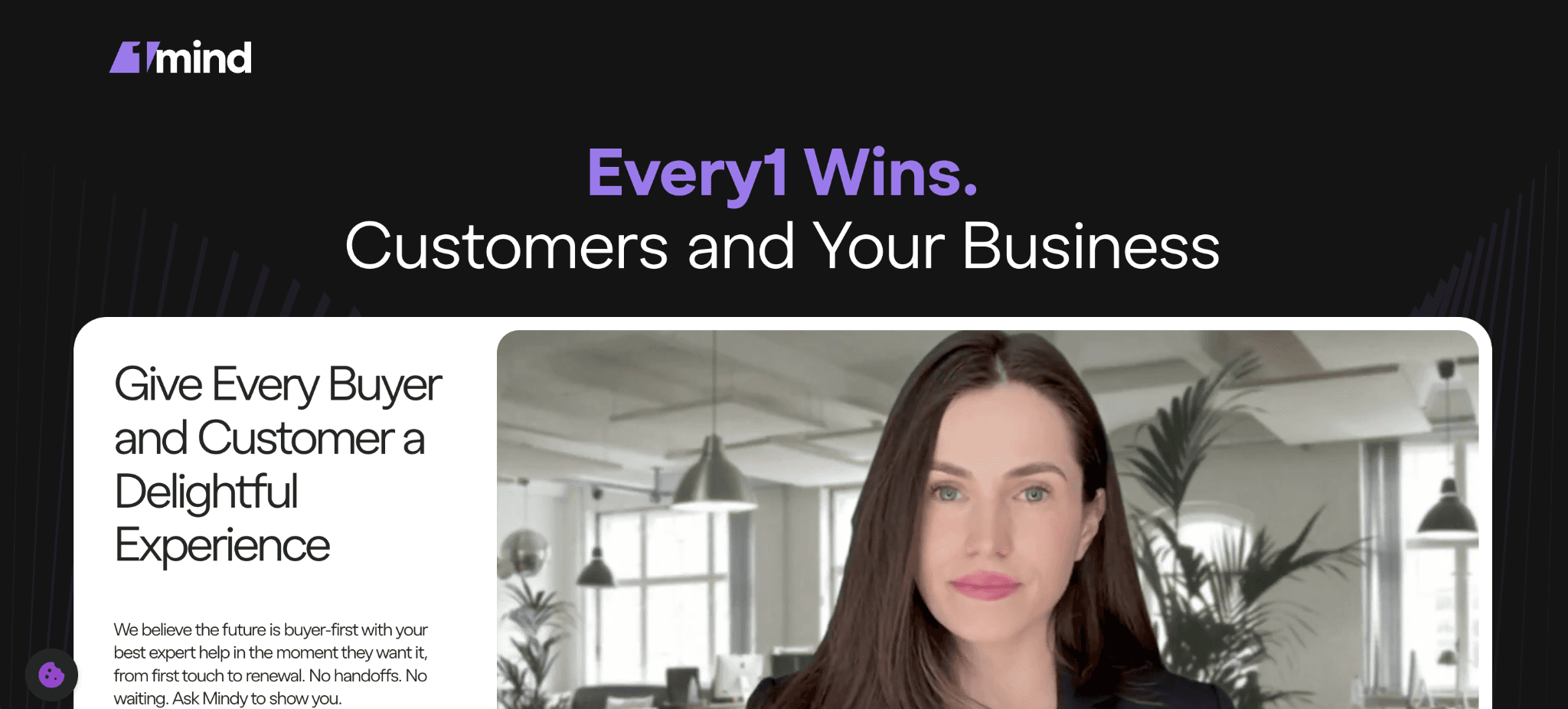
1mind focuses on AI-powered sales conversations through interactive virtual avatars capable of engaging buyers across websites and digital channels. The platform uses Tavus-powered video technology to create human-like sales experiences while supporting enterprise qualification workflows.
Teams evaluating AI avatar technology often compare 1mind with broader AI SDR platforms depending on whether their priority is conversational experiences or pipeline generation.
Pricing: Custom pricing
6. Apollo.io
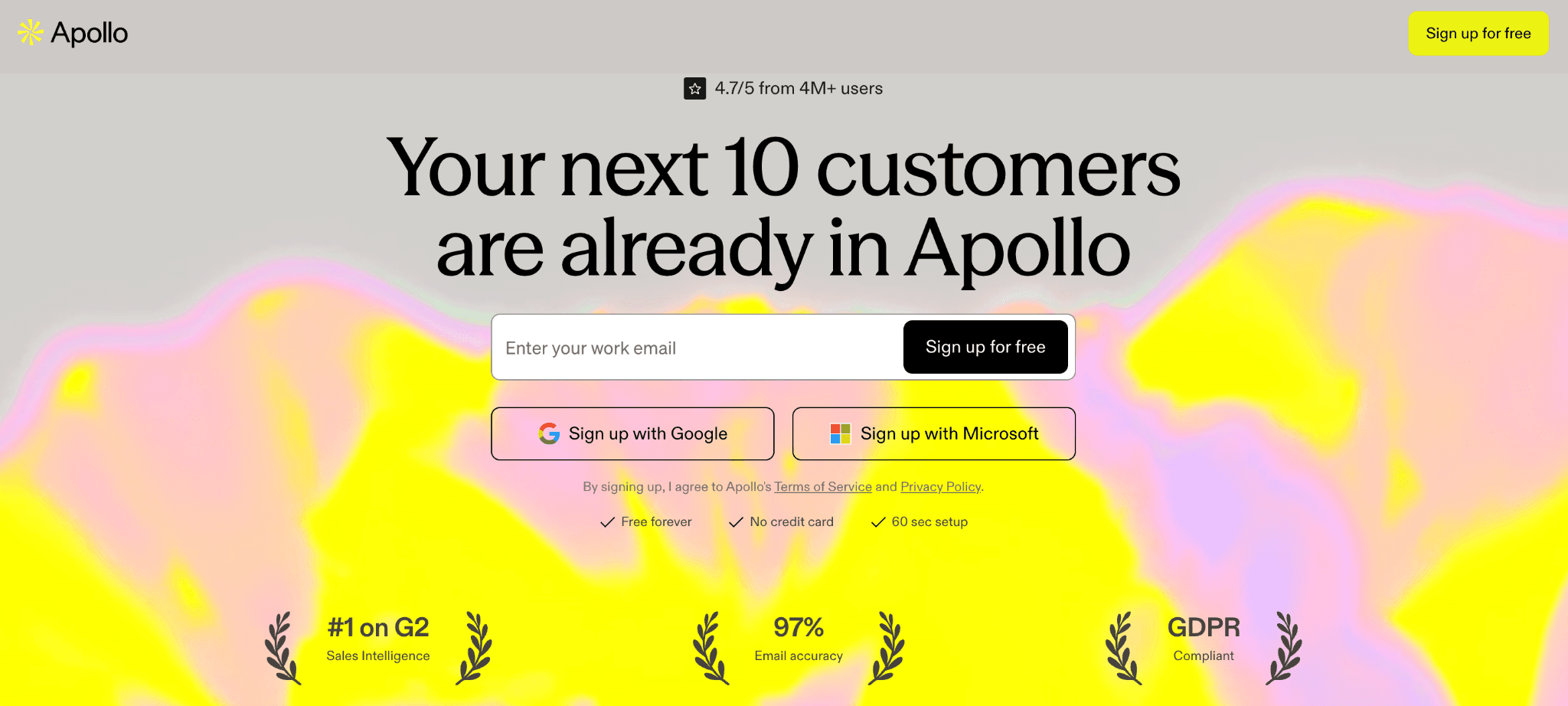
Apollo.io combines one of the industry’s largest B2B contact databases with outbound sequencing, enrichment, prospecting, and SDR workflows. Revenue teams use Apollo to discover contacts, automate outreach, and manage outbound campaigns inside one platform.
Although it strengthens prospecting considerably, organizations still depend on separate solutions for website engagement and inbound pipeline generation.
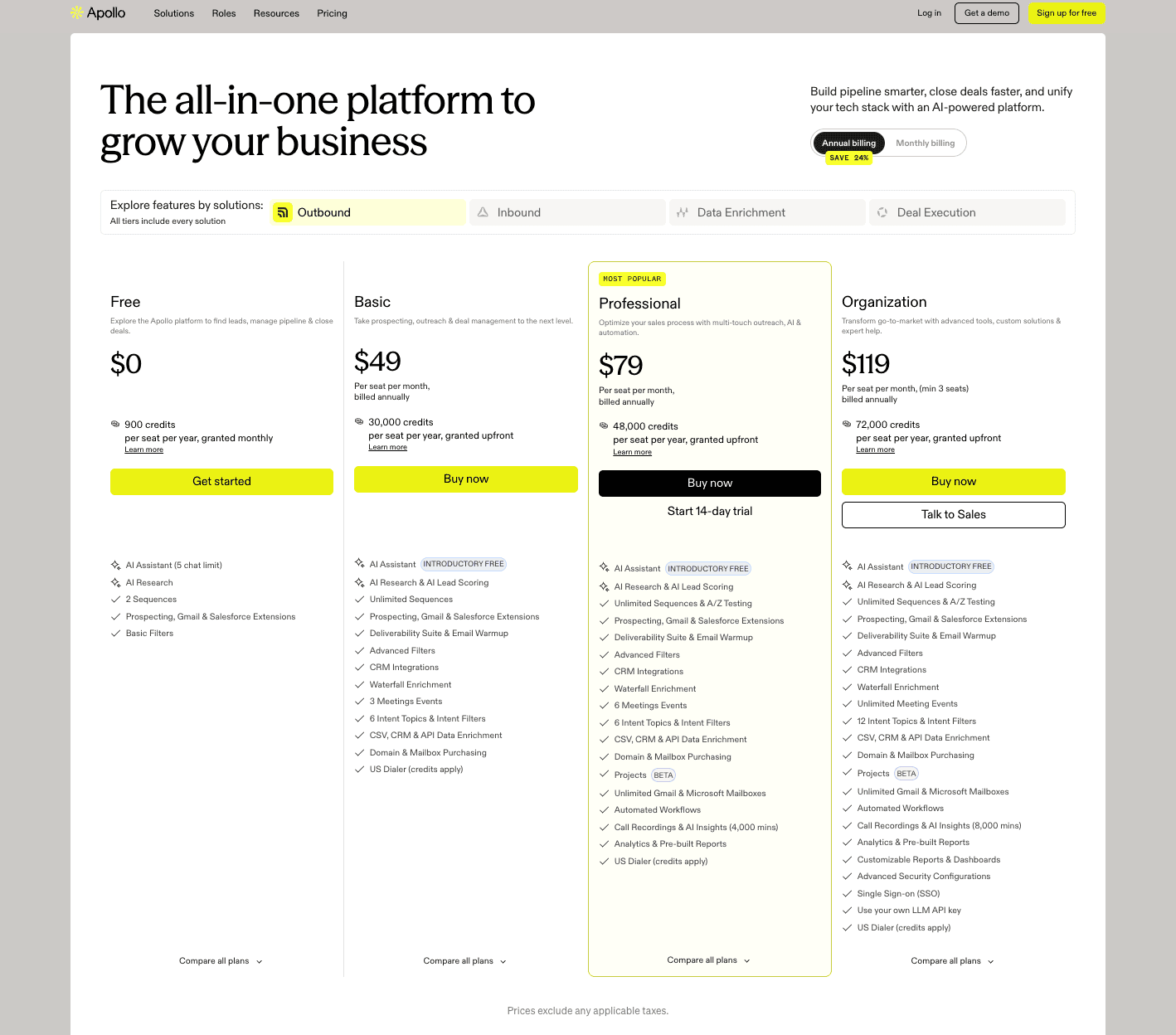
Pricing: Free to paid plans are available
7. Artisan
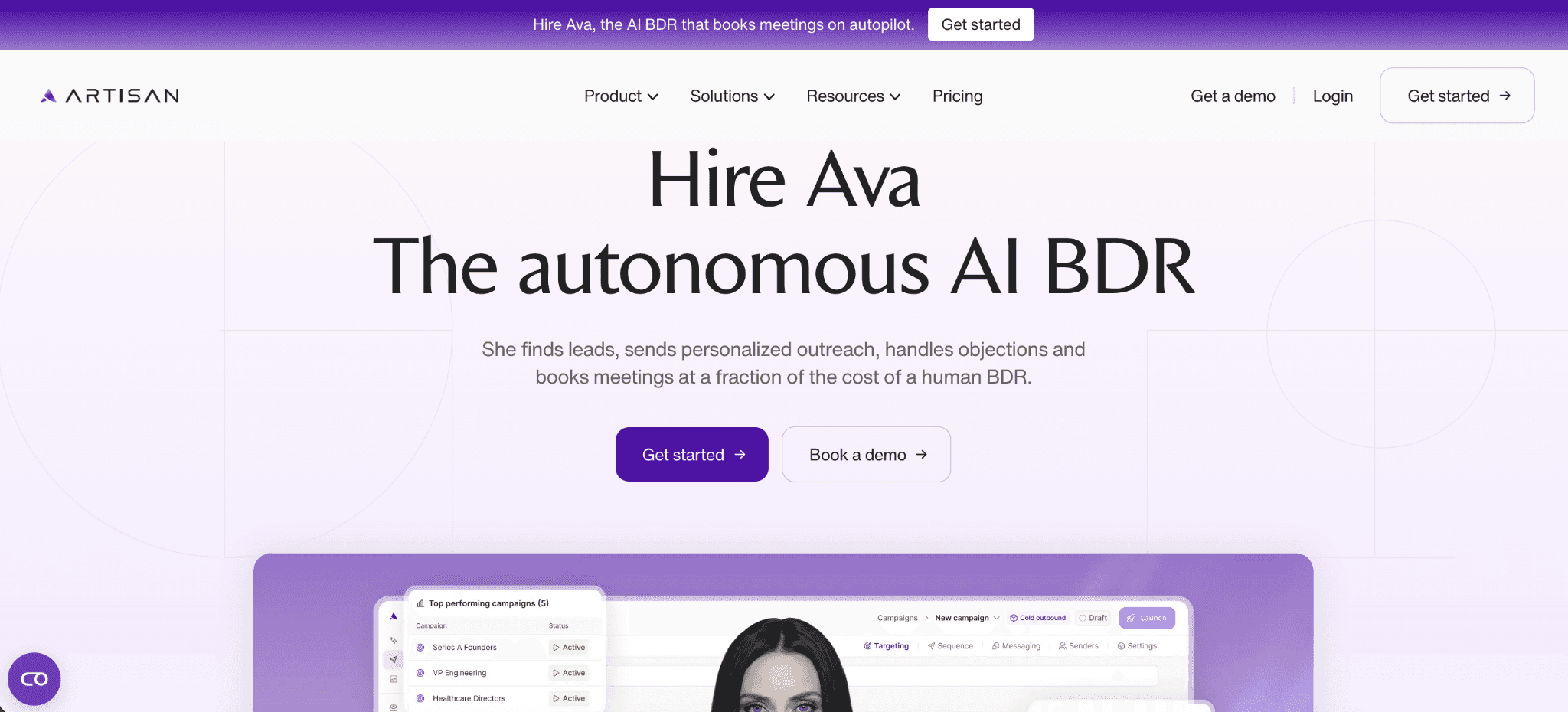
Artisan positions Ava as an AI SDR built primarily for outbound prospecting and cold outreach automation. The platform researches prospects, personalizes messaging, and executes outbound campaigns across large contact lists.
Organizations focused on scaling outbound operations often evaluate Artisan, although pipeline creation still depends heavily on prospect responsiveness and email engagement.
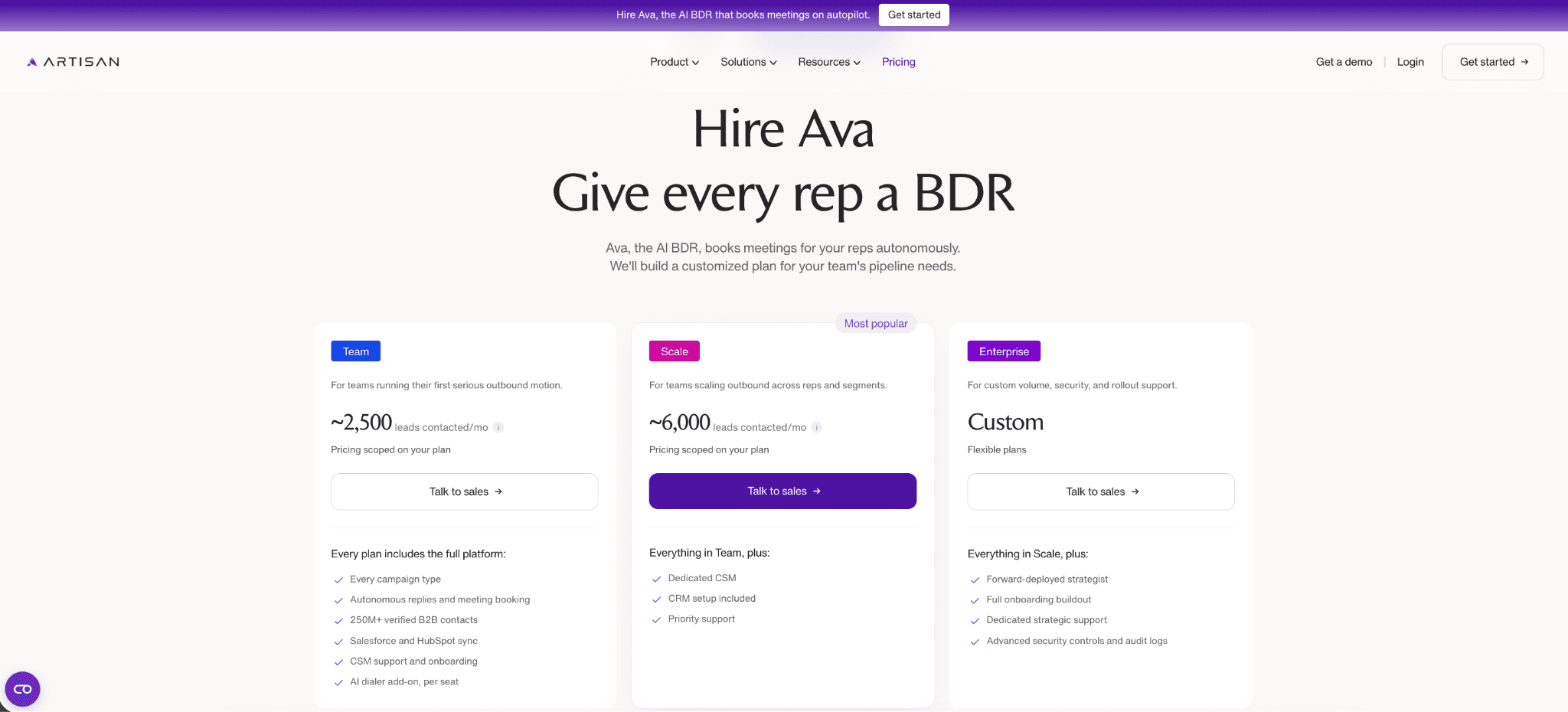
Pricing: Custom pricing
Which Conversica Alternative Is Best?
The right platform depends on where the pipeline slows down. Some organizations struggle with outbound execution. Others struggle converting existing website traffic into meetings.
Choose based on your biggest revenue bottleneck:
If you need | Choose |
Inbound pipeline | Breakout |
Visitor identification | Warmly |
Salesforce infrastructure | Qualified |
Customer messaging | Intercom |
AI avatars | 1mind |
Prospecting data | Apollo |
Outbound automation | Artisan |
5 Reasons Why Breakout Stands Out
Many AI SDR platforms automate one stage of the buying journey. Some send personalized emails. Others identify visitors or manage conversations after buyers raise their hands.
Breakout connects those activities into one continuous revenue workflow that starts the moment someone lands on your website.
Here’s why revenue teams increasingly choose Breakout:
1. Converts Visitors Before They Leave
Website traffic already represents buying intent. Breakout captures that opportunity by engaging visitors while they actively explore your product instead of waiting for a form submission or outbound response. Conversations begin when buyer interest is highest, creating more opportunities before prospects disappear.
2. AI Qualification
Every visitor receives a personalized experience based on company attributes, browsing behavior, and buying intent. Breakout evaluates prospects against your ideal customer profile automatically, ensuring sales representatives spend their time speaking with qualified buyers instead of manually filtering every lead.
3. Autonomous Meeting Booking
Qualified buyers should not wait for manual follow-up before speaking with sales. Breakout answers product questions, confirms qualification, and books meetings directly on the appropriate representative’s calendar during the same browsing session. Faster qualification leads to faster pipeline creation.
4. Multi-Agent Architecture
Breakout coordinates specialized AI agents that work together across your revenue motion. One agent monitors buying signals, another manages campaigns and engagement, while operational agents keep CRM records, routing logic, and internal notifications synchronized automatically.
5. CRM Synchronization
Buyer conversations, qualification status, engagement history, and meeting outcomes flow directly into your CRM. Sales representatives receive complete context before every conversation without relying on manual updates or disconnected workflows between marketing and sales.
6. Inbound-to-Outbound Orchestration
Buying journeys rarely happen inside one channel. Breakout connects inbound website activity with outbound engagement by integrating with CRM platforms, Apollo, and existing sales workflows. Instead of treating inbound and outbound separately, your team responds to buyer behavior through one coordinated revenue motion.
End Note
Conversica remains a capable AI conversation platform, particularly for organizations focused on lead nurturing and automated follow-up. However, modern revenue teams increasingly expect AI to do much more than continue email conversations.
They want platforms that qualify buyers, create opportunities, and contribute directly to pipeline growth.
Breakout closes that gap by identifying high-intent visitors, qualifying them through AI-led conversations, and booking meetings while buyers are still actively evaluating your solution.
Instead of adding another conversation tool to your stack, you add an AI SDR that turns existing website traffic into a measurable pipeline with less manual effort.
See an AI SDR qualify and book meetings in minutes, not months. Start your free trial today.
FAQs
Q. How much does Conversica cost?
Conversica does not publicly publish detailed pricing plans. Independent pricing sources consistently estimate that subscriptions start around $2,999 per month, while implementation, onboarding, CRM customization, and additional integrations can significantly increase the total investment.
Q. What is the best alternative to Conversica?
The best alternative depends on your revenue goals. Breakout is ideal if your priority is inbound pipeline generation and autonomous meeting booking. Warmly specializes in visitor identification, Qualified serves Salesforce organizations, Intercom focuses on customer messaging, while Apollo.io strengthens outbound prospecting and sales engagement.
Q. Is Conversica worth the price?
Conversica can deliver value for enterprise organizations managing large lead databases and extensive nurturing programs. If your biggest challenge is converting existing website traffic into qualified meetings, platforms designed around pipeline generation may provide faster and more measurable revenue outcomes.
Q. Does Conversica book meetings automatically?
Conversica supports qualification and scheduling workflows, but many organizations still depend on SDR teams to move buyers through later sales stages. Additional tools are often required for visitor identification, routing, qualification, and consistent meeting generation across the entire buying journey.
Q. What makes Breakout different from Conversica?
Conversica focuses primarily on AI-powered conversation automation and lead nurturing. Breakout focuses on identifying anonymous visitors, qualifying buyers in real time, engaging them through contextual conversations, and booking meetings automatically before prospects leave your website.
Q. Does Conversica work with Salesforce?
Yes. Conversica integrates with Salesforce and several other major CRM and marketing automation platforms. These integrations help synchronize customer data and conversation history, allowing sales teams to continue working inside their existing CRM environment while managing AI-assisted engagement workflows.


