To understand what AI SDRs actually do, start with the complete guide. AI SDRs are scaling tasks that used to demand full teams. The repetitive motion of responding to inbound leads, qualifying fit, and following up no longer depends on human capacity.
Companies adopting inbound AI SDRs now move faster, cover more traffic, and run qualification without hiring cycles or training delays.
Research shows a strong tilt toward automated engagement.
Gartner found that 61% of B2B buyers want rep-free sales experiences.
Inside sales teams reflect the shift, too:
Only 8% avoid AI entirely
While those using it rank it as the highest ROI category across tools
Meanwhile, cold outbound is slowing. Reply rates are down by nearly half in the past two years, pushing revenue teams toward inbound intent capture and AI-led qualification.
Instead of hiring more SDRs to chase forms or follow up on inbound interest, teams are testing the best AI sales agent platforms to run live conversations, route buyers, and book meetings around the clock.
But not every “AI SDR” delivers the same value. Many tools position themselves as intelligent when they’re little more than scripted chatbots. Others claim full autonomy but still need daily tuning or human intervention.
This guide breaks down the top 10 inbound AI SDRs in 2025, grouped by strengths, limitations, and real use-case fit. You’ll see what each platform is built for, where it falls short, and how it handles qualification and pipeline reporting.
If your goal is more than Q&A, if you want a tool that identifies anonymous visitors, qualifies them, and books meetings, then the right AI inbound marketing platform can change your pipeline trajectory.
Let’s get into the list.
What’s an inbound AI SDR?
An inbound AI SDR does more than greet visitors or answer questions. It behaves like a trained rep, guiding the conversation toward qualification, interest signals, and next steps. Instead of waiting for form fills, it acts in real time while a buyer is still exploring.
Teams test these tools because inbound traffic is valuable and time-sensitive. The right tool greets visitors instantly, learns who they are, and decides whether they are worth routing, all before a rep steps in.
What does an inbound AI SDR actually focus on?
Unlike outbound SDRs that are built to push awareness and start conversations, inbound AI SDRs take over once interest exists. They read buyer signals, ask structured qualification questions, and route leads automatically.
The role of an inbound AI SDR is to qualify buyers, route them intelligently, and move the conversation toward a clear next action. That workflow mirrors what human reps do, only faster and without delays or fatigue.
Qualification is only useful when paired with engagement that feels natural. The best tools guide buyers through questions, objections, and clarification while collecting lead data that sellers can use.
Can it turn intent into scheduled meetings?
For inbound teams, most traffic arrives anonymously. If the AI cannot identify the visitor or personalize early, the experience stalls. That’s where inbound AI SDRs stand apart: they connect identity, behavior, and conversation.
Once the tool can recognize who is visiting and why, the shift from conversation to deal creation becomes measurable. That is the difference between a chatbot and an AI lead qualification software built to generate a pipeline.
Inbound AI SDRs act as the first step in the buying journey and run qualification in real time. From there, they guide the buyer forward through a structured path by:
Adapting conversation style by industry, company size, or buying stage
Using intent-led questioning instead of broad, repetitive prompts
Serving content tied to user needs, such as pricing, comparisons, or walkthroughs
Preventing abandonment by offering a clear next action
Re-engaging through email when the visitor isn’t ready to book
Capturing pain points and buying signals for sales teams
Swapping static website paths for dynamic, behavior-based experiences
Handing warm buyers to a rep when fit and timing align
Breakout: The all-in-one AI SDR platform
Breakout replaces scattered inbound workflows with one tool that handles context, qualification, routing, and booking. Instead of relying on forms or scripted flows, it reads intent and adapts the conversation so every visitor moves at their own pace.
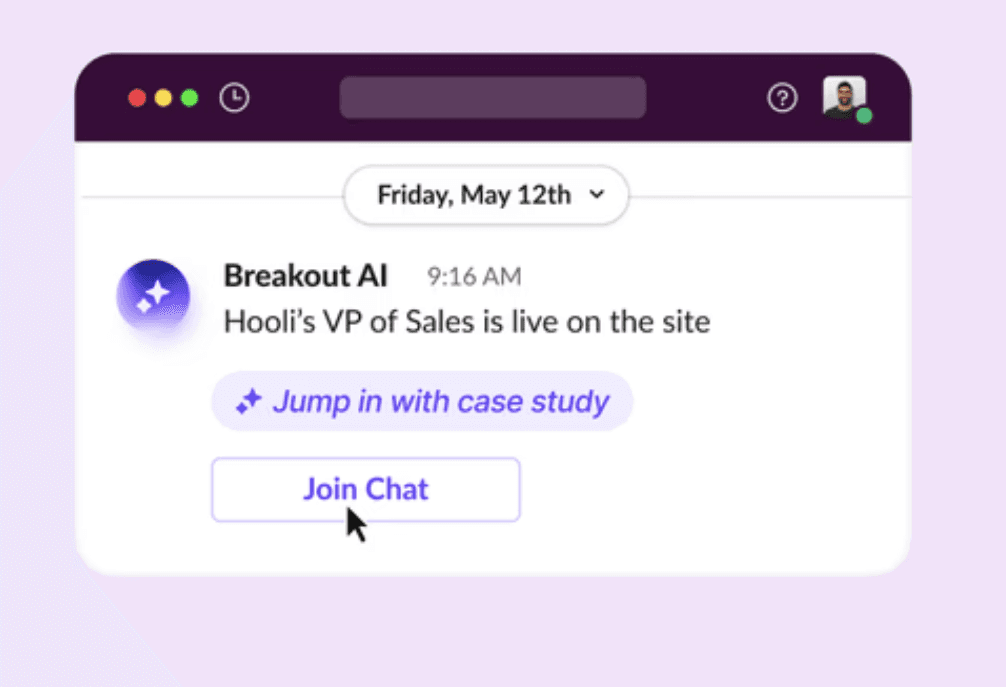
This makes Breakout useful for teams that want consistent pipeline outcomes without heavy setup or manual routing.
How Breakout identifies visitors and personalizes in seconds
Most inbound AI SDR tools start once a visitor volunteers information. Breakout starts earlier. It deanonymizes traffic through account matching and intent signals, then uses that data to tailor tone, content, and structure inside the AI knowledge base.
Once the visitor engages, the AI shifts based on behavior. A pricing-focused user may see ROI proof points, while a technical buyer may receive integration steps or security-aligned content. No workflow trees or conditional blocks. Just adaptive logic.
For RevOps and GTM teams, this reduces workflow maintenance and improves consistency across segments.
Where Breakout stands apart from other inbound platforms
Many products in this category fall into two groups: tools designed for outbound automation and tools shaped like chat support widgets.
Breakout sits in the middle, but with an inbound focus. It manages discovery, objection handling, qualification logic, and booking in one workflow.
The tool’s AI engine doesn’t wait for reps, scripts, or manual approvals. Human involvement becomes optional for late-stage conversations or high-value accounts.
Because Breakout is an AI inbound SDR platform rather than a rule-based chat tool, it learns and improves with traffic volume.
What teams see in real usage
Breakout works with companies across SaaS, healthcare, and B2B software, especially teams with strong inbound traffic.
The AI-powered cloud-based EHR platform, Barti, saw 4X higher visitor engagement and stronger conversions after replacing static pages with adaptive conversations.
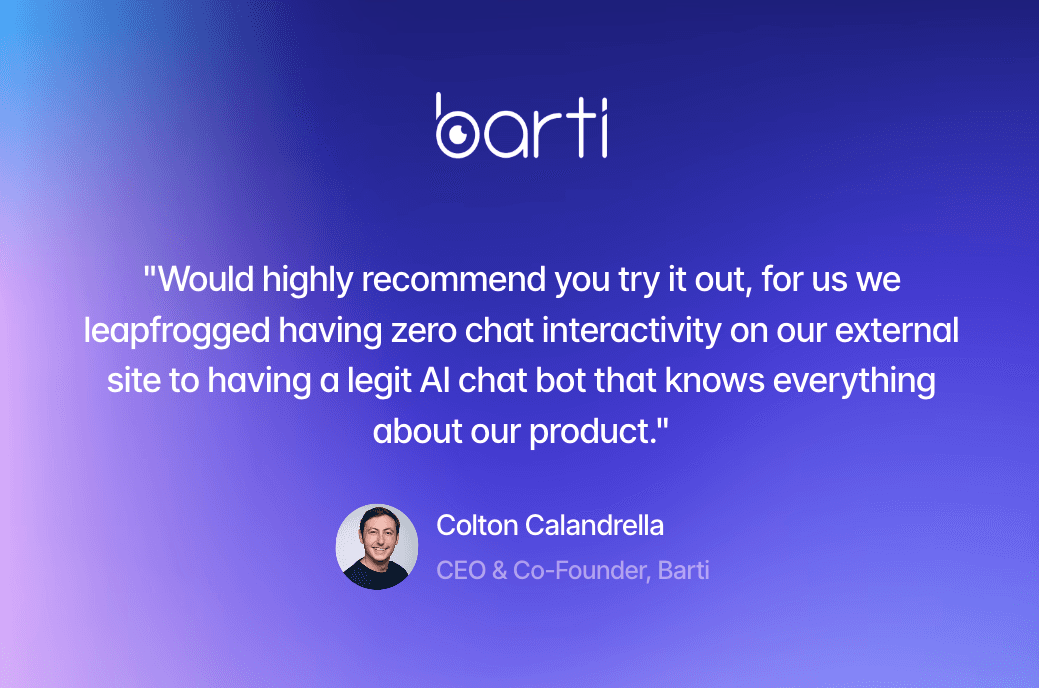
Results included:
19% incremental pipeline
5.7% drop in bounce rate
9.8% visitor-to-lead conversation rate
With Breakout, Barti turned its website into a guided buying experience without adding SDR headcount.
The top 10 inbound AI SDRs (Ranked by use case)
The inbound AI SDR market has grown fast, and many tools sound similar on the surface. But the real difference shows up in how they handle qualification, routing, context, and scale.
To make this research easier, we sorted the top platforms based on the use case they serve best, not just features or pricing.
This format helps teams compare tools based on stack fit, rather than guessing through product pages or mixed reviews. We grouped them into three segments so you can make an informed decision based on your inbound motion:
Salesforce ecosystem tools
These platforms exist to deepen routing and engagement for Salesforce-first organizations, where account context drives every step.
Legacy conversational tools
Long-standing chat and engagement platforms that have expanded into AI and qualification but still rely on structured workflows.
Outbound-first automation tools
Multi-channel SDR tools originally built for email and sequences now offer inbound AI SDR functionality as an add-on rather than a core engine.
Category 1: Best for Salesforce enterprises
This group suits teams that live inside Salesforce and want their inbound AI SDR to sit on top of CRM objects and account hierarchies. These tools feel natural if your GTM motion is already tightly modeled in Salesforce.
Qualified (Piper)
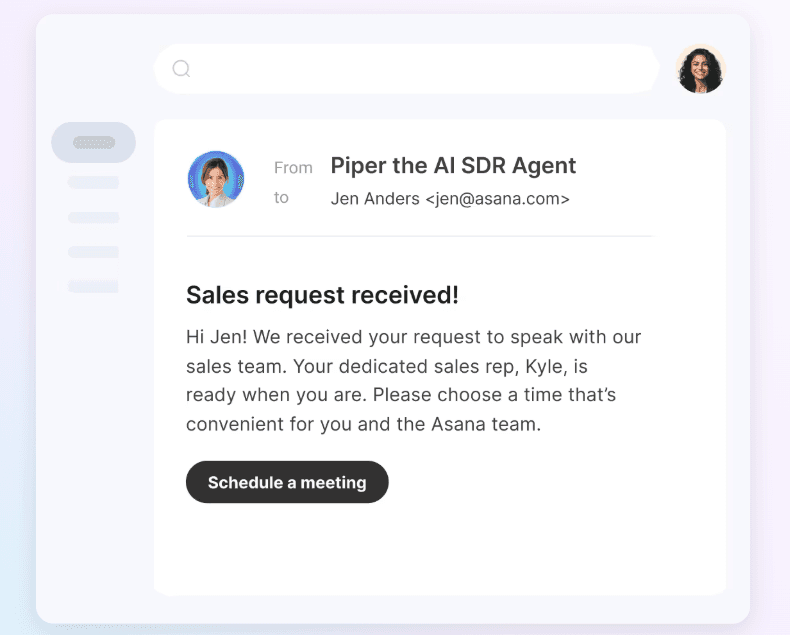
Qualified positions itself as a “pipeline cloud” for Salesforce websites. It uses its AI assistant, Piper, to identify visitors, match them to accounts, ask qualification questions, and trigger routing and meeting booking based on Salesforce data.
Pros
Deep Salesforce sync with accounts, opportunities, and custom objects, which makes it strong for account-based teams
Website experiences driven by CRM context, including target-account alerts and playbooks triggered by known accounts
Strong focus on pipeline reporting that ties web conversations to influenced and sourced revenue
Cons
Public estimates place entry pricing in the tens of thousands of dollars per year, which puts it out of reach for many mid-market teams
Several G2 reviews mention a steep learning curve when setting up segments, rules, and routing flows
Works best only when Salesforce is the center of your stack; hybrid CRM setups get less value
Salesforce Agentforce
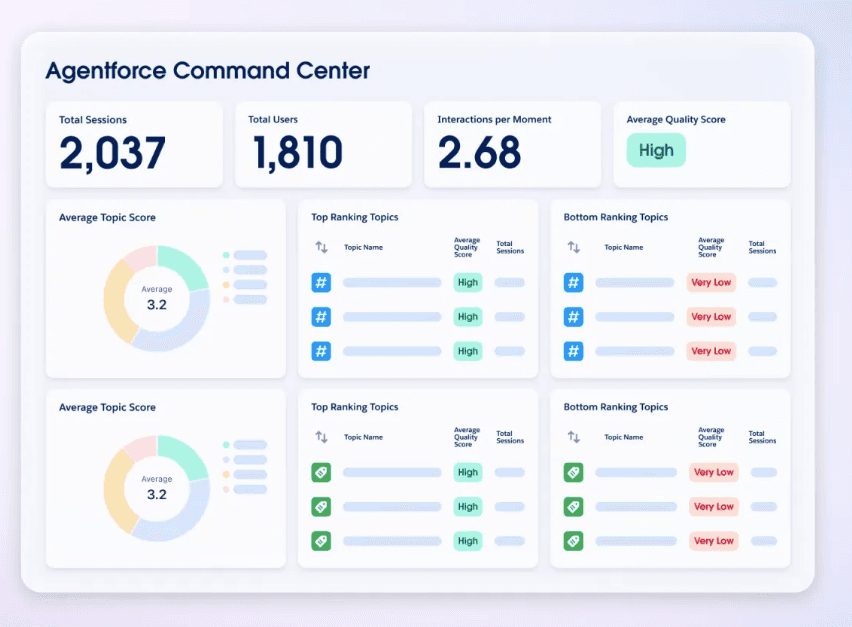
Agentforce is Salesforce’s own AI agent framework. It sits across Sales Cloud, Service Cloud, and other Salesforce apps, letting teams build AI agents that act on CRM data with clicks instead of heavy coding.
Pros
Natively plugged into Salesforce records, permissions, and workflows, which reduces integration friction
Lets teams design agents that can read and write CRM fields, trigger standard flows, and follow internal governance
Good fit for organizations that already invest in Salesforce AI like Einstein and want a single vendor strategy
Cons
Still early-stage; many GTM teams are experimenting rather than running it as the main inbound AI SDR
Tied to Salesforce licensing and pricing, which can add up for large go-to-market teams
Requires mature Salesforce administration to avoid messy automation and conflicting rules
Category 2: Best for high-volume legacy chat
These tools grew up as conversational marketing or support platforms. They now offer AI features, but their design still leans on live reps, scripted flows, and playbooks.
Drift
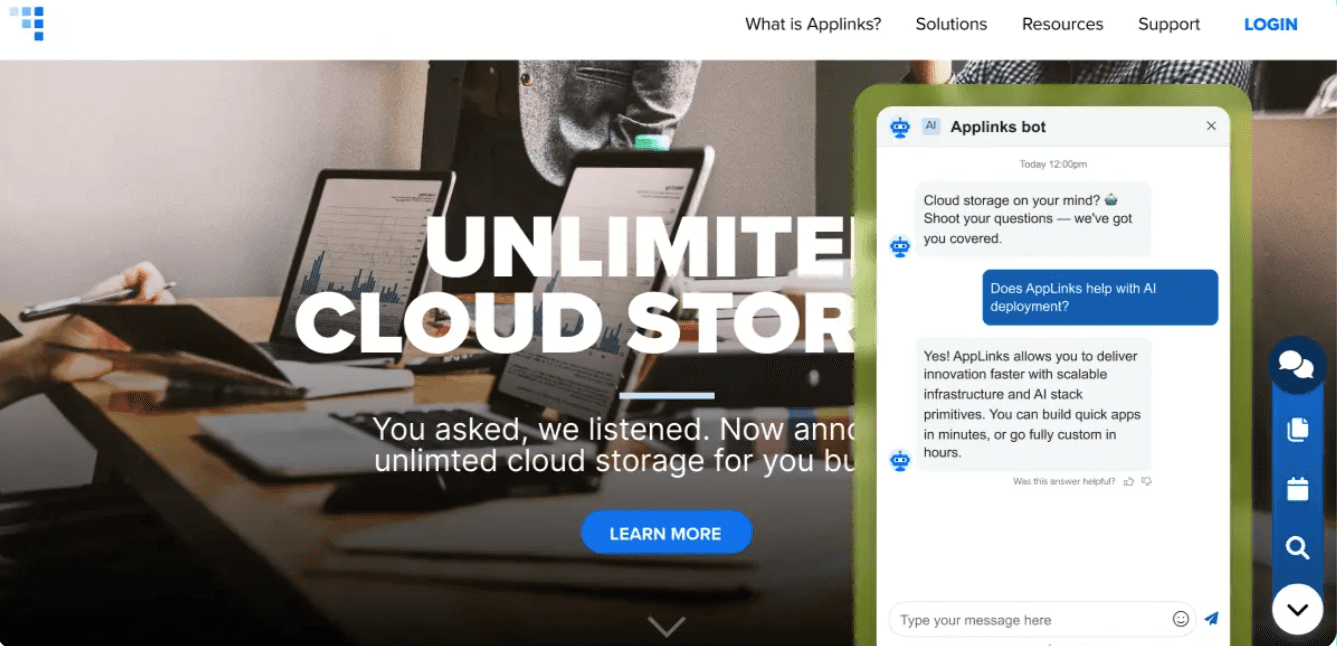
Drift built its brand on conversational marketing and live chat. It connects website visitors to sales reps, uses playbooks to route traffic, and offers AI to help triage conversations and suggest replies.
Pros
Mature feature set for ABM-style campaigns, including targeted messages for named accounts and segments
Strong integrations with Salesforce, HubSpot, and outreach tools, making it familiar to many revenue teams
Rich reporting on chat volume, rep performance, and page-level engagement
Cons
G2 reviewers often mention high cost relative to usage, with entry pricing around a few thousand dollars per month
Playbooks need frequent tweaks; teams report ongoing admin work to keep flows current
Still depends heavily on human coverage, which means you need reps online for the best results
Intercom
Intercom is a customer-service-first platform that now includes Fin, an AI agent that automates a large share of inbound support questions. It also supports basic lead capture and routing.

Pros
Strong for support-led inbound, with AI that uses your help center and previous answers to reply
Multi-channel inbox across chat, email, and more, so teams can see conversations in one place
Clear reporting on volume, response time, and resolution rates, which helps support leaders
Cons
Sales and qualification features are light; it is not a full inbound AI SDR
Advanced automation and Fin usage can get pricey as volumes grow
Not ideal for complex routing or B2B qualification, where many stakeholders shape a deal
Category 3: Best for outbound teams with inbound features
These tools shine for cold outreach. They now offer some inbound hooks, but their strength is still email and multi-channel prospecting.
11x (Alice)
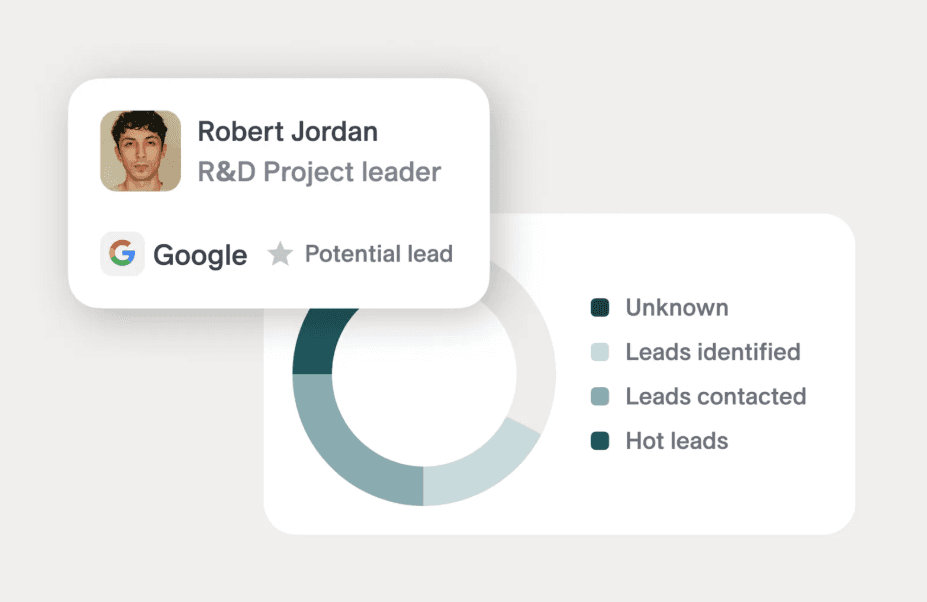
11x.ai provides named AI SDRs like Alice that research leads, send cold emails, and follow up until a meeting is booked.
Pros
Handles prospecting and outreach with little manual work once configured
Clear goal around meeting setting, which makes ROI easier to track
Useful for companies without time to build a full internal SDR team
Cons
Limited inbound coverage: website visitors still need another solution
Cold email performance relies on list quality and domain health
Less suited to complex product education or long inbound cycles
Artisan AI (Ava)
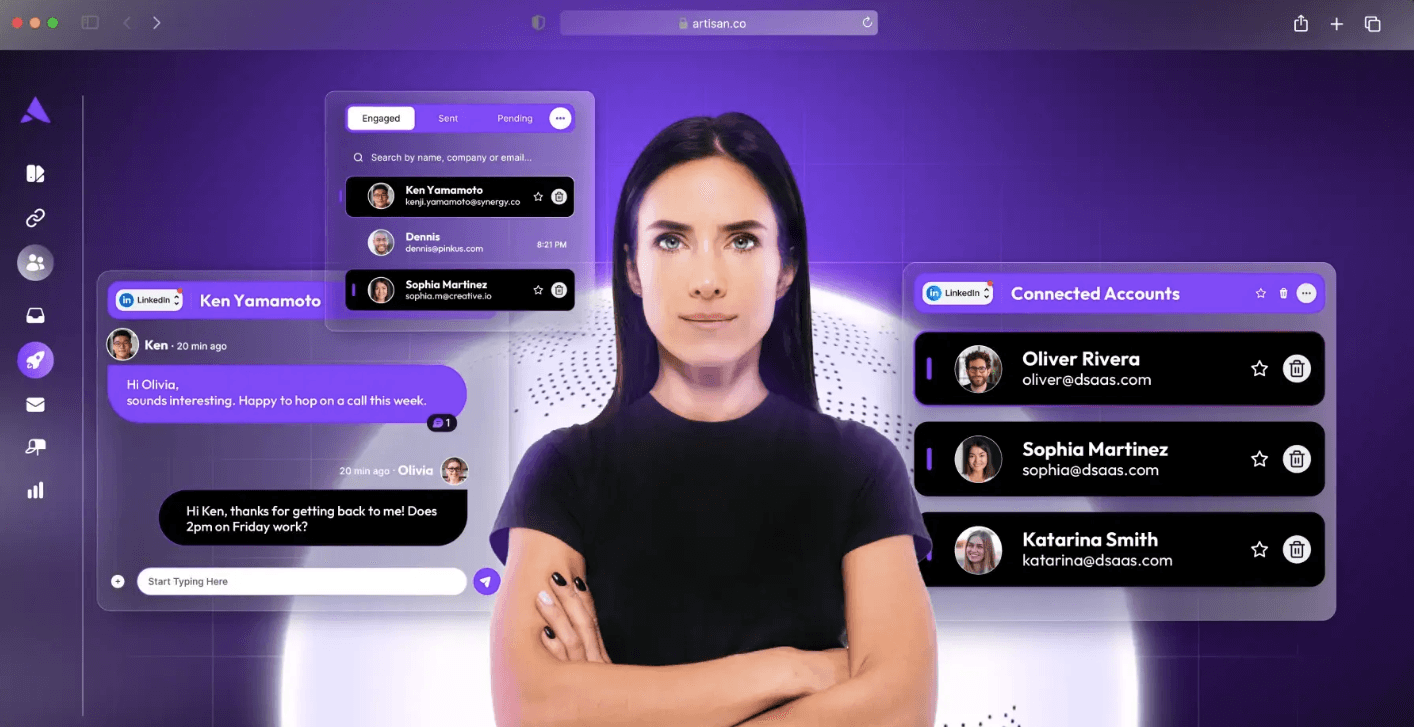
Artisan AI offers AI “employees,” where Ava acts as an SDR that sends outreach, responds to replies, and schedules calls.
Pros
Multi-channel campaigns across email and social aim to mirror human SDR work
Simple value story for teams that want to test AI SDR without hiring
Integrates with calendars and CRMs for basic data sync
Cons
Inbound handling remains light; most of the value is in outbound
Still maturing; early adopters mention they fine-tune prompts and targeting often
Harder to use as the main inbound AI SDR without extra tools
AiSDR
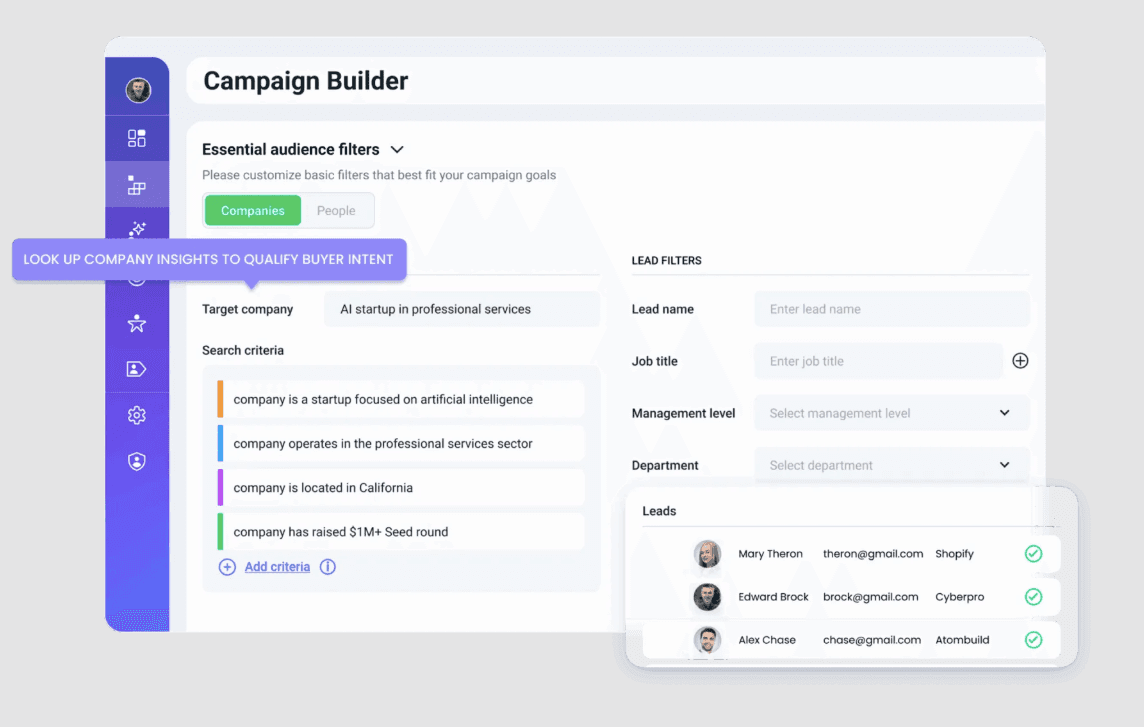
AiSDR specializes in AI-written cold outreach, with automated follow-up and lead qualification via email.
Pros
Good for teams that want to scale email prospecting quickly
Can sync leads and activity to your CRM stack
Frees human reps from manual drafting and follow-up
Cons
Little support for on-site qualification and live web sessions
Dependent on inbox placement and response habits, which vary a lot
Category 4: Simple AI chatbots
These tools are fine when you want a website FAQ agent that can capture basic leads, but they stop short of full inbound AI SDR behavior.
ChatSimple / Expertise AI
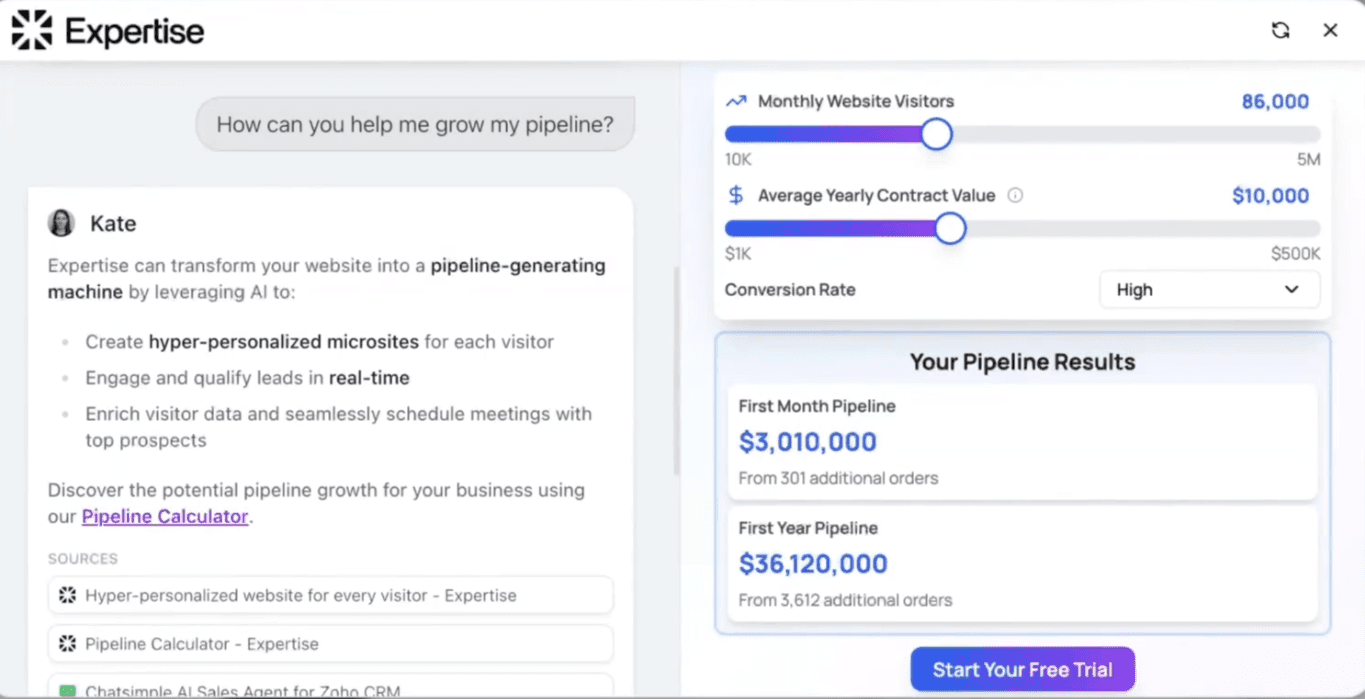
ChatSimple or Expertise AI helps teams launch chatbots fast. They use your content to answer visitor questions and support voice and multilingual chat.
Pros
Very low setup friction for small teams or fast pilots
Voice and language support help across different markets
Works well as a front-line responder for frequent questions
Cons
Reviews highlight limited analytics in lower tiers and steep jumps for CRM/API access
Qualification, routing, and pipeline views are thin compared to full inbound AI SDR platforms
Salespeak
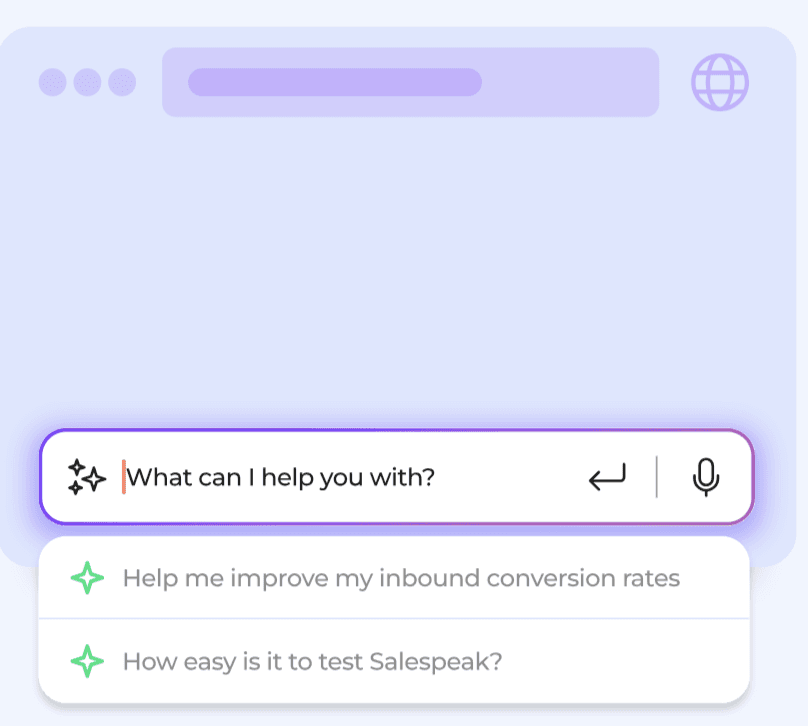
Salespeak is a smaller player that focuses on Q&A from documentation. It is better seen as an AI help widget than a full SDR.
Pros
Good when your main need is to answer product questions without hiring extra support
Simple deployment for teams with a clear docs library
Works as a first step into AI chat before heavier tools
Cons
Light on analytics, routing, and CRM sync compared with larger vendors
Not suited for multi-stage qualification or meeting-heavy workflows
Often replaced once teams move to a full inbound AI SDR model
Comparison table: A snapshot of key features and platform focus
With many tools calling themselves the best AI sales agent or AI SDR for website traffic, the fastest way to cut through the noise is a structured comparison.
The table below breaks down the ten platforms covered in this guide based on how they work, where they’re strongest, and how they differ from Breakout.
The right choice depends on whether your priority is routing, outbound volume, live chat coverage, or a single inbound AI platform that identifies visitors, qualifies them, and books meetings automatically.
Category | Examples | What they’re best at |
Best Fit for AI-Led Inbound Qualification | Breakout | Best for turning anonymous visitors into meetings. Combines deanonymization, reasoning-led qualification, and scheduling in one workflow. |
Salesforce-native AI | Qualified (Piper), Salesforce Agentforce | Built around CRM fields, routing logic, and ABM workflows. Strong if Salesforce already defines how inbound traffic moves. |
Legacy conversational AI | Drift, Intercom | Designed for live chat handoffs and playbooks maintained by operations teams. AI supports the workflow but rarely replaces it. |
Outbound AI SDRs with inbound add-ons | 11x (Alice), Artisan AI (Ava), AiSDR | Strong for email and LinkedIn automation. Useful for booking meetings from cold outreach. Inbound handling is basic. |
Simple AI chatbots | ChatSimple/Expertise AI, Salespeak | Good for Q&A and lightweight support. Best for teams that want fast deployment without complex routing or reporting. |
Making the final decision: The right AI SDR for your team
Choosing an inbound AI SDR comes down to how much of the buyer journey you want automated. Some tools answer questions, while some assist reps.
A few can route leads or hand off meetings. But only a small group can own a qualification, speed up decisions, and turn website intent into a pipeline you can track.
If your inbound motion is growing, the gaps become easy to spot:
Manual routing takes time
Live chat coverage is inconsistent
Generic visitor experiences waste high-intent traffic
At that point, teams look past simple automation and search for a tool that identifies visitors, adapts to context, and moves qualified buyers forward without daily tuning.
Breakout fits that need. It runs autonomously and books meetings the moment a visitor shows buying intent. Reps can still jump in when they want hands-on control, so teams get automation without losing the human option.
Schedule a demo to see Breakout’s inbound AI SDR qualify and book meetings live.
FAQs
What is an inbound AI SDR?
An inbound AI SDR is software that responds to website visitors, asks layered qualification questions, and guides buyers toward the right action, whether that’s a demo, content, or a meeting. It automates early funnel steps that teams normally assign to SDRs.
How is an inbound AI SDR different from a chatbot?
Chatbots handle support-style tasks, whereas an inbound AI SDR understands buying signals, adapts tone, and moves prospects toward conversion.
What should teams look for when comparing inbound AI SDR tools?
Visitor tracking, qualification depth, CRM syncing, and calendar booking are essential capabilities.