All Blogs
A quick look at better options than 7 HubSpot Chat.

Evan Marshall
Senior Growth AI Strategist
Published On
HubSpot has been part of the marketing and sales stack for years.
Particularly for B2B teams that operate within their CRM.
Its live chat and conversations inbox made it easier to talk to website visitors without adding more tools. For many teams, that was enough to get started.
HubSpot Chat is simple, affordable, and tightly integrated with HubSpot’s marketing and CRM products. Basic bots, shared inboxes, and routing work well for support and early-stage inbound conversations.
But there’s a gap.
HubSpot Chat was not built to automate sales end-to-end. It helps you respond to visitors, but it still relies heavily on rules, manual handoffs, and human availability to turn conversations into a pipeline.
That limitation matters more in 2025.
The AI SDR market is projected to reach USD 15.01 billion by 2030, reflecting a clear shift in how revenue teams operate. Buyers expect instant, relevant engagement, and teams need systems that qualify and book meetings without increasing headcount.
This is where newer, AI-first platforms take the lead.
Tools like Breakout go beyond conversational chat. They are designed to proactively qualify visitors, route them intelligently, and book meetings across HubSpot, Salesforce, or mixed CRM stacks.
If HubSpot Chat is no longer driving the pipeline your team needs, exploring alternatives makes sense.
In this article, we review the top HubSpot Chat alternatives in 2025, using real user reviews, pricing context, and practical use cases to help you choose the right fit.
When Is HubSpot Chat a Good Fit?
HubSpot Chat works best when expectations are clear and scope is limited.
HubSpot-native teams need basic live chat and simple bots. If your team lives fully inside HubSpot, HubSpot Chat is a reasonable starting point. It’s tightly integrated with HubSpot CRM and Marketing Hub, and the setup is fast.
For early-stage teams, the shared inbox and simple bot flows are enough to manage inbound conversations.
Support teams benefit most here, especially when the goal is to answer questions, route tickets, or qualify very lightly.
It’s also cheap. The freemium tier lowers the barrier to entry, which matters for lean teams.
But this fit only holds while inbound volume and expectations stay modest.
Where Teams Outgrow HubSpot Chat in 2026
As traffic, deal sizes, and stakeholder complexity increase, HubSpot Chat starts to show its limits.
1. Advanced AI and automation needs (AI SDR coverage)
HubSpot Chat relies heavily on rules-based bots and predefined flows.
That works for FAQs. It breaks down for nuanced qualification.
There’s no true AI SDR coverage that can reason across intent, behavior, and account context. Conversations still depend on human availability or rigid logic trees.
For teams trying to capture every qualified visit, this creates gaps.
2. Sales acceleration, ABM orchestration, and proactive targeting
Modern inbound is no longer passive. High-performing teams want to proactively engage the right accounts, at the right moment, with the right message.
HubSpot Chat struggles here.
Account-aware engagement, ABM-style routing, and proactive qualification are limited without heavy customization or manual effort.
This is where AI-first platforms take the lead.
3. Scaling costs and cross-team complexity
HubSpot Chat starts with a free live chat option that works well for basic use cases.
However, as more teams share the inbox, complexity increases. Routing rules become harder to manage, reporting loses clarity, and costs rise as seats and channels expand.
What begins as a simple chat tool can gradually add operational overhead. At this stage, many teams start evaluating alternatives designed to scale beyond basic conversations.
Customer feedback on HubSpot Chat
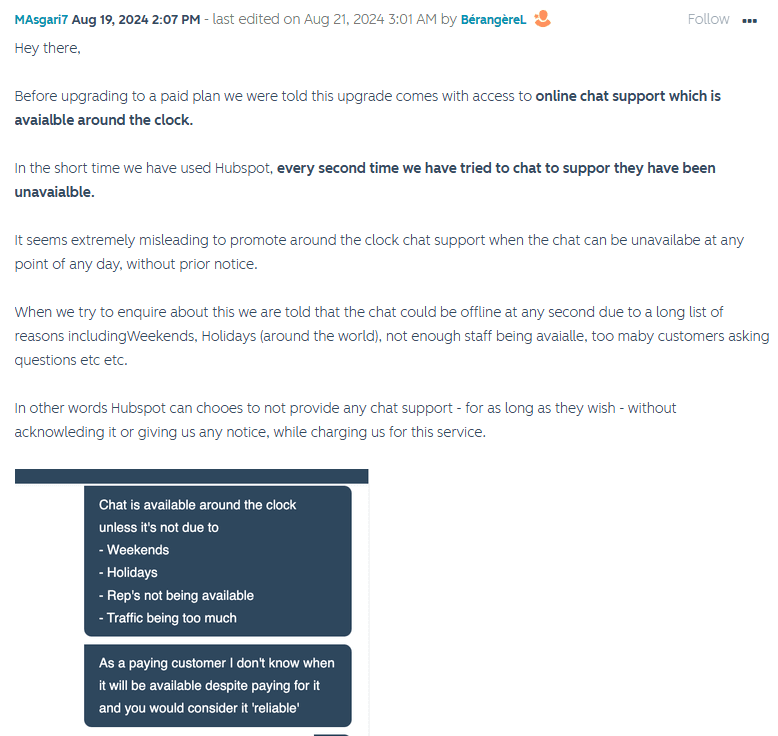
One paid HubSpot customer reported that chat support, advertised as available 24/7, was often unavailable without notice.
The user was informed that availability could vary due to weekends, holidays, staffing, and traffic levels. This points to a need for clearer expectations, better uptime transparency, and less reliance on human-only support coverage.
Top Seven HubSpot Chat Alternatives in 2026
Not every team outgrows HubSpot Chat for the same reason.
Some need better automation. Others need sales acceleration. Many need both.
The tools below reflect how inbound has evolved in 2026. Less manual routing. More AI-led qualifications. Faster speed-to-lead without adding headcount.
We’ve included a mix of AI-first platforms, sales-focused tools, and support-led solutions. Each one serves a different use case, depending on how your team uses chat today and what you expect it to deliver next.
If your priority is turning website traffic into pipeline, start at the top.
1. Breakout (best AI-first alternative)
Inbound chat should create a pipeline, not manual follow-ups.
Breakout is built with that goal in mind.
It helps revenue teams convert website visitors into qualified meetings without adding SDR headcount. Instead of functioning as basic live chat, it operates as an AI-led SDR focused on inbound conversion.
Breakout can de-anonymize visitors and understand intent using behavioral and account context.
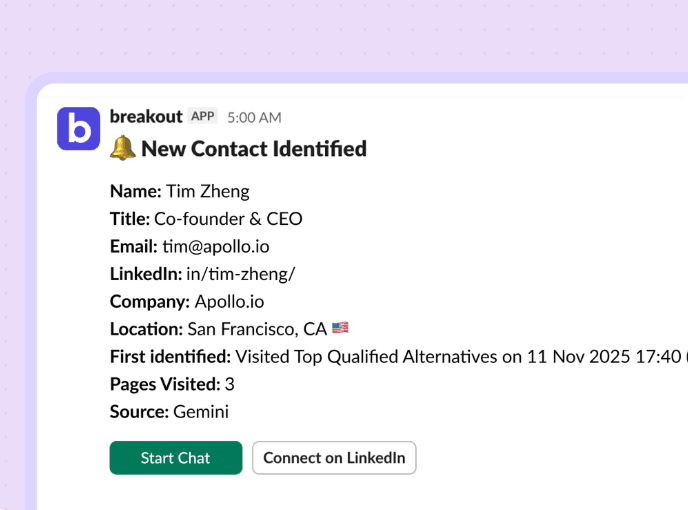
It qualifies visitors in real time, asks relevant follow-up questions, and automatically routes conversations. Meetings can be booked directly within the chat when intent is confirmed.
The platform provides consistent coverage across time zones with automation-first routing. It works with HubSpot, Salesforce, and mixed CRM stacks. Slack alerts keep teams informed without constant inbox monitoring.
Why teams choose Breakout
AI-first qualification, not rules-first bots
Automation-led routing and scheduling
Fast setup and quick time to ROI
Here is the Proof
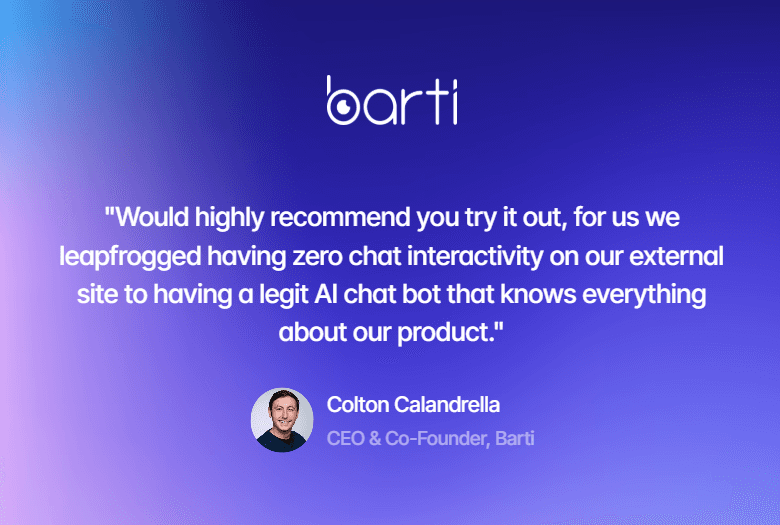
Barti generated 21% of its inbound pipeline in Q1 using Breakout.
No additional SDR hires. No complex workflows.
For teams that see inbound as a growth channel, Breakout is the most direct upgrade from HubSpot Chat.
2. Intercom Fin
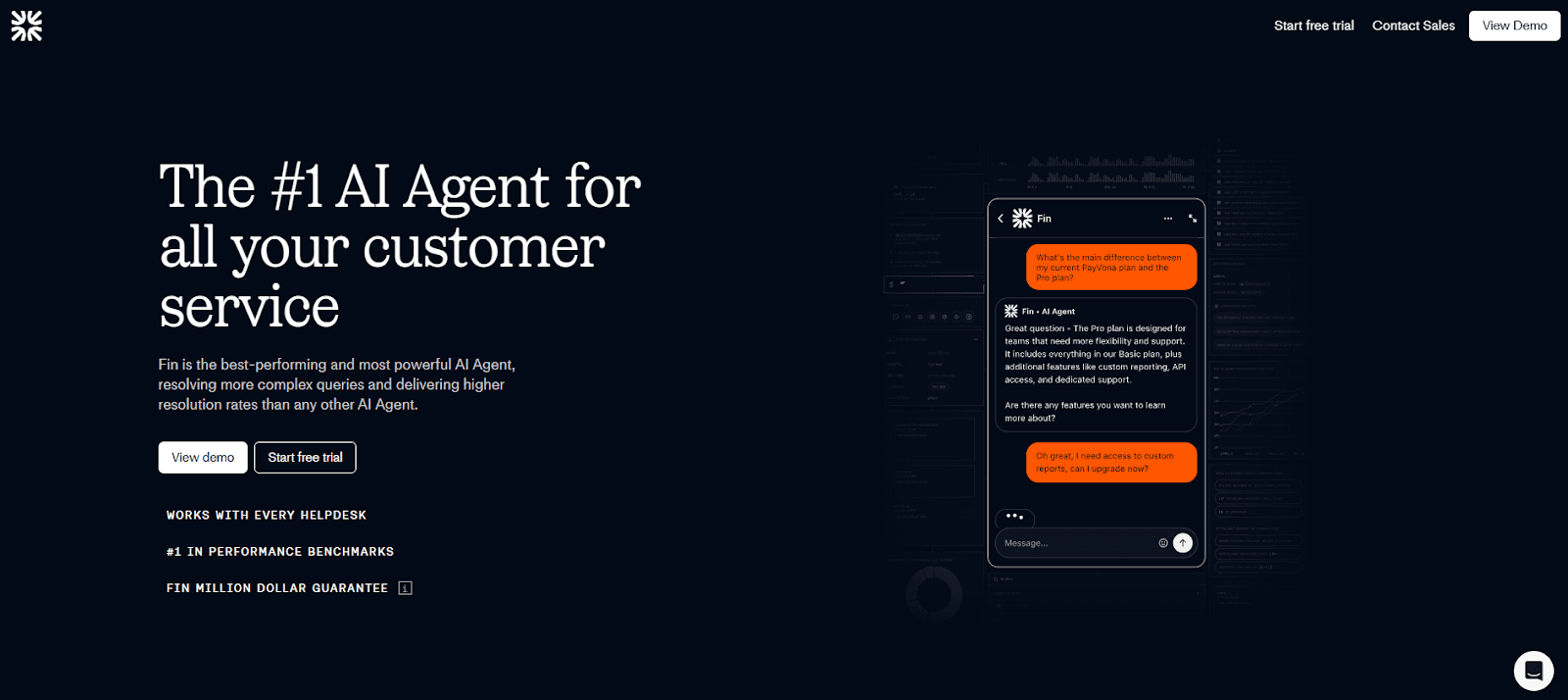
Intercom is a mature platform built primarily for customer support, with chat as one part of a larger service stack.
What users like
Easy-to-use interface that supports teams adopt quickly
Strong automation for handling repetitive support questions
Knowledge base and help desk features reduce ticket volume
What users don’t like
Sales and pipeline use cases require add-ons and manual effort
Pricing increases sharply as automation and seats scale
Chat feels more reactive than proactive for revenue teams
Reviews
"Fin integrates smoothly into Intercom and is easy to set up across channels. It handles repetitive support questions well and maintains on-brand responses by learning from help content. The main drawback is pricing. The pay-per-resolution model makes costs harder to predict and can become expensive as usage scales."
- Stephan W., Head of Support (Small Business)
"Fin improves response times, provides 24/7 coverage, and reduces the workload on human agents. It integrates closely with Intercom and offers clear analytics that help teams improve support quality over time. Overall, it works reliably as an AI support agent without major issues."
- Kim G., Data Entry Specialist (Mid-Market)
Verdict
Intercom is best when chat is mainly a support channel, and your team prioritizes ticket resolution over pipeline creation. It can replace HubSpot Chat for support-heavy teams, but it’s not a strong alternative if your goal is automating inbound sales.
3. Drift
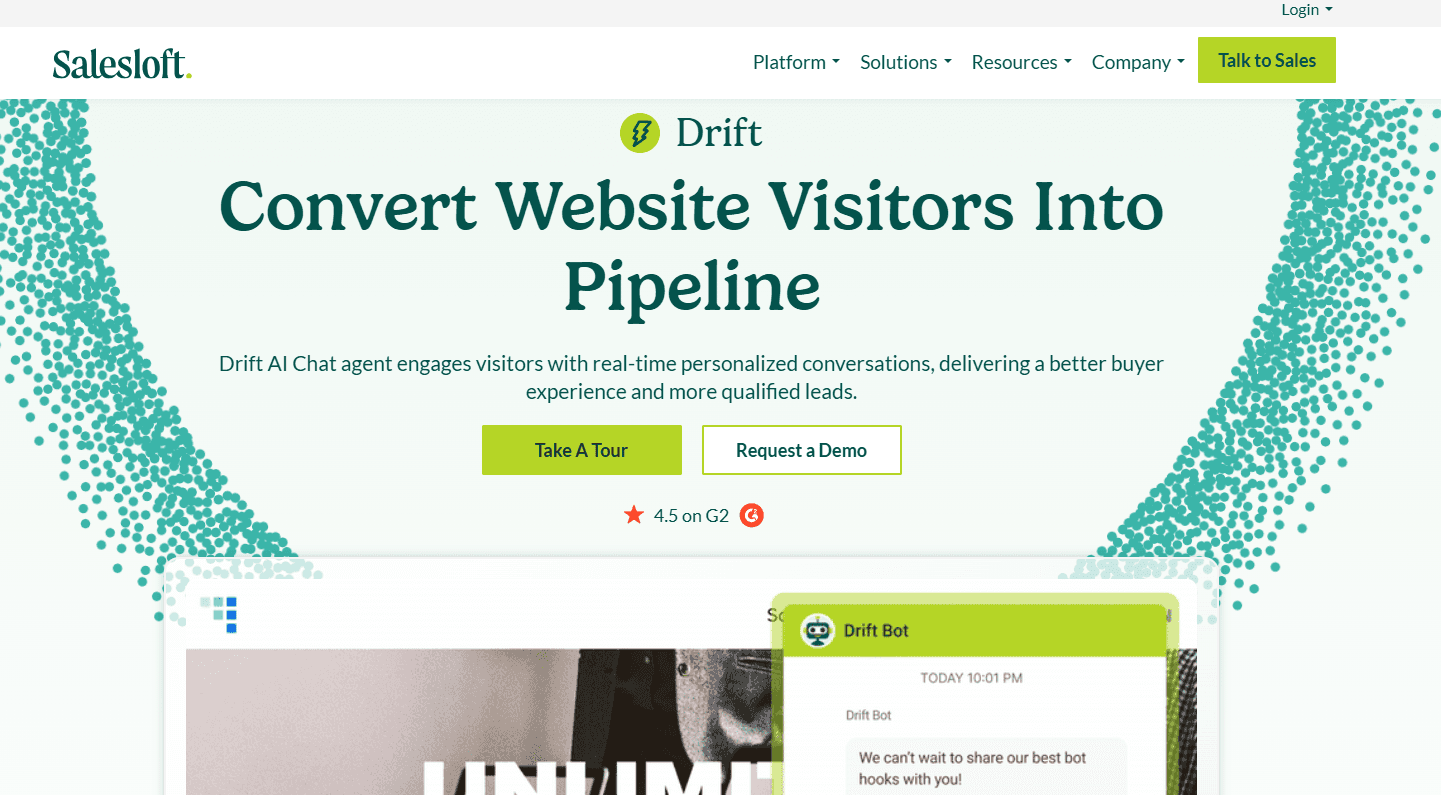
Drift is designed around sales conversations and account-based engagement, especially for B2B teams running ABM motions.
What users like
Effective for engaging high-intent and target accounts
Flexible routing and playbooks for sales teams
Strong brand presence in conversational marketing
What users don’t like
Setup and management require ongoing effort
Heavily dependent on rules and SDR availability
Costs scale quickly as usage grows
Reviews
“Drift is effective at turning website chats into sales opportunities through smart routing and instant meeting scheduling. It integrates well with tools like HubSpot and Salesforce, making it useful for B2B SaaS teams focused on pipeline growth. However, the platform can feel heavy and slow, pricing lacks clarity, and implementation and support can be challenging for smaller teams.”
- Nabin P., CEO (Mid-Market)
“Drift makes it easy to move from chat to action, including calling leads directly or scheduling quick meetings during conversations. The experience is smooth for daily use. That said, customer qualification before routing to sales could be more refined.”
- Shubham C., Business Development Representative (Enterprise)
Verdict
Drift works best for sales-led teams with dedicated SDR coverage and ABM strategy. It can replace HubSpot Chat for sales use cases, but it still relies on humans, making it less effective for teams looking for AI-led automation.
4. Tidio
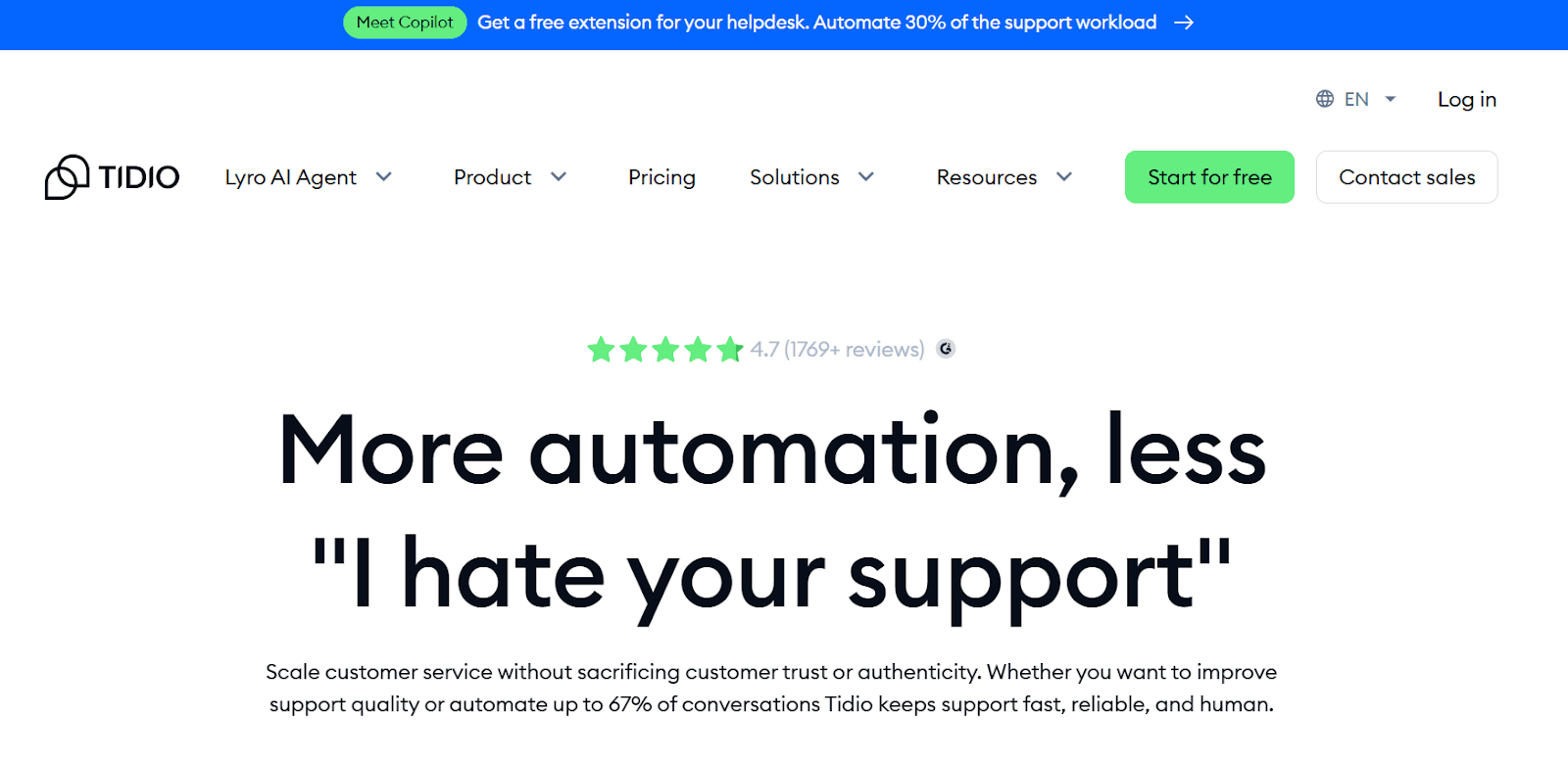
Tidio is a lightweight live chat and automation tool built for small teams. It works well for basic chat coverage and simple automation, but it is not designed for advanced sales qualification or AI-led inbound conversion.
What users like
Quick setup with minimal technical effort
Affordable pricing that suits early-stage teams
Covers basic chat and simple automation needs
What users don’t like
Limited AI and advanced qualification
Not built for complex sales workflows
Teams often outgrow it as inbound volume increases
Costs increase as conversation limits
Reviews
"Tidio makes it easy to manage customer chats from one place with a fast, responsive live chat experience. Setup is quick, and basic automation handles common questions when teams are offline, with smooth handoffs to human agents. As volume grows, automation needs tuning, and advanced features push teams toward higher-priced plans."
- Avyan S., Software Developer (Small Business)
"Tidio’s visual chatbot builder makes creating automations simple, even for non-technical users. The Lyro AI assistant helps small teams handle a large share of customer questions around the clock. However, free and lower-tier plans feel restrictive, and pricing increases quickly as conversation limits and operators scale."
- Andrea C., Photographer and Filmmaker (Small Business)
Verdict
Tidio is best for SMBs that need a simple replacement for HubSpot Chat without added complexity. It’s a good alternative when cost and speed matter more than pipeline automation.
5. Crisp
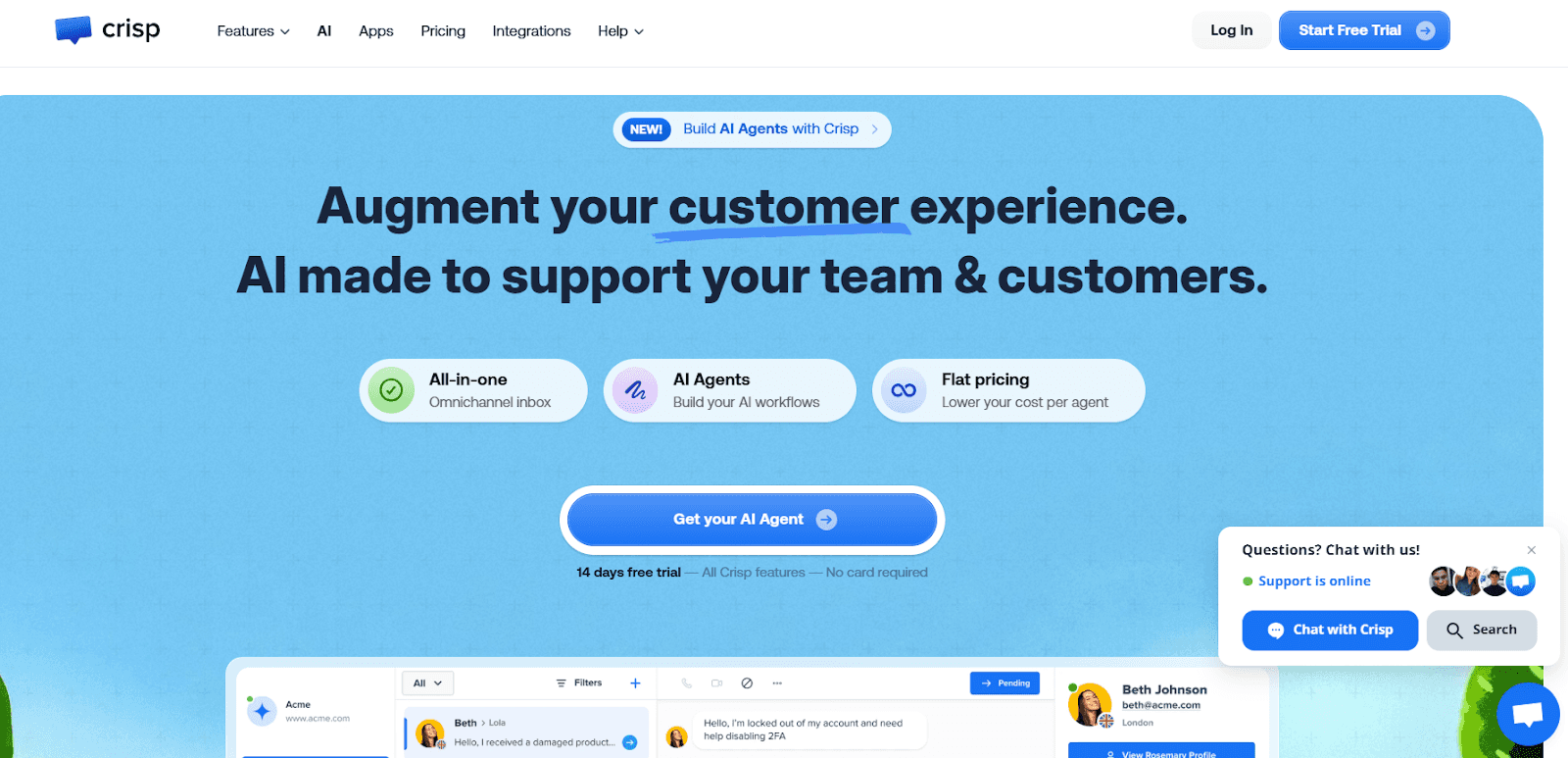
Crisp offers chat, email, and messaging in one platform for startups. It’s easy to use and works well for teams that want simple, affordable communication tools.
What users like
Clean interface with a low learning curve
Unlimited seats on lower plans
Good value for small teams
What users don’t like
Automation and AI features are basic
Limited support for sales qualification
Reporting lacks depth for revenue teams
Reviews
"Crisp brings live chat, email, WhatsApp, and messaging into one clean, intuitive inbox. Automation and chatbot flows help reduce manual work, and real-time visitor tracking adds useful context for sales and support teams. Initial setup, especially around WhatsApp credits and billing, can feel less straightforward."
- Ali Can H., Marketing Manager (Small Business)
"Crisp makes it easy to centralize conversations across channels in a single, simple-to-learn interface. Real-time visitor insights and automation save time in daily workflows. However, the mobile app lacks some advanced features available on the desktop version."
- Rafael G., Laravel Developer (Small Business)
Verdict
Crisp is best for startups that want an affordable, easy-to-use HubSpot Chat alternative. It’s not ideal if chat is expected to drive revenue outcomes.
6. Zendesk Messaging
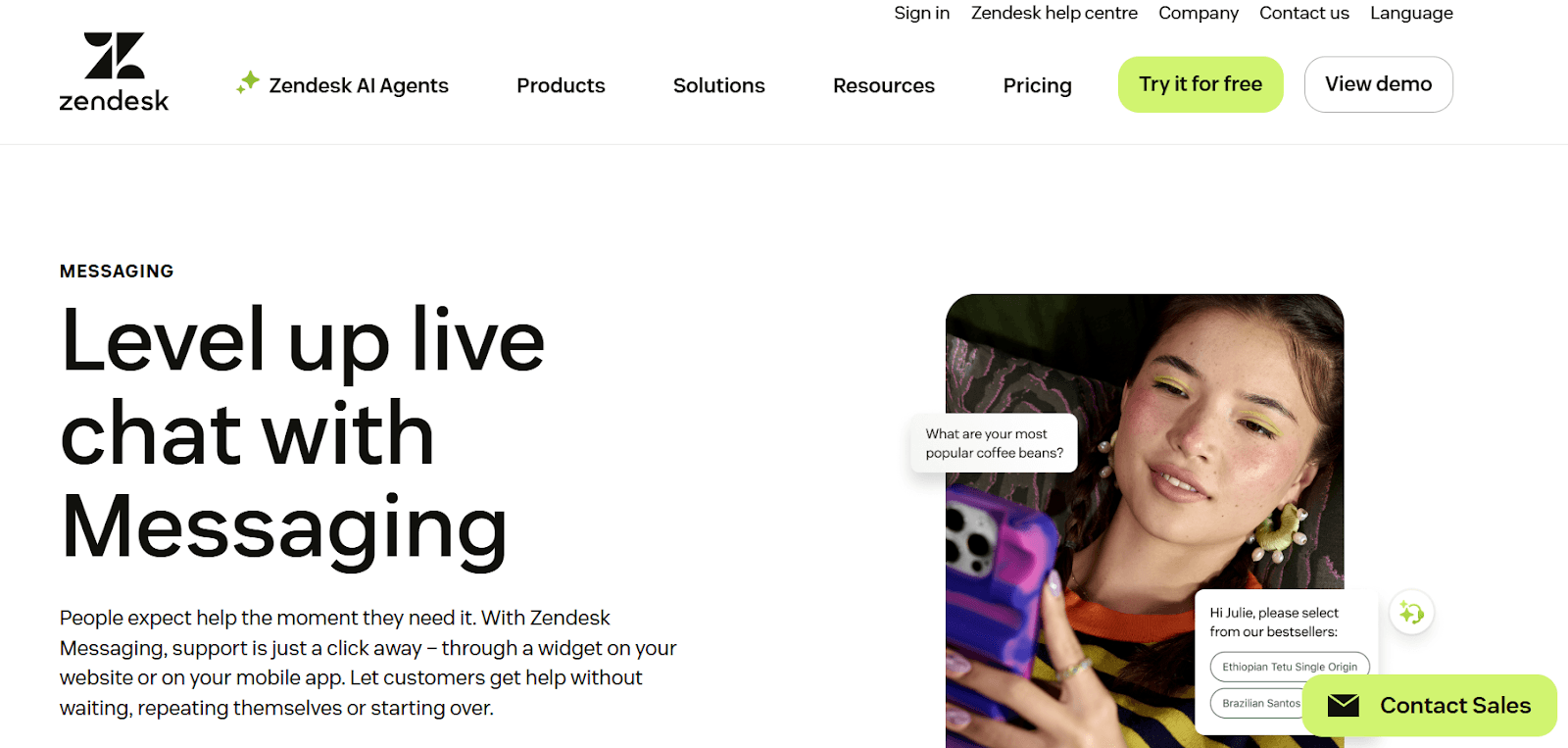
Zendesk Messaging is built for customer support at scale within the Zendesk ecosystem.
What users like
Deep integration with Zendesk tickets and workflows
Handles high-volume support environments well
Reliable performance for large teams
What users don’t like
Sales and marketing features feel secondary.
Expensive for non-enterprise teams.
Limited value for inbound sales automation.
Reviews
"Zendesk keeps high-volume customer support organized by centralizing email, chat, and customer history in one place. Automation, workflows, and reporting help teams work efficiently at scale. However, setup can feel complex, and pricing increases quickly as advanced features and agents are added."
- Radhika R., Full Stack Developer (Small Business)
"It is a structured and reliable platform for managing support at scale. Strong automation, integrations, and APIs reduce manual work and keep workflows consistent. The trade-offs are higher costs as teams grow and increased complexity when managing advanced configurations."
- Sanket P., Software Engineer (Small Business)
Verdict
Zendesk Messaging is best when chat is primarily a support channel. It can replace HubSpot Chat for support use cases, but it’s not a strong alternative for revenue-focused teams.
7. Warmly AI
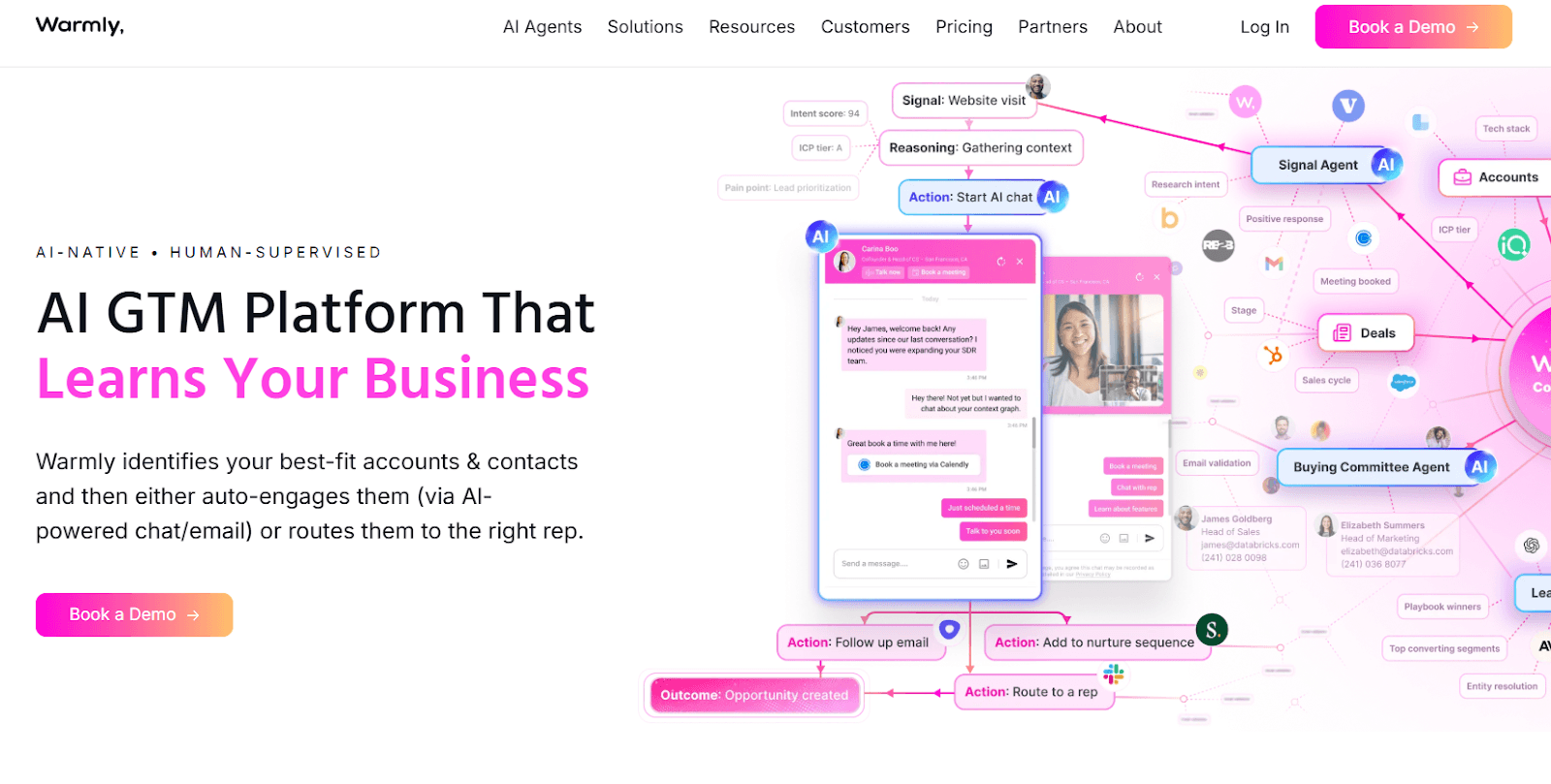
Warmly focuses on identifying website visitors and surfacing intent data for B2B sales teams. It helps teams understand who is on the site and prioritize outreach based on real-time engagement signals.
What users like
Strong intent and visitor identification
Helps sales teams prioritize outreach
Useful for ABM strategies
What users don’t like
Not a complete chat or AI SDR solution
Requires other tools for qualification and booking
Limited conversational automation
Reviews
"Warmly provides real-time visibility into who is visiting the website and what they are engaging with. Intent signals and integrations with tools like HubSpot and Slack help teams prioritize high-interest accounts quickly. However, visitor identification accuracy can vary, and reporting and customization options feel limited for deeper analysis."
- Khushi K., Demand Generation Specialist (Small Business)
"Warmly makes it easy to identify and engage high-intent website visitors in real time. Its AI-driven insights, alerts, and integrations help sales teams act faster and personalize outreach. Some advanced features are locked behind higher pricing tiers, and identification accuracy depends on traffic quality."
- Nour K., AI Evaluator (Mid-Market)
Verdict
Warmly is best used as an intent layer alongside chat. It complements HubSpot Chat but does not fully replace it for inbound conversion.
Comparison Table: HubSpot Chat Vs HubSpot Chat Alternatives
This table helps you cut through feature lists and focus on outcomes.
It highlights three things that matter in real buying decisions:
What each tool is primarily built for
How much automation does it actually provide
Whether it contributes to the pipeline or just conversations
If your goal is basic chat coverage or support efficiency, several options here will work. If your goal is to turn inbound traffic into qualified meetings, the differences become obvious.
Use this table to quickly rule tools in or out based on how you expect chat to perform for your business.
Platform | Primary Use Case | AI / Automation Depth | Pipeline Focus |
HubSpot Chat | Basic live chat + support | Low (rules-based bots) | Low |
Breakout | AI-led inbound SDR | High (AI qualification, routing, booking) | High |
Intercom Fin | Customer support at scale | Medium (AI support automation) | Low |
Drift | Sales chat + ABM | Medium (rules + human SDRs) | Medium |
Tidio | SMB live chat | Low | Low |
Crisp | Startup omnichannel chat | Low | Low |
Zendesk | Enterprise support | Low to Medium | Low |
Warmly | Visitor intent + identification | Medium (intent signals) | Medium (assistive) |
How to choose the right alternative
Choosing the right HubSpot Chat alternative depends on what you expect chat to achieve.
If chat is mainly for support, HubSpot Chat and similar tools are sufficient. They help manage conversations, answer questions, and resolve tickets efficiently.
But expectations change when chat is expected to drive pipeline.
In 2026, inbound teams need more than rules-based bots and manual handoffs. Buyers expect fast, relevant engagement. Revenue teams need consistent coverage without adding SDR headcount.
This is where Breakout fits best.
Breakout is built for inbound pipeline, not just conversations.
It de-anonymizes visitors, understands intent, qualifies in real time, and books meetings automatically. The focus is on conversion, not inbox management.
For teams that have outgrown HubSpot Chat and want inbound to generate revenue, Breakout is the most direct alternative.
See how an AI SDR qualifies and books meetings in minutes.
FAQs
1. What’s the best HubSpot Chat alternative for SMBs?
For SMBs focused on pipeline creation, Breakout is the strongest option because it automates qualification and meeting booking. For teams needing simple live chat and low-cost support coverage, Tidio is often a practical and easy-to-adopt alternative.
2. Does HubSpot Chat use AI?
HubSpot Chat includes basic automation and rule-based bots designed for routing and FAQs. It does not offer full AI SDR capabilities, such as real-time intent understanding, autonomous qualification, or automated meeting booking across inbound conversations.
3. Do these HubSpot Chat alternatives work with HubSpot CRM?
Most leading alternatives integrate with HubSpot CRM. Tools like Breakout, Drift, Intercom, and Warmly sync conversation data, lead activity, and routing information, allowing teams to keep HubSpot as their system of record.
4. How hard is it to switch from HubSpot Chat?
Switching from HubSpot Chat is typically straightforward. Most platforms offer fast setup, lightweight installation, and simple migration paths without disrupting live conversations or requiring major changes to your website or CRM setup.
5. Is HubSpot Chat free to use?
HubSpot Chat offers a free tier suitable for basic live chat and early-stage use. However, advanced features, reporting, and scaling options are tied to paid HubSpot plans, which can increase costs as teams grow.
6. How does HubSpot Chat pricing scale over time?
HubSpot Chat pricing scales with added users, inbox complexity, and connected tools. As more teams share the inbox and automation needs grow, total costs often rise beyond the initial free or low-cost entry point.
7. Can HubSpot Chat generate inbound pipeline on its own?
HubSpot Chat helps start conversations but relies heavily on human follow-ups and manual qualification. It is not designed to autonomously convert visitors into meetings, which limits its direct impact on inbound pipeline creation.
8. What do HubSpot Chat reviews commonly say?
HubSpot Chat reviews often praise ease of use and CRM integration. Common criticisms include limited automation depth, reliance on rules, and challenges scaling chat for sales-driven or high-volume inbound teams.
9. Which alternative is best for AI-led inbound sales?
Breakout is purpose-built for AI-led inbound sales. It de-anonymizes visitors, understands intent, qualifies conversations in real time, and books meetings automatically without requiring additional SDR headcount.
10. Do AI-first chat tools replace SDRs completely?
AI-first chat tools reduce manual SDR work significantly by handling qualification and routing. SDRs are still valuable for complex deals, outbound efforts, and later-stage sales conversations that require human judgment.