All Blogs
A quick look at better options than Spara.

Evan Marshall
Senior Growth AI Strategist
Published On

Every B2B sales team is chasing the same outcome.
More qualified meetings, delivered faster.
AI has started to make that a reality. In 2024 alone, teams using AI SDRs saved 2 to 5 hours per rep every week. Productivity increased by as much as 44%. Not because AI replaced SDRs, but because it removed friction from the process.
This is why AI-led inbound SDRs are quickly becoming the new standard.
Spara is one of the newer tools in this space. It presents itself as a multichannel AI agent that engages leads through chat, email, and voice. The idea is promising.
But the product is still early, and that becomes clear when you compare it with more established AI SDR platforms like Breakout and Drift.
If you are evaluating Spara, you are at the right place.
In this article, we will walk through what Spara does well, where it falls short, and whether it makes sense for your revenue team today.
We will also cover the best Spara alternatives and break down how each one performs in terms of speed to lead, AI capabilities, and real pipeline impact, based on real user reviews.
Let's Take a Closer Look at Spara: A Multichannel AI Agent
As we mentioned earlier, Spara positions itself as a multichannel AI agent.
It engages inbound leads across website chat, email, and voice. The goal is to contact prospects immediately after they show intent, no matter how they enter the funnel.
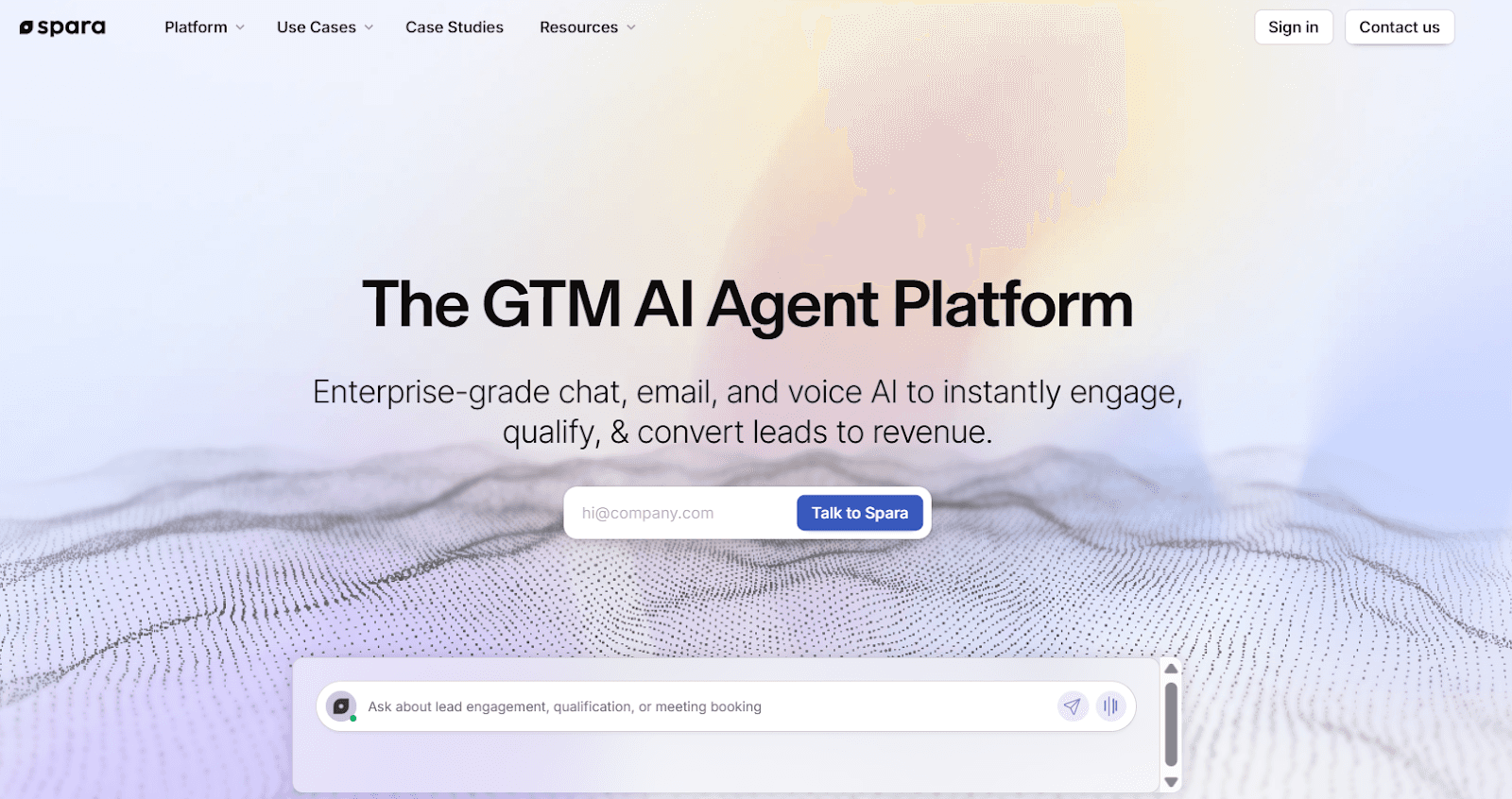
At a high level, Spara is built to:
Respond instantly to inbound signals
Capture basic qualification details
Route interested prospects toward demos or meetings
The platform is mainly optimized for simple and linear flows. This can feel limiting for teams with complex buying journeys, deeper qualification requirements, or multi-stakeholder sales motions.
What Prompts Teams to Consider Spara Alternatives
Most teams don’t go looking for an alternative on day one. They get there after using the product and noticing a few friction points.
1. ROI is hard to validate upfront
There are limited detailed reviews and public case studies available. For revenue leaders, this makes it harder to confidently predict impact before investing time and budget.
2. It does not fully replace the inbound GTM stack
Spara often needs to be paired with other tools for enrichment, routing, CRM workflows, and reporting. More tools mean more setup, more maintenance, and a slower time to value.
3. Limited emphasis on visitor identification
Speed to lead depends on knowing who is on your site. Spara does not strongly highlight deanonymization, which can delay engagement with high-intent buyers.
4. Leans toward a hybrid sales model
Spara’s approach suggests more human SDR involvement in early conversations.
For teams aiming to run an AI-first inbound motion and scale without adding headcount, this can become a constraint.
Platforms like Breakout make this gap entirely solvable.
Breakout is an all-in-one AI SDR built to reduce manual SDR work. It also speeds up pipeline creation.
It shortens the path from anonymous traffic to qualified sales conversations.
If you want proof, look at
How Breakout Helped HackerHealth
After adopting Breakout, HackerHealth started engaging high-intent visitors the moment they landed on the site. They no longer waited for form fills or delayed outreach.
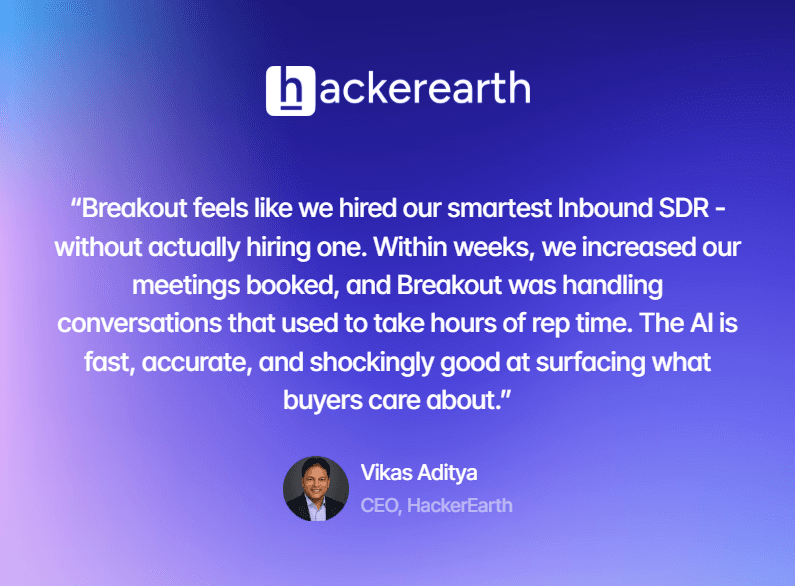
Breakout handled first-touch conversations across channels. It qualifies leads automatically. Only sales-ready prospects reached the sales team.
The impact was clear.
Qualified conversations began within minutes rather than hours or days. Demo-ready leads increased without adding SDR headcount. Manual follow-ups dropped significantly. Sales teams spent more time closing deals.
HackerHealth also gained visibility into buyer intent before prospects converted.
Breakout helped turn existing traffic into a real pipeline. It did this faster and with less operational effort.
Top 3 Spara Alternatives You Should Consider
Spara may work for teams exploring a multichannel AI approach, but it is not the only option.
Several platforms focus more clearly on inbound conversion, speed to lead, and measurable pipeline impact.
The alternatives below differ in how much they automate, how quickly teams see value, and how much manual effort they require. If your goal is to turn website traffic into real conversations and a qualified pipeline, these tools are worth a closer look.
1. Breakout - All-in-one Inbound Platform
Breakout is an all-in-one AI SDR built for inbound revenue teams.
It sits on your website and engages visitors in real time.
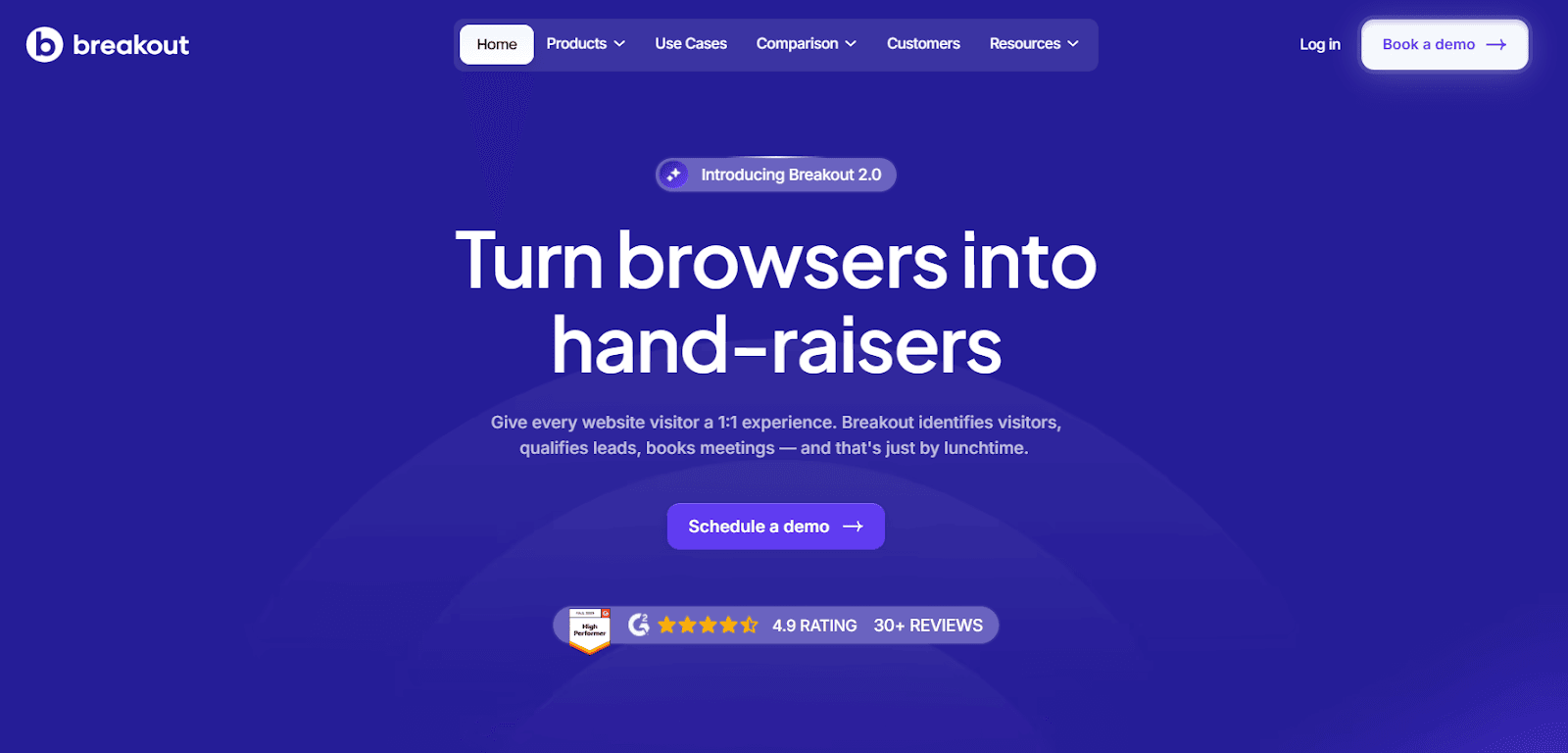
Breakout identifies anonymous visitors, starts conversations, qualifies intent, and routes leads automatically. It can answer product questions, deliver in chat demos, and book meetings.
The goal is simple. Turn passive website traffic into qualified pipeline without adding SDR headcount. Breakout integrates smoothly with tools like Slack. Sales teams get real-time alerts, summaries, and lead context to act faster.
Pros
Setup takes minutes using a simple Google Tag
Converts anonymous visitors into active conversations
Strong real-time Slack alerts improve speed to lead
Automated inbound qualification reduces SDR workload
In chat product demos help move buyers forward
Smooth integrations with CRM and GTM tools
Support team is fast, responsive, and proactive
Clear lift in inbound conversion rates and pipeline
Cons
Breakout's purpose is built for inbound conversion, so its biggest impact shows once traffic is flowing to your site.
Teams that already rely heavily on inbound will see results faster than teams just starting to build demand.
Pricing Model
Breakout follows a subscription-based B2B SaaS pricing model.
Plans likely scale based on website traffic, feature usage, and GTM needs. This positions Breakout for serious inbound-focused teams rather than casual use.
Customer Reviews
Users consistently highlight speed, ease of setup, and real pipeline impact.
"Breakout’s turned our website into an actual driver of new business. Visitors aren’t just bouncing. They’re engaging."
- Sanjay G., CEO, Small Business
"The lift on inbound has been real, north of 18 percent since we turned it on."
- Anubhav T., Data Engineer, Small Business
Support quality and responsiveness also stand out across reviews.
Final Verdict
Breakout is best suited for B2B SaaS teams that rely on inbound demand.
You should use Breakout if:
You have strong website traffic but low conversion
Speed to lead is hurting inbound revenue
SDR bandwidth is limited or expensive
You want intent visibility before form fills
Breakout works best for early-stage to mid-market teams. It is especially effective when used as the first touch SDR layer.
2. Qualified
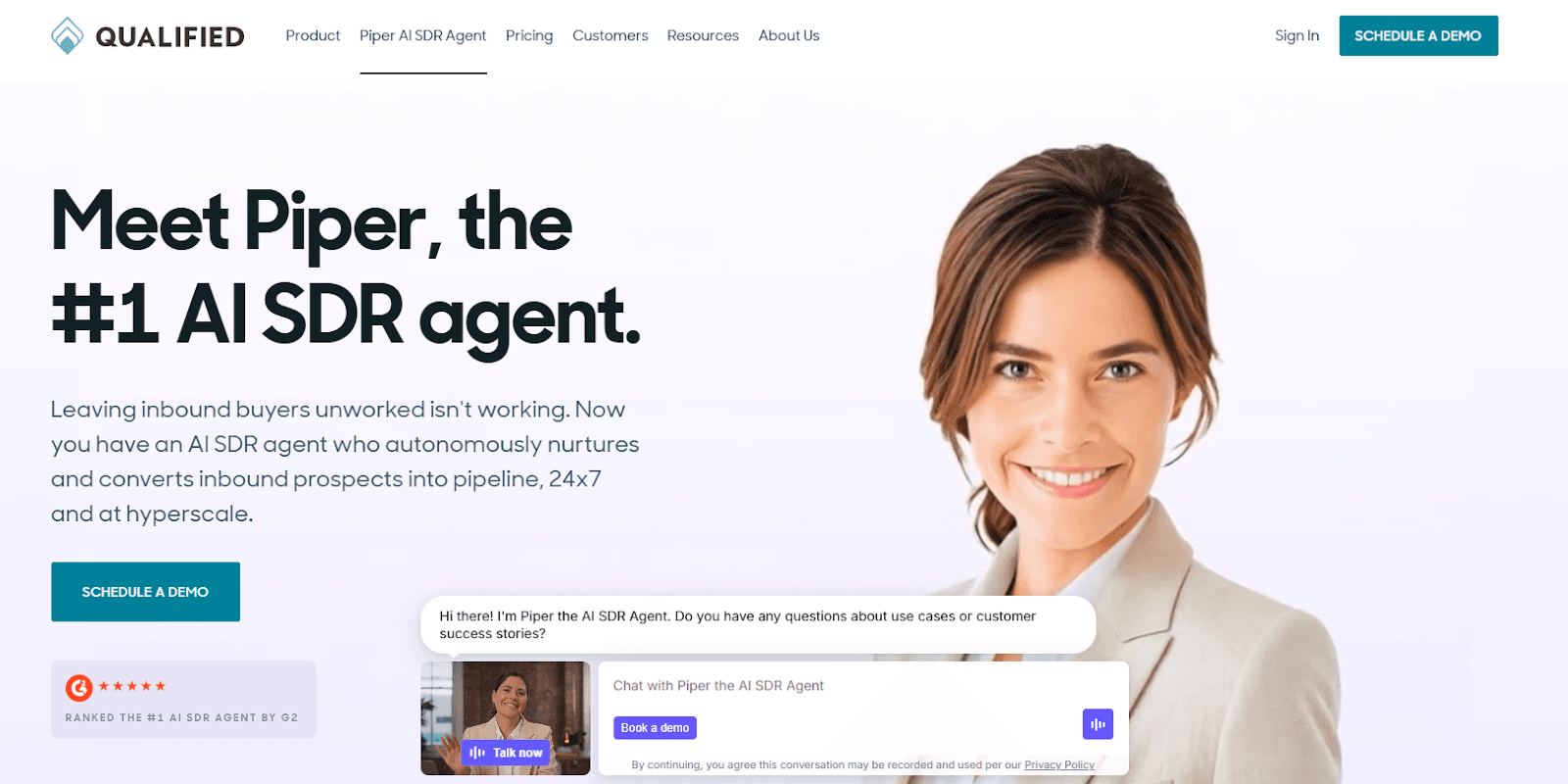
Qualified is a conversational AI platform designed to help B2B teams engage website visitors and route conversations to sales.
It focuses on live chat, AI-driven qualification, and structured handoffs.
The platform is commonly used by mid-market and enterprise teams. Qualified is often positioned as part of a broader revenue operations stack rather than a lightweight inbound tool.
Pros
Helps convert website visitors into sales conversations
Strong Salesforce integration for routing and data sync
Flexible targeting based on page, account, or intent
Cons
Qualified tends to work best for teams with established processes and cross-functional alignment
Teams with simpler inbound motions may find the platform heavier than needed
Pricing Model
Qualified uses a custom enterprise pricing model.
Pricing is not publicly available. Costs typically scale with traffic volume, features, and organizational complexity. It is generally positioned for mid-market to enterprise budgets.
Customer Review
Below is a representative review highlighting typical Qualified feedback.
“Qualified helps turn website traffic into real sales conversations. The AI chatbot qualifies intent well before passing conversations to sales, which has improved lead quality for us.”
- Edwin L., Sales Operations Manager, Enterprise
The reviewer also notes a learning curve during setup, which eases once workflows are configured.
Final Verdict
Qualified is a reasonable option for larger teams with structured sales operations.
It fits organizations that prioritize control, reporting, and Salesforce alignment.
For teams looking to move fast, reduce setup effort, or get value with minimal overhead, Qualified may feel more involved than necessary.
This is where simpler, AI-first inbound platforms like Breakout often become the preferred alternative.
3. Drift
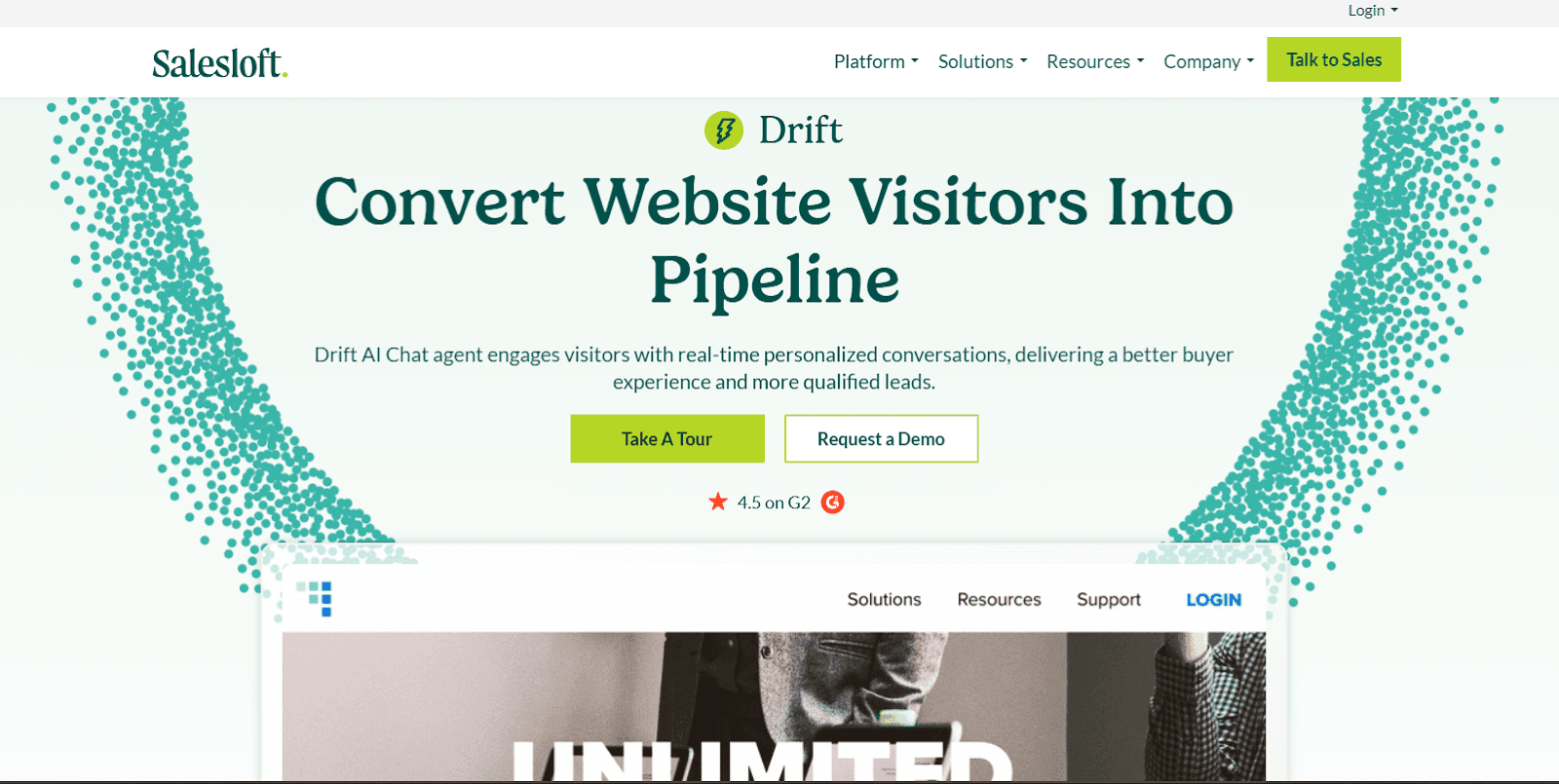
Drift is a conversational marketing and sales platform focused on live chat and meeting booking. It helps B2B teams turn website conversations into sales opportunities.
Drift is commonly used by mid-market and enterprise teams. It integrates with tools like HubSpot, Salesforce, and Marketo. The platform has evolved over time from basic chat to a broader sales engagement tool. It is often part of a larger, enterprise GTM stack.
Pros
Integrates with major CRM and marketing platforms
Useful for SDR teams handling inbound conversations
Supports calling and live handoffs in some workflows
Familiar tool for many enterprise sales teams
Cons
Drift tends to be better suited for larger teams with enterprise budgets
Teams often need time and resources to manage setup, performance, and ongoing optimization
Several reviews mention higher costs compared to alternatives.
Pricing Model
Drift follows a high-end enterprise pricing model.
Pricing is not clearly published and can be difficult to predict upfront.
Customer Review
“Drift transforms website chats into immediate sales opportunities and routes complex inquiries well, but the platform can feel slow and expensive.”
Nabin P., CEO, Mid Market
Final Verdict
Drift remains a known player in conversational sales. It works reasonably well for enterprise teams with established SDR processes.
For teams that want faster deployment, clearer pricing, and a more AI-first inbound motion, Drift may feel heavy. This is why many modern teams now evaluate newer alternatives like Breakout.
A Quick Comparison: Spara Vs Spara Alternatives
At a high level, tools like Spara, Breakout, Qualified, and Drift all aim to improve inbound sales conversations.
Where they differ is in how much they automate, how quickly teams see value, and how much operational effort they require.
Some platforms focus on hybrid models with heavier human involvement. Others are built for enterprise scale with deeper configuration needs.
The table below compares these platforms across core capabilities, pricing approach, and ideal use case to help clarify where each one fits.
Platform | Core Strengths | Pricing | Primary Use Case |
Breakout | Fast setup, AI-led conversations, intent capture, CRM and Slack integration, in chat demos | Custom pricing - scales with usage | B2B teams looking to turn website traffic into pipeline quickly with minimal SDR effort |
Spara | Broad channel coverage, hybrid sales support | Custom pricing | Teams experimenting with AI-assisted outbound and inbound across multiple channels |
Qualified | Salesforce depth, targeting rules, reporting, enterprise support | Enterprise pricing, not public | Mid-market and enterprise teams with mature RevOps and complex routing needs |
Drift | Live chat, meeting booking, CRM integrations | High-end enterprise pricing | Large sales teams handling high inbound chat volume |
Move Faster With the Right Spara Alternative
Through this article, we can see that while Spara offers a multichannel approach and a few clear benefits, there are still gaps.
One of the biggest is “credibility”, since it is hard to find public user reviews that validate real results.
When it comes to Spara alternatives, choosing what works best depends on how your team sells and where conversions matter most.
If your focus is faster conversions and a stronger inbound motion, the difference becomes clear quickly.
You need more than multiple channels. You need clear intent signals and immediate action.
This is where Breakout fits better.
Breakout is a full inbound AI SDR built to maximize inbound ROI.
It identifies anonymous visitors, qualifies them in real time, and books meetings without slowing your team down.
If your goal is to turn website traffic into a pipeline with speed and consistency, Breakout is the more practical choice.
Book a demo to see Breakout’s AI SDR qualify visitors and book meetings in real time.
FAQs
1. What are the best Spara alternatives available today?
The best Spara alternatives depend on your GTM goals. Teams focused on inbound conversion often compare Breakout, Qualified, and Drift. These platforms differ in automation depth, setup effort, and how quickly they turn website traffic into pipeline.
2. How is Breakout different from other Spara competitors?
Breakout is built as a full inbound AI SDR rather than a multichannel assistant. It focuses on identifying anonymous visitors, qualifying intent in real time, and booking meetings. This makes it a strong option for teams prioritizing inbound ROI.
3. Does Spara AI have public pricing?
Spara AI pricing is not publicly available. Like many AI buyer engagement platforms, pricing is typically shared through sales conversations and may vary based on usage, channels, and team size.
4. What should I look for in an AI buyer engagement platform?
When evaluating an AI buyer engagement platform, look for real-time visitor engagement, intent qualification, CRM integration, and speed to lead. Platforms that combine these elements tend to deliver higher inbound conversion rates.
5. Is Breakout the best inbound AI SDR for B2B teams?
Breakout is often considered one of the best inbound AI SDR options for B2B teams with steady website traffic. It works especially well for teams that want faster qualification and minimal manual SDR effort.
6. Are Spara competitors better for inbound or outbound sales?
Most Spara competitors are stronger on inbound use cases. Platforms like Breakout, Qualified, and Drift are primarily designed to engage website visitors and route qualified conversations to sales teams rather than run outbound campaigns.
7. Can an AI SDR replace human SDRs completely?
AI SDRs are most effective at first touch engagement and qualification. While they reduce manual workload significantly, most teams still use human SDRs for complex or late-stage sales conversations.