

All Blogs
A simple breakdown of Top 10 Warm Outbound Tools: pricing without the confusing fine print.

Paige Rankwell
GTM Analyst
Published On
Are you still running outbound like it’s 2019?
Many outbound programs are built on a bad assumption.
They assume the fastest path to the pipeline is more contacts, sequences, and volume.
Reps spend hours building lists and sending messages that sound like every other message in the inbox.
When outreach fails, teams send more volume and call it “testing.”
Meanwhile, buyers are not sitting around waiting for a pitch.
They are revisiting your pricing pages
They are reviewing your integrations and setup docs
They are scanning case studies on your site
These are the hand-raise moments most teams miss.
Warm outbound tools help you act on these signals fast.
While warm leads are said to have a 3x higher conversion rate, warm outbound campaigns will only work if your team can act fast.
The problem is that teams today are not equipped for this. Intent signals come in, then sit untouched. Research takes too long, while reps are stuck toggling between tools.
This is where the outbound stack is changing in 2026.
Tools like Apollo, Warmly, and Clay can help you find, enrich, and segment. But what most teams still lack is an AI SDR that can act on the data immediately (not next week or when a rep has time).
In this guide, we give you our honest review of the top 10 tools that you need to consider for warm outbound success in 2026.
If you want to build an outbound motion that starts from intent, respects buyer attention, and converts without burning out your team, read on.
What is warm outbound?
Warm outbound is an inbound-led outbound motion. It starts when a buyer engages with your website, emails, ads, or webinars, and then you follow up while interest is still active.
The follow-up happens while the buyer is still researching, and it addresses what they care about.
A warm outbound motion has three steps:
Detect the signal
Resolve identity
Take contextual action
If any of those steps is slow, the signal goes stale.
Why warm outbound works:
Familiarity reduces resistance: Buyers reply more when they recognize your name
Signals give you context: You do not need generic openers
Speed matters: You follow up while the buyer is still active
Rep time improves: SDRs spend less time on dead sequences and more time on real accounts
The 10 best tools for warm outbound in 2026
As outbound stacks are being rebuilt in 2026, we tested the leading warm outbound tools hands-on.
Our top filter was “time to action.” How quickly can your team see a signal, route it, and start a relevant conversation while interest is still alive?
Warm outbound tools fall into four categories. Teams may choose one category or use a mix across the stack:
Signal detection (Warmly, Dealfront, 6sense, Common Room)
Person-level identity resolution (RB2B)
Enrichment and personalization (Clay)
Execution (Apollo, Outreach, HubSpot)
Full-loop AI SDR (Breakout)
Below, we break down the 10 best warm outbound tools. We share our verdict on each platform. You’ll also get clear notes on pricing, what works well, and where it falls short.
Breakout (AI SDR platform that closes the loop, best for speed-to-lead)
Many warm outbound tools stop at visitor identification. They show you who visited, what they did, and which accounts look interesting. Then they hand the work back to your team.
Breakout is different. It does not just surface intent. The tool is built to identify anonymous visitors, build context, and start a conversation while the buyer is still engaged. It also closes the loop when the visitor leaves without converting.
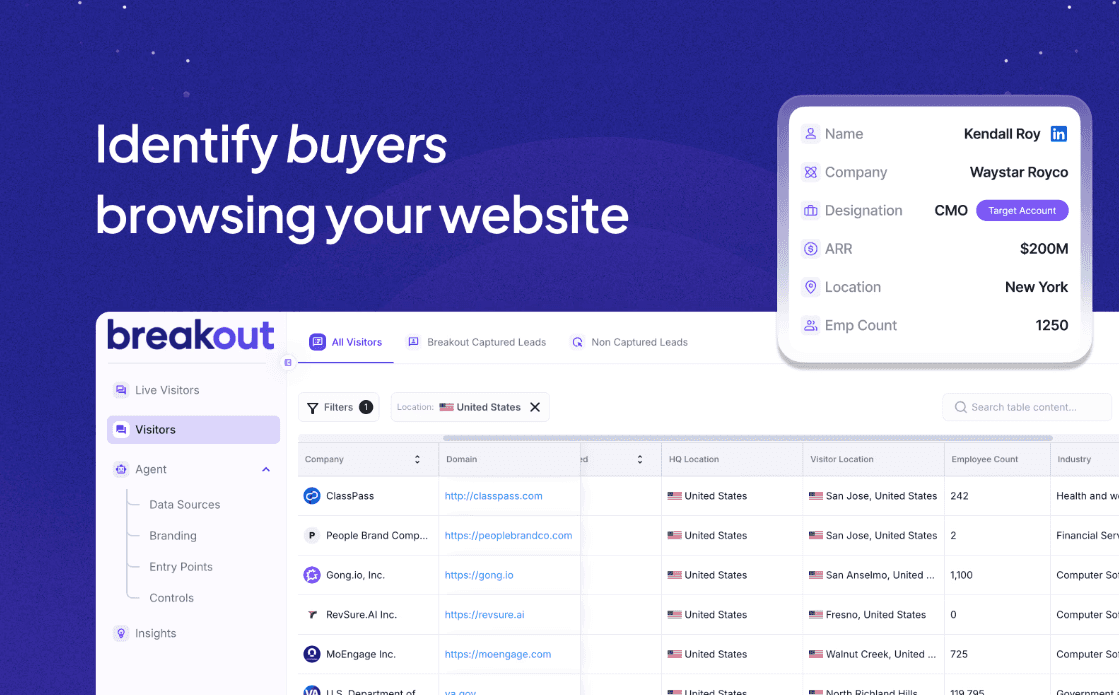
At its core, Breakout functions like an AI SDR that can qualify, route, and book meetings without waiting on a human handoff.
How quickly does it let you act on a signal?
Breakout is built for speed. It does not wait for a rep to see an alert, research the account, and decide what to send.
The platform uncovers anonymous visitors, builds a 1:1 persona through enrichment, and engages them with contextual nudges while they are still browsing.
If a high-intent visitor bounces, Breakout can trigger LinkedIn and email follow-up using the same session context as soon as they leave your website.
This is what makes Breakout a strong fit for warm outbound. It turns first-party intent into action without a human bottleneck.
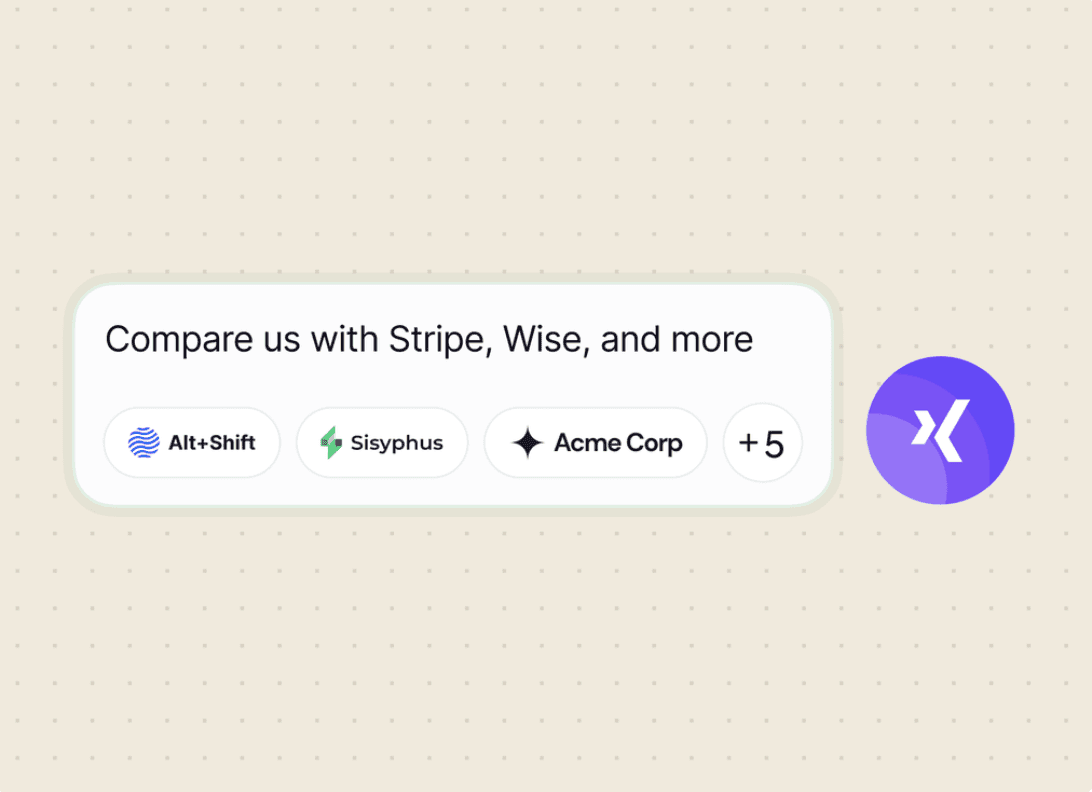
If a visitor is in comparison mode, Breakout can trigger a competitor comparison. If they are stuck on pricing, it can surface a short ROI calculator. If they need proof, it can pull the most relevant G2 reviews for their industry, size, and region.
And when the visitor is high value, Breakout routes them directly to the right rep while they are still on the site.

Pricing
Plans start with packages for early-stage teams, with consumption-based pricing at higher tiers.
What Breakout does well
Converts visitors even when reps are offline
Learns from GTM content and CRM history
Runs tailored qualification paths by persona
Supports voice engagement with instant feedback
Embeds interactive demos inside live conversations
Provides deep intent insight from deanonymized data
Connects cleanly with multiple CRMs
What could be better?
Advanced analytics modules are still developing.
Why Breakout fits in a warm outbound tools stack
Visitor deanonymization provides the company and context early in the user session
Auto-waterfall enrichment to fill in missing context fast
Real-time qualification tied to behavior, not generic scripts
Meeting booking and routing inside the same workflow
Step-in control so reps can jump in and close live
24/7 engagement through chat and voice
CRM integrations across HubSpot and other systems
How Recruit CRM turned “dark traffic” into 50+ new pipeline leads
Recruit CRM switched from Intercom to Breakout to capture high-intent website visitors without waiting for SDR follow-up. The platform qualified buyers during the session and routed the best ones into the sales workflow.
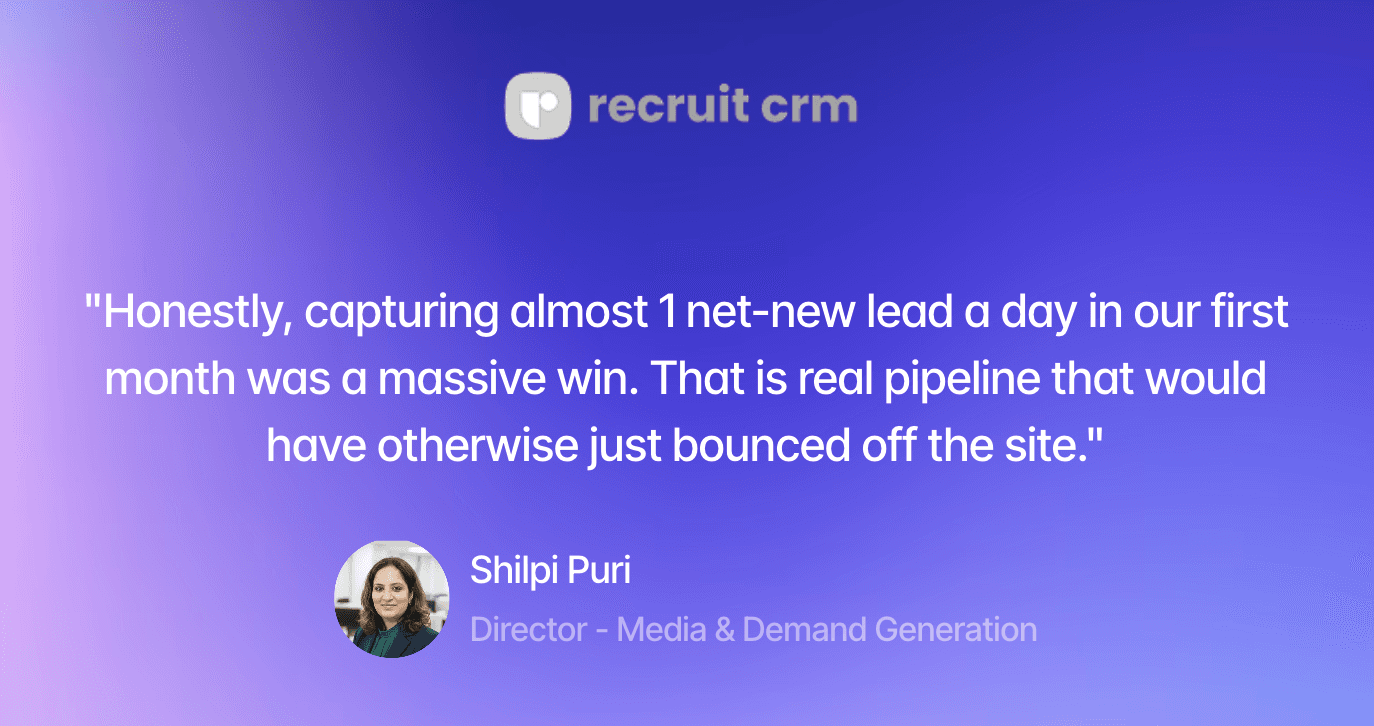
In the first month, they saw:
55 net-new pipeline leads
867 visitors moved from browsing to conversation
83% of engagement handled after hours
Warmly (Best for signal-based orchestration and live engagement)
Warmly is a signal-led warm outbound platform built for fast routing and orchestration. It identifies website visitors by person and company, watches intent in real time, then triggers the next action through chat overlays, email, LinkedIn, video, or rep handoff.
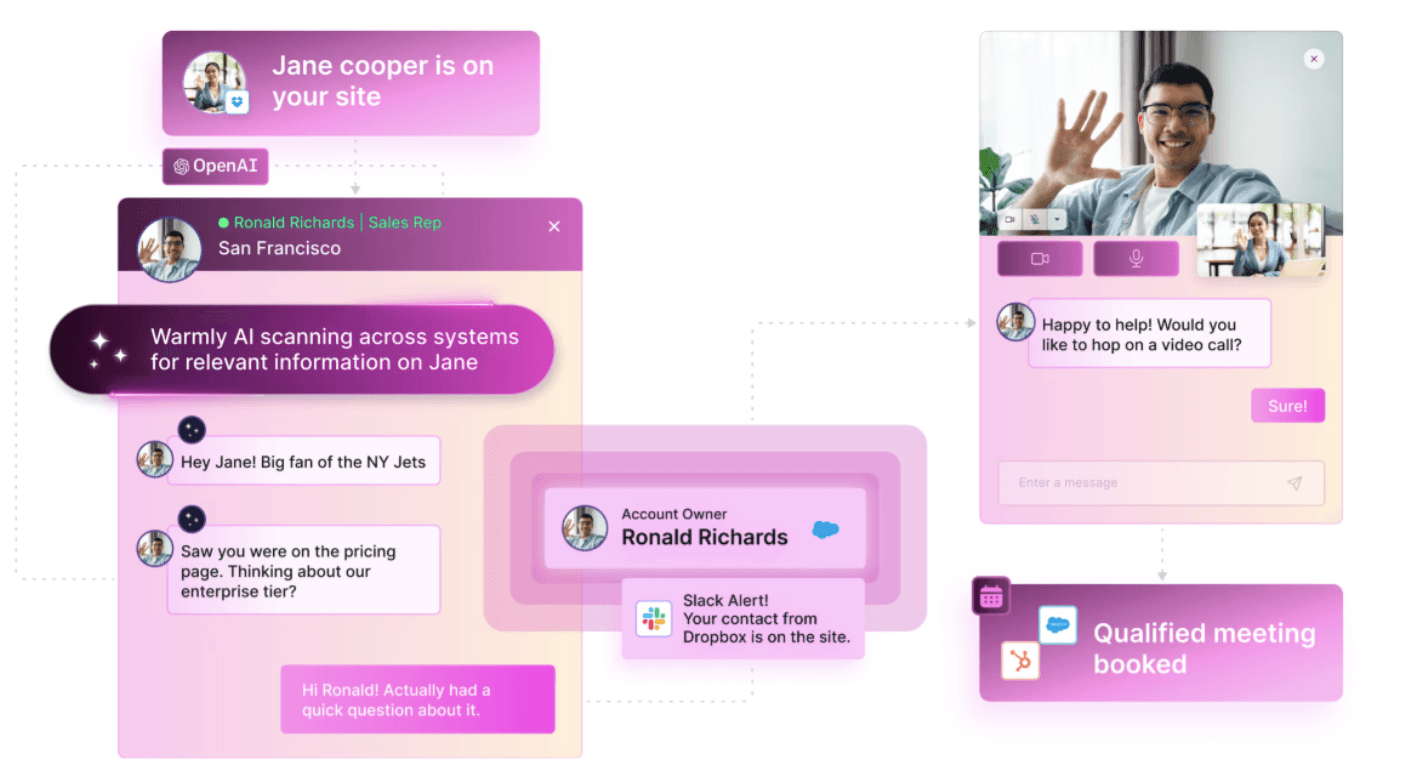
This makes Warmly a strong fit for SMB teams that want signal-based revenue orchestration without building a complex outbound stack. Warmly is strongest at detecting intent and triggering plays. Most teams still pair it with a sequencer for outbound execution.
How quickly does it let you act on a signal?
Starts tracking website intent within minutes of installation
Triggers live chat overlays during the session while the visitor is still active
Can route high-value visitors to a rep before they leave the site
Uses enrichment and intent data to personalize outreach without manual research
Supports fast multi-channel follow-up when a signal spikes
Pricing
Free plan available. Paid plans start at $15,000/year, with higher tiers that can go up to $30,000/year. The full GTM stack is available for a custom pricing model.
What Warmly does well
Good signal coverage without complex ABM operations
Flexible triggers tied to behavior, intent, and account data
Multi-channel options that work well for lean teams
Clear funnel reporting for intent-driven workflows
What could be better?
Mid-market and enterprise teams may outgrow the integration depth
Advanced features require higher tiers
AI-led qualification is not as deep as AI SDR-first platforms
RB2B (Best for founders running fast warm outbound from Slack)
The website visitor identification tool, RB2B, is focused on person-level matches. It works best for U.S. traffic and is designed for speed. When someone visits your site, RB2B can surface their LinkedIn profile and send it to Slack in real time.
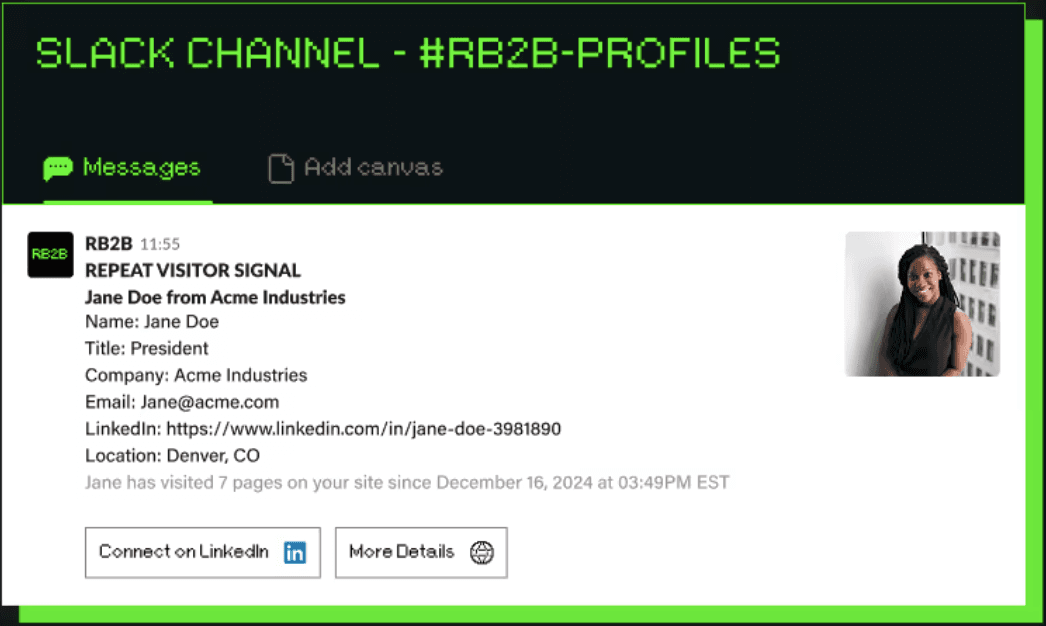
RB2B is strongest at identity resolution. It helps teams move from “someone visited” to “this exact person visited,” so a rep can follow up fast.
How quickly does it let you act on a signal?
Captures a visitor’s LinkedIn profile during or right after the session
Pushes alerts to Slack instantly so a rep can follow up right away
Makes it easy to message the exact person who visited, not just the company
Supports “hot page” tracking so visits to pricing or key pages stand out
Filters by ICP traits so the team is not chasing low-fit traffic
Pricing
Free plan available with 150 monthly resolutions. Paid plans range from $79 to $199 per month, with custom options for larger teams.
What RB2B does well
Fast person-level identity for warm outbound
Works well for LinkedIn-first outreach
Slack delivery keeps response time short
Useful enrichment on paid tiers
What could be better?
U.S.-only coverage limits global demand gen teams
Credit-based pricing can get expensive as traffic grows
Person-level matching can produce false positives at times
Not built for deep automation, routing logic, or full-funnel reporting
Apollo.io (Best for an all-in-one database plus sequencing)
In a 2026 outbound stack, Apollo.io is often the “system of record” for outbound execution. Built for teams that want prospecting and outreach in one place, Apollo.io combines a large contact database, enrichment, and sequencing.
Apollo is not a signal detection tool. It is the execution layer that turns warm signals into consistent outreach.
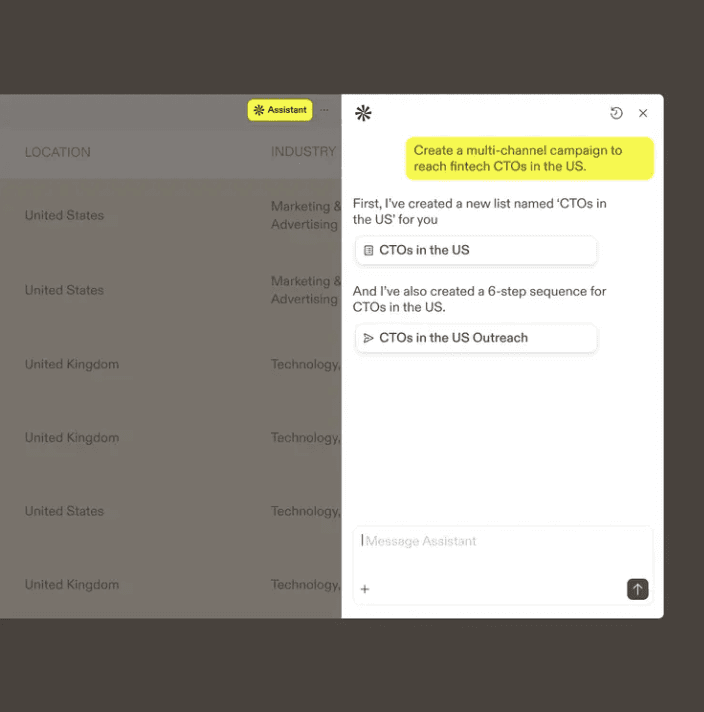
How quickly does it let you act on a signal?
Builds targeted lists fast using filters like job changes, funding, and tech stack
Enriches email and phone data inside the same workflow
Supports email, calls, and LinkedIn tasks in one sequence view
Works best when another system provides the signal, and Apollo handles execution
Pricing
Free tier available
Basic: $49
Professional: $79
Organization: $119
What Apollo.io does well
Strong contact database for outbound list building
Sequencing is easy to use for most SDR teams
Built-in deliverability features like warmup and sending limits
Dialer included for teams that still call as part of outbound
What could be better?
Data accuracy is not always consistent across industries
The credit model can feel confusing for forecasting spend
Larger teams may need stronger workflow governance and analytics
6sense (Best for large teams running full ABM)
6sense is built for enterprise ABM teams that want to track intent at the account level across the web. It shows which companies are researching your category, what topics they are consuming, and how close they may be to a buying decision.
Then it turns that into account stages and orchestration workflows.
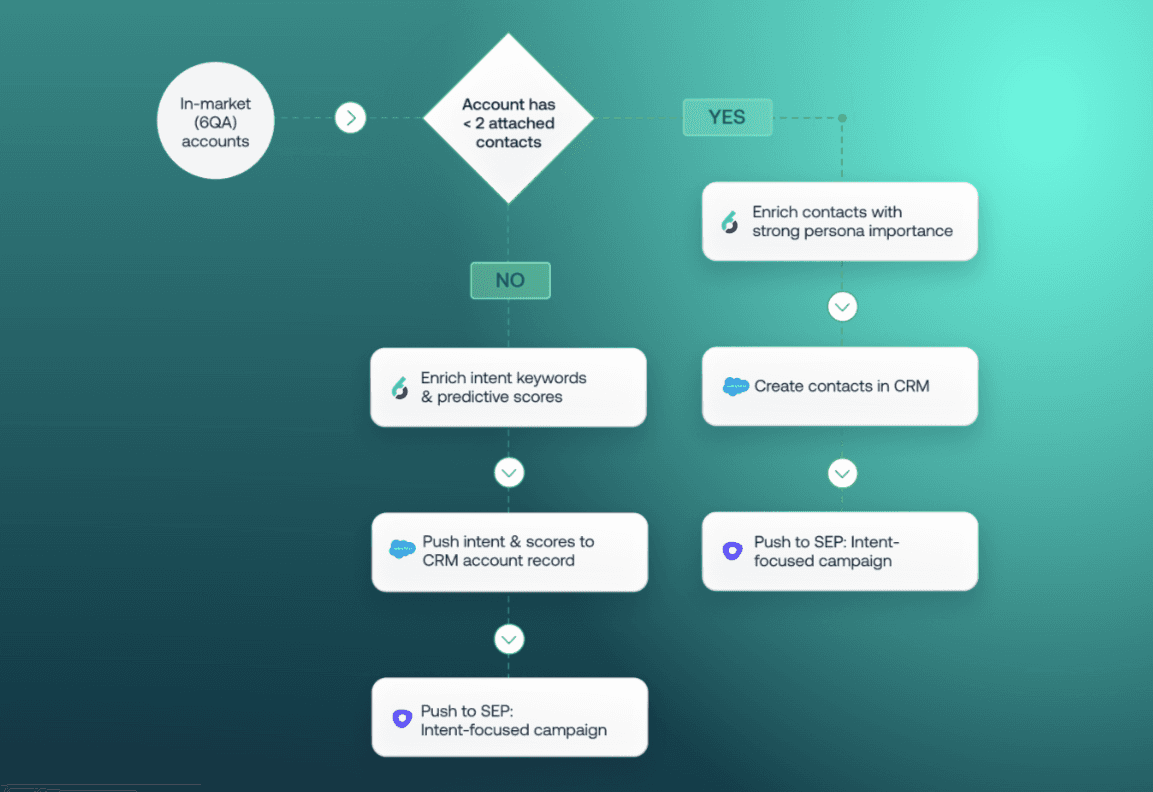
6sense is strongest for account-level intent beyond your site, but teams still need first-party signals and routing to execute warm outbound fast.
How quickly does it let you act on a signal?
Surfaces in-market accounts before they touch your forms, which gives outbound a head start
Sends alerts when accounts move into a higher buying stage based on research behavior
Pushes intent and stage data into Salesforce, HubSpot, and MAP tools for faster routing
Builds dynamic audiences for LinkedIn and programmatic ads once an account spikes
Helps SDR teams prioritize accounts, but rep outreach still depends on process and enablement
Pricing
6sense has a free plan offering 50 data credits per month. It is typically sold through annual enterprise contracts, with pricing driven by account volume, modules, and ad spend.
What 6sense does well
Strong fit for dark funnel account visibility
Useful for ABM teams that need account prioritization at scale
Supports coordinated plays across ads, SDR, and AE motions
Integrates well with Salesforce, HubSpot, and enterprise MAP tools
Helps reduce wasted spend by focusing ads on accounts that are actually researching
What could be better?
Implementation and training can take months
Requires consistent ops work to keep routing and scoring clean
It can be overkill if you only need fast, warm outbound execution
Reporting and value depend heavily on adoption across sales and marketing
Clay (Best for turning intent signals into personalized outreach)
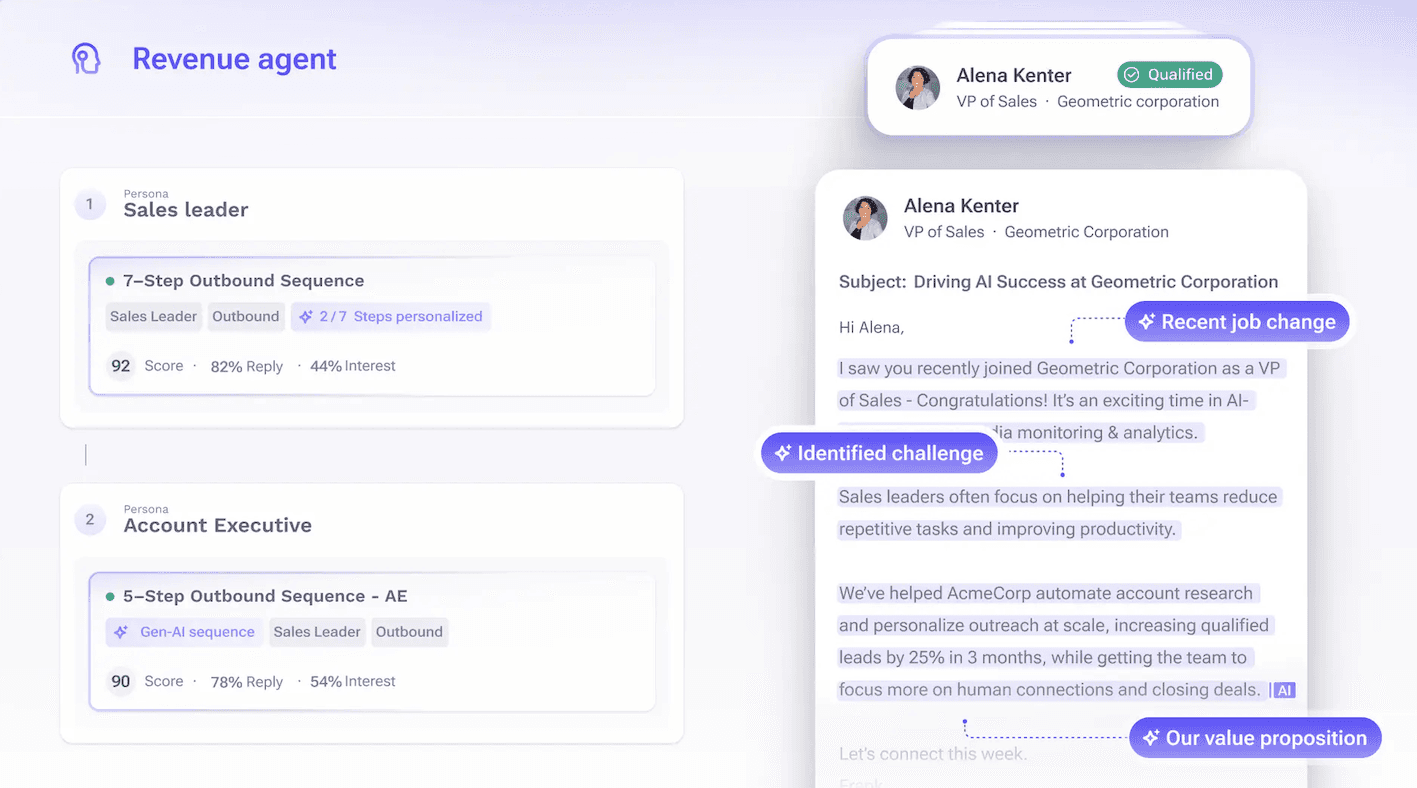
Built for research-heavy prospecting, Clay pulls live data from many sources, enriches leads, and helps teams write messages that sound like a human did the work.
How quickly does it let you act on a signal?
Pulls contact and company data from multiple sources in minutes
Lets teams enrich, score, and filter leads in one pass
Sends clean, enriched leads into your sequencer without CSV handoffs
Pricing
Free Plan
Starter: $134/mo
Explorer: $314/mo
Pro: $720/mo
Enterprise: Custom plans available based on enterprise requirements
What Clay does well
Strong enrichment coverage without relying on one provider
Best for teams that want hyper-personalized warm outbound emails
Good for building repeatable playbooks across segments
Works well with Apollo, HubSpot, and outbound sequencing tools
Allows RevOps to control quality before leads hit sequences
What could be better?
Not beginner-friendly if you are new to enrichment workflows
Hard to forecast spend if you run too many steps per lead
CRM sync is limited to higher tiers
The interface gets crowded on complex builds
Outreach (Best for turning warm signals into consistent multi-touch execution)
Outreach is a sales engagement platform that sits after identification and enrichment. If your team already knows who to contact and why, Outreach is the system that makes the follow-up repeatable.
Consider Outreach to be your execution layer. It works best when another tool detects the signal and pushes the right lead into a sequence.
It keeps warm outbound from turning into a messy mix of one-off emails, missed tasks, and untracked calls.
How quickly does it let you act on a signal?
Pushes leads from Salesforce into sequences with rules, not spreadsheets
Starts outreach as soon as a lead hits a stage, score, or trigger field
Uses templates and snippets so reps can send the first touch in minutes
Tracks engagement and moves prospects through the cadence without manual follow-up
Pricing
Custom quotes are available on request
What Outreach does well
Strong sequencing for enterprise SDR and BDR teams
Reliable Salesforce workflows for large pipeline volumes
Clear activity reporting for managers and RevOps
Built-in dialer and call logging for execution workflows
What could be better?
Complex product for teams without dedicated RevOps support
UI and workflow design can feel dated compared to newer tools
Not built for deep research or enrichment on its own
Dealfront [formerly Leadfeeder] (GDPR-aligned account signals from website traffic)
Dealfront’s visitor identification tool (formerly Leadfeeder) is best described as “company intent from your own site.”
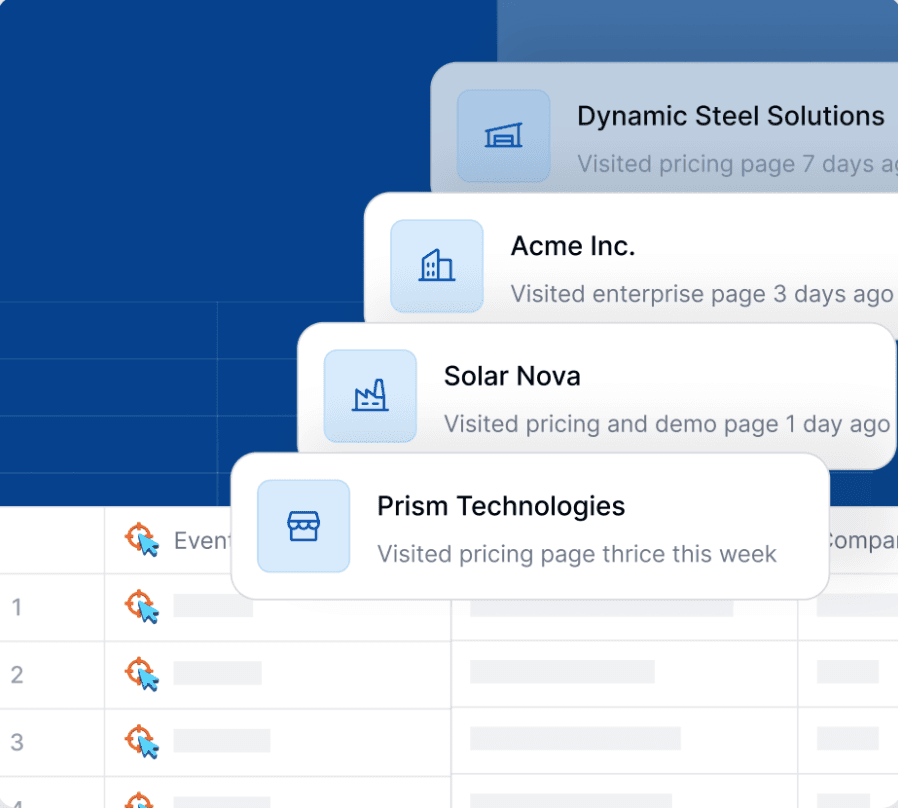
It helps teams spot warm outbound opportunities hiding inside everyday traffic. Instead of waiting for a form fill, it shows which accounts are already being researched.
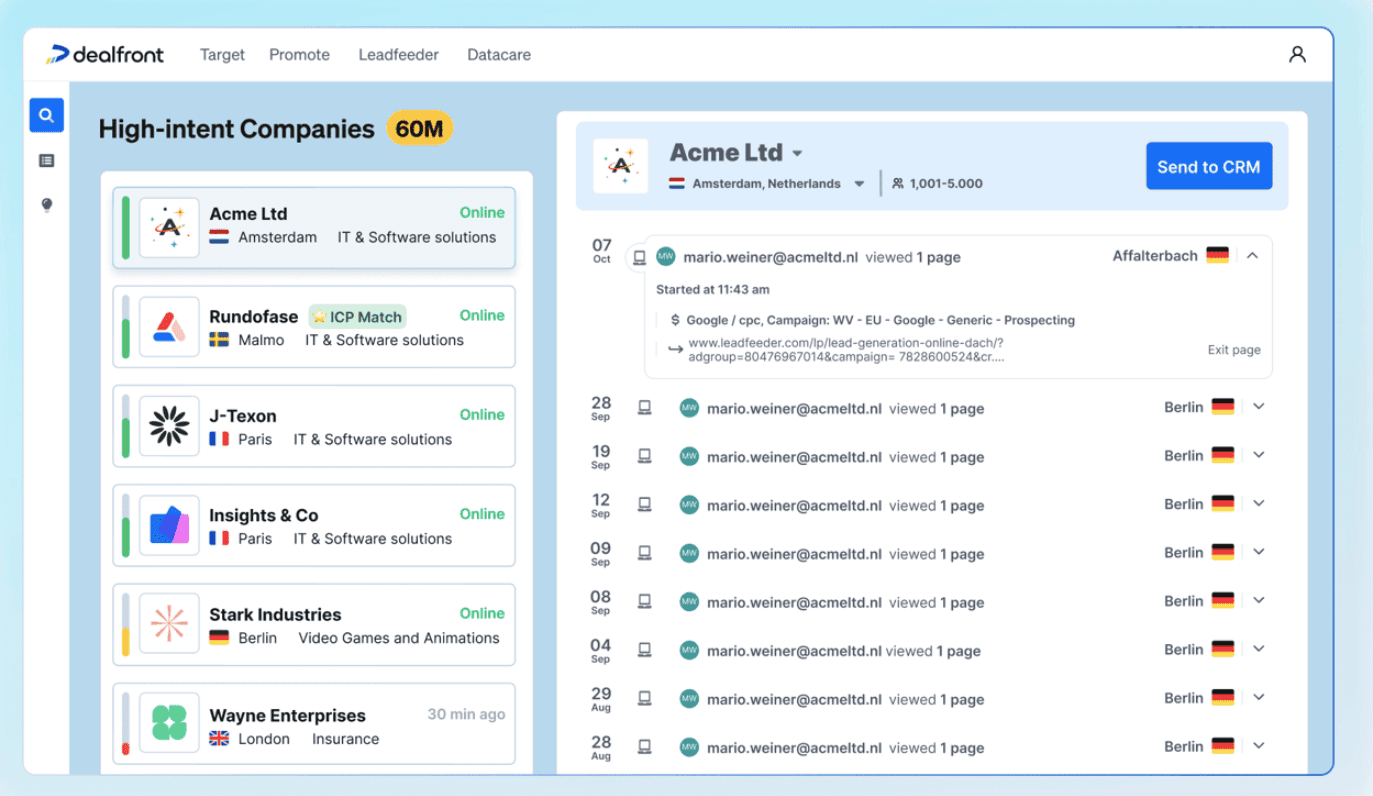
How quickly does it let you act on a signal?
Identifies companies within minutes of a site visit
Alerts reps when a named account returns to the site
Syncs accounts into CRM, so ownership rules apply automatically
Supports custom scoring to prioritize the right companies
Pricing
Free plan available
Paid plans start around $99/month (varies by package and volume)
What Dealfront does well
Strong fit for EU teams that need GDPR-first warm outbound tools
Clear visibility into which companies are researching your site
Good filters for sorting out noise like bots and ISPs
Helpful for connecting ad clicks to downstream account interest
What could be better?
No contact discovery built in
Company matching is not perfect, so reps must validate
Limited value if your site traffic is low
HubSpot Sales Hub (CRM-first warm outbound workflows)
For many B2B teams, HubSpot is already where the pipeline lives. That makes it a natural place to run warm outbound. Instead of moving signals between tools, you can capture intent, route it to the right rep, and start a sequence without leaving the CRM.
HubSpot works best when your signals and enrichment flow into it in real time, so reps can act without switching tools.
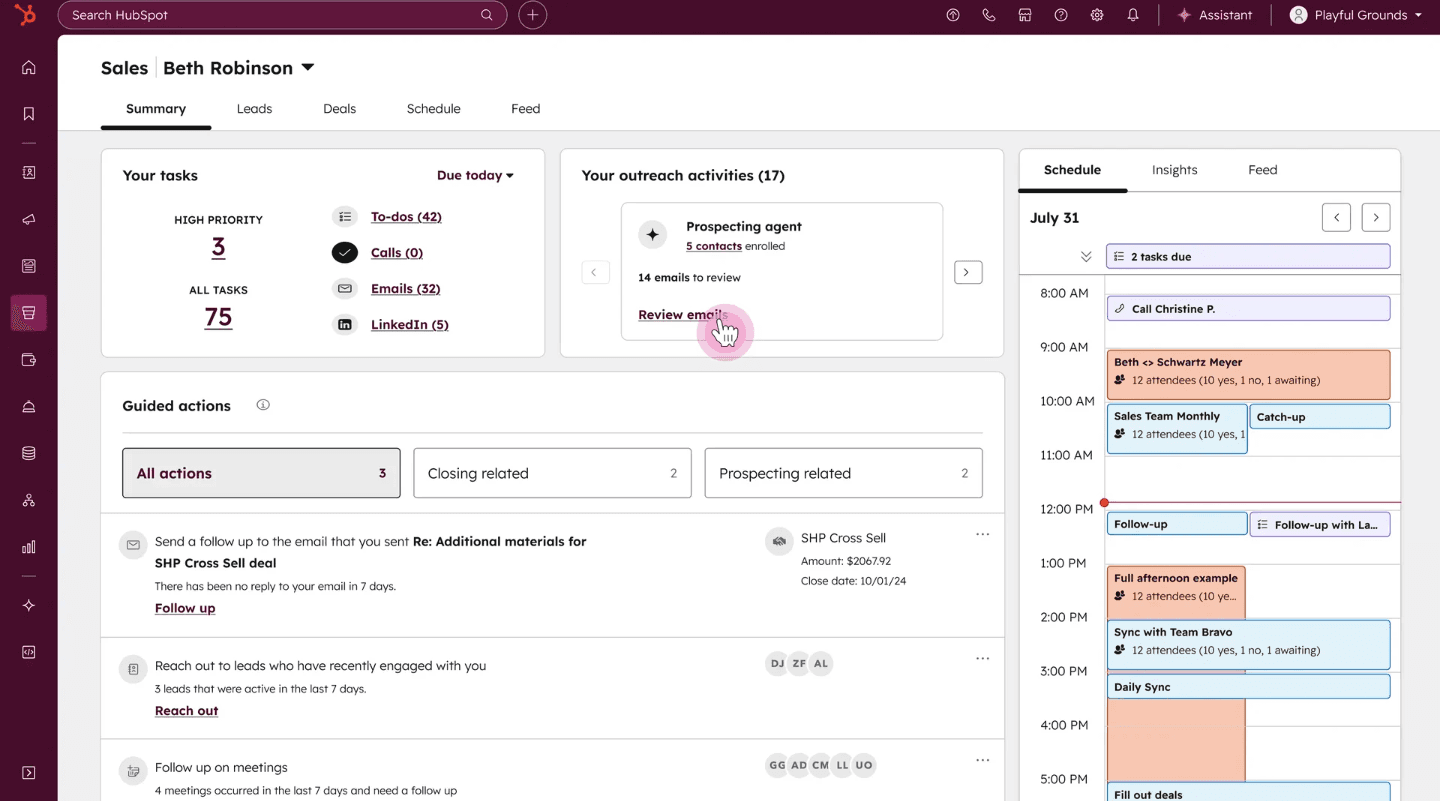
This is the right fit for teams that want warm outbound tools to plug into an existing system. It is also a practical option for teams that need reporting that sales and marketing both trust.
How quickly does it let you act on a signal?
Routes warm leads instantly through workflows and ownership rules
Starts sequences as soon as a lead hits a defined stage or list
Sends alerts and task queues so reps follow up the same day
Uses playbooks to keep messaging consistent across SDRs
Tracks every touch inside the deal record for clean attribution
Pricing
Free tools: $0
Sales Hub Starter: $9 per seat
Sales Hub Professional: $100 per seat
Sales Hub Enterprise: $150 per seat
What HubSpot Sales Hub does well
Strong CRM foundation for what is warm outbound in practice
Sequences handle the basics of outbound execution
Meeting scheduling removes friction in booking
Forecast and pipeline views work well for sales leadership
Playbooks help reduce rep-to-rep variance in outreach
What could be better?
Hard to separate regional views inside one account structure
Some reps find record navigation clunky at scale
Higher tiers get expensive when you add seats
Fixes for product issues can take time
Common Room (Best for community-led warm outbound)
A lot of warm outbound is not website-driven. It comes from people asking questions, comparing tools, or reacting to a product launch in public. Common Room is built for that world.
Instead of scoring anonymous traffic, it tracks engagement across community and social channels and links it back to accounts. Common Room works best as a signal layer. Most teams pair it with an AI SDR to run the follow-up.
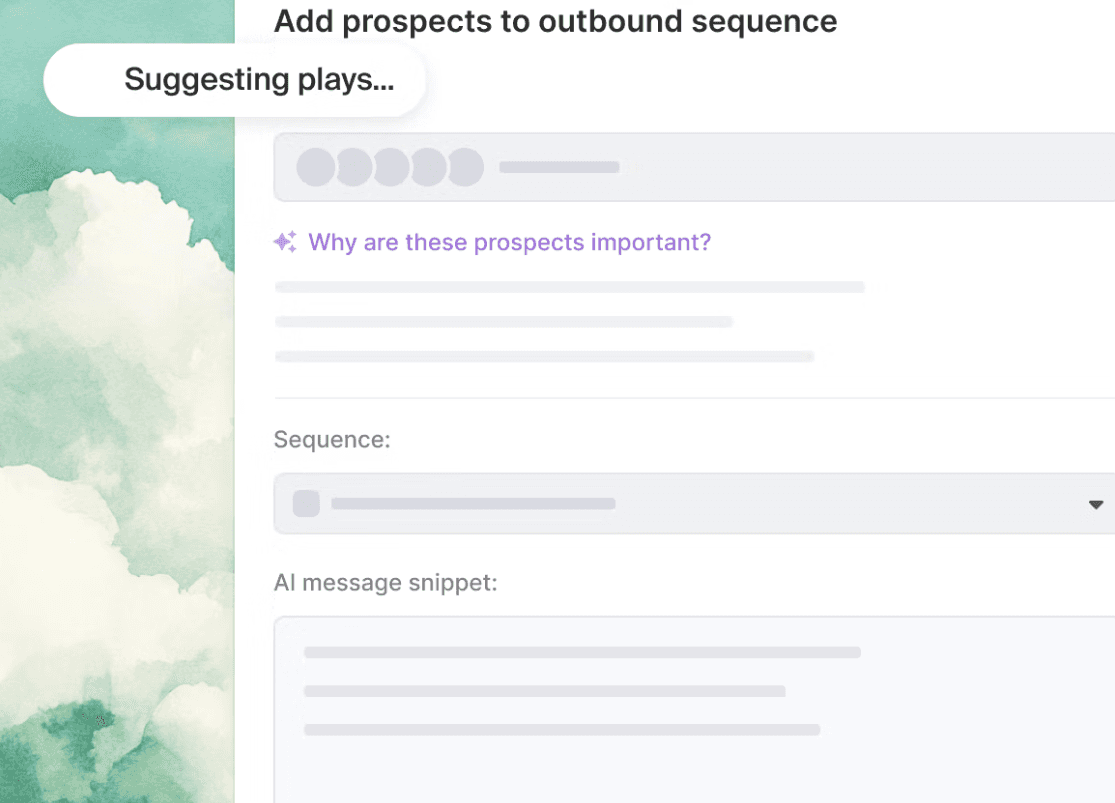
How quickly does it let you act on a signal?
Captures real-time signals from community and social channels
Uses tags and filters to prioritize high-intent engagement
Pushes signals into CRM and sales tools so reps can follow up fast
Pricing
Starter: ~$1,000/month
Team: ~$2,500/month
Enterprise: Custom pricing
What Common Room does well
Tracks warm outbound signals where modern buyers actually spend time
Identifies the individual behind the engagement in many cases
Good segmentation and tagging for sales and community teams
Useful for PLG, open-source, and dev tool GTM models
Works well as part of a warm outbound tools stack
What could be better?
UI and setup can feel heavy at first
Some sales teams will still need Outreach or HubSpot to run sequences
Pricing may not fit early-stage teams
How to choose the right tool?
Choosing the right tool for warm outbound comes down to what you need it to do and where it fits in your stack. Some teams need better signals, while others need faster follow-up.
Use the checklist below to choose warm outbound tools that fit your motion and your team’s speed-to-lead goals.
Data accuracy vs. actionability
Some tools stop at identity resolution. RB2B can surface who visited your site, which works well if your reps can move quickly.
If your bottleneck is follow-up, you need automation that can take action. Breakout behaves more like an AI SDR. It takes the signal and drives the outreach without waiting for a rep to write the first touch.
Integrations
Signals only matter if your team sees them fast enough to act. CRM sync with Salesforce or HubSpot is non-negotiable. Slack alerts matter too, especially for speed-to-lead and shared account ownership.
Compliance
For mid-market and enterprise teams, check SOC 2 and GDPR readiness early. Breakout’s SOC 2 Type II compliance is a practical advantage in security reviews.
Warm outbound in 2026: The new standard for your pipeline
Outbound is shifting from interruption to intent-based timing. The teams winning with warm outbound are the ones that follow up quickly with prospects who have already visited, clicked, compared, or engaged.
If your site gets traffic and your accounts show signals, you do not need more volume. You need a shorter time-to-action. Breakout turns those warm signals into conversations automatically, giving you the output of an AI SDR without adding SDR headcount.
Stop letting intent leak. Book a demo with Breakout and turn warm traffic into meetings before the signal goes stale.
FAQs
What is warm outbound, and how is it different from cold outbound?
Warm outbound starts with a signal. The buyer has already shown interest. That signal could come from actions like website visits, pricing page views, returning sessions, email clicks, or webinar attendance.
Cold outbound starts with a list and a guess. Warm outbound picks up on real buyer behavior and timing.
Do warm outbound tools replace SDRs, or do they support them?
Warm outbound tools sit between marketing activity and sales execution. What changes is how quickly a lead gets worked and how much manual effort it takes.
The SDR becomes more of a closer for warm leads and less of a list worker. Warm outbound tools reduce research, routing delays, and manual follow-up.
What is the best warm outbound tool stack in 2026?
There is no single best stack. The warm outbound tools that win in 2026 are the ones that cut time-to-action. Most teams combine signal detection, identity resolution, enrichment, and execution.
Breakout stands out because it can close the loop and act on the signal immediately, instead of waiting for a rep to follow up later.
What is the fastest way to turn anonymous traffic into meetings?
The fastest path is: identify → qualify → engage immediately. Most teams do the first step and stop. They identify the account but do not act.
The top warm outbound tools respond while the buyer is still in motion, using the context of the session to start the conversation.