All Blogs
A breakdown of Warmly's strengths, pricing limits, and top alternatives for B2B revenue teams — with Breakout as the best option for intent-driven pipeline.

Evan Marshall
Senior Growth AI Strategist
Published On

Your revenue team wants to convert anonymous website traffic into pipeline without waiting for form fills, so you start looking at visitor identification tools and Warmly comes up in every buyer conversation. The product works for specific use cases, especially if your traffic volume is high and your team is already invested in HubSpot or Salesforce, but Warmly reviews from users reveal constraints around pricing, CRM data consistency, and orchestration flexibility that create friction for teams at different growth stages. This breakdown walks through what Warmly does well, where the limitations show up in practice, and which alternatives solve for the gaps that matter most when you're building a revenue intelligence stack in June 2026.
TLDR:
Warmly has entered into an agreement to be acquired by HubSpot, which may affect product direction for prospective buyers.
Drift was sunset by Salesloft in March 2026 and is no longer available to new customers; teams listing it as a Warmly alternative should consider other options in its place.
Warmly identifies website visitors and enriches them with intent data, but starts at $19,000/year.
CRM sync has reported data inconsistencies, creating reconciliation work for revenue ops teams.
Warmly only tracks accounts that visit your site, leaving gaps for outbound prospecting.
Breakout surfaces accounts researching your category before they hit your site, starting at $500/month.
AI scoring in Breakout adapts to your historical win data, not a generic propensity model.
What Is Warmly and How Does It Work?
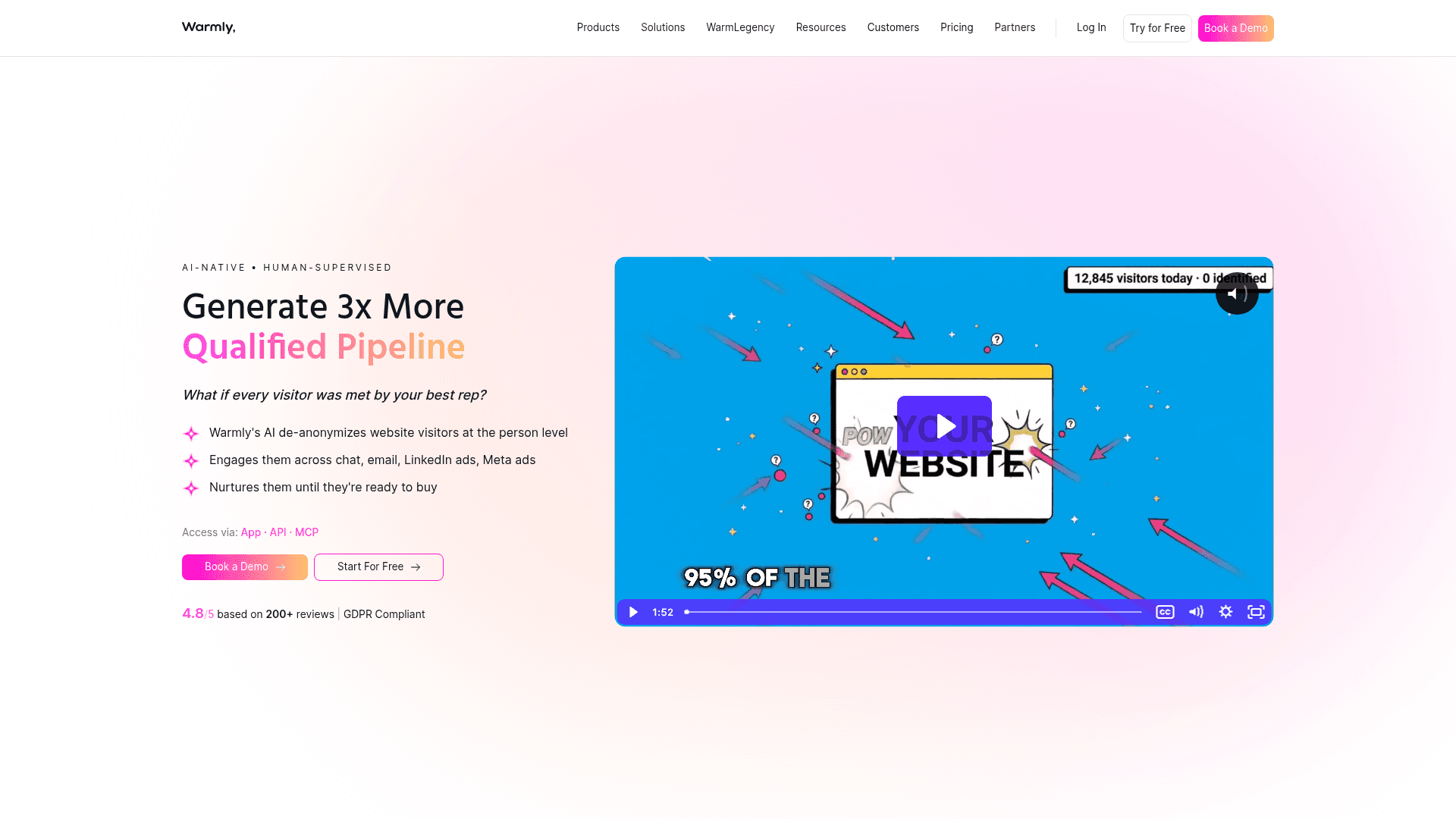
Warmly is a B2B revenue intelligence tool that identifies anonymous website visitors and matches them to company and contact records. When someone lands on your site, Warmly pulls from data providers like Clearbit, Bombora, and 6sense to surface who they are, what company they work for, and what they might be researching based on intent signals.
The core workflow looks like this: a visitor hits your site, Warmly de-anonymizes the session, enriches it with firmographic and intent data, and then routes that information to your sales team via Slack alerts, CRM updates, or an in-app dashboard. Some plans also include an AI agent layer that can trigger automated outreach when a target account shows up.
Warmly sits in a growing category of pipeline tools that promise to convert anonymous traffic into actionable leads without requiring form fills. The appeal is real for revenue teams trying to get more signal out of existing web traffic. Worth noting for anyone evaluating the product: Warmly recently announced it has entered into an agreement to be acquired by HubSpot. Existing contracts and integrations are expected to remain unchanged in the near term, but the acquisition does mean Warmly's product roadmap will increasingly align with HubSpot's priorities, which is worth factoring in if your stack runs on a different CRM.
A few things worth knowing about the architecture before you assess it:
Warmly relies on third-party data enrichment, so match rates and data quality are only as good as the underlying providers, which can vary by industry and audience segment.
The AI automation features live on higher-tier plans, meaning the entry-level experience is closer to a visitor identification dashboard than a true AI-driven prospecting tool.
Routing logic and CRM sync work well for teams already invested in HubSpot or Salesforce, but lighter-weight stacks may find the integration overhead harder to support.
Why Consider Warmly Alternatives?
Warmly works well for specific use cases, but it has real limitations that matter depending on how your team operates. The pending HubSpot acquisition also introduces a consideration worth weighing: as Warmly's roadmap integrates more tightly with HubSpot's product suite, teams running on Salesforce or lighter-weight CRMs may find the tool drifting further from their needs over time.
The core issue is cost. Warmly's pricing starts at $19,000 per year for meaningful feature access, which is a substantial commitment for teams that are still testing whether website visitor identification fits their workflow. If you're scaling a revenue program and need to validate ROI before locking in a long-term contract, that price point creates real friction.
Beyond budget, there are structural constraints worth considering:
The visitor identification layer is strong, but orchestration capabilities outside of that core function can feel limited if your team runs multi-channel sequences or needs flexibility in how leads are routed and followed up on.
Warmly's CRM sync has received mixed feedback from users, with some reporting data inconsistencies that create reconciliation work for revenue ops teams managing multiple tools.
The product is built around intent signals from your own site, which means you get less coverage for outbound prospecting or accounts that haven't yet visited your pages.
For teams where Warmly's pricing aligns with their budget and website traffic volume supports the model, it can deliver solid results. But if your team needs broader prospecting coverage, tighter CRM integration, or more predictable costs at an earlier growth stage, looking at alternatives is a reasonable call.
Best Warmly Alternatives in June 2026
If you're reconsidering Warmly, a few tools come up repeatedly in buyer conversations at the Series B and beyond stage. The options below match the competitors compared in the table further down, so you can read the write-up and the side-by-side together.
Breakout
Breakout is an AI-powered buyer intent and sales intelligence tool built to run the full motion from signal to booked meeting. Where Warmly flags an account and routes a Slack alert, Breakout identifies the visitor, scores them against your ICP, engages them on-site with personalized content, and triggers warm email and LinkedIn follow-up when they leave without converting. Your reps receive a qualified, routed lead with context already loaded, not a raw notification that requires manual follow-up.
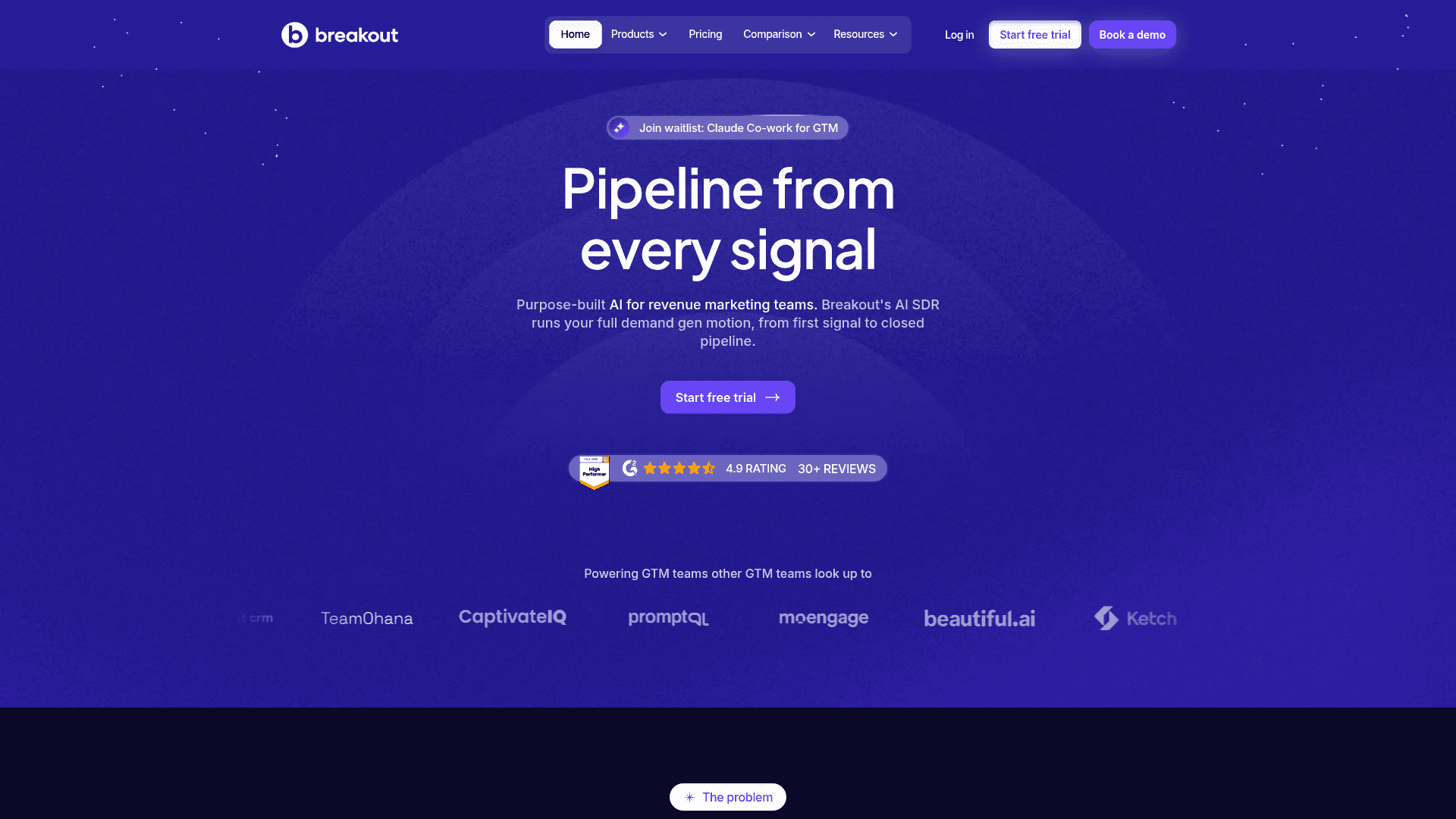
The gap between the two tools shows up most clearly after identification. Warmly surfaces the account and stops there. Breakout runs identification, on-site engagement, multi-channel follow-up, and CRM sync in a single connected workflow, so the window between buyer intent and rep conversation stays as short as possible.
A few specifics that stand out when comparing the two:
Waterfall enrichment covers both company-level and person-level identification, giving your team contact-level data to work with.
AI scoring adapts to your historical win data, so the accounts Breakout surfaces reflect what actually closes for your team.
Native CRM sync with Salesforce, HubSpot, and Marketo keeps data consistent in real time, with no manual reconciliation.
Pipeline attribution ties intent signals to closed revenue, giving you a clear line from signal to deal.
The Signals plan starts at $500/month with a 30-day free trial, so you can validate the workflow before committing to an annual contract.
1mind

1mind is a conversational AI tool that handles inbound buyer conversations, covering qualification, demos, and pricing discussions without handing off to a human rep. It covers a different scope than Warmly: the focus is on managing the full buyer conversation autonomously, with no native visitor identification or outbound motion. Pricing is enterprise-tier and requires a direct conversation with their sales team.
Qualified
Qualified, acquired by Salesforce in April 2026, routes high-intent visitors to live reps with its Piper AI SDR layered on top. It requires Salesforce as a hard dependency, setup runs in months rather than weeks, and the AI relies on rep availability for off-hours visitors. Entry pricing starts around $42K per year, which puts it out of range for most Series B buyers.
Artisan
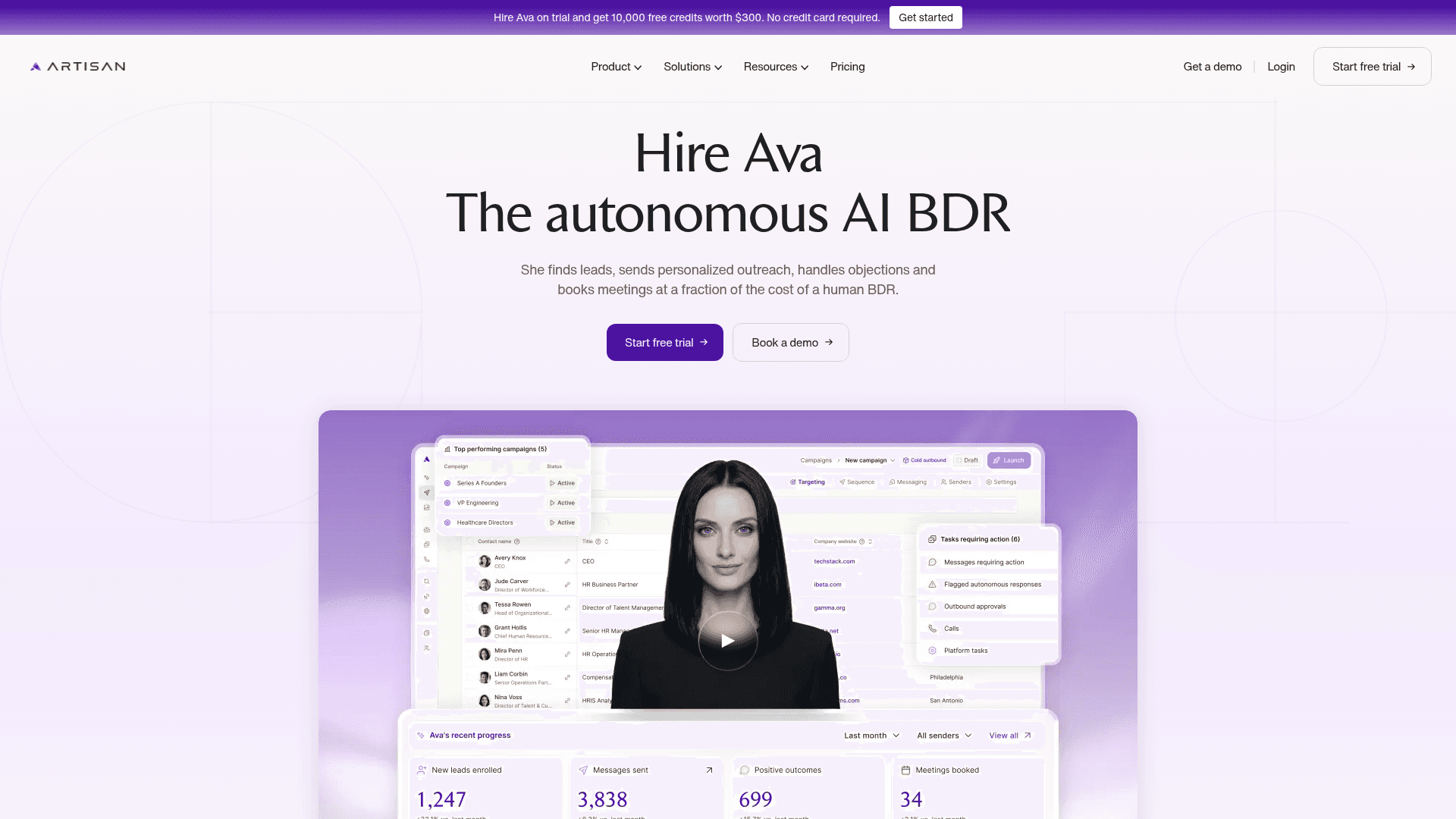
Artisan runs an outbound motion through its Ava agent, handling cold email prospecting, list building, and sequencing. It covers a different scope than Warmly, aimed at sourcing net-new outbound instead of converting traffic already on your site, with no native website visitor identification. It's worth considering if outbound volume is the gap, but it won't cover inbound hand-raisers, and LinkedIn outreach is restricted in 2026.
11X
11X is an outbound AI SDR with its Alice agent driving cold email and LinkedIn sequences. Like Artisan, it has no native visitor identification or on-site engagement, so it covers the outbound side only. Consider it if outbound prospecting is the gap, but you'll need a separate tool to convert the inbound traffic already reaching your pages.
Drift (Historical Reference)
Drift is included in this comparison for reference. It was one of the most widely evaluated conversational tools in the B2B sales category, and teams still search for it when researching Warmly alternatives. Salesloft sunset the product in March 2026, so it is no longer an option for new buyers. During its run, Drift pioneered real-time B2B chat, engaging visitors and routing qualified leads to reps. The core trade-off was that conversations were text-only and qualification ran on rule-based flows, so the AI got you a routed lead rather than an autonomous one that demos and follows up on its own. If you are actively looking for a replacement, 1mind, Qualified, and Breakout each cover the core use cases Drift was built for.
Feature Comparison: Warmly vs Top Alternatives
Side-by-side comparisons cut through positioning claims faster than any vendor description will. Here's how the main options stack up across the features that matter most to revenue teams at the Series B stage.
Feature | Warmly | Breakout | 1mind | Qualified | Artisan | 11X | Drift (Sunset) |
|---|---|---|---|---|---|---|---|
Website Visitor Identification | Company and person-level (20-65%) | Waterfall enrichment with person and company ID | No native capability | Company and person-level (Salesforce-dependent) | No native capability | No native capability | Company-level via IP |
AI Chat Agent | Basic AI chat with deterministic routing | Specialized AI SDR with real-time discovery | Full-journey Superhuman (qualify, demo, and close) | Piper AI SDR (rep-dependent) | Ava for outbound email | Alice for outbound email | AI-powered chat with rule-based flows |
Visual Engagement | Text-only | Interactive demos, slides, videos in chat | Live demo capability in conversation | Text-only | No (outbound focused) | No (outbound focused) | Text-only |
Multi-Channel Plays | Email and LinkedIn orchestration | Warm email, LinkedIn, on-site engagement | On-site live conversation | On-site chat focused | Email and LinkedIn (LinkedIn restricted 2026) | Email and LinkedIn | On-site chat only |
Native Scheduler | Third-party calendar integration required | In-built scheduler | Built-in meeting scheduling | Meeting coordination | Meeting scheduling | Meeting coordination | Fastlane meeting booking |
CRM Integration | HubSpot and Salesforce only | Salesforce, HubSpot, Marketo | HubSpot and Salesforce | Deep Salesforce native | Salesforce and HubSpot | CRM sync | Multiple CRMs |
Pricing | $15,000/year starting | $500/mo (Signals), $2,000/mo (Growth) | Contact for pricing | ~$42K/year starting | Contact for pricing | Contact for pricing | Sunset March 2026 - no longer available |
Why Breakout Is the Best Warmly Alternative
Warmly is a signals tool. It identifies who visited your site, enriches the record, and sends an alert. What happens next falls on your team. Breakout picks up where Warmly stops: it takes the identified visitor, scores them against your ICP, engages them on-site with personalized content, and runs warm email and LinkedIn follow-up without a rep needing to trigger the next step. That gap between identifying a visitor and converting one is where most Warmly users find themselves doing manual work that Breakout automates.
The pricing gap reinforces the case. Warmly starts at $19,000 per year for meaningful feature access. Breakout's Signals plan starts at $500 per month with a 30-day free trial and no credit card required. Teams that have been carrying Warmly's price point without a full return have a direct path to test the alternative without a budget commitment.
What Makes Breakout Different in Practice
When a target account starts showing buying behavior, Breakout surfaces that signal, scores the account against your ICP, and routes it to the right rep with context already loaded. Your team spends time selling, not chasing notifications.
A few things that matter at the Series B+ stage:
Breakout's AI scoring adapts to your historical win data, so the accounts it surfaces reflect what actually closes for your team, not a generic propensity model borrowed from another company's pipeline.
Native CRM sync with Salesforce, HubSpot, and Marketo keeps data consistent in real time, with no manual export, no reconciliation lag, and no version of the truth living outside your system of record.
Pipeline attribution in Breakout ties intent signals to closed revenue, so you can show your board exactly which signals preceded your best deals and build your coverage model around that evidence.
If Warmly's post-identification automation, CRM consistency, or price-to-value ratio has been a friction point for your team, Breakout was built with those specific gaps in mind.
Final Thoughts on Warmly Reviews and What They Mean for Your Decision
Warmly reviews reflect a tool that does visitor identification well but comes with real trade-offs on price and execution depth. For teams where traffic is already converting and budget supports a $19,000+ annual commitment, it delivers solid identification coverage. For teams that need the action layer on top of the signals layer, Breakout is the more direct fit. Identification, on-site engagement, multi-channel follow-up, and CRM sync run in a single connected workflow, so reps receive qualified, routed leads instead of raw notifications that require manual follow-up. The Signals plan starts at $500/month with a 30-day free trial, so you can see whether signal-based prioritization changes your pipeline velocity before committing to an annual contract. Most teams evaluating Warmly alternatives end up testing Breakout first, and the pricing structure makes that an easy call to justify.
FAQ
What are the main reasons teams switch away from Warmly?
The two biggest factors are pricing structure and orchestration depth. Warmly starts at $19,000 per year for meaningful features, which creates budget pressure for teams still validating ROI on visitor identification tools. Beyond cost, teams that run multi-channel sequences or need tight CRM sync often hit friction with Warmly's more limited automation and reported data consistency issues.
When should you consider moving from Warmly to a different solution?
If your team needs outbound coverage beyond on-site visitors, requires reliable CRM data sync without manual reconciliation, or wants predictable costs before committing to a five-figure contract, it's worth evaluating alternatives. The signal to move usually shows up when you're spending more time stitching together data from multiple tools than actually working qualified accounts.
What features should you focus on when comparing Warmly alternatives?
Focus on three areas: how the tool identifies visitors (company-only vs. person-level matching), what happens after identification (basic routing vs. full multi-channel orchestration), and how it syncs with your CRM (one-way data push vs. bidirectional sync with attribution). Teams at Series B and beyond should also check whether intent scoring adapts to your historical win data or relies on generic models.
How does Breakout differ from Warmly in practice?
Breakout surfaces buying signals before accounts visit your site and connects those signals directly to your go-to-market workflows instead of stopping at a notification dashboard. Where Warmly focuses on real-time visitor engagement, Breakout surfaces which accounts in your total addressable market are researching your category right now, then routes them to the right rep with context already loaded.
Can you get person-level visitor identification without Warmly's pricing?
Yes. Breakout's Signals plan starts at $500 per month and includes waterfall enrichment with both company and person-level identification, delivering similar deanonymization capabilities at a fraction of Warmly's entry cost. That pricing structure lets teams validate the workflow before committing to enterprise-level contracts.