Today’s buyers rarely contact sales or support with basic questions.
Studies show that over 70% buyers want to self-serve product information before speaking to sales.
They expect clear answers on the website, and when those answers are slow or missing, they move on, even if the product is strong.
To meet this shift, many teams adopt AI chat platforms like Chatbase.
Chatbase enables fast deployment of knowledge-trained chatbots for FAQs and self-serve discovery, reducing support load.
However, it stops at Q&A. Modern AI tools like Breakout can identify who is on your site, qualify intent, and guide buyers toward conversion while they are live. Chatbase leaves these steps to sales teams.
This creates a practical decision for modern GTM teams - Should inbound simply answer questions, or qualify intent and move deals forward in real time?
This guide breaks down where Chatbase performs well and where it falls short for revenue-driven teams.
It also reviews the top Chatbase alternatives to consider in 2025 and explains why platforms like Breakout operate in a different category. These AI SDR platforms execute the inbound sales motion end to end, with predictable costs and measurable pipeline impact.
What Chatbase Does Well and Where It Struggles
Chatbase is an AI chatbot platform built to deliver instant, knowledge-based answers on your website.
Teams train it on documents, URLs, or internal content to respond to visitor questions in natural language without ongoing engineering work.
For many teams, this solves an immediate problem, i.e., reducing repetitive support questions and improving on-site responsiveness.
What Chatbase Does Well
Chatbase is built for speed and simplicity.
Teams can train a bot using documentation, FAQs, or internal content and deploy it on their site within minutes. There’s no heavy configuration, no required CRM setup, and minimal technical overhead.
This makes Chatbase appealing for:
Early-stage SaaS teams
Support-heavy websites
Teams testing AI chat for the first time
The chatbot performs well when visitor intent is informational. It answers “what,” “how,” and “where” questions quickly and consistently.
Core Use Case Fit
Chatbase works best when:
The primary goal is knowledge delivery
Conversations are short and reactive
Success is measured by support deflection, not pipeline

However, these same strengths become constraints once inbound traffic becomes a revenue channel.
The Major Pain Point: Unpredictable Credit-Based Pricing
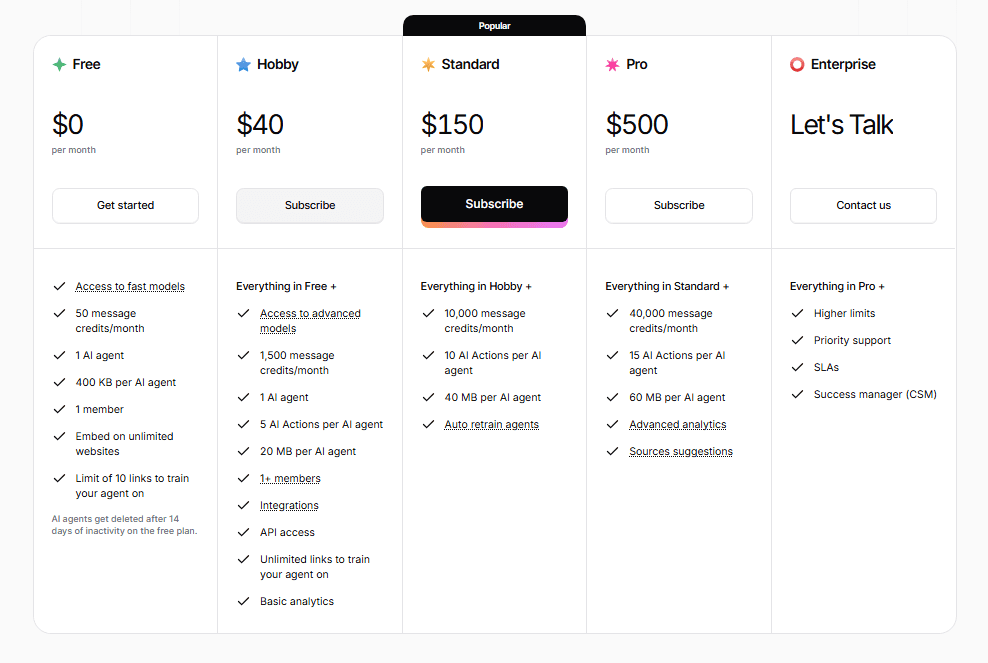
Chatbase follows a credit-based pricing model where each AI response consumes credits based on model choice and response length.
At low usage, costs feel manageable. As volume grows, forecasting spend becomes difficult once credits are exhausted.
Key pricing challenges teams report:
GPT-4 responses can cost up to 20x more than simple replies
Credit consumption varies widely based on visitor behavior
Essential features such as branding removal, multiple agents, or integrations require add-ons
For RevOps and finance teams, this introduces uncertainty. As traffic and engagement increase, so does spend, often without a clear link to pipeline impact.
Qualification and GTM Limitations
Chatbase offers basic lead capture through:
Name and email prompts
Simple action triggers, such as sharing a Calendly link
However, it lacks:
Visitor or company deanonymization
Deep B2B qualification logic
Intent-based personalization for anonymous visitors
The chatbot waits for the visitor to ask a question. It does not proactively qualify, personalize, or route based on firmographic or behavioral signals.
As a result, Chatbase requires teams to stitch together:
CRM tools
Sales engagement platforms
Visitor identification software
Manual SDR follow-up
This fragmented setup limits scalability for revenue-driven teams.
Top Chatbase Alternatives for Common B2B Use Cases
Teams usually evaluate Chatbase alternatives once Q&A no longer supports revenue goals.
At that point, the key difference between tools is how much of the inbound funnel they own, from engagement to qualification and conversion.
1. Breakout: More Than a Chatbot, Built for Pipeline Execution
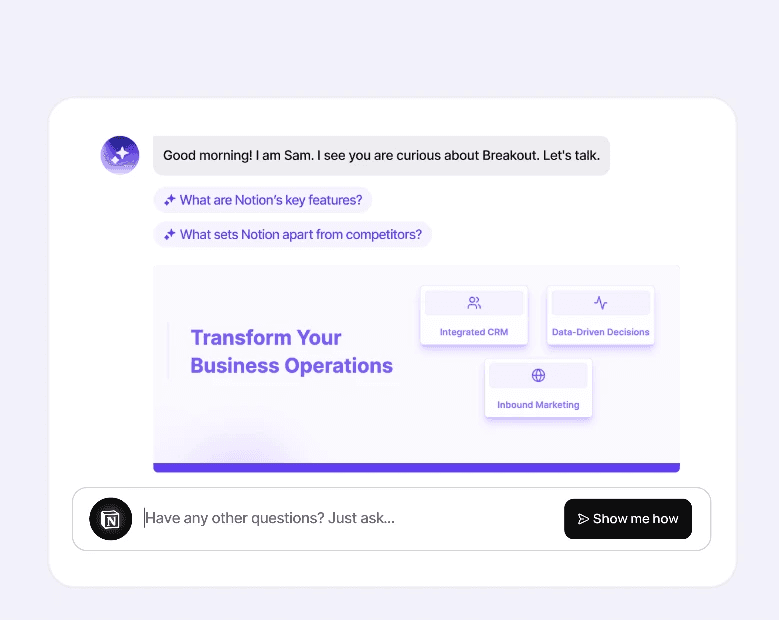
Breakout is not a traditional chatbot.
It is an AI SDR built to execute the inbound sales motion end-to-end.
Instead of waiting for visitors to ask questions, Breakout actively engages them based on intent signals and on-site behavior.
Conversations feel natural and human, but they are guided by context, timing, and buyer readiness rather than fixed scripts.
Strengths
Human-like conversations that adapt in real time
Visitor and company identification for anonymous traffic
Structured B2B qualification and intent capture
Automated meeting booking without SDR involvement
Handles support and sales conversations in one flow
This approach removes the gaps that typically slow inbound conversion. Instead of stitching together chat, forms, routing, and follow-up tools, Breakout runs the entire inbound flow in one place.
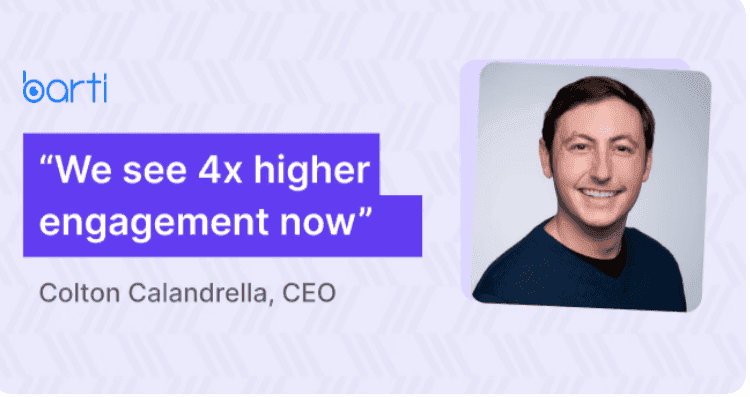
Barti applied this model by replacing forms and passive chat with Breakout’s AI-led conversations. The result was smoother product discovery, real-time qualification, and continuous inbound conversion without adding SDR headcount or expanding the tech stack.
Pricing
Uses value-based pricing tied to pipeline execution, not conversation usage. This removes credit volatility and makes monthly costs easier to forecast as inbound traffic grows.
When to use
Breakout is best when inbound traffic is expected to produce a pipeline, not just engagement.
It suits teams that want to reduce SDR dependency, identify visitors automatically, qualify intent in real time, and convert conversations into meetings without adding tools or headcount.
2. Drift: Best for Conversational Sales and Marketing

Drift is designed for B2B sales and marketing teams that rely on live conversations and human follow-up. It integrates deeply with CRMs like Salesforce and HubSpot.
Strengths
Real-time routing and meeting booking
Strong CRM integrations
Personalization for known accounts
Weaknesses
Heavy reliance on human SDR availability
Rule-based flows require constant maintenance
Pricing
Typically starts at enterprise pricing levels, often above $2,500 per month.
When to use
Drift works well for mid-market and enterprise teams, offering dedicated SDR coverage and operational support. It fits sales motions where live conversations and rep-led engagement are central to conversion.
3. Intercom: Best for AI-Powered Customer Support
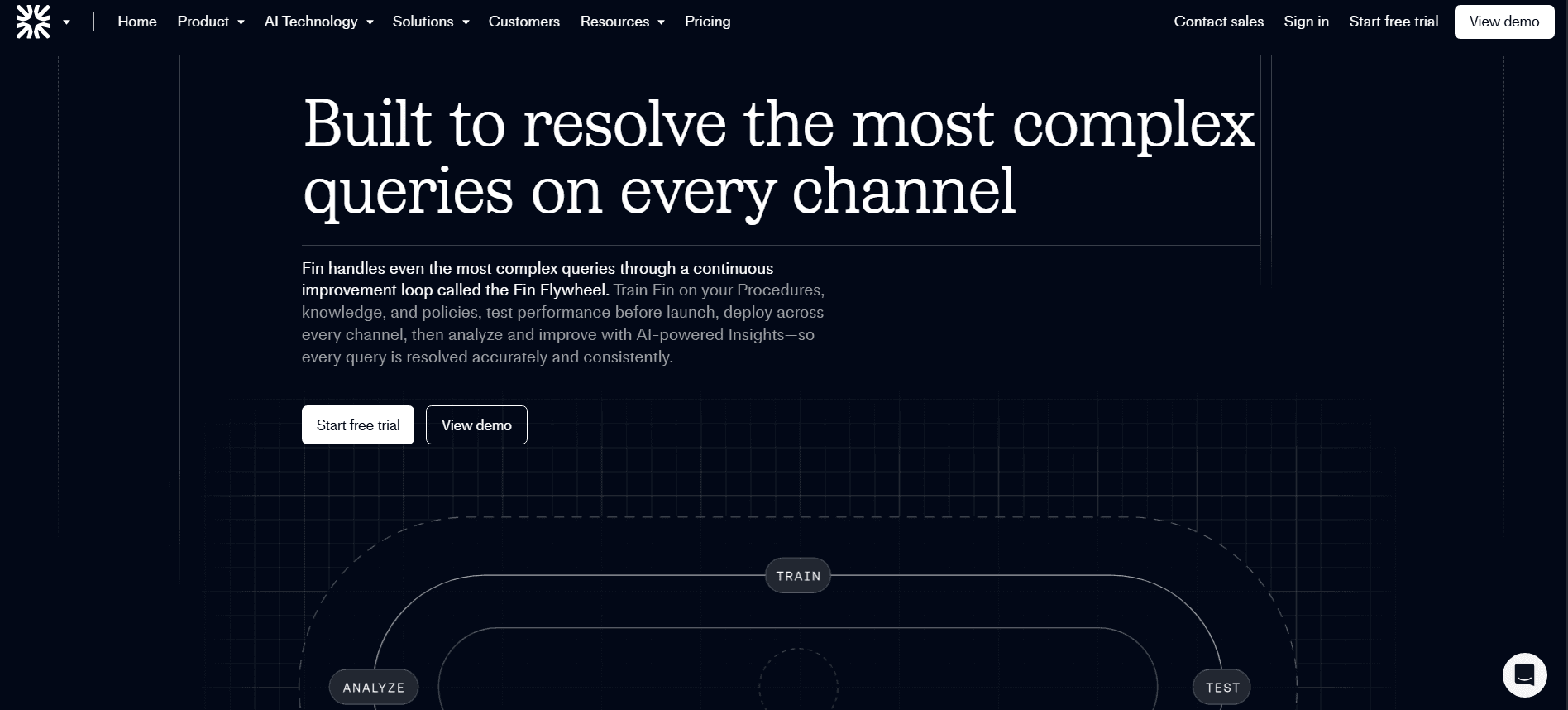
Intercom’s Fin AI agent is built primarily for support automation. It answers help center questions and escalates complex issues to human agents.
Strengths
Accurate support responses
Unified inbox for AI and human agents
Strong ticket routing
Weaknesses
Sales qualification is secondary
Limited pipeline impact
Pricing
Usage-based. Pricing is tied to the number of resolutions and seats.
When to use
Intercom is a good choice when inbound traffic is mostly support-driven. It fits teams focused on reducing ticket volume rather than qualifying buyers or generating a pipeline.
4. Botpress: Best for Developer Control and Customization
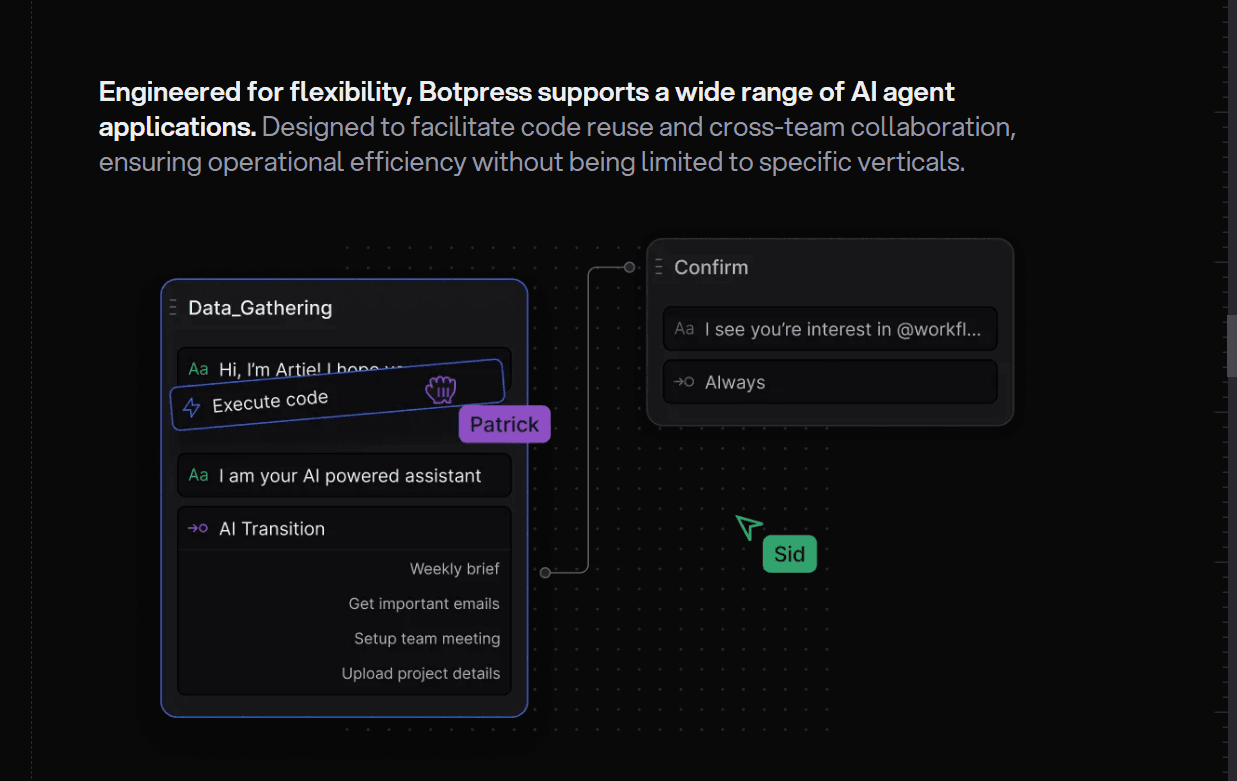
Botpress is an open-source framework for teams that want full control over chatbot logic and integrations.
Strengths
High customization
Control over data and hosting
Flexible architecture
Weaknesses
Requires engineering resources
No native qualification or conversion layer
Pricing
Open-source core with paid enterprise options.
When to use
Botpress suits companies with in-house developers building custom conversational workflows. It is not ideal for GTM teams seeking fast deployment or revenue execution.
5. Yellow.ai: Best for Enterprise Omnichannel Automation
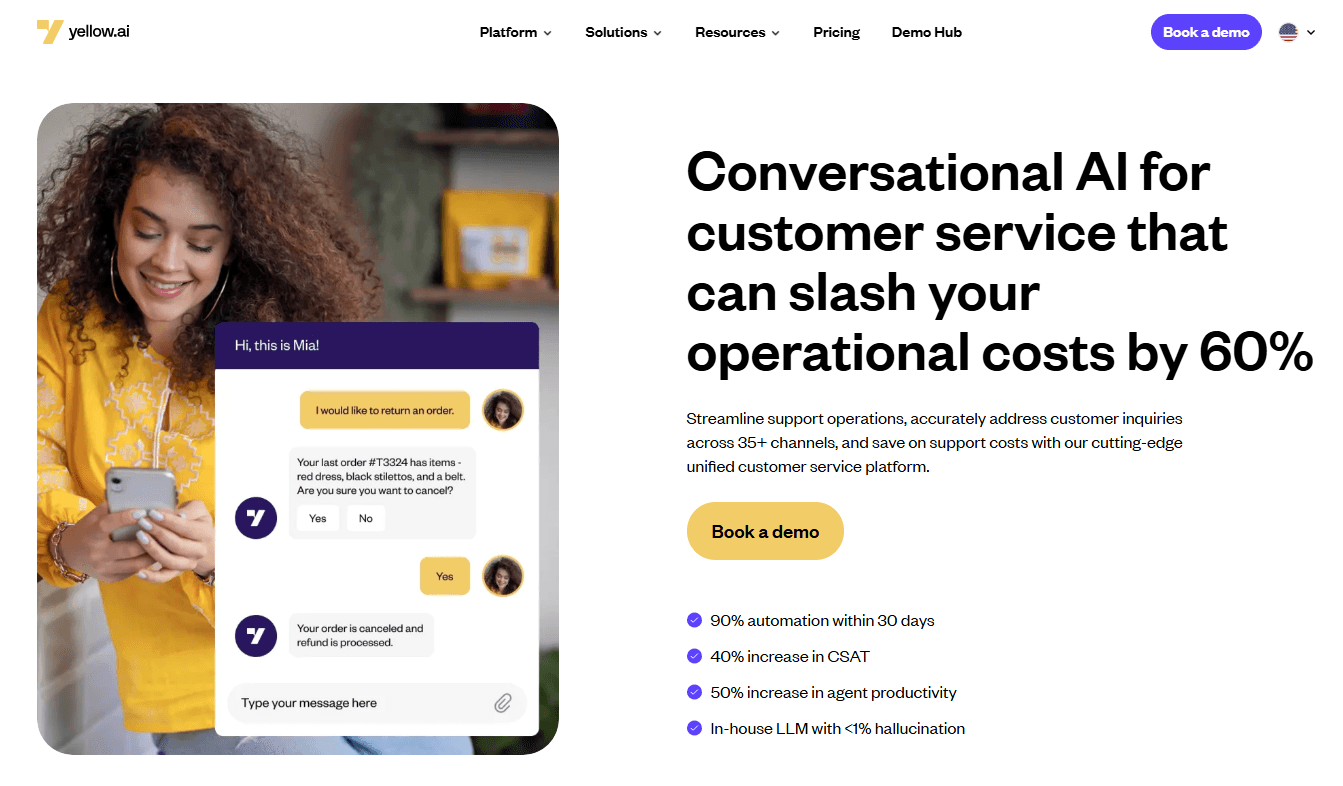
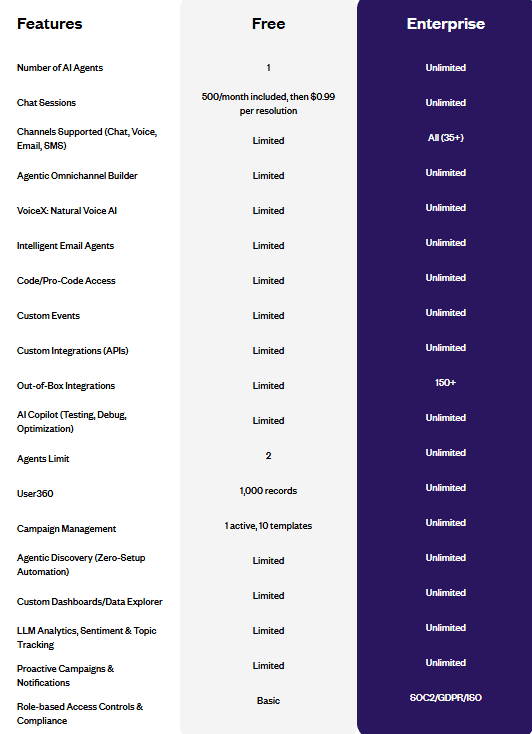
Yellow.ai targets large enterprises with complex conversational needs across chat, voice, and email.
Strengths
Omnichannel coverage
Multilingual support
Enterprise-grade analytics
Weaknesses
Long onboarding cycles
High cost and complexity
Pricing
It is typically cost-prohibitive for SMBs and best suited for large, global organizations.
When to use
Yellow.ai fits global enterprises that need conversational AI across regions and channels. It is best when scale and coverage matter more than inbound sales qualification.
Feature Comparison Table: Chatbase and Breakout
Chatbase and Breakout are built for different stages of inbound maturity.
Chatbase focuses on answering questions and supporting self-serve discovery. Breakout is designed to identify visitors, qualify intent, and convert inbound traffic into meetings.
This comparison helps teams understand when Q&A is sufficient and when a more complete inbound AI SDR is the better option.
Features | Chatbase | Breakout |
Primary Use Case | Knowledge-based Q&A and customer support | Inbound AI SDR for pipeline generation |
Inbound Sales Capability | Limited to reactive conversations | Proactive qualification and meeting booking |
Visitor Identification | No visitor or company identification | Deanonymizes visitors and companies in real time |
Customer Support Handling | Strong for FAQs and support deflection | Handles support while converting sales-ready visitors |
AI Autonomy | Requires human follow-up to convert leads | Fully autonomous 24/7 qualification and conversion |
Pricing Model | Credit-based with variable monthly costs | Predictable, value-based pricing tied to outcomes |
Breakout Moves Beyond Chatbots as an Inbound AI SDR
Chatbase can work well when the goal is basic customer support. It helps teams answer questions, resolve FAQs, and improve response time.
For support-led use cases, that can be enough to improve customer satisfaction.
The challenge appears when teams expect more than conversations. Credit-based pricing makes scale harder to predict, and the chatbot remains reactive. It waits for questions instead of understanding who the visitor is or why they are on the site.
In 2025, most GTM teams cannot afford point solutions. Running separate tools for chat, visitor identification, qualification, routing, and booking increases cost and operational complexity.
Teams need systems that do more of the work automatically, not tools that add more steps.
This is where platforms like Breakout differ.
As mentioned before, Breakout does not function just as a chatbot. It operates as an inbound AI SDR that identifies visitors, understands intent, and converts demand in real time. Conversations are human and contextual, but they are backed by sales intelligence and decision logic.
1. From Anonymous Visits to Qualified Conversations
Unlike chatbots that treat every visitor the same, Breakout starts by identifying who is on your site. It performs visitor and company deanonymization using firmographic and behavioral signals.
This context is fed directly into the conversation. Messaging adapts based on company size, industry, page depth, and repeat visits.
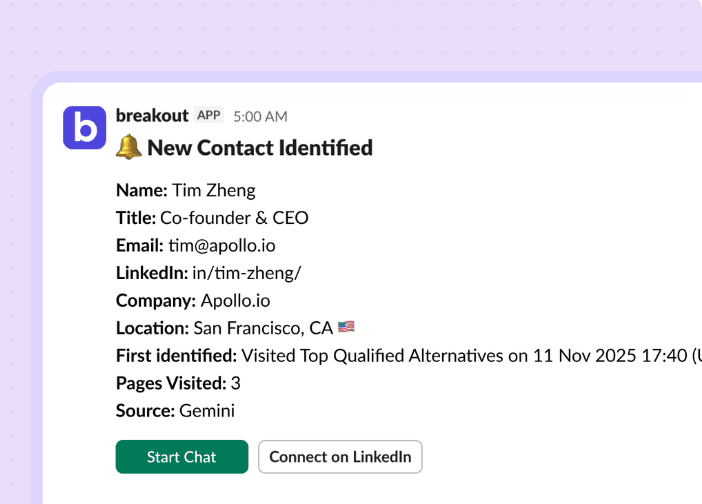
Instead of answering generic questions, the AI runs personalized qualification aligned to where the buyer is in the funnel.
This step alone changes inbound from reactive support to proactive revenue execution.
2. Qualification That Runs Without SDRs
Breakout operates autonomously, without relying on SDR availability.
The AI initiates conversations, asks structured qualification questions, captures intent, and books meetings automatically.
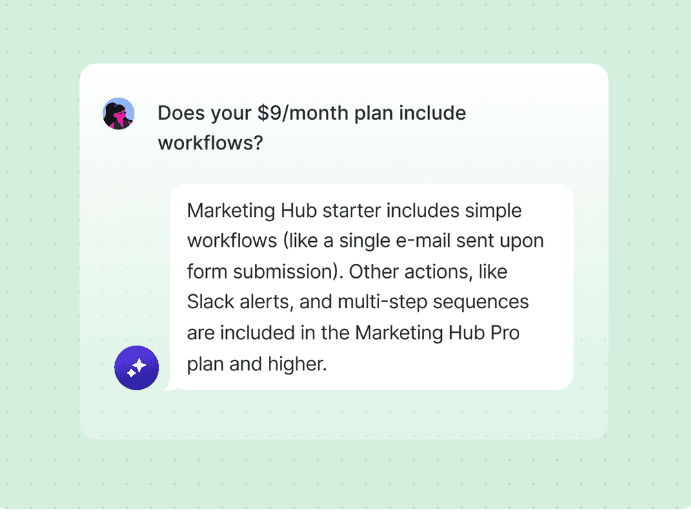
There are no scripts to maintain and no manual handoffs required. Qualification runs 24/7, including outside business hours, ensuring high-intent visitors are acted on while they are live.
For GTM teams, this reduces dependency on headcount and removes delays that often kill inbound conversion.
3. One Inbound System Instead of Many Tools
Chatbase and similar tools require additional systems to complete the inbound flow.
Teams often need separate tools for visitor identification, CRM enrichment, routing, and scheduling.
Breakout consolidates these functions into a single platform. Identification, AI chat, qualification, CRM sync, and booking all work together by default.
This reduces tooling sprawl, improves data consistency, and lowers the total cost of ownership.
How Breakout Helped HackerEarth
HackerEarth replaced forms and static chat with Breakout’s AI-led inbound conversations. The goal was to capture more intent from existing traffic without expanding SDR headcount.

The results were clear. Engagement increased by 2.5%, and more than 10% of engaged visitors converted into leads. Most importantly, Breakout influenced 21% of HackerEarth’s Q1 pipeline.
For HackerEarth, inbound shifted from passive intake to an always-on qualification engine.
Final Thoughts
Chatbase helps teams answer questions faster and reduce support load.
That value is real. But as inbound becomes a revenue channel, answering questions is not enough. Teams need systems that identify visitors, qualify intent, and convert demand while buyers are live.
That is where Breakout stands apart. It goes beyond chat to run the full inbound motion autonomously, from identification to meeting booking.
If you want inbound to generate a predictable pipeline, see Breakout’s AI SDR in action. Book a demo here.
FAQs
1. What are the best Chatbase alternatives for B2B teams?
Popular Chatbase alternatives include Breakout, Drift, Intercom, Botpress, and Yellow.ai. Each tool serves a different use case, from support automation to inbound sales qualification. Teams focused on the pipeline typically choose platforms that go beyond Q&A.
2. How does Chatbase pricing work?
Chatbase uses a credit-based pricing model where AI responses consume credits based on model complexity and response length. While manageable at low usage, costs can become unpredictable as traffic and engagement increase.
3. Who are Chatbase’s main competitors?
Chatbase competitors include AI chat and conversational platforms like Breakout, Drift, Intercom, Botpress, and Yellow.ai. The key difference lies in whether the tool only answers questions or actively qualifies and converts inbound traffic.
4. Is Chatbase good for lead generation?
Chatbase supports basic lead capture, such as collecting emails or sharing booking links. However, it does not perform visitor identification or structured B2B qualification, which limits its effectiveness as an AI chatbot for lead generation.
5. What is the difference between Breakout and Chatbase?
Chatbase is built for knowledge-based Q&A and support deflection. Breakout is an inbound AI SDR that identifies visitors, qualifies intent, and books meetings autonomously. Breakout focuses on pipeline execution, not just conversations.
6. Can I use Chatbase as a custom chatbot platform?
Yes, Chatbase works as a custom chatbot platform for FAQs and documentation-based responses. For teams needing custom sales logic, personalization, and conversion workflows, more advanced platforms are often required.
7. Which AI chatbot is best for inbound sales and pipeline?
For inbound sales, teams need more than a chatbot. Platforms like Breakout combine AI chat with visitor identification, qualification, and booking, making them better suited for generating a predictable pipeline from inbound traffic.