The endless back-and-forth of finding a meeting time is a massive drain on your sales team's productivity today. Tools make the booking process easy, but they only work after someone finally decides to schedule a time.
Many website visitors leave before reaching your booking link if the path to it requires multiple clicks or extra steps to get there.
The real challenge is not the act of scheduling meetings but creating those opportunities in the first place. You are likely losing qualified prospects because you are waiting for them to take the first step on a static page.
In this guide, we are going to review the top scheduling tools that help your team coordinate calendars and manage internal availability. You will learn which platforms offer the best integrations and how to move beyond basic links to capture more pipeline.
TLDR:
Most scheduling tools solve coordination, but leave the pipeline problem unsolved by waiting for visitors to act first.
Your tool choice depends on team size: Calendly for simple links, Chili Piper for form-based routing, HubSpot Meetings for CRM-native workflows.
Free options like Google Calendar and Microsoft Bookings work for internal use, but lack the routing and qualification your sales team needs.
Cal.com suits technical teams needing self-hosted control; SavvyCal suits those prioritizing a collaborative booking experience.
Breakout uses an AI SDR to identify and qualify high-intent website visitors, booking them onto your calendar before they leave.
Need To Know
Choosing the right software depends on your team size and whether you need advanced routing or simple individual booking links:
Breakout: Use this if you want to qualify and book website visitors automatically using an AI SDR.
Calendly: Use this if you need a simple and widely recognized booking link for individual or small team use.
Chili Piper: Use this if your sales team requires complex lead routing and instant scheduling directly from website forms.
HubSpot Meetings: Use this if you are already using the HubSpot CRM and want a native scheduling experience.
Google Calendar: Use this for internal team coordination and basic appointment slots if you use the Google Workspace suite.
Microsoft Bookings: Use this if your organization is standardized on Microsoft 365 and needs a simple client booking portal.
SavvyCal: Use this if you want to provide a more collaborative booking experience where prospects can see their own calendar.
Cal.com: Use this if you require an open source and highly customizable scheduling infrastructure for your specific technical needs.
What Are Scheduling Tools?
Scheduling tools are software platforms that help individuals and teams book meetings by sharing availability and eliminating manual coordination emails. These tools integrate with your calendars and allow prospects to select time slots based on your predefined rules and availability.
By using these platforms, you can be confident that your sales reps spend more time talking and less time managing their inboxes.
Here is what scheduling tools are designed to handle:
Share availability links: Provide a direct URL that shows your open time slots to anyone who needs to book a meeting.
Automate meeting booking: Allow prospects to select a time and automatically add the event to all participant calendars without manual entry.
Sync with calendars: Connect directly with Google or Outlook so that you never get double-booked for a sales call.
Reduce back-and-forth scheduling: Eliminate the need for multiple emails to find a single time that works for every person involved.
Send reminders and confirmations: Automatically notify all parties about upcoming meetings to reduce no-show rates in B2B sales and improve overall meeting attendance.
Integrate with CRM and sales tools: Log every booked meeting in your system of record to keep your sales data clean and accurate.
Why Teams Use Scheduling Tools
Scheduling tools boost productivity and reduce friction in booking meetings for sales, customer success, and your internal support teams. According to 2026 sales productivity benchmarks, reps spend only 30% of their time on actual selling, making any reduction in admin overhead a direct gain for revenue. These tools solve the coordination problem by making it easy for a person to choose a time that fits their schedule.
However, you must remember that these tools manage the calendar, but they do not solve your underlying pipeline generation problem.
Teams rely on scheduling tools to simplify these workflows:
Faster meeting booking: Prospects can find a time and book a demo in seconds instead of waiting for a manual reply.
Reduced manual coordination: Your sales reps no longer have to play calendar Tetris to find an open slot for a prospect.
Better calendar visibility: Managers can see the meeting volume of their entire team in one centralized dashboard or reporting view.
Improved customer experience: Provide a professional and modern way for buyers to engage with your brand on their own terms.
Automated reminders: Keep your meetings top of mind for prospects so that your sales team stays busy with live calls.
10 Scheduling Tools That Go Beyond Just Booking Meetings
Not all scheduling tools are built the same because some focus on simplicity while others support advanced routing and team needs. You should select a platform based on how it fits into your existing sales stack and your specific workflow requirements.
Here are the best scheduling tools based on features, usability, and your specific team requirements:
Tool | Best For | Qualification Layer | Lead Routing | Pricing |
|---|---|---|---|---|
Breakout | AI-led inbound pipeline generation | Yes (AI SDR) | Yes | Paid plans available |
Calendly | Simple individual or team booking links | No | Limited | Free + paid tiers |
Chili Piper | High-growth teams needing form-based routing | No | Yes | Paid (per seat) |
HubSpot Meetings | HubSpot CRM users wanting native scheduling | No | Limited | Included with HubSpot |
Google Calendar | Internal coordination in Google Workspace | No | No | Free |
Microsoft Bookings | Microsoft 365 organizations needing a booking portal | No | No | Included with M365 |
SavvyCal | Collaborative, low-friction booking experience | No | No | Free + paid tiers |
Cal.com | Technical teams needing self-hosted control | No | No | Free (open source) + paid |
Lemcal | Personal branding in the booking process | No | No | Free + paid tiers |
Doodle | Group availability polling for multi-person events | No | No | Free + paid tiers |
1. Breakout
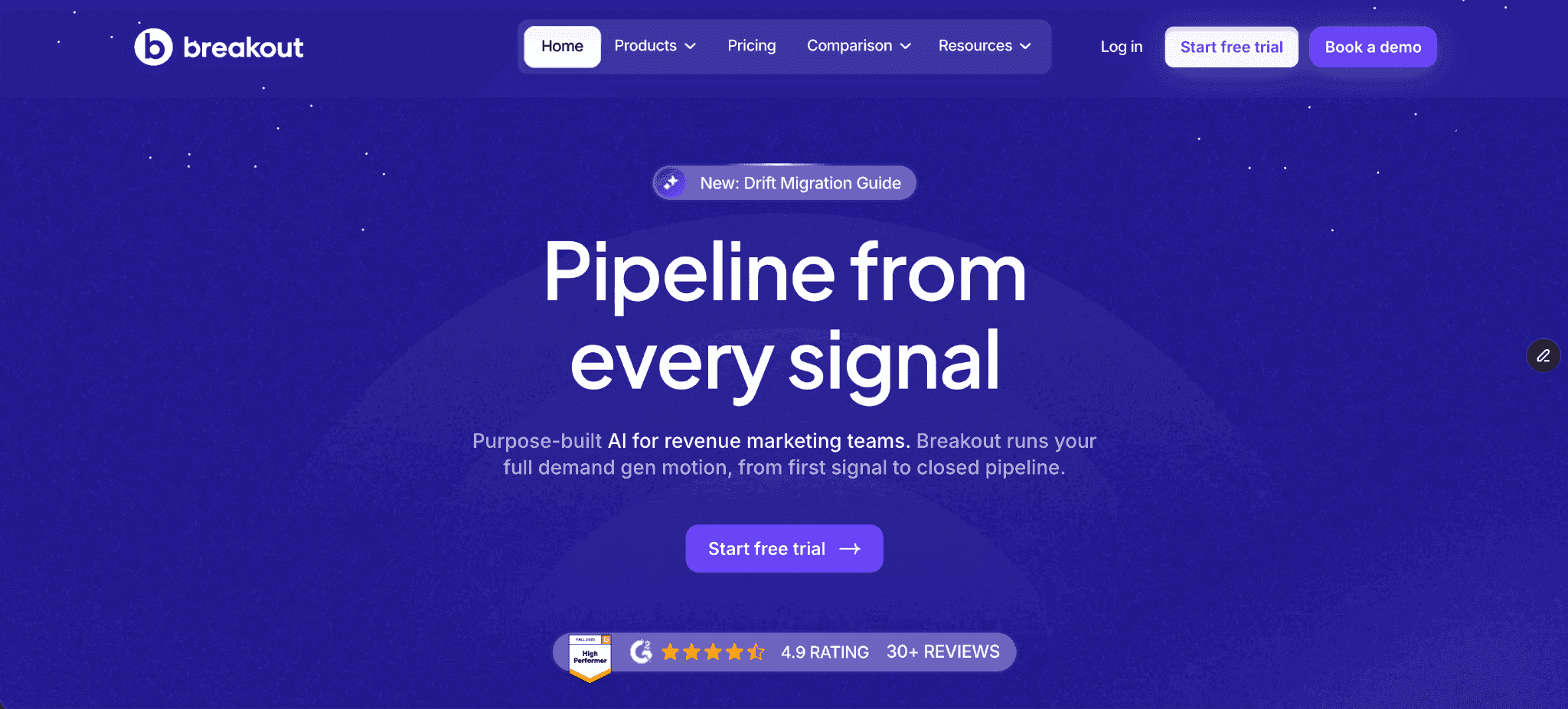
Most scheduling tools sit passively on your site and wait for a visitor to do the work. Breakout flips this dynamic by turning your website into an active participant in your sales cycle.
Instead of hoping a prospect finds your "Book a Demo" link, Breakout identifies high-intent visitors and uses an inbound AI SDR to qualify them and secure the meeting while they are still on your page.
It works as a layer above your existing calendar tools. While Calendly manages the time slot, Breakout manages the buyer. It guarantees that your sales team only wakes up to a calendar filled with qualified, high-value prospects who have already been vetted against your ICP.
Key Features You Shouldn't Miss
Engage visitors before they click book: Start a conversation with your potential buyers before they have a chance to leave your site.
Book meetings instantly: Allow your qualified prospects to choose a time on your calendar while they are still highly engaged.
Multi-Source Waterfall Enrichment: Pull data from Apollo and other top-tier providers so every lead is fully enriched with 100% accuracy.
Instant AI Qualification: Your AI SDR engages visitors immediately, asking the right questions to separate buyers from window shoppers.
Frictionless Handoffs: Qualified prospects can book directly onto the correct rep’s calendar based on your specific routing rules.
Live Pipeline Creation: Move from "waiting for forms" to "booking meetings" the moment a visitor shows interest in your solution.
Why It Is A Better Alternative
Breakout is a revenue engine that converts anonymous traffic into a scheduled pipeline. It solves the "ghosting" problem by capturing the buyer's attention exactly when it is highest.
By automating the qualification and booking steps, you eliminate the manual grind for your SDRs and make sure no lead is ever left to go cold.
2. Calendly
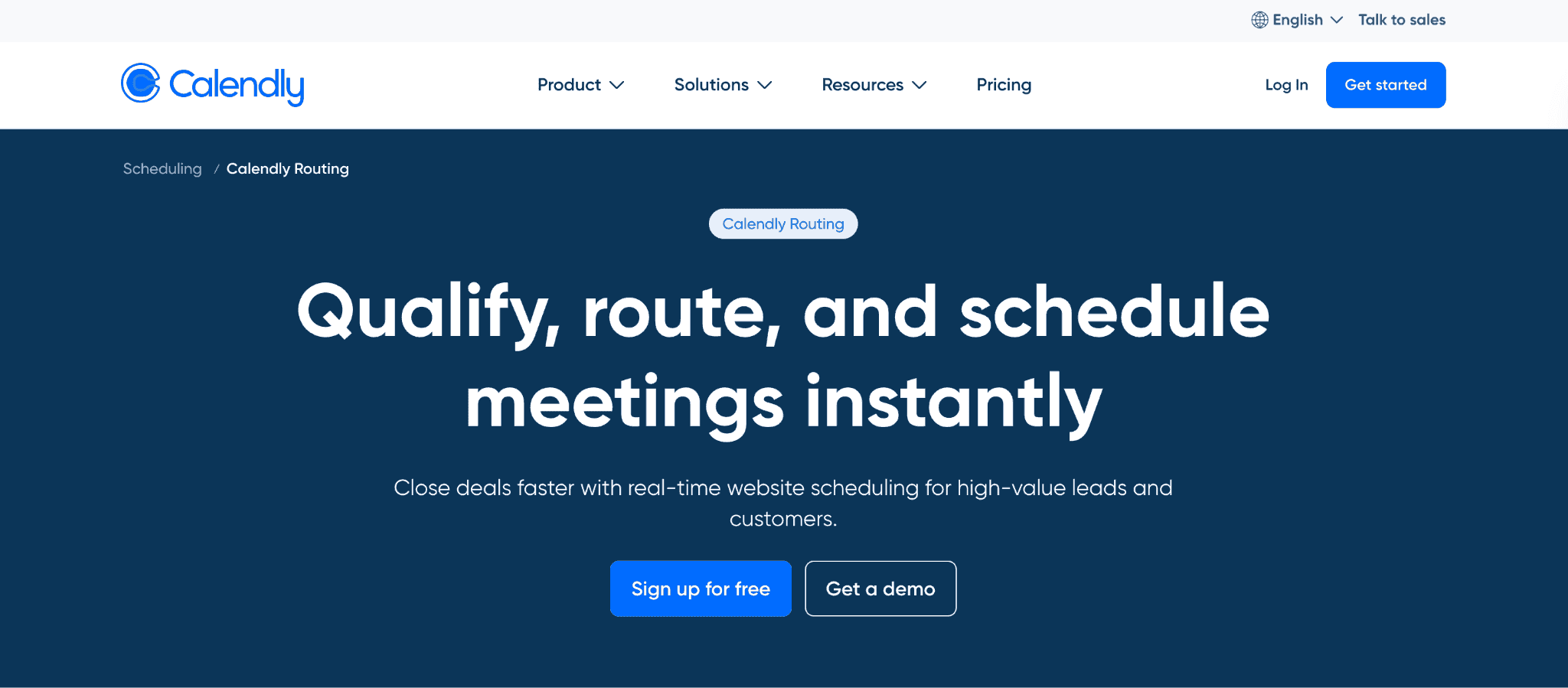
Calendly is a widely recognized platform that allows individuals and teams to share their availability through simple booking links. It remains a top choice because of its intuitive interface and massive library of integrations with other popular business apps.
Pros
Easy setup: You get started quickly without complex configuration.
Wide adoption: Your prospects are already familiar with the interface.
Calendar sync: Avoid conflicts through real-time availability updates.
Automation: Send reminders and confirmations automatically.
Integration support: Connect with CRM and productivity tools easily.
Cons
No qualification layer: You cannot assess lead quality before booking.
Reactive workflow: You rely on users to take action first.
Limited pipeline impact: You manage meetings but do not create them.
Verdict: The safest choice for teams that need a reliable and simple way to share individual or group booking links.
3. Chili Piper
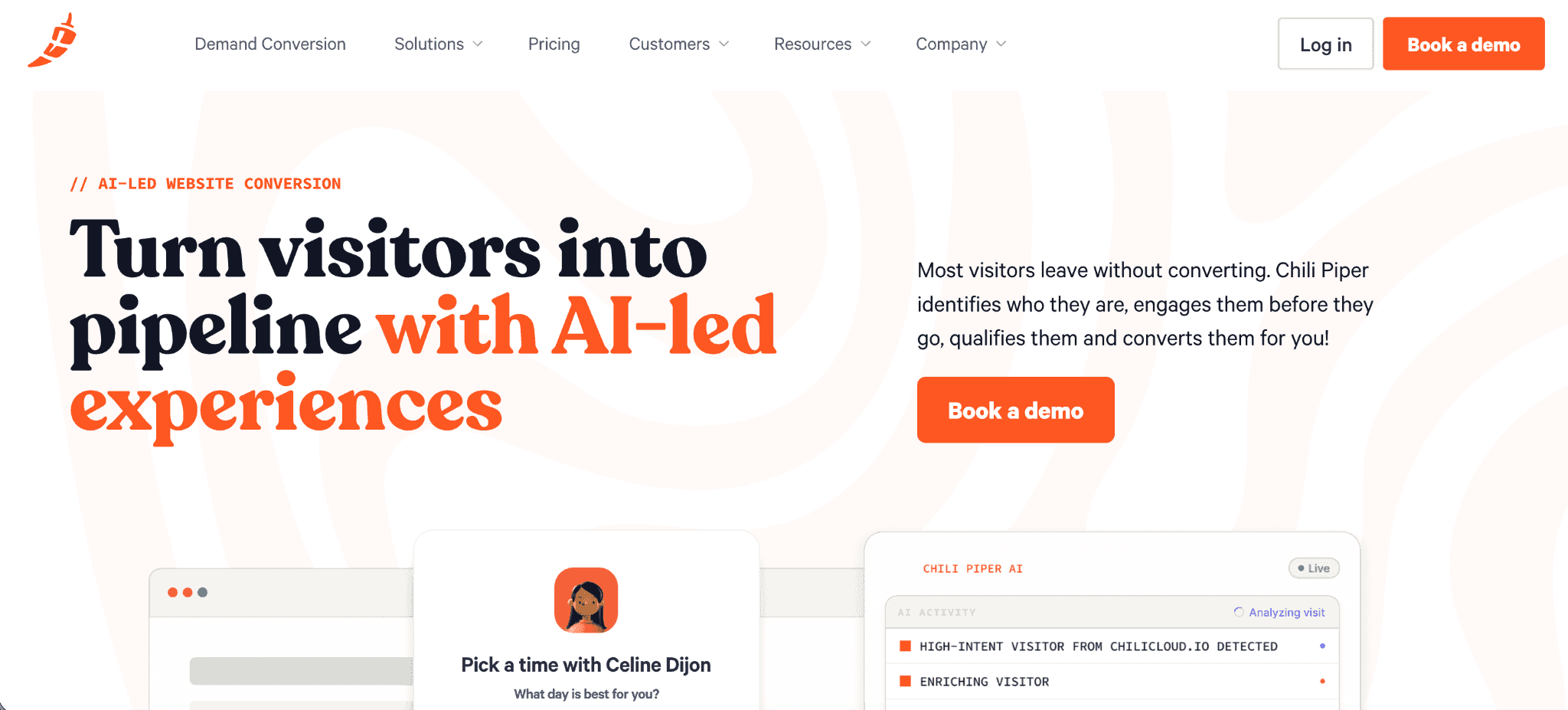
Chili Piper is built specifically for high-growth sales teams that need to route leads and book meetings from web forms. See how it stacks up in our Chili Piper vs Calendly breakdown. It focuses on speed to lead by connecting the right prospect to the right sales representative in a matter of seconds.
Pros
Instant booking: Reduce delays after form submission.
Routing logic: Assign meetings to the right rep automatically.
CRM integration: Keep data synchronized across systems.
Improved speed-to-lead: You connect faster with prospects.
Sales alignment: You coordinate scheduling with routing workflows.
Cons
Form dependency: Requires users to convert first.
No real-time engagement: You cannot interact with anonymous visitors.
Limited automation depth: You still rely on manual processes.
Verdict: Best for sophisticated sales organizations that prioritize routing accuracy and immediate conversion from their existing website lead forms.
4. HubSpot Meetings
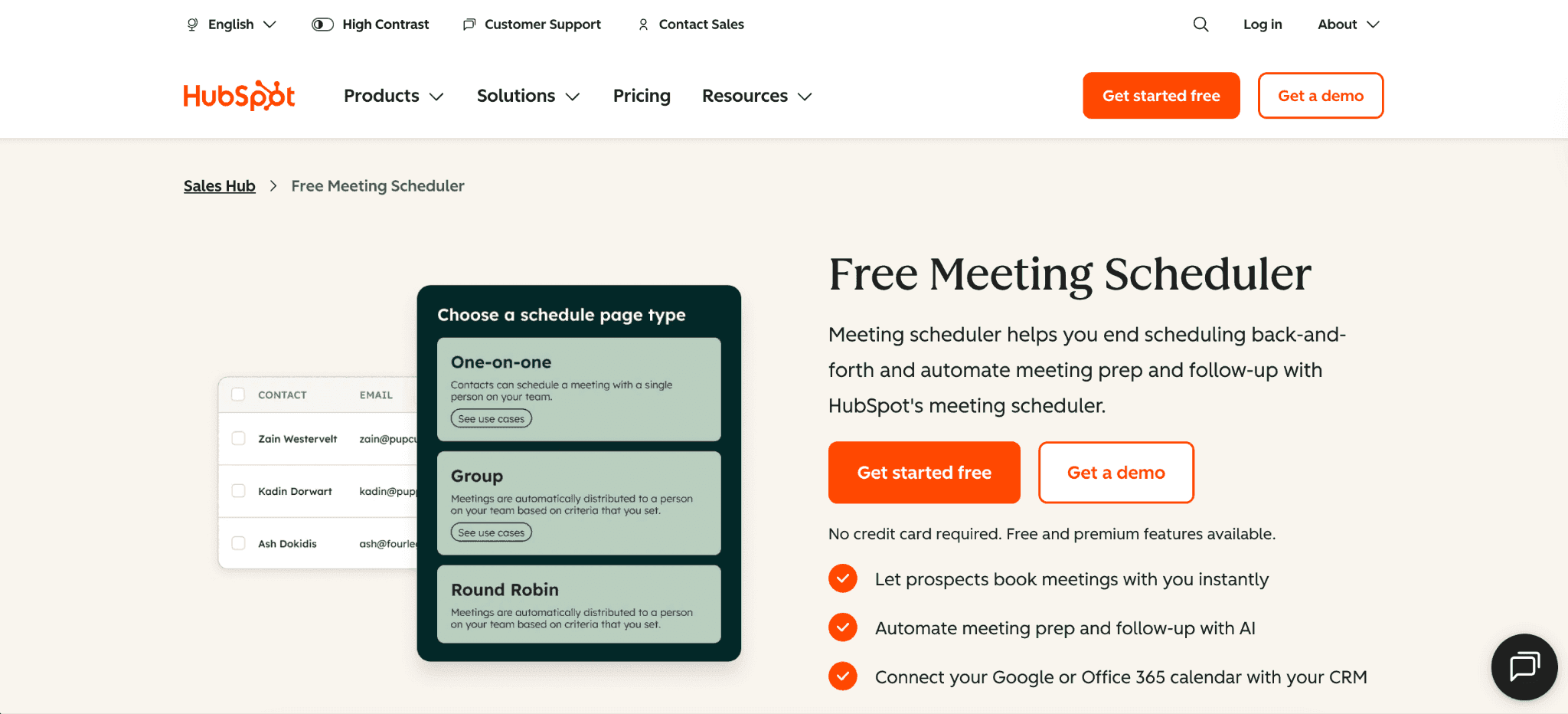
HubSpot Meetings provides a native scheduling experience that connects directly to the HubSpot CRM and marketing automation suite for users. It allows you to create booking links that automatically update contact records and trigger follow-up workflows for your team.
Pros
CRM integration: Manage scheduling within your existing system.
Ease of use: Simplify workflows for marketing and sales teams.
Automation: Simplify reminders and confirmations.
Data visibility: Track meetings alongside pipeline data.
Centralized workflows: Align scheduling with campaigns.
Cons
Limited outside ecosystem: You depend on HubSpot for full value.
No qualification layer: No option to filter leads before booking.
Reactive process: You rely on user intent to schedule meetings.
Verdict: The obvious choice if your team already lives in HubSpot and you want to keep your sales data unified.
5. Google Calendar
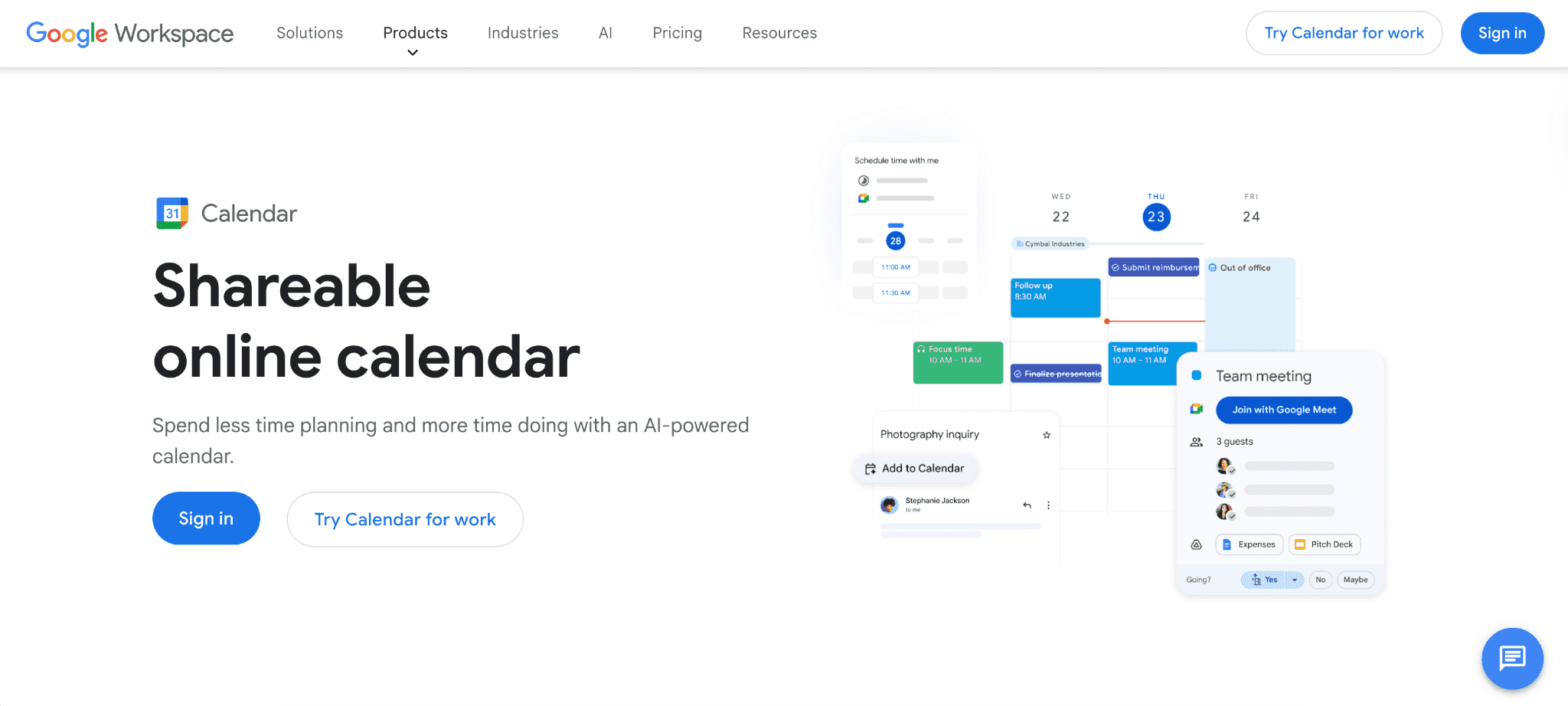
Google Calendar offers built-in appointment slots and booking pages for users of the Google Workspace business and education suites. It is a no-cost option for teams that only need basic functionality and do not require advanced routing. It is included here for completeness, but Series B+ sales teams with active pipeline goals will find it too limited for anything beyond internal scheduling.
Pros
Familiar interface: You use a tool already integrated into your workflow.
Free access: Manage scheduling without additional cost.
Calendar sync: Avoid conflicts with real-time updates.
Simple setup: Does not require onboarding.
Accessibility: Access it from anywhere.
Cons
Limited features: You lack advanced scheduling automation.
No routing: You cannot assign meetings across teams.
No pipeline impact: You manage time, not demand.
Verdict: Ideal for small teams or internal use where simple availability sharing is more important than advanced sales features.
6. Microsoft Bookings
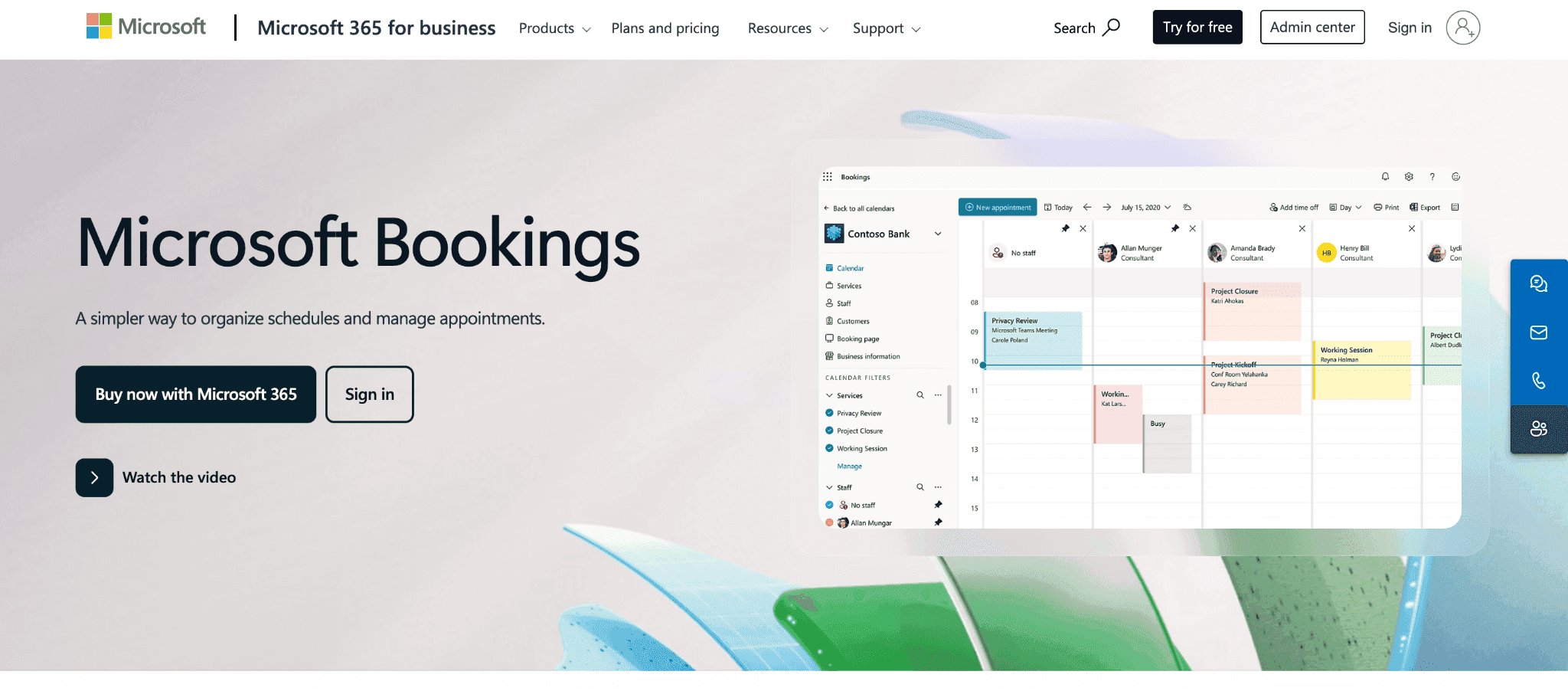
Microsoft Bookings is a scheduling tool included with Microsoft 365 that provides a simple web-based booking page for customers. It integrates natively with Outlook and Teams to help your staff manage their appointments and customer interactions in one place.
Pros
Microsoft integration: Align with existing tools and workflows.
Centralized scheduling: Manage bookings across teams.
Calendar sync: Avoid conflicts and double bookings.
Automated confirmations: Reduce manual communication.
Enterprise readiness: Support structured workflows.
Cons
Limited customization: You cannot adapt workflows easily.
No qualification: You cannot filter leads before booking.
Reactive model: You depend on user action.
Verdict: A great free alternative for Microsoft-heavy organizations that need a functional client booking portal without extra spend.
7. SavvyCal
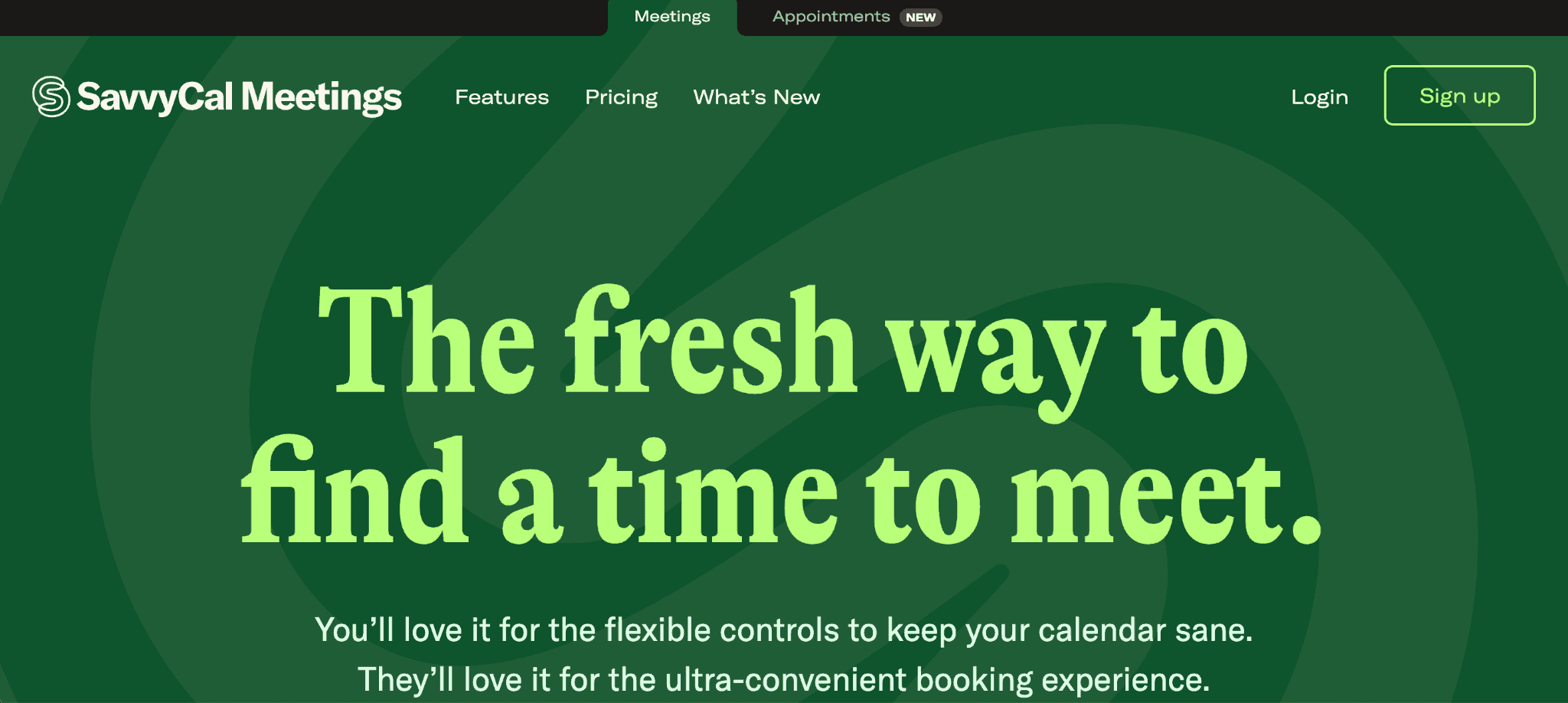
SavvyCal focuses on a collaborative booking experience by allowing the person scheduling to overlay their own calendar on your availability. This unique approach reduces the mental effort required to find a time and makes the process more friendly for prospects.
Pros
Flexible scheduling: Improves user experience with calendar overlays.
Customization: Adjust availability and preferences easily.
User-friendly interface: Simplified booking interactions.
Time zone handling: You reduce confusion for global teams.
Lightweight setup: Start quickly without complexity.
Cons
No routing: Cannot assign meetings automatically.
No qualification: You cannot assess intent before booking.
Limited impact: Improves experience and not the pipeline.
Verdict: Best for professionals and small teams that want to provide a premium and friction-free experience for their clients.
8. Cal.com
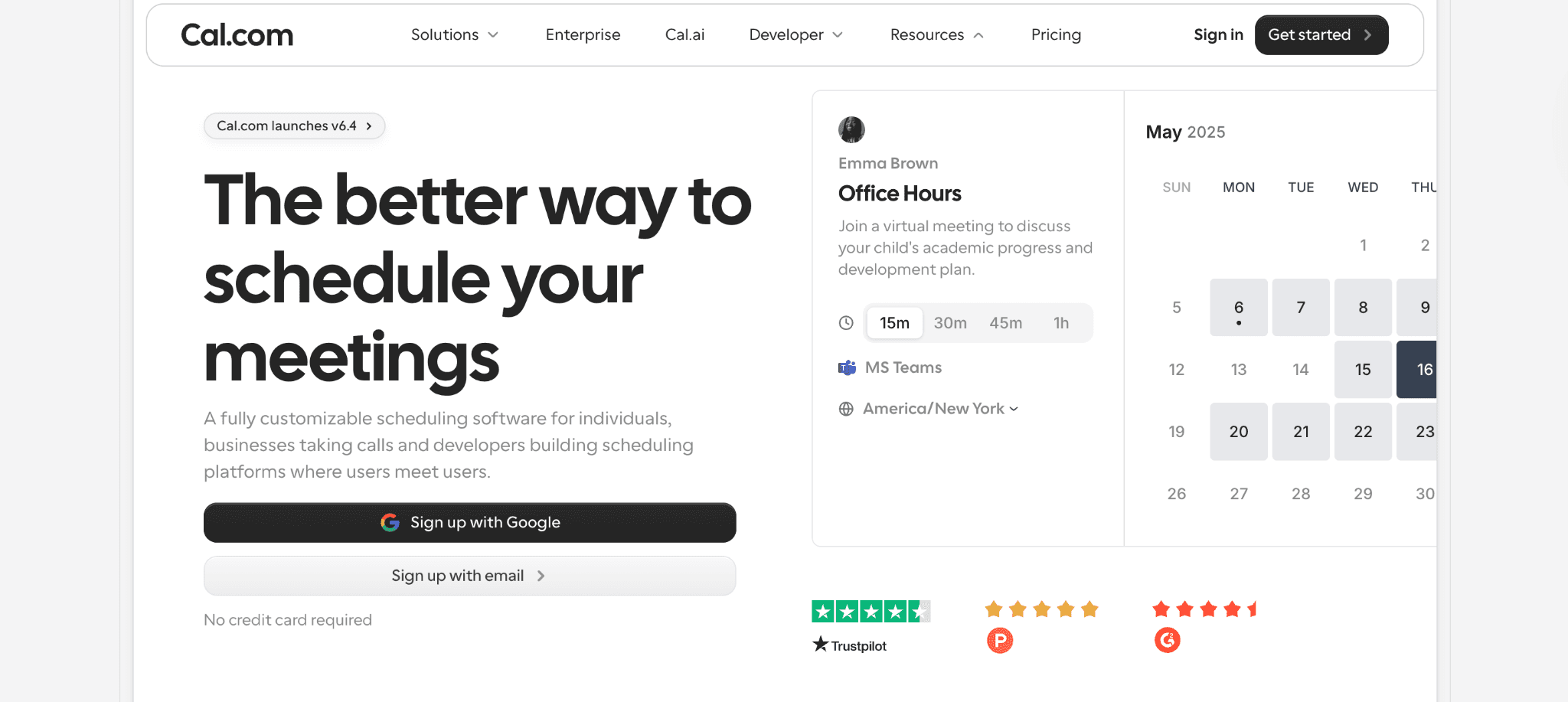
Cal.com is an open source scheduling platform that gives you full control over your data and how you build your booking. It is highly flexible and allows developers to customize the experience to fit their specific product or internal company workflows.
Pros
Open-source flexibility: Customizes workflows based on your needs.
Control: Manages your scheduling infrastructure.
Integration support: Connects with multiple tools.
Scalability: Adapts workflows as your team grows.
Customization: Tailors scheduling experiences.
Cons
Technical setup: Requires development resources.
No qualification layer: You cannot assess lead quality.
No pipeline creation: You manage scheduling only.
Verdict: The best choice for technical teams and companies that require a highly customizable or self-hosted scheduling solution.
9. Lemcal
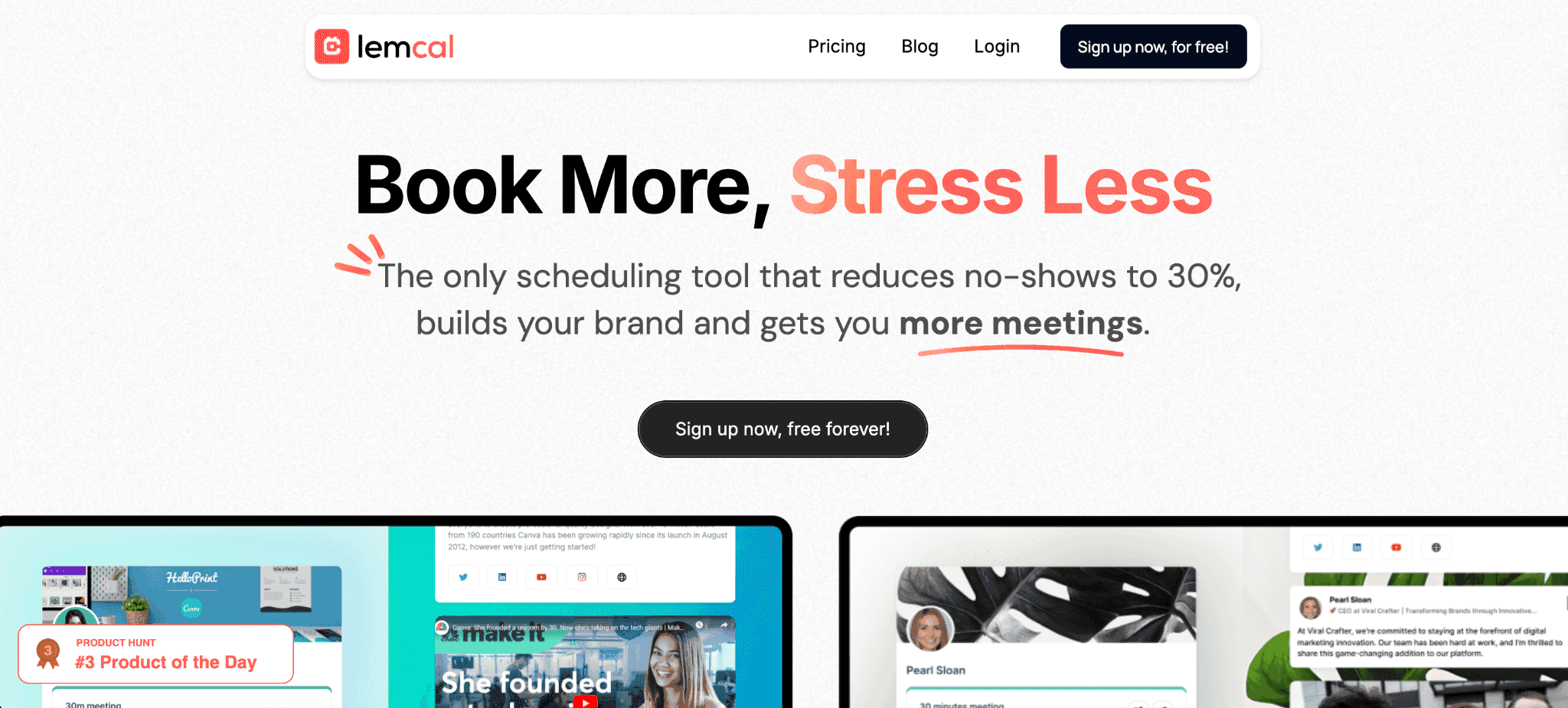
Lemcal is a scheduling tool designed to help you stand out by creating personalized and visually appealing booking pages for prospects. It focuses on the social and branding aspects of scheduling to help you build rapport before the meeting begins.
Pros
Modern interface: Improves user experience.
Collaboration: Coordinates across teams easily.
Ease of use: Reduces friction in booking.
Lightweight setup: You can start quickly.
Flexibility: Adapt scheduling preferences.
Cons
Limited features: Lacks advanced automation.
No qualification: You cannot filter leads.
No pipeline impact: You manage bookings only.
Verdict: Great for individual sales reps and founders who want to inject their personal brand into the booking process.
10. Doodle
Doodle is the industry standard for finding a common time among a large group of people through simple polling features. It is most effective for coordinating committee meetings or events where you need to see the availability of many participants. Like Google Calendar, it is included here for completeness. It is not a fit for Series B+ revenue teams that need qualification, routing, or pipeline creation.
Pros
Group coordination: Simplify scheduling for multiple participants.
Polling feature: Collect availability efficiently.
Ease of use: Reduce coordination effort.
Accessibility: Use it without a heavy setup.
Flexibility: Manage different scheduling scenarios.
Cons
No automation: Lacks advanced scheduling workflows.
No CRM integration: You cannot connect to pipeline tools easily.
No qualification: You cannot assess lead intent.
Verdict: Use this for group coordination and one-off events rather than daily sales and lead management workflows.
Final Thoughts
Scheduling tools are essential for managing your time, but they are only one piece of a modern revenue engine today. You can have the most efficient calendar in the world, but it means nothing if your reps are not meeting buyers.
Breakout turns your website into an active pipeline machine by qualifying and booking meetings with the people who are interested now. Instead of waiting for a prospect to navigate to a contact page, you can greet them and book them immediately.
This approach keeps your sales team focused on closing deals instead of chasing cold leads through email.
Don't wait for your prospects to take the first step and start filling your calendar with a qualified pipeline. Schedule a free trial to learn how Breakout turns your website visitors into booked meetings in minutes.
FAQs
Why is Breakout more effective for pipelines than traditional scheduling tools?
Traditional scheduling tools like Calendly are passive; they sit on your site and wait for a visitor to decide to book. Breakout is an active AI SDR that identifies high-intent visitors in real time, strikes up a conversation, and qualifies them before they ever leave. You stop hoping for clicks and start capturing the pipeline the moment intent is shown.
Are scheduling tools free?
Many scheduling tools offer free plans for basic links, but they often gate the features that actually drive revenue. You can also get started for free with Breakout to see how AI-led qualification works on your own site. While basic tools limit you to simple syncing, Breakout’s professional tiers unlock full AI SDR orchestration to turn that free traffic into a booked pipeline.
What is the difference between scheduling and lead routing?
Scheduling tools book meetings based on your availability, while lead routing tools assign those leads to the correct sales representatives. Both of these processes happen after a lead already exists in your system, but neither tool creates that demand. You need a platform that qualifies and converts visitors to make these routing and scheduling tools effective.
Can scheduling tools qualify leads?
Most scheduling tools cannot qualify leads before booking because they rely on the user to click a link and choose. This often leads to your sales reps spending time on calls with prospects who do not fit your target profile. Platforms like Breakout solve this by qualifying visitors through an AI conversation before the meeting is officially scheduled.
Is the AI engagement better than a standard chatbot?
Yes, significantly. While most bots follow rigid, frustrating decision trees, Breakout’s AI SDR holds natural, contextual conversations. It can answer product questions, handle objections, and adapt to visitor behavior on the fly. It feels like a human sales rep who is available 24/7, so you never miss a lead because your team was offline.