
Quick Summary
If you're short on time, here's the quick answer.
Choose RB2B if you want to identify individual buyers visiting your website and your sales team relies on person-level prospecting.
Choose Leadfeeder if you need company-level visitor identification, stronger international coverage, and account-based marketing insights.
RB2B uses an identity graph to identify people, while Leadfeeder uses reverse IP technology to identify companies.
Leadfeeder generally offers broader CRM integrations, reporting, and better GDPR suitability for European businesses.
RB2B provides richer contact data when a match is available but performs best in the US.
Neither platform engages website visitors or converts them into meetings automatically.
If your goal is to turn anonymous website traffic into a qualified pipeline through AI conversations and automated meeting booking, Breakout is a better fit.
Website visitor identification has become a critical part of modern B2B sales.
RB2B and Leadfeeder are two of the most popular tools in the category.
While both help you uncover who's visiting your website, they solve the problem in fundamentally different ways. Leadfeeder identifies the companies behind anonymous website traffic, whereas RB2B aims to identify the individual people visiting your site using its identity graph.
Choosing between them isn't just about features.
It's about understanding the trade-offs around pricing, match accuracy, geographic coverage, privacy, compliance, and how each platform fits into your go-to-market strategy.
In this guide, we'll compare RB2B vs. Leadfeeder across pricing, visitor identification, integrations, reviews, and real-world use cases.
We'll also cover where Breakout fits in for teams looking to go beyond visitor identification and convert anonymous website traffic into qualified pipeline.
How RB2B Works
RB2B helps B2B companies identify the individual people visiting their website rather than just the businesses they work for.
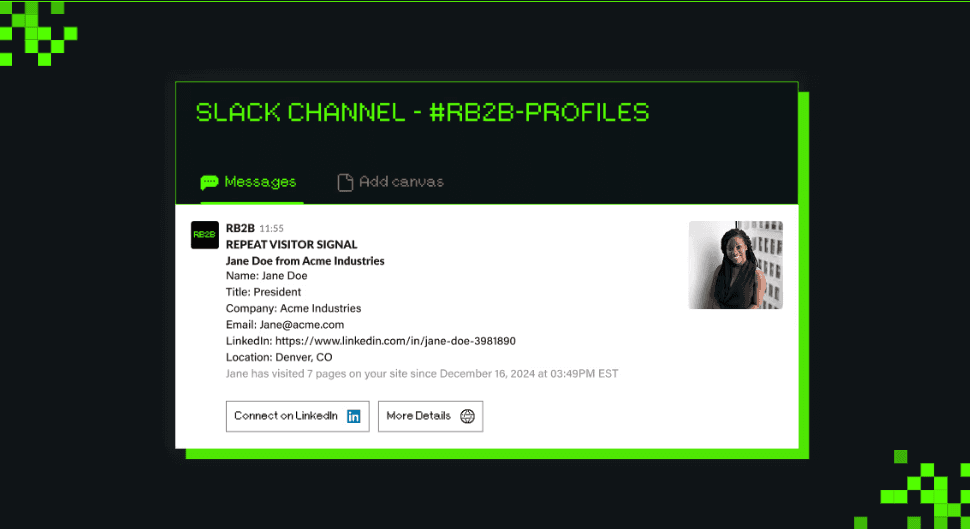
It uses an identity graph that combines first-party signals and third-party data sources to match anonymous visitors with professional profiles when sufficient data is available.
The platform is designed primarily for sales and outbound teams that want to know which buyers are researching their products.
Once a visitor is identified, RB2B enriches the contact with details such as their name, company, job title, LinkedIn profile, and email address (where available). This allows sales teams to start outreach without waiting for a demo request or contact form submission.
RB2B works best for companies targeting the US market, where its identity graph has the strongest coverage.
However, match rates can vary depending on visitor location, browser settings, consent choices, and the quality of available data. It also focuses on identifying visitors rather than engaging or qualifying them on your website.
How Leadfeeder Works
Leadfeeder takes a different approach by identifying the companies that visit your website rather than the individuals behind each visit.
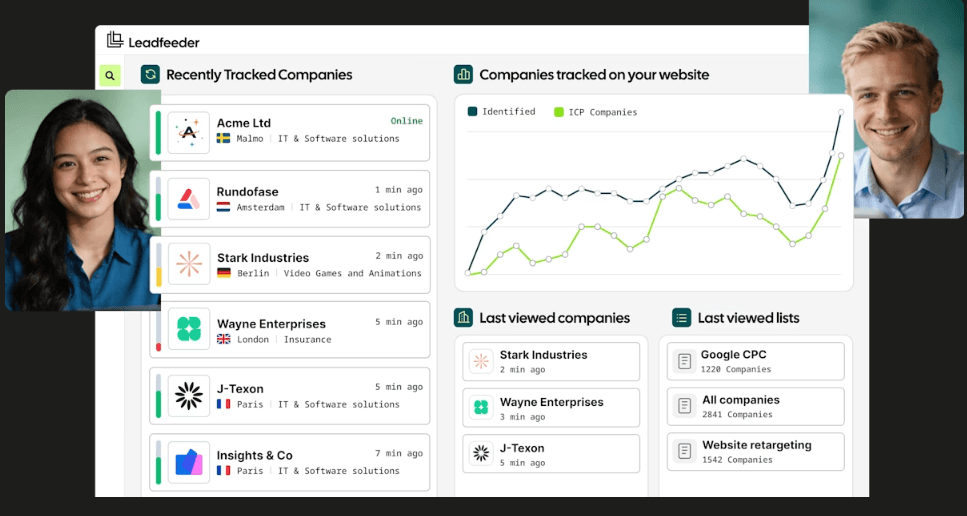
It analyzes IP addresses and combines them with business databases to determine which organizations are interacting with your website, even if no one fills out a form.
Once a company is identified, Leadfeeder shows information such as pages viewed, visit frequency, time on site, traffic source, and firmographic details. S
Sales and marketing teams can use these insights to prioritize target accounts, identify buying intent, and trigger follow-up workflows in their CRM or sales engagement platform.
Because Leadfeeder focuses on company identification, it generally offers broader international coverage than person-level identification platforms.
The trade-off is that it usually can't tell you exactly which employee visited your website, making it better suited for account-based marketing than individual prospecting.
How RB2B and Leadfeeder Actually Identify Website Visitors
At first glance, RB2B and Leadfeeder seem to do the same thing.
Both promise to reveal who's visiting your website. But the technology behind them is completely different, and that directly affects the data you receive.
RB2B focuses on people. Leadfeeder focuses on companies. Understanding that difference is the key to choosing the right platform.
RB2B: Identifying Individual Buyers
RB2B uses an identity graph to match anonymous website visitors with individual professionals. Instead of telling you that someone from HubSpot visited your website, it aims to identify the actual person behind the visit.
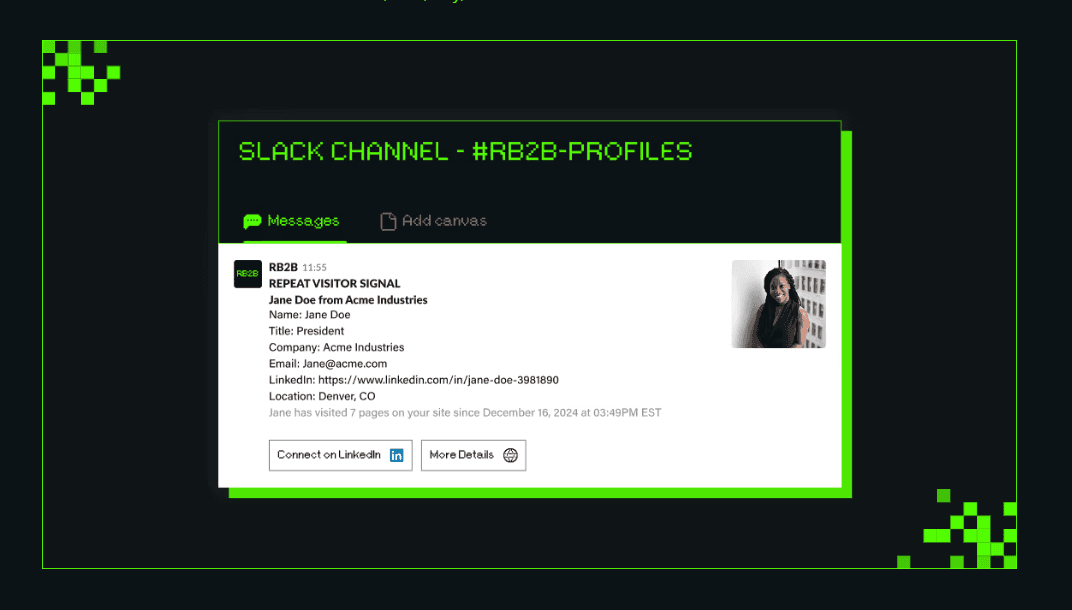
When a match is available, RB2B enriches the visitor with details like their name, company, job title, LinkedIn profile, and contact information. That makes it useful for sales teams that want to start outreach before a prospect fills out a form.
Its strongest coverage is in the US, where its identity graph contains the most data. Match rates can vary depending on visitor consent, browser privacy settings, and the availability of matching records.
Leadfeeder: Identifying Buying Accounts
Leadfeeder takes a company-first approach. Instead of identifying people, it uses reverse IP lookup to determine which businesses are visiting your website.

Once a company is identified, Leadfeeder shows which pages they viewed, how often they returned, how long they stayed, and where they came from.
This gives marketing and sales teams a clearer picture of account-level buying intent without relying on form fills.
Because company identification isn't tied to an individual identity graph, Leadfeeder supports businesses across more regions and generally offers broader global coverage. The trade-off is that you rarely know which employee actually visited your website.
RB2B vs. Leadfeeder: Feature Comparison
Although RB2B and Leadfeeder are both visitor identification tools, they solve different problems.
RB2B is designed to identify individual buyers, while Leadfeeder helps you understand which companies are showing buying intent.
Here's how they compare across the features that matter most.
1. Visitor Identification
This is the biggest difference between the two platforms.
RB2B attempts to identify the actual person visiting your website. When a match is available, it enriches the visitor with details such as their name, company, job title, LinkedIn profile, and contact information.
This gives sales teams someone they can immediately research or reach out to.
Leadfeeder doesn't identify individuals. Instead, it identifies the company behind the visit using reverse IP matching. It then shows engagement data like pages viewed, visit history, and visit frequency.
For account-based sales, knowing which company is researching your product is often enough to trigger outreach.
Verdict: RB2B is the stronger choice if your sales process depends on identifying individual buyers. Leadfeeder is a better fit if your team focuses on account-based marketing and prioritizes companies rather than contacts.
2. Match Accuracy
No visitor identification tool delivers a 100% match rate.
Leadfeeder generally provides more consistent company identification because many businesses use corporate IP addresses.
However, accuracy can drop when visitors browse from home networks, VPNs, mobile devices, or shared internet connections.
RB2B has a more difficult task.
Identifying a specific person requires matching multiple data points within its identity graph. Browser privacy settings, consent preferences, ad blockers, and regional privacy laws can all reduce match rates.
When RB2B finds a match, it usually provides richer information than company-level tools. When it doesn't, you simply won't see an identified visitor.
False positives matter as much as match rates. A tool that identifies fewer visitors but with higher confidence is often more valuable than one that returns questionable matches your sales team can't trust.
Verdict: Leadfeeder typically delivers more reliable company-level identification. RB2B provides deeper person-level insights when a confident match is available.
3. Real-Time Alerts
Both tools notify your team when relevant visitors land on your website, but they use those alerts differently.
Leadfeeder alerts sales teams when target accounts visit important pages, making it easier to prioritize outreach based on account activity.
RB2B alerts are tied to identified individuals. If a known buyer returns to your pricing or product pages, sales reps can follow up while interest is still high.
Neither platform actively engages visitors while they're on your website. They simply notify your team after identification.
Verdict: Both perform well. Choose RB2B for person-level sales alerts and Leadfeeder for account-level buying signals.
4. CRM Integrations
Both platforms integrate with popular CRMs such as Salesforce and HubSpot, helping sales teams move visitor data into existing workflows.
Leadfeeder has been in the market longer and offers mature integrations with CRM, marketing automation, and sales engagement tools. This makes it easier to fit into established ABM processes.
RB2B focuses on enriching identified visitors and sending those contacts into outbound workflows. While its integration ecosystem continues to grow, it's more focused than Leadfeeder's.
Verdict: Leadfeeder offers broader integration options. RB2B covers the essentials for outbound prospecting.
5. Reporting and Insights
Leadfeeder provides detailed reports on company visits, traffic sources, engagement trends, and returning accounts.
Marketing teams can use these insights to understand which campaigns drive high-value traffic.
RB2B focuses more on surfacing identified buyers than producing deep marketing analytics. The emphasis is on providing sales teams with actionable contacts rather than dashboards.
If marketing reporting is a priority, Leadfeeder offers more visibility into website engagement over time.
Verdict: Leadfeeder is the stronger reporting platform. RB2B prioritizes actionable prospect data over analytics.
6. AI Capabilities
Neither platform positions AI as its core product.
RB2B uses automation and enrichment to identify potential buyers but doesn't offer AI-powered conversations or autonomous engagement.
Leadfeeder focuses on visitor intelligence and reporting rather than AI-driven buyer interactions.
If your goal is simply identifying visitors, both tools do the job. If your goal is to engage visitors automatically, you'll need another solution alongside them.
Verdict: Both provide limited AI capabilities. Teams looking for AI-powered buyer engagement will need an additional platform.
7. Ease of Setup
Both platforms are relatively easy to deploy.
Leadfeeder requires installing a tracking script before company data starts appearing. Most teams can complete setup within a few minutes.
RB2B also relies on a lightweight script, but getting the most value often requires connecting your CRM and configuring enrichment or outbound workflows.
Neither platform requires significant engineering resources.
Verdict: Both are easy to implement. Leadfeeder is slightly simpler for first-time users, while RB2B requires a bit more configuration to unlock its full value.
Privacy & Compliance
Privacy is an important consideration when choosing a visitor identification platform. While both RB2B and Leadfeeder help businesses understand website traffic, they use different approaches to identify visitors.
1. GDPR & Consent
Leadfeeder's company-level identification generally makes it a better fit for businesses with significant European traffic.
RB2B's person-level identification may require additional compliance review for organisations subject to GDPR. Regardless of the platform, businesses should have a compliant consent management process in place.
2. CCPA, Opt-Outs & Data Retention
Both RB2B and Leadfeeder support businesses in meeting CCPA requirements and provide options for managing data and honoring opt-out requests. However, compliance ultimately depends on how your organisation collects, stores, and processes visitor data.
Who Should Be Careful?
Review your legal requirements carefully if you:
Primarily serve customers in the EU or UK.
Operate in regulated industries.
Handle large volumes of personal data.
Privacy Verdict:
Leadfeeder is generally the safer choice for businesses prioritising GDPR compliance and company-level insights.
RB2B offers richer person-level identification but requires closer attention to privacy and consent obligations.
Where Both RB2B vs Leadfeeder Fall Short
RB2B and Leadfeeder solve different visitor identification problems, but neither is a complete buyer engagement platform. Both help you understand who's visiting your website, yet both leave important gaps in the buying journey.
RB2B Limitations
RB2B identifies individual website visitors using an identity graph, but its accuracy depends on the quality and coverage of that identity data. Not every visitor can be matched, particularly outside its strongest markets.
It also stops at identification. Your sales team still needs to reach out, qualify interest, and move prospects into the pipeline.
Leadfeeder Limitations
Leadfeeder identifies companies, not the people researching your product.
That makes it useful for account-based sales but less effective when you need to know which buyer is actually showing intent.
It also offers limited real-time engagement. While it surfaces visitor insights, it doesn't actively interact with visitors or help move them further down the funnel.
Other Alternatives Worth Considering
RB2B and Leadfeeder aren't the only options for identifying and converting website visitors. Depending on your GTM strategy, another platform may be a better fit.
Tool | Best For |
Warmly | Turning website visitors into outbound opportunities through visitor identification and sales engagement. |
HubSpot Breeze Intelligence | CRM enrichment, buyer data, and lead scoring within the HubSpot ecosystem. |
6sense | Enterprise account-based marketing, intent data, and predictive buying signals. |
Koala | Product-led growth (PLG) companies that want to identify product-qualified accounts and high-intent website visitors. |
Breakout | AI-powered visitor conversion by identifying high-intent visitors, engaging them in real time, qualifying buyers, and booking meetings. |
The best choice depends on your primary goal.
If you need account intelligence, 6sense or Leadfeeder may be a better fit. If your priority is enriching CRM records, Breeze Intelligence stands out.
For PLG motions, Koala is a strong option. And if your goal is converting more of your existing website traffic into qualified pipeline, Breakout is purpose-built for that.
When Visitor Identification Isn't Enough
RB2B and Leadfeader both help you understand who's visiting your website, but that's only part of the equation.
Knowing that someone visited your site doesn't automatically create pipeline. Your team still needs to identify buying intent, start a conversation, qualify the prospect, and book a meeting. That often requires multiple tools and manual follow-up.
Breakout is designed to solve that next step.
How Breakout Takes a Different Approach
Instead of stopping at visitor identification, Breakout helps revenue teams turn high-intent website traffic into qualified sales opportunities.
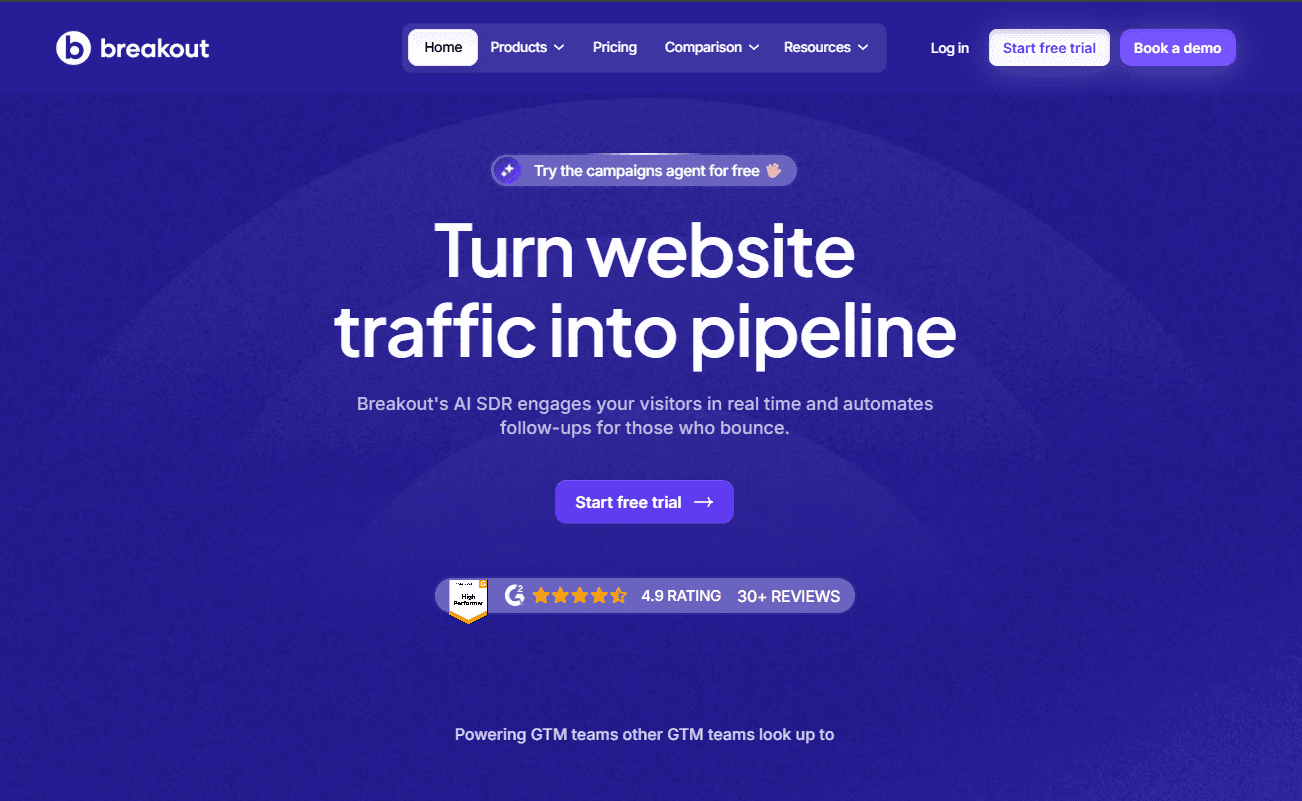
It combines several capabilities in a single workflow:
Anonymous visitor identification to uncover high-intent buyers.
Waterfall enrichment to improve match rates using multiple data sources.
AI-powered conversations that qualify prospects in real time instead of relying on static forms.
Automated meeting booking with qualified buyers, using your existing scheduling and CRM tools.
Rather than replacing your GTM stack, Breakout works alongside it to help sales teams act on buying signals faster.
Best For:
Breakout is best suited for B2B SaaS companies with consistent website traffic and an inbound sales motion.
It's particularly valuable for RevOps leaders, demand generation teams, founders, and sales teams looking to generate more pipeline from existing demand rather than increase traffic.
See how Breakout helped RecruitCRM
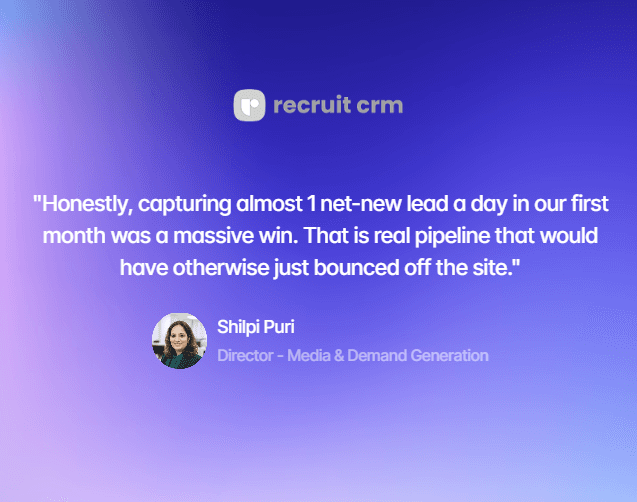
RecruitCRM wanted to capture more value from its website traffic without increasing ad spend.
After implementing Breakout, the team was able to engage high-intent visitors earlier in their buying journey and convert more of that existing traffic into qualified sales conversations, helping improve pipeline generation without changing its acquisition strategy.
Which Tool Should You Choose?
RB2B and Leadfeeder both help you understand who's visiting your website, but they solve different problems.
Choose RB2B if:
You want person-level visitor identification.
Your sales team benefits from knowing which individuals are researching your product.
Your primary market is the US.
Choose Leadfeeder if:
Company-level identification is enough for your sales process.
You run an account-based sales strategy.
You have significant website traffic in Europe and want established company intelligence.
Choose Breakout if:
You want to convert more of your existing website traffic into pipeline.
You need more than visitor identification and want to engage high-intent buyers while they're still on your website.
You're looking to qualify prospects and book more meetings without adding manual work.
Identifying visitors is only the first step. The real challenge is turning those anonymous buyers into qualified pipeline while they're still on your website. That's where Breakout comes in.
Book a demo to see how Breakout helps revenue teams turn website visitors into qualified pipeline.
FAQs
1. What's the difference between RB2B and Leadfeeder?
RB2B identifies individual website visitors using an identity graph, while Leadfeeder identifies the companies visiting your website through reverse IP technology.
RB2B is ideal for person-level insights, whereas Leadfeeder focuses on account-level visibility.
2. How much does RB2B cost?
RB2B offers multiple pricing plans based on website traffic and business requirements. Pricing may change over time, so it's best to check RB2B's official pricing page or contact its sales team for the latest information.
3. How much does Leadfeeder cost?
Leadfeeder offers a free plan with limited functionality alongside paid plans with additional visitor insights, CRM integrations, and reporting features. Visit Leadfeeder's pricing page for the most up-to-date pricing.
4. Is RB2B accurate?
RB2B can accurately identify many anonymous website visitors, but its performance depends on the strength of its identity graph and the quality of available data.
Like any visitor identification platform, it cannot identify every visitor.
5. Is Leadfeeder GDPR compliant?
Leadfeeder provides features designed to help businesses operate in line with GDPR requirements, including support for consent management and data privacy controls. However, businesses remain responsible for ensuring their own compliance.
6. Does RB2B work outside the US?
Yes, RB2B can identify visitors outside the US, but its identity coverage is generally strongest in the United States. Match rates may vary depending on the region and available data.
7. Can Leadfeeder identify individual visitors?
No. Leadfeeder identifies companies visiting your website rather than individual buyers. It provides account-level insights instead of person-level contact information.
8. Which tool has better CRM integrations?
Both RB2B and Leadfeeder integrate with popular CRMs like HubSpot and Salesforce. The better choice depends on your existing sales workflow and the integrations your team relies on most.
9. Is RB2B worth it?
RB2B is worth considering if your sales team benefits from identifying individual buyers instead of just companies. Businesses with strong inbound traffic often see the most value from person-level visitor identification.
10. Can you use RB2B and Leadfeeder together?
Yes. Some businesses use RB2B for person-level identification and Leadfeeder for company-level insights. Using both can provide a more complete view of website visitor activity.
11. What are the best RB2B alternatives?
Some of the best RB2B alternatives include Leadfeeder, Warmly, Breeze Intelligence, Koala, 6sense, and Breakout.
The right choice depends on whether you need visitor identification, CRM enrichment, intent data, or AI-powered visitor conversion.
12. What's better than Leadfeeder?
That depends on your goals.
RB2B is a better option for person-level visitor identification, while platforms like 6sense offer enterprise intent data.
If your priority is converting anonymous visitors into a qualified pipeline, Breakout provides AI-powered engagement and automated meeting booking in addition to visitor identification.