All Blogs
Looking for a better Salesloft alternative? In this article, we compare eight platforms across features, pricing, implementation, and common drawbacks.

Paige Rankwell
Senior Growth AI Strategist
Published On

Since Salesloft announced the gradual sunset of Drift earlier this year, more revenue teams have started reassessing the systems behind their sales motion.
The topic is no longer limited to conversational marketing or sales engagement platforms.
Sales teams are spending more time thinking about the operational load behind pipeline generation and whether older SDR-led models still match modern buying behavior.
But companies today want systems that create meetings faster without adding more operational overhead.
That includes:
Less sequence management
Fewer routing issues
Cleaner CRM workflows
Faster qualification
And a quicker response to inbound interest
All this while their buyers now arrive with more context before speaking to sales. They compare vendors independently, spend time on review platforms, and visit pricing pages multiple times.
As per recent G2 research, many B2B buyers now complete large parts of product research before booking meetings with vendors. We have come a long way from the Yellow Pages era to buyers using ChatGPT to one-shot their shortlists.
Today, 51% of buyers start product research with an AI chatbot more often than with Google.
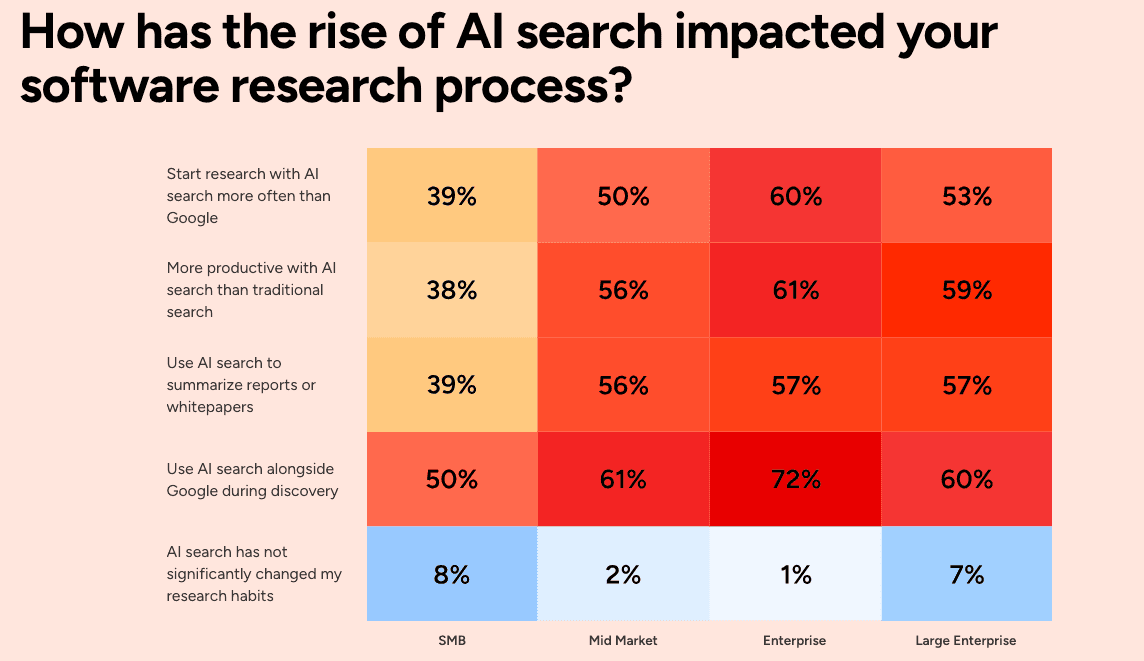
Buyers do not spend weeks waiting for follow-ups anymore. They research faster, narrow choices earlier, and expect quick responses once they show interest.
That means revenue teams need faster follow-up and better visibility into buying intent.
Revenue leaders want systems that:
Respond faster
Require fewer manual updates
Keep CRM data cleaner
And create meetings without expanding headcount every quarter
Besides this, the Clari and Salesloft merger has put Salesloft back into the spotlight.
As teams look at what the combined platform could mean for their revenue stack, many are also comparing Salesloft alternatives and AI-led sales engagement tools.
This guide compares the top Salesloft alternatives based on pricing, setup effort, automation depth, inbound response workflows, and pipeline creation.
Up ahead, we’ll cover:
Why are teams reconsidering Salesloft?
How modern sales engagement platforms compare today
And which Salesloft alternatives buyers should seriously evaluate
The TL;DR before we get into the details
Here’s a quick breakdown before we go deeper into pricing, setup effort, and operational trade-offs.
Platform | Best known for | SDR dependency | Setup speed |
Breakout | AI-led qualification and meeting booking | Low | Fast |
Instantly.ai | Cold email scaling and deliverability | Medium | Fast |
Reply.io | Multichannel outreach workflows | Medium | Moderate |
Apollo.io | Prospecting database plus outreach | Medium | Moderate |
Smartlead | Email infrastructure and sending volume | Medium | Fast |
Warmly | Visitor identification and buyer signals | Low | Moderate |
Outreach | Enterprise sales execution | High | Slow |
Revenue.io | Conversation tracking and forecasting | High | Slow |
Why teams are moving away from Salesloft
We are listing some of the biggest reasons teams are now considering Salesloft alternatives and AI-led SDR tools.
Rising cost of outbound
Salesloft pricing itself already places the platform in a higher-cost category for many SMB and mid-market SaaS teams, as pointed out by this user on G2.
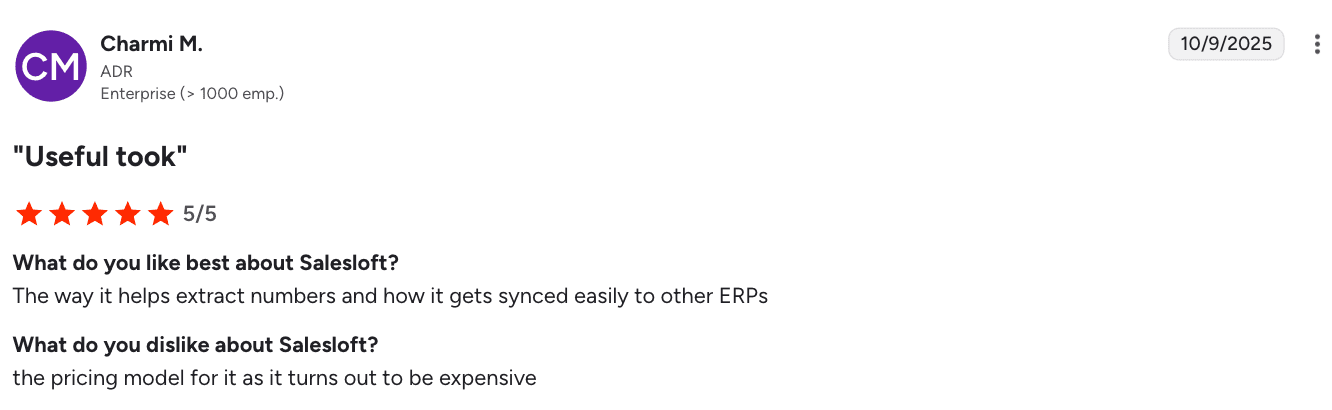
Beyond software spend, companies also need SDR headcount, enrichment tools, dialers, deliverability platforms, and RevOps support to keep outbound running smoothly.
SDR-heavy execution model
Salesloft still depends heavily on SDR activity.
Reps need to manage sequences, update tasks, handle follow-ups, monitor replies, and keep workflows active throughout the sales cycle. As teams grow, that workload increases quickly.
And for leaner revenue organizations, that model becomes difficult to sustain over time.
Workflow maintenance keeps growing
As outbound programs expand, sequence management becomes a larger operational task. Teams constantly update messaging, rotate domains, monitor deliverability, adjust cadences, and clean CRM workflows to keep campaigns active.
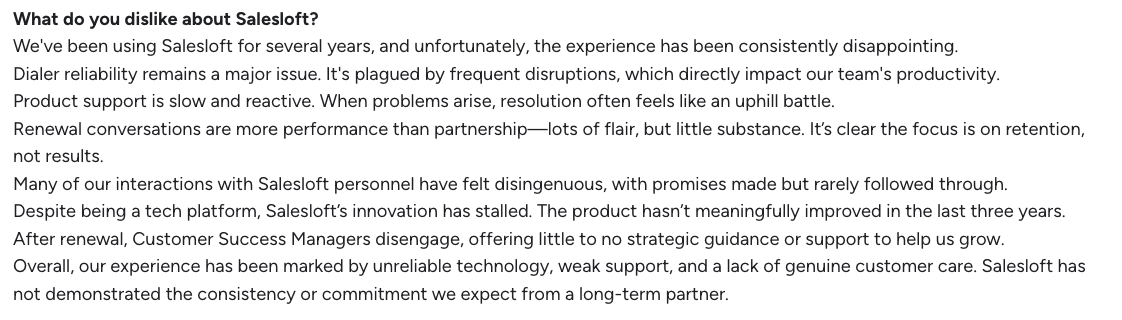
Some users have also pointed to reliability and support concerns as operations scale. Delays in issue resolution, inconsistent platform performance, and limited post-onboarding support can create additional operational pressure.
Shift toward automation and AI-led outbound
Many revenue teams are moving toward AI SDR tools that reduce manual coordination behind pipeline generation.
The goal is not to remove SDRs completely. It is to reduce repetitive operational work and shorten the time between buyer interest and booked meetings.
The operational cost behind Salesloft
As outbound programs scale, many companies are reassessing whether the workload behind Salesloft still makes sense for modern revenue teams.
A few of the trade-offs that come up most often:
1. Software spend increases with team size: Pricing scales quickly across SDR seats, managers, dialers, and connected tools.
2. SDR teams carry most of the execution load: Follow-ups, cadence management, and CRM updates still depend heavily on manual rep activity.
3. Setup takes time across systems: Most teams spend weeks configuring workflows, integrations, reporting, and permissions before launch.
4. Outbound workflows need constant upkeep: Messaging, deliverability, domains, and sequences require regular updates to maintain performance.
Top 8 Salesloft alternatives and competitors in 2026
Revenue teams are no longer evaluating sales engagement platforms the same way they did a few years ago.
The conversation has shifted from “Which platform sends the most outreach?” to “Which system creates a pipeline with the least operational friction?”
Some revenue teams want lower SDR dependency. Others want stronger CRM workflows, outbound scale, visitor intelligence, or faster response coverage across the funnel.
To narrow this list down, we looked at:
Operational workload
Workflow flexibility
Buyer engagement speed
Reporting visibility
Set up requirements across sales teams
The market for Salesloft alternatives has split into three clear groups:
Category | Tools |
AI-led SDR and engagement platforms | Breakout, Instantly.ai, Reply.io |
Prospecting and outbound workflow platforms | Apollo.io, Smartlead, Warmly |
Enterprise revenue workflow platforms | Outreach, Revenue.io |
We will now break down where each platform performs well, where trade-offs appear, and which types of revenue teams each tool fits best.
Breakout: AI SDR platform for always-on buyer engagement
Breakout focuses on helping revenue teams qualify buyers and book meetings without relying on constant SDR coordination.
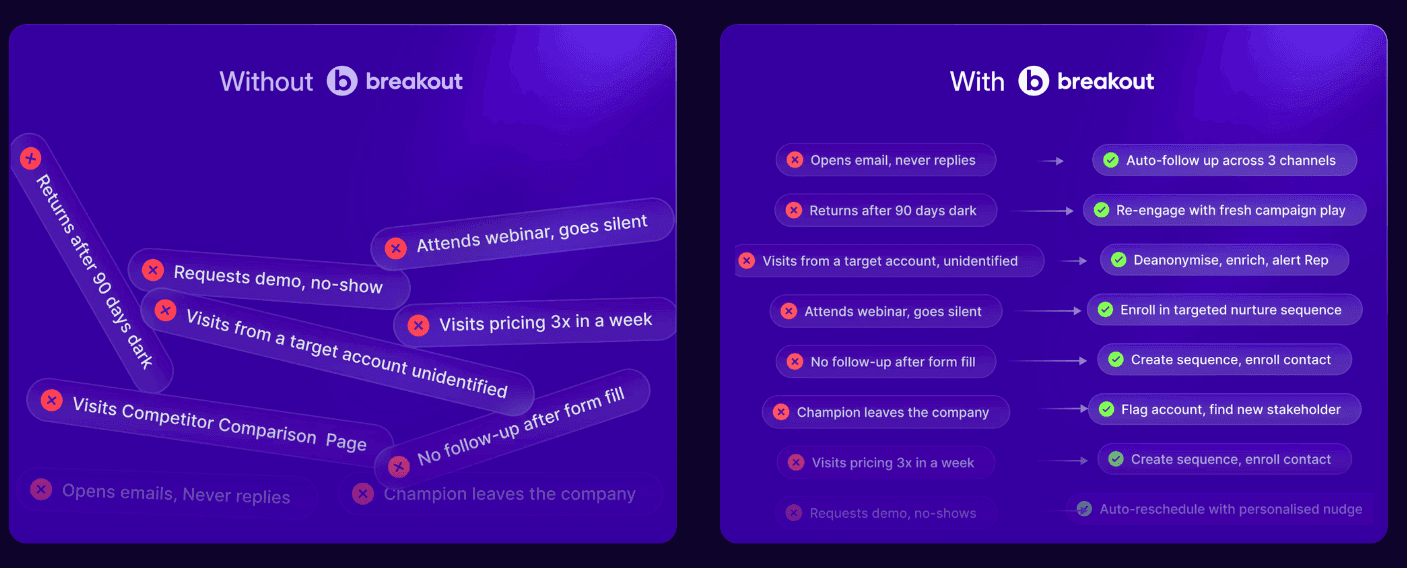
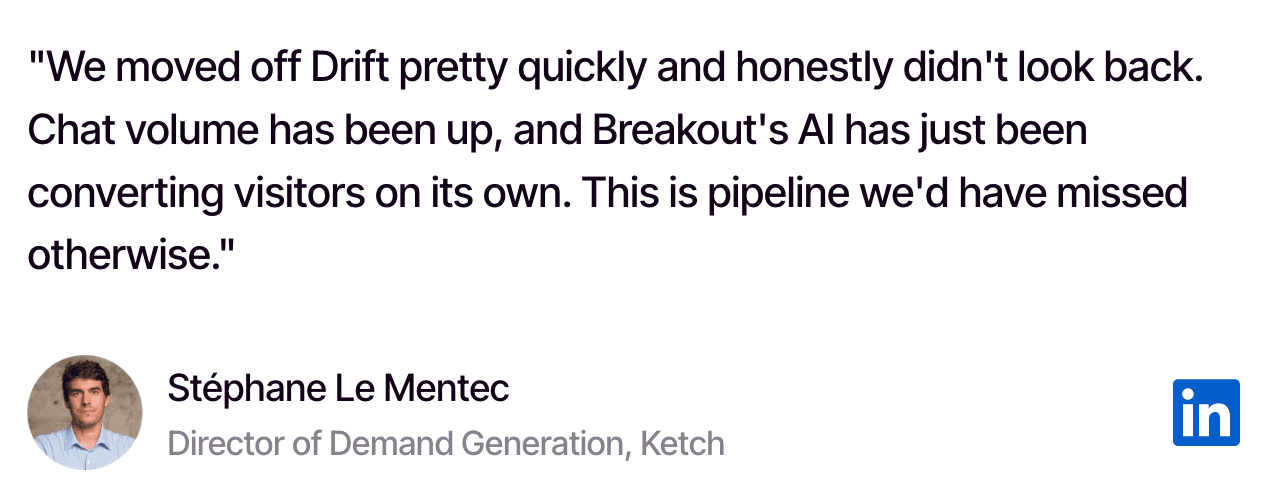
Instead of treating chat as a lead capture layer, Breakout handles qualification, routing, follow-up, and scheduling in one system. Conversations adjust based on buyer behavior, company signals, and funnel stage, while meetings continue moving forward even outside business hours.
The platform is designed for teams dealing with high inbound volume, slower SDR response time, or operational bottlenecks across handoffs and follow-up.
Breakout also reduces the amount of workflow management tied to pipeline creation. Teams do not need to build large decision trees or maintain rigid routing logic just to keep conversations active across the funnel.
What sets Breakout apart?
Breakout combines qualification, meeting booking, buyer engagement, and follow-up into one continuous workflow.
The platform identifies visitors early, adapts conversations in real time, and continues engagement across channels after sessions end. That reduces SDR dependency while helping teams respond faster during high-intent moments.
Pros
Handles qualification and scheduling automatically
Reduces manual SDR workload
Supports continuous inbound coverage
Faster implementation than traditional enterprise platforms
Captures buyer intent earlier in the funnel
Cons
Advanced reporting workflows are still developing
Pricing
Usage-based pricing tied to inbound volume and engagement activity.
Best fit for
B2B SaaS teams focused on inbound pipeline generation, faster qualification, and lower SDR dependency.
Instantly.ai: Multi-inbox outbound platform for fast campaign execution
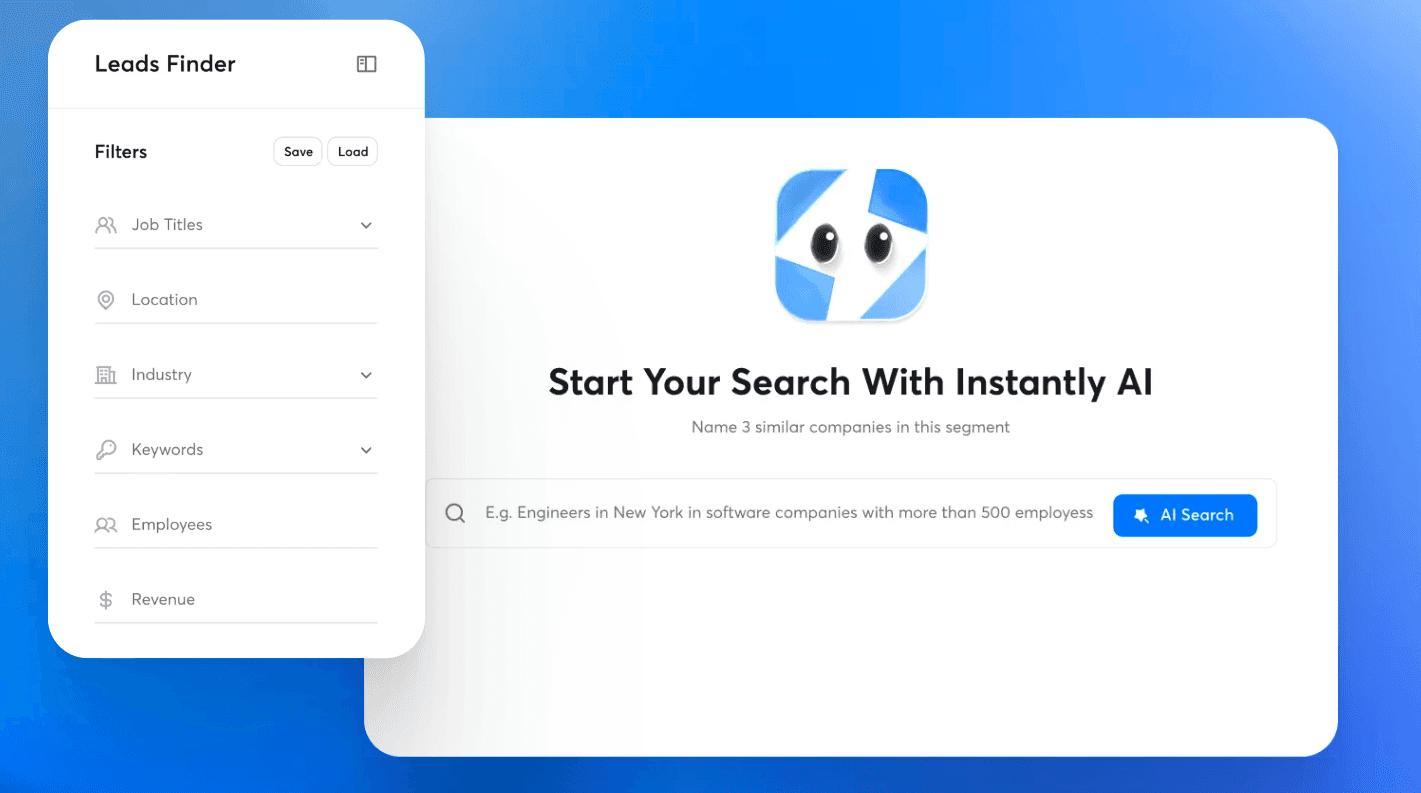
Up next, we have Instantly.ai, a tool designed for teams that want to launch and scale outbound email campaigns quickly without building a large operational setup around deliverability.
The platform focuses heavily on cold email infrastructure. Users can automate sequences, warm inboxes, rotate sending accounts, and manage replies without relying on several disconnected tools.
What sets Instantly.ai apart?
Instantly combines outbound execution, inbox warmup, and lead sourcing inside one platform.
That reduces the operational burden tied to deliverability management and outbound scaling for smaller teams running high email volume.
Pros
Strong inbox warmup system
High-volume sending support
AI-assisted sequence generation
Centralized reply management through Unibox
Built-in lead database available
Cons
Multi-channel orchestration is still limited
Mobile workflow experience is weaker
Advanced workflow automation remains limited
Some users report inconsistent deliverability visibility
Pricing
Growth: $47/monthly
Hypergrowth: $97/monthly
Light speed: $358/monthly
Enterprise: Request their sales team for exclusive plans
Best fit for
SMB sales teams, agencies, and outbound operators focused heavily on cold email volume and deliverability.
Reply.io: AI-assisted sales engagement built for multichannel prospecting
Next up, we have Reply.io, a tool that takes a broader approach than traditional sales engagement platforms. Instead of focusing only on email sequences, it combines prospect discovery, outreach, deliverability, AI personalization, and reporting inside one system.
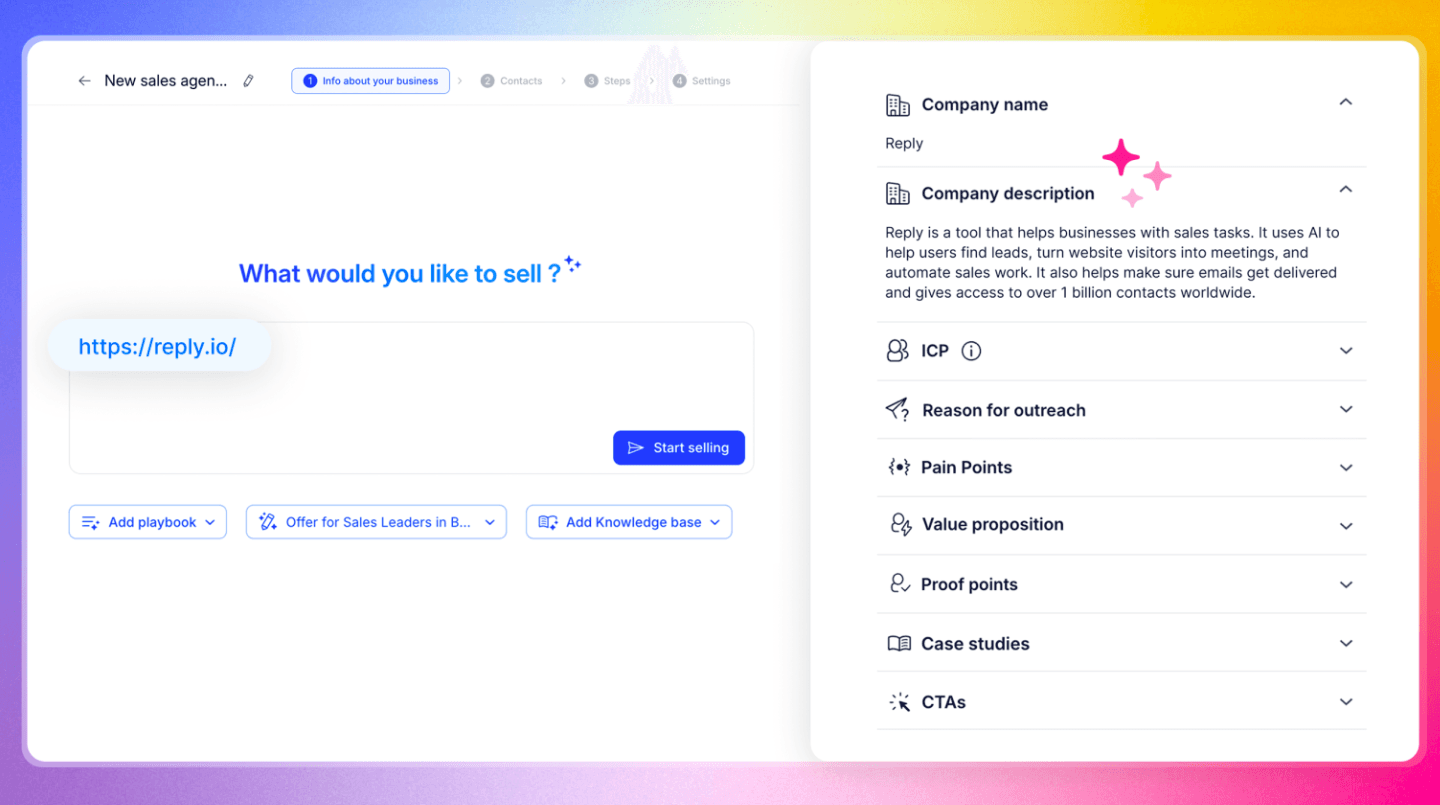
The tool's biggest addition over the past two years has been Jason AI, an AI SDR designed to help with prospect research, message creation, reply handling, and sequence management.
What sets Reply.io apart?
Reply.io brings together prospecting, outreach, and AI automation under one roof.
Instead of purchasing separate enrichment, sequencing, and personalization tools, teams can manage the entire workflow from one platform while maintaining visibility across every channel.
Pros
Broad multichannel coverage
Strong AI personalization engine
Flexible sequence builder with conditional logic
Detailed reporting and A/B testing
Cons
Jason AI requires higher-priced plans
Initial setup takes longer than lighter outbound tools
Teams still need to build and maintain outreach logic
The interface can feel feature-heavy for smaller organizations
Pricing
Email Volume: $59 per user/month for email outreach for 1000 active contacts per month
Multichannel: $89 per user/month
You can also hire a Jason AI SDR at $500 per month
Best fit
Growing B2B sales teams that want one platform for multichannel outreach with AI assisting throughout the sales process.
Apollo.io: Best for sales teams replacing multiple outbound tools with one platform
Apollo.io goes beyond traditional sales engagement software. Its biggest strength is combining prospect discovery, CRM enrichment, outreach automation, and sales intelligence inside a single product.
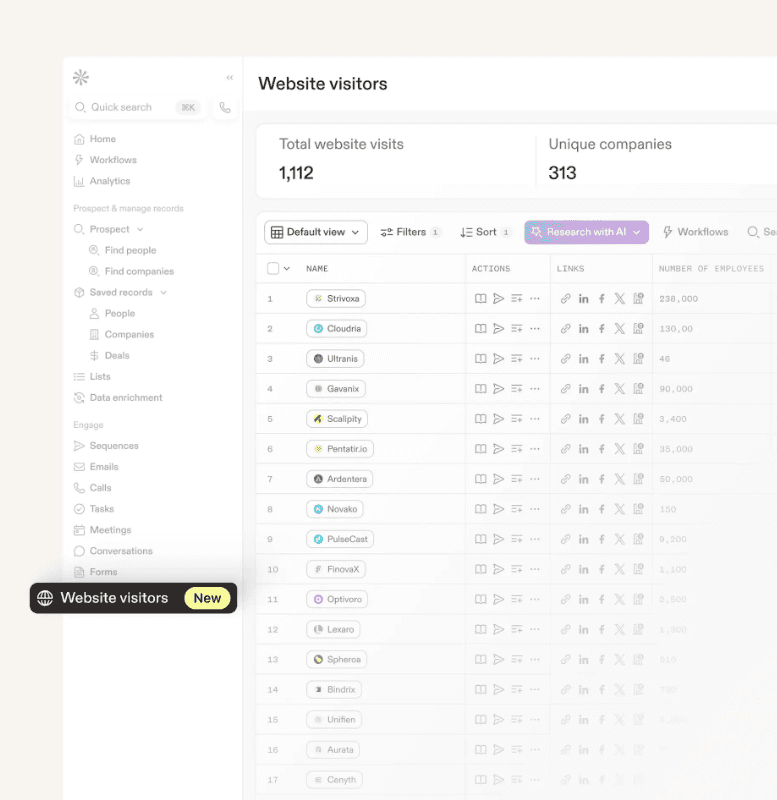
Recent product updates have added AI writing assistance, conversation intelligence, buying intent signals, and workflow recommendations.
What sets Apollo.io apart?
Apollo stands out because it combines prospect data and outbound execution in one platform.
Instead of buying a separate contact database, enrichment platform, dialer, and sequencing tool, teams can manage all four inside Apollo.
Pros
One platform for prospecting and outreach
Large verified contact database
AI-assisted email writing and lead prioritization
Strong integrations with leading CRMs
Cons
Data freshness can vary across regions
The credit model may increase costs over time
Advanced enterprise workflows are limited
Email infrastructure is not as specialized as dedicated outbound platforms
Pricing
Free plan available
Basic: $49 per seat per month, billed annually
Professional: $79 per seat per month, billed annually
Organization: $119 per seat per month (minimum 3 seats) billed annually
Best fit
SMBs and SaaS companies looking to consolidate several outbound tools into one platform.
Smartlead: Ideal for deliverability-focused outbound teams
Built for teams that send cold emails at scale, Smartlead puts most of its attention on the technical side of outreach. It gives users the tools to manage mailbox health, distribute sending across multiple inboxes, and maintain deliverability as campaign volume grows.
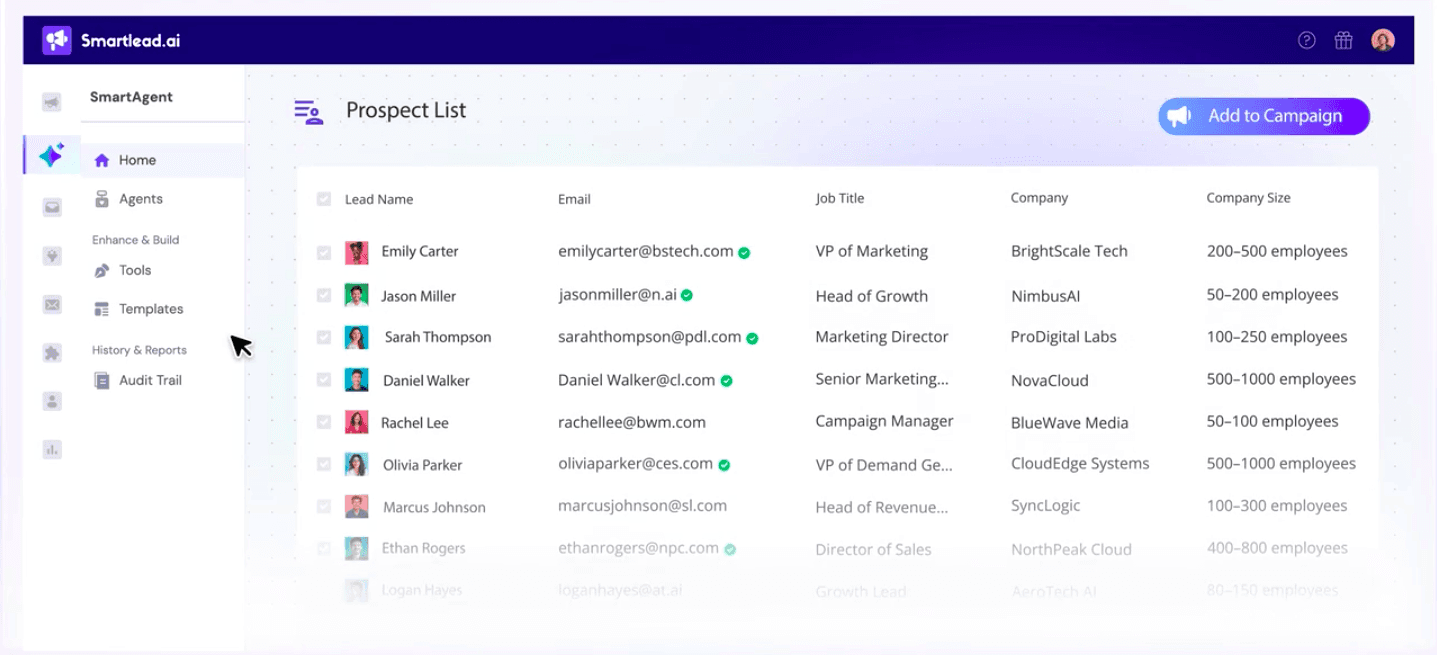
That focus has made it especially popular with agencies and companies managing multiple brands or clients.
What sets Smartlead apart?
Smartlead gives teams more control over email infrastructure than most sales engagement platforms.
Unlimited mailbox support, built-in warmup, inbox rotation, and agency features make it a strong choice for organizations managing high sending volumes across multiple clients or brands.
Pros
Unlimited email accounts on paid plans
Strong deliverability and mailbox management
Unified inbox across campaigns
White-label workspace for agencies
API support for custom workflows
Cons
No built-in lead database
Limited buying signal capabilities
Teams often need enrichment software alongside it
Pricing
Base: $32/month
Pro: $78/month
Unlimited Smart: $144/month
Unlimited Prime: $315/month
Best fit
Agencies and outbound teams running high-volume cold email across multiple clients or brands.
Warmly: Built for account identification and buyer intent tracking
The platform, Warmly, focuses on helping revenue teams understand who is visiting their website before those visitors complete a form.
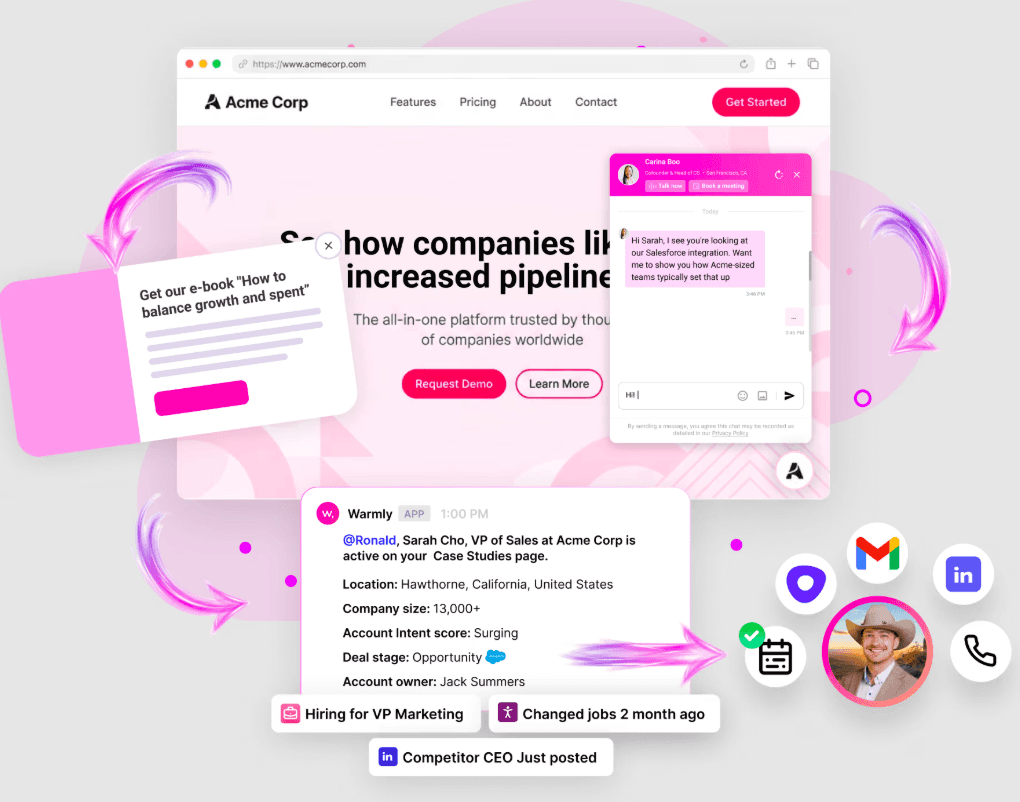
Warmly combines visitor identification, buying signals, CRM enrichment, and automated outreach to help sales teams engage accounts showing early purchase intent.
With HubSpot set to acquire Warmly, buyers should also consider how the platform may evolve as its technology becomes part of the broader HubSpot ecosystem.
What sets Warmly apart?
The tool blends visitor identification with intent monitoring and automated engagement. It helps sales teams act on website activity instead of waiting for prospects to request a demo or complete a contact form.
Pros
Identifies anonymous website visitors at the company level
Combines visitor intelligence with intent signals
Supports email, LinkedIn, and chat engagement
Integrates with Salesforce, HubSpot, Slack, and other GTM tools
Cons
Visitor identification is not always accurate for every account
Qualification still depends on the SDR follow-up
Advanced automation is available only on higher pricing tiers
Limited conversational depth compared with AI SDR platforms
Pricing
A free tier is available. Paid plans begin at roughly $850 per month with annual billing, while enterprise pricing is customized.
Best fit
Mid-market and enterprise B2B companies that want stronger visitor intelligence and account prioritization before SDR outreach.
Outreach.ai: Enterprise sales engagement platform for complex revenue teams
Sales organizations running complex outbound programs often need more than email sequences. That is where Outreach.ai fits. The platform combines engagement, forecasting, coaching, and pipeline management into one revenue workflow designed for large teams.
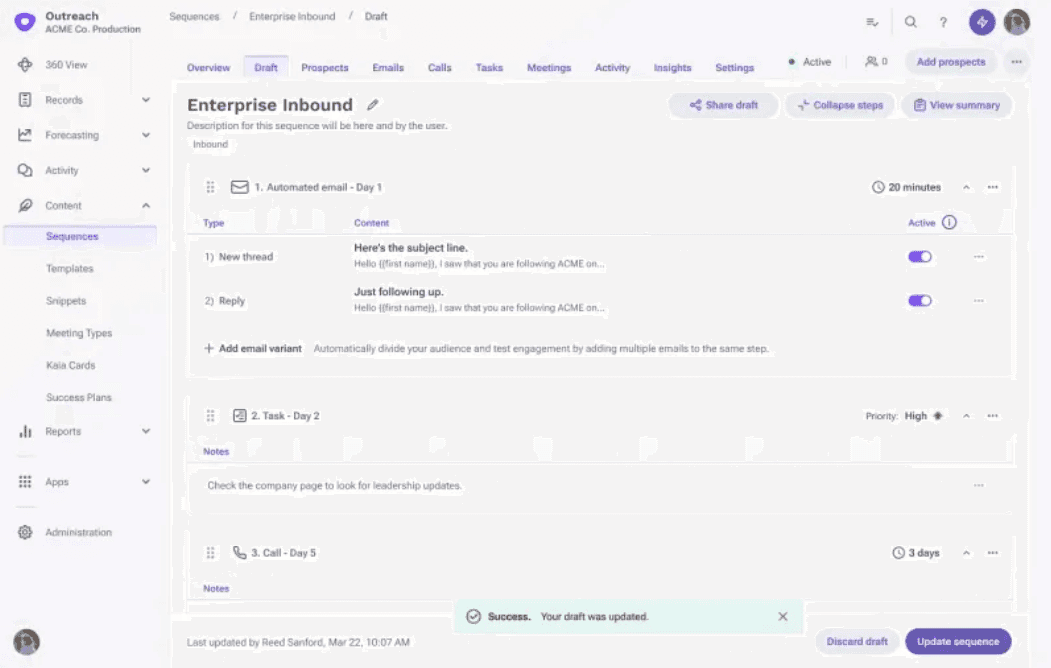
Its AI assistant, Kaia, also summarizes calls, surfaces follow-up actions, and provides coaching insights for sales teams.
What sets Outreach apart?
Its strength lies in connecting engagement, coaching, forecasting, and revenue management instead of treating them as separate products.
Pros
Mature multi-channel engagement platform
Strong forecasting and pipeline reporting
Native conversation intelligence with Kaia
Deep Salesforce and HubSpot integrations
Cons
Longer onboarding than most competitors
Several advanced capabilities require additional products
Better suited to enterprise teams than SMBs
Pricing
Custom quote based on team size, products selected, and contract terms.
Best fit
Large B2B companies looking for a centralized revenue execution platform.
Revenue.io: Salesforce-native revenue platform with AI sales guidance
Not every sales engagement platform focuses on helping reps during live conversations.
Revenue.io stands out by combining engagement tools with real-time coaching that helps sales teams respond to buyer questions, objections, and next steps while meetings are still in progress.
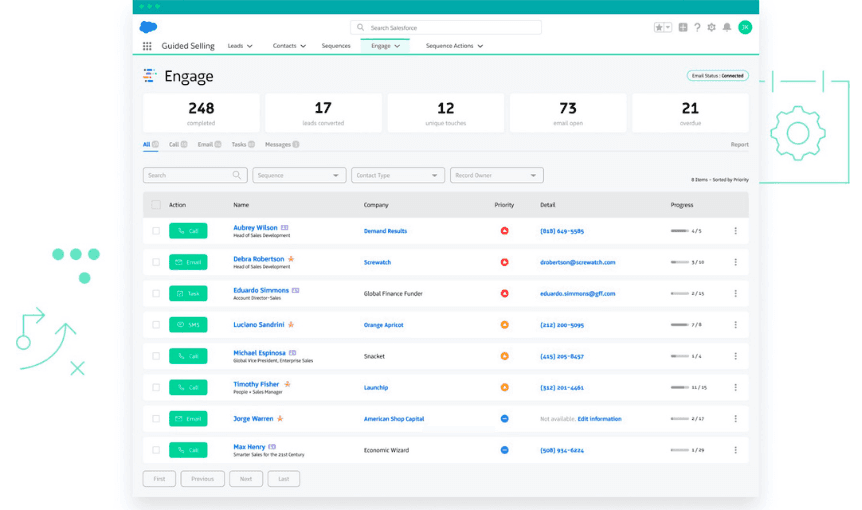
The platform automatically records activity, summarizes calls, and surfaces coaching opportunities for managers.
What sets Revenue.io apart?
Revenue.io focuses on improving live sales conversations through AI coaching while keeping activity tightly connected to Salesforce.
Pros
Native Salesforce integration
Real-time AI coaching during live calls
Strong conversation intelligence and call analytics
Automates activity logging and CRM updates
Cons
No transparent pricing
Limited value outside Salesforce
Requires onboarding for new users
Some users mention call stability concerns
Pricing
Custom pricing is available on request.
Best fit
Enterprise sales teams already using Salesforce that want AI coaching, conversation intelligence, and sales engagement in one platform.
How to choose the right Salesloft alternative
Every revenue team runs a different sales motion. Before comparing features, decide what your business actually needs from a sales engagement platform.
Use this checklist to shortlist:
☐ Time to value measured in days or weeks, not months
☐ Automation that removes repetitive work instead of creating more admin
☐ Pricing that remains predictable as users and pipeline grow
☐ AI capabilities that help qualify, prioritize, and move buyers forward
☐ Clear visibility into meetings, pipeline, and revenue impact
☐ Strong customer support and regular product improvements after onboarding
Should you still use Salesloft in 2026?
Salesloft still fits revenue teams that rely on structured SDR workflows and want detailed control over sales engagement, coaching, and pipeline activity.
The question is whether that operating model still matches your business.
If you're looking for faster execution, lower operating costs, and continuous AI-led outreach, Breakout offers a different approach. Instead of helping SDRs do more work, it takes ownership of much of the qualification and meeting booking process.
See how Breakout helps revenue teams generate more qualified meetings with less manual effort. Book a demo.
FAQs
What are the best Salesloft alternatives in 2026?
Revenue teams evaluating Salesloft alternatives in 2026 usually compare platforms based on speed, automation, and operating cost. Breakout stands out for AI-led qualification and meeting booking, while tools like Instantly.ai and Reply.io focus on cold email execution.
How much does Salesloft cost?
Salesloft pricing is available through custom quotes rather than public plans. The final investment depends on team size, product modules, and contract terms.
Buyers should also account for onboarding, CRM integrations, user training, and the internal resources needed to keep cadences and workflows running over time.
Is Salesloft worth it for SMB teams?
Salesloft is often a better fit for companies with larger revenue teams and structured sales operations.
SMBs with leaner teams may find greater value in Salesloft alternatives that automate qualification and reduce manual follow-up.
Can AI tools replace SDR outbound workflows?
AI works best when it handles the repetitive parts of outbound. It can qualify prospects, respond instantly, schedule meetings, and continue follow-ups without waiting for rep availability.