All Blogs
A plain-English look at Drift and Chili Piper so you can see which one fits better.

Evan Marshall
Senior Growth AI Strategist
Published On

The Drift vs Chili Piper decision keeps coming up because inbound teams are dealing with two separate problems that feel connected but require different tools to fix. Drift focuses on engaging visitors before they ever submit a form, using chat and account-based signals to personalize the experience. Chili Piper focuses on what happens after form submission, making sure qualified leads get routed correctly and booked into meetings fast. We're going to walk through what each tool actually does well and help you figure out which gap you need to close first.
TLDR:
Drift focuses on pre-form engagement with conversational AI and account-based personalization, but routing to meetings requires more setup than expected, and Salesloft has announced Drift is being gradually sunset.
Chili Piper excels at instant post-form routing and scheduling with flexible CRM logic, but lacks native chat or pre-form engagement tools.
Neither tool covers the full inbound journey alone, forcing many teams to run both and manage two separate systems. Inbound AI SDRs like Breakout handle the full journey in a single motion.
Your choice depends on whether your priority is engaging target accounts before form submission or converting high-volume inbound leads fast.
How Drift and Chili Piper Compare
Drift and Chili Piper have both earned real traction with inbound revenue teams, but they were built with different problems in mind. Understanding where each tool excels, and where each one falls short, gives you a cleaner basis for making a decision that matches how your team actually works.
Drift started as a conversational marketing tool, built around the idea that website visitors should be able to talk to a company in real time. Over time, it expanded into AI-assisted chat, intent signals, and account-based engagement. Salesloft acquired Drift for $1.1 billion and later merged with Clari, after which Clari and Salesloft announced a gradual sunset of the Drift product, with existing customers being referred to 1mind as the designated successor. That context matters for any team currently evaluating Drift as a long-term investment. Chili Piper took a different path, focusing on the moment a prospect fills out a form and making sure that handoff from marketing to sales happens as fast as possible. Its core product is meeting scheduling and lead routing, done with precision.
By June 2026, both products have matured considerably. But the questions inbound teams are asking have also matured. Speed-to-lead is table stakes now. The real competition is happening around conversion quality, routing intelligence, and how well your tools hold up under the complexity of a real go-to-market motion.
What Drift Does Well
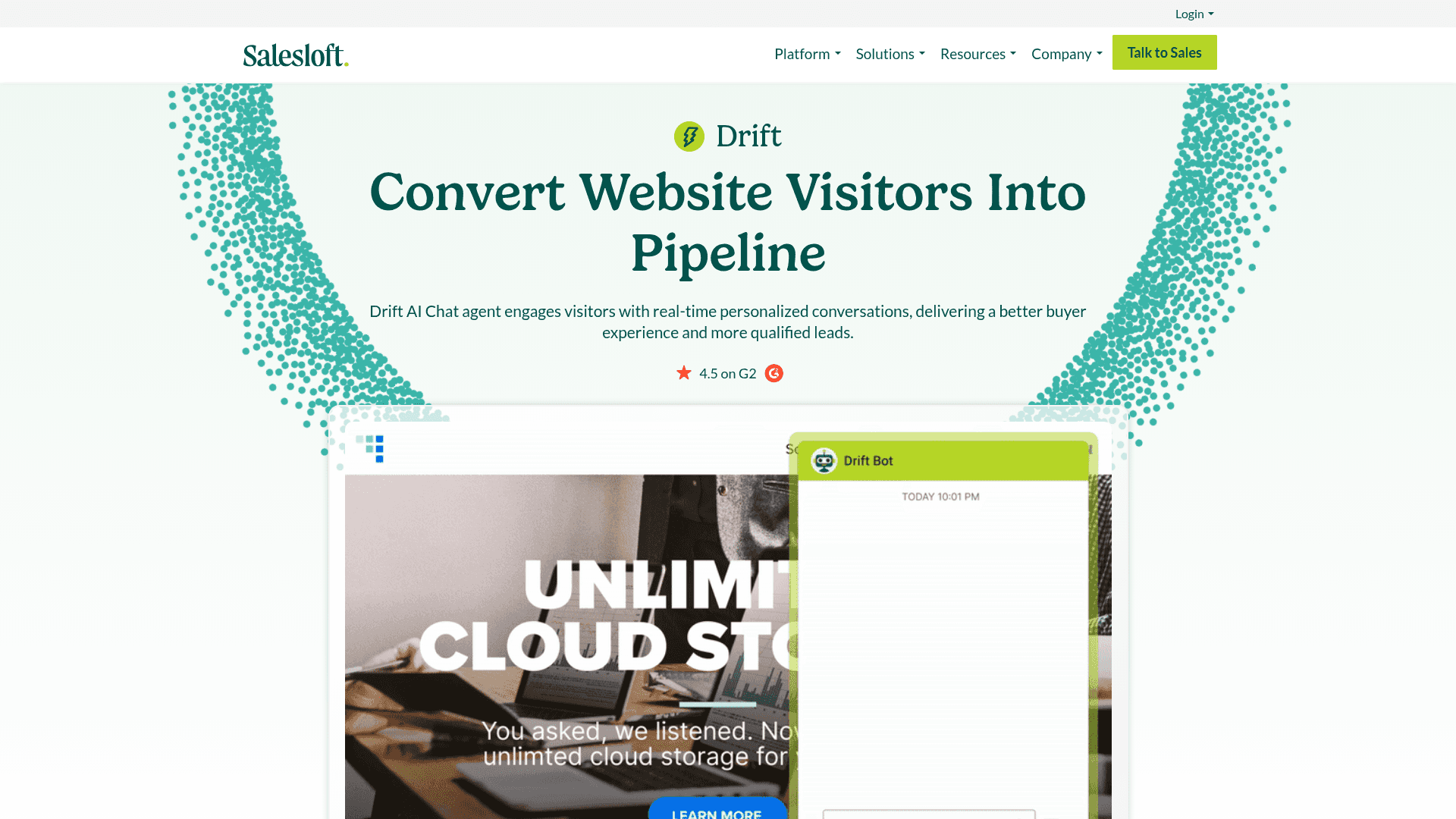
Drift's strength has always been the top of the funnel. Its chatbot and conversational AI layer sits on your website and engages visitors before they ever hit a form. For teams running account-based programs, Drift lets you personalize that experience based on firmographic data, so a visitor from a target account sees a different experience than an anonymous browser. Conversational marketing tools drive measurable engagement when used strategically for pre-form interactions.
The product has also built out a solid intent data integration layer, connecting with tools like 6sense and Bombora to surface which accounts are showing buying signals. That makes it genuinely useful for teams where sales and marketing are tightly coordinated around a named account list.
Where Drift runs into friction is in post-conversation routing and scheduling. Getting a prospect from a live chat into a booked meeting involves more configuration than most teams expect, and the experience can feel disjointed if your CRM routing logic is at all complicated. The underlying architecture reflects Drift's pre-AI origins: its conversational flows are built around manually authored playbooks and scripted decision trees, which means teams typically spend weeks mapping dialogue paths before going live and face ongoing maintenance as messaging or ICP criteria shift. Beyond the product gaps, the bigger issue for teams evaluating Drift right now is the sunset timeline. With Salesloft and Clari having announced they are winding the product down and pointing customers toward 1mind, any investment in Drift workflows carries migration risk that wasn't a factor a year ago.
What Chili Piper Does Well
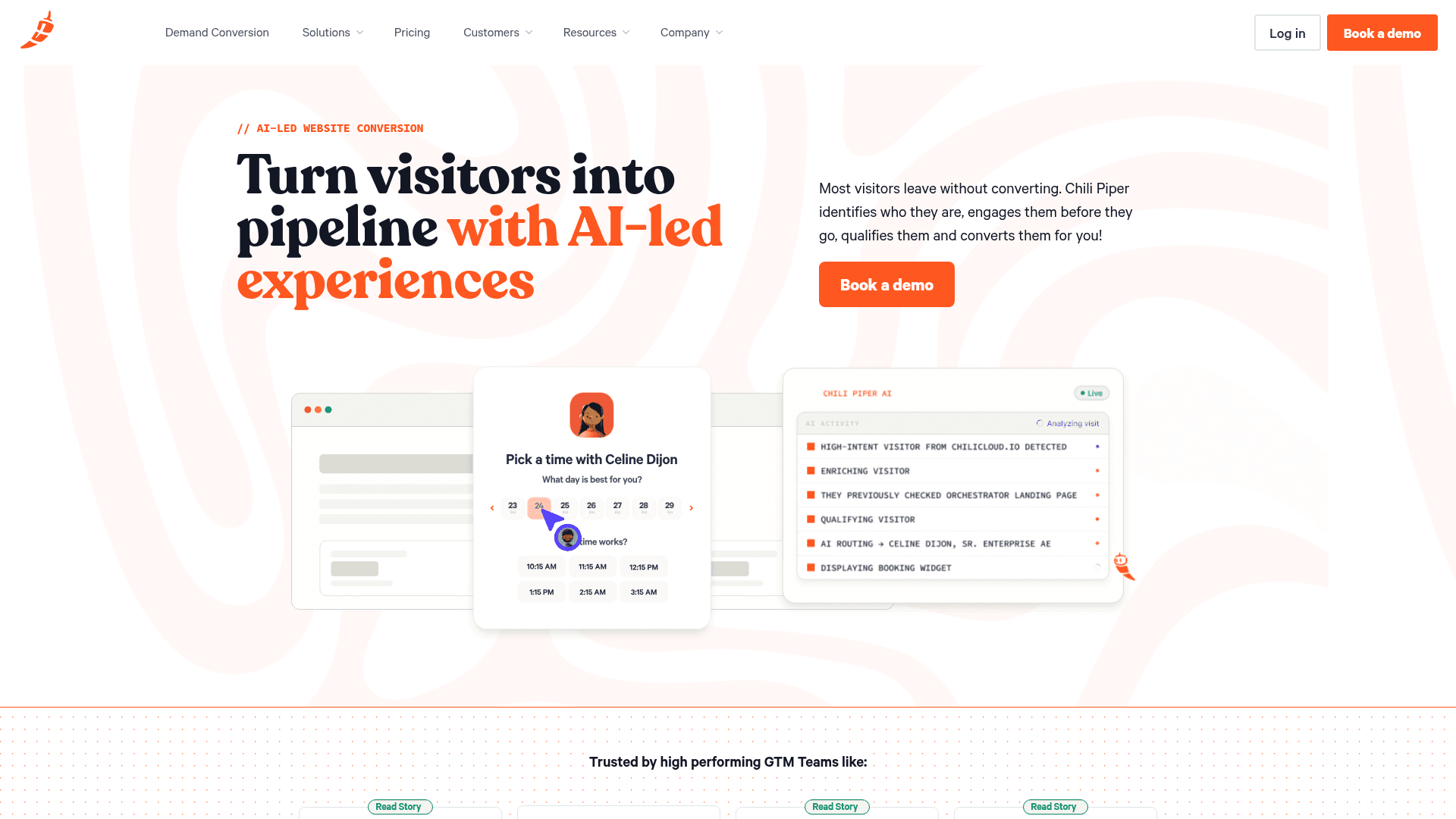
Chili Piper's reputation is built on one thing: making sure a qualified lead books a meeting before the momentum fades. Its Concierge product sits at form submission and routes the lead instantly based on rules you define, then presents a calendar for immediate booking. For teams where inbound volume is high and response time matters, this is where Chili Piper earns its keep. Effective lead routing strategies are critical for converting high-intent prospects quickly.
The routing engine is genuinely flexible. You can route based on territory, account ownership, round-robin logic, rep availability, or any combination of CRM field values. It handles the complexity that most sales ops teams deal with daily, without requiring engineering support to maintain. That flexibility comes with a real implementation cost, though. Chili Piper was built in the era of manually configured playbooks, and getting it live requires teams to map out every routing rule, test edge cases, and configure logic across all relevant CRM fields before the product functions as intended. Every change to territory structure or ICP criteria means going back into the configuration layer and updating rules by hand.
The gap in Chili Piper's story is pre-form engagement. It does not have a native chat or conversational layer, so anything happening before the form submission is handled by a separate tool. For teams that want a single vendor covering the full inbound journey, that requires a workaround.
Head-to-Head Comparison
Capability | Drift | Chili Piper |
|---|---|---|
Website chat and conversational AI | Strong native experience | Not included |
Form-based lead routing | Limited, requires configuration | Core product strength |
Meeting scheduling | Available, less polished | Purpose-built and fast |
Account-based personalization | Yes, with integrations | Minimal |
CRM routing logic complexity | Moderate | High |
Intent data integrations | Yes (6sense, Bombora) | Limited |
Pre-form engagement | Yes | No |
Who Each Tool Is Built For
Drift fits best with teams that are running account-based programs and want to engage target accounts directly on the website before a form is ever submitted. If your marketing motion is heavily coordinated with sales around a named list, and you want that coordination to show up in the buyer experience, Drift gives you tools to make that happen. The important caveat is that Drift's sunset changes the calculus on building workflows around it. Teams choosing Drift today are also choosing to plan a migration when the product is discontinued, which adds operational overhead that should factor into the decision.
Chili Piper fits best with teams that have meaningful inbound volume and need to make sure every qualified lead gets routed correctly and booked fast. If your current problem is that leads are falling through the cracks between form fill and first conversation, Chili Piper solves that gap directly.
The honest read is that neither tool covers the full picture on its own. Teams running both often do so because they need Drift's pre-form layer and Chili Piper's post-form routing, which means added cost, added complexity, and two sets of logic to keep in sync.
Why Setup Overhead Matters More Than Most Teams Expect
Drift and Chili Piper were both designed in an era when building a reliable inbound motion meant manually authoring every workflow. Drift required teams to map out playbook trees, script dialogue for every scenario, and maintain those scripts as products and ICPs evolved. Chili Piper required teams to define every routing rule, territory boundary, and lead assignment condition before a single lead could be handled correctly. Both models put the configuration burden squarely on revenue ops, and both demand ongoing attention every time something in the business changes.
For teams running a clean, stable motion, that overhead is manageable. For teams that are growing, shifting territory structures, or working with messy CRM data, it becomes a maintenance backlog that compounds over time.
Breakout was built on a different model. As an inbound AI SDR, it covers the full journey from first website visit through qualification, routing, and booked meeting in a single connected motion. Instead of asking teams to author playbooks and configure routing rules upfront, Breakout's AI-native architecture uses your ICP criteria, CRM data, and engagement history to engage and qualify visitors before they fill out a form, then route them instantly when they do. Most teams go live within days, with no mandatory onboarding fees. When your ICP shifts or territory lines change, the system adjusts without requiring a full reconfiguration cycle.
Final Thoughts on the Drift and Chili Piper Comparison
Your inbound motion probably needs more than one of these tools can give you on its own. Drift gets you personalized engagement up front, Chili Piper gets leads routed and booked fast. If you want both without the integration headache, Breakout is an inbound AI SDR that handles the full journey in a single product: identifying and engaging target accounts before they submit a form, qualifying them through AI-led conversation, and routing confirmed meetings to the right rep automatically. Pull your last 90 days of pipeline data. If deals are stalling between form fill and first meeting, the problem is post-form conversion and Chili Piper addresses that directly. If target accounts are bouncing without ever submitting a form, the problem is earlier-stage engagement and that is where an inbound AI SDR like Breakout starts.
FAQ
Which tool is better for teams with high inbound volume?
Chili Piper is purpose-built for high-volume inbound environments where speed-to-lead matters. Its routing engine handles complex territory logic and immediate scheduling better than Drift, which requires more configuration to achieve the same result.
What's the main pricing difference between Drift and Chili Piper?
Drift typically costs more at the enterprise level due to its conversational AI and account-based features, while Chili Piper's pricing focuses on per-user scheduling and routing capabilities. Teams often find Chili Piper more predictable for budgeting when focused solely on form-to-meeting conversion.
Can Drift handle meeting scheduling as well as Chili Piper?
Drift includes scheduling functionality, but it's not as polished or flexible as Chili Piper's core product. Teams that need complex routing based on CRM fields, territory assignments, or rep availability typically find Chili Piper handles these scenarios with less friction.
When should you choose Drift over Chili Piper?
Choose Drift when you're running account-based programs and need to engage target accounts before they fill out a form. If your motion depends on personalizing the website experience based on firmographic data or intent signals, Drift gives you tools Chili Piper doesn't offer.
Do most teams use both Drift and Chili Piper together?
Many revenue teams do run both because they need Drift's pre-form conversational layer and Chili Piper's post-form routing precision. This dual-tool approach solves coverage gaps but adds cost and requires maintaining two separate systems with their own configuration logic.