All Blogs
A plain-English look at Chili Piper and Breakout so you can see which one fits better.

Evan Marshall
Senior Growth AI Strategist
Published On
Most inbound tools still assume buyers want to book meetings early.
That assumption quietly breaks a lot of modern GTM workflows.
Today’s B2B buyers do not want to speak to sales immediately. They research independently, compare vendors anonymously, and spend significant time evaluating products directly on company websites before booking a meeting.
Yet most inbound infrastructure still activates only after that form submission happens.
This is where many revenue teams start feeling friction with traditional routing platforms.
The problem is no longer just speed-to-lead.
It is pipeline visibility and conversion coverage.
Platforms like Chili Piper help revenue teams manage routing, scheduling, and calendar coordination. But that efficiency often comes with heavy operational maintenance, complex workflows, and pricing that scales quickly.
But modern buying behavior changed faster than most inbound systems did.
Revenue teams now need platforms that can:
Identify anonymous buyers
Qualify visitors automatically
Engage buyers before form fills
Continue follow-up after visitors leave
Reduce SDR dependency
Generate pipeline without adding operational complexity
This shift is exposing several limitations in routing-first infrastructure.
Not because Chili Piper is a weak product.
Because the category itself is changing.
Many teams evaluating Chili Piper today are no longer just asking:
“How can we book meetings?”
They are asking:
“How much buying intent are we missing before the meeting workflow even begins?”
That is where Breakout takes a very different approach.
While Chili Piper optimizes post-conversion coordination, Breakout focuses on converting inbound traffic throughout the entire buyer journey.
That distinction affects:
Pipeline generation
Operational overhead
SDR dependency
Workflow complexity
Visitor visibility
Conversion consistency
In this guide, we will compare Chili Piper vs. Breakout across:
Pricing and total operational cost
Visitor identification capabilities
AI autonomy and buyer engagement
Routing complexity and workflow maintenance
Inbound-led outbound workflows
Pipeline generation impact
CRM flexibility and implementation overhead
Which platform fits modern GTM teams better in 2026
By the end, you will have a much clearer understanding of whether your team needs a routing platform or a system designed to generate and convert more inbound pipeline.
TL;DR Comparison Snapshot
Both platforms improve inbound workflows.
But they solve very different problems.
Category | Breakout | Chili Piper |
Core Focus | Autonomous inbound conversion | Scheduling and routing |
Buyer Engagement | Dynamic and continuous | Mostly post-form |
Visitor Identification | Company and person-level | No native deanonymization |
Qualification | Automated during browsing | After form-fill |
AI Capability | Handles engagement and follow-up | Mostly routing assistance |
Rep Dependency | Lower | Higher |
Workflow Complexity | Lower operational overhead | Multiple workflow layers |
Follow-Up | Inbound-led outbound | Limited nurture workflows |
CRM Dependency | Flexible | Salesforce-heavy |
Best For | Scaling pipeline efficiently | Routing inbound meetings |
Before comparing them directly, it helps to understand what each platform is actually designed to do.
What Chili Piper Is Really Built For
Chili Piper is fundamentally a revenue routing platform.
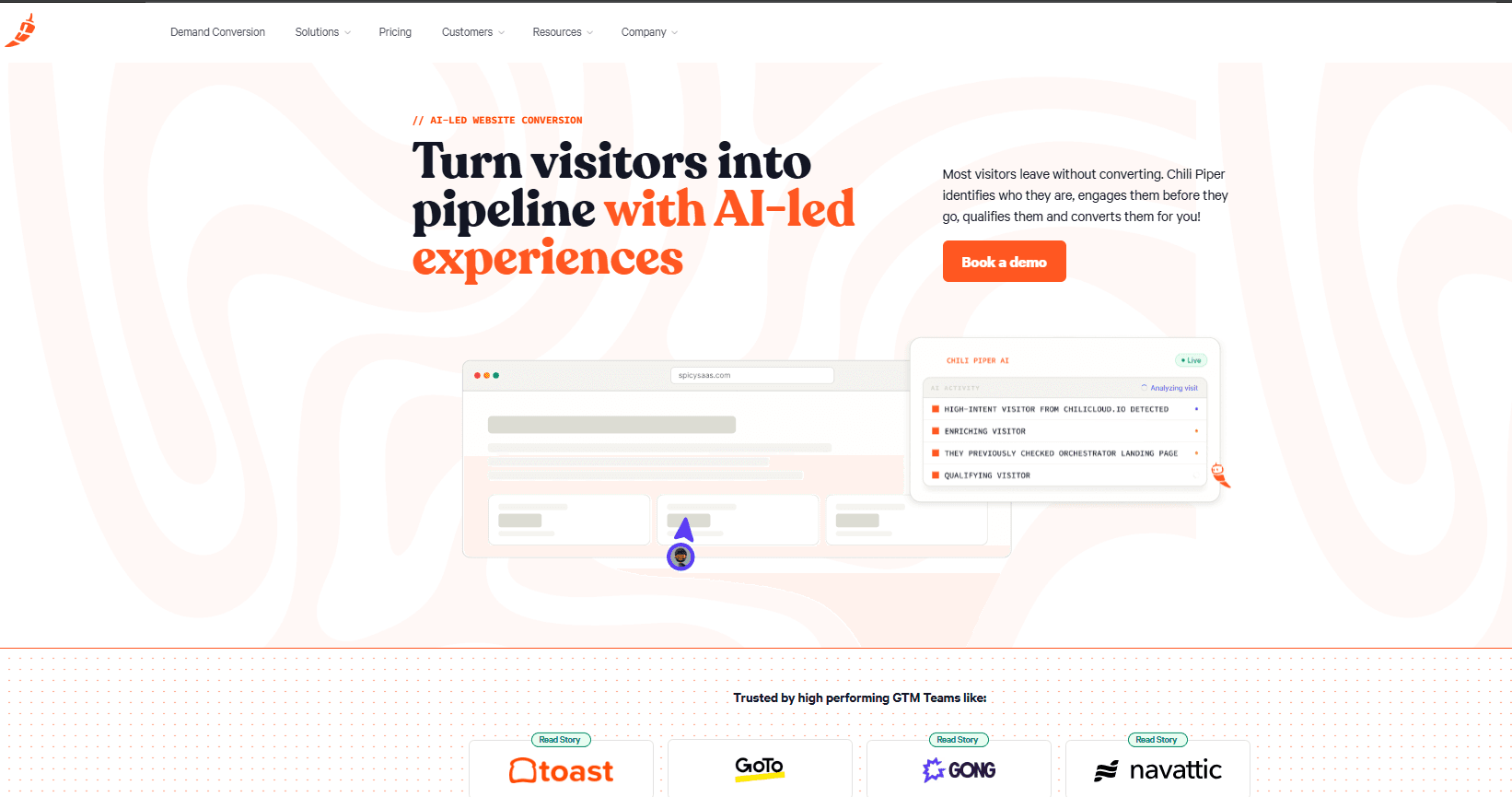
Its core value comes from improving operational efficiency after a lead converts.
The platform automates:
Scheduling
Lead routing
Calendar coordination
Territory assignment
Meeting handoffs
For companies managing high inbound form volume, those workflows still matter.
Especially inside:
Enterprise sales organizations
SDR-heavy motions
Salesforce-centric environments
Mature RevOps teams
The product performs best when inbound already converts consistently through forms. That detail matters more than most comparison articles acknowledge.
Because Chili Piper does not solve top-of-funnel conversion gaps. It optimizes what happens after the buyer identifies themselves.
Where Chili Piper Starts Creating Friction
The biggest limitations inside routing-first platforms are not always obvious during implementation.
They appear over time.
Especially as GTM motions scale.
1. Too Many Workflow Layers
Many teams eventually realize they are stitching together multiple systems just to run one inbound motion.
One tool handles routing.
Another handles visitor intelligence.
Another handles outbound.
Another handles engagement.
Another handles qualification.
The workflow becomes operationally fragmented.
The hidden cost is not software pricing alone. It is the maintenance burden created between systems.
This is where many RevOps teams start feeling platform fatigue.
2. The Pricing Problem
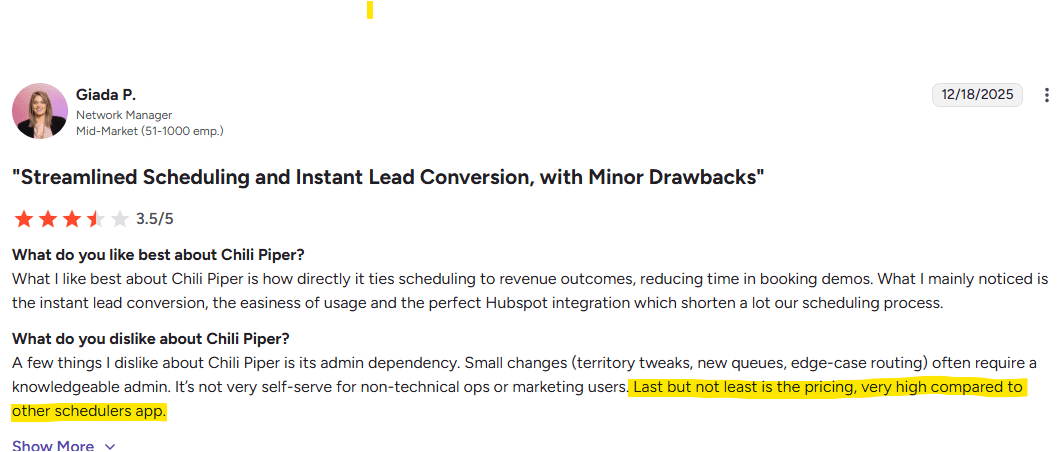
Chili Piper pricing can become difficult to justify as workflow complexity increases.
Especially because the platform primarily solves one stage of the buyer journey:
meeting coordination.
Teams often still need:
Deanonymization tools
Intent platforms
Chat software
Outbound systems
Enrichment providers
to build a complete inbound conversion motion around it.
The total stack cost compounds quickly.
That becomes harder to defend when GTM leaders start evaluating actual pipeline contribution instead of scheduling efficiency alone.
3. No Real Visitor Identification Layer
This is one of the largest gaps operationally.
Chili Piper does not natively identify anonymous visitors before form fills.
If a high-intent buyer lands on the pricing page, evaluates integrations, compares competitors, and leaves quietly, the platform has almost no visibility into that journey.
Teams often need tools like 6sense or Bombora configured separately just to approach basic account-level deanonymization before conversion happens.
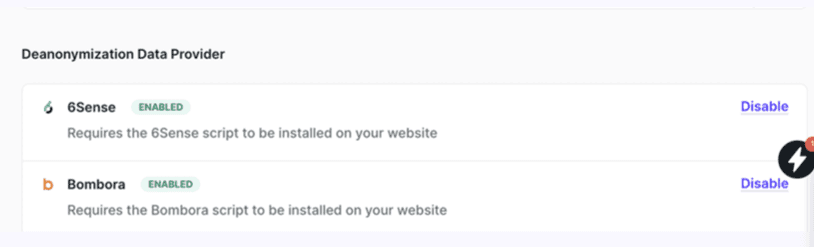
That creates additional tooling, cost, and operational complexity around the workflow.
This is a major problem in modern B2B buying behavior.
Especially because many of the strongest buying signals happen before buyers ever talk to sales.
4. AI Autonomy Is Still Limited
Most AI functionality inside Chili Piper still supports routing workflows rather than autonomous engagement.
The system helps buyers move toward scheduling.
But if visitors:
Ask unexpected questions
Want product education
Need qualification guidance
Delay booking decisions

The workflow becomes much more dependent on live rep involvement.
That creates inconsistent coverage outside SDR working hours.
5. Booking Workflows Become Operationally Heavy
This is another issue many teams underestimate initially.
Meeting booking sounds operationally simple until workflows scale across:
Territories
Teams
Segments
Round robins
Enterprise ownership structures
Global calendars
Routing systems naturally become more rules-heavy over time. The workflow works well until complexity increases. Then operational overhead grows quietly in the background.
What Breakout Is Solving Instead
Breakout approaches inbound conversion from a completely different operational perspective.
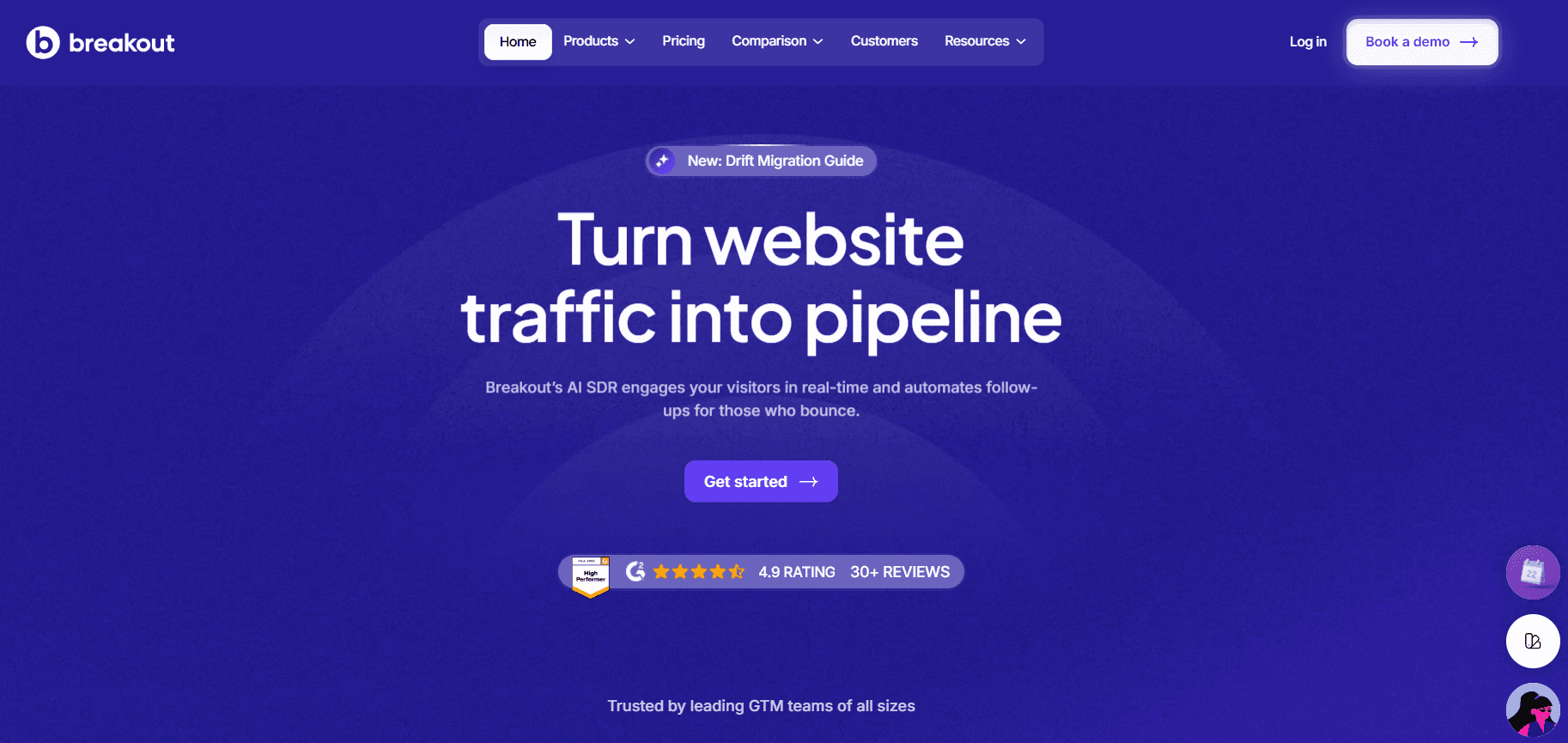
Instead of optimizing what happens after buyers convert, the platform focuses on increasing how much inbound traffic converts in the first place.
That changes the architecture significantly.
Breakout identifies visitors while they are actively researching the website, qualifies intent dynamically, engages buyers conversationally, and continues follow-up after visitors leave.
The workflow starts earlier.
Which means more buying intent gets captured before disappearing.
Why This Matters Operationally
Most inbound systems still treat:
Engagement
Qualification
Scheduling
Follow-up
Prospecting
as separate workflows.
Breakout combines them into one continuous motion. That removes a significant amount of operational coordination between tools.
For lean GTM teams, that distinction matters more than feature depth alone.
6 Major Differences Between Chili Piper and Breakout
At a surface level, both platforms sit inside the inbound workflow.
But operationally, they solve very different problems.
Chili Piper focuses on improving routing efficiency after a buyer converts.
Breakout focuses on increasing how much inbound traffic converts into pipeline in the first place.
That distinction changes almost everything:
Workflow design
Rep dependency
Operational overhead
Pipeline coverage
Buyer visibility
Long-term scalability
The differences become much clearer once you look beyond scheduling workflows.
1. Pricing and Total Operational Cost
The pricing difference between Chili Piper and Breakout is larger than most comparison pages acknowledge.
Chili Piper pricing often looks reasonable initially when evaluated purely as a scheduling platform. But the total operational cost usually increases once teams start layering additional systems around it.

Most organizations still need:
Visitor identification tools
Intent platforms
Engagement software
Enrichment providers
Outbound systems
just to build a complete inbound conversion workflow.
The hidden cost is not only the software spend.
It is platform fragmentation.
As more tools get added, operational complexity grows alongside licensing costs.
Breakout consolidates much more of the workflow inside one system:
Visitor identification
Qualification
Engagement
Follow-up
Scheduling
Inbound-led outbound

That reduces both tooling sprawl and operational coordination overhead.
For lean GTM teams, that difference compounds quickly over time.
2. Routing Infrastructure vs Pipeline Infrastructure
Chili Piper improves speed-to-meeting.
Breakout improves how much inbound traffic becomes pipeline at all.
That sounds subtle.
It is not.
Routing infrastructure only impacts buyers who have already converted.
Breakout engages visitors before:
Forms
Demo requests
SDR handoffs
CRM routing
That expands pipeline coverage significantly.
Especially since most inbound traffic no longer reaches the form stage.
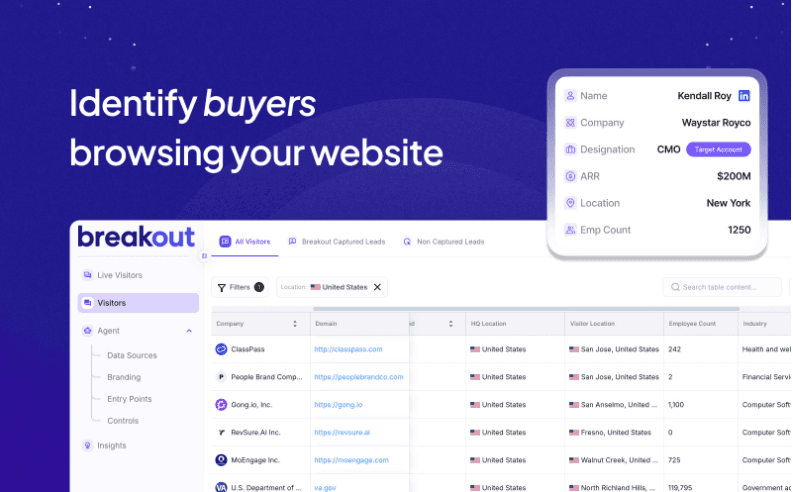
3. Visitor Identification
Breakout identifies:
Companies
Buyers
Intent signals
Behavioral patterns
while visitors are still browsing the website.
That changes:
Qualification quality
Personalization
Follow-up timing
Outreach effectiveness
Chili Piper has no native visitor deanonymization layer.
Teams usually need external tooling just to approach account visibility before conversion.
The category mistake many companies make is assuming routing tools and visitor intelligence platforms solve the same problem.
They do not.
4. AI Autonomy and Buyer Engagement
Breakout behaves much closer to a true inbound SDR workflow.
The platform handles:
Product questions
Qualification
Buyer guidance
Follow-up
Scheduling progression
Intent-aware engagement
throughout the session automatically.
Chili Piper’s AI capabilities remain much more workflow-driven.
The platform still depends heavily on:
Routing logic
Meeting workflows
Rep escalation
Manual orchestration
especially during more nuanced buying conversations.
The difference becomes most visible after business hours.
Breakout continues progressing buyers even when SDRs are offline.
5. Inbound-Led Outbound
This is where the separation becomes clearest.
Most routing systems stop once visitors leave the website. Breakout continues engagement after the session ends.
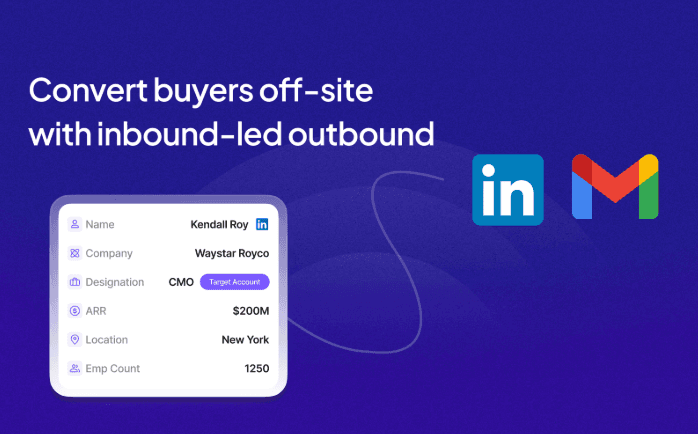
The platform combines:
Visitor identification
Enrichment
Qualification
Filtering
Personalized outreach
inside the same workflow.
That allows GTM teams to prospect high-intent visitors who never submitted forms or booked meetings directly.
Chili Piper cannot recover that intent natively.
If buyers leave without converting, the workflow largely ends there.
That becomes increasingly expensive as more buying journeys stay anonymous longer.
6. Workflow Complexity and Operational Overhead
The hidden cost inside inbound infrastructure is operational maintenance.
Not licensing.
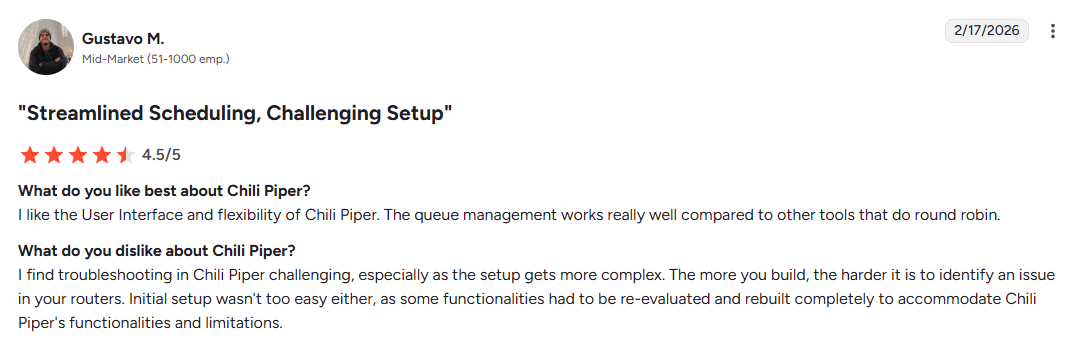
As routing-heavy systems scale, teams spend increasing time managing:
Routing rules
Territories
Ownership logic
Scheduling coordination
Workflow exceptions
CRM orchestration
Booking workflows also become significantly more complex as organizations grow across multiple teams, regions, and ownership structures.
What initially feels like scheduling automation gradually becomes workflow administration.
Breakout reduces much of that operational burden by combining engagement, qualification, follow-up, and outreach inside one system.
The operational difference compounds over time.
Especially for lean RevOps teams trying to scale pipeline without increasing coordination overhead.
Why More GTM Teams Are Moving Beyond Routing Platforms
Most routing systems still assume:
Buyers fill out forms early
SDRs stay central throughout progression
Meetings happen quickly
Sales engagement starts early
Modern B2B buyers increasingly operate differently.
They expect:
Faster answers
Independent evaluation
Personalized engagement
Flexible progression
Less friction before speaking to sales
The companies winning inbound now are not simply routing leads faster.
They are identifying intent earlier and converting buyers continuously across the full journey.
That operational shift explains why more GTM teams are moving toward inbound AI SDR tools like Breakout instead of relying entirely on routing systems alone.
When You Should Choose Chili Piper
Chili Piper still works well for companies whose inbound motion is heavily built around forms, routing logic, and SDR coordination.
The platform performs strongest when:
Buyers already convert consistently through demo forms
SDR teams manage large inbound queues
Salesforce orchestration is deeply embedded internally
RevOps teams can maintain routing workflows continuously
For enterprise organizations with mature routing infrastructure, Chili Piper can improve:
Scheduling efficiency
Lead assignment
Calendar coordination
Territory management
Speed-to-meeting
But the platform creates the most value after buyers raise their hands.
That distinction matters because many modern buying journeys never reach that stage anymore.
If your biggest problem is routing qualified demo requests faster, Chili Piper can still fit naturally into the workflow.
If the challenge is converting more anonymous website traffic into pipeline, the platform becomes more limited.
Why Breakout Makes More Sense for Modern GTM Teams
Breakout is better suited to revenue teams trying to solve a larger inbound problem.
Not just meeting coordination.
Pipeline generation itself.
The platform is designed around the reality that modern buyers:
Research anonymously
Avoid forms longer
Expect immediate engagement
Evaluate independently before sales conversations
Instead of waiting for hand-raisers, Breakout identifies visitors while they are actively evaluating the website and engages them dynamically based on behavior and intent.
That changes how much inbound traffic actually becomes pipeline.
The platform combines:
Visitor deanonymization
Qualification
Conversational engagement
Scheduling
Follow-up
Inbound-led outbound
inside one workflow instead of across multiple disconnected systems.
Operationally, that reduces a significant amount of complexity for GTM teams.
Especially lean RevOps and demand generation teams already stretched across:
Routing tools
Intent platforms
Chat systems
Enrichment providers
Outbound workflows
Breakout also reduces dependence on live SDR coverage.
The platform continues progressing buyers through:
Product conversations
Qualification
Personalized nudges
Follow-up workflows
Intent-aware engagement
even when reps are offline.
That matters because many high-intent buying sessions happen outside normal sales coverage windows.
Most importantly, Breakout expands the amount of inbound intent teams can actually capture.
Not just the traffic that fills out forms.
The traffic that would otherwise disappear completely.
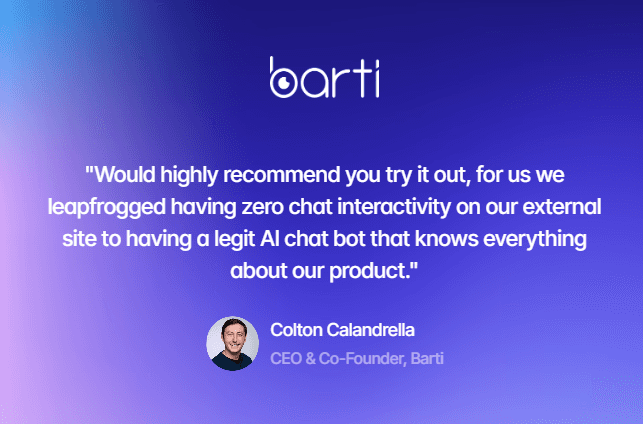
See how Breakout helped Barti:
Breakout helped Barti turn its website into an active pipeline generation channel instead of a static information hub.
Within three months, Breakout influenced 19% of the total pipeline and achieved a 9.8% conversation-to-lead rate.
The platform also reduced website bounce rates by 5.7% and reduced inbound response time from hours to instant without adding SDR headcount.
Final Verdict: Chili Piper vs. Breakout
Chili Piper remains a strong routing and scheduling platform for companies already operating mature form-based inbound motions.
If your biggest challenge is reducing scheduling friction after buyers convert, the platform still delivers value.
But modern GTM teams are increasingly solving for a different problem now.
They need to identify anonymous buyers earlier, engage them before form submissions happen, and convert more website traffic into pipeline without increasing SDR headcount or operational complexity.
That is where Breakout fits better.
The platform is not simply improving handoffs between marketing and sales. It is helping revenue teams capture and convert buying intent throughout the entire inbound journey.
As B2B buying behavior becomes more self-directed, that distinction becomes harder to ignore.
If your team is evaluating alternatives to traditional routing platforms, Breakout is worth looking at closely.
Especially if pipeline growth, operational efficiency, and anonymous traffic conversion are becoming bigger priorities inside your GTM motion.
FAQs
1. Is Chili Piper still worth it for modern inbound GTM teams?
Chili Piper still works well for companies heavily dependent on form-based inbound routing and SDR coordination.
But many GTM teams now need more than scheduling automation.
As buying journeys become more anonymous and self-directed, teams increasingly look for platforms that can identify visitors, qualify intent, and generate pipeline before form submissions happen.
2. What are the limitations of Chili Piper?
The biggest limitations usually appear in the GTM motion scale.
Teams often mention:
Heavy routing and workflow management
Multiple tools required for a complete inbound workflow
No native anonymous visitor identification
Limited autonomous engagement
Dependence on SDR handoffs
Increasing operational overhead over time
The platform works best when the workflow already revolves around demo forms and meeting scheduling.
3. What is the best Chili Piper alternative in 2026?
It depends on the workflow problem being solved.
If the priority is routing and scheduling optimization, platforms like LeanData or RevenueHero are often evaluated.
If the priority is:
Converting anonymous website traffic
Autonomous qualification
Website pipeline generation
Inbound-led outbound
Reducing SDR dependency
Then platforms like Breakout are increasingly becoming a stronger alternative.
4. Chili Piper vs Breakout: Which platform generates more pipeline?
Chili Piper improves routing efficiency after a lead converts.
Breakout focuses on increasing how much inbound traffic converts into pipeline in the first place.
That distinction matters because many high-intent visitors never fill out forms or request demos. Breakout identifies and engages buyers earlier in the journey, which expands pipeline coverage significantly.
5. Can Chili Piper identify anonymous website visitors?
No, not natively.
Chili Piper primarily activates after form submissions or known buyer interactions. Teams typically need additional tools for visitor deanonymization and account identification before conversion happens.
Breakout includes visitor identification directly inside the platform and can often identify both companies and buyers while they are still browsing the site.
6. Why are companies moving from routing tools to AI SDR platforms?
Because the bottleneck changed.
Earlier GTM systems optimized:
Speed-to-lead
Scheduling
SDR coordination
Modern GTM teams increasingly need:
Buyer identification
Autonomous qualification
Continuous engagement
Inbound-led outbound
Pipeline generation without adding headcount
Routing tools solve operational efficiency problems. AI SDR platforms solve pipeline coverage problems.
7. Which platform is better for lean SDR teams?
Breakout generally fits lean SDR teams better because the platform handles qualification, engagement, follow-up, and scheduling progression automatically.
Chili Piper still relies much more heavily on:
SDR availability
Routing workflows
Manual orchestration
Rep handoffs
The operational difference becomes more noticeable as inbound volume scales.
8. Does Chili Piper require Salesforce?
Chili Piper works best inside Salesforce-centric environments.
The platform can integrate with other systems, but much of its operational strength comes from Salesforce-based routing and orchestration workflows.
Breakout is generally more flexible across modern GTM stacks and does not depend heavily on Salesforce infrastructure to function effectively.
9. Which platform is easier to implement: Chili Piper or Breakout?
It depends on the complexity of the GTM motion.
Chili Piper implementation often becomes more involved as routing rules, territories, ownership logic, and scheduling workflows expand.
Breakout typically requires less workflow orchestration because visitor identification, engagement, qualification, and follow-up exist inside the same system.
The hidden implementation cost in routing platforms is usually long-term workflow maintenance.
10. How does Breakout handle inbound-led outbound?
Breakout continues engagement after visitors leave the website.
The platform uses:
Visitor identification
Intent signals
Browsing behavior
Qualification context
to trigger personalized follow-up and outbound workflows automatically.
This allows GTM teams to convert high-intent visitors who never submitted forms or booked meetings directly.
11. Is Breakout replacing traditional conversational marketing tools?
In many cases, yes.
Traditional conversational marketing platforms primarily focus on:
Chat engagement
Routing
Meeting booking
SDR handoffs
Breakout combines:
Visitor deanonymization
Qualification
Conversational engagement
Follow-up
Outbound prospecting
Pipeline generation
inside one workflow.
That makes it operate more like an inbound SDR system than a traditional chat or routing tool.