All Blogs
A plain-English look at Chili Piper and Qualified so you can see which one fits better.

Evan Marshall
Senior Growth AI Strategist
Published On
B2B revenue teams don’t just struggle with generating inbound interest.
They also struggle to convert it efficiently.
The modern pipeline problem is operational.
Buyers expect immediate responses, contextual engagement, and fast qualification across every touchpoint. For teams considering a Qualified alternative, Breakout provides a different approach to converting intent. Meanwhile, GTM teams are trying to increase pipeline without endlessly scaling SDR headcount.
That pressure created two major categories of software:
Revenue routing and scheduling platforms
Conversational marketing platforms
Chili Piper became one of the recognized names in inbound routing and scheduling.
Qualified emerged as a Salesforce-native conversational marketing platform built around live website engagement.
Both products solve legitimate problems.
But they solve different parts of the inbound conversion workflow.
That distinction matters because many teams evaluating these platforms are not actually trying to solve the same operational issue.
Some need faster scheduling.
Others need conversational engagement.
Increasingly, many need something else entirely:
AI qualification
anonymous website visitor identification
inbound-led outbound workflows
autonomous pipeline generation
That is where newer AI SDR platforms like Breakout entered the market.
This article breaks down:
Where Chili Piper performs well
Where Qualified fits best
The hidden operational tradeoffs behind both platforms
Why modern GTM teams are increasingly evaluating Inbound AI SDRs instead
TL;DR: Chili Piper vs. Qualified
Chili Piper focuses on routing and scheduling after buyers convert.
Qualified improves conversational engagement through rep-assisted chat workflows.
The bigger shift happens when Inbound AI SDR tools like Breakout enter the picture.
Breakout combines visitor identification, AI qualification, buyer engagement, and follow-up into one continuous inbound conversion workflow.
The table below breaks down how all three platforms differ across AI capabilities, SDR dependency, operational complexity, visitor visibility, and overall pipeline generation.
Category | Chili Piper | Qualified | Breakout |
Core Category | Revenue routing and scheduling | Conversational marketing | AI SDR platform |
Best For | Form routing and instant scheduling | Website engagement and chat | Autonomous inbound conversion |
Primary Workflow | Scheduling and routing | Conversational pipeline acceleration | AI qualification and pipeline generation |
AI Capabilities | Limited workflow automation | AI-assisted conversations | AI-native SDR workflows |
Website Visitor Identification | No | Limited | Yes |
Inbound Qualification | Manual-heavy | Mixed AI + SDR | Autonomous AI qualification |
SDR Dependency | High | Moderate to high | Lower |
CRM Dependency | Moderate | High Salesforce dependency | More flexible |
Operational Complexity | Moderate | High | Lower operational overhead |
Time-to-Value | Fast | Moderate to long | Faster deployment |
Hidden Cost | Routing maintenance | Workflow and SDR management | Lower workflow maintenance |
What Chili Piper Actually Does Well
Chili Piper became popular because it solved a real inbound bottleneck: I.e, speed to lead.

For years, inbound conversion workflows looked inefficient:
Buyers submitted forms
SDRs manually qualified leads
Reps coordinated schedules through email
Meetings took days to book
Chili Piper streamlined that process by automating:
Lead routing
Calendar coordination
Meeting scheduling
Ownership assignment
Handoff workflows
For high-volume inbound teams, this still creates meaningful operational leverage.
Particularly for:
SaaS companies with strong demo-request volume
RevOps-heavy organizations
enterprise sales teams with complex territories
SDR organizations handling large inbound queues
The platform works especially well when inbound qualification criteria are already mature internally.
That is an important nuance.
If your primary bottleneck is scheduling friction, Chili Piper remains one of the go-to platforms in the category.
Where Chili Piper Starts Creating Workflow Gaps
The challenge appears when inbound workflows evolve beyond forms.
Modern buying behavior rarely follows a clean linear path anymore.
Many high-intent buyers:
browse anonymously
avoid forms initially
research across multiple sessions
expect immediate contextual engagement
Routing platforms alone cannot solve that.
Because the architecture activates after a form is submitted.
That means:
Anonymous intent remains invisible
Qualification still depends heavily on SDR review
Website engagement remains disconnected
Inbound and outbound workflows stay fragmented
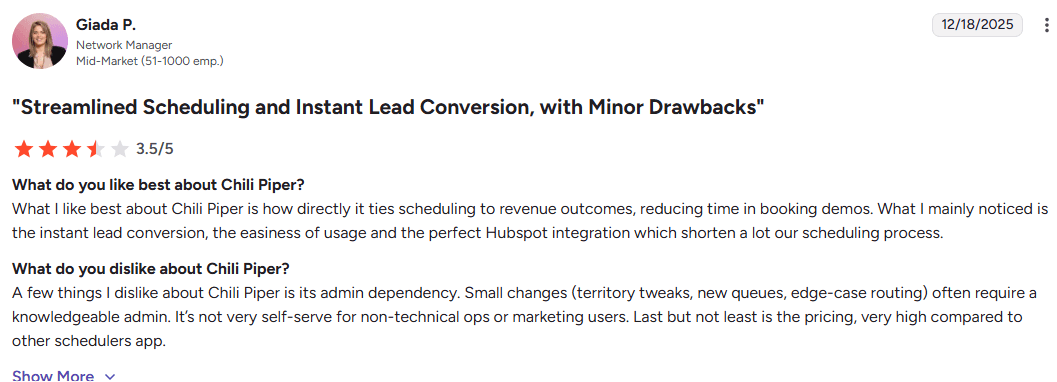
This is where tools like Breakout come in handy.
Modern GTM teams increasingly need systems that engage buyers before formal conversion happens.
What Qualified Actually Does Well
Qualified entered the market from a different angle.
Instead of optimizing post-form conversion, Qualified focused on real-time website engagement.
The thesis was simple → Engage buyers while intent is happening.
That changed the workflow entirely.

Rather than waiting for buyers to submit forms and wait for follow-up, Qualified enabled:
live website conversations
SDR chat handoffs
AI-assisted qualification
meeting booking inside conversations
Salesforce-native engagement workflows
For enterprise SaaS companies with strong inbound traffic, this became compelling.
Especially inside Salesforce-centric GTM organizations.
Qualified performs particularly well for:
enterprise demand generation teams
conversational sales motions
high-traffic B2B websites
SDR teams actively monitoring inbound conversations
The platform helped shift conversational marketing from static chat widgets to pipeline-generation infrastructure.
The Hidden Operational Cost of Conversational Marketing Platforms
Conversational platforms often look simpler in demos than they are operationally.
Because the software is only one layer of the workflow.
Effective conversational selling also requires:
SDR coverage
conversation management
routing logic
escalation rules
playbook optimization
Salesforce architecture maturity
The product works well if the organization can support the operational complexity behind it.
That is the key tradeoff many buyers underestimate.
Live engagement systems create dependency on:
SDR responsiveness
workflow ownership
RevOps administration
conversational optimization
The hidden cost is not only software pricing.
It is organizational overhead.
This is one reason many companies evaluating Qualified today are also exploring AI SDR platforms like Breakout.
The market increasingly wants autonomous engagement instead of human-heavy conversational orchestration.
Chili Piper vs. Qualified: 7 Major Differences Modern GTM Teams Should Know
1. Routing Infrastructure vs Conversational Engagement
This is the biggest distinction between the two platforms.
Chili Piper focuses primarily on:
routing
scheduling
operational efficiency after form conversion
Qualified focuses on:
conversations
website engagement
real-time qualification
One accelerates scheduling workflows.
The other accelerates buyer engagement.
The category mistake happens when companies expect one platform to solve the other’s core problem.
Routing software does not automatically improve website engagement.
Conversational software does not eliminate routing complexity.
2. AI Automation vs Workflow Automation
This is where the market shifted significantly in 2026.
Most legacy GTM platforms automate workflows.
That is different from autonomous execution.
Chili Piper automates:
lead assignment
scheduling coordination
routing workflows
Qualified automates:
portions of website conversations
chat engagement
qualification flows
But both platforms still rely heavily on:
workflow management
SDR involvement
operational oversight
Modern AI SDR platforms like Breakout approach the problem differently.
Instead of simply automating workflows, they attempt to autonomously execute:
qualification
engagement
follow-up
visitor identification
inbound conversion
That architectural shift matters because many GTM teams are trying to reduce operational dependency entirely.
3. Website Visitor Conversion
This is another major separation point.
Chili Piper was not designed for website engagement.
Its strength begins after inbound intent becomes explicit.
Qualified performs significantly better for:
website conversations
real-time engagement
conversational qualification
But even conversational marketing platforms still struggle with anonymous traffic visibility.
That is becoming one of the most important problems in modern demand generation.
A large percentage of buying intent never converts through forms or chat.
Platforms like Breakout focus heavily on identifying anonymous high-intent website visitors before traditional conversion happens.
That changes the economics of inbound pipeline generation entirely.
4. SDR Dependency and Operational Overhead
This is one of the most overlooked buying criteria.
Chili Piper dependency:
SDR qualification
RevOps routing maintenance
inbound queue management
Qualified dependency:
SDR availability
conversation management
Salesforce operational ownership
playbook maintenance
As organizations scale, those operational requirements compound.
This is why many revenue teams are shifting toward AI SDR platforms.
Not because routing or conversational tools stopped working.
But because operational overhead became too expensive relative to pipeline efficiency gains.
5. CRM Flexibility and Salesforce Dependency
Qualified’s deep Salesforce integration is both a strength and a limitation.
For enterprise Salesforce environments, the native alignment is valuable.
For companies operating more flexibly across systems, the dependency can create rigidity.
Implementation depth increases:
workflow complexity
operational maintenance
deployment timelines
Chili Piper is comparatively more CRM-flexible.
But complex routing logic still creates significant RevOps dependency over time.
Breakout positions itself differently here by focusing more heavily on AI workflow execution rather than deeply nested workflow administration.
That reduces some operational complexity.
6. Pricing and Total Cost of Ownership
Most comparison articles oversimplify pricing.
The real cost is not subscription pricing alone.
It is:
workflow maintenance
SDR staffing
RevOps administration
implementation complexity
operational ownership
Chili Piper pricing considerations:
typically scales by seats and routing infrastructure
additional complexity increases operational maintenance
enterprise routing logic often requires ongoing RevOps management

Qualified pricing considerations:
enterprise pricing can become significant
Salesforce dependency increases operational overhead
conversational workflows require active maintenance and SDR support
The hidden cost is organizational bandwidth.
This is why many companies evaluating these categories are increasingly comparing them against AI SDR platforms like Breakout instead of only comparing them against each other.
7. Time-to-Value and Implementation Complexity
Chili Pfaiper usually reaches value faster.
Especially for organizations with:
established inbound forms
structured SDR workflows
clear routing logic
Qualified implementations often require more operational coordination because conversational workflows are inherently broader.
Deployment complexity increases across:
routing
conversations
SDR management
Salesforce integrations
engagement design
Breakout’s positioning around faster deployment and lower operational overhead becomes relevant here.
Especially for leaner GTM teams trying to scale pipeline without building large operational layers.
Why More Revenue Teams Are Evaluating AI SDR Platforms Instead
The market is shifting away from isolated workflow tools.
First came:
form capture tools
Then:
routing and scheduling platforms
Then:
conversational marketing software
Now the category is moving toward autonomous AI SDR tools.
The reason is simple.
Modern GTM teams increasingly need:
qualification
engagement
visitor identification
follow-up
pipeline orchestration
to operate as one connected workflow.
Not fragmented tooling layers managed manually across teams.
Revenue organizations are under pressure to:
increase efficiency
reduce SDR dependency
improve pipeline velocity
convert anonymous traffic
accelerate inbound response
That creates demand for platforms capable of executing workflows autonomously.
Why Breakout Fits the Modern GTM Stack Better
Breakout approaches the problem differently from both Chili Piper and Qualified.
Instead of focusing narrowly on:
routing
scheduling
chat
conversational widgets
Breakout positions itself as an AI-native SDR platform built for autonomous inbound pipeline generation.
That changes the architecture entirely.
AI-Native Instead of Workflow-Native
Most older platforms were originally designed around operational workflows.
AI was layered into the architecture later.
Breakout was designed around AI execution from the start.
The platform behaves less like workflow software and more like an autonomous revenue execution layer.
That distinction is becoming increasingly important in modern GTM environments.
Website Visitor Deanonymization
One of the biggest limitations in traditional inbound systems is anonymous traffic loss.
Most buyers never complete forms.
Most conversational platforms still depend heavily on active engagement behavior.
Breakout focuses heavily on identifying anonymous high-intent website visitors earlier in the buying journey.
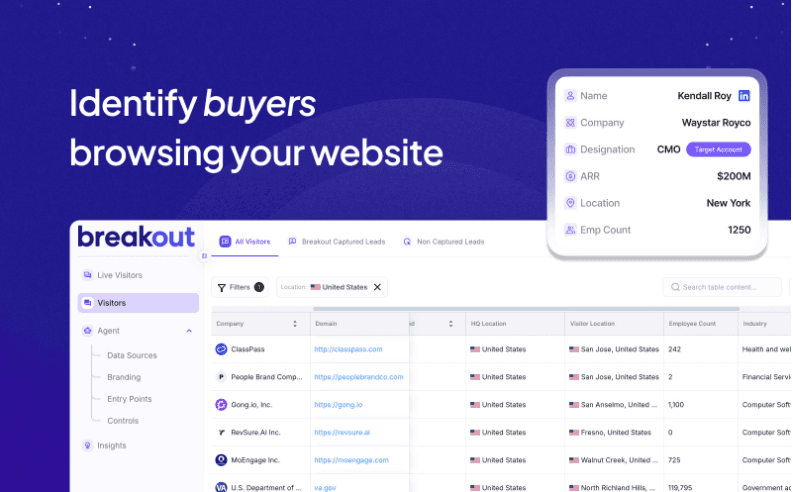
That creates a larger addressable inbound pipeline without increasing paid acquisition spend.
For demand generation teams, that matters significantly.
Inbound-Led Outbound Workflows
Traditional categories separate inbound and outbound motions.
Breakout connects them.
Website activity and intent signals can trigger outbound-style AI engagement workflows automatically.
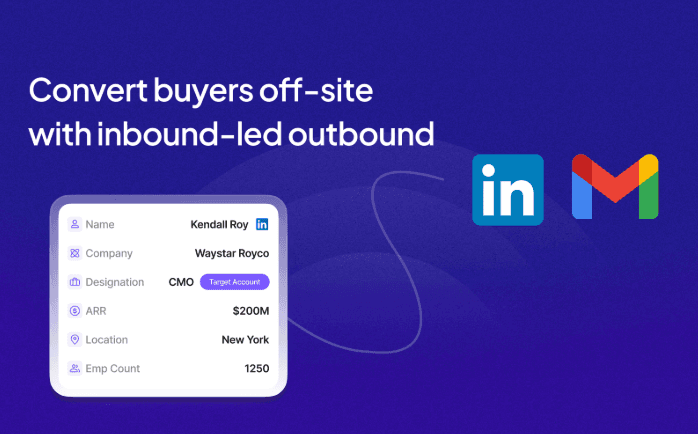
That creates:
faster response timing
better personalization
improved pipeline efficiency
lower SDR dependency
This is where the category is heading overall..
Reduced Operational Overhead
This is one of the strongest strategic arguments for AI SDR platforms.
Most revenue teams are overloaded with:
routing rules
CRM administration
SDR coordination
workflow maintenance
fragmented tooling
Breakout’s positioning resonates because modern GTM organizations increasingly want:
fewer disconnected systems
lower maintenance overhead
faster deployment
autonomous execution
The market is gradually moving from workflow management toward workflow autonomy.
That is the deeper transition happening underneath this category.
From Routing and Conversations to Actual Conversion
Chili Piper and Qualified both solved important problems for modern GTM teams. One improved scheduling efficiency.
The other improved website engagement.
But revenue teams today are facing a different challenge entirely.
The problem is no longer just routing meetings or managing conversations. It is converting buying intent faster without adding operational complexity, SDR overhead, and fragmented workflows across multiple tools.
That is why the market is shifting toward AI-native revenue platforms.
Platforms like Breakout are built around autonomous qualification, visitor identification, inbound-led outbound workflows, and AI-driven engagement instead of isolated workflow automation.
If your team is evaluating the next generation of inbound conversion infrastructure, the real question is no longer chat vs routing.
It is whether your GTM stack is built for workflow management or autonomous pipeline generation.
FAQs
1. What are the best Chili Piper alternatives for modern B2B revenue teams?
Chili Piper works well for routing and scheduling. Modern GTM teams often need more than meeting coordination.
Popular alternatives include:
LeanData
Calendly
Qualified
Platforms like Breakout combine AI qualification, visitor identification, and inbound conversion workflows into a single platform.
2. Is Qualified worth the price over Chili Piper?
Qualified is stronger for conversational selling and website engagement.
Chili Piper is stronger for routing and scheduling workflows.
Qualified usually requires more operational support. Teams often need SDR coverage and Salesforce administration.
Many SaaS companies now evaluate Breakout for lower operational overhead and AI SDR workflows.
3. How does Chili Piper compare to Calendly for B2B sales teams?
Chili Piper focuses on enterprise routing, inbound qualification flows, and territory assignment.
Calendly focuses more on simple appointment scheduling.
Chili Piper fits larger revenue teams with complex workflows.
Modern GTM teams increasingly evaluate Breakout for AI-driven inbound conversion and qualification.
4. Which AI appointment scheduler is best for inbound conversion in 2026?
Traditional scheduling tools mainly optimize calendar coordination.
Modern AI SDR platforms handle:
qualification
visitor identification
engagement
follow-up
meeting booking
Breakout is built for autonomous inbound conversion instead of standalone scheduling workflows.
5. How do I make sure routed leads convert into held meetings?
Fast routing alone does not improve conversion quality.
Revenue teams also need:
accurate qualification
fast engagement
contextual follow-up
consistent buyer conversations
Many companies use Breakout to automate qualification and improve inbound pipeline conversion rates.