All Blogs
A quick look at AI SDR agents, with reviews to help you compare.

Evan Marshall
Senior Growth AI Strategist
Published On
This is the August 2026 refresh of our 2025 AI SDR agent guide. For the foundational view of AI SDR agents, see the complete explainer. The core rankings hold, but the market shifted enough in the first half of 2026 that several entries needed a major update before this list could be trusted again.
Sales reps are finally focused on closing deals.
AI manages repetitive work like qualification, routing, and follow-ups.
B2B companies are steadily moving routine prospecting and qualification from human SDRs to AI that work faster, cleaner, and with far fewer manual steps.
Fortune Business Insights projects the AI SDR market to grow from USD 4.27 billion in 2025 to USD 18.19 billion by 2032, and the numbers make the picture obvious.
Automated qualification, routing, and engagement are quickly becoming core parts of the modern revenue engine.
But not all AI SDRs play the same role.
Most platforms focus on outbound automation. Only a handful are truly built for inbound conversion.
Because each category solves a different problem, there is no one best AI SDR.
The right choice depends on your motion, your buyers, and the level of automation your team can actually adopt.
In this guide, you will find
The leading AI SDR agents across inbound, outbound, and enterprise categories
Real user sentiment that shows practical pros and cons
Clear strengths and limitations of each platform
A simple comparison of all tools
A walkthrough on converting inbound leads with Breakout AI
What Changed from 2025 to 2026
If you read our 2025 AI SDR agent guide, here is what is different in this version and why it matters.
Drift is no longer available. Salesloft officially shut down Drift in March 2026 following price hikes, product stagnation, and a security breach affecting 700+ organizations. We removed it from the inbound list and replaced it with 1mind, which has become the leading alternative for avatar-led inbound qualification. Teams migrating away from Drift (like Ketch, which generated 150+ leads from anonymous traffic in under three months after switching to Breakout) are finding that purpose-built inbound AI SDRs deliver stronger results than legacy chat tools.
Intercom Fin is now a Salesforce product. Salesforce acquired Intercom in June 2026 for approximately $3.6 billion. Fin’s technology is being folded into Agentforce. Teams on HubSpot or any non-Salesforce CRM should factor in the lock-in risk before committing.
Qualified Piper is now fully Salesforce-owned. Salesforce completed its acquisition of Qualified on April 1, 2026. Piper now functions as a Salesforce-native capability, which deepens its value for Salesforce-first enterprises but makes it a poor fit for teams outside that ecosystem.
The inbound category matured. In 2025, inbound AI SDRs were still early. In 2026, teams are reporting 60 to 80 percent reductions in inbound SDR workload. The gap between AI-first inbound tools and legacy chat tools has widened considerably.
What Is an AI SDR Agent?
An AI SDR (Sales Development Representative) agent is software that performs the qualification, outreach, and meeting-booking work a human SDR would otherwise handle. It engages prospects through chat, email, and LinkedIn, captures buying signals, and routes qualified leads to sales without requiring a human to manage each conversation.
AI SDR agents fall into two broad categories:
Inbound AI SDRs engage website visitors, form fills, and event attendees who have already shown buying intent. They identify who is on your site, start personalized conversations in real time, and book meetings before the engagement window closes. Platforms like Breakout connect directly to your CRM, email, and LinkedIn to act the moment a buyer signal appears.
Outbound AI SDRs run cold prospecting: they build contact lists, write personalized emails, and manage LinkedIn sequences to generate new pipeline. They integrate with CRMs like Salesforce and HubSpot, and email sequencing tools to sync every interaction back to the contact record automatically.
The core distinction matters for your buying decision: inbound AI SDRs convert demand you already have. Outbound AI SDRs create demand from scratch. Most B2B teams need both, but the best starting point depends on where your biggest pipeline gap sits today.
TL;DR - Best AI SDR Agents in 2026
Best Inbound AI SDR Agents
1. Breakout: Automates inbound qualification and books meetings instantly with high-intent leads.
2. 1mind (Superhuman): Deploys photorealistic AI avatars for inbound qualification and live demo conversations. Best for high-inbound-volume products with video-comfortable buyers. Drift note: officially shut down by Salesloft in March 2026 and no longer available for new deployments.
3. Intercom Fin (Acquired by Salesforce, June 2026): Provides AI-driven responses and qualifies prospects through intelligent chat workflows. Now part of Salesforce’s Agentforce platform following the June 2026 acquisition, with lock-in risk for non-Salesforce CRM users.
Best Outbound AI SDR Agents
4. Artisan (Ava): Acts as a full outbound SDR with personalized research and multichannel outreach.
5. 11x.ai (Alice): Runs fully automated outbound sequences with minimal manual oversight.
6. AiSDR: Creates targeted outbound campaigns and sends personalized emails at scale.
7. Reply.io (Jason AI): Builds outbound sequences, drafts replies, and automates follow-ups within Reply.io.
Best Enterprise and CRM-Native Agents
8. Qualified Piper (Acquired by Salesforce, April 2026): Engages enterprise website visitors and routes leads using Salesforce intelligence. Now fully Salesforce-owned, meaning CRM dependency is structural instead of architectural.
9. Salesforce Agentforce: Delivers native Salesforce AI for lead qualification, routing, and enterprise workflows.
10. Clodura AI: Pairs a large B2B database with automated outreach and CRM enrichment for data-heavy teams.
What to Look for in an AI SDR Agent
The right AI SDR depends on how your team sells and how hands-off you want the system to be. A quick check on motion, autonomy, and visitor insight will point you to the right fit.
Inbound vs. Outbound Motion
Before comparing platforms, clarify your revenue motion.
Outbound AI SDRs (Artisan, 11x.ai, AiSDR)
These are designed for cold email and LinkedIn outreach. They are useful for top-funnel volume but target low intent.Inbound AI SDRs (Breakout, Drift, Intercom)
These convert existing website traffic, which is the highest-intent channel, into meetings.
Most mid-market and enterprise buyers shifting to automation now put inbound conversion first because it delivers the fastest and cleanest ROI.
Degree of Autonomy
The market spans several types.
Human-assisted tools like Intercom still depend on manual review.
Semi-autonomous tools like Artisan and 11x.ai automate outreach but need oversight.
Fully autonomous inbound agents like Breakout operate continuously by adapting to your website’s visitor flow.
Choosing the right AI SDR comes down to how much autonomy you want the system to handle on its own.
Deanonymization
The biggest challenge for AI agents is the quality and depth of the data they receive, with deanonymization being a key factor that improves performance.
Most tools interact only after a visitor self-identifies. Breakout identifies anonymous visitors before engaging them, allowing personalized conversations from the first message. For teams like TeamOhana, where buyers arrive pre-researched from AI tools and rarely fill out forms, contact-level resolution is what makes real-time routing possible.
CRM Compatibility
Your AI SDR is only as useful as the data it feeds back into your stack. Before committing to a platform, confirm it writes directly to your CRM without requiring middleware or manual exports. Breakout syncs qualified leads and conversation summaries into HubSpot, Salesforce, and Marketo in real time, so your sales team always has full context before following up.
Speed to Deploy
Implementation time varies dramatically across platforms. Enterprise-grade tools like Qualified and Salesforce Agentforce can take weeks or months of RevOps involvement before they go live. Lighter-weight platforms like Breakout are designed for fast onboarding: most teams are live within a few hours of adding a single script tag, with no playbook-building required. If pipeline generation is urgent, deployment speed is a real constraint, more than a convenience factor.
Pricing Model
Seat-based pricing ties your cost to headcount, which means costs scale with your team instead of your results. Usage-based pricing ties cost to actual activity, which is a better fit for teams that want to start small and grow. Breakout uses usage-based pricing, so you pay for qualified conversations and meetings booked instead of for licenses that go idle. When comparing platforms, ask whether your contract charges for activity or for access.
Best Inbound AI SDR Agents (For Website Traffic)
CRM Compatibility
Check which CRMs the tool syncs with natively before committing. Platforms that require manual exports or third-party bridges add operations overhead and introduce data lag that throws off lead routing. Breakout syncs directly with HubSpot and Salesforce, pushing qualified leads with full conversation context attached so your reps see the full picture before picking up the phone.
Speed to Deploy
Some platforms require weeks of RevOps configuration before going live. If your team needs pipeline moving now, look for tools that install with a single tag and run live conversations within hours. Breakout deploys via a Google Tag, and most teams are in production the same day without touching a playbook or routing rule.
Pricing Model
Seat-based pricing fits outbound tools where usage scales with headcount. For inbound automation running continuously against your full website traffic, usage-based pricing is a better match because you pay for outcomes instead of licenses. Breakout uses usage-based pricing, so costs scale with actual pipeline created instead of seats purchased.
Best Inbound AI SDR Agents (For Website Traffic)
1. Breakout (Best All-in-One Inbound AI SDR)
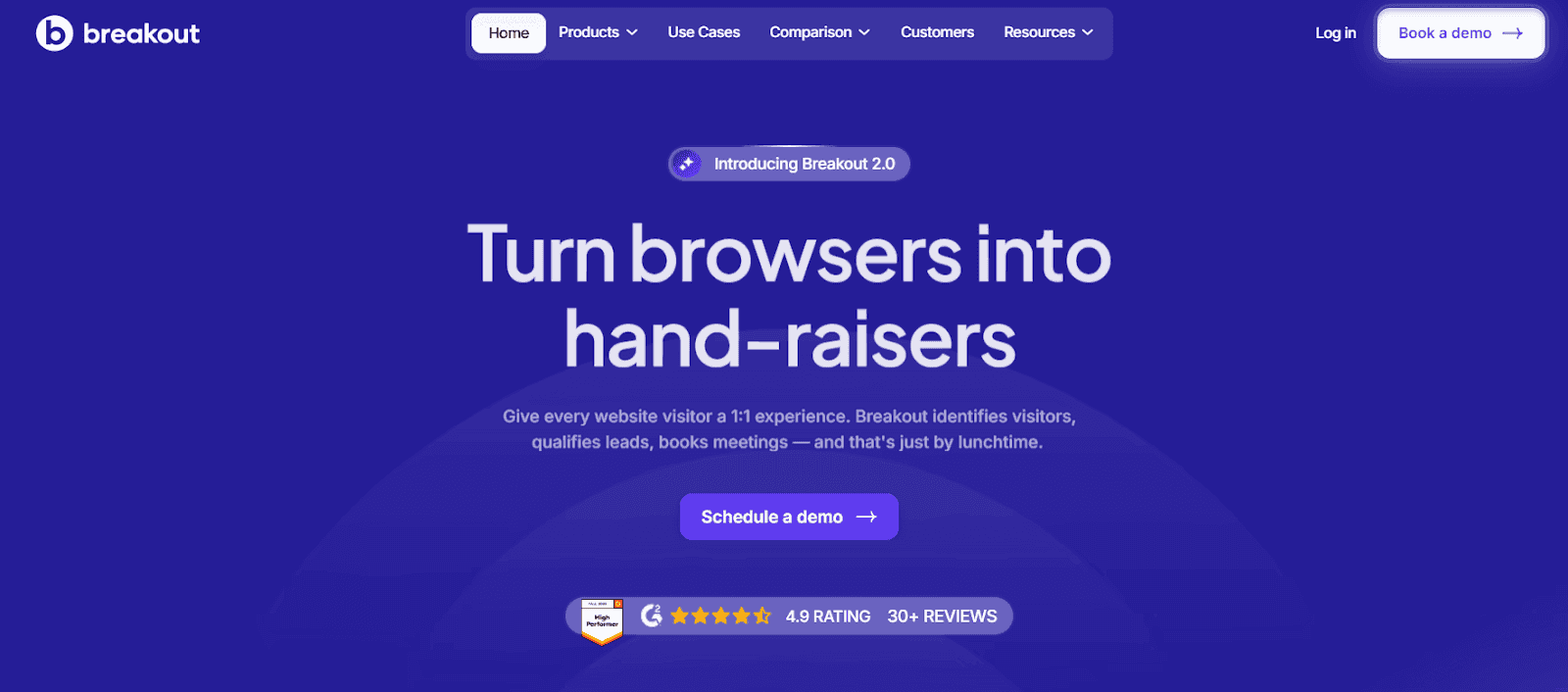
Breakout leads the inbound category because it solves all parts of the conversion problem in a single autonomous system: Identify, Engage, Qualify, and Book.
Key Features
Visitor Deanonymization
Breakout uniquely brings firmographic data into the AI reasoning layer so it can open conversations based on company, industry, or page intent.Autonomous AI SDR
No routing rules, no human drivers, no RevOps oversight.
The agent reads website intent, asks qualification questions, captures BANT signals, and books meetings automatically.Full-funnel adaptability
The system adjusts conversation style based on role, funnel stage, or buyer intent without rule building.
What real users say
Setup took hours, not weeks.
We replaced 60 to 80 percent of our inbound SDR workload.
Conversations feel contextual, not scripted.
It checks intent and pushes only real opportunities.
User Review on G2
Here is what Shubhanshu has to say about Breakout on G2
“A gamechanger for our conversion rates”
What do they like best about Breakout?
“We’ve been using Breakout at Talowiz for a couple of months now, and it’s been a solid addition to our website stack. It’s easy to see the difference - it’s helping us convert more visitors into conversations and, in the end, pipeline.
The setup was super straightforward - just dropped in a Google Tag and we were live in under five minutes. From there, Breakout plugged right into our existing tools - HubSpot for CRM tracking, Slack for real-time conversation alerts - and it just works.
The real-time Slack alerts have been a game changer for our team. We’re able to act right away, and the conversation summaries plus lead intelligence make it easier to tailor our follow-ups. The Breakout team’s been super responsive and helpful whenever we’ve had questions or needed tweaks.
Overall, Breakout’s become a key part of our GTM workflows, and we’re seeing it pay off in better conversion rates.”
What do they dislike about Breakout?
“Truthfully, nothing stands out as a real downside at the moment. Breakout’s been doing exactly what we brought it in to do - smooth integration, great real-time insights, and frictionless execution. No complaints so far!”
Customer results
Ketch replaced Drift with Breakout and generated 150+ leads from anonymous traffic in under three months. Beautiful.ai built a full SDR motion without hiring a single SDR and closed three new opportunities in their first quarter. TeamOhana turned zero-click traffic into $2.3M in pipeline by acting on contact-level visitor signals in real time.
Who it is best for
GTM teams that want to convert their existing traffic into meetings without hiring or maintaining a large SDR team. Fast-moving mid-market and enterprise teams seeking AI-first inbound automation.
Verdict
This is the leading choice for inbound AI SDR automation. Breakout stands out as the only inbound AI SDR that identifies visitors, engages them in real time, and converts them on or off your site.
2. 1mind: Best for Avatar-Led Inbound Conversations
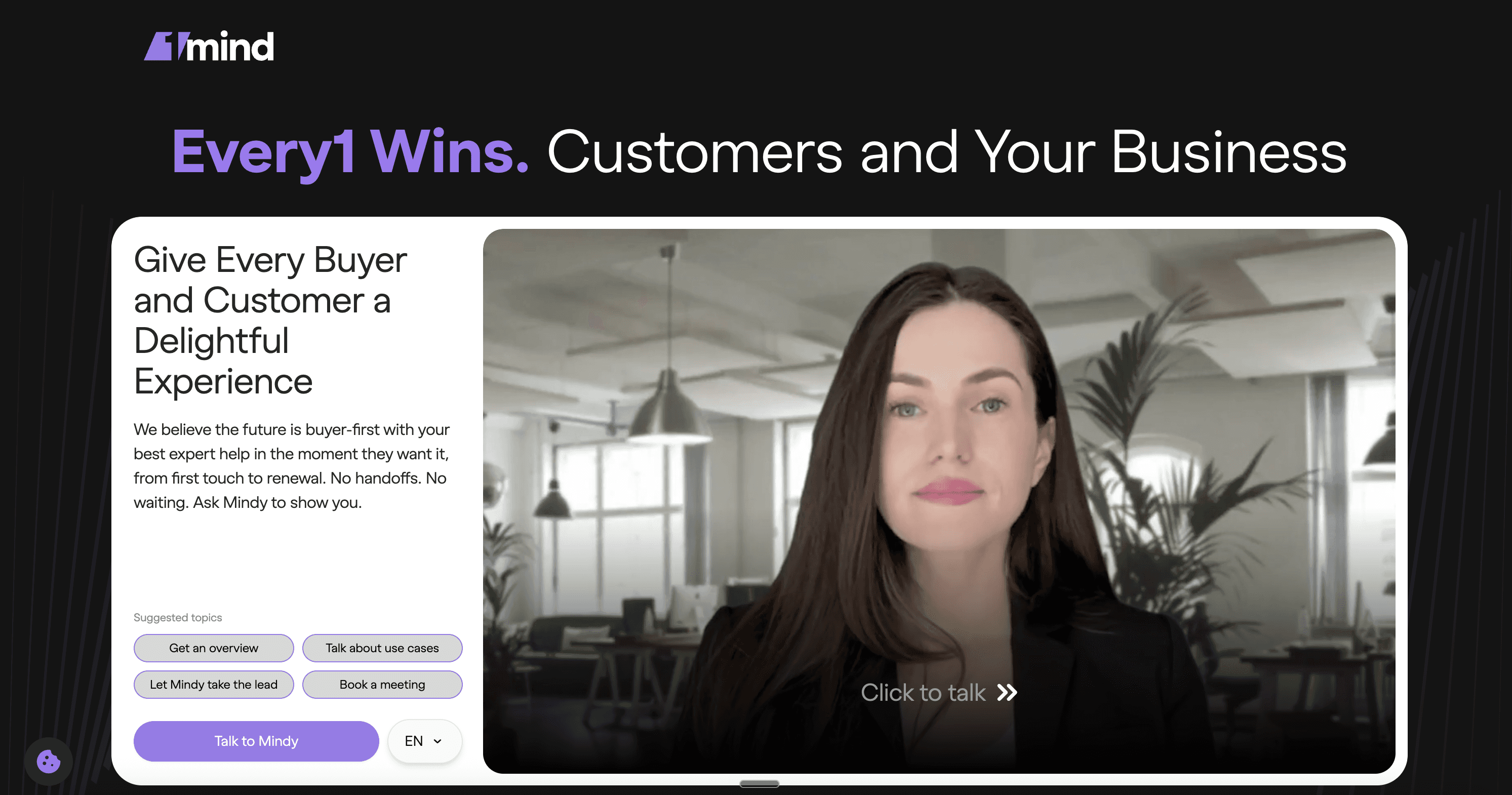
1mind deploys photorealistic AI avatars called Superhumans that join Zoom calls, run live product demos, handle objections in real time, and qualify leads end-to-end without a human in the loop. The company runs its own Superhuman, Mindy, who is credited with sourcing 76% of their pipeline. Average buyer conversations run about seven minutes, which points to real sales engagement instead of quick FAQ exchanges.
Drift sidenote: Drift, the former default inbound chat tool for B2B revenue teams, was officially shut down by Salesloft in March 2026 following price hikes, product stagnation, and a security breach affecting 700+ organizations. It is no longer available for new deployments.
Real user sentiment
Strong for deep, multi-minute qualification conversations.
Requires 1mind team support for initial backend configuration.
High buyer engagement, though avatar format may not suit every buying audience.
Trains once and applies consistently across all interactions.
User Review on G2
Here is what a verified user has to say about 1mind
“A dedicated, 24/7 multi-tasking lead qualification team”
What do they like best about 1mind?
“1mind is solving the universal problem of wasting expensive human capital on low-value qualification tasks. The Superhuman is truly proficient at retaining complex product knowledge. With 1mind, we train one Superhuman once, and that perfect, consistent knowledge is applied across every single prospect interaction, instantly. We also get full transcripts of every conversation, including those that did not convert, which is as valuable as the converted leads because it tells you exactly what the market is thinking.”
What do they dislike about 1mind?
“Right now, to get the absolute maximum performance, we rely on the 1mind team for certain backend tasks. Being able to give our internal team real-time backend access will allow us to immediately update the Superhuman’s training documents and adjust its knowledge base without an intermediary.”
Strengths
Photorealistic AI avatar that joins live calls and demos
Deep qualification depth with seven-minute average conversations
Trains once, applies consistently across all interactions
Limitations
No visitor deanonymization or anonymous traffic identification
No native multi-channel follow-up (email or LinkedIn)
Small G2 review base (7 reviews vs. category leaders with 1,000+)
Backend knowledge updates currently require 1mind team involvement
Who it is best for
Teams whose buyers are comfortable with video-first, avatar-led conversations and whose products translate well to a 20-minute AI-led demo with high inbound volume.
Verdict
A focused option for avatar-led inbound qualification. Teams migrating from Drift who need visitor deanonymization, SDR pounce alerts, or multi-channel follow-up (email and LinkedIn) will find those gaps here. Breakout covers all of them.
3. Intercom Fin (Acquired by Salesforce, June 2026): Best for Salesforce-Native Support Teams
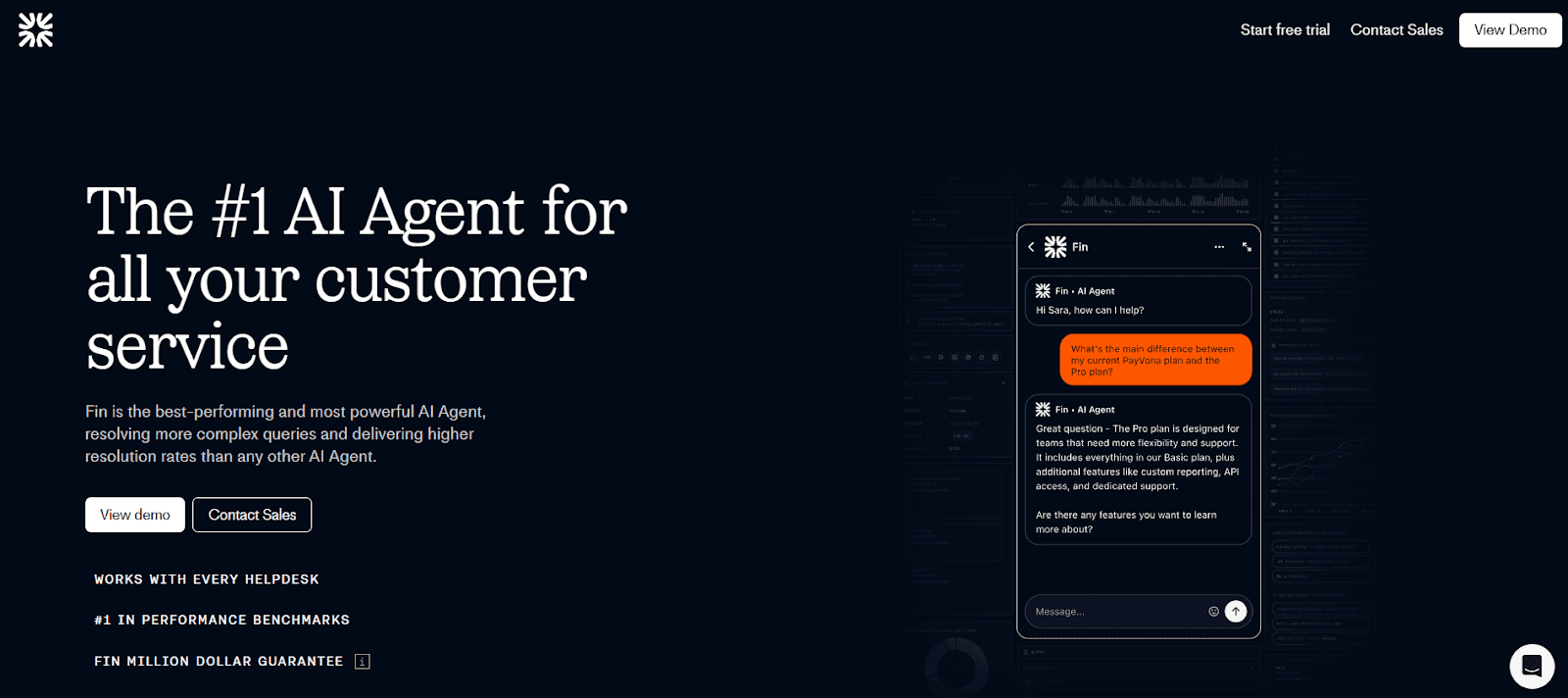
Update: Salesforce completed its acquisition of Intercom (Fin) in June 2026 for approximately $3.6 billion. Fin’s technology is being folded into Salesforce’s Agentforce platform. Teams on HubSpot, Marketo, or any non-Salesforce CRM should treat Fin as a Salesforce-dependent product going forward, with roadmap and pricing decisions controlled by Salesforce.
Intercom is not an AI SDR, though teams sometimes use it like one. Fin handles FAQs, ticket triage, and routing, and while it offers light qualification features, it is not built for pipeline generation. Acquisition note (June 2026): Salesforce acquired Intercom in June 2026. Teams running HubSpot or multi-CRM environments should factor in the Salesforce lock-in risk before committing to Intercom long-term.
Real user sentiment
Great for handling support tickets.
Not strong in aggressive qualifications.
More of a helpdesk AI than an SDR.
User Review on G2
Here is what Manish P. has to say about Fin by Intercom
“Simplified Customer Support with Learning AI”
What do they like best about Fin by Intercom?
“Fin by Intercom is highly accurate and adapts as we use it, freeing up resources and reducing the need for support agents while maintaining excellent service. It also improves customer experience by resolving inquiries quickly and was very easy to set up.”
What do they dislike about Fin by Intercom?
“Sometimes, Fin by Intercom doesn’t know the answer to a question, requiring escalation to a human agent.”
Strengths
Best in class for ticket resolution
Unified support, chat, and email management
Strong knowledge-base integration
Limitations
Not designed for sales-focused organizations
Limited outbound or inbound sales workflows
Minimal AI-led qualification depth
Verdict
Excellent for support automation. The June 2026 Salesforce acquisition introduces platform consolidation risk, particularly for teams not standardized on Salesforce. Limited for revenue teams needing a real pipeline.
Best Outbound AI SDR Agents (For Cold Outreach)
4. Artisan (Ava)
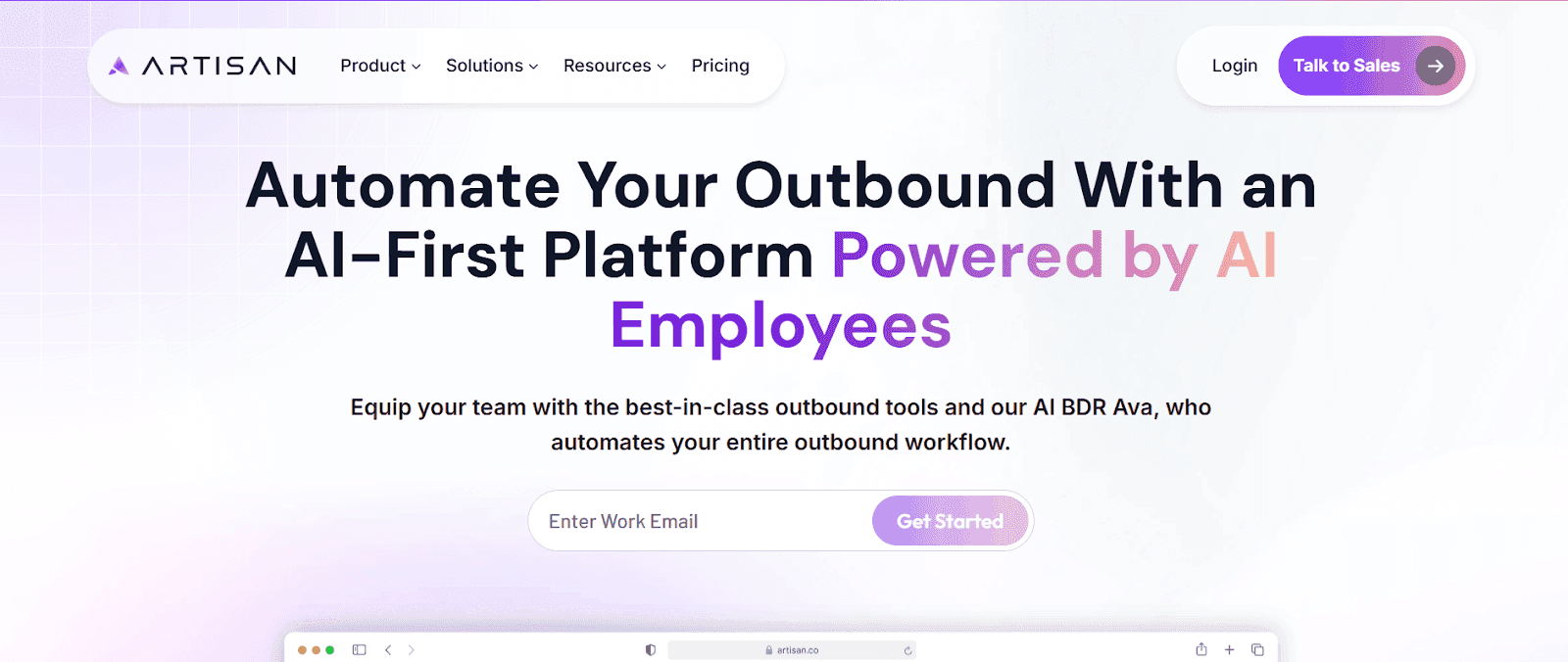
Artisan’s Ava simulates a BDR writing cold emails and LinkedIn outreach. The platform focuses on personalization at scale.
Real user sentiment
Email quality is surprisingly human.
Pricing is unclear.
Not built for inbound.
User Review on G2
Here is what David J. has to say about Artisan Sales
What do they like best about Artisan Sales?
“Artisan sharply cut down the time we used to spend on outbound email campaigns. Managing multiple campaigns and handling the large volume would have been impossible for us if we were still doing everything manually.”
What do they dislike about Artisan Sales?
“It would be great to have more trigger-based campaigns, like M&A’s.”
Strengths
Strong email personalization
Multi-account outreach management
Human-like tone adaptation
Limitations
Does not engage website traffic
Used only in top-funnel outbound
Setup and deliverability require tuning
When not configured, outbound gets overloaded
Verdict
Ideal for AI-powered cold outreach. Not useful for inbound conversion.
5. 11x.ai (Alice)
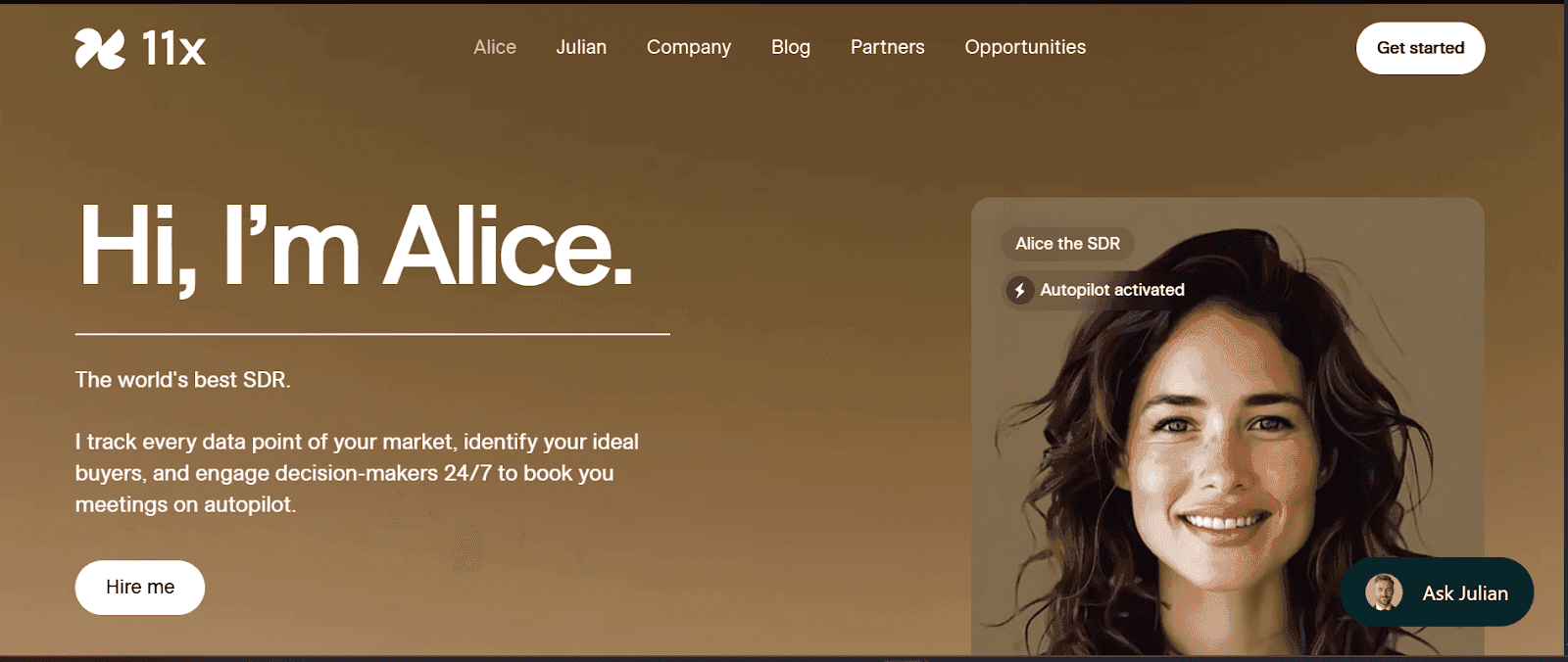
11x.ai automates outbound sequences across email and LinkedIn. Alice manages inbox replies, follow-ups, and sequences.
Real user sentiment
Strong multi-channel outreach.
Setup can be technical.
Requires time to fine-tune.
User Review on G2
Here is what Chris B. has to say about 11x
“11x has helped us fix our 2 biggest issues: speed to lead and 24hr lead outreach”
What do they like best about 11x?
“I love how customizable the agents are and the onboarding/continued customer service has been as solid as I’ve ever experienced with any kind of new tech roll out. When weighing the alternative of partnering with a full-blown 24/7 call centre, 11x has proven to be a better choice for us. Alice Qu on the deployments team has been extremely helpful related to our onboarding, initial launch, and our continued tweaks to the agents/use cases.”
What do they dislike about 11x?
“There is a lack of analytics and reporting in the current iteration, however there have been many updates to the platform since we’ve joined and I’m confident more capable reporting is coming soon. At the agent level we are able to get pretty granular, however we would benefit from more global reporting options spanning across all of the agents.”
Strengths
Strong multi-channel automation
Handles replies with context
Replicates human BDR workflows
Limitations
Not built for website conversion
Complex learning curve
No deanonymization or inbound flows
When not configured, spam risk increases.
Verdict
Effective outbound automation. Not an inbound SDR replacement.
6. AiSDR

AiSDR focuses on ease of use for cold email sequences. It is a good starting point, but it lacks deep AI reasoning.
Real user sentiment
Affordable and simple.
Integrations can be shallow.
Better for small teams.
User Review on G2
Here is what Koen.T has to say about AiSDR
“Efficient Emailing with Stellar Results”
What do they like best about AiSDR?
“AiSDR offers the right mix of features and pricing, making setup quick and the interface easy to use. Customer support is helpful, and the platform effectively scales outreach, automates emailing, and builds lead lists, boosting overall output.”
What do they dislike about AiSDR?
“AiSDR does not integrate with Constant Contact, requiring manual lead transfers. The overview feature could also be improved with a larger screen and easier ways to distribute leads to my team and connect to email inboxes.”
Strengths
Low learning curve
Budget-friendly
Basic outbound automation
Limitations
No advanced personalization
Shallow AI conversation depth
Not a full inbound or outbound AI SDR
When not configured, outreach becomes spammy
Verdict
A lightweight starter tool for outbound teams.
7. Reply.io (Jason AI)
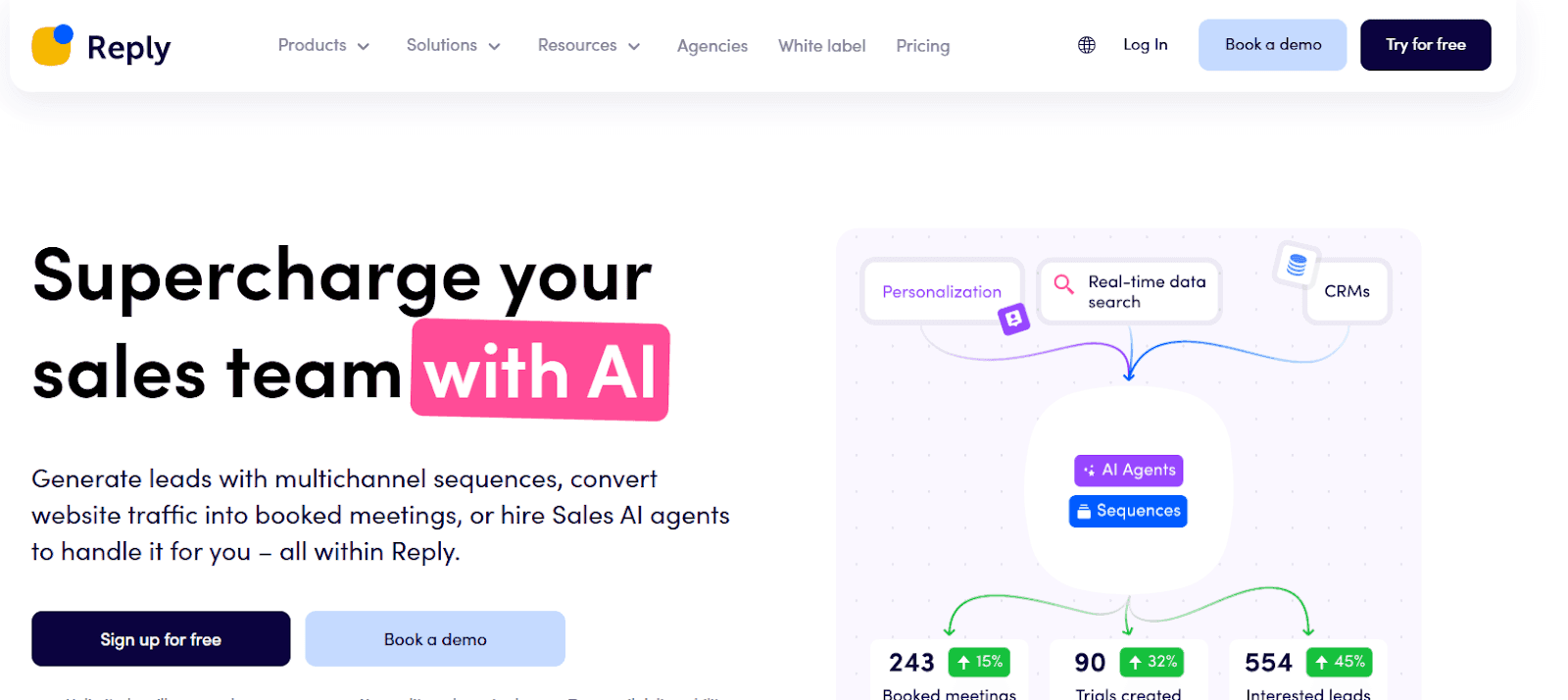
Jason AI works within Reply.io to personalize and automate cold outreach.
Real user sentiment
Best if you already use Reply.
Email quality is acceptable but not advanced.
Not built for inbound.
User Review on G2
Here is what Maggie L. has to say about Reply
“Efficient Outreach Automation with Smooth Integrations”
What do they like best about Reply?
“Reply.io helps organize outreach in one place and automate sequences that would otherwise take a lot of time to manage manually. I appreciate that the interface is pretty straightforward once you get used to it, and it does a good job of keeping contacts and tasks structured. It also integrates with other tools without much difficulty, making it usable for day-to-day use.”
What do they dislike about Reply?
“Some parts of Reply.io feel a bit clunky or outdated compared with other outreach platforms. The reporting can be limited at times, and certain features take longer to learn than expected. It works overall, but I’ve found myself needing extra steps or workarounds to get the results I want. It’s not bad, just not the smoothest experience.”
Strengths
Convenient for Reply.io customers
Handles multi-step outbound sequences
Decent personalization templates
Limitations
Locked into the Reply.io ecosystem
Limited reasoning capabilities
No inbound automation
Verdict
A good fit only if Reply.io is already your outbound platform.
Best Enterprise and CRM-Native Agents
8. Qualified Piper (Acquired by Salesforce, April 2026)

Update: Salesforce completed its acquisition of Qualified on April 1, 2026. Qualified’s Piper AI SDR is now being integrated into Agentforce, making Salesforce dependency structural at the ownership level instead of merely an architectural choice. Qualified now functions as a Salesforce-native capability, and teams not fully invested in the Salesforce ecosystem are categorically excluded. Piper handles routing, account intent scoring, and chat, but only within the Salesforce stack. This deepens its value for Salesforce-first enterprises, but makes it a poor fit for teams on HubSpot or mixed-CRM environments.
Real user sentiment
Strong Salesforce integration.
Extremely expensive.
Requires RevOps to maintain.
User Review on G2
Here is what Alex P. has to say about Qualified
“Exceptional Support and Easy Implementation”
What do they like best about Qualified?
“Ease of use, the implementation and support team is incredible. Implementation was simple and quick and the team really helped each step of the way. Our partners, Camille and Alise, are super knowledgeable and responsive. It’s nice to have support that wants to ideate, improve, and work towards your goals with you. The ROI is super easy to measure and this made an immediate impact on our pipeline.”
What do they dislike about Qualified?
“The backend of the platform can be a bit confusing to move around but our team has really helped us get the hang of it and is always happy to help when we can’t figure it out.”
Strengths
Deep Salesforce data sync
Strong alignment for ABM teams
Strong attribution reporting
Limits
High minimum cost, often around 70K or more
Long implementation timelines
Heavy reliance on Salesforce logic
Verdict
Now fully part of Salesforce following the April 2026 acquisition, Qualified is the strongest option for enterprises already standardized on Salesforce. For any team outside the Salesforce ecosystem, the dependency makes this a nonstarter.
9. Salesforce Agentforce
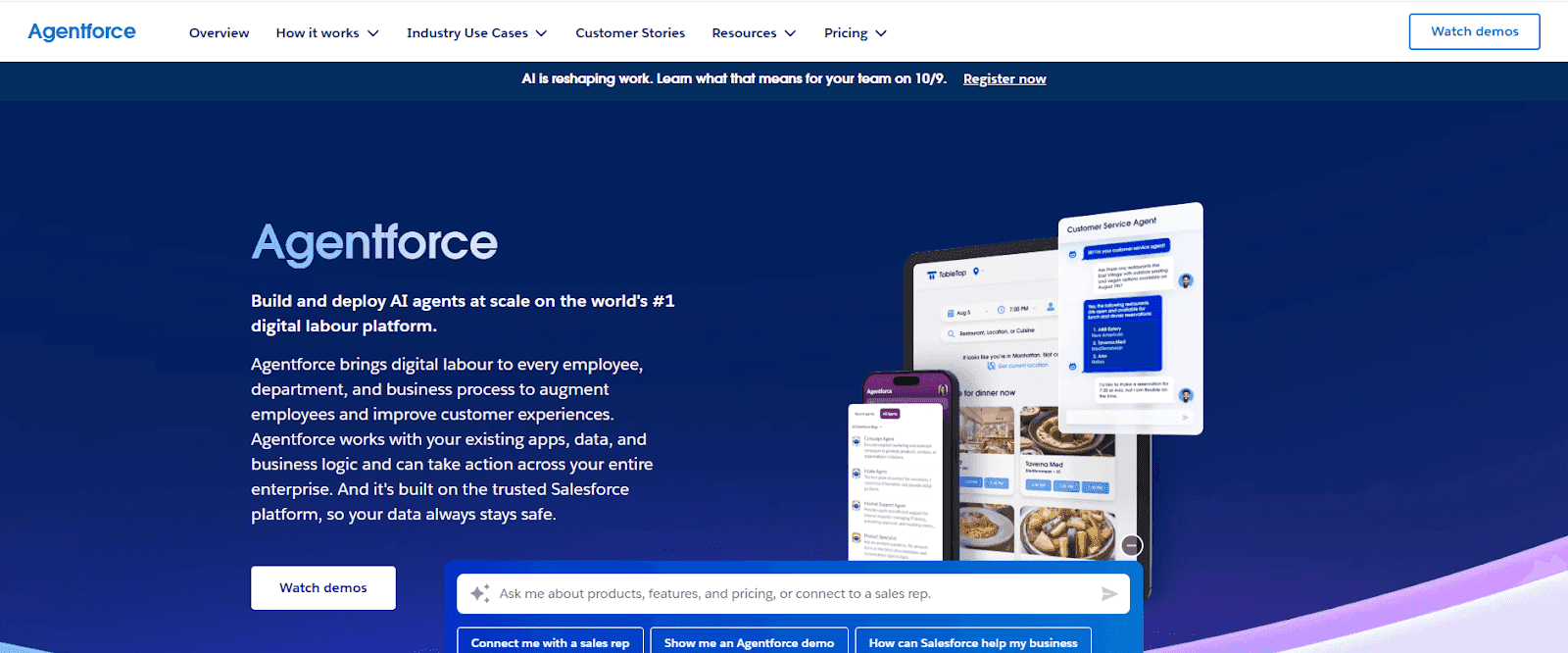
Agentforce extends Salesforce native AI capabilities with automated responses and routing.
Real user sentiment
Useful for Salesforce-first organizations.
Too complex for smaller teams.
Not flexible for mixed CRM environments.
User Review on G2
Here is what Ameer A. has to say about Salesforce Agentforce
“An Efficient Solution for Managing Customer Interactions”
What do they like best about Salesforce Agentforce?
“Salesforce Agentforce simplifies customer interactions and automates repetitive tasks. It integrates smoothly with Salesforce CRM, making lead and case management easy. The interface is intuitive, and automation features save time, boosting team productivity and improving customer experience.”
What do they dislike about Salesforce Agentforce?
“Agentforce can feel overwhelming due to many features and configuration options. Initial setup requires technical expertise, and some advanced features cost extra, which may be challenging for smaller teams. Despite this, it performs exceptionally well once configured.”
Strengths
Native Salesforce AI
Automatic routing within the CRM
Suitable for enterprise IT governance
Limits
Locked into Salesforce
High cost of ownership
Limited qualification capabilities compared to AI-first tools
Verdict
Enterprise-only. Not ideal for teams needing fast deployment or cross-CRM flexibility.
10. Clodura.ai
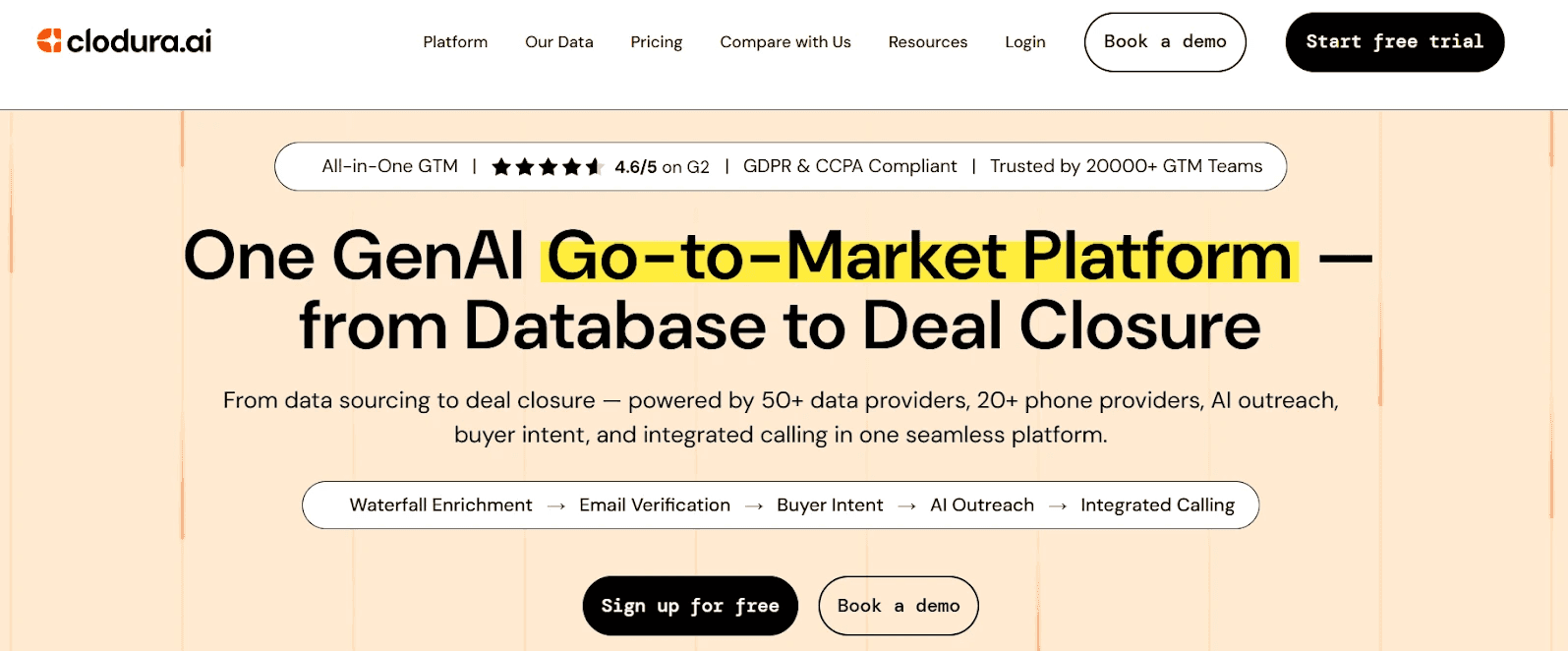
Clodura AI combines a large B2B contact database with AI-powered email, calling, and outreach workflows.
Real user sentiment
Great for teams needing both data + outreach automation.
Occasional outdated contacts require manual checks.
UI can feel complex for small teams.
User Review on G2
Here is what Amar R. has to say about Clodura.AI
“Very Useful for B2B Lead Generation and Outreach”
What do they like best about Clodura.AI?
“Clodura.AI collects data from multiple partners, making it more accurate. The email verification feature helps avoid bounced mails, and the browser extension makes prospecting easier. The app is beginner-friendly, easy to implement, and the customer service is good, with a demo provided within a day.”
What do they dislike about Clodura.AI?
“Some data can be outdated and needs cross-checking. The user interface could be smoother, especially when managing large searches.”
Strengths
Verified contact database with firmographics & intent signals
Automated multi-channel outreach (email + calls)
CRM integration and data enrichment
Limits
Not fully CRM-native; setup required
Overkill for small or simple sales teams
Data accuracy varies
Verdict
Ideal for enterprises or outbound-heavy teams seeking an all-in-one prospecting and engagement tool. Less suited for small teams or purely CRM-native workflows.
A Quick Comparison of the Top AI SDR Tools’ Core Capabilities
This comparison shows how each AI SDR platform approaches inbound, outbound, and enterprise workflows. The table gives a clear snapshot of focus, limitations, and pricing so you can quickly identify the platform that fits your sales motion.
Platform | Core Focus | Deanonymization | Pricing Model |
Breakout | Inbound conversion | Yes | Usage based |
1mind | Inbound avatar-led qualification | No | Seat based |
Intercom (Fin) | Inbound support automation | No | Seat based (add-on) |
Artisan (Ava) | Outbound prospecting | No | Seat based |
11x.ai | Outbound outreach | No | Seat based |
AiSDR | Outbound sequencing | No | Seat based |
Reply (Jason AI) | Outbound automation | No | Hybrid (seat plus usage) |
Qualified | Inbound enterprise pipeline (Salesforce-acquired April 2026) | No | Salesforce enterprise licensing |
Agentforce | CRM-native automation | No | Enterprise licensing |
Clodura AI | Outbound lead generation | No | Seat based |
Choosing the Right AI SDR Agent
Outbound tools help you add volume at the top of the funnel, but they do not convert the traffic that is already showing intent on your website.
Legacy chat tools let visitors ask questions, yet they still depend on humans to manage conversations and decide who is worth passing to sales.
Breakout solves this gap for teams that want a cleaner, more reliable inbound workflow. It identifies anonymous visitors, qualifies them with context, and books meetings without human effort.
If your goal is to turn website traffic into a predictable pipeline with less day-to-day overhead, Breakout is the AI SDR built for this motion.
Hire your first Inbound AI SDR today!
FAQs
1. What are the best AI SDR agents in 2026?
The best AI SDR agents in 2026 include Breakout, 1mind, Intercom Fin, Artisan, 11x.ai, AiSDR, Reply Jason AI, Qualified, Salesforce Agentforce, and Clodura AI. Breakout leads the inbound AI SDR category, 1mind covers avatar-led inbound conversations, and Artisan and 11x.ai are strong for outbound.
2. What does an AI SDR agent mean?
An AI SDR agent is an automated sales representative that engages leads, qualifies them using AI reasoning, and books meetings without the need for a human SDR. It handles tasks like routing, conversation, follow-ups, and pipeline creation.
3. What is an inbound AI SDR?
An inbound AI SDR converts website visitors into meetings. It reads intent, qualifies leads, and engages high-intent traffic in real time. Among the top options, Breakout is the leading inbound AI SDR because it adds deanonymization and full autonomy.
4. How do AI SDR tools compare to each other?
AI SDR tools differ by autonomy, inbound vs outbound focus, deanonymization, and pricing. For example:
Breakout vs Artisan vs 11x.ai
Breakout: Fully autonomous inbound agent
Artisan: Semi-autonomous outbound SDR
11x.ai: Outbound automation with inbox management
5. Are there any free AI SDR tools?
Most top AI SDR tools in 2026 offer free trials, not fully free plans. Tools like AiSDR, 11x.ai, and Reply have lower-cost tiers, while inbound-focused platforms like Breakout offer usage-based pricing.
6. What is the difference between outbound AI SDR and inbound AI SDR tools?
Outbound AI SDR tools (Artisan, 11x.ai, AiSDR) focus on cold outreach, emails, and LinkedIn sequences. Inbound AI SDR tools (Breakout, 1mind, Intercom Fin) convert warm website traffic and handle buying intent. Note: Drift shut down in March 2026 and is no longer available; 1mind is widely considered its successor for avatar-led inbound conversations. Qualified is now fully Salesforce-owned and functions as a Salesforce-native product.
7. Can AI replace human SDRs?
AI SDRs now automate 60 to 80 percent of SDR tasks like qualification, routing, and follow-ups. While AI handles repetitive tasks, human SDRs still excel at strategic conversations and closing deals.
8. Do AI SDR tools work on Linux or developer environments?
Yes, web-based AI SDR platforms like Breakout, 1mind, or AiSDR run on any OS, including Linux, since everything works inside the browser.
9. What is Hermes AI SDR?
Hermes AI SDR refers to smaller or newer AI SDR tools focused on outbound sequences. They are entry-level compared to leading platforms and may lack inbound automation or deanonymization.
10. Is MeetChase AI SDR a good option?
MeetChase is a lightweight AI SDR for simple lead routing. Good for small teams, but not strong enough for enterprise-level inbound automation or deep qualification compared to top AI sales representatives like Breakout or Qualified.
11. What is the best AI SDR for inbound conversion?
Breakout is considered the best inbound AI SDR because it adds deanonymization, real-time qualification, and fully autonomous meeting booking.
12. Which AI tools are best for SDR teams?
Top AI tools for SDRs include Breakout (inbound), Artisan (outbound personalization), 11x.ai (automated outreach), and Qualified (Salesforce-native).
13. How do automated sales agents work?
Automated sales agents use AI to engage prospects, ask qualification questions, detect buying intent, and schedule meetings without a human SDR.
14. Which AI SDR provides the fastest setup?
Most users report that Breakout takes only a few hours to set up, compared to Drift or Qualified, which require heavy RevOps involvement.
15. Are AI sales representatives good for small teams?
Yes, AI SDRs are especially beneficial for small teams because they reduce the need for hiring SDRs and automate the entire inbound workflow.
16. How does an AI SDR agent work for inbound demand generation?
An AI SDR agent converts website traffic into pipeline by identifying who is visiting, reading behavioral signals, and starting personalized conversations in real time. For inbound demand generation, the agent watches for high-intent actions (specific pages visited, time on site, form interactions) and opens a conversation before the buyer clicks away. It asks qualification questions, captures budget, authority, need, and timeline signals, and books a meeting directly into a sales rep’s calendar. The key advantage over traditional chat tools is autonomy: no human needs to monitor the queue. The AI reads each visitor’s context, adapts its conversation accordingly, and only routes to a human rep when the lead meets your qualification criteria. Platforms like Breakout add visitor deanonymization, so the AI can open a personalized conversation even before the visitor fills out a form.
17. What is the difference between an AI chat agent and an AI SDR for inbound lead qualification?
An AI chat agent answers questions. An AI SDR qualifies leads and books meetings. The distinction matters because most chat tools (Intercom Fin, standard live chat) are built for support: they resolve FAQs, route tickets, and escalate to a human when they hit a limit. They respond reactively to what a visitor asks. An AI SDR operates with a different goal: it proactively identifies buying intent, asks qualification questions, and moves the conversation toward a meeting. It reads signals instead of waiting for questions. An AI SDR also connects to your CRM, writes back lead scores, BANT data, and conversation context, and triggers follow-up sequences without human input. If your goal is pipeline generation instead of support deflection, you need an AI SDR, not a chat agent.
18. How do AI SDR tools handle real-time prospect discovery and hand-off to human sales reps?
Real-time prospect discovery starts the moment a visitor lands on your site. The AI SDR identifies the company behind the visit through IP resolution and firmographic matching, cross-references it against your CRM and target account list, and scores the visit based on the pages visited and time spent. When the score crosses a threshold, the AI opens a conversation. During that conversation, it captures qualification signals and confirms meeting intent. Hand-off to a human sales rep happens one of two ways: the AI books a meeting directly onto the rep’s calendar using round-robin routing, or it fires a real-time Slack or CRM notification so the rep can join the conversation live. Breakout handles both paths: it books meetings autonomously and sends rep alerts with full conversation context attached so the rep walks in prepared.
19. How do AI inbound SDR tools compare to human SDRs for pipeline generation in 2026?
In 2026, AI inbound SDR tools have taken over the high-volume, time-sensitive parts of pipeline generation that human SDRs struggle to cover at scale. AI responds to inbound signals in seconds, operates 24/7 without turnover, and handles qualification conversations across every visitor simultaneously. Human SDRs, by contrast, typically respond within hours and can cover only a fraction of daily website traffic. Teams using AI SDRs like Breakout report replacing 60 to 80 percent of their inbound SDR workload while improving response speed and conversation volume. The gap widens when you account for the 99% drop-off that occurs during the typical 8 to 12 week research phase. AI shortens that window by engaging buyers at the exact moment they show intent, while a human SDR working a queue may not reach the same buyer until the window has closed. Human SDRs still own complex negotiation, enterprise relationship-building, and late-stage deal conversations. The most effective 2026 GTM teams run AI SDRs for top-of-funnel qualification and hand off only confirmed, meeting-ready leads to human reps.
20. What are the top AI-powered lead nurturing tools for B2B websites in 2026?
AI-powered lead nurturing on B2B websites refers to automated systems that identify, engage, and follow up with visitors across multiple channels without a human managing each interaction. The leading tools in 2026 fall into two categories: inbound AI SDRs that engage visitors in real time, and outbound sequencing tools that maintain contact after the session ends. Breakout covers both: it identifies anonymous visitors, opens personalized conversations in real time, then follows up with warm email and LinkedIn sequences when visitors leave without booking. For teams focused purely on outbound nurture sequences, Artisan and 11x.ai automate multi-step email and LinkedIn follow-ups at scale. Reply.io handles automated multi-step outreach for teams already using its sequencing tool. The key differentiator between nurturing tools is what triggers the outreach: AI-native inbound tools act on behavioral signals like page views and time on site, while outbound tools rely on manually defined contact lists. For B2B teams with meaningful website traffic, inbound-triggered nurturing generates higher-intent conversations than outbound sequences because the trigger is a real buying signal rather than a cold contact.
21. How do you build an agentic sales workflow?
An agentic sales workflow replaces manual handoffs between tools and people with AI agents that act autonomously across the full sales cycle, from the first signal to the booked meeting. Building one involves five layers. First, signal detection: configure your AI SDR to watch for intent signals including website visits, form submissions, content downloads, and event attendance. Second, lead scoring and qualification: define your ICP criteria so the AI scores incoming signals and opens conversations only with accounts that match. Third, autonomous engagement: the AI opens conversations, asks qualification questions, handles objections, and confirms meeting intent without a human monitoring the queue. Fourth, meeting booking: integrate your calendar so the AI books confirmed leads directly without a separate scheduling step. Fifth, CRM sync: route qualified leads to your CRM with full conversation context attached so reps walk into calls with the complete picture. Tools like Breakout handle all five steps as a single connected workflow for inbound signals. For teams that need to automate outbound prospecting as well, Breakout’s Spoc agent connects across 200+ GTM tools and runs recurring tasks like list building, sequence setup, and follow-up without manual intervention between steps.