All Blogs
A short read on why AI SDRs are changing how sales teams work.

Evan Marshall
Senior Growth AI Strategist
Published On
For a practical definition of AI SDRs and the work they can take on, see our complete guide. AI SDR is quickly becoming the default way modern sales teams generate pipeline.
Instead of relying on human SDRs to manually follow up, qualify leads, and book meetings, AI SDR handles these steps instantly and at scale.
This shift is not driven by hype. It is driven by performance.
Traditional SDR teams are built around sequences, queues, and follow-ups. That model introduces a delay at every step.
AI SDRs remove that delay.
They engage inbound visitors the moment intent appears, run real-time qualification, and move qualified leads to meetings without friction.
The result is clear:
Faster response
Higher conversion
Less dependence on outbound
In a market where buyers expect immediate engagement, speed is no longer optional.
It is the difference between capturing demand and losing it.
This is why more B2B teams are moving away from traditional SDR models and adopting inbound AI SDRs to drive pipeline more efficiently.
Why the Traditional SDR Model Is Breaking in 2026
The traditional SDR model is not failing because teams are doing a bad job. It is failing because the environment has changed.
Buyers behave differently.
Channels are saturated.
Speed expectations are higher.
And the old model was not built for this.
1. Outbound is saturated
Outbound used to be predictable.
Build a list. Send emails. Book meetings.
That playbook still exists. It just does not perform the same way.
Cold email response rates are declining
Buyers are overloaded with outbound messages
Personalization does not scale effectively
CAC keeps increasing as competition rises
You can still generate pipeline through outbound.
But it now takes significantly more effort to get the same result. And for most teams, that trade-off is getting harder to justify.
2. Speed is now the competitive advantage
In today’s buying journey, timing matters more than messaging.
The first response usually wins.
When a buyer shows intent, they are actively evaluating options.
If they do not get an immediate response, they move on.
This is where traditional SDR teams struggle.
Leads sit in queues
Follow-ups happen with delays
Engagement depends on rep availability
Humans cannot operate in real time at scale.
That gap between intent and response is where most conversions are lost.
3. Inbound is growing, but conversion is not
Most B2B teams have solved for traffic.
They invest in:
Paid acquisition
Content and SEO
Website optimization
Traffic is increasing across the board.
But pipeline is not growing at the same rate.
Why?
Because inbound is still handled like outbound.
Visitors are pushed to forms
Leads enter a queue
SDRs follow up later
By the time that follow-up happens, intent has already dropped.
The problem is not demand.
It is what happens after someone shows interest.
This is where Breakout changes the equation.
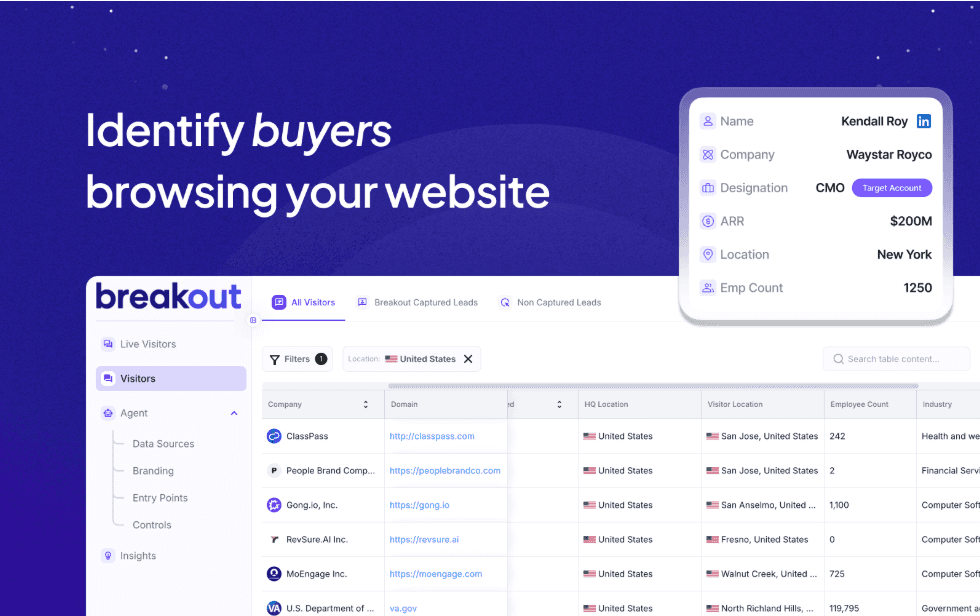
Instead of capturing leads and delaying engagement, Breakout acts in the moment of intent. It engages visitors instantly, qualifies them through conversation, and books meetings in real time.
Inbound is no longer something you process later. It becomes something you convert immediately.
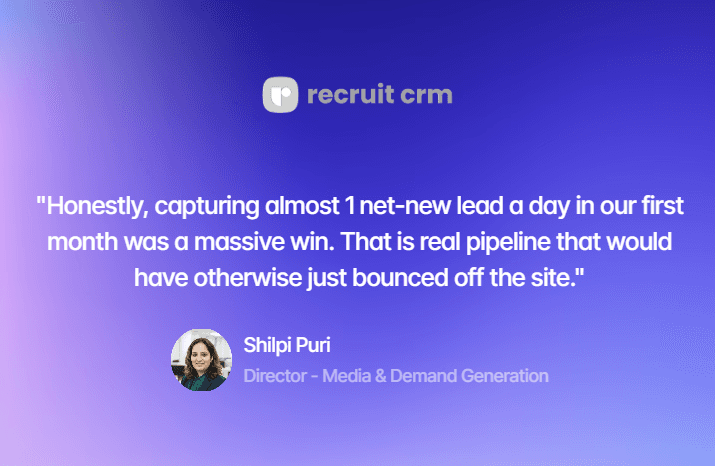
See how Breakout helped RecruitCRM
In the first month, Breakout engaged 860+ passive visitors and generated 50+ net-new pipeline opportunities, with 83% after-hours coverage.
RecruitCRM replaced Intercom to turn their website from a reactive support channel into a consistent, always-on revenue engine.
4. SDR hiring is expensive and inefficient
Scaling SDR teams looks straightforward on paper.
Hire more reps. Generate more pipeline.
In reality, it is much more complex.
New hires take time to ramp
Attrition resets productivity
Performance varies across individuals
Even with a strong team, output is inconsistent.
And costs scale linearly with headcount.
More SDRs means higher fixed costs. But not necessarily better conversion.
The pattern across all of this is clear.
The traditional SDR model is built on:
Delayed response
Manual effort
Linear scaling
Those constraints no longer hold up in a market that rewards speed, consistency, and real-time engagement.
AI SDR vs Traditional SDR Teams
The difference between an AI SDR and a traditional SDR team is not subtle.
It shows up in how fast you respond, how many leads you handle, and how much pipeline you actually convert.
Here’s how they compare in practice:
Factor | AI SDR | Traditional SDR |
Response time | Instant | Delayed |
Availability | 24/7 | Working hours |
Scale | Handles conversations in parallel | Works leads sequentially |
Cost | Marginal as you scale | Increases with headcount |
Consistency | Same experience every time | Varies by rep |
Conversion | Higher | Lower |
This is not just about efficiency. It is about timing.
When a lead shows intent, even a short delay reduces the chance of conversion. Traditional SDR workflows are built around that delay. AI SDRs are not.
AI SDRs remove delay. That is where conversion is won.
5 Reasons Why Really AI SDRs Are Replacing SDR Teams
This shift is not about replacing people for the sake of efficiency. It is happening because AI SDRs consistently drive better outcomes at the top of the funnel.
Here are the five reasons behind it.
1. Real-time engagement converts intent instantly
Intent has a short lifespan.
When a buyer lands on your website, they are actively exploring. That is the highest-value moment to engage.
Traditional SDR teams respond later. AI SDRs respond immediately. That one difference changes everything.
Instead of chasing leads after they drop off, AI SDRs convert them while the intent is still strong.
This is where most of the conversion lift comes from.
2. Unlimited scalability without hiring
Scaling SDR teams means hiring more people. More people mean more cost, more training, and more management.
AI SDRs remove that constraint.
They can:
Handle thousands of conversations at once
Engage every visitor without prioritization
Scale instantly without adding headcount
Pipeline generation becomes tied to demand, not team size.
3. Consistent qualification across all leads
In a human-led setup, qualification depends on the rep.
Some ask better questions
Some miss key signals
Some rush conversations
AI SDRs remove this variability.
Every lead goes through:
The same qualification logic
The same structured flow
The same level of rigor
This improves lead quality and makes outcomes more predictable for sales teams.
4. Built for conversion, not activity metrics
Traditional SDR teams are measured on activity.
Calls made
Emails sent
Tasks completed
But activity does not guarantee results.
AI SDRs shift the focus to outcomes:
Meetings booked
Qualified pipeline generated
Conversion rates improved
This aligns the system with what actually matters to revenue teams.
5. Matches modern buyer expectations
Buyer behavior has changed.
Today’s buyers expect:
Instant responses
Low-friction interactions
Control over how they engage
They do not want to fill out forms and wait for follow-ups.
They want answers now.
AI SDRs meet that expectation.
Tools like Breakout take this further by operating directly at the moment of intent.
They engage visitors in real time, qualify them through conversation, and move them to booked meetings without delay.
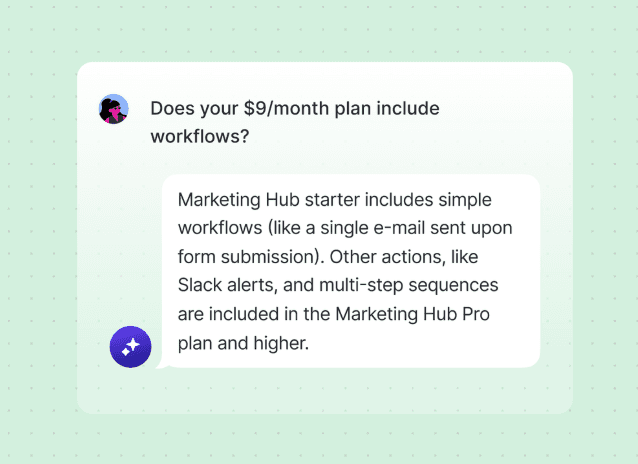
That alignment between buyer behavior and sales execution is what makes AI SDRs so effective.
Who Should Replace SDR Teams with AI SDRs
Not every company needs to replace SDR teams immediately.
But for certain teams, the impact is direct and measurable.
If your pipeline depends on inbound demand, this shift becomes hard to ignore.
1. B2B SaaS companies
B2B SaaS teams already invest heavily in driving traffic.
Paid campaigns
Content and SEO
Product-led growth
The gap is usually not just demand.
It is conversion.
AI SDRs help capture and convert that demand in real time,
instead of letting it drop off between form fills and follow-ups.
2. High inbound traffic businesses
If your website gets consistent traffic, you are already sitting on an opportunity.
The question is how much of that traffic actually turns into pipeline.
Most teams:
Capture a small percentage of visitors
Lose high-intent users due to delays
Depend on SDR follow-ups to recover intent
AI SDRs engage every visitor instantly. They turn more of that traffic into qualified conversations and meetings.
3. Product-led or demo-led funnels
If your growth depends on demos, speed becomes critical.
Users explore on their own
Interest peaks during product discovery
Delays reduce the likelihood of booking
AI SDRs remove friction from this process.
They:
Engage users while they are evaluating
Qualify them based on context
Book meetings without back-and-forth
This shortens the path from interest to conversion.
4. Lean sales teams
Smaller teams often face a trade-off.
Either invest in hiring SDRs or accept slower pipeline growth
AI SDRs remove that trade-off.
They allow lean teams to:
Operate at a larger scale
Maintain consistent qualification
Generate more pipeline without increasing headcount
If your team fits any of these categories, the bottleneck is likely not demand. It is how quickly and effectively you convert it. That is exactly where AI SDRs create an advantage.
Breakout turns inbound traffic into pipeline, instantly
At this point, the shift is clear.
The biggest constraint in traditional SDR models is not effort.
It is delay.
Leads come in, sit in a queue, and get followed up later.
By then, intent has already faded.
This is exactly the gap Breakout is built to solve.
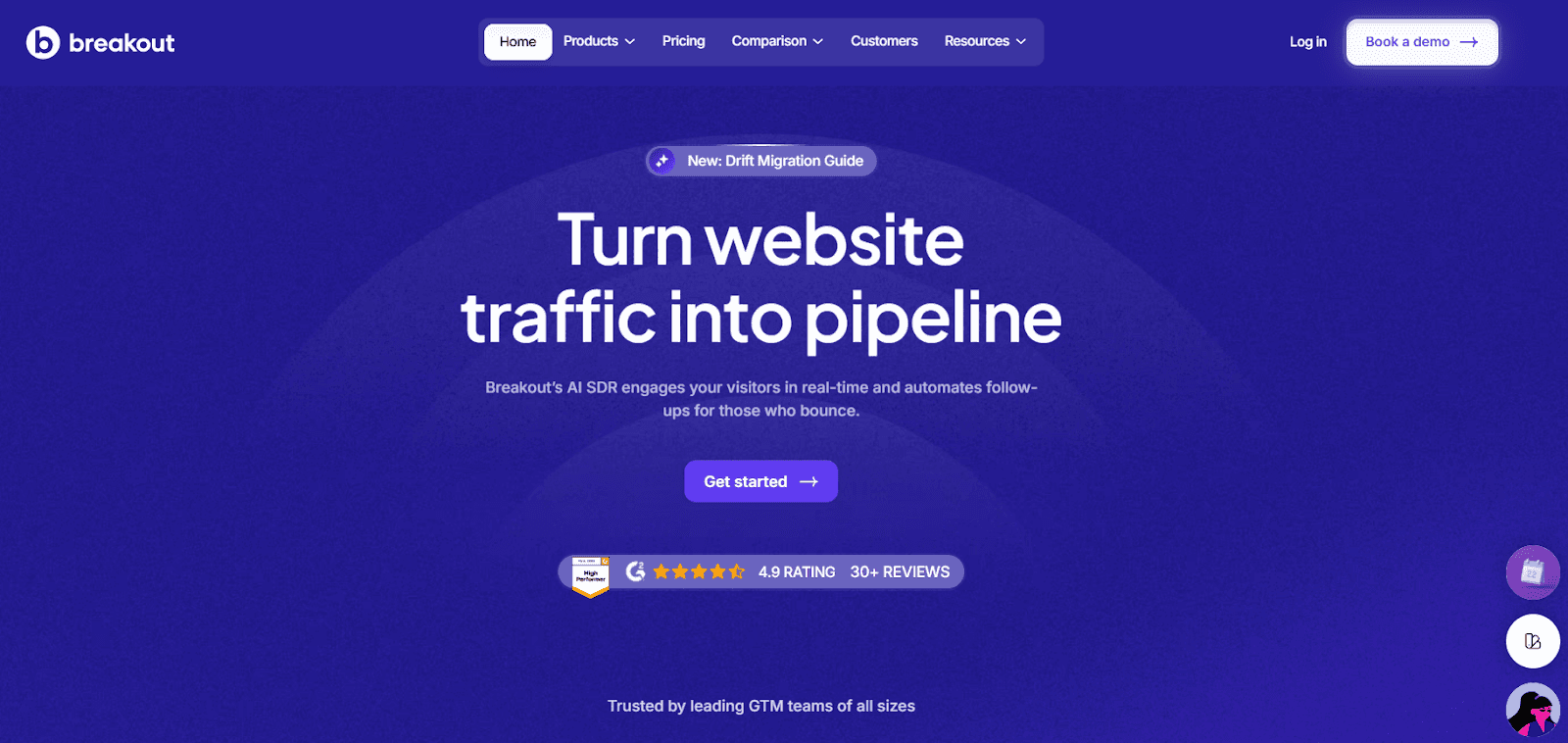
Instead of waiting for leads to convert themselves,
Breakout engages them the moment they show intent.
It starts a conversation in real time,
qualifies the lead as the interaction unfolds,
and moves them to a booked meeting without friction.
If the goal is more meetings, the lever is not more outreach.
It is faster conversion.
Breakout removes the delays that typically exist between:
A visitor landing on your site
A lead getting qualified
A meeting getting scheduled
And that changes how pipeline gets generated.
What makes this approach different is how it replaces traditional steps:
Real-time engagement instead of form-based capture
Conversation-led qualification instead of static fields
Pipeline generation instead of pipeline processing
The result is simple.
You stop collecting leads and hoping they convert. You start converting them while intent is still high.
Convert faster. Win more pipeline.
Traditional SDR teams are limited by speed, scale, and cost. Every step, from follow-up to qualification, introduces delay.
AI SDRs remove that delay.
They engage instantly, qualify in real time, and convert demand while intent is still high.
That is what aligns with how modern buyers behave today.
Buyers expect immediate interaction. If you are not first, you are often out.
This is no longer about working harder. It is about responding faster and converting smarter.
Shift from passive lead capture to active conversion. Breakout turns inbound traffic into pipeline the moment intent appears.
FAQs
1. What is SDR in AI?
An AI SDR (AI sales development representative) is a tool that automates lead engagement, qualification, and meeting booking.
It responds instantly, runs structured conversations, and converts inbound interest into pipeline without manual follow-ups.
2. What are the best AI SDRs?
The best AI SDRs focus on real-time engagement and conversion.
Breakout → Built for inbound conversion and instant engagement
Qualified → Strong in product-led environments
Conversica → Known for AI-driven email follow-ups
The right tool depends on whether you want to capture leads or convert them.
3. Do AI SDRs work?
Yes. AI SDRs are effective, especially for inbound-driven teams.
They improve response time, increase lead coverage, and drive higher conversion rates by engaging prospects when intent is highest.
4. Is AI SDR better than manual SDR?
AI SDRs outperform in speed, scale, and consistency.
Manual SDRs perform better in complex conversations and relationship-driven sales. Most teams see the best results when both work together.
5. Can AI replace SDRs?
AI replaces repetitive tasks like outreach, follow-ups, and initial qualification.
It does not replace strategic roles. SDRs will shift toward higher-value work like deal progression and closing support.
6. Can AI SDR handle complex sales conversations?
AI SDRs are effective for early-stage engagement and qualification.
More complex conversations, negotiations, and closing still require human involvement.
7. How does an AI SDR improve conversion rates?
AI SDRs engage instantly when a visitor shows intent.
This reduces drop-offs, shortens response time, and increases the likelihood of converting leads into meetings.
8. Who should use an AI SDR?
AI SDRs are best suited for:
B2B SaaS companies
High inbound traffic businesses
Product-led or demo-led funnels
Lean sales teams
If your pipeline depends on inbound conversion, AI SDRs create an immediate impact.
9. Do AI SDRs replace outbound sales?
No. They reduce reliance on outbound.
AI SDRs focus on converting inbound demand, while outbound can still support pipeline generation.
10. What are the 4 types of AI?
AI is broadly categorized into four types:
Reactive machines → Basic systems with no memory
Limited memory AI → Uses past data (most modern AI, including AI SDRs)
Theory of mind AI → Understands emotions and intent (still evolving)
Self-aware AI → Hypothetical, not yet achieved
Most AI SDRs today operate as limited memory systems designed for real-time decision-making.