
All Blogs
A simple explanation of what an AI SDR does and when it helps.

Evan Marshall
Senior Growth AI Strategist
Published On
Hiring more SDRs is no longer the default way to scale pipeline in 2026.
More headcount increases activity. It does not automatically increase leverage.
In many cases, it increases cost faster than it increases conversion.
At the same time, agentic AI has matured quickly. For an overview of how AI SDRs work, see the complete guide. What began as assistive copilots now operate as autonomous systems capable of taking action.
AI handles customer support, optimizes marketing performance, and runs outbound workflows without waiting for human input.
Sales is moving in the same direction.
By 2026, most B2B buyer interactions take place in digital channels.
Buyers complete the majority of their research before ever speaking to sales. Nearly 70% of the journey is self-directed. They compare vendors anonymously, align internally, and often build a shortlist before submitting a form.
That shifts where influence happens.
Your website becomes the primary evaluation environment. Yet the average B2B site converts only a small fraction of its traffic.
You invest to generate demand. But conversion lags.
Speed becomes the deciding factor.
Responding within minutes meaningfully increases qualification rates. Still, many teams reply hours or days later because leads require manual review, enrichment, and routing.
Human bandwidth turns into a constraint.
This is where AI SDRs step in:
It operates continuously
It responds in seconds
It scales without adding headcount
In 2026, this is not optional infrastructure. It is a competitive advantage.
This guide explains what an AI SDR is, how it works, where it fits in your stack, and what separates real AI SDR systems from rebranded chat tools.
What is an AI SDR?
An AI SDR is an artificial intelligence system that performs the core responsibilities of a sales development representative.
It identifies potential buyers, qualifies them against defined criteria, engages them with relevant messaging, and moves them toward booking a meeting.
This is what separates an AI SDR from basic automation.
Traditional SDR workflows rely on manual prospecting, static sequences, and human follow-up. An AI SDR operates continuously, analyzes signals in real time, and decides the next best action without waiting for a rep.
It changes how qualification happens.
Instead of reviewing leads one by one, the system evaluates firmographics, behavior, engagement history, and intent signals instantly. High-fit accounts are prioritized. Low-fit traffic is filtered out.
It also changes response speed.
An AI SDR engages when interest is active, not hours later. The interaction reflects what the buyer is researching, whether that is pricing, integrations, security, or product fit.
This reduces lag between intent and conversation.
It also shifts the role of human SDRs.
Reps focus on complex objections, strategic accounts, and deeper discovery. The repetitive tasks, initial qualification, and routine follow-ups are handled autonomously.
In 2026, an AI SDR is not just a chatbot.
Chatbots respond to prompts. AI SDRs interpret signals, make qualification decisions, personalize engagement, and orchestrate routing across systems.
Some platforms extend this further. For example, systems like Breakout identify anonymous visitors, engage them on-site with contextual messaging, and book meetings automatically while syncing everything to the CRM.
That is how AI SDRs move from automation to revenue infrastructure.
To Put It in Perspective, Let’s Compare AI SDRs and Human SDRs
Both AI and human SDRs aim to create a qualified pipeline.
They just operate under different constraints.
AI SDRs: Built for Scale and Speed
AI SDRs process large volumes of intent signals instantly. They qualify leads against ICP criteria in real time and prioritize without delay.
They respond in seconds, not hours.
Follow-ups do not depend on calendar availability or task queues. Every visitor receives structured, timely engagement.
Performance stays consistent.
No fatigue
No missed handoffs
No variable output
Cost structure also shifts.
AI operates continuously without incremental salary, ramp time, or capacity ceilings.
AI SDRs are strongest at detection, first-touch engagement, qualification, routing, and repeatable workflows.
Human SDRs: Built for Nuance and Depth
Human SDRs interpret tone, hesitation, and subtle context in live conversations. They adjust messaging dynamically when discussions move off-script.
They manage complex objections.
They navigate internal politics within buying committees.
They build trust through conversation, not automation.
When a deal becomes strategic, human judgment matters more than speed.
What Changes in 2026
The comparison is not replacement versus retention.
It is task allocation.
AI SDRs handle high-volume, time-sensitive, and rules-based work. Humans focus on strategic accounts, complex discovery, and deeper qualification.
The highest-performing teams combine both layers.
AI captures and qualifies intent immediately. Humans convert high-value conversations into revenue.
AI SDR vs Human SDR: Cost, Scalability, Accuracy, and More
When teams evaluate AI SDRs, the real question is not “human or AI.”
The real question is how each performs across the metrics that drive the pipeline: cost, speed, scale, and output quality.
Here is a practical side-by-side view.
Category | AI SDR | Human SDR |
Cost | Fixed software investment. No commissions, benefits, or overtime. | Salary, incentives, benefits, hiring costs, and management overhead. |
Scalability | Handles high volume instantly without performance drop. | Scales only by hiring and training more reps. |
Speed to Lead | Engage in seconds, any time of day. | Depends on workload, time zones, and availability. |
Consistency | Delivers structured messaging every time. | Performance varies by experience and energy levels. |
Qualification Accuracy | Applies ICP rules and behavioral data uniformly. | Applies judgment, which can vary rep to rep. |
Emotional Intelligence | Limited to programmed sentiment detection | Strong at reading tone, nuance, and context. |
Complex Conversations | Best for repeatable, structured interactions. | Stronger in high-stakes or nuanced discussions. |
Availability | Always on, across geographies. | Limited to working hours and capacity. |
Ramp Time | Deploys quickly after configuration. | Requires hiring, onboarding, and training cycles. |
Pain Points AI SDRs Address for B2B Teams in 2026
AI SDR adoption is not driven by hype. It is driven by operational friction.
Most B2B revenue teams are not struggling with demand. They are struggling with execution gaps.
Signals go unworked
Follow-ups slow down
Qualification varies
Costs rise faster than pipeline
These issues compound over time.
What looks like a conversion problem is often a workflow problem. What feels like a headcount gap is usually a leverage gap.
Below are the core pain points AI SDRs are designed to solve.
1. Inconsistent Speed-to-Lead
Leads often wait in queues before qualification. Response times depend on rep workload and time zones. High-intent opportunities cool off before the first touch.
AI SDRs respond instantly. Every signal receives immediate evaluation and engagement.
2. High Cost of Scaling Headcount
Adding SDRs increases salary, commission, management overhead, and ramp time. Scaling pipeline becomes tied to hiring cycles.
AI SDRs scale activity without proportional payroll growth. Capacity expands without adding seats.
3. Missed or Unworked Intent Signals
Intent data lives across tools.
Website visits, email engagement, and content downloads often go untracked.
AI SDRs continuously monitor and prioritize signals. High-fit accounts are surfaced and acted on automatically.
4. Manual Qualification Bottlenecks
Reps spend hours researching accounts and checking ICP fit. Qualification varies based on experience and attention to detail.
AI SDRs apply structured qualification logic uniformly. Every lead is evaluated against the same criteria.
5. Follow-Up Gaps
Human follow-up is inconsistent.
Tasks slip. Context gets lost between handoffs. AI SDRs maintain consistent outreach and preserve context across touchpoints.
6. Pipeline Volatility
Early-stage pipeline fluctuates with rep performance and capacity.
AI SDRs provide steady, predictable activity across accounts, reducing dependence on individual output.
7. SDR Burnout and Turnover
Repetitive prospecting and qualification tasks lower morale. High churn resets productivity.
AI SDRs absorb routine work. Human SDRs focus on complex conversations and revenue-driving interactions.
These challenges explain why AI SDRs are becoming core infrastructure for modern revenue teams.
The next question is practical.
Which platforms actually solve these problems in 2026, and how do they differ?.
Below is a structured breakdown of the leading AI SDR platforms and where each fits in a modern GTM stack.
5 Leading AI SDR Tools Powering Pipeline in 2026
AI SDR platforms in 2026 generally fall into two operating models.
Some are built to convert inbound demand by engaging website visitors and acting on real-time buying signals.
Others focus on automating outbound prospecting across email and LinkedIn at scale.
Understanding this distinction is critical because the value you get depends on whether your growth motion is inbound-led, outbound-heavy, or a combination of both.
Below is a structured breakdown of the leading platforms in 2026.
1. Breakout (All-in-One Inbound led Outbound AI SDR)
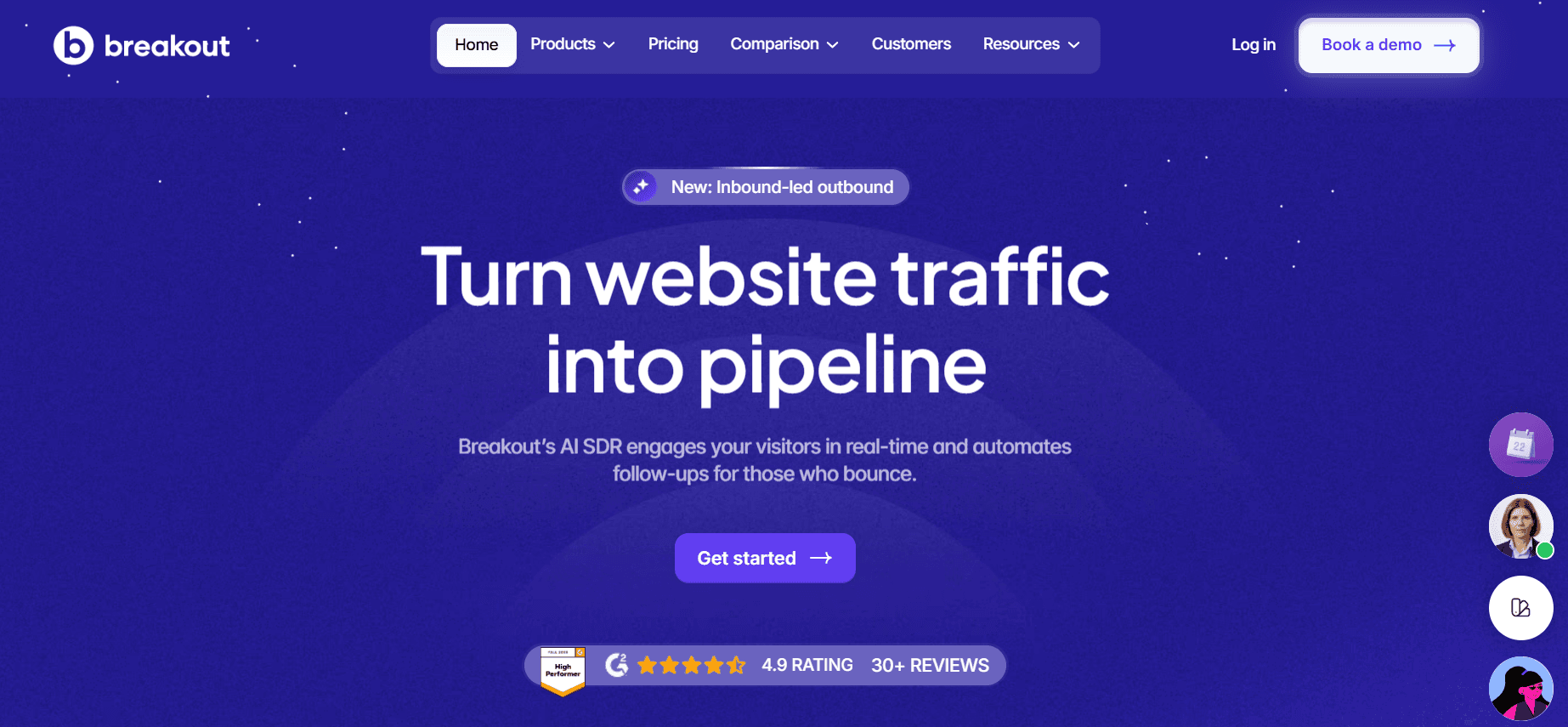
Breakout focuses on converting inbound traffic into qualified pipeline.
It operates as an autonomous AI SDR that identifies website visitors, engages them in real time, qualifies against ICP criteria, and books meetings without manual routing or SDR intervention.
It is designed for revenue teams that want to increase conversion from existing traffic without expanding headcount.
Key Features
1. Visitor Identification
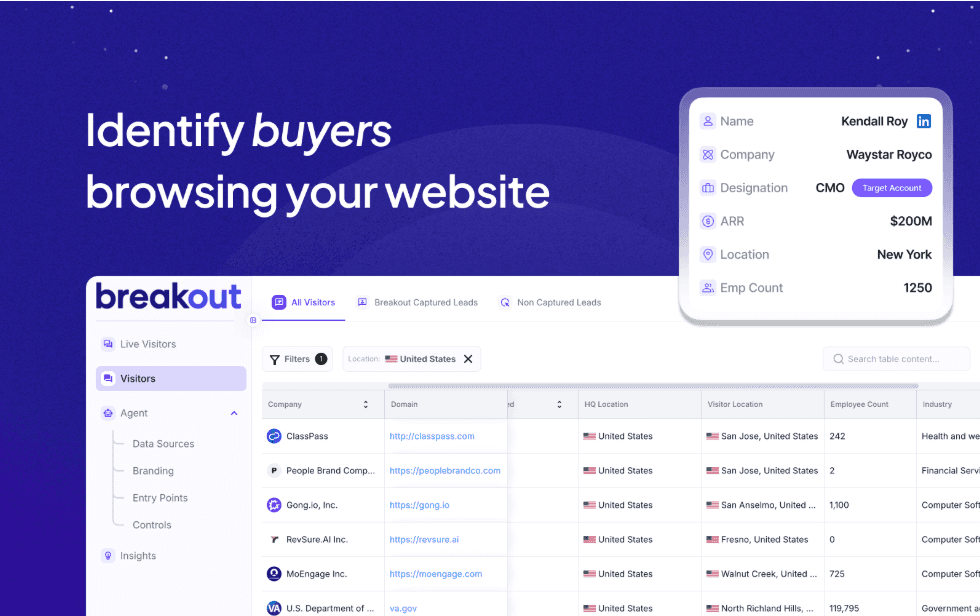
Identifies anonymous website visitors early in the session and maps them to verified company and persona data. This context informs qualification and engagement from the first interaction.
2. Autonomous Qualification
Evaluates ICP fit and buying intent in real time. It asks contextual qualification questions, captures relevant signals, and determines the next best action automatically.
3. Real-Time Engagement
Engages visitors based on live page context such as pricing, integrations, documentation, or security. Conversations adapt to what the buyer is actually reviewing.
4. Automatic Routing and Booking
Routes high-intent accounts directly to the appropriate rep or books meetings instantly. No manual triage or approval steps are required.
5. Inbound-Led Outbound Follow-Up
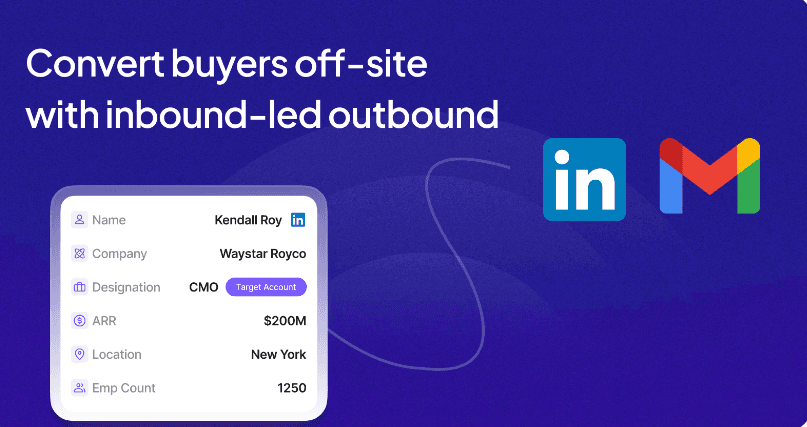
If a qualified visitor leaves without booking, Breakout continues the process.
It automatically triggers personalized LinkedIn and email follow-ups using session context, identity data, and browsing behavior.
The outreach reflects what the buyer explored, reducing reliance on manual SDR follow-up and minimizing unworked intent.
6. CRM Enrichment
Updates and enriches CRM records automatically so account data, conversation context, and qualification details are preserved.
When to Use
Use Breakout when inbound traffic is a primary growth channel and speed-to-lead directly impacts revenue.
It is well-suited for mid-market and enterprise SaaS teams that want structured, AI-led inbound conversion with continuity beyond the website session.
See How Breakout Helped Barti
Barti had steady inbound traffic but low conversion from high-intent visitors.
Many prospects browsed pricing and integrations yet left without booking, and manual SDR follow-up created delays. After implementing Breakout, Barti shifted to real-time identification and engagement.

In 6 months:
3,000+ visitors converted into qualified conversations
$10M+ in qualified pipeline generated
Faster speed-to-lead without expanding SDR headcount
Breakout helped Barti convert existing traffic into measurable pipeline.
2. Drift (Enterprise Conversational Marketing)
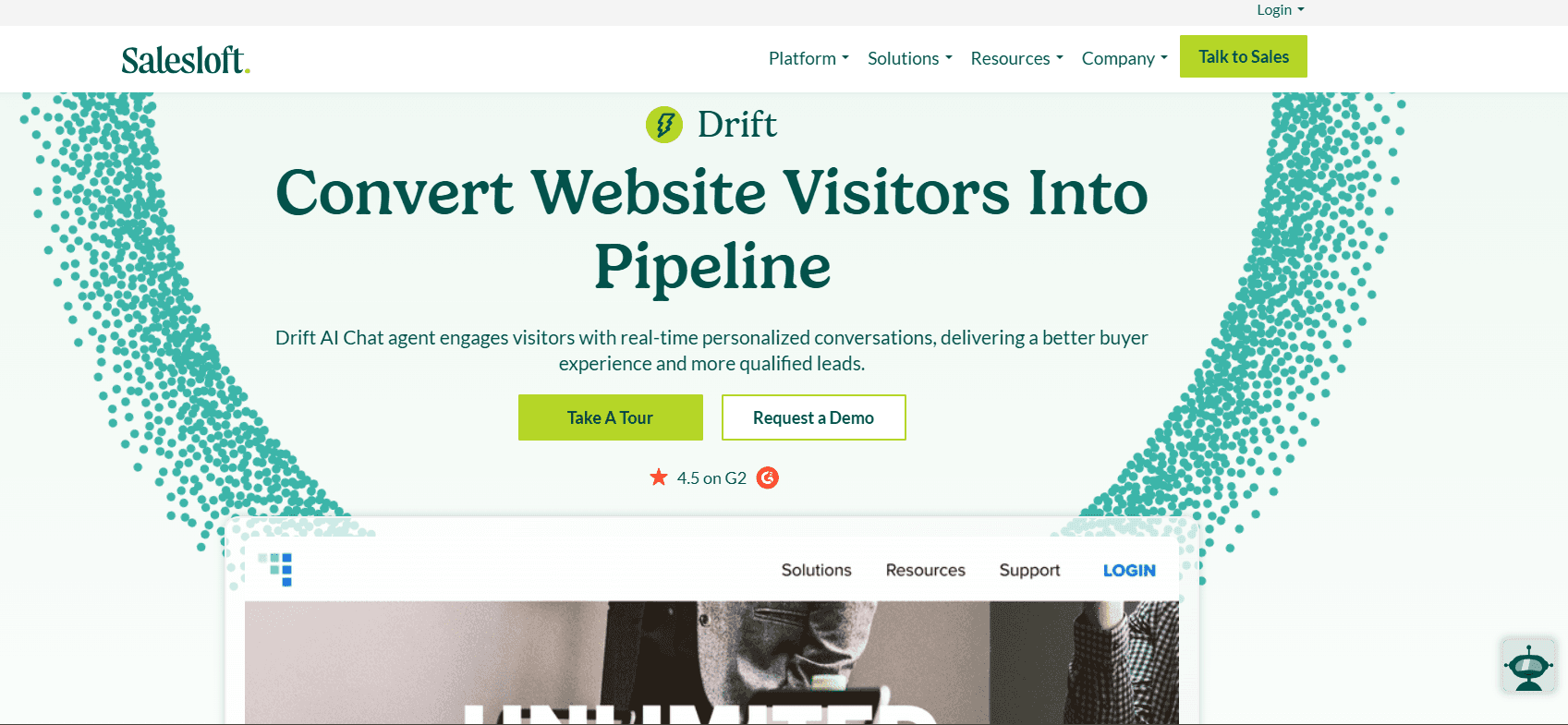
Drift is a conversational marketing platform designed for live chat, routing, and account-based engagement. It combines automation with heavy human involvement.
Key Features
Advanced routing to connect visitors with human reps.
Targeted messaging for enterprise accounts.
Deep Salesforce reporting and enterprise integrations. b
When to Use
Best for large organizations with established SDR teams that want structured chat and routing workflows rather than full autonomy.
3. Intercom Fin (Support-Led Teams)
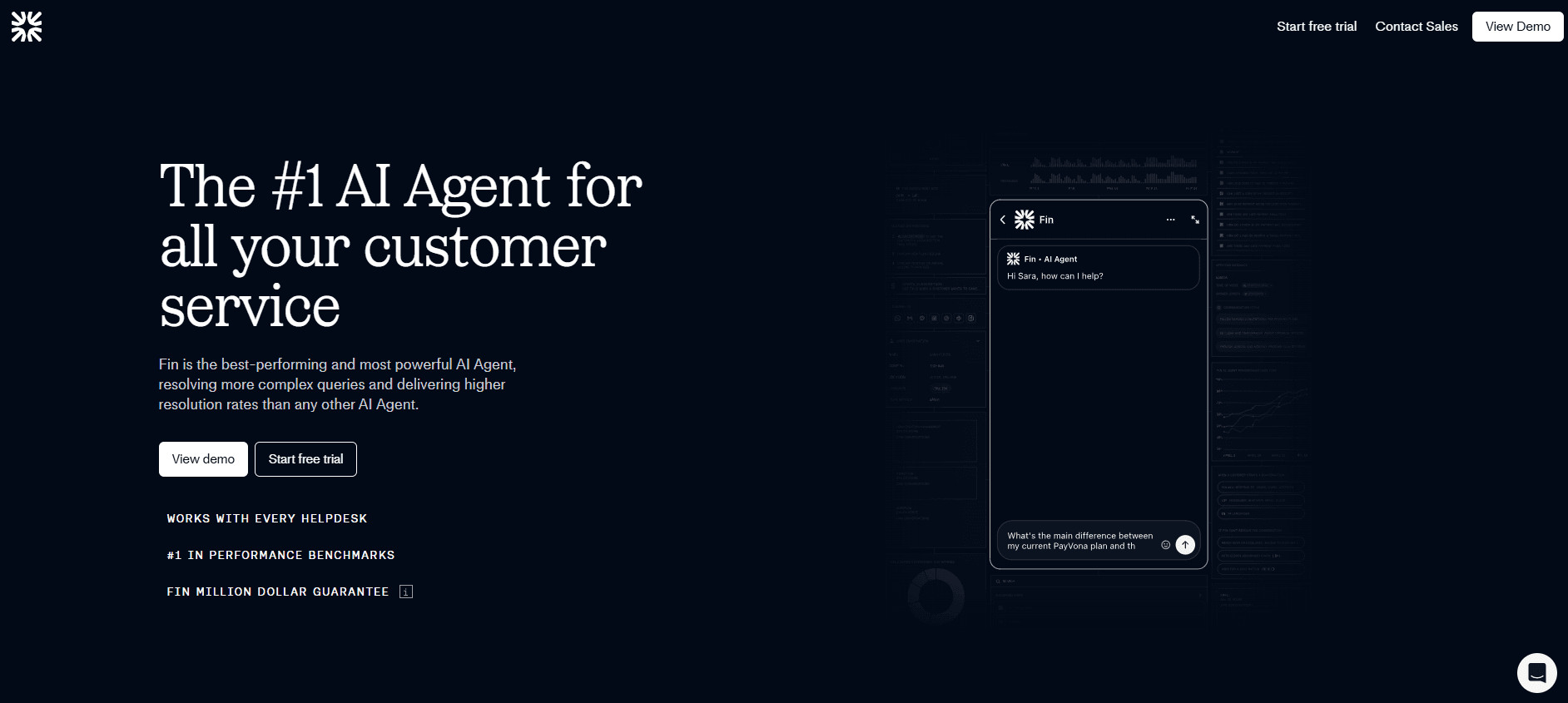
Fin by Intercom is primarily a support automation tool. Some teams use it for light qualification, but it is not built as a dedicated AI SDR for pipeline generation.
Key Features
Handles FAQs and ticket resolution at scale
Pulls answers from structured documentation
Combines chat, email, and helpdesk workflows
When to Use
Best for support-heavy teams focused on customer experience rather than revenue qualification.
4. Artisan Ava (AI-Powered Cold Outreach)
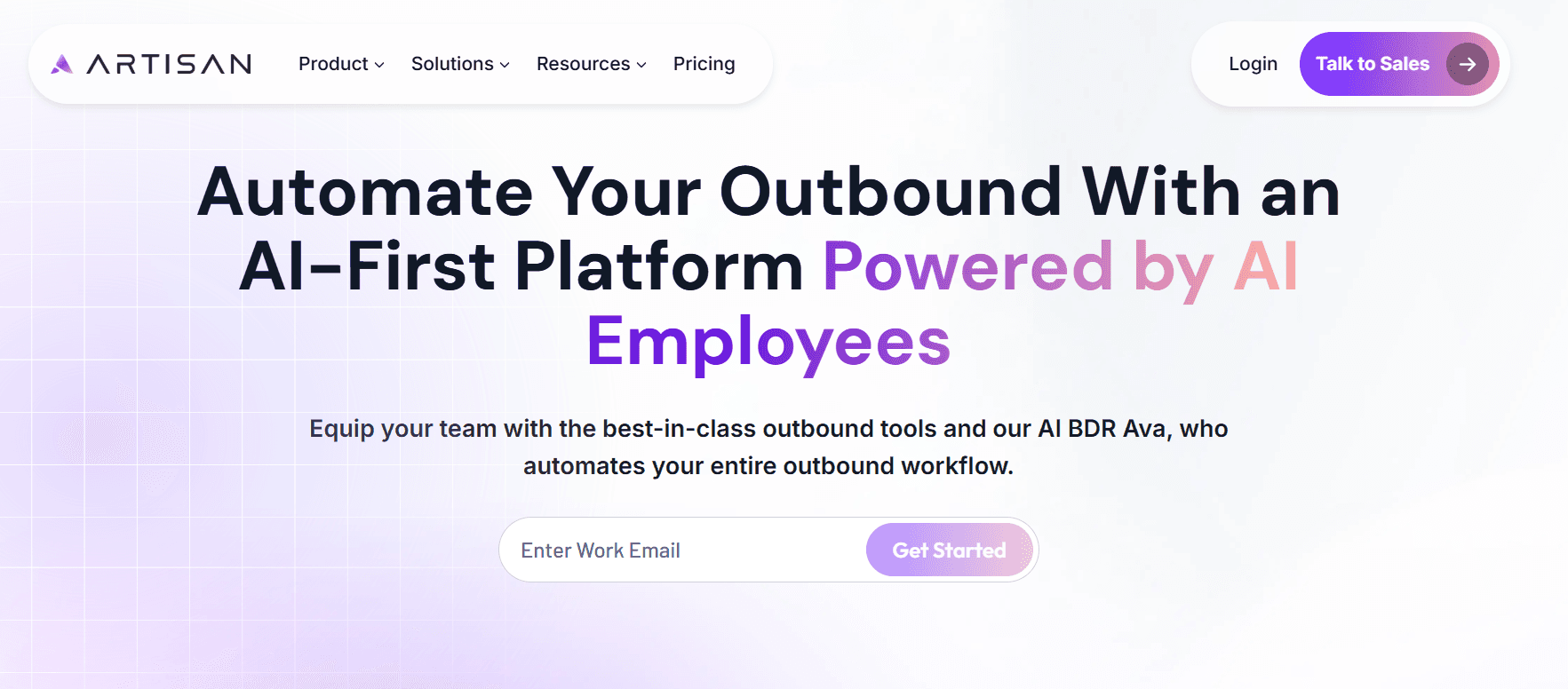
Artisan focuses on outbound automation. Ava generates personalized cold emails and LinkedIn outreach at scale.
Key Features
Creates human-like outbound messages
Manages campaigns across large prospect lists
Automates follow-up and response workflows
When to Use
Best for outbound-heavy teams looking to automate top-of-funnel cold outreach.
5. 11x.ai (Alice) - Multi-Channel Outbound Automation
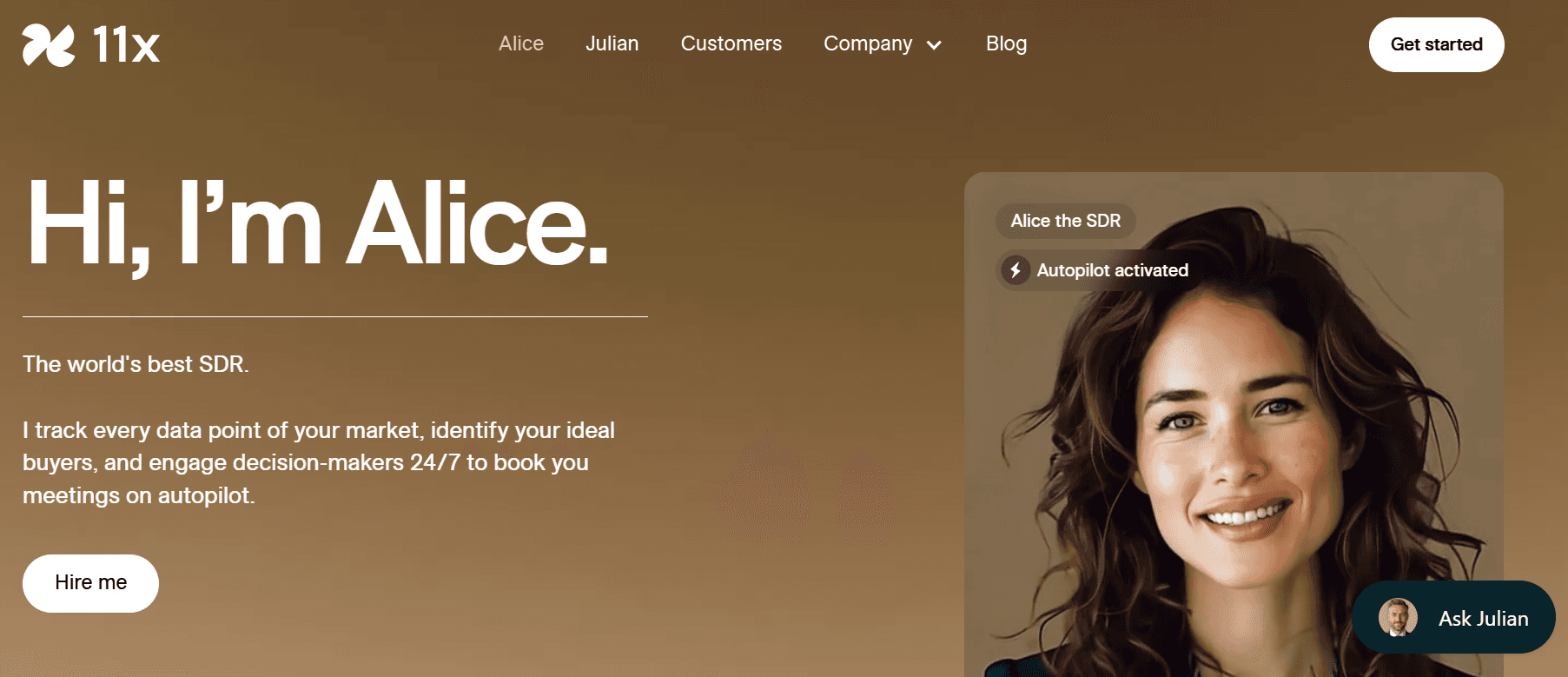
11x automates outbound sequences across email and LinkedIn. It focuses on speed-to-lead and inbox management.
Key Features
Automates email and LinkedIn outreach
Handles responses and follow-ups contextually
Configurable automation based on use case
When to Use
Best for teams prioritizing outbound automation rather than website conversion.
5 Reasons Breakout Stands Out as the Best AI SDR
Choosing the best AI SDR is not about adding another tool. It is about choosing the system that controls how inbound turns into pipeline.
Breakout stands out because it closes the gaps most platforms leave open.
1. Intelligent Visitor Identification
Most platforms wait for a form fill.
Breakout does not.
It identifies anonymous visitors and matches them to company and persona data in real time. That firmographic context feeds directly into the AI reasoning layer, so qualification starts with who the buyer is, not just what they typed.
If an enterprise VP lands on pricing, the conversation reflects enterprise context. If a small team browses documentation, the engagement adjusts accordingly.
Intent plus identity drives better qualification.
2. Unified Inbound Execution
Many GTM stacks are stitched together.
One tool identifies traffic
Another runs chat
Another routes leads
Another books meetings
Breakout consolidates that motion.
Visitor identification, AI engagement, qualification, routing, enrichment, and scheduling operate inside one coordinated system.
There is no delay between detection and action. There is no manual handoff between tools.
The system captures context once and uses it across the entire workflow.
That removes friction.
3. True AI Autonomy
Automation is not autonomy.
Breakout does not rely on static routing rules or constant RevOps oversight. The AI evaluates ICP fit, interprets buying signals, asks qualification questions, and decides the next step in real time.
High-intent accounts are routed instantly. Qualified buyers can book without waiting for an SDR to approve the lead.
This reduces human bottlenecks and protects speed-to-lead.
4. Inbound-Led Outbound Continuity
Most platforms stop engaging once a visitor leaves the website.
Breakout continues the process.
Not every high-intent visitor books a meeting during the first session. Some review pricing, explore integrations, or gather information before exiting.
When a qualified visitor leaves without converting, Breakout automatically triggers personalized LinkedIn and email follow-ups.
The outreach uses context already collected, including identity, company data, browsing behavior, and prior on-site interactions.
There is no need for manual research
There is no generic batch sequence
There is no waiting for an SDR to act
The follow-up is based on real session data.
This reduces the number of high-intent accounts that go unworked after they leave the site.
Watch the LinkedIn post from our founder, Sachin Gupta, for a detailed walkthrough of this feature.

5. Fast Deployment
Complex implementations slow momentum.
Breakout is designed for rapid deployment. GTM teams can integrate, configure, and launch quickly without building dozens of conditional workflows.
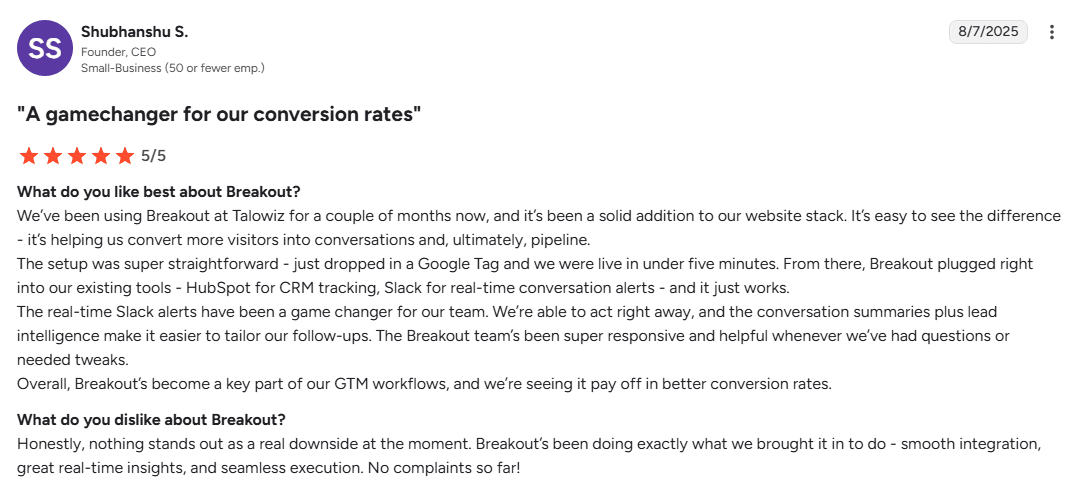
Once live, it begins identifying visitors, qualifying traffic, and generating meetings immediately.
The impact compounds because it works on traffic you already generate.
In 2026, the advantage is not more traffic. It is better conversion.
Breakout wins because it turns inbound attention into structured pipeline without adding headcount.
Turn Website Traffic into Qualified Meetings, Faster
In 2026, the challenge is not demand generation.
It is demand conversion.
Buyers research independently, compare vendors anonymously, and move quickly once they shortlist. If your team responds hours later, the opportunity is already gone.
AI SDRs matter because they close the gap between intent and action. They detect buying signals instantly, qualify against your ICP in real time, and move high-fit accounts toward meetings without manual delay.
Breakout takes this model further by combining visitor identification, real-time engagement, autonomous qualification, and instant booking into one coordinated system.
It does not wait for form fills.
It does not rely on static routing rules.
It converts inbound traffic while interest is still active and syncs everything directly into your CRM.
It continues follow up automatically if high-intent visitors leave without booking.
The result is simple: faster speed-to-lead, higher conversion rates, and more qualified pipeline without increasing headcount.
If inbound drives your growth, your conversion engine must match buyer speed.
See how an AI SDR qualifies and books meetings in minutes, not months.
Book a demo today!
FAQs
1. Will AI SDRs replace human SDRs?
No, not at a full scale.
AI SDRs handle repetitive and time-sensitive tasks such as signal monitoring, first-touch engagement, and structured qualification.
Human SDRs remain essential for complex conversations, strategic accounts, and closing deals. The strongest teams combine both.
2. What is an AI SDR in simple terms?
An AI SDR is an autonomous system that identifies buying signals and evaluates fit against your ICP.
It engages prospects contextually, qualifies them automatically, and advances high-fit leads toward booked meetings.
3. How does an AI SDR qualify leads?
AI SDRs evaluate firmographic data, behavioral signals, engagement history, and responses to qualification questions.
They apply consistent logic to determine fit and either route, nurture, or disqualify leads in real time.
4. Can AI SDRs engage anonymous website visitors?
Yes. Advanced AI SDR platforms can identify anonymous visitors, match them to company data, and initiate contextual engagement before a form is submitted.
5. Will AI SDRs improve speed-to-lead?
Yes. AI SDRs respond instantly when intent appears.
This reduces delays caused by manual review, task queues, or rep availability.
6. How do AI SDRs differ from chatbots?
Chatbots react to prompts using scripted flows.
AI SDRs analyze real-time signals, evaluate account fit, make qualification decisions, and orchestrate routing or booking autonomously.
7. Can AI SDRs follow up after a visitor leaves a website?
Yes. Some AI SDR platforms continue engagement after a session ends by triggering personalized outreach using captured context and identity data. This prevents high-intent accounts from going unworked.
8. Do AI SDRs integrate with CRMs?
Most AI SDR platforms like Breakout integrate directly with CRMs and marketing automation systems. They sync conversation history, qualification data, and booking details automatically.
9. Are AI SDRs cost-effective compared to hiring more SDRs?
In most cases, yes.
AI SDRs scale without salary, commission, or ramp time. Cost efficiency improves as traffic and signal volume increase.
10. When should a B2B team implement an AI SDR?
AI SDRs are most valuable when inbound traffic is strong, speed-to-lead impacts conversion, SDR bandwidth is constrained, or intent signals frequently go unworked.
They are especially effective in mid-market and enterprise SaaS environments where scale and consistency matter.


