All Blogs
A simple explanation of warm outbound? a comprehensive guide with tools, signals, and examples.

Paige Rankwell
GTM Analyst
Published On
B2B buyers don’t respond to cold pitches from brands that show up late, loud, or generic.
They have enough reasons not to.
They get hit with hundreds of unsolicited messages every week. Most of them sound the same.
Fake familiarity, forced compliments, a vague “quick question,” and clickbait subject lines that try too hard to win the open.
Some frequently used subject lines include:
“Re: next steps” (with no prior thread)
“Can I steal 15 minutes?” (from a stranger)
“I noticed you’re scaling” (as if every company is not)
And some that honestly lack taste, like this one.
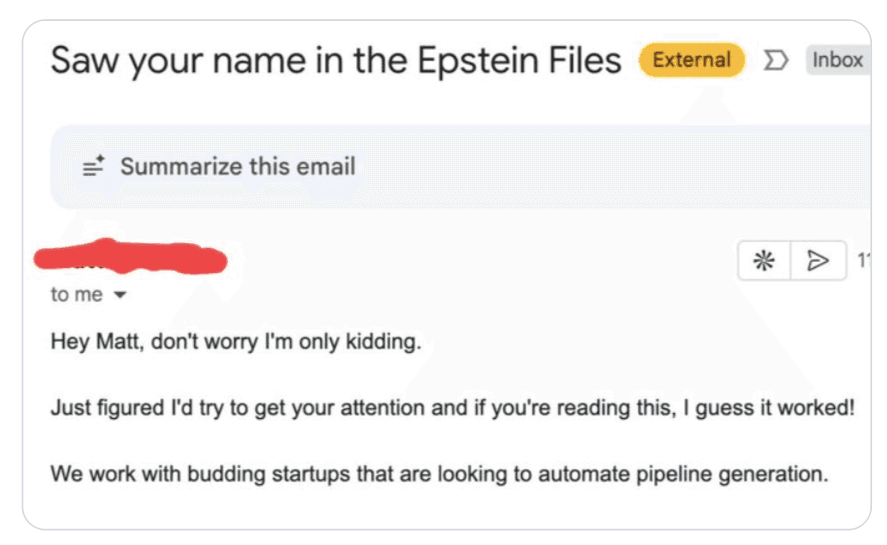
While it might earn you a negative mention, your buyers tune out these spray-and-pray cold emails.
As a result, we see more teams moving to warm outbound.
Warm outbound is an inbound-led outbound motion. It starts with first-party intent. A buyer engages with your website, emails, ads, or webinars. Then you follow up while the interest is still active. The outreach is tied to what they did and what they are likely trying to solve.
This is why warm outbound works. You are not starting from zero. You are stepping into an active decision process.
And the numbers back it up.
In 2025, Cognism analyzed outbound activity across SDR-led cold outreach and AE-led warm outreach. AEs ran fewer calls, but their calls lasted much longer.
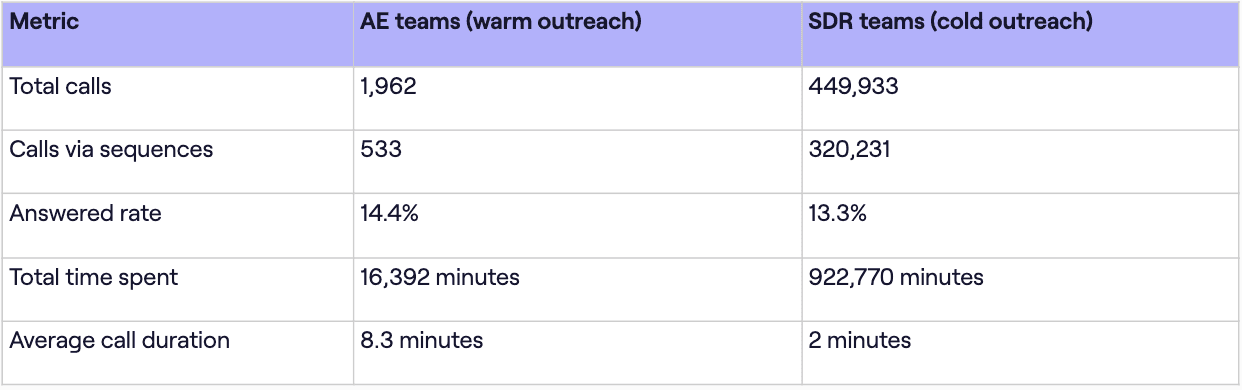
The average call duration was about 4X higher for warm outreach. Longer calls are usually a sign that the buyer is already evaluating. The conversation shifts from “Who are you?” to “How does this work?”
But warm outbound has a hard requirement.
Speed.
Warm outbound is only “warm” while the signal is fresh. If your process takes two days, it turns cold again. This is why warm outbound tools matter and why teams are moving toward inbound-led outbound systems that can act right away.
In this guide, we break down:
What is warm outbound?
Why inbound-led outbound is becoming the new baseline
Where to find high-quality signals
And how to execute warm outbound without burning out your team
We’ll also explain what changes when your stack includes an AI SDR that doesn’t wait for a rep to pick up the lead.
The basics: What is warm outbound?
Warm outbound is outreach triggered by a real signal.
It is the process of reaching out to prospects who have already shown intent or engagement, instead of pulling names from a list.
This is what separates warm outbound from cold outreach.
Cold outbound tries to create interest from scratch. Warm outbound starts from existing intent and adds the next step.
It changes the first message.
Instead of “quick question,” the rep can speak to what the buyer is already doing. That makes the outreach feel grounded.
It also changes the job of your team.
Warm outbound is about sending fewer messages with better timing. Signals are only valuable if the follow-up is fast and relevant.
This is also why warm outbound tools matter. They help teams connect intent, identity, and action before interest cools off.
The 3 pillars of a warm outbound strategy
Warm outbound only works when you treat outreach like a response, not a broadcast. You do not reach out because the account fits your ICP. You reach out because the account did something that shows timing.
That “something” is a signal. It is a trackable action that tells you a buyer is already in motion. It could be interest, comparison, urgency, or internal alignment.
A warm outbound strategy has three pillars:
1. Signal detection tells you what happened
2. Identity resolution tells you who did it
3. Contextual action turns it into a message before the signal goes stale
Let's take a closer look.
1. Signal detection: Spotting the action that signals intent
A signal is a behavior that suggests buying motion.
A pricing page visit is one signal. Another strong signal is a buyer checking your security page or implementation timeline.
Those pages are not read by people who are “just curious.” They are read by people doing internal validation.
What signals really mean:
The buyer is comparing options
They are building a shortlist
They are collecting proof for a manager, IT, or finance
They are testing whether you fit their workflow
Signals worth tracking in warm outbound:
Clicks “Contact sales” but does not submit the form
Registers for a webinar and stays for most of it
Downloads a pricing sheet, security doc, or ROI calculator
Opens a nurture email more than once within 24 hours
Starts a trial and completes the first 1–2 onboarding steps
Replies to a LinkedIn poll or comment thread about the exact pain you solve
2. Identity resolution: Figuring out who is behind the activity
Signal detection tells you something happened. Identity resolution tells you who did it.
Most buying research is anonymous. That does not mean it is invisible.
Identity resolution connects the session to a real company, and in some cases, a real person. It is what turns “traffic” into a lead your team can act on.
Types of visitors you typically see:
Known contacts already in your CRM
Known accounts with new stakeholders you have never met
Anonymous visitors from target accounts
Anonymous visitors from non-ICP accounts
This step matters because it protects rep time.
Without identity resolution, teams chase noise. They send follow-ups to the wrong person. Or they never follow up at all.
Warm outbound tools that only show company names help. But the best systems go further by matching the session to a person, enriching them, and routing instantly.
3. Contextual action: Responding with relevance
Warm outbound works when the message matches the buyer’s moment.
The goal is not to “sell.” It is to continue the research path they already started.
Here are a few high-intent instances and short first touches that fit.
Instance A: Buyer returns to the product page twice in a week
Subject: Anything I Can Clarify?
“Hi {{FirstName}}, you’ve been back on our product pages a couple of times this week. If you’re comparing options, I can share the 2-minute breakdown of where teams see the fastest time-to-value.”
Instance B: Buyer visits the integrations page for Salesforce
Subject: Salesforce Fit
“Hi {{FirstName}}, if Salesforce is your source of truth, I can send the field mapping and the setup flow so your RevOps team can sanity check it.”
Instance C: Buyer hits pricing, then exits
Subject: Got Pricing Questions?
Hi {{FirstName}}, I’m just checking in to see if I can help.
Noticed you were reviewing our pricing. If you tell me your rough seat count and CRM, I can point you to the plan that fits, along with what’s included.”
Why "inbound-led outbound" is the new standard
Inbound-led outbound is the most ideal response to buyer behavior in 2026 and beyond. Buyers now do most of their evaluation before they talk to sales. They read, compare, and shortlist on their own.
Your content, product pages, and webinars do the first round of qualification before a rep ever reaches out.
That recognition changes the first touch. Instead of “Who are you, and why are you emailing me?” the buyer is already connecting the dots. It becomes a continuation of a thread, not a cold start.
Higher conversion rates come from earned attention
When a prospect has already watched a product video or read a guide, they are more educated and less defensive. They know what problem they are trying to solve. They also know which vendors are in the mix.
This is why inbound-led outbound tends to convert better. The prospect is already market-aware, so the rep can focus on fit, timing, and next steps.
Speed-to-lead is not a tactic; it’s the whole point
Warm signals fade fast. A buyer might compare pricing at 11:00 AM and book a competitor demo at 2:00 PM. If your follow-up arrives tomorrow, you are late.
This is why speed-to-lead matters so much in warm outbound. The teams that win are the ones that respond while interest is still active.
The playbook to execute warm outbound
Warm outbound works because it is built on proof. A buyer does something that signals curiosity, need, or timing. Even if it is passive, it creates a real opening to reach out with context.
This matters because the modern buyer moves fast and moves sideways. They read, compare, ask peers, and then disappear for weeks. Traditional outbound does not handle this well because it treats timing as random and outreach as volume.
We are sharing below a playbook that is built around one goal: acting while the buyer is still in motion.
Leveraging website traffic (Deanonymization)
Most websites are full of warm outbound opportunities that never get worked. The buyer is there. The interest is there. But the identity is missing.
Warm outbound starts when you can tie behavior to a real company and a real persona. That is what makes it possible to follow up with confidence and not sound like a stranger.
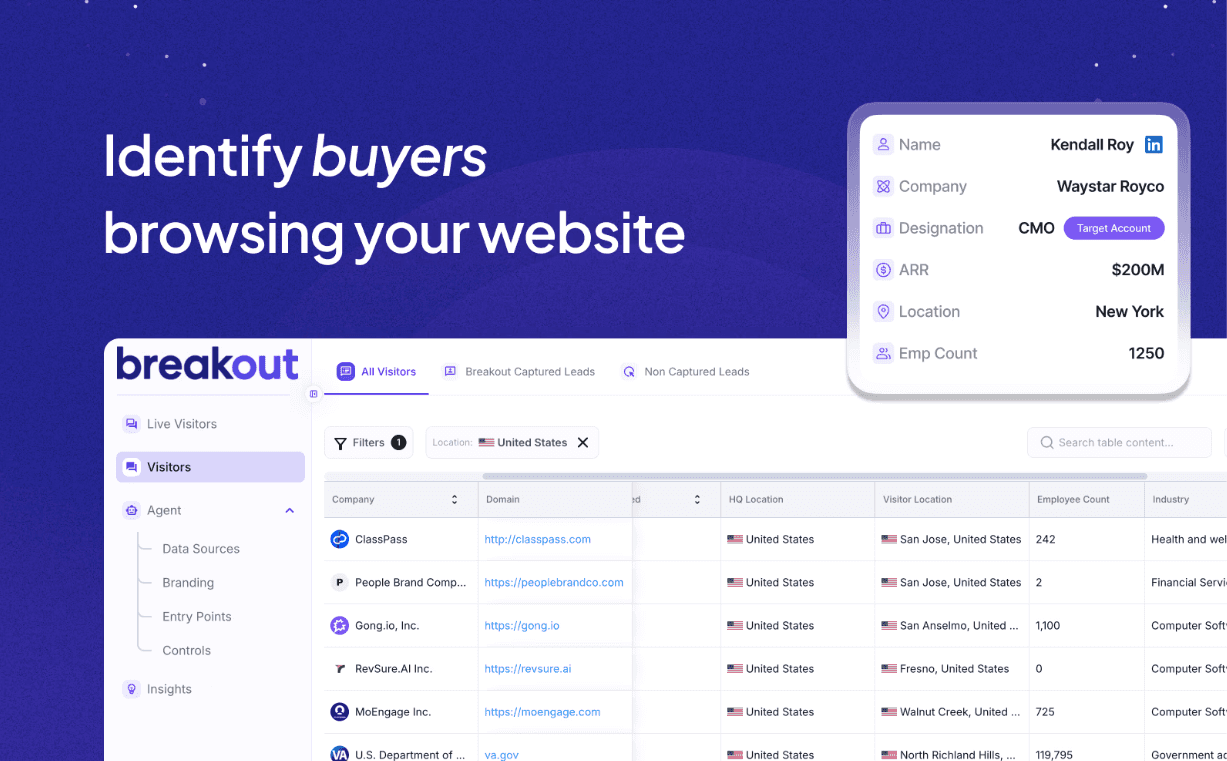
Breakout handles this by deanonymizing visitors early in the session and mapping them to a company and likely buyer profile early in the session. It also fills in missing details automatically, so the rep does not lose time on manual research.
Personalized engagement (AI nudges)
Once you know who is on the site, the next step is to engage while the buyer is still active. This is where warm outbound stacks usually slow down. A rep gets an alert, but they see it late. Or the chatbot waits for the buyer to start the conversation.
Breakout uses AI decisioning to choose the right message in real time. It looks at context like UTM source, firmographic fit, and the page being viewed. That way, a pricing visit gets a different response than a visit to an integrations page, without you building dozens of rules.
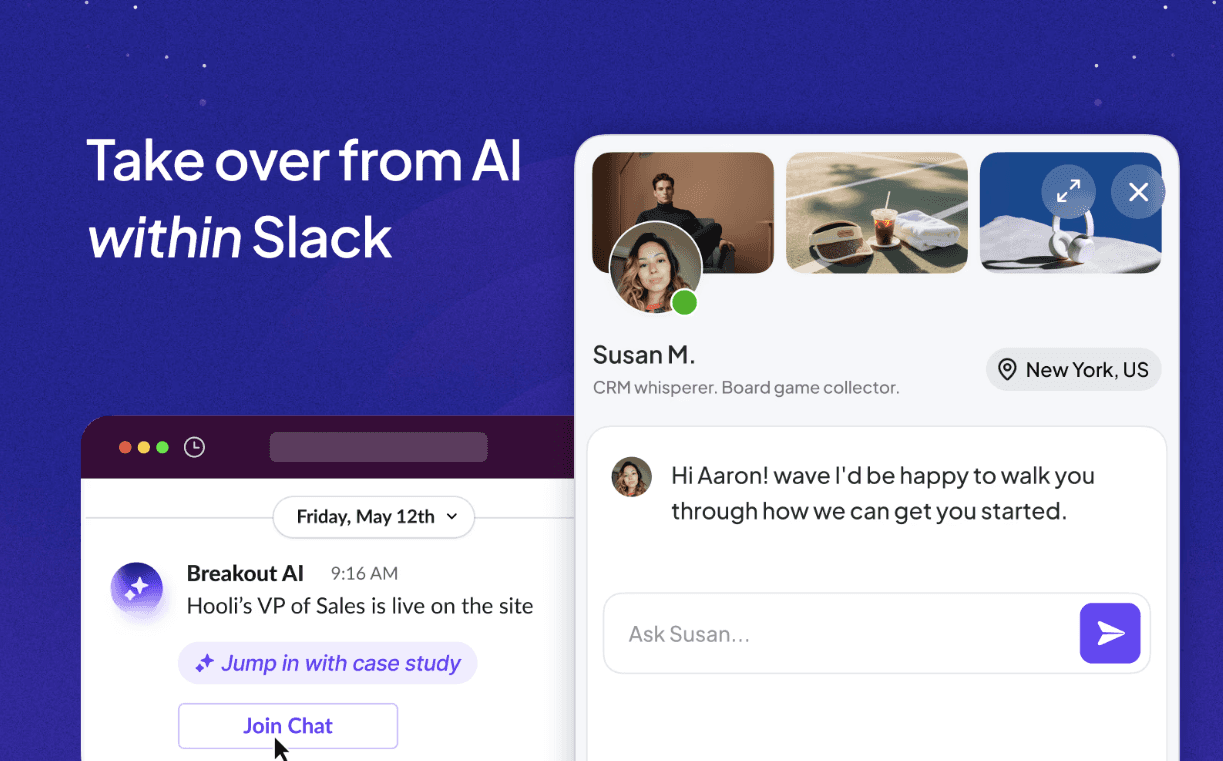
Even if the visitor is not ready to book, Breakout still captures the key details. It keeps the session context intact so the next touch stays specific and relevant.
Connecting the loop (CRM & routing)
Strong on-site engagement will not catch every buyer. Many accounts will leave without converting, even if they are a great fit. That is where most teams lose incremental pipeline.
Breakout keeps the motion alive after the bounce. It can trigger LinkedIn and email follow-up immediately, using the same context the buyer created during the visit.
This also reduces the human capacity bottleneck. Reps do not need to chase every signal manually.
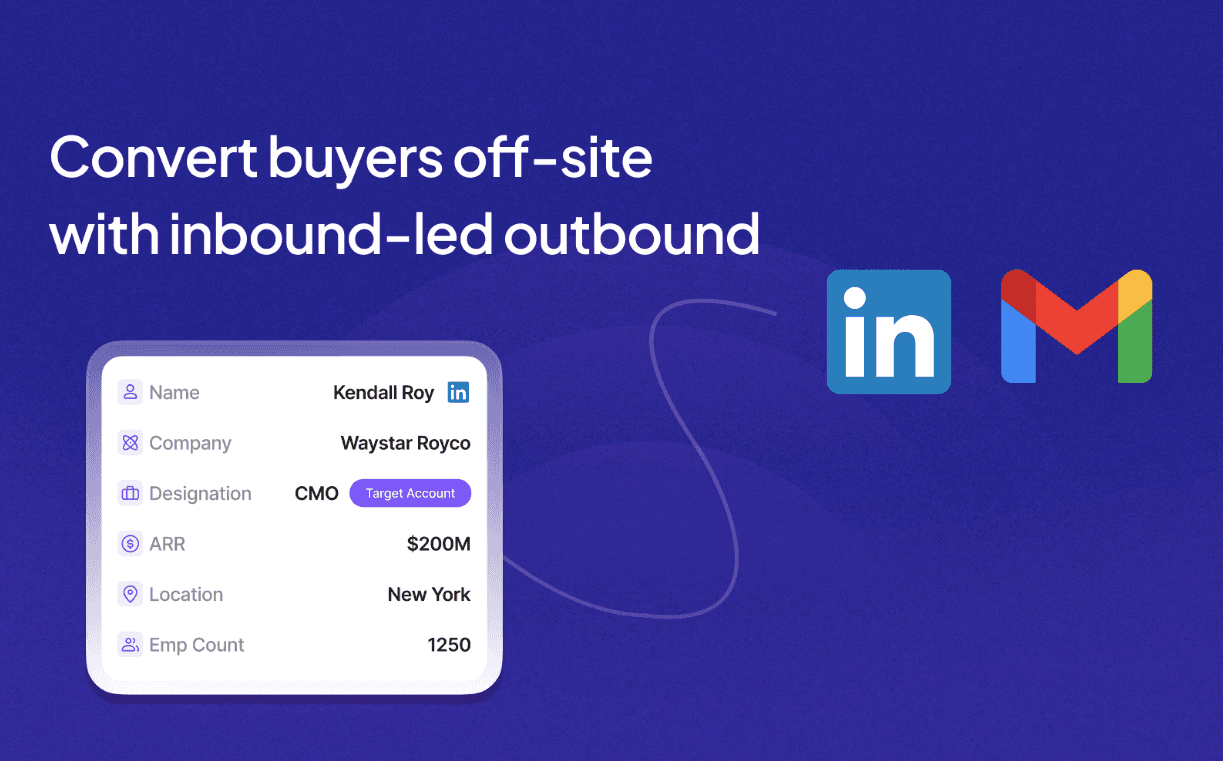
It also runs Auto-Waterfall Enrichment in the background, so your CRM record is not missing key fields. When intent is high, Breakout can route the buyer straight to the right closer or book a meeting without waiting for an SDR handoff.
Top channels for warm outbound signals
Warm outbound works best when your signal sources are broad. Website visits are the obvious one, but they are not the only one.
The strongest systems pull signals from multiple channels and then turn them into fast follow-up.
Below are the top channels where you can spot warm outbound signals and act while interest is still active.
Channel | What the signal looks like | Why it matters for warm outbound | Best next step |
Website visits | Repeat visits, pricing views, integration pages, security pages | Shows active research, not casual browsing | Identify the account, route to the right rep, and start a relevant message |
Paid ads | Clicks on retargeting ads, high CTR on competitor or pricing ads | Captures accounts already in motion | Send a follow-up that matches the ad angle, not a generic pitch |
Email engagement | Link clicks, repeat opens, replies to a nurture thread | Confirms the buyer is paying attention | Use the clicked topic as the outreach entry point |
Webinars and virtual events | Attendance, questions asked, watch time, replays | Signals problem awareness and internal selling | Follow up with the exact segment and topic they joined for |
Product and documentation | Visits to set up docs, API pages, and implementation guides | Often means the buyer is past curiosity | Offer help on rollout, timelines, or fit with their stack |
Review sites | G2 category traffic, comparison pages, intent badges | Strong buying intent with vendor evaluation | Share proof tied to their segment and use case |
Social engagement | Comments, poll responses, repeated profile visits | Indicates interest without a form fill | Use a short message that references the topic, not the person |
CRM reactivation | Old opp reopened, stalled deal revisiting pages | Clear signal from a known account | Re-engage with “what changed” and a fast next step |
Warm outbound is what buyer-led selling looks like in 2026
Cold outbound still works in pockets. But it is no longer the foundation. Buyers want relevance, and they reward timing.
Warm outbound is how you meet that standard. You reach out because the account did something. Not because they fit a filter.
Breakout is built for this motion. It closes the loop by triggering a follow-up the moment a high-intent visitor leaves, using the context from their session.
Are you losing high-intent traffic to slow follow-up? Use Breakout to book more meetings with the visitors you already have.
FAQs
What is warm outbound, and what are the best practices?
Warm outbound is outreach triggered by intent. The prospect has already interacted with your brand in some way. That interaction gives you timing and context.
Best practices are simple:
Act fast while the interest is still active
Reference the signal without sounding like you are watching them
Route the lead to the right owner instantly
Send a first touch that helps, not pitches
Track time-to-first-touch as a core metric
Warm outbound vs inbound: What is the difference?
Inbound is when the buyer comes to you and raises a clear hand. They fill out a form, request a demo, or reply asking for pricing.
Warm outbound happens earlier. The buyer is showing interest, but they have not asked for a conversation yet. They are still researching.
How long does a lead stay “warm”?
A lead stays warm for as long as the buyer is still in active research. For many B2B deals, that window is short. It is often measured in hours, not weeks.
The safest rule is this:
0–2 hours: hottest
Same day: still warm
48 hours later: cooling fast
One week later: usually cold again unless signals repeat
What warm outbound tools do you actually need in 2026?
In 2026, the gap is not “more signals.” The gap is time-to-action. Many stacks detect interest but still rely on humans to do the follow-up.
This is where full-loop tools matter. Breakout fits here because it does not stop at identification. It can engage on-site, trigger follow-up after a bounce, and route the right leads into the CRM with context.