All Blogs
A step-by-step guide for B2B revenue teams on building a demand gen program that connects strategy, execution, and measurement to drive real pipeline.

Evan Marshall
Senior Growth AI Strategist
Published On

Your demand gen program might already have good pieces in it. Good content, solid paid spend, an outbound motion that gets replies. But if those pieces aren't connected to each other and tied back to revenue, you're running a demand generation program in name only. Getting from scattered activity to a real, pipeline-driving program comes down to a few sequencing decisions most teams skip. Here's how to get that right.
TLDR:
B2B demand gen programs fail when strategy, execution, and measurement aren't connected as a system.
Start by defining your ICP, aligning sales and marketing on pipeline goals, and configuring attribution before any campaign launches.
Mature B2B demand gen programs see MQL-to-SQL conversion rates between 13% and 27%; track 6-8 metrics tied to pipeline, not impressions.
A well-configured simple tech stack (marketing automation, CRM, analytics) outperforms an underused sophisticated one.
Optimizing for lead volume fills your pipeline with contacts who won't buy; target accounts and buying committees produce better opportunities.
The Problem: Why Building a B2B Demand Generation Program Is Harder Than It Should Be
Most B2B revenue teams know they need a demand generation program. The harder question is why so many of them struggle to build one that actually produces pipeline.
The reality is that demand gen sits at the intersection of brand, content, paid media, sales alignment, and revenue attribution, and most teams are trying to manage all of that without a clear system connecting the pieces. Marketing runs campaigns. Sales works leads. But the handoff between them is often where deals quietly die.
There's also a measurement problem. B2B buying cycles are long, buying committees are large, and attribution models rarely capture how a prospect moved from anonymous visitor identification to qualified opportunity. Without clear data, it's difficult to defend budget, adjust strategy, or prove the program is working.
The result is a fragmented effort that generates activity but struggles to generate revenue. Building a program that performs requires getting the strategy, execution, and measurement working together, which is exactly what this guide walks through. For a broader look at how demand gen fits into a full-funnel strategy, Full Funnel's demand generation guide is a useful reference point.
What Good Looks Like: Key Principles of a B2B Demand Generation Program
Before getting into tactics and channel mix, it helps to get clear on what separates a demand generation program that compounds over time from one that just generates activity.
The best B2B demand generation programs share a few defining characteristics, regardless of company size or go-to-market motion.
They treat demand generation as a system, not a campaign
High-performing teams build interconnected programs where content, paid, outbound, and nurture work together. A webinar generates attendees who enter a nurture sequence, which surfaces intent signals that trigger a warm outbound touch. Each piece feeds the next.
They align tightly with revenue, not raw volume
Demand generation best practices have shifted away from raw lead counts. What matters is pipeline quality and contribution to closed revenue. This requires close alignment between marketing and sales on ICP definition, lead scoring and handoff criteria.
They invest in both short- and long-term demand
The most durable programs balance brand-building activity with direct response. Demand capture without demand creation eventually runs out of audience to convert.
They measure what actually matters
Vanity metrics like impressions and MQL volume tell you very little about program health. Teams running effective demand gen programs track pipeline contribution, CAC by channel, and revenue influence to understand what is actually working.
Step-by-Step: How to Build a B2B Demand Generation Program
Building a demand generation program from scratch requires sequencing decisions correctly. The order matters as much as the tactics themselves.
Step 1: Define Your ICP and Total Addressable Market
Your ICP is the foundation every other demand gen decision builds on. Define the company attributes that predict a high probability of closing: industry, company size, tech stack, funding stage, and the behavioral signals your sales team already uses to separate good fits from poor ones. Pair this with a realistic TAM estimate that counts how many accounts actually meet those criteria, so your pipeline targets reflect the market you can genuinely reach, not an inflated universe that dilutes focus. The output of this step is a shared definition that both marketing and sales agree to use when building campaign targeting, lead scoring models, and outreach lists.
Step 2: Align Sales and Marketing on Pipeline Goals
Sales and marketing alignment on pipeline goals before any campaign goes live determines whether the program you build produces revenue or just activity. Agree on a shared pipeline number, then work backward: what MQL volume, at what conversion rate, through which channels, gets you to that number? Define lead scoring thresholds together, not in a separate marketing-only session that produces a model sales will discard. Document the handoff criteria: what score, what behavior, and what account attributes trigger a sales-ready classification and a follow-up SLA. When both teams have committed to the same definitions before the first campaign launches, the handoff friction that kills most demand gen programs disappears.
Step 3: Configure Attribution Before Campaigns Launch
Attribution configuration is the unglamorous prerequisite that most teams skip, then spend six months trying to reconstruct after the fact. Before your first campaign goes live, connect your marketing automation to your CRM and define how pipeline will be credited across touchpoints. Choose a model (first touch, last touch, or multi-touch) that your team will actually use consistently. Tag every campaign with UTM parameters from launch. Make sure form submissions, chat conversations, and outbound replies are all flowing into your CRM with source data attached. Clean attribution data from day one is worth more than any single campaign optimization you will make in month three.
Step 4: Build and Sequence Your Channel Mix
Channel selection comes after ICP definition and attribution setup, not before. With a clear picture of who you are targeting and a measurement system ready to track performance, you can make defensible choices about where to spend. Most Series B demand gen programs should start with two or three channels, not attempt full coverage immediately: a content and SEO motion that builds long-term organic pipeline, a paid channel that captures in-market demand now, and an outbound motion targeting your highest-priority accounts directly. Run each channel long enough to generate meaningful data (90 days minimum for paid, six months for content) before judging performance or reallocating budget. Adding channels before the first ones are producing signals creates noise that obscures what is working.
Tools and Tech Stack Considerations
The tools powering your demand generation program matter, but over-investing in tech before validating your strategy is a common and costly mistake. Start with the fundamentals before adding complexity.
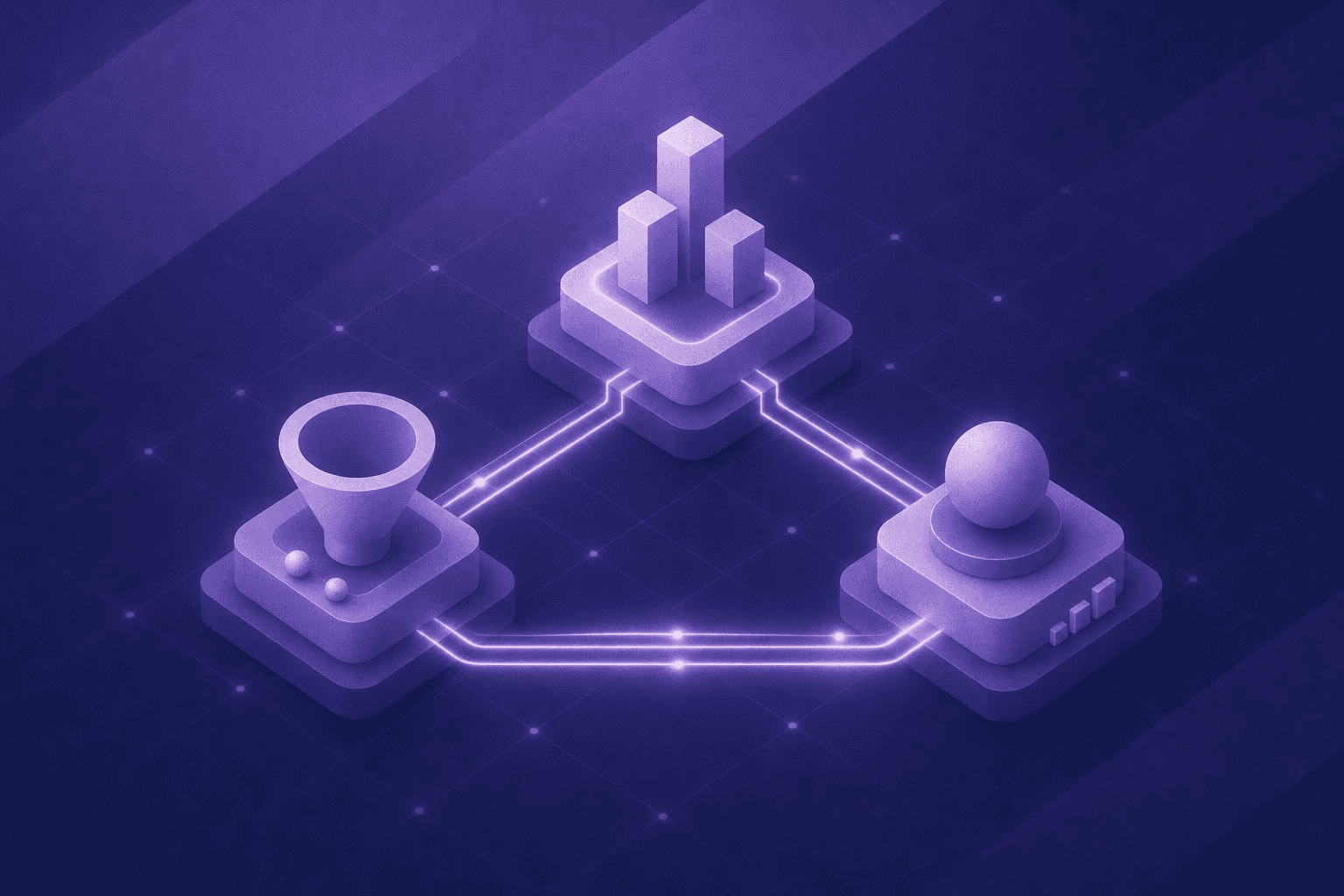
Most B2B teams need three core categories covered:
A marketing automation system to run email nurture, score leads, and trigger follow-up sequences based on behavior, so prospects move through your funnel without requiring manual intervention at every step.
A CRM that syncs bidirectionally with your marketing tools, paired with lead routing tools, giving sales reps full visibility into engagement history before they ever make contact with a prospect.
An analytics layer that ties campaign activity to pipeline and revenue, going beyond clicks and opens, so you can trace which programs are actually moving deals forward.
Beyond the core stack, intent data tools, B2B AI chatbot tools, and AI-assisted content are worth adding once your fundamentals are producing consistent output. Adding these too early creates maintenance overhead without meaningful return.
The real test for any tool is whether your team will actually use it. A well-configured simple stack consistently outperforms an underused sophisticated one.
Measuring Success: KPIs and Benchmarks
Tracking the right metrics separates demand generation programs that scale from those that stall. For B2B revenue teams, the most telling KPIs span the full funnel instead of stopping at top-of-funnel volume.
The KPIs Worth Tracking
At the bottom of the funnel, cost per opportunity, win rate by source, and revenue influenced by demand gen activity are the numbers that tie your program to actual business outcomes.
Funnel Stage | Key Metrics to Track | What It Tells You |
|---|---|---|
Awareness | Content engagement rate, branded search volume growth, social reach among target accounts | Whether your program is building visibility with the right audience |
Mid-Funnel | MQL-to-SQL conversion rate, time-to-conversion, pipeline influence by channel | How efficiently prospects move from marketing to sales-ready; benchmark: 13% to 27% MQL-to-SQL |
Bottom of Funnel | Cost per opportunity, win rate by source, revenue influenced by demand gen | Whether your program is driving closed revenue, beyond pipeline activity |
A few benchmarks worth knowing: B2B companies with mature demand gen programs typically see MQL-to-SQL conversion rates between 13% and 27% (see Geckoboard's MQL-to-SQL benchmark data for breakdowns by lead source). Cost per lead varies widely by industry, but for enterprise B2B, a healthy range often falls between $200 and $500.
The goal is not to track everything. Pick six to eight metrics that map directly to your pipeline goals, review them monthly, and adjust spend and content mix based on what the data shows.
Common Mistakes That Kill B2B Demand Generation Program Results
Most demand generation programs underperform for the same handful of reasons. Recognizing these patterns early saves you from rebuilding your entire program six months in.
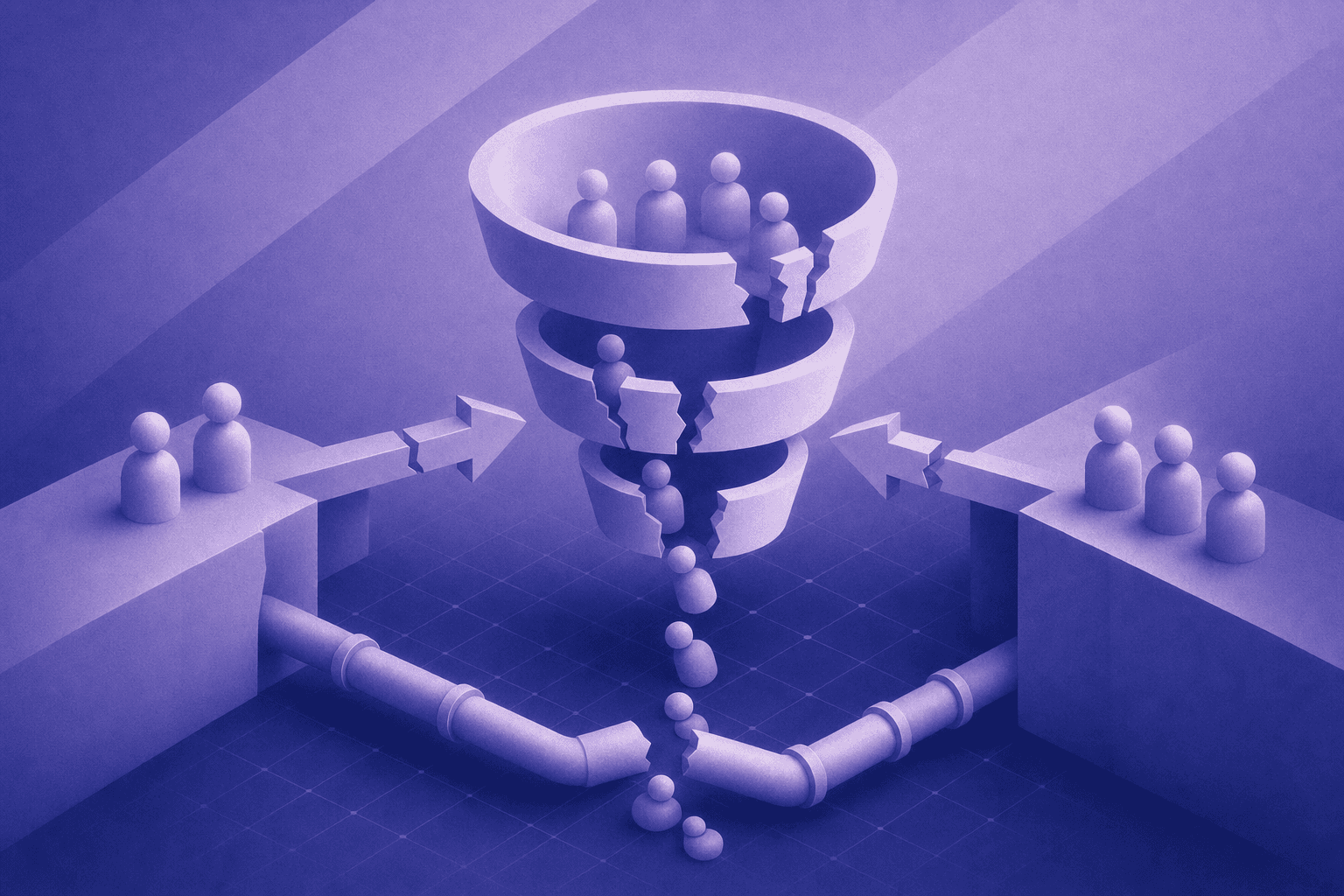
Chasing leads instead of accounts: When your team optimizes for raw lead volume, you fill your pipeline with contacts who were never going to buy. A better starting point is to identify and convert anonymous visitors. Aligning your demand gen program around target accounts and buying committees produces fewer but higher-quality opportunities.
Treating content as an afterthought: Demand gen without a content strategy behind it is just paid distribution with nothing worth distributing. Your content needs to speak to real problems your buyers are actively trying to solve.
Misaligned sales and marketing handoffs: If sales doesn't know what marketing promised a prospect, or when to follow up, opportunities stall. Agreeing on lead definitions, handoff criteria, and follow-up SLAs before launching any program closes this gap.
Measuring too early or with the wrong metrics: Judging a demand gen program by MQL volume in the first 90 days tells you almost nothing about pipeline impact. Define the metrics that matter before you start, not after results come in.
Final Thoughts on Building a B2B Demand Generation Program
Demand generation works when strategy, execution, and measurement are all connected. Without that connection, you get activity without pipeline. Focus on building a system your sales team trusts and your data can actually support. If you want to see how Breakout fits into that system, sign up and take a look.
FAQ
How do I build a board-ready case for demand gen investment?
Start with pipeline math, not channel metrics. Take your closed-won revenue target for the next fiscal year, apply your average win rate by source, and work backward to the pipeline volume your demand gen program needs to produce. From there, layer in your cost per opportunity by channel and your current MQL-to-SQL conversion rate (mature B2B programs typically run between 13% and 27%) to show the board exactly what spend is required to hit the number. The strongest investment cases show two things: first, that you have attribution data tying past program spend to closed revenue, and second, that you have a plan to improve conversion rate at the weakest stage of the funnel. A board-ready demand gen case is a pipeline model with a CAC payback period attached, not a summary of campaign activity or impressions.
How do Breakout's Signals Agent and Campaigns Agent (Spoc) work together inside a demand generation program?
The Signals Agent identifies and deanonymizes anonymous website visitors, while Spoc executes the downstream GTM work triggered by those signals: building outreach lists, writing sequences, and launching multi-channel follow-up across tools like Apollo, Clay, and Smartlead. The handoff is signal-to-action without manual routing steps between detection and outreach, so high-intent visitor data moves directly into an active campaign instead of sitting in a dashboard waiting for a rep to act on it.
What are the most common B2B demand generation tactics that fail because of sales and marketing misalignment?
The highest-failure-rate tactics are those where the handoff criteria were never agreed on before launch: content syndication that floods sales with unqualified contacts, inbound chat that routes leads without agreed SLAs, and MQL-based scoring that sales ignores because the definition wasn't built together. Fixing misalignment before campaigns go live (shared ICP definition, agreed lead scoring thresholds, and documented follow-up SLAs) is the single highest-impact intervention in most demand gen programs.
What KPIs should a VP of Marketing track to measure demand generation program performance at a Series B company?
Track MQL-to-SQL conversion rate, pipeline contribution by channel, cost per opportunity, and revenue influenced by demand gen activity, not impressions or raw MQL volume. B2B companies with mature programs typically see MQL-to-SQL conversion between 13% and 27%; if you're below that range, the diagnostic starts with lead quality and handoff speed, not top-of-funnel volume.
Should I build out my demand generation tech stack before or after validating my strategy?
Validate your strategy first. A well-configured simple stack (marketing automation, a CRM with bidirectional sync, and a reliable analytics layer) consistently outperforms an underused sophisticated one. Add intent data tools, AI-assisted content, and visitor identification tools like Breakout's Signals Agent once your core program is producing consistent pipeline output, so the added complexity has a stable foundation to build on.