All Blogs
Compares 5 buying committee discovery tools for enterprise B2B teams. Breakout leads for full-cycle coverage; UserGems, Unify, Warmly, and Qualified suit narrower use cases.

Evan Marshall
Senior Growth AI Strategist
Published On

Most pipeline reviews treat a stalled deal like a mystery. The champion stops responding, the deal slips the quarter, and the post-mortem says 'lost to no decision.' What actually happened is that the decision kept moving inside an account your team only had partial visibility into. There are tools built to fix that, and they're not all built the same way.
TLDR:
Enterprise B2B buying committees average 6 to 22 stakeholders, so mapping only your champion leaves most of the decision invisible.
Qualified is now a Salesforce product and Warmly is now a HubSpot product, making CRM lock-in a live evaluation risk in 2026.
Most tools in this category handle one part of the problem: job-change signals, intent aggregation, or visitor identification, but stop short of real-time on-site engagement.
UserGems starts at $3,000/month plus up to $10,000 in onboarding fees, so total entry cost matters as much as feature coverage.
Breakout covers buying committee identification, person-level deanonymization, on-site AI qualification, and multi-channel follow-up with no CRM dependency required.
What Are Buying Committee Discovery Tools?
Buying committee discovery tools help enterprise B2B sales teams identify, map, and engage every stakeholder involved in a purchasing decision, including the ones who never filled out your demo form.
That distinction matters more than most teams account for. Gartner data cited by The Starr Conspiracy puts the average buying committee at 6 to 10 stakeholders per enterprise deal. Forrester goes further, placing the typical B2B software decision at 22 stakeholders, split between 13 internal decision-makers and 9 external influencers. When your CRM only has the champion's contact, you're building your entire deal strategy on incomplete information.

The practical failure mode: a deal stalls, the champion goes quiet, and you have no visibility into who else is involved or where internal alignment broke down. Buying committee discovery tools solve this by surfacing the full account network so you can engage the right people before the deal dies in committee.
How We Ranked These Tools
Five criteria drove how we assessed each tool on this list.
Depth of buying committee and buying group identification: how many stakeholders the tool surfaces per account, and whether it goes beyond the obvious champion to map the full decision network.
Real-time website deanonymization and person-level enrichment: whether the tool identifies individuals before they fill out a form, and how accurate that resolution is.
Native AI engagement and qualification capabilities: whether the tool acts on signals autonomously or simply hands a list of names to a rep and stops there.
CRM compatibility and integration depth: Salesforce-only tools were penalized. With Qualified folded into Salesforce and Warmly absorbed by HubSpot, CRM lock-in is now a live risk, not a theoretical one.
Pricing transparency and total cost of deployment: tools that publish pricing were weighted over those requiring a sales call to get a number, with onboarding fees factored in where they exist.
No single tool maxes out every dimension. The rankings reflect which tools best serve a Series B+ revenue team running a real account-based motion, where incomplete committee coverage means deals die quietly in rooms you never knew existed.
Best Overall Buying Committee Discovery Tool: Breakout
Breakout ranks first because it's the only tool here that closes the gap between identifying a buying committee and actually converting them into pipeline, without requiring a separate engagement layer to do it.
The moment a stakeholder lands on your site, Breakout deanonymizes them through B2B website visitor identification: company, individual identity, firmographics, and whether they're already in your CRM. Waterfall enrichment combined with Rb2b's API pulls person-level LinkedIn data, so you're mapping actual buyers instead of anonymous company domains. When multiple stakeholders from the same account visit across a campaign, Breakout surfaces the full buying group automatically.
From there, the inbound AI SDR takes over. It engages each stakeholder with personalized on-site conversations, handles objections, and books meetings directly in-conversation through inbound sales routing, so the right rep gets the right buyer without a form fill or manual handoff.
A few other details worth noting for enterprise evaluation:
Native integrations with Salesforce, HubSpot, Marketo, and GongEngage, with no CRM dependency required
Transparent pricing starting at $500/month with a 30-day free trial and no mandatory onboarding fees
Deploys in days, not weeks
UserGems
UserGems built its reputation on one signal: knowing when a past buyer or champion changes jobs and turning that movement into pipeline. Since then, it has expanded into a broader AI GTM tool, aggregating 30+ signal types and running automated outbound sequences through its Gem-E AI agent.
There are legitimate use cases here, particularly for outbound-first teams with mature Salesforce CRM motions. The gaps are structural, though, and worth understanding before you consider it for buying committee work.
What UserGems Offers
Champion tracking and job-change signal detection across known accounts
Gem-E AI agent for automated prospecting, outreach drafting, and signal scoring
ABM orchestration across signals including G2 reviews, funding rounds, and intent data
Website visitor identification as an add-on capability
The core limitation is that UserGems is an outbound signal-to-sequence tool. When a buying committee member visits your site, there is no native mechanism to engage them in that moment. The identified visitor sits in a queue until an outbound sequence reaches them later, which creates a real gap if your inbound motion depends on real-time engagement. Pricing starts at $3,000/month with a one-time implementation fee of $3,000 to $10,000, so entry costs are steep before you have booked a single meeting. See UserGems reviews and alternatives for a broader evaluation.
UserGems fits outbound-first teams running signal-driven ABM on top of a mature Salesforce CRM. For teams that need the buying committee engaged the moment they arrive on site, it leaves that motion unresolved.
Unify
Unify is a warm outbound tool that pulls 25+ intent signals together (job changes, G2 activity, funding rounds, website visits) and uses them to trigger AI-crafted email sequences it calls "Plays." The intent aggregation is genuinely broad, and the managed mailbox infrastructure takes deliverability off your plate.
What Unify Offers
25+ intent signals including job changes, funding, G2 reviews, and website visits, giving your team a wide view of pre-visit buyer behavior before any outreach begins
AI-generated "Plays" that trigger personalized email sequences when signals fire, reducing the manual work of deciding who to contact and when
Managed mailbox infrastructure that handles outbound deliverability so your team avoids the warmup and maintenance burden
Salesforce and HubSpot CRM integration for syncing signal activity back to existing records
The structural gap appears when a buying committee member actually visits your site. Unify has no native AI chatbot and no real-time on-site engagement layer, so that visit gets logged as a signal and queued for an outbound email later. The highest-intent moment in the buyer journey passes without any live conversation. Setup also runs 2 to 4 weeks for audience mapping, signal configuration, and mailbox warmup, and Unify's per-mailbox pricing compounds quickly as team size grows.
Unify is a solid choice for teams building pipeline from cold intent signals before prospects arrive. For teams that need those same buyers engaged the moment they land on site, the gap between signal detection and real-time conversation remains unresolved.
Warmly
Warmly's strongest suit has always been signal coverage. By aggregating Bombora intent, G2 buyer activity, and job-change data alongside website visitor identification, it gives revenue teams a wide view of buying committee behavior across the full pre-purchase journey. That breadth made it a credible option for outbound TAM orchestration for teams targeting net-new accounts before they ever visited the site. HubSpot's acquisition of Warmly on June 30, 2026 changes the calculus considerably. Teams now weighing Warmly alternatives post-acquisition have limited independent options left.
What Warmly Offers
Website visitor identification with Bombora and G2 intent signal coverage
Text-based inbound chat with rule-based routing for identified visitors
Outbound TAM orchestration for net-new account targeting
HubSpot CRM sync for signal activity and identified visitor records
The acquisition creates a hard HubSpot dependency. Teams on Salesforce, Marketo, or any other CRM are now structurally excluded, and Warmly's independent product roadmap is frozen, subordinated to HubSpot's priorities. The inbound chat layer relies on deterministic rule-based routing in place of AI-driven qualification, so complex multi-stakeholder conversations still require manual rep involvement.
Warmly is a reasonable fit for HubSpot shops that want broad intent signal coverage and basic visitor routing. For enterprise teams on any other CRM, or those needing AI-driven qualification across a full buying committee, the acquisition makes it a non-starter.
Qualified
Qualified was acquired by Salesforce on April 1, 2026, and is now being integrated into the Agentforce platform. What was once a standalone conversational AI tool is now a Salesforce-native marketing agent, which tells you most of what you need to know before putting it on your shortlist.
There are legitimate use cases here, but they apply to a narrow slice of the market.
What Qualified Offers
Conversational AI for inbound website visitor engagement tied directly to Salesforce CRM data
Intent data and buying signal detection for known Salesforce accounts
Meeting scheduling with Salesforce-dependent routing rules
Pipeline attribution reporting tied to Salesforce objects
The Salesforce dependency is now structural at the ownership level. Teams on HubSpot, Marketo, or Dynamics have no viable deployment path. Visitor identification is also limited to accounts already in Salesforce, so buying committee members from unrecognized accounts go undetected until they self-identify, a gap that visitor intelligence platforms designed for broader identification solve natively.
Qualified fits enterprise organizations deeply invested in Salesforce that want an agentic marketing layer connected to their existing Agentforce workflows. For anyone outside that setup, the acquisition closes the door entirely.
Feature Comparison Table of Buying Committee Discovery Tools
Feature | Breakout | UserGems | Unify | Warmly | Qualified |
|---|---|---|---|---|---|
Real-Time Person-Level Deanonymization | Yes | Yes (add-on) | Yes (email follow-up only) | Yes | Yes (Salesforce accounts only) |
Buying Committee / Group Identification | Yes, with AI discovery | Yes, via job-change signals | Partial, via signal aggregation | Partial, via signal aggregation | Limited to Salesforce account records |
Native On-Site AI Engagement | Yes | No | No | Text-only rule-based chat | Yes (Salesforce-native) |
Multi-Channel Follow-Up (Email + LinkedIn) | Yes | Yes | Email only | No | No |
In-Conversation Meeting Scheduling | Yes, native | No | No | No | Yes (Salesforce routing) |
CRM Compatibility | Salesforce, HubSpot, Marketo | Salesforce, HubSpot | Salesforce, HubSpot | HubSpot only (post-acquisition) | Salesforce only |
Pre-Form Visitor Engagement | Yes | No | No | Partial | No |
Pricing Transparency | Yes, published pricing | Yes, published pricing | Partial (Growth tier published) | No (post-acquisition, in flux) | No, custom quotes only |
No Mandatory Onboarding Fee | Yes | No ($3,000-$10,000 fee) | No (mailbox setup costs) | Unclear (post-acquisition) | No (historically $10,000-$30,000) |
Why Breakout Is the Best Buying Committee Discovery Tool
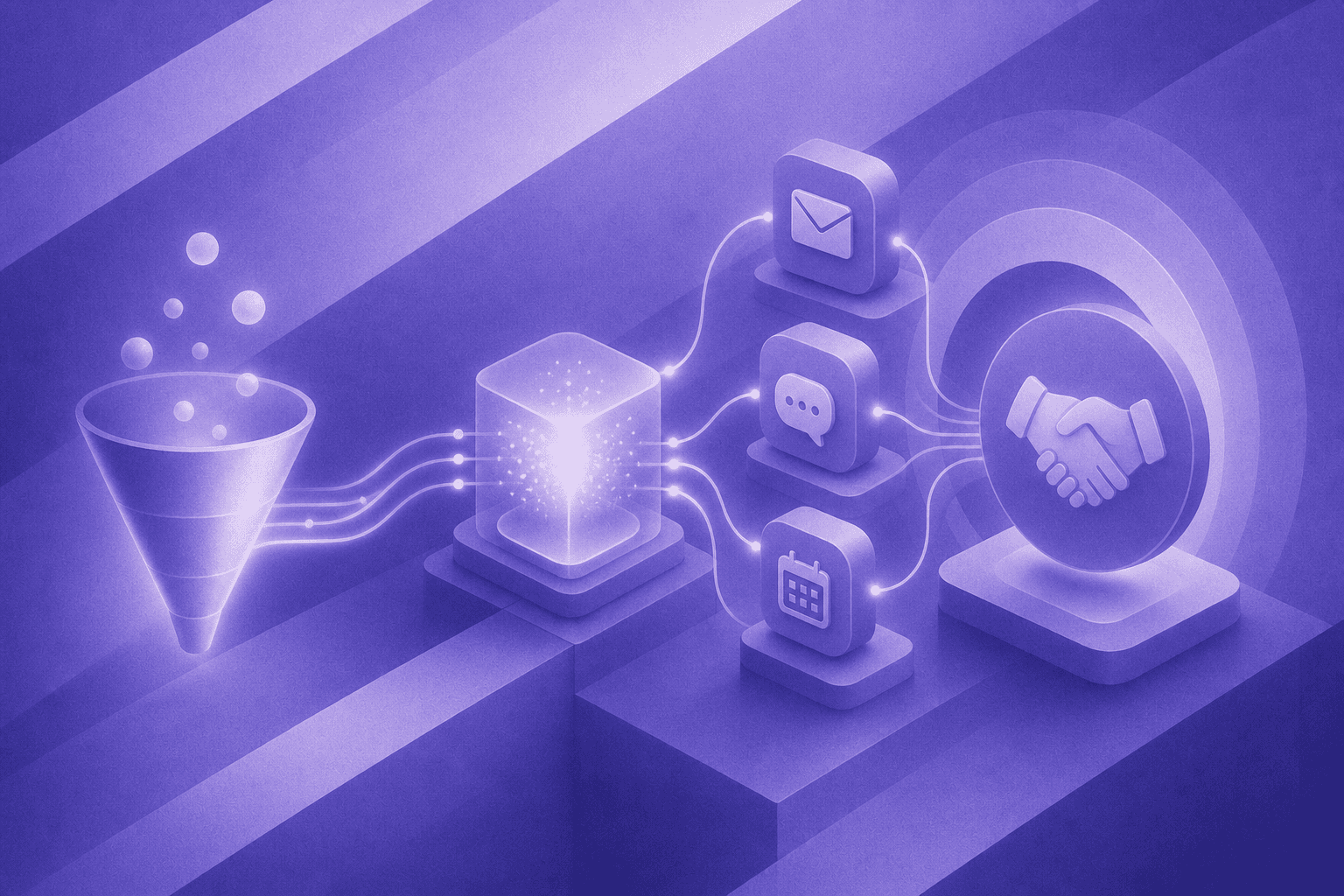
Breakout covers the full buying committee problem where every other tool in this comparison handles only part of it. UserGems tracks job changes. Unify aggregates intent signals. Warmly identifies visitors. Qualified engages them on-site, if your CRM is Salesforce. Breakout runs real-time buying committee identification, person-level deanonymization, on-site AI SDR qualification, and multi-channel follow-up across email and LinkedIn inside a single connected layer, with native integrations across Salesforce, HubSpot, and Marketo.
That consolidation picture, covered above, leaves Breakout as the only independent tool covering the full cycle from a committee member's first site visit through a booked meeting, with no CRM prerequisite and no acquisition forcing your hand. See how Breakout vs Warmly compares directly.
Final Thoughts on Choosing the Right Buying Committee Discovery Tool
Your CRM contact count and your actual buying committee are almost never the same number. The gap between those two figures is where most enterprise deals quietly fall apart. Tools that only surface signals and queue outbound sequences leave the highest-intent moment in the buyer journey untouched. If your evaluation is still open, a concrete next step is to map your last five stalled deals against the stakeholders you had on record. You can start a free 30-day trial with Breakout and see that gap close in real time.
FAQ
How do I choose the right buying committee discovery tool for my team's CRM stack?
Start by identifying your CRM as a hard constraint: Qualified requires Salesforce, Warmly now requires HubSpot following its June 2026 acquisition, and both carry frozen independent roadmaps subordinated to their parent platforms. If your team runs Salesforce, HubSpot, or Marketo, Breakout supports all three natively; if you run any other CRM, Qualified and Warmly are structurally unavailable to you before you assess a single feature.
Is Breakout better than UserGems or Unify for engaging buying committee members in real time?
UserGems and Unify both identify signals and queue outbound sequences, but neither tool engages a buying committee member the moment they land on your site. If a committee member visits during active evaluation and no one engages them immediately, that window closes. Breakout's inbound AI SDR fires in that moment with personalized on-site conversation, objection handling, and in-conversation meeting scheduling, which is a structural gap the other two tools leave unresolved regardless of how strong their signal aggregation is.
When should a Series B+ revenue team choose Warmly or Qualified over Breakout?
Warmly is a reasonable fit if your team runs exclusively on HubSpot, wants broad Bombora and G2 intent coverage, and is comfortable with a product roadmap controlled by HubSpot's priorities and not by a dedicated vendor. Qualified fits if your organization is deeply embedded in Salesforce Agentforce and wants a native conversational layer tied to existing Salesforce objects. Outside those two specific configurations, both tools carry hard CRM dependencies and acquisition-driven roadmap risk that Breakout does not.
What is the difference between a buying committee discovery tool and a basic visitor identification tool?
A visitor identification tool tells you which company visited your site. A buying committee discovery tool goes further: it resolves individual stakeholder identities across an account, maps the full decision network, and in Breakout's case, acts on that information autonomously through AI-driven engagement, qualification, and meeting booking. That gap in practice matters because knowing a company visited without knowing which stakeholders and without engaging them in that moment still leaves your deal strategy built on incomplete information.
How do Breakout's pricing and deployment costs compare to Qualified and UserGems for enterprise evaluation?
Breakout publishes pricing starting at $500 per month with a 30-day free trial and no mandatory onboarding fee. Qualified historically charged $10,000 to $30,000 in onboarding fees and now requires custom quotes through Salesforce. UserGems starts at $3,000 per month with a one-time implementation fee of $3,000 to $10,000. For revenue operations leaders building a business case, the total cost of entry for Breakout is measurably lower, and deployment runs in days compared to the weeks of configuration Qualified and Unify require before delivering pipeline value.