All Blogs
Compares top inbound sales routing and scheduling tools—Breakout, Chili Piper, Qualified, Drift, and Warmly—to help revenue teams cut lead-to-meeting time.

Evan Marshall
Senior Growth AI Strategist
Published On

Inbound sales teams have a timing problem. A lead fills out a form, interest peaks, and then the clock starts running against you. The average business takes over 29 hours to respond to a new lead according to 2026 lead response benchmarks, and that gap is where most deals quietly stall. Good inbound sales routing software closes that gap automatically, and pairing it with solid meeting scheduling for sales teams means a qualified rep is on the calendar before momentum fades. Here's how the top lead routing tools compare so you can find what fits your stack.
TLDR:
Inbound routing tools match leads to reps by territory, ownership, or capacity, then book meetings before momentum fades.
Most tools split routing and scheduling into separate products, which creates handoff gaps and reconciliation work for ops teams.
Chili Piper works for high-volume inbound booking but layers per-seat and per-feature costs that complicate budget forecasting.
Drift's 2023 acquisition by Salesloft has introduced roadmap and pricing uncertainty reflected in G2 and Capterra reviews.
Breakout connects routing logic directly to scheduling in one flow, with native Salesforce and HubSpot sync and no middleware required.
What Are Inbound Sales Routing and Scheduling Tools?
Inbound sales routing and scheduling tools are software systems that automatically connect incoming leads to the right sales rep and get a meeting on the calendar before the prospect disengages. When a prospect fills out a form, chats with a bot, or calls in, these tools decide who should follow up, then hand off that lead through an automated booking flow.
The lead routing tools layer matches leads to reps based on rules you define: territory, account ownership, product line, or rep capacity. Following lead routing best practices on those criteria puts the right rep on the lead before speed-to-contact degrades. The scheduling layer removes the back-and-forth by letting prospects book directly into a qualified rep's calendar the moment intent is expressed.
Together, they close the gap between a lead arriving and a conversation starting.
How We Ranked These Tools
Each tool in this roundup was assessed across four criteria that matter to inbound revenue teams: routing logic depth, scheduling flexibility, CRM integration quality, and time-to-live for new reps. We weighted real user reviews from G2 and Capterra alongside documented feature sets, with particular attention to how each tool handles lead assignment under volume spikes and territory changes. Price transparency also factored in, since opaque seat-based pricing makes budget forecasting unreliable at the Series B+ stage when headcount is shifting fast. We also cross-referenced our findings against scheduling tools for teams to confirm coverage of the full calendar layer.
Best Overall: Breakout
Breakout is built for inbound sales teams that need leads routed and meetings booked without manual handoffs slowing things down. When a prospect fills out a form, Breakout qualifies them in real time, routes them to the right rep based on ownership, territory, or round-robin rules, and lets them book a meeting instantly on that rep's calendar. The entire sequence happens in one flow, so there is no lag between interest and conversation.
Where most lead routing tools stop at assignment, Breakout goes further by connecting routing logic directly to scheduling. Reps get context-rich notifications, and prospects get a frictionless booking experience that reflects the rep they were matched with, not a generic calendar link.
Breakout also integrates with Salesforce, HubSpot, and other CRMs to keep ownership and pipeline data in sync without requiring ops teams to maintain fragile Zap chains or custom middleware. For revenue operations leaders trying to reduce time-to-meeting without adding headcount, that native integration layer is where a lot of the practical value sits.
Qualified

Qualified is a conversational marketing tool built around pipeline generation for Salesforce-native teams. It excels at real-time visitor identification and live chat routing, giving sales reps visibility into who is on their site and why.
That focus is a genuine strength for enterprise accounts running account-based strategies. Where it becomes a constraint is for inbound sales teams that need flexible meeting scheduling, multi-CRM support, or routing logic that lives outside a Salesforce environment. Teams in that position often consider Qualified alternatives for SaaS teams to find a better fit. Teams not standardized on Salesforce will find integration options limited, and pricing reflects an enterprise positioning that may not fit a scaling Series B budget.
Chili Piper
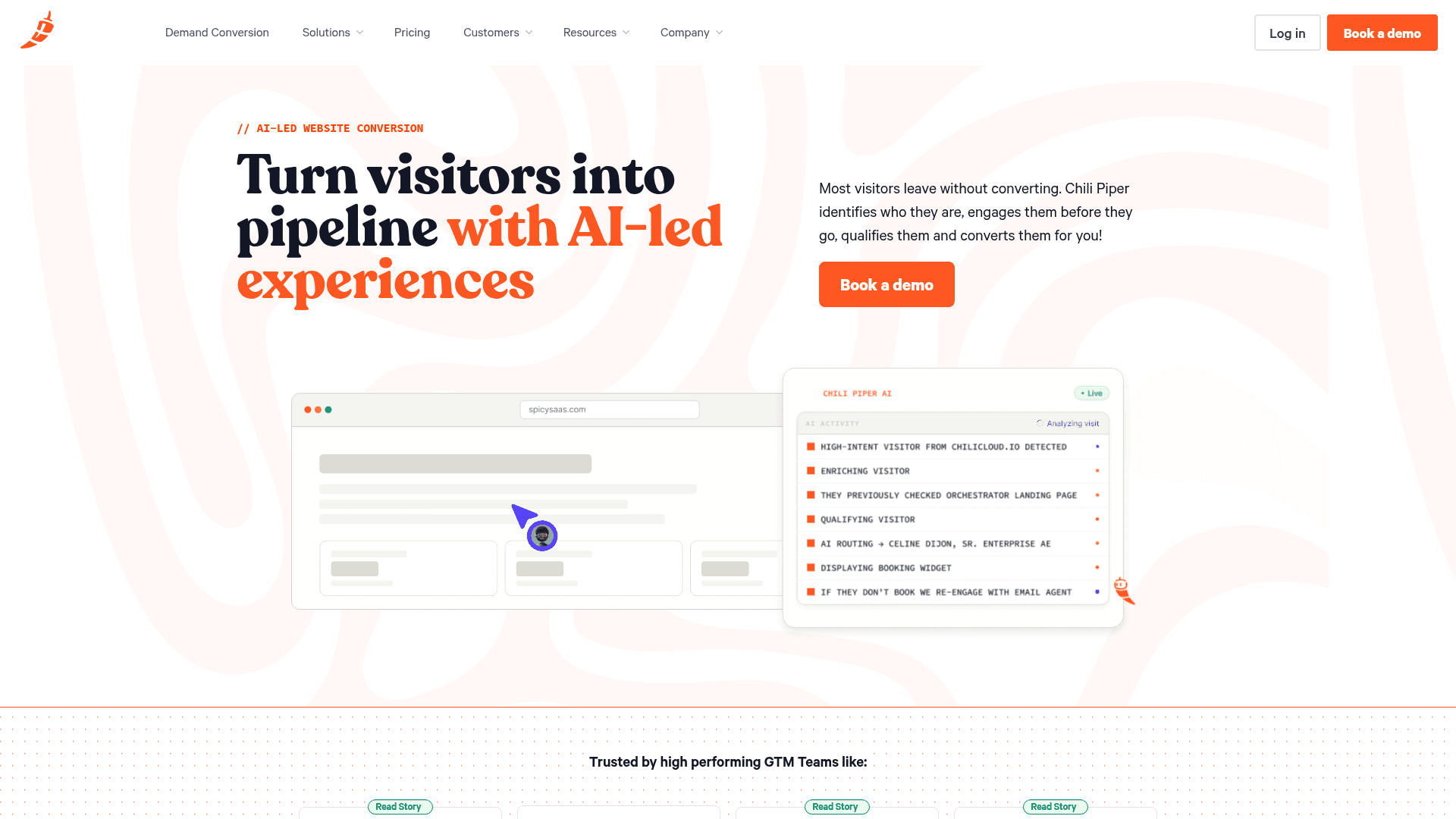
Chili Piper has been a go-to choice for inbound scheduling since the early 2020s, and it earns that reputation in specific contexts. For teams running high-volume demo request flows, its Concierge product routes and books meetings directly from web forms with solid reliability.
Where Chili Piper tends to frustrate buyers is Chili Piper pricing and complexity at scale. Plans layer on per-seat and per-feature costs that can surprise revenue operations teams during budget planning. Setup also requires meaningful configuration time, and routing logic changes often need admin involvement instead of self-service edits.
It serves enterprise teams well when dedicated ops resources are available. For leaner inbound teams who need fast setup and predictable costs, the overhead may outweigh the benefits, making Chili Piper alternatives worth a close look.
Warmly
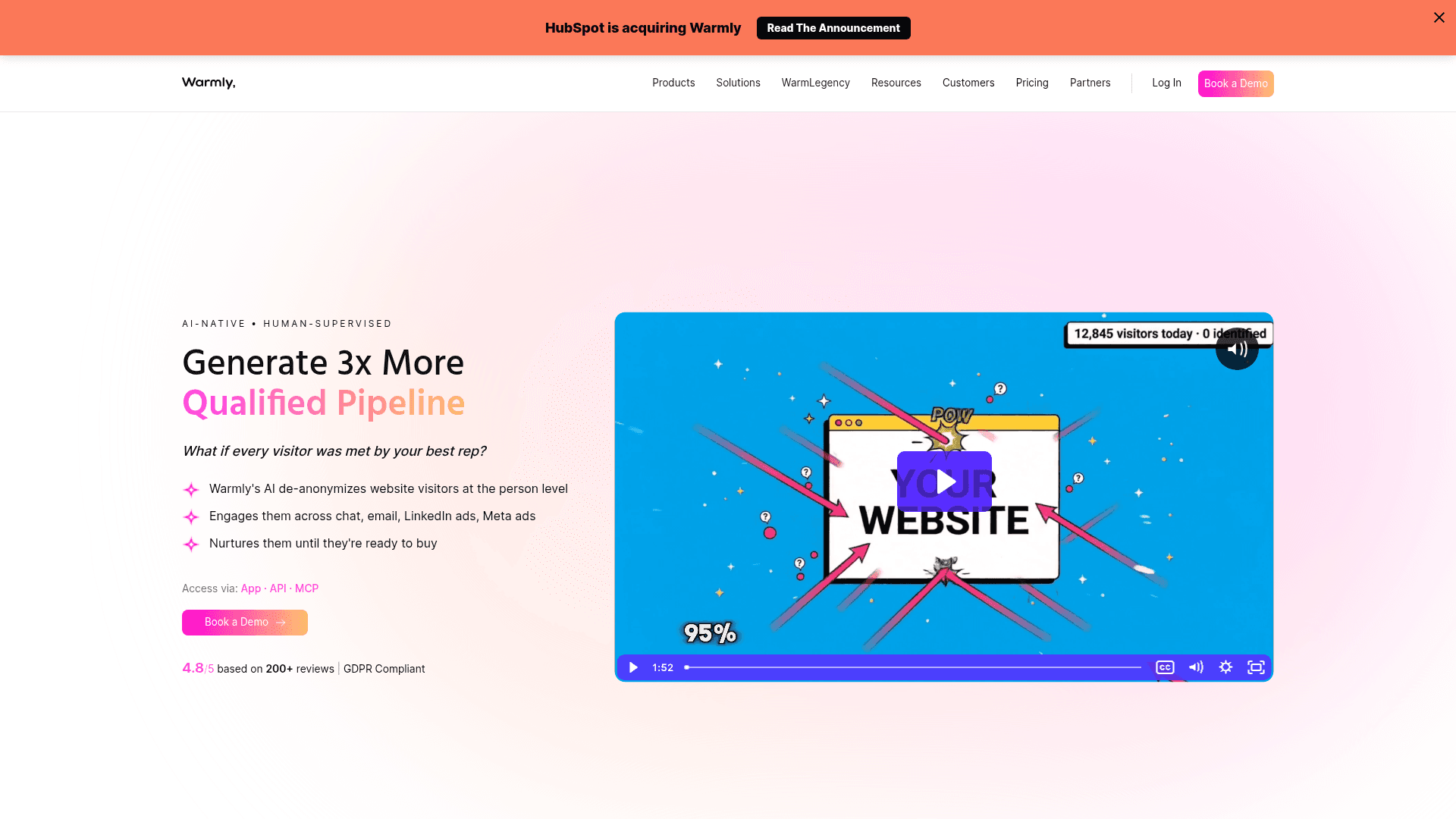
Note: Warmly was acquired by HubSpot on June 30, 2026 and is no longer a standalone tool. Teams currently evaluating it should factor in that its independent roadmap is frozen and pricing is in flux.
Warmly was built as a revenue intelligence tool around website visitor identification, and teams who weighed Warmly vs Chili Piper will find the distinction between the two tools useful as historical context. It could reveal which companies are browsing your site, layer in intent signals, and route those accounts to the right rep before they ever fill out a form. For teams that were running account-based strategies, that proactive identification was genuinely useful.
That said, Warmly is better suited for outbound-leaning ABM motions than pure inbound routing. If your volume comes primarily from form fills and booked meetings, the visitor identification layer adds cost without adding much to your core workflow. Pricing also scales with identified traffic, which can make forecasting tricky as your site grows.
Drift
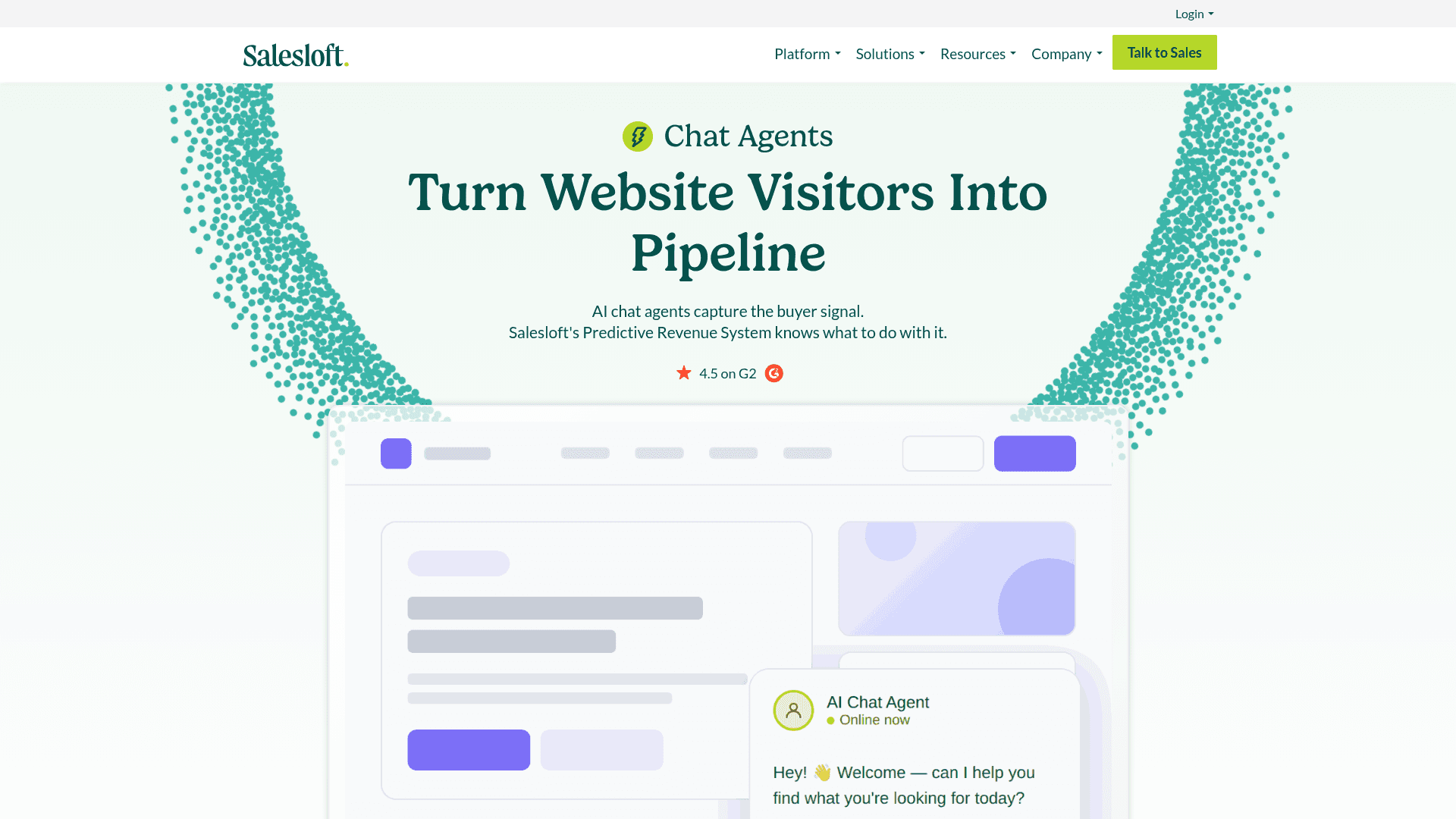
Drift built its reputation on conversational marketing, and for teams already invested in that motion, the chatbot-to-meeting workflow still has real appeal. When a qualified visitor engages with a Drift bot, reps can be looped in for live chat or a meeting can be booked without the visitor ever leaving the page.
That said, Salesloft has sunsetted Drift, and teams currently on the product need to plan a migration. Revenue operations leaders evaluating Drift today should treat it as a deprecated option, not a long-term investment.
For inbound sales routing in particular, Drift works best when your qualification logic lives inside the chatbot conversation and not upstream in your CRM or MAP. If your routing rules depend on CRM field values or enrichment data, expect to build and maintain workarounds.
Feature Comparison Table of Inbound Sales Routing and Scheduling Tools
Here is a comparison of the leading inbound sales routing and scheduling tools across the dimensions that matter most to revenue operations teams reviewing these solutions.
Tool | Routing Logic | Meeting Scheduling | CRM Sync | AI Features | Best For |
|---|---|---|---|---|---|
Breakout | Advanced rules-based + AI | Native, embedded | Real-time, bidirectional | Lead scoring, rep matching | Inbound-focused sales teams |
Qualified | Rules-based (Salesforce-native) | Via integrations | Salesforce only | Visitor identification, live chat routing | Enterprise ABM teams on Salesforce |
Chili Piper | Rules-based | Native | Real-time | Limited | High-volume inbound booking |
Warmly | Account-based, intent-driven | Via integrations | Moderate | Visitor identification, intent signals | Outbound-leaning ABM teams |
Drift | Chatbot-based | Native (in-chat) | Moderate | Conversational AI | Conversational marketing teams |
Each tool serves a different use profile. Chili Piper handles scheduling well but offers limited routing depth, which creates gaps when lead qualification logic grows complex. LeanData suits large, segmented GTM teams but requires separate scheduling integrations, but it requires separate scheduling integrations, adding coordination overhead. HubSpot Meetings works cleanly inside the HubSpot ecosystem but loses value the moment your stack extends beyond it, which is why revenue teams also look into LeanData alternatives when building out a more flexible routing layer.
Why Breakout Is the Best Inbound Sales Routing and Scheduling Tool
Breakout was built for inbound sales teams that need leads routed and meetings booked without the manual overhead that slows most teams down. Where other tools require you to stitch together separate routing, scheduling, and CRM sync products, Breakout handles the full handoff in one place.
When a lead submits a form, Breakout instantly matches them to the right rep based on account ownership, territory, or round-robin rules, then drops a confirmed meeting on the calendar before the prospect ever leaves the page. No follow-up emails, no back-and-forth, no leads going cold while reps sort through queues.
Breakout connects natively with Salesforce and HubSpot, so your CRM data stays current without reconciliation work. Routing logic updates in real time as your team changes, which means you won't inherit the fragile, rep-dependent workflows that break the moment someone leaves the organization.
For revenue operations leaders managing complex sales motions, Breakout also supports conditional routing, lead-to-account matching, and meeting analytics that show exactly where handoff friction occurs in your funnel. For a direct comparison, see Chili Piper vs Breakout.
Final Thoughts on Inbound Sales Routing and Scheduling Tools
No single tool wins for every team, but the decision gets simpler once you know where your leads are going cold. For most inbound sales teams, the friction lives in the handoff, and that's where meeting scheduling for sales teams built around routing logic pays off most. Start with your own funnel data before you commit to any of the tools above.
FAQ
How do I choose between Breakout, Chili Piper, and Calendly for my inbound sales team?
Start by mapping your routing complexity against your scheduling volume: Calendly fits teams whose primary need is lightweight booking with minimal qualification logic, Chili Piper suits high-volume demo request flows where a dedicated ops team can manage configuration and cost layers, and Breakout fits teams that need routing, qualification, and scheduling to happen in a single connected flow without stitching separate tools together. If your lead assignment rules depend on CRM field values, account ownership, or territory logic, that dependency should drive your evaluation more than scheduling features alone.
Is Breakout a better fit than Qualified for teams not running Salesforce?
Yes. Qualified requires Salesforce as a hard dependency and cannot operate with HubSpot, Dynamics, or other CRMs, which makes it a structural mismatch for any team running a non-Salesforce stack. Breakout integrates natively with Salesforce, HubSpot, and Marketo out of the box, so routing logic, lead ownership, and meeting data stay in sync regardless of which CRM your revenue team uses.
When should I consider LeanData over Breakout for lead routing?
LeanData is worth considering when your primary challenge is routing complexity across a large, segmented GTM team with multiple product lines, territories, and ownership hierarchies. It is a specialized routing engine built for that depth. The trade-off is that LeanData requires separate scheduling integrations and does not handle qualification or AI-assisted lead scoring natively, so teams that need routing and booking in one workflow will face coordination overhead that Breakout avoids.
What happened to Warmly and Drift, and how does that affect my tool selection?
Both have exited the independent vendor category: Drift was sunsetted by Salesloft, and Warmly was acquired by HubSpot on June 30, 2026, making it a HubSpot-native capability instead of a standalone tool. Teams currently on either product or actively reviewing them should factor in that Warmly's independent roadmap is frozen and its pricing is in flux, while Drift users migrating off the product will need a replacement that covers visitor deanonymization, SDR alerts, and multi-channel follow-up. The official Drift successor does not offer those capabilities.
How do I know if my team's real problem is routing logic or meeting scheduling?
Pull your last 90 days of pipeline data and identify where qualified leads stopped moving forward: if the drop-off happens between form submission and first meeting, your bottleneck is handoff speed and routing accuracy, which points toward tools with real-time CRM-connected routing like Breakout or Chili Piper. If leads are reaching reps but meetings are not converting, the problem sits in scheduling friction or qualification quality, and that moves the evaluation toward booking experience and lead scoring depth instead of routing rules alone.