
All Blogs
A quick look at better options than LeanData.

Evan Marshall
Senior Growth AI Strategist
Published On

Revenue teams think they have solved lead routing.
Or at least, their stack suggests they have.
Tools like LeanData make it easier to assign leads, match accounts, and manage ownership inside Salesforce. But pipeline doesn’t scale the way teams expect. Because routing isn’t the real problem.
The gap sits earlier.
Buyers visit your site, show intent, and leave without ever entering your funnel. By the time a lead gets routed, the moment is already gone.
That’s why more teams start exploring LeanData alternatives.
Not to improve distribution.
To improve what gets distributed in the first place.
If you are evaluating options, you are likely asking:
How do we capture more high-intent visitors before they bounce?
How do we qualify faster without adding SDR headcount?
How do we turn inbound traffic into actual pipeline, not just routed leads?
In this guide, we break down the top LeanData alternatives in 2026.
We compare how each platform handles routing, qualification, and inbound conversion, and where they actually drive revenue.
Because the best teams today don’t optimize routing workflows.
They optimize conversion before routing even begins.
Why Teams Are Switching from LeanData
LeanData has been a strong solution for bringing order to lead routing.
But as go-to-market strategies evolve, teams are starting to expect more than just structured distribution. They want flexibility, faster execution, and better control across the entire inbound journey.
That is where the gaps begin to show.
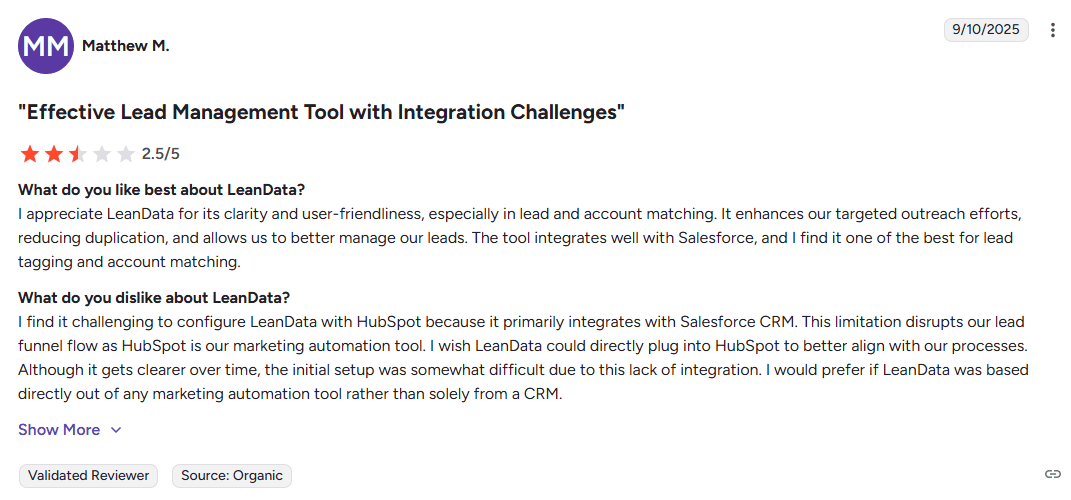
1. Salesforce Dependency Limits Flexibility
LeanData is built deeply inside Salesforce.
That works for teams fully committed to the ecosystem. But most modern revenue stacks are no longer Salesforce-only. Teams use multiple tools across marketing, sales, and data.
This creates a disconnect.
Routing stays locked within Salesforce, while the rest of the funnel evolves outside it. As a result, adapting workflows becomes slower and less flexible.
2. Complex Setup and Ongoing Maintenance
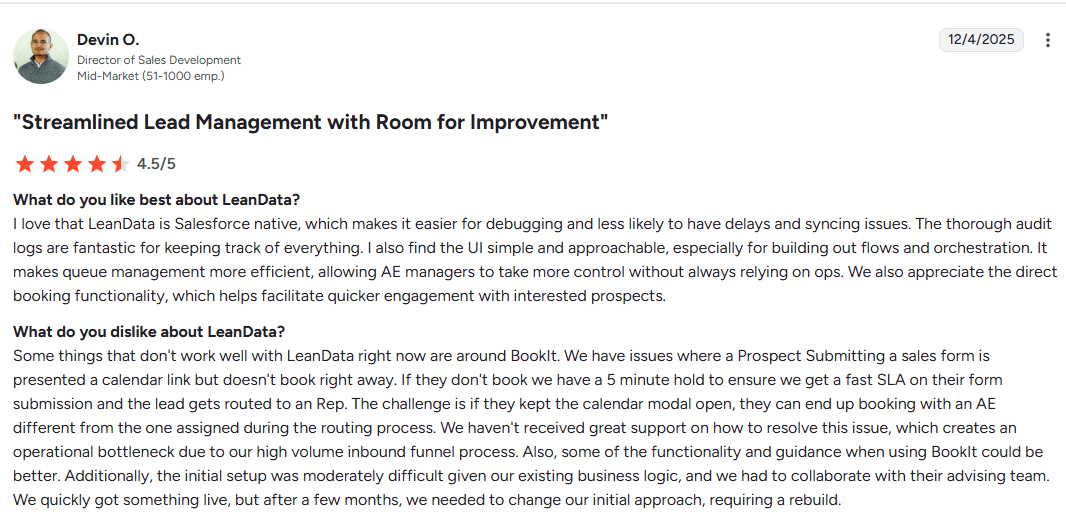
LeanData is useful in many ways, but it is not lightweight.
Its routing capabilities rely on detailed logic, workflows, and rules that require constant oversight. RevOps teams often spend significant time building, testing, and maintaining these systems.
As GTM strategies evolve, this complexity compounds.
What starts as structured routing can quickly turn into an operational burden that slows down execution instead of enabling it.
3. No Frontend Conversion Layer
LeanData improves what happens after a lead is captured.
It does not influence what happens before.
There is no built-in way to:
Engage anonymous visitors
Capture intent in real time
Qualify leads before they enter the funnel
This creates a critical gap.
Teams optimize routing, but still lose high-intent buyers who never convert into leads in the first place.
4. Shift Toward AI and Real-Time Engagement
The way buyers interact with websites has changed.
They expect instant responses, not forms and delays.
Modern tools reflect this shift. They focus on:
Identifying visitors as they land
Starting conversations immediately
Qualifying intent in real time
This changes the entire motion.
Instead of waiting for leads to come in and routing them efficiently, teams now prioritize capturing and converting intent as it happens.
That is the real reason teams are moving away from LeanData.
The 10 Best LeanData Alternatives in 2026
LeanData focuses on routing leads once they enter your system. But most pipeline is won or lost before that moment.
That is why modern tools are shifting upstream. They don’t just distribute leads. They capture, qualify, and convert intent in real time.
Below are the best LeanData alternatives in 2026, starting with a platform that redefines how inbound actually works.
1. Breakout (Best for AI-Led Inbound Conversion)
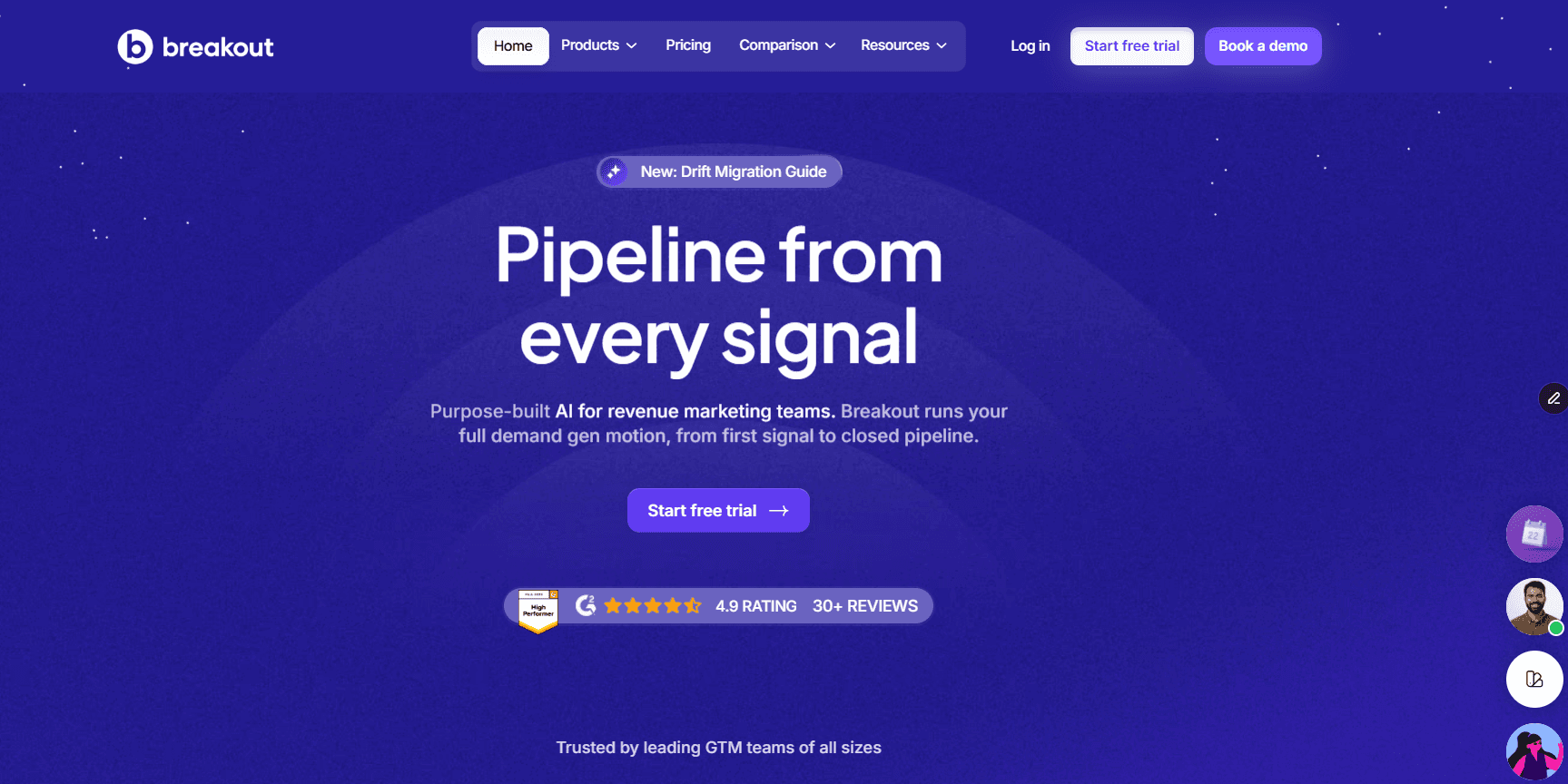
LeanData routes leads after capture.
Breakout converts visitors before they become leads.
This is the fundamental shift.
Instead of relying on forms and delayed follow-ups, Breakout engages buyers the moment they land on your website. It identifies who they are, starts a conversation instantly, and qualifies them in real time.
By the time a lead reaches your CRM, it is already sales-ready.
What makes Breakout different
1. Real-Time AI Engagement, Not Static Routing
Traditional tools rely on predefined CRM rules.
Breakout replaces that with live, adaptive conversations. It engages visitors instantly, answers questions, and qualifies them while they are still exploring your product.
This matters because intent is time-sensitive. The faster you engage, the higher the conversion.
2. End-to-End Inbound Flow, Not Just a Routing Layer
Breakout doesn’t sit at the end of the funnel. It owns the entire journey:
Visitor identification → AI-led qualification → meeting booking
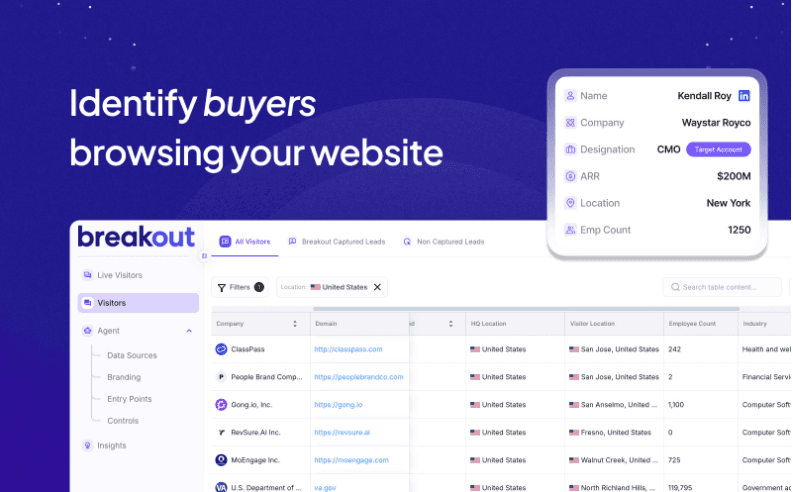
It can deanonymize up to 88% of website visitors, giving teams visibility into accounts that would otherwise remain invisible.
Instead of waiting for leads, it creates them.
3. Autonomous Qualification That Scales Without SDR Bandwidth
Breakout acts like a trained SDR.
It asks structured questions, captures key data points (role, company, use case), and qualifies prospects naturally through conversation.
SDRs stay in control but don’t need to handle every interaction. They step in only when needed, while the AI manages volume and consistency.
4. Converts Existing Traffic Into Pipeline
Most tools optimize how leads are distributed.
Breakout improves how many leads you get in the first place.
Teams using Breakout see:
Higher visitor engagement
More conversations started
Measurable lift in pipeline from the same traffic
In some cases, it contributes directly to 20%+ of pipeline without increasing SDR headcount.
5. Captures and Converts Missed Intent (Even After Visitors Leave)
Breakout doesn’t stop at on-site engagement.
If a high-intent visitor leaves without booking, it can identify the account and trigger personalized follow-ups across email or LinkedIn.
This ensures demand isn’t lost just because a form wasn’t filled.
Why This Makes Breakout the Best LeanData Alternative
LeanData optimizes routing after a lead exists.
Breakout changes what enters the pipeline in the first place.
It combines:
Visitor deanonymization
Real-time AI conversations
Automated qualification
Instant and follow-up conversion
All in one flow.
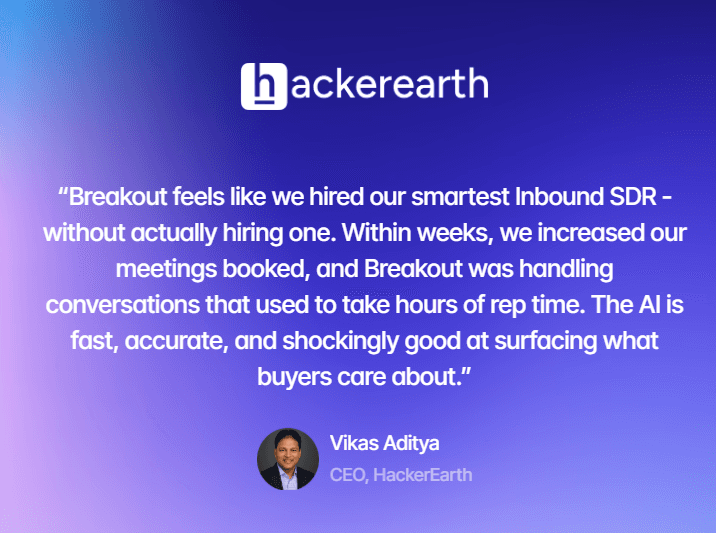
See How Breakout Helped HackerEarth
With Breakout, HackerEarth started engaging visitors in real time instead of waiting for form fills.
High-intent prospects were qualified instantly and routed to sales, leading to faster conversations and a more demo-ready pipeline without increasing SDR effort.
2. Chili Piper (Best for Frontend Scheduling & Routing)
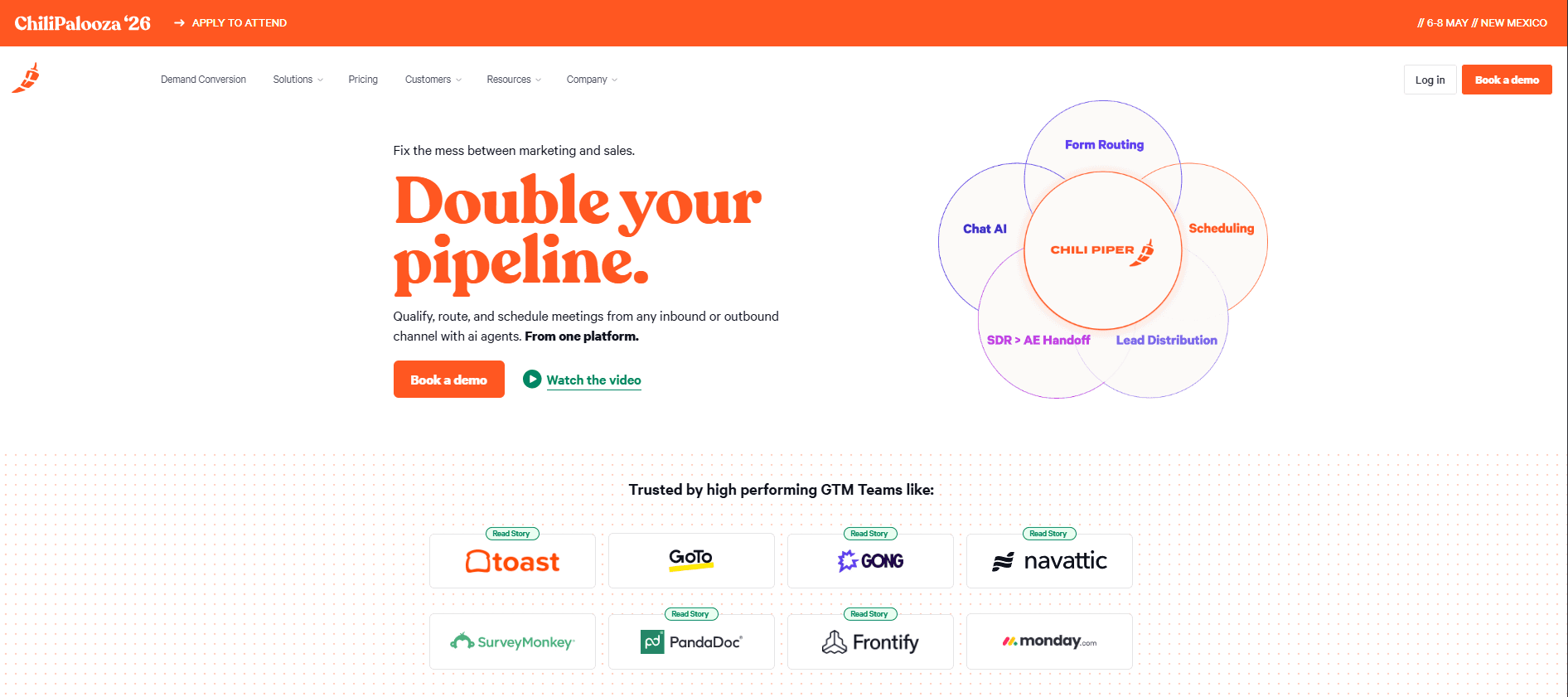
Chili Piper is a tool designed to turn form fills into meetings.
Instead of sending leads through a delayed routing process, it qualifies, routes, and presents available time slots the moment a form is submitted.
Key Features
Form-to-meeting conversion
Calendar-based routing using round-robin, territory, or ownership rules
Integrations with Salesforce, HubSpot, and calendars
Drawbacks
Depends entirely on form submissions and misses pre-form intent
Focused only on scheduling, not full-funnel conversion or qualification
Advanced routing setups require ongoing RevOps effort
Pricing can increase quickly as team size and usage grow
Verdict
Chili Piper remains one of the tools for improving speed to meetings.
It is a strong fit for teams with a form-driven inbound motion that want to reduce drop-offs after conversion. But it does not address what happens before a lead submits a form.
In 2026, it works best as a layer within a traditional funnel, not as a complete inbound solution.
3. Qualified (Best for Conversational Routing)
Qualified brings routing into a conversational layer.
Instead of relying only on forms, it engages website visitors through chat, qualifies intent, and routes prospects to the sales reps.
This makes it especially useful for teams prioritizing conversion first and account-based engagement.
Key Features
Real-time website chat to engage and qualify visitors
AI-assisted routing based on intent, account data, and behavior
Strong Salesforce integration for seamless data sync and workflows
Ability to route conversations directly to SDRs or book meetings
Drawbacks
Often requires human SDR involvement to handle and convert conversations
Set up and optimization can be complex for teams without mature RevOps
Pricing is typically enterprise-level and not publicly transparent
Can feel heavy for teams with simpler inbound motions
Verdict
Qualified is a fair choice for teams that want to prioritize and convert high-intent visitors through conversations.
It works best for mid-market and enterprise companies with established SDR teams and structured processes. If you already have traffic and need better qualification and routing through chat, it delivers.
But it is not fully autonomous.
In 2026, Qualified fits teams that want conversational engagement with human oversight, not a fully AI-led inbound motion.
4. Default (Best All-in-One Inbound Platform)
Default is built for teams that are tired of stitching together multiple inbound tools.
Instead of managing separate systems for forms, enrichment, scheduling, and routing, Default brings everything into one place.
Key Features
Combines forms, enrichment, scheduling, and routing into a workflow
Gives RevOps teams a unified layer to manage inbound operations
No-code workflows make it easier to adapt routing and qualification logic
Reduces dependency on multiple tools and integrations
Drawbacks
Can feel heavy if your inbound motion is still simple
Requires RevOps ownership to fully utilize its capabilities
Focuses more on managing leads than improving how they are captured
Does not prioritize real-time visitor engagement
Verdict
Default makes the most sense for teams dealing with growing operational complexity.
If your stack feels fragmented and hard to manage, it brings structure and control. But it does not fundamentally change inbound conversion.
It is a strong choice for simplifying workflows and consolidating tools, not for rethinking how pipeline is generated.
5. RevenueHero (Best for Simpler Routing Automation)
RevenueHero is built for teams that want to fix routing and scheduling without adding complexity.
It focuses on doing the basics really well. Qualify leads, route them correctly, and get meetings booked fast.
The setup is quick, the interface is straightforward, and most teams can get it running without heavy RevOps involvement.
Key Features
Fast setup with minimal technical or RevOps dependency
Strong form-to-meeting workflows with real-time booking
Flexible routing rules based on territory, ownership, or round-robin
Native integrations with Salesforce, HubSpot, and calendars
Drawbacks
Still depends on form submissions to trigger workflows
Limited depth compared to enterprise routing platforms
Does not handle pre-form engagement or inbound conversion
Fewer advanced orchestration capabilities for complex GTM setups
Verdict
RevenueHero is a great fit if you want a simpler, faster alternative to heavier routing tools.
It works well for teams that need reliable routing and booking without long implementation cycles. If your goal is to clean up and speed up your existing funnel, it delivers.
But it stays within that scope.
In 2026, RevenueHero is ideal for simplifying routing and scheduling, not for transforming how inbound pipeline is created.
6. HubSpot Sales Hub (Best for HubSpot-Native Teams)
HubSpot Sales Hub is built for teams that want everything to run inside one system.
Instead of adding separate tools for routing, workflows, and scheduling, HubSpot handles it natively within its CRM.
Leads can be captured through forms, qualified using workflows, assigned automatically, and pushed into meetings without leaving the platform.
For teams already using HubSpot, this removes the need for additional routing tools entirely.
Key Features
Native lead routing and assignment using workflows and automation rules
Built-in meeting scheduler with real-time calendar availability and round-robin distribution
Form-based qualification with conditional logic and automated follow-ups
Unified CRM that tracks leads, deals, and interactions in one place
Drawbacks
Works best only if your entire stack is already on HubSpot
Routing flexibility is limited compared to dedicated platforms like LeanData
Advanced workflows and logic require higher-tier plans
Still relies heavily on form-based capture rather than real-time engagement
Verdict
HubSpot Sales Hub is a strong choice if you are already committed to the HubSpot ecosystem.
It simplifies your stack and gives you enough routing, automation, and scheduling to run a clean inbound motion without extra tools. For small to mid-sized teams, that is often more than enough.
But it is not built for deep routing complexity or modern AI-led inbound.
In 2026, HubSpot works best as an all-in-one system for simplicity and consolidation, not as a specialized solution for advanced routing or conversion.
7. Tray.ai (Best for Custom Workflow Automation)
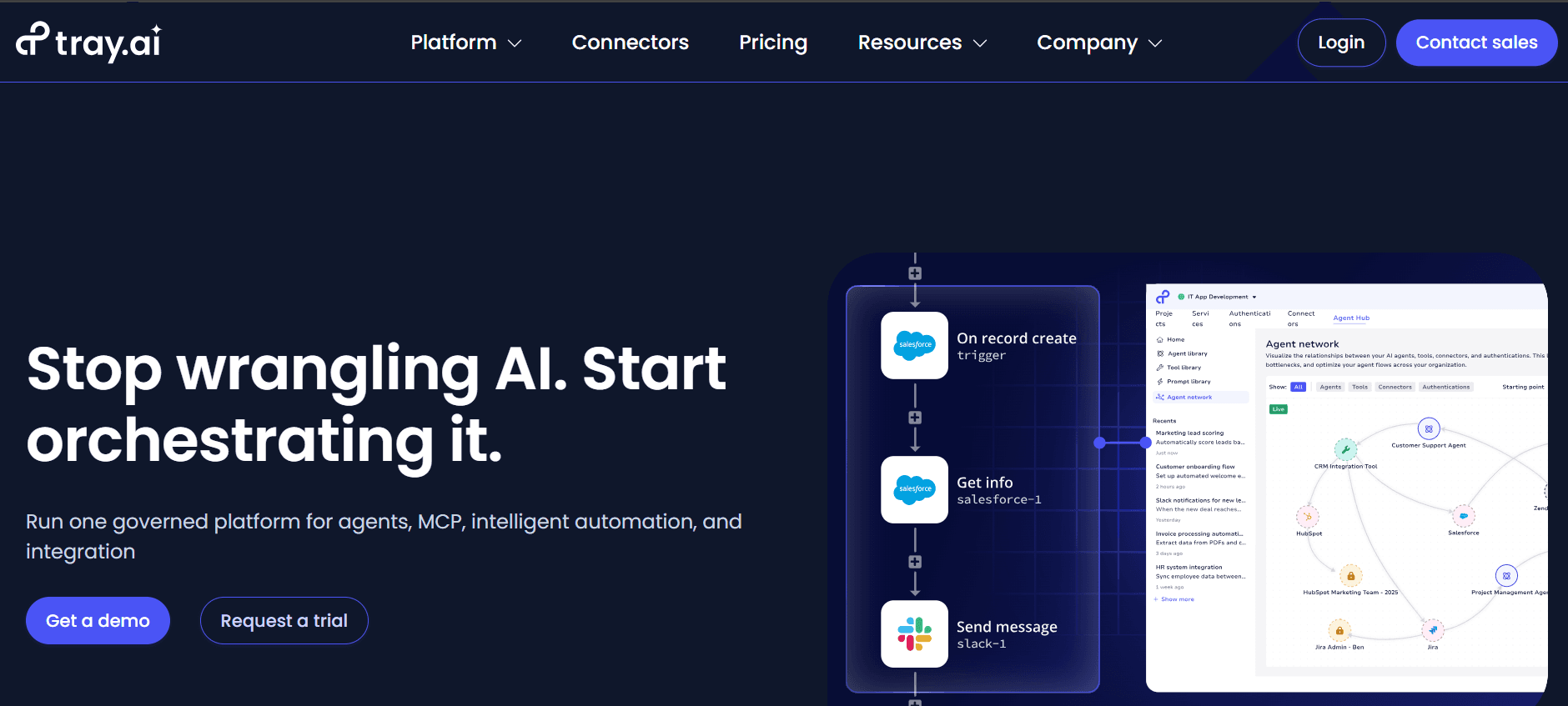
Tray.ai is built for teams that need full control over how their systems talk to each other.
It is not a plug-and-play routing tool. It is an integration and automation layer where you can design complex workflows across your entire GTM stack. From lead capture to routing, enrichment, notifications, and beyond, everything can be customized to fit your exact process.
Key Features
Low-code visual builder to design complex, multi-step workflows without heavy engineering
Deep integrations with hundreds of tools and APIs across CRM, marketing, and data systems
Advanced logic with conditions, branching, and data transformation for custom routing flows
Scalable automation layer that supports high-volume, enterprise-grade workflows
Drawbacks
Not purpose-built for lead routing or inbound conversion
Requires technical or RevOps expertise to design and maintain workflows
Setup and implementation can take longer compared to plug-and-play tools
No native frontend engagement or conversion layer
Verdict
Tray.ai is best suited for teams that need custom orchestration across multiple systems, especially at scale. If your routing logic is highly specific or spans multiple tools, it gives you the flexibility that most platforms cannot.
But it is not a direct replacement for LeanData.
It works best as an automation backbone for complex GTM systems, not as a standalone solution for routing or inbound conversion.
8. Segment (Best for Data-Driven Routing)
Segment approaches routing from a completely different angle.
It is not a routing tool in the traditional sense. It is a customer data platform that collects, unifies, and routes data across your entire stack.
Instead of assigning leads based on static rules, Segment enables teams to route and prioritize based on real-time behavioral data, identity resolution, and unified customer profiles.
This makes routing smarter, but also more dependent on your data maturity.
Key Features
Collects and unifies customer data from websites, apps, and multiple tools into a single profile
Routes data to hundreds of downstream tools, including CRMs, marketing platforms, and analytics systems
Enables data-driven lead scoring and prioritization based on behavior and engagement signals
Real-time event streaming allows teams to act on customer intent instantly across systems.
Drawbacks
Not a dedicated lead routing or scheduling tool
Requires strong data infrastructure and engineering support
Needs additional tools for execution (routing, engagement, or conversion)
Setup and implementation can be resource-intensive
Verdict
Segment solves for data, not routing directly.
It works best for teams that want to build a data-driven foundation for decision-making and orchestration across tools. If you have the infrastructure and resources, it enables much smarter prioritization and routing logic.
In 2026, Segment is ideal if your goal is unifying and activating customer data at scale, not if you are looking for a standalone routing or inbound conversion solution.
9. Salesforce Flow (Best Native Alternative Inside Salesforce)
Salesforce Flow is the closest you get to replacing LeanData without leaving Salesforce.
It is a built-in automation layer that lets you create routing logic, workflows, and assignments directly inside the CRM.
Using a visual, no-code builder, teams can design flows that trigger on lead creation, update records, assign ownership, and automate follow-ups based on custom rules. In simple terms, it gives you the flexibility to recreate routing logic without relying on external tools.
Key Features
Native automation inside Salesforce with no additional tools required
Visual, no-code builder to create routing rules and workflows
Supports lead assignment based on territory, score, or custom criteria
Can automate multi-step processes like follow-ups, updates, and notifications
Drawbacks
Requires manual setup and ongoing maintenance for complex routing logic
Becomes difficult to manage as workflows scale and evolve
Limited out-of-the-box capabilities compared to dedicated routing platforms
No frontend engagement or inbound conversion layer
Verdict
Salesforce Flow is a practical option if you want to stay fully inside Salesforce and avoid additional tools.
It works well for teams with strong admin or RevOps support who are comfortable building and maintaining custom workflows. For simpler routing needs, it can replace LeanData effectively. But it comes with tradeoffs.
In 2026, Salesforce Flow is best suited for teams prioritizing cost control and native workflows, not for those looking for advanced routing or modern inbound conversion capabilities.
10. 6sense (Best for Account-Based Routing)
6sense takes a data-first approach to routing. Instead of assigning leads based on forms or rules, it identifies which accounts are already in-market, predicts their buying stage, and helps teams prioritize outreach accordingly.
It uses AI, intent data, and predictive analytics to surface high-value accounts before they even raise their hand.
Key Features
AI-driven intent data to identify accounts actively researching solutions
Predictive scoring to prioritize accounts based on likelihood to convert
Account-level insights across buying stage, engagement, and behavior
Multi-channel orchestration across ads, email, and sales workflows
Drawbacks
Not a dedicated routing or scheduling tool
Requires strong data maturity and existing traffic to be effective
High cost and longer implementation cycles for most teams
Does not directly handle real-time inbound conversion or engagement
Verdict
6sense is powerful for teams running account-based strategies at scale.
It works best for enterprise teams that want to prioritize high-value accounts using intent data and predictive insights. If your GTM motion is ABM-heavy, it adds a strong intelligence layer on top of your stack. But it does not replace routing tools directly.
In 2026, 6sense is ideal for deciding who to prioritize, not for capturing and converting inbound in real time.
Quick Comparison: LeanData vs Top Alternatives
To understand where LeanData stands today, it helps to compare it across the factors that actually impact pipeline: setup, flexibility, routing depth, and how early each tool engages buyers.
Older tools optimize routing after capture. Newer tools optimize conversion before routing.
Tool | Ease of Setup | CRM Integration | AI & Real-Time Engagement |
LeanData | Complex setup requires RevOps and Salesforce expertise | Deeply Salesforce-native | Limited real-time engagement, mostly rule-based routing |
Breakout | Fast setup, minimal RevOps dependency | CRM-agnostic, integrates across tools | Visitor deanonymization + real-time AI conversations + instant qualification |
Chili Piper | Moderate setup with routing and calendar configuration | Works with Salesforce and HubSpot | Real-time scheduling, but only after form fill |
Qualified | Complex setup for full implementation | Strong Salesforce dependency | Chat-based engagement with partial AI + SDR involvement |
Default | Moderate, workflow-driven setup | Flexible across multiple CRMs | Some AI in workflows, limited frontend engagement |
LeanData still leads in structured routing inside Salesforce.
But the gap is clear.
Most tools either:
Improve speed after a form fill, or
Add layers of routing and workflow control
Very few change what happens before a lead exists.
Breakout stands out because it operates earlier in the journey. It identifies visitors, engages them instantly, and qualifies intent before routing even begins.
That shift defines the next wave of revenue tools.
Routing Isn’t Enough. Conversion Is What Wins
Most teams try to fix pipeline by improving routing. But routing only works with what already exists.
High-intent buyers visit your site every day. Most leave without converting. No routing logic can recover that.
That is why the shift to inbound AI SDRs is happening now.
Instead of waiting for form fills, these systems:
Identify visitors in real time
Start conversations instantly
Qualify intent before it’s lost
Route only sales-ready opportunities
This simplifies everything downstream.
Breakout is built for this exact shift.
It turns your website into an active pipeline engine. It captures intent as it happens and converts it into qualified meetings without adding headcount.
If your goal is more pipeline, faster, the answer isn’t better routing.
FAQs
1. What are the best LeanData alternatives in 2026?
The best LeanData alternatives in 2026 include tools like Breakout, Chili Piper, Qualified, Default, and RevenueHero. Each tool solves a different part of the revenue workflow, from lead routing and scheduling to inbound conversion and AI-driven engagement.
2. Why are teams moving away from LeanData?
Teams are moving away from LeanData because it focuses only on routing after lead capture.
Modern revenue teams want tools that also handle visitor identification, real-time engagement, and inbound conversion, not just distribution.
3. What should you look for in a Salesforce lead routing tool?
When evaluating Salesforce lead routing tools, look for:
Ease of setup and flexibility
Lead-to-account matching accuracy
Real-time routing and response speed
Integration with your CRM and GTM stack
Ability to improve conversion, not just routing
4. What is the difference between lead routing and inbound conversion tools?
Lead routing tools assign leads after they enter the CRM.
Inbound conversion tools focus on engaging, qualifying, and converting visitors before they become leads.
This is the key shift in modern revenue orchestration platforms.
5. How does Breakout compare to LeanData?
Breakout focuses on capturing and converting inbound traffic in real time, while LeanData focuses on routing leads after capture.
Breakout identifies anonymous visitors, qualifies them through AI conversations, and routes only sales-ready leads. This results in faster pipeline creation and better lead quality.
6. Are AI SDR tools replacing traditional lead routing software?
AI SDR tools are not fully replacing routing software, but they are redefining the workflow.
They handle first-touch engagement, qualification, and intent capture, reducing the volume of low-quality leads that need routing. This makes traditional routing tools less central to pipeline generation.
7. Which tool is best for improving inbound conversion rates?
For improving inbound conversion, tools that engage visitors in real time perform best.
Platforms like Breakout focus on identifying visitors, starting conversations instantly, and qualifying intent, helping teams convert more of their existing traffic into pipeline.


