All Blogs
A quick look at UserGems reviews, pricing, and alternatives.

Evan Marshall
Senior Growth AI Strategist
Published On

The UserGems reviews you've read mention strong champion tracking but also flag pricing that doesn't scale well for smaller GTM teams and data delays that reduce the value of a warm contact alert. If you're deciding whether to move forward or test a different tool that covers more of the signal-to-sequence workflow, the trade-offs matter more than the feature set. We'll walk through how UserGems has evolved past pure job change tracking, what users consistently flag as gaps, and where alternatives like Breakout fit if you need real-time intent or tighter CRM integration without the manual routing work.
TLDR:
UserGems tracks job changes and processes 600+ signals, but G2 reviews flag pricing, data delays, and workflow gaps.
Common friction points include enterprise-tier cost structure and manual steps between signal detection and outreach.
Breakout monitors broader intent signals and automates signal-to-sequence without stitching tools together.
Clay requires technical setup, Apollo trades signal depth for lower price, and each fits different team structures.
What Is UserGems and How Does It Work?
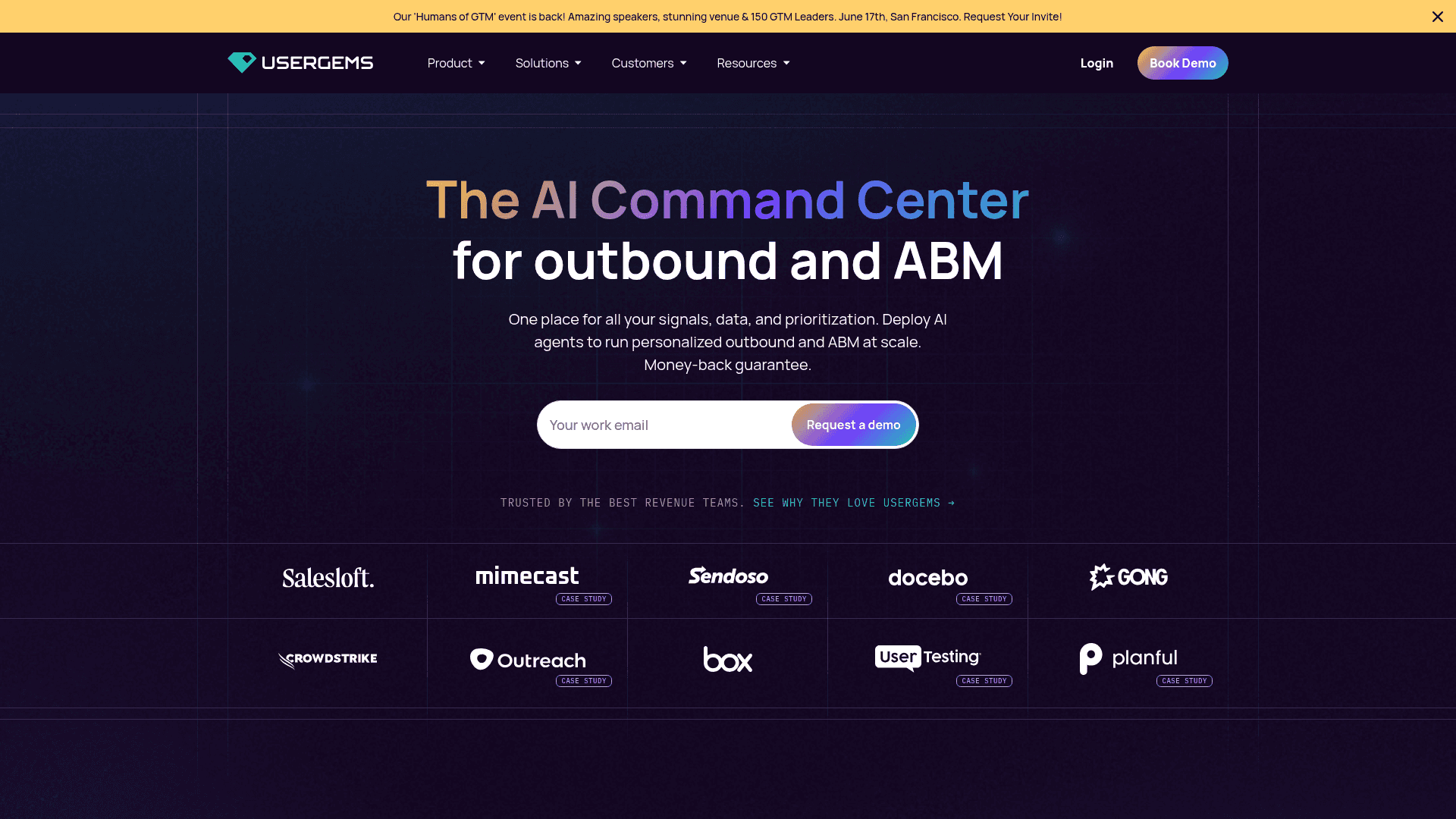
UserGems started as a champion tracking tool. When a key contact left a customer account and landed somewhere new, the system would flag that person as a warm lead and push the job change directly into Salesforce. That core idea still drives the product, but the scope has expanded.
UserGems now positions itself as an AI GTM command center, pulling in 21+ contact and account-level signals including job changes, website visits, tech stack changes, hiring trends, funding announcements, M&A activity, and prior closed-lost context. An AI scoring engine processes 600+ signals and refreshes contact and account scores on a weekly cadence.
In January 2025, UserGems launched Gem-E, its AI agent. Gem-E for Outbound functions as an AI SDR that builds contact lists, scores accounts, and generates email sequences, call scripts, and LinkedIn messages. Gem-E for ABM focuses on account prioritization and coordinates sales activity with marketing ad spend. Both modes serve B2B revenue teams, with Salesforce as the primary CRM anchor.
Why Consider UserGems Alternatives?
UserGems is a well-regarded tool for tracking job changes and champion movement, but several patterns in user feedback point to real friction that's worth weighing before you commit.
The most consistent complaint in G2 and Capterra reviews is pricing. UserGems sits at the enterprise tier, and buyers report that the contract structure makes it difficult to right-size for smaller GTM teams or leaner pipeline stages. If you're running a tight budget cycle, the cost-to-signal ratio can feel off, especially when a large share of tracked contacts don't convert into active pipeline.
A second theme is data freshness. Some reviewers note delays between a contact's actual job change and when it surfaces in UserGems, which matters when the window to reach a warm contact is narrow. A stale alert on a champion who moved three months ago has far less value than a same-week notification.
There's also a workflow gap. UserGems surfaces signals well, but several users flag that acting on those signals still requires manual steps or custom CRM work. For teams that want signal-to-sequence without stitching tools together, that gap adds friction.
None of this makes UserGems a poor choice for every team. But if pricing flexibility, data timeliness, or tighter workflow integration rank high on your criteria list, the alternatives below are worth a close look.
Best UserGems Alternatives in June 2026
UserGems tracks champion movement and buying signals well, but it sits in a narrow category. If you need broader pipeline coverage, richer data, or a different pricing structure, these alternatives are worth a close look.
Breakout
Breakout is an AI-powered pipeline intelligence tool built for revenue teams that need to act on buying signals without building a complex workflow from scratch. Where UserGems focuses primarily on champion tracking, Breakout surfaces job change alerts, account-level intent signals, and warm outbound triggers across your entire addressable market. The result is a wider signal surface with less manual configuration required from your team.
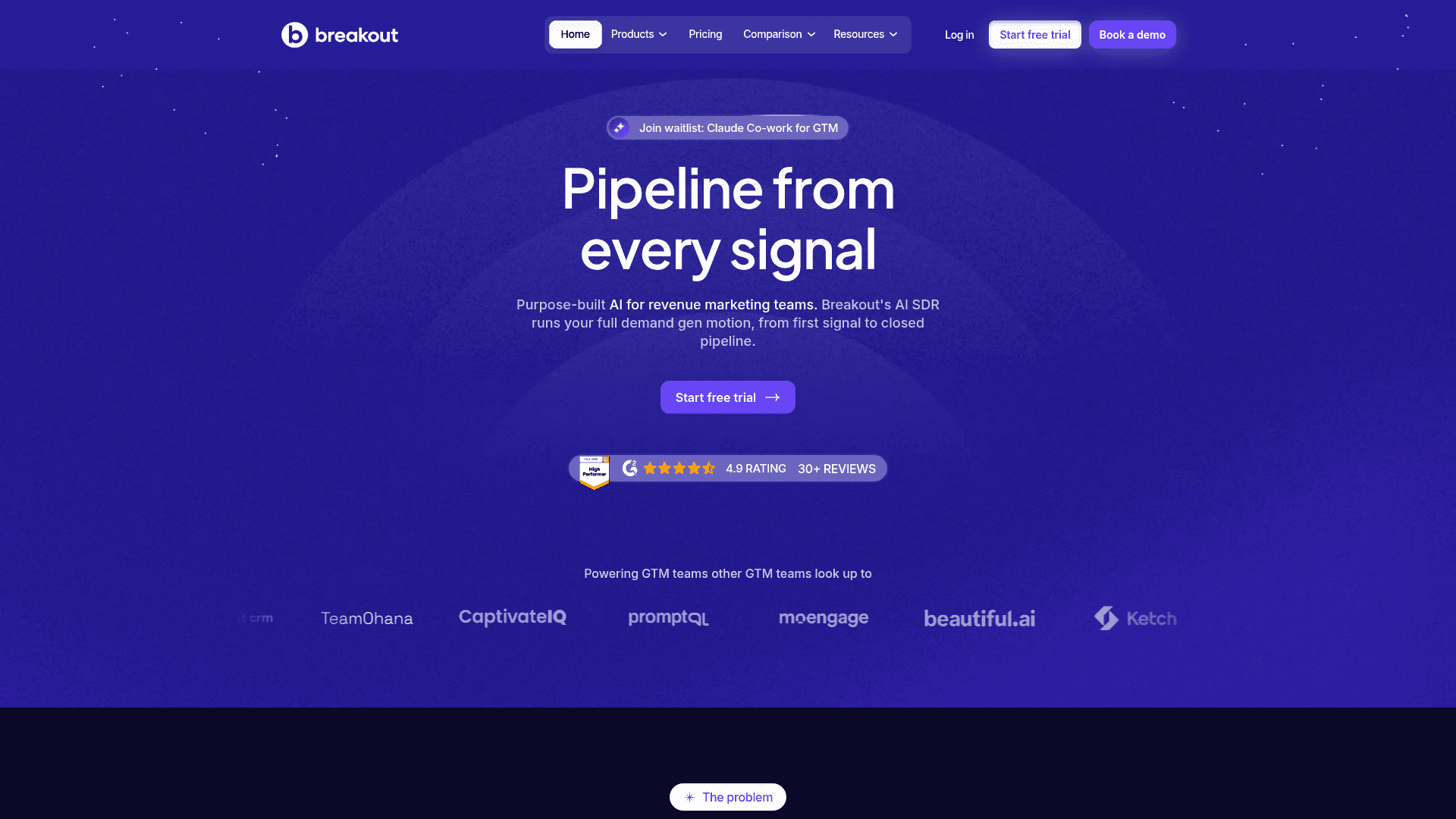
For Series B+ companies running multi-channel outbound, Breakout's signal prioritization means your reps spend time on accounts that are actually in motion, not accounts that simply fit a static ICP profile.
Clay
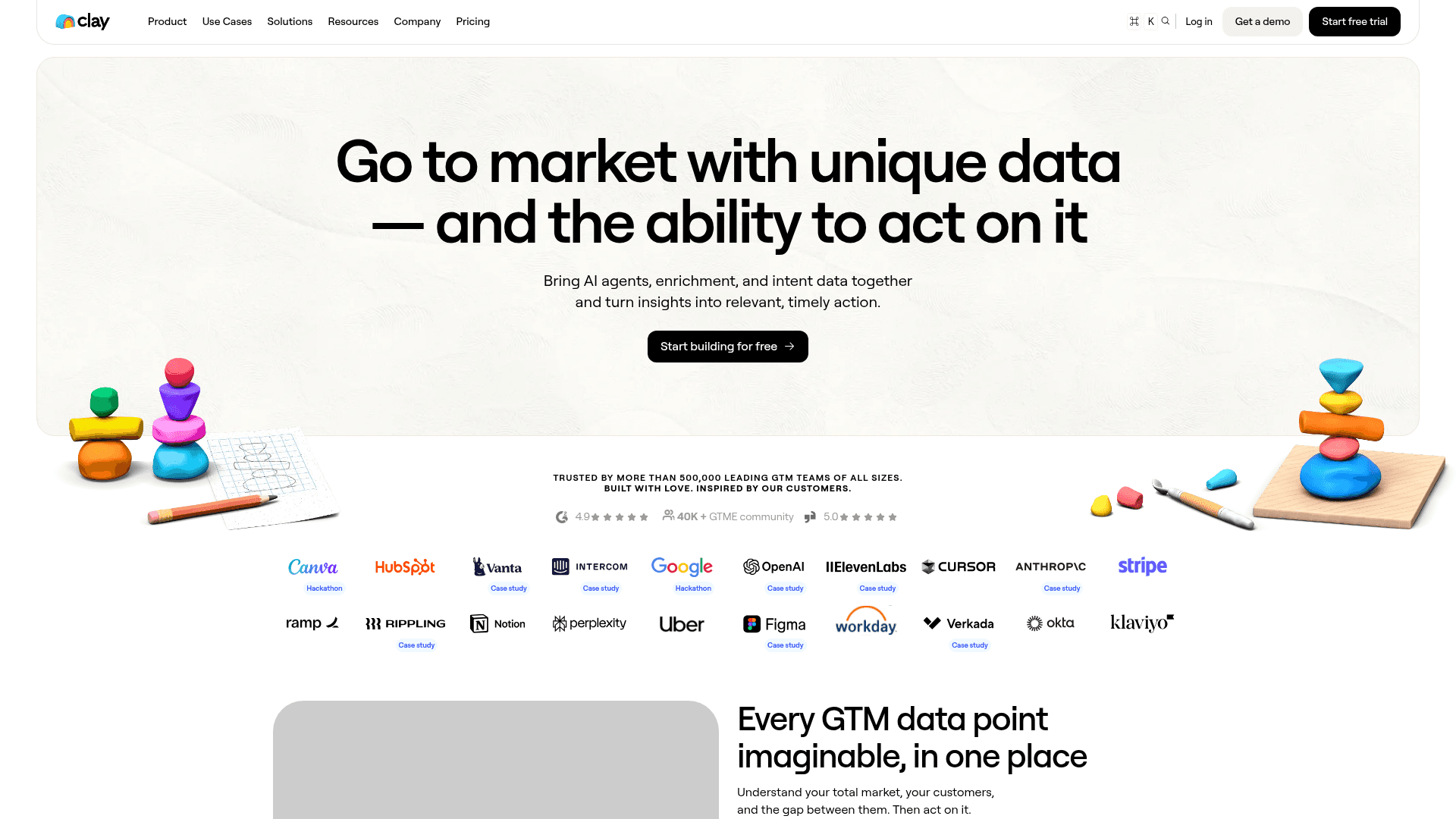
Clay is a data enrichment and workflow automation tool that can replicate many UserGems use cases through its waterfall enrichment model. It pulls from dozens of data providers simultaneously to fill contact and company records. The trade-off is that Clay requires meaningful setup time and technical fluency to get right. It rewards teams with dedicated RevOps support but adds friction for teams that want signals out of the box.
Apollo.io
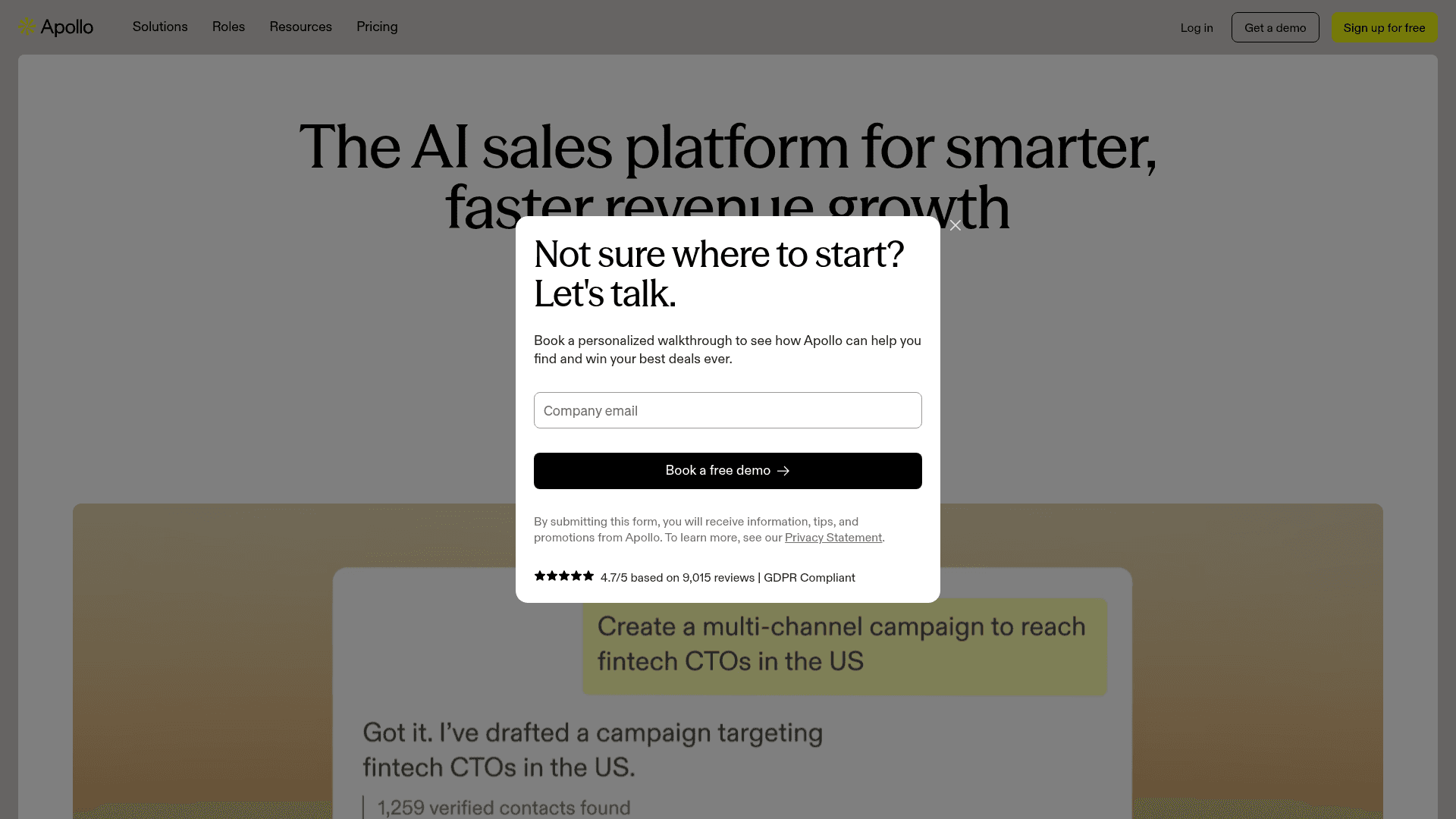
Apollo combines a contact database with sequencing and basic intent signals. It covers more of the funnel than UserGems but goes less deep on champion tracking alone. Teams that want an all-in-one prospecting tool at a lower price point often default here, accepting shallower signal quality in exchange for consolidated tooling.
Warmly
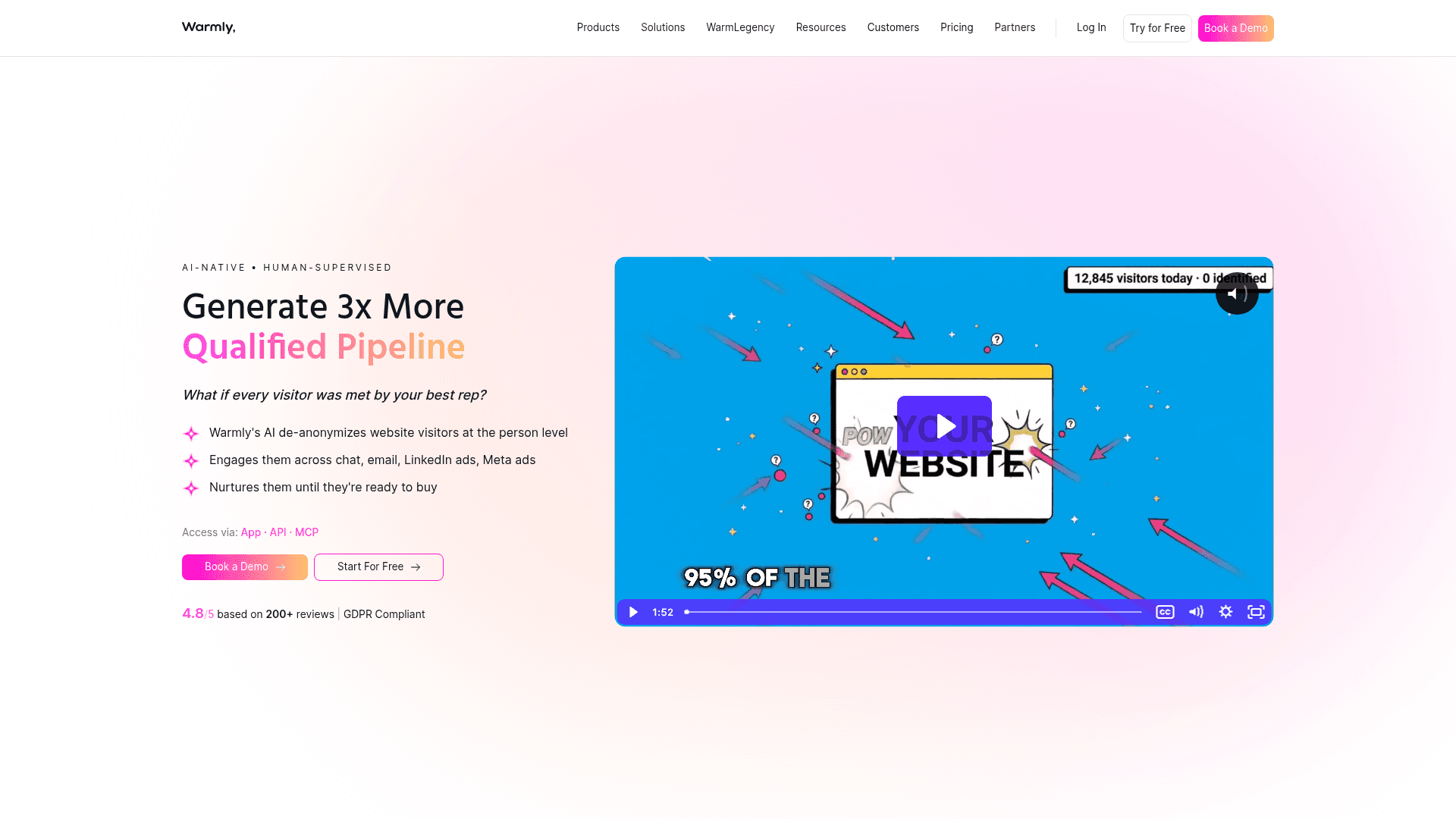
Warmly is a signals tool built around website visitor identification and intent aggregation, pulling from third-party data partners like Bombora and G2 to flag accounts showing buying activity. It's the right call if your team runs a heavy inbound motion and wants to de-anonymize web traffic, but it won't track champion job changes the way UserGems does, so it solves a different part of the pipeline problem.
The trade-off is in execution. Warmly leans on a text-only chat interface and rule-based routing, which means the work of acting on a flagged visitor still falls to your reps. For teams with dedicated mark-ops resources who want configurability, that's manageable. For leaner teams who want a signal to trigger qualification and outreach without manual routing, the gap between detection and action remains.
Keyplay
Keyplay is an account identification and ICP scoring tool that helps revenue teams build and refine target account lists based on fit. It models your best customers across firmographic, technographic, and qualitative attributes, then scores your addressable market so reps focus on accounts that actually match your profile. Where UserGems watches for contact-level movement, Keyplay works at the account level to tell you who belongs on your list in the first place.
The trade-off is that Keyplay stops at identification and scoring. It builds a strong target list, but it tracks no real-time intent and runs no execution layer, so acting on those accounts still means handing the list to another tool for outreach and sequencing. It's the right call if your gap is account selection and ICP precision, but a poor fit if you need a signal to trigger qualification and outreach without exporting data into a separate system.
Feature Comparison: UserGems vs Top Alternatives
UserGems, Breakout, Warmly, and Keyplay each take a meaningfully different approach to pipeline generation, and the right fit depends on how your team sources and acts on buying signals.
How the Tools Stack Up
Feature | UserGems | Breakout | Warmly | Keyplay |
|---|---|---|---|---|
Job change tracking | Yes | Yes | No | No |
AI account scoring | Limited | Yes | No | Yes |
Real-time website intent | No | Yes | Yes | No |
CRM auto-enrichment | Yes | Yes | No | No |
Workflow automation | Basic | Advanced | Basic | No |
ICP fit scoring | No | Yes | No | Yes |
Pricing transparency | Low | Medium | Low | Medium |
What This Table Actually Tells You
UserGems leads on job change tracking, which is genuinely useful if champion re-engagement is your primary motion. The limitation is that it stops there. You get the signal, but routing it, scoring it against your ICP, and triggering a workflow requires stitching together other tools.
Breakout covers more of that loop natively, combining job changes, intent, and outreach automation in one system. That matters in practice because a signal you cannot act on quickly loses value.
Warmly is the right call if your team runs a heavy inbound motion and wants to identify anonymous web visitors, but it won't help with champion tracking. Keyplay excels at ICP modeling but handles no execution layer at all.
Why Breakout Is the Best UserGems Alternative
Breakout is built for revenue teams that need to act on buying signals before the window closes. Where UserGems focuses narrowly on champion tracking, Breakout monitors a wider range of signals across your entire addressable market and surfaces the accounts most likely to convert right now.
The core difference is in how each product handles signal coverage. UserGems watches for job changes among your past champions and customers. Breakout pulls from a broader set of buyer intent signals, firmographic triggers, and relationship data so your team sees the full picture of who is in-market, including accounts beyond contacts who recently switched companies.
Here is what Breakout does that UserGems does not:
Unified signal scoring across multiple intent sources so reps receive a single ranked account list instead of disconnected alerts requiring manual triage.
Real-time alerts built directly into your existing CRM and sales engagement tools, which means no context-switching or duplicate data entry to act on a new signal.
Buyer journey mapping that shows where an account is in the decision process, giving your team a clearer sense of timing instead of just contact-level triggers.
Transparent pricing with no seat minimums designed to squeeze mid-market budgets, making it a stronger fit for Series B and C teams scaling their go-to-market motion.
If champion tracking is your only priority, UserGems may meet that need. But if you want broader signal coverage without stitching together multiple point solutions, Breakout is worth a close look.
Final Thoughts on Champion Tracking and Pipeline Intelligence Tools
UserGems carved out a clear niche in champion tracking, and for teams where that's the priority, it's a solid choice. But most revenue orgs need more than job change alerts to keep pipeline healthy. If you're comparing alternatives, focus on signal breadth, workflow integration, and whether the pricing structure actually fits your team size. Breakout handles that wider scope without forcing you to patch together multiple point solutions.
FAQ
When should you consider moving away from UserGems?
If you're finding that UserGems alerts arrive too late to catch contacts while they're still warm, or if the contract price feels high relative to how many flagged contacts actually convert to pipeline, it's worth testing alternatives that offer broader signal coverage or more flexible pricing structures.
What features matter most when comparing champion tracking alternatives?
Look for tools that combine job change tracking with real-time intent signals, automated CRM enrichment, and workflow triggers that let your team act on alerts without manual routing. Signal latency and workflow friction are the two factors that most commonly undermine champion tracking ROI.
How does Breakout differ from UserGems for tracking job changes?
Breakout monitors job changes alongside website intent, firmographic triggers, and relationship data in a unified scoring system, so your team gets a single ranked account list instead of isolated champion alerts that require manual triage, and separate evaluation against your ICP criteria.
Can you replicate UserGems functionality with a data enrichment tool like Clay?
Clay can surface job change data through waterfall enrichment, but it requires dedicated RevOps resources to configure and maintain the workflows that UserGems handles natively. Teams without technical support typically face weeks of setup time before seeing usable signals.
What's the main limitation of focusing only on champion tracking for pipeline generation?
Champion tracking only captures accounts where you already have a prior relationship, which means you miss the larger pool of in-market accounts that fit your ICP but haven't engaged with your company yet. Tools that monitor broader intent signals give your team visibility into net-new opportunities alongside warm re-engagement plays.