
Quick Verdict
Choose Clay if your priority is advanced data enrichment, workflow automation, and GTM engineering.
Choose Apollo if you want an all-in-one platform for prospecting, contact data, and sales engagement.
Clay offers greater flexibility with 100+ data providers and customizable workflows.
Apollo simplifies outbound sales by combining prospecting, outreach, and CRM integrations in one platform.
Both platforms help you find and engage buyers but don't convert anonymous website visitors.
Breakout complements both by identifying anonymous visitors, engaging them with an Inbound AI SDR, qualifying buying intent, and booking meetings automatically.
Clay vs Apollo at a Glance
Feature | Clay | Apollo | Breakout |
Best For | GTM engineering and RevOps | Prospecting and outbound sales | Converting website visitors into pipeline |
Core Strength | Data enrichment and workflow automation | Sales intelligence and engagement | Inbound AI SDR and buyer engagement |
Data Source | 100+ enrichment providers | Proprietary B2B database | Waterfall enrichment for anonymous visitors |
Buyer Engagement | Workflow-driven | Outbound email and sales engagement | Personalized AI conversations on your website |
Meeting Booking | Via integrations | Sales workflow support | AI-powered meeting booking |
Pricing | Credit-based | Free and tiered plans | Custom pricing |
Ideal For | Teams building custom GTM workflows | Teams scaling outbound sales | Teams looking to convert more existing website traffic into qualified pipeline |
Building a predictable pipeline has become more challenging than ever.
Buyers research independently, sales cycles are longer, and revenue teams need accurate data, efficient workflows, and the right tools to reach prospects at the right time.
That's why go-to-market (GTM) teams increasingly rely on sales intelligence and automation platforms to streamline prospecting, enrich customer data, and improve outbound execution.
Two names that consistently appear on buyers' shortlists are Clay and Apollo.
While both help revenue teams accelerate pipeline generation, they take very different approaches. Understanding those differences is key to choosing the right platform for your GTM strategy.
In this guide, we'll compare Clay vs Apollo across data quality, enrichment, automation, AI capabilities, pricing, integrations, and ideal use cases to help you determine which platform best fits your team.
Why GTM teams choose Clay?
As GTM strategies become more data-driven, revenue teams need more than a contact database.
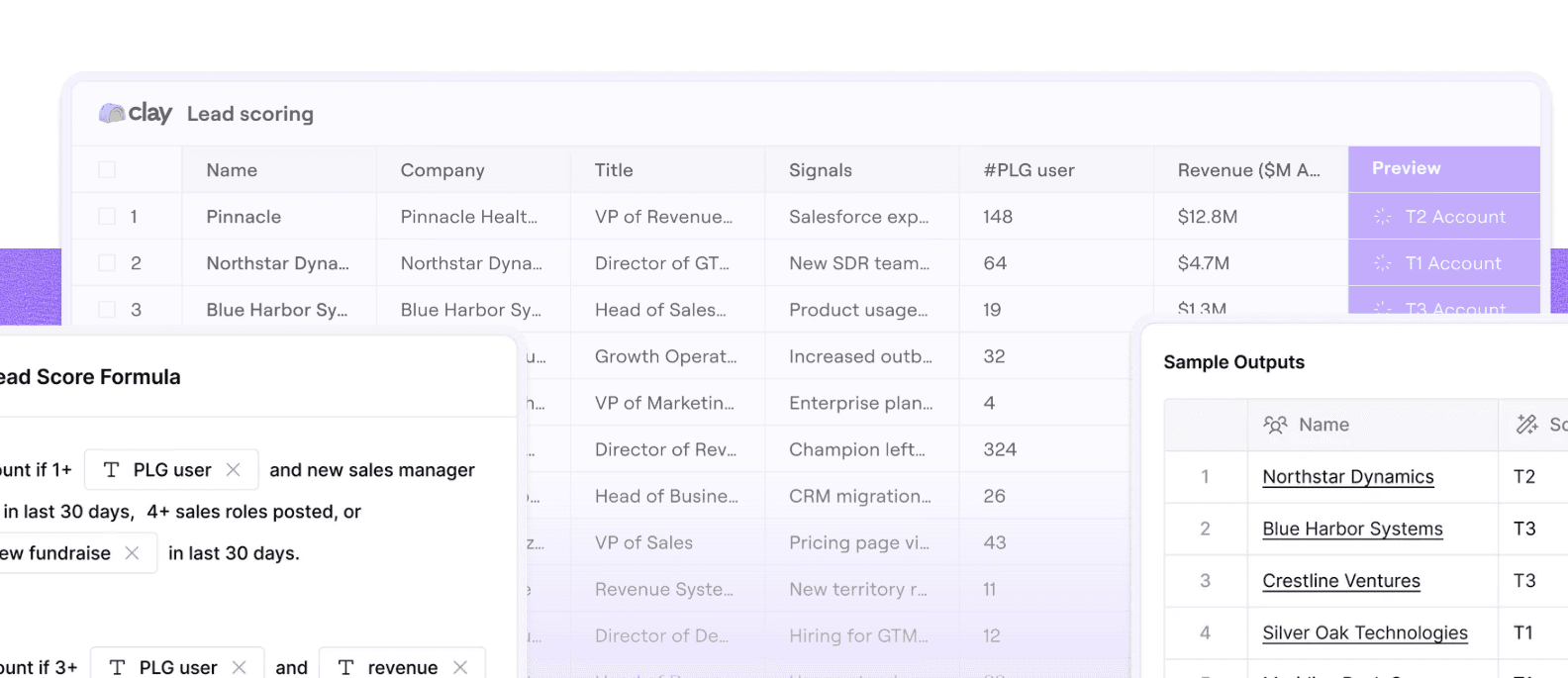
They need a platform that can enrich data, automate workflows, and connect information from multiple sources. That's where Clay has built its reputation.
Instead of relying on a single provider, Clay brings together data from more than 100 sources in one workspace.
Teams use it to enrich CRM records, build targeted prospect lists, automate inbound and outbound workflows, and research accounts at scale.
For organizations investing in GTM engineering, Clay offers the flexibility to build custom workflows that match their sales process.
Why GTM teams choose Apollo?
Many sales teams prefer a platform that combines prospecting, engagement, and pipeline management in one place.
Apollo has become a popular choice because it brings these capabilities together without requiring multiple tools.
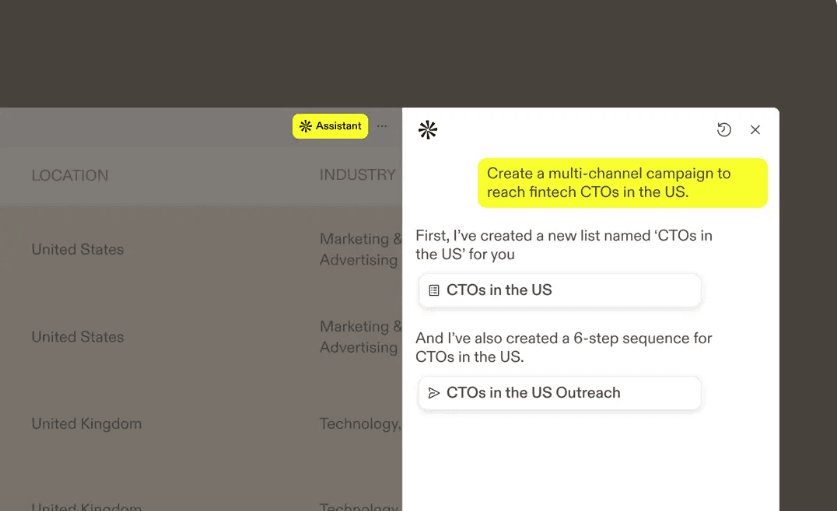
Revenue teams use Apollo to discover prospects, qualify inbound leads, enrich customer data, and manage deals throughout the sales cycle.
Its AI-powered features help automate repetitive tasks and improve sales productivity.
For growing GTM teams, Apollo offers a straightforward way to manage both inbound and outbound motions from a single platform.
Clay vs Apollo: Which Platform Is Better for Your GTM Team?
Choosing between Clay and Apollo isn't about finding the platform with the longest feature list. It's about understanding how each platform supports your go-to-market strategy.
Clay focuses on helping GTM teams build better data workflows. Apollo combines prospecting, engagement, and sales execution in one platform. While both help revenue teams generate pipeline, they excel in different areas.
Here's how they compare across the features that matter most.
1. Data Enrichment
High-quality data is the foundation of every GTM strategy. Better data helps sales teams identify the right accounts, personalize outreach, and keep CRM records accurate.
Clay stands out for data enrichment. It combines information from more than 100 data providers and supports real-time data scraping.
Teams can build custom enrichment workflows that fit their sales process. This makes Clay a strong choice for GTM engineering and RevOps teams.
Apollo also offers data enrichment, but it relies primarily on its own B2B database. Sales teams can enrich contacts and company records without leaving the platform. The experience is simpler because prospecting, enrichment, and engagement work together.
Verdict: Clay for its flexible enrichment capabilities and extensive data sources.
If you're looking beyond traditional data enrichment, Breakout solves a different challenge.
Instead of enriching people already in your CRM, Breakout uses waterfall enrichment to identify anonymous website visitors and build rich company and buyer profiles before they ever submit a form.
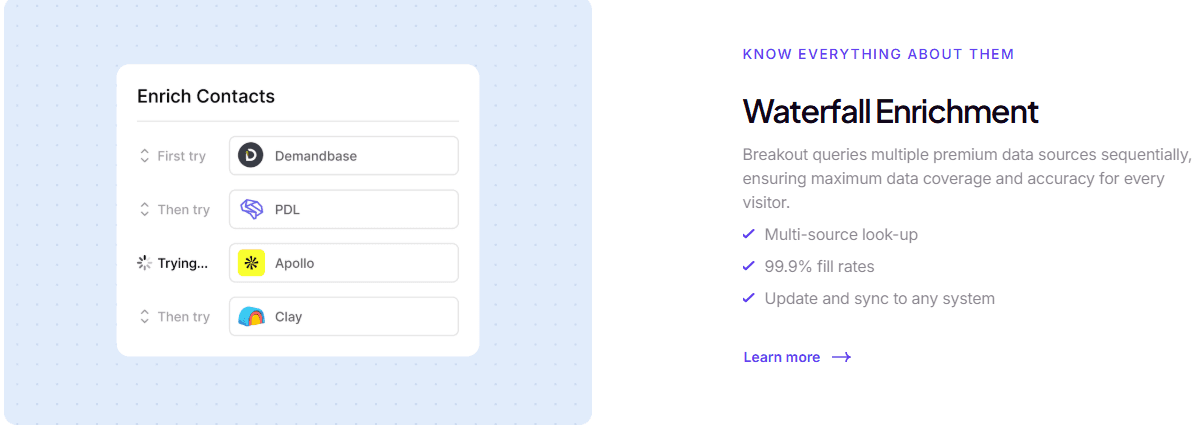
With better visitor identification, revenue teams can personalize conversations. They can qualify buying intent in real time and convert high-intent website traffic into qualified pipeline instead of letting valuable buying signals go unnoticed.
2. Prospecting
Prospecting is more than finding contacts. Revenue teams need accurate data, relevant accounts, and efficient workflows to build a healthy pipeline.
Clay helps teams build highly targeted prospect lists using multiple data sources. It also supports account research, territory planning, and AI-powered workflows. This gives teams greater control over how they discover and prioritize prospects.
Apollo combines a large B2B contact database with prospect search and outreach tools. Sales teams can discover prospects, verify contact information, and start engaging buyers from the same platform.
Verdict: Apollo for its all-in-one prospecting experience.
3. Workflow Automation
Modern GTM teams automate repetitive tasks to save time and improve productivity. The right platform should reduce manual work without adding complexity.
Clay is designed for workflow automation. Teams can automate CRM enrichment, inbound and outbound processes, reverse ETL, account research, and territory planning. Its flexibility makes it a favourite for teams building custom GTM workflows.
Apollo also automates key sales activities. Teams can streamline prospecting, inbound lead qualification, and deal execution. However, its workflows are more focused on supporting the sales process than building custom automation.
Verdict: Clay for advanced workflow automation and flexibility.
4. CRM Integrations
CRM integrations keep customer data consistent across the sales stack. They also reduce manual updates and improve collaboration between teams.
Clay integrates with CRM platforms to enrich records and automate data updates. It also supports reverse ETL, making it easier to sync enriched data across multiple systems.
Apollo integrates with leading CRM platforms to keep prospect, account, and deal information up to date. Since prospecting and engagement happen within the same platform, sales teams spend less time switching between tools.
Verdict: Tie. Both platforms offer strong CRM integrations, but they serve different needs.
5. Buyer Engagement
Engaging buyers at the right moment can have a significant impact on pipeline generation. The challenge is delivering the right experience when buyers are ready to learn more.
Apollo helps sales teams engage prospects through outbound campaigns and respond quickly to inbound leads. It supports buyer engagement throughout the sales cycle, making it a strong choice for outbound-focused teams.
Clay supports engagement by improving data quality and automating workflows. However, it isn't designed to own buyer conversations or interact directly with website visitors.
This is where Breakout takes a different approach. Instead of helping teams find buyers, it helps convert buyers who have already arrived on your website.
Breakout identifies anonymous visitors, personalizes conversations in real time, answers questions, and qualifies buyers before connecting them with sales.

Verdict: Apollo for sales engagement. Breakout for turning high-intent website visitors into qualified pipeline.
Clay vs Apollo Pricing
Pricing is more than just the monthly subscription. Consider how each platform charges, what features are included, and how costs scale as your team grows.
Credit-based pricing model.
Credits are used for data enrichment, AI workflows, and integrations.
Flexible for custom GTM workflows.
Costs can increase as enrichment usage grows.
Best for: GTM engineering and RevOps teams with complex workflows.
Apollo
Tiered pricing with Free, Basic, Professional, and Organization plans.
Includes prospecting, engagement, data enrichment, and AI capabilities.
Easy to scale as teams grow.
Predictable pricing for most sales organizations.
Best for: Teams looking for an all-in-one GTM platform.
The Bigger GTM Problem Neither Tool Solves
Clay and Apollo help revenue teams build stronger outbound motions. They make it easier to find prospects, enrich customer data, and improve sales efficiency.
Most GTM teams use these platforms to:
Find target accounts and prospects.
Enrich contact and company data.
Build and automate outbound campaigns.
Improve sales productivity.
However, there's another source of pipeline that often goes underutilized.
Every day, high-intent buyers visit your website after discovering your brand through search, ads, referrals, or social media.
Many research your product, compare pricing, and evaluate alternatives. Yet, most leave without starting a conversation with sales.
According to industry benchmarks, the average website conversion rate is just 3.3%. That means the majority of buying intent never becomes pipeline.
This is where Breakout fits into the modern GTM stack.
Instead of helping teams find more prospects, Breakout helps them capture more value from the visitors already on their website.
It identifies anonymous visitors using waterfall enrichment, personalizes conversations in real time, qualifies buyers, and routes sales-ready opportunities automatically.
For revenue teams, the opportunity isn't just generating more traffic. It's converting more of the traffic they already have.
See how it’s done:
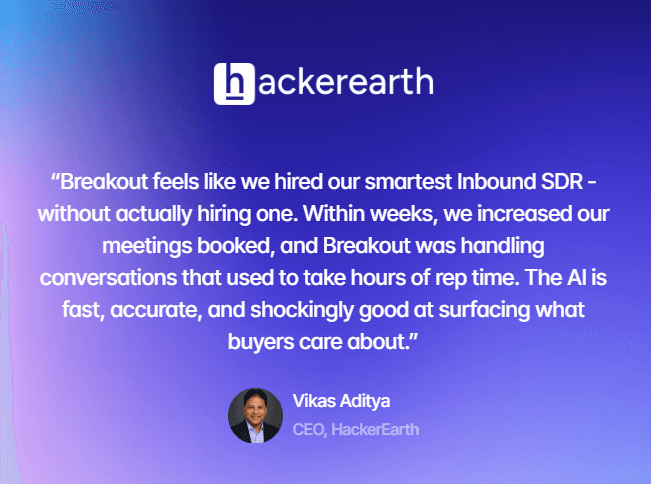
HackerEarth was generating strong website traffic but struggled to convert high-intent visitors into pipeline.
Many buyers left without finding the information they needed, while traditional forms and chatbots failed to keep them engaged.
Breakout transformed the experience by delivering personalised AI conversations, qualifying buyers in real time, and booking meetings automatically.
As a result, HackerEarth increased website visitor engagement by 2.5%, achieved a 10% engagement-to-lead conversion rate, and saw 21% of its Q1 pipeline driven or influenced by Breakout.
Why Modern Revenue Teams Are Investing in Inbound Conversion
Revenue teams have spent years optimizing outbound. They've invested in better prospecting, richer data, and smarter automation.
Meanwhile, buying behavior has changed.
Most B2B buyers now complete their research independently. They visit your website after reading reviews, comparing competitors, or searching for solutions. By the time they arrive, they're already evaluating whether your product fits their needs.
These buying moments don't last long.
If visitors can't find answers quickly, they'll continue their research somewhere else. Every unanswered question increases the chance of losing pipeline.
This is why inbound conversion has become a priority for modern GTM teams. The opportunity isn't generating more traffic. It's converting more of the high-intent buyers who are already on your website.
From Prospecting to Pipeline Creation
Modern GTM teams need more than prospecting.
Finding buyers is important. Enriching their data is equally valuable. But neither creates pipeline unless buyers actually engage with your business.
That's why today's GTM stack is evolving.
Apollo helps sales teams find and engage prospects.
Clay enriches data and powers sophisticated GTM workflows.
Breakout converts high-intent website visitors into qualified pipeline.
Instead of helping teams reach more buyers, Breakout helps them capture more value from the buyers who are already evaluating their solution.
How Breakout Turns Website Visitors into Pipeline
Clay helps you enrich data. Apollo helps you find and engage prospects. Breakout helps you convert the buyers who are already on your website.
Instead of relying on forms or outbound outreach, Breakout uses an Inbound AI SDR to identify high-intent visitors, engage them in real time, qualify buying intent, and book meetings automatically.
Identify Anonymous Visitors: Breakout uses waterfall enrichment to deanonymize website visitors and build rich company and buyer profiles before a form is ever submitted.
Start Personalized AI Conversations: The Inbound AI SDR engages visitors based on their company, behaviour, and buying intent, delivering relevant conversations instead of generic chatbot interactions.
Qualify Buyers Automatically: The AI SDR asks qualification questions, understands buyer needs, and identifies sales-ready opportunities without requiring manual SDR involvement.
Book Meetings Instantly: Qualified buyers can schedule meetings immediately. Breakout automatically shares conversation summaries and buyer insights with your CRM and sales team for faster follow-up.
The result is a GTM motion that doesn't just generate demand. It converts existing website traffic into qualified pipeline while buying intent is at its highest.
Clay vs Apollo: Which Tool Is Right For Your Team?
Clay and Apollo are both strong GTM platforms, but they serve different use cases.
If your team needs advanced data enrichment and custom GTM workflows, Clay is the better choice. If you want an all-in-one platform for prospecting and sales engagement, Apollo offers more value for most revenue teams.
That said, both tools focus on helping you find and manage buyers. Neither is built to convert the anonymous visitors already evaluating your product.
That's where Breakout comes in.
As an Inbound AI SDR, it identifies anonymous website visitors, engages them with personalized conversations, qualifies buying intent, and books meetings automatically.
Want to turn more website traffic into pipeline?
Book a demo with Breakout and see how your website can become your highest-converting revenue channel.
FAQs
1. Which is better, Clay or Apollo?
Neither platform is objectively better. Clay is ideal for GTM teams that need advanced data enrichment and custom workflows. Apollo is better for teams looking for an all-in-one platform for prospecting, contact data, and sales engagement.
2. How is Clay different from Apollo?
Clay focuses on data enrichment, GTM automation, and workflow customization. Apollo combines a B2B contact database with prospecting, outreach, and sales engagement tools.
3. Can you use Clay and Apollo together?
Yes. Many GTM teams use Clay to enrich prospect data and automate workflows while using Apollo for prospecting and outbound engagement.
4. Which platform has better data enrichment?
Clay provides more flexible data enrichment by combining multiple providers into custom workflows. Apollo relies primarily on its own B2B contact database.
5. Which platform is better for outbound sales?
Apollo is the better choice for outbound sales. It combines prospecting, email sequencing, AI features, and sales engagement in one platform.
6. Who is Apollo's biggest competitor?
Apollo competes with platforms like ZoomInfo, Cognism, Lusha, Seamless.AI, and UpLead. Buyers also compare Apollo with Clay when evaluating GTM tools, although they serve different purposes.
7. What is better, Apollo or Lusha?
Apollo offers a broader set of features, including prospecting, outreach, and sales engagement. Lusha is better suited for teams that primarily need verified contact data.
8. Is Apollo trustworthy?
Yes. Apollo is widely used by sales and GTM teams and includes CRM integrations, email verification, and compliance features. As with any contact database, data accuracy may vary depending on the market and industry.
9. Is Clay worth it?
Clay is worth the investment for teams that rely on data enrichment, GTM engineering, and workflow automation. Smaller sales teams looking for a simple prospecting platform may find Apollo a better fit.
10. Is Clay free to use?
Clay offers a free plan with limited credits. Paid plans provide additional credits, integrations, and workflow capabilities for growing GTM teams.
11. Do Clay or Apollo help convert website visitors?
No. Both platforms help teams find, enrich, and engage prospects, but neither is designed to convert anonymous website visitors into qualified pipeline.
12. What is the best tool for converting anonymous website visitors?
If your goal is to turn existing website traffic into pipeline, Breakout is built for that purpose. It identifies anonymous visitors, personalizes conversations, qualifies buying intent, and books meetings automatically using an Inbound AI SDR.