


TL;DR
“6sense doesn't publish its pricing. Most businesses receive a custom quote based on team size, TAM, products, and data usage.”
6sense pricing starts with a custom quote. There are no publicly available subscription plans for paid products.
Most mid-market and enterprise buyers spend between $30,000 and $200,000+ per year, depending on the platform, users, and data credits.
The licence fee isn't the full cost. Implementation, integrations, credit overages, and administration can significantly increase your first-year investment.
Negotiate before signing. Credit overage rates, renewal caps, and implementation fees are often negotiable.
If transparent pricing matters, compare alternatives like Breakout before making a decision.
Disclaimer: Since 6sense offers custom pricing, the estimated contract values in this article are based on publicly available buyer data and Vendr benchmarks. Reported median annual contract values range from $55,000 to $62,000, though your quote may differ.
6sense is one of the popular revenue intelligence platforms on the market. Finding out what it actually costs, however, isn't nearly as straightforward.
Unlike many SaaS platforms, 6sense doesn't publish its pricing.
Every customer receives a custom quote based on factors like team size, total addressable market (TAM), product modules, and expected data usage. That makes it difficult to estimate your budget before speaking with sales.
In this guide, we'll break down everything you need to know about 6sense pricing in 2026.
It includes estimated costs, pricing plans, credit-based billing, hidden fees, contract terms, and negotiation tips.
We'll also compare 6sense with leading alternatives so you can decide whether it's the right investment for your business.
How Much Does 6sense Cost in 2026?
6sense doesn't publicly disclose pricing for its paid plans. Instead of listing prices on its website, it provides custom quotes based on your business requirements.
The final price depends on several factors, including the size of your target account list (TAM), the products you purchase, your data and credit usage, and the length of your contract.
Although 6sense doesn't publish official pricing, third-party contract data offers a good estimate of what businesses typically pay.
According to Vendr, the median annual contract value falls between $55,000 and $62,000. Reported deals range from around $11,500 for smaller deployments to more than $175,000 for larger implementations. Enterprise contracts with multiple products and higher usage can exceed $250,000 to $400,000 per year.
Estimated 6sense Pricing:
Plan / Deployment | Estimated Annual Cost |
Free Plan | $0 |
Small teams | $30,000–$55,000 |
Mid-market | $80,000–$130,000 |
Enterprise | $150,000–$300,000+ |
Median contract | ~$55,000–$62,000 |
The wide pricing range exists because 6sense uses custom pricing rather than fixed plans. Your quote is influenced by:
The number of accounts you want to monitor (TAM)
The products and modules you purchase
Data and enrichment credit usage
Contract length
Whether you're buying 6sense as a standalone product or as part of a larger GTM technology stack
6sense Pricing Plans & Tiers
6sense simplified its pricing model in May 2025 by retiring its legacy plans—Team, Growth, Enterprise, and Enterprise Lite.
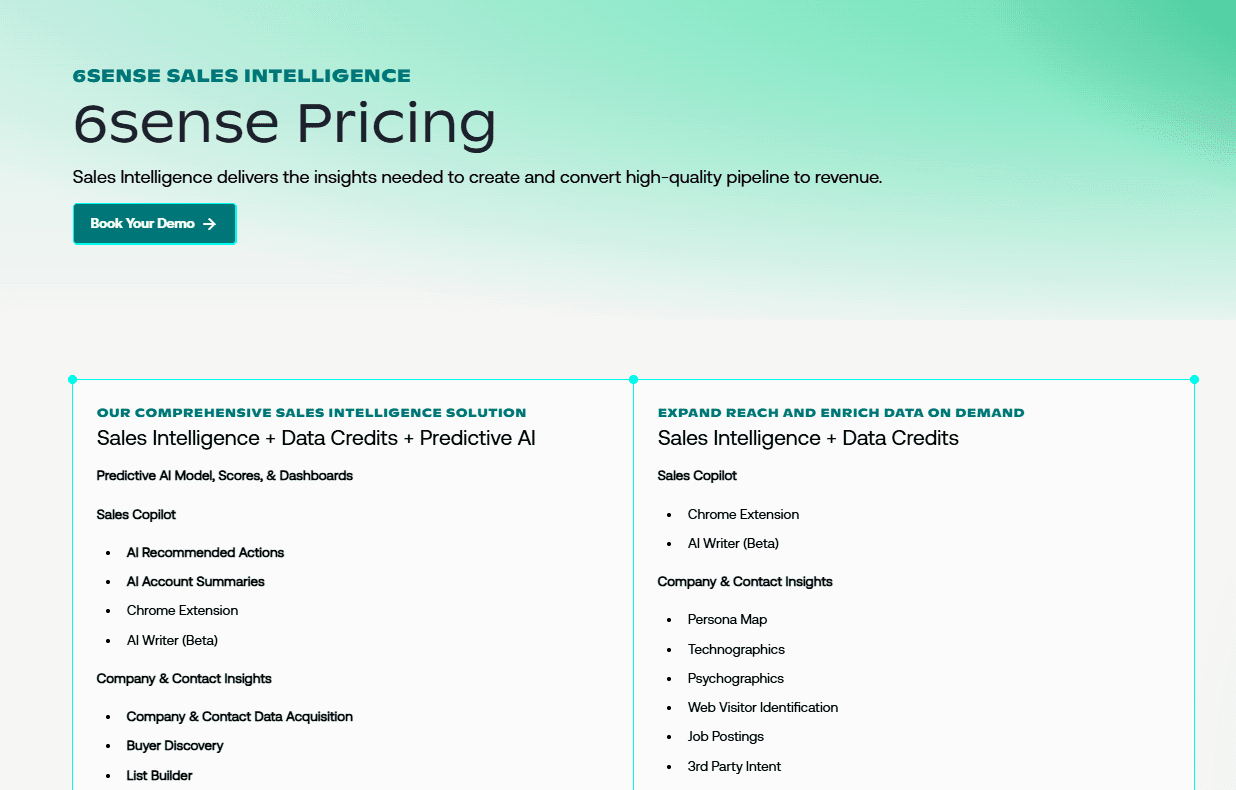
Instead of choosing from multiple tiers, customers now start with a Sales Intelligence licence and add the capabilities they need through Data Credits, Predictive AI, or both.
If you're comparing an older quote with a new one, don't expect the plan names to match. While the packaging has changed, many of the core capabilities remain the same.
How the Old Plans Compare:
Legacy Plan | Current Equivalent |
Team | Sales Intelligence + Data Credits |
Growth | Sales Intelligence + Predictive AI |
Enterprise / Enterprise Lite | Sales Intelligence + Data Credits + Predictive AI |
Today, businesses can choose from four configurations.
1. Free Plan ($0)
The free plan is designed for individual sellers who want to explore the platform before making a larger investment.
It includes:
50 data credits per month
Company and people search
Chrome extension
Basic sales alerts
However, advanced features like intent data, predictive AI, CRM automation, and buying-stage insights aren't included.
2. Sales Intelligence + Data Credits (Estimated $30,000–$55,000/year)
This package focuses on helping sales teams find and enrich accounts.
It includes:
Company and contact enrichment
Technographic and firmographic data
Third-party intent signals
Website visitor identification
CRM and sales engagement integrations
If your goal is better prospect data rather than AI-driven prioritisation, this is typically the starting point.
3. Sales Intelligence + Predictive AI (Estimated $50,000–$80,000/year)
This configuration is built for teams that want help identifying which accounts are most likely to buy.
In addition to the core Sales Intelligence platform, it includes:
Predictive account scoring
Buying-stage classification
Sales Copilot
AI-powered insights
Intent signals
Unlike the previous plan, the focus here is prioritisation rather than expanding your data pool.
4. Sales Intelligence + Data Credits + Predictive AI (Estimated $100,000–$250,000+/year)
This is the complete 6sense platform and the option most enterprise organisations evaluate.
It includes everything in the previous plans, plus:
Advanced workflow automation
Corporate hierarchy mapping
Advanced reporting
Dedicated customer success support
This configuration is designed for large revenue teams running mature account-based marketing programmes across multiple regions.
Feature | Free | Sales Intelligence + Data Credits | Sales Intelligence + Predictive AI | Sales Intelligence + Data Credits + Predictive AI |
Monthly data credits | 50 credits | Custom | Custom | Custom |
Company & contact search | Yes | Yes | Yes | Yes |
Chrome extension | Yes | Yes | Yes | Yes |
Firmographic & technographic insights | No | Yes | Yes | Yes |
Third-party intent data | No | Yes | Yes | Yes |
AI account scoring | No | No | Yes | Yes |
Buying stage & intent insights | No | No | Yes | Yes |
Sales Copilot | No | Limited | Yes | Yes |
Website visitor identification | No | Yes | Yes | Yes |
Workflow automation | No | Basic | Basic | Advanced |
Corporate hierarchy mapping | No | No | No | Yes |
Dedicated Customer Success Manager | No | Optional | Optional | Yes |
Which Plan Offers the Best Value?
For most companies, the answer isn't the most expensive plan.
If you're still building your outbound or ABM motion, Sales Intelligence + Data Credits is often the most practical place to start. It gives your team the data needed to identify and engage target accounts without paying for AI capabilities that may go unused.
Predictive AI becomes more valuable once you've established a repeatable sales process and have enough account data for the models to generate meaningful insights.
The full platform makes the most sense for enterprise organisations with mature ABM programmes, dedicated RevOps resources, and the budget to support a six-figure investment.
For many mid-market businesses, paying for every module upfront can lead to unused features rather than a better pipeline.
6sense Pricing by Team Size / TAM
Your 6sense quote isn't determined by headcount alone.
It also depends on your total addressable market (TAM), the number of accounts you want to monitor, the products you purchase, and how much data your team consumes.
However, the licence fee is only part of the cost.
To estimate your budget accurately, look beyond the subscription price. Implementation, onboarding, training, integrations, and ongoing administration can significantly increase your first-year investment.
The examples below illustrate what businesses of different sizes typically spend over three years. These are estimates based on publicly available buyer data and industry benchmarks.
Small Teams (5–10 Sales Reps):
Cost Component | Year 1 | Year 2 | Year 3 |
Platform licence | $30,000–$55,000 | $32,000–$58,000 | $34,000–$61,000 |
Implementation & onboarding | $5,000–$10,000 | - | - |
Training & enablement | $5,000–$8,000 | $1,000–$2,000 | $1,000–$2,000 |
Credit overages | $3,000–$8,000 | $3,000–$6,000 | $3,000–$6,000 |
Estimated Total | $50,000–$88,000 | $36,000–$66,000 | $38,000–$69,000 |
Mid-Market Teams (Around 15 Sales Reps):
Cost Component | Year 1 | Year 2 | Year 3 |
Platform licence | $55,000–$100,000 | $58,000–$105,000 | $61,000–$110,000 |
Implementation & onboarding | $10,000–$25,000 | - | - |
Training & enablement | $5,000–$10,000 | $2,000–$4,000 | $2,000–$4,000 |
Credit overages | $5,000–$15,000 | $8,000–$15,000 | $8,000–$15,000 |
CRM & sales tool integrations | $8,000–$13,000 | $8,000–$13,000 | $8,000–$13,000 |
Part-time RevOps administration | $15,000–$20,000 | $15,000–$20,000 | $15,000–$20,000 |
Estimated Total | $98,000–$183,000 | $91,000–$157,000 | $94,000–$162,000 |
Estimated three-year cost: $283,000–$502,000
Enterprise Teams (50+ Sales Reps):
Cost Component | Year 1 | Year 2 | Year 3 |
Platform licence | $100,000–$200,000+ | $105,000–$210,000+ | $110,000–$220,000+ |
Implementation & professional services | $20,000–$50,000 | - | - |
Credit overages & add-ons | $10,000–$30,000 | $10,000–$30,000 | $10,000–$30,000 |
CRM & sales tool integrations | $20,000–$35,000 | $20,000–$35,000 | $20,000–$35,000 |
Full-time RevOps or Marketing Ops support | $60,000–$120,000 | $60,000–$120,000 | $60,000–$120,000 |
Custom integrations | $5,000–$15,000 | $2,000–$5,000 | $2,000–$5,000 |
Estimated Total | $215,000–$450,000+ | $197,000–$400,000+ | $202,000–$410,000+ |
Estimated three-year cost: $614,000–$1.26M+
The Hidden Cost Most Buyers Miss
The platform licence is often the number sales teams focus on during the buying process. In reality, it's only one part of the total investment.
Implementation, employee training, CRM integrations, data overages, and the operational resources required to manage the platform can add tens or even hundreds of thousands of dollars over the life of the contract.
For larger organisations, the cost of dedicated RevOps or Marketing Ops support can eventually exceed the cost of the software licence itself.
Note: These figures are estimates based on publicly reported buyer data, Vendr contract data, G2 reviews, and industry benchmarks. Since 6sense uses custom pricing, your actual quote will vary based on your TAM, product configuration, contract terms, and usage.
How the 6sense Credit System Works
6sense uses a credit-based system for many of its data and enrichment features. Your contract includes a pool of credits that your team shares across Sales Intelligence and related workflows.
Here's how credits are typically used:
Activity | Credits Used |
Unlock a person's email or phone number | 1 |
Enrich a record with new data | 1 |
Create or enrich a lead through job-change workflows | 1 |
Export people data | 1 per record |
Export to CRM or sales tools | 1 (if new data is added) |
Push segments or account scores to your CRM | No credits |
What Buyers Should Know:
Unused credits don't roll over. Any remaining credits expire at the end of your billing cycle.
Re-enriching a record within 12 months is free. Once a record has been enriched, updating it again during the next year doesn't consume additional credits.
Overage pricing isn't public. If you exceed your credit allocation, additional credits are charged at negotiated rates. Ask for a capped overage rate before signing your contract to avoid unexpected costs.
For example, a 20-person sales team researching 10 new accounts per rep each week can easily use 800+ credits per month.
If your contract only includes 500 monthly credits, you'll either hit overage fees or have to limit prospecting. Before signing, estimate your team's monthly usage to ensure your credit pool matches how your team actually sells.
Contract Red Flags: What to Watch For Before Signing
The quoted price isn't always your final cost. Before signing a 6sense contract, review these terms carefully to avoid unexpected expenses later.
1. Auto-Renewal Clauses
Most 6sense contracts renew automatically unless you cancel within a set notice period, often 60–90 days before renewal.
What to do: Confirm the cancellation deadline and add a calendar reminder as soon as the contract is signed.
2. Annual Price Increases
Some contracts allow 6sense to increase pricing at renewal without a fixed limit.
What to do: Negotiate a maximum annual increase, such as 3–5%, before signing.
3. Undefined Credit Overage Fees
If your team exceeds its monthly credit allocation, additional charges apply. However, overage rates aren't typically published or included by default.
What to do: Ask for a fixed overage rate or negotiate additional credits at your contracted price.
4. Long-Term Commitments
Many customers are encouraged to sign 12–24-month contracts upfront.
What to do: If you're a first-time customer, ask for a pilot period or a shorter initial contract before committing long term.
5. User and Seat Definitions
Review how 6sense defines a licensed user. In some cases, CRM or sales tool access may count towards your seat allocation.
What to do: Make sure the contract clearly states who requires a paid licence.
6. Bundled Implementation Fees
Implementation costs are sometimes quoted as a single amount, making it difficult to understand what you're paying for.
What to do: Request an itemised implementation proposal. Many buyers successfully negotiate discounts or have onboarding fees waived during contract discussions.
Before You Sign:
Don't focus only on the licence price. Review the renewal terms, pricing clauses, credit policies, and implementation costs carefully. A few contract changes negotiated upfront can save thousands of dollars over the life of your agreement.
How to Negotiate 6sense Pricing
Because 6sense uses custom pricing, the first quote is rarely the final one. A few negotiation tactics can help lower your total cost.
Get multiple quotes: Evaluate platforms like Demandbase and ZoomInfo alongside 6sense. Competitive pressure often improves pricing.
Negotiate implementation fees: Many buyers reduce or eliminate onboarding costs during contract discussions.
Cap annual price increases: Ask for a maximum renewal increase of 3–5% instead of accepting open-ended pricing.
Lock in credit overage rates: Don't wait until you exceed your allocation. Negotiate overage pricing before signing.
Bundle products carefully: Only pay for modules you'll use in the first year. You can always expand later.
Bring procurement or finance into negotiations early: Enterprise vendors often offer better commercial terms when multiple stakeholders are involved.
The biggest savings usually come from negotiating contract terms, not just the licence price.
Top 3 6sense Alternatives to Consider
If 6sense doesn't fit your budget or GTM strategy, these three platforms are worth considering. Each solves a different problem and comes with a different pricing model.
1. Demandbase
Best for: Enterprise ABM teams
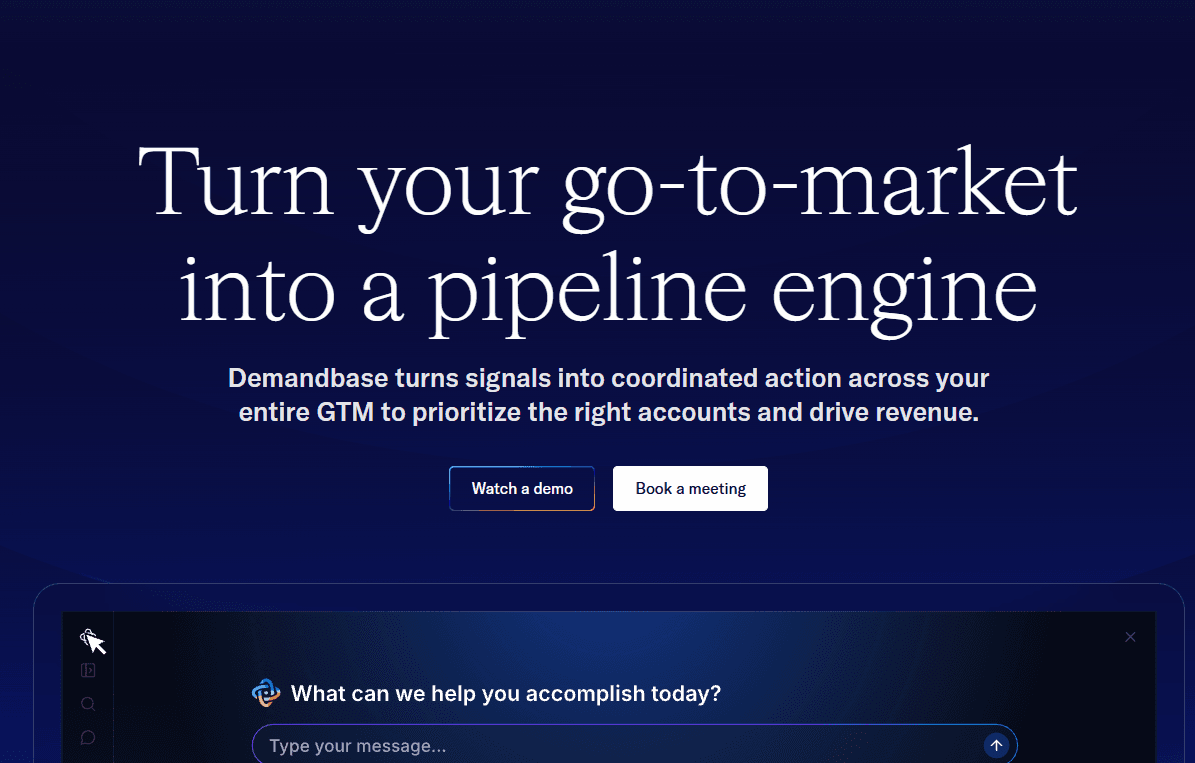
Demandbase is 6sense's closest competitor. It combines intent data, account intelligence, advertising, and sales orchestration into one platform.
Pricing: Custom quote only.
Like 6sense, expect enterprise pricing, implementation costs, and a longer rollout. It's best suited for companies with mature ABM programmes.
2. ZoomInfo
Best for: Sales prospecting and contact data
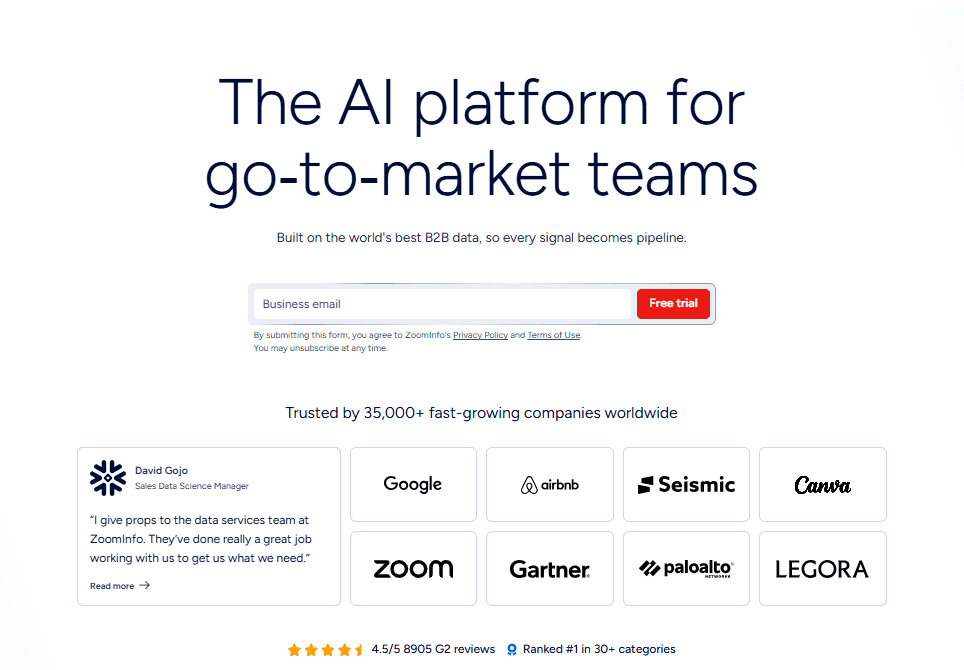
ZoomInfo focuses on helping sales teams find contacts, enrich CRM data, and identify buying intent.
Pricing: Custom quote only.
It's typically easier to adopt than 6sense if your priority is outbound prospecting rather than enterprise ABM.
3. Breakout
Best for: Converting website visitors into pipeline
Breakout helps revenue teams identify anonymous website visitors, engage buyers with AI, qualify intent, and book meetings automatically.
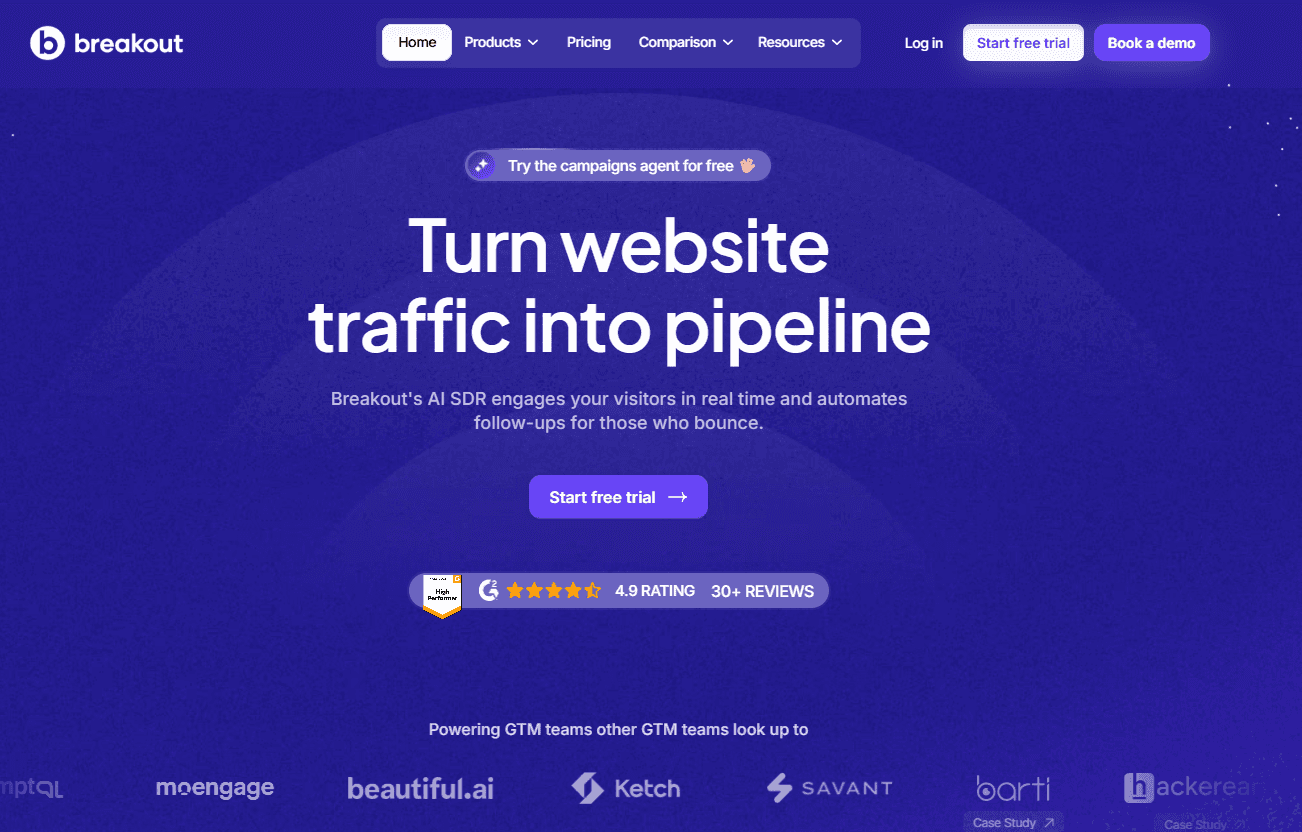
Pricing: Starts at $500/month for Signals, $2,000/month for Growth, with custom Enterprise pricing for larger organisations.

Unlike traditional revenue intelligence platforms, Breakout offers transparent starting prices instead of custom enterprise quotes for every customer.
There are no credit-based pricing models to manage, and teams can start with website deanonymisation before scaling to AI-powered inbound automation.
If predictable pricing, faster implementation, and a lower total cost of ownership are priorities, Breakout is a compelling alternative to 6sense.
How Does Breakout Pricing Compare to 6sense Pricing?
Choosing between 6sense and Breakout ultimately comes down to what you're trying to solve.
If you need a full-scale enterprise revenue intelligence platform with predictive analytics, account-based marketing, and intent data, 6sense is a strong option.
However, that capability comes with custom pricing, a credit-based consumption model, implementation costs, and ongoing operational overhead that can significantly increase your total cost of ownership.
Breakout is built differently. Instead of offering an enterprise GTM suite, it helps B2B SaaS companies convert anonymous website visitors into a qualified pipeline.
Pricing is transparent; there's no complex credit system to manage, and teams can get started without lengthy onboarding or dedicated RevOps support.
For many growing revenue teams, that's a simpler and more cost-effective way to generate pipeline from the traffic they already have.
Rather than paying for features you may never use, you invest in a platform focused on identifying high-intent visitors, engaging them with personalised AI conversations, qualifying buyers, and booking meetings automatically.
If you're looking for a faster, more transparent alternative to 6sense, see how Breakout can help you turn more website visitors into revenue.
FAQs
1. How much does 6sense cost?
6sense doesn't publish its pricing publicly. Pricing is quote-based and depends on factors such as your team size, products purchased, data credits, and contract length.
2. Does 6sense offer a free plan?
Yes. 6sense offers a limited Free plan with basic company insights. Advanced features such as predictive analytics, intent data, and orchestration require a paid subscription.
3. Why doesn't 6sense publish its pricing?
6sense follows a custom enterprise pricing model. Quotes are based on your total addressable market (TAM), users, selected products, and expected data usage.
4. Does 6sense charge by user or by credits?
Both. Customers typically pay an annual platform fee while consuming credits for many data enrichment and contact-related actions.
5. What affects 6sense pricing the most?
Key factors include your TAM, number of users, selected modules, credit allocation, implementation services, and contract length.
6. Is 6sense worth the price?
If you're running a mature enterprise ABM programme, 6sense can deliver significant value. However, businesses focused on converting website traffic into pipeline may find a specialised platform like Breakout offers a lower total cost of ownership.
7. Are there any hidden costs with 6sense?
Beyond the platform licence, you should budget for implementation, training, integrations, credit overages, and ongoing administration. These costs often increase your first-year investment.
8. How does 6sense compare to Demandbase?
Both platforms offer enterprise revenue intelligence, account intelligence, and intent data. They also use custom pricing, making it important to compare total ownership costs before choosing.
9. What is the difference between 6sense and ZoomInfo?
6sense focuses on predictive revenue intelligence and buying signals, while ZoomInfo primarily provides contact data and sales intelligence for outbound prospecting.
10. What are the best alternatives to 6sense?
Popular alternatives include Demandbase, ZoomInfo, and Breakout. Demandbase competes directly in enterprise ABM, ZoomInfo focuses on sales intelligence, while Breakout helps B2B SaaS teams identify anonymous website visitors, engage buyers with AI, and generate pipeline with transparent pricing.
11. What is 6sense used for?
6sense helps B2B revenue teams identify in-market accounts, predict buying intent, prioritise prospects, and support account-based marketing and sales.
12. Does 6sense use AI?
Yes. 6sense uses AI to identify buying intent, score accounts, recommend next actions, and prioritise sales opportunities. Platforms like Breakout also use AI, but focus on engaging website visitors and qualifying them in real time instead of enterprise account scoring.
13. Where does 6sense get its data?
6sense combines first-party, second-party, and third-party data with intent signals, firmographic information, and predictive AI models.
14. Is 6sense a CRM?
No. 6sense is a revenue intelligence platform that integrates with CRMs such as Salesforce and HubSpot. It doesn't replace your CRM.
15. What companies use 6sense?
6sense is primarily used by mid-market and enterprise B2B companies across SaaS, technology, manufacturing, healthcare, and financial services.
This placement is natural because Breakout appears only where users are already evaluating alternatives, value, or AI, instead of being forced into unrelated questions. That aligns well with Breakout's challenger positioning.