
All Blogs
Compares 7 AI SDR tools for B2B revenue teams, covering inbound vs. outbound fit, CRM compatibility, and pricing to help teams pick the right tool.

Evan Marshall
Senior Growth AI Strategist
Published On

Your AI SDR evaluation probably started with a feature comparison and ended up more confusing than when you began. The real split in this category isn't features, it's whether a tool is built for cold outbound, inbound conversion, or both, and whether it works with the CRM stack you already have. We mapped out six tools across both motions so you can make the call without sitting through six vendor demos first.
TLDR:
AI SDR tools split into two distinct motions: outbound prospecting and inbound visitor conversion, and picking the wrong type wastes budget.
Most tools in this category carry CRM lock-in: Qualified requires Salesforce, and Warmly now requires HubSpot following its June 2026 acquisition.
Only one tool on this list offers human-in-the-loop controls before outreach sends, a gap that matters for teams with brand governance or compliance requirements.
11X reports costs of $5,000 to $15,000+ per month with no published pricing, making budget forecasting harder than it needs to be during evaluation.
Breakout covers inbound and outbound in one tool, deploys in days, and starts at $500/month with a 30-day free trial and no credit card required.
What Are AI SDR Tools?
AI SDR tools are software that automates sales development work that would otherwise require a human rep. Depending on the tool, that can mean sourcing cold prospects, writing outreach sequences, identifying anonymous website visitors, qualifying inbound leads, or booking meetings directly onto a rep's calendar.
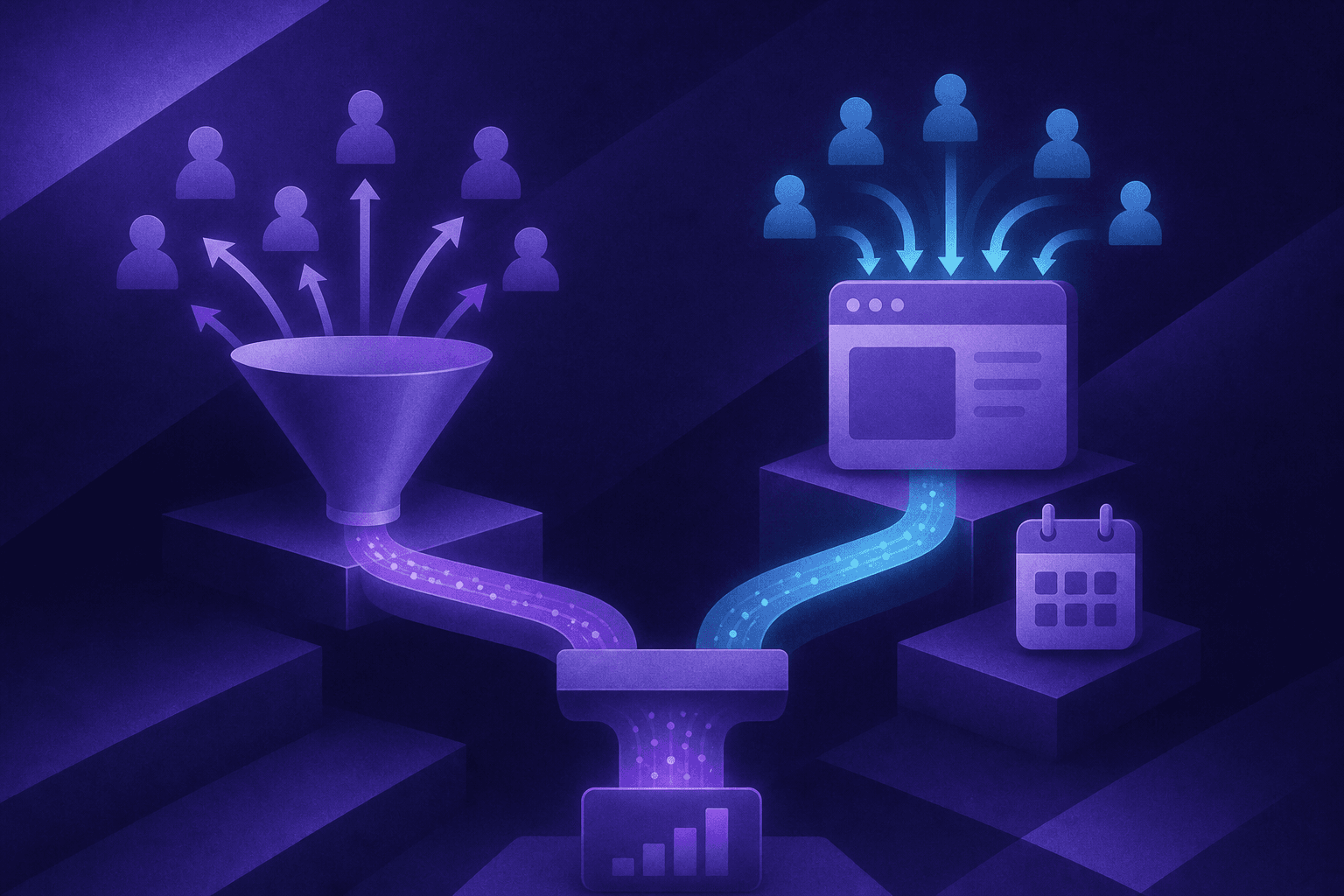
The category spans two fundamentally different motions:
Outbound AI SDRs like Artisan and 11X focus on cold prospecting: building contact lists, personalizing emails at scale, and running multi-step sequences across a list of contacts who have never heard of you.
Inbound AI SDRs focus on the other side, engaging visitors who have already shown buying intent by landing on your site, downloading content, or submitting a form, and converting that intent into a booked meeting before the window closes.
Picking the wrong type is a common and costly mistake. A team whose pipeline depends on converting high-intent website traffic will not get that from a tool optimized for cold outbound volume. That distinction matters more than any feature comparison you will find in a product demo.
How We Ranked These AI SDR Tools
Each tool on this list was assessed across seven dimensions that reflect what actually determines whether an AI SDR generates pipeline or just generates activity.
Inbound vs. outbound motion coverage: whether the tool serves one motion, the other, or both, and whether that coverage is native or bolted on
Visitor deanonymization: whether the tool can identify anonymous site visitors before they fill out a form, and how deep that identity resolution goes
AI autonomy and human-in-the-loop controls: how much the tool runs on its own versus how much visibility and approval your team retains before outreach sends
CRM flexibility: native support for HubSpot, Salesforce, Marketo, or other stacks beyond Salesforce
Time to deployment: how quickly a team can go from signed contract to live conversations, measured in days instead of months
Pricing transparency: whether pricing is published or requires a full sales cycle to obtain a number
Multi-channel follow-up: whether the tool pursues prospects across email and LinkedIn after they leave, or stops at the first interaction
No single tool scores perfectly across all seven. The goal here is to give you enough signal to match the right AI SDR to your actual go-to-market motion.
Best Overall AI SDR Tool: Breakout
Breakout was built as an inbound AI SDR from the ground up, which means every feature reflects one job: converting high-intent visitors into pipeline before they disappear.
The moment someone lands on your site, Breakout deanonymizes them, surfacing company, individual identity, and CRM match before any form is filled. From there, the AI runs qualification conversations autonomously around the clock, handling objections and booking meetings in-conversation without waiting for a rep to be available. When a visitor bounces without booking, personalized email and LinkedIn follow-up fires within minutes, automatically.
Unlike Qualified or Warmly, Breakout integrates natively with Salesforce, HubSpot, Marketo, and GongEngage, so your existing CRM stack is not a prerequisite. Deployment takes days, not months, with no mandatory onboarding fees. Pricing starts at $500/month with a 30-day free trial and no credit card required.
Qualified
Qualified is a conversational pipeline tool built exclusively for Salesforce, and it does that job well. Its AI SDR agent, Piper, handles real-time visitor routing and live rep handoffs through a "Pounce" model that lets sales reps jump into active conversations with high-intent accounts. Intent data, meeting scheduling, and chat all sit inside the Salesforce ecosystem, making it a coherent solution for enterprises already running a Salesforce-native GTM stack.
What They Offer
Salesforce-native AI SDR (Piper) with real-time visitor routing and live rep handoff via the Pounce model
Intent data and meeting scheduling integrated directly into Salesforce
Enterprise-grade customization for Salesforce deployments
The constraint is structural: Qualified cannot function with HubSpot, Marketo, or any non-Salesforce CRM. Implementation typically runs months, with users reporting heavy configuration dependency on the Qualified team. Since Salesforce completed its acquisition of Qualified in April 2026, the product roadmap is now subordinated to Salesforce's priorities, which introduces lock-in risk even for existing Salesforce customers who may want flexibility later. Teams in that position should review Qualified alternatives for SaaS teams.
Warmly
Warmly built a strong reputation on signal breadth. Its data layer pulls from website visits, G2 intent, and Bombora third-party signals, giving sales teams a wider view of in-market accounts than most standalone tools offer. Outbound TAM orchestration lets teams proactively work target accounts showing intent across multiple sources.
What They Offer
Broad signal aggregation across website visits, G2 intent, and Bombora data
Website visitor identification with outbound TAM orchestration
Text-based routing chatbot for inbound chat engagement
Integration into HubSpot's Smart CRM and Data Hub following acquisition
The core limitation is structural. HubSpot acquired Warmly on June 30, 2026, making HubSpot a hard dependency going forward. That disqualifies it for teams on Salesforce, Marketo, or any other CRM. Those teams should review Warmly alternatives following the HubSpot acquisition. Its chat interface also remains text-only and rule-based, not a true autonomous AI SDR.
Good fit for HubSpot shops that want richer signal coverage layered into existing CRM workflows. A poor fit for non-HubSpot teams or anyone who needs an independent, full-cycle inbound AI SDR.
Unify
Unify is a warm outbound engine built around signal intelligence. It aggregates 25+ intent signals, including job changes, funding rounds, and G2 reviews, then translates those signals into AI-crafted outbound email sequences called "Plays" that fire automatically when a target account hits a defined threshold. Research and messaging agents handle copy generation, so reps aren't writing sequences by hand.
Plays trigger personalized outbound email sequences from aggregated intent signals across job changes, funding rounds, and G2 reviews
AI research and messaging agents generate email copy without rep involvement
Salesforce and HubSpot CRM integration
The gap appears the moment a prospect lands on your site. Unify has no AI chatbot and no real-time on-site engagement capability, so a high-intent visitor who arrives after clicking your outbound email cannot be engaged in the moment. Setup also requires 2 to 4 weeks of audience mapping, signal configuration, and Play configuration before any sequences go live.
Good fit for sales teams whose primary bottleneck is cold outbound pipeline built from intent signals. A poor fit for inbound-heavy teams who need to convert the visitors those signals generate.
Artisan
Artisan's core product is Ava, an autonomous AI BDR that handles outbound prospecting from end to end. Ava sources contacts from a 300M+ B2B contact database, writes personalized email sequences, and manages campaign delivery with built-in email warmup to protect deliverability. For teams whose primary constraint is cold outbound volume, it covers roughly 80% of the manual work an SDR would otherwise handle.
Artisan's limitation is categorical. There is no inbound visitor identification, no on-site AI engagement, and no post-bounce follow-up across email or LinkedIn. A prospect who clicks an Ava-sent email and lands on your site gets nothing. Teams with meaningful inbound web traffic will need a separate tool entirely to capture that motion. Consider reviewing Artisan alternatives that drive pipeline.
Good fit for small to mid-size B2B teams scaling cold outreach without adding SDR headcount. A poor fit for teams whose pipeline depends on converting website visitors or managing inbound hand-raisers.
11X
11X positions its AI SDR, Alice, as a full digital worker replacement for a human SDR. Prospect research, email personalization, outreach sequencing, and follow-up scheduling all run autonomously without rep involvement. It targets enterprise teams running high outbound volume who want to remove human bottlenecks from the prospecting motion entirely.
What They Offer
Alice handles prospect research, email personalization, and outreach sequencing across email and LinkedIn without human intervention
Integrations built for enterprise sales stack environments
Pricing is not published and requires an enterprise sales process to get a number. Reported costs range $5,000 to $15,000+ monthly depending on contract terms, with no free trial or self-serve signup available.
The autonomy is also a constraint for some teams. Alice sends outreach without a human review step, meaning there is no pre-send approval layer to catch off-brand messaging before it reaches a prospect. Teams uncomfortable with that should look at 11X alternatives. For organizations with strict brand governance or compliance requirements, that gap matters.
Good fit for large enterprises with dedicated RevOps resources and high outbound volume who are comfortable with fully autonomous AI execution. A poor fit for teams that want visibility into what their AI SDR sends on their behalf, or those without an enterprise budget to match.
Feature Comparison Table of AI SDR Tools
The table below maps eight capabilities across the six tools covered in this post, so you can spot gaps without reading each review twice.
Feature | Breakout | Qualified | Warmly | Unify | Artisan | 11X |
|---|---|---|---|---|---|---|
Visitor Deanonymization | Yes | Limited (Salesforce-cookied users) | Yes | Yes | No | No |
Real-Time On-Site AI Engagement | Yes | Yes (rep-dependent) | Text chat only | No | No | No |
Multi-Channel Follow-Up (Email + LinkedIn) | Yes | No | No | Email only | Email only | Email + LinkedIn |
CRM Agnostic | Yes | No (Salesforce only) | No (HubSpot only, post-acquisition) | Limited (Salesforce + HubSpot) | Yes | Yes |
Human-in-the-Loop Controls | Yes | No | No | No | No | No |
Transparent Published Pricing | Yes | No | No | Partial | No | No |
Deploys in Days | Yes | No | No | No | No | No |
Inbound and Outbound in One Tool | Yes | No | No | No | No | No |
A few patterns worth noting before you move into the individual reviews:
CRM lock-in is a real constraint for several tools here. Qualified requires Salesforce, and Warmly is tightly coupled to HubSpot following its acquisition, which limits where each fits in your stack.
Human-in-the-loop controls are rare across this group, which matters if your compliance or brand standards require a rep to approve outreach before it sends.
Opaque pricing is the norm, not the exception, making budget forecasting harder than it needs to be during evaluation.
Why Breakout Is the Best AI SDR Tool
For a Series B+ revenue team assessing this category in mid-2026, the competitive picture has narrowed considerably. Qualified is Salesforce-only. Warmly now requires HubSpot. 11X and Artisan cover outbound but go dark the moment a prospect lands on your site. Unify has no on-site engagement layer. Breakout is the only tool on this list that covers the full motion: visitor deanonymization before any form fill, real-time on-site qualification, post-bounce follow-up across email and LinkedIn, and outbound sequencing, without requiring you to commit to a specific CRM or accept fully autonomous outreach with no review step.
The structural differentiators compound: deployment takes days, not months, pricing starts at $500/month with a 30-day free trial and no mandatory onboarding fees, and human-in-the-loop controls mean your team approves outreach before it sends. If your pipeline problem spans both inbound conversion and outbound reach, Breakout is the only tool here built to run both without stitching together separate systems.
Final Thoughts on Picking AI SDR Tools That Actually Fit Your Stack
The tools that look similar in a comparison table can behave very differently once you factor in CRM dependencies, deployment timelines, and whether the tool covers your actual motion. Most of the category covers outbound well and leaves inbound visitors completely unengaged, which is a real pipeline gap for teams with meaningful web traffic. Figure out where your pipeline breaks before you compare features. Breakout offers a 30-day free trial with no credit card required, so you can test the inbound motion without committing.
FAQs
How do I choose between Breakout, Qualified, and Warmly if my team is comparing inbound AI SDR tools?
Start with your CRM stack: Qualified requires Salesforce, and Warmly now requires HubSpot following its June 2026 acquisition, so either of those constraints may eliminate an option before you review a single feature. If your team runs a non-HubSpot or non-Salesforce CRM, Breakout is the only tool in this group that deploys across any stack without a hard platform dependency.
Is Breakout or Artisan the right choice for a B2B team that needs both inbound and outbound pipeline coverage?
See the Artisan section above for a full breakdown; Breakout covers both motions in one tool, Artisan does not. Breakout covers both motions in one workflow, so if your pipeline depends on converting inbound visitors and running outbound sequences without separate tooling for each, Breakout is the more complete fit.
When should a revenue team choose 11X over other AI SDR tools on this list?
11X is a reasonable fit for large enterprises with dedicated RevOps resources, high outbound volume, and budget in the $5,000 to $15,000+ per month range who are comfortable with fully autonomous execution. If your team requires a pre-send review step before outreach reaches a prospect, or if transparent pricing matters during your budget cycle, 11X is a poor fit: none of those controls exist in the product.
How do I know whether my pipeline problem requires an inbound AI SDR or an outbound AI SDR?
Pull your last 90 days of pipeline data: if target accounts are visiting your site but not converting to meetings, your constraint is inbound conversion and tools like Breakout are the right category to consider. If your pipeline depends on reaching accounts that have never shown any buying signal, outbound-first tools like Artisan or Unify handle that earlier-stage problem.
Can Breakout replace the full functionality of Drift for teams that still need migration support?
Breakout is explicitly built as a Drift migration destination, covering visitor deanonymization, multi-channel follow-up across email and LinkedIn, SDR pounce alerts, and AI nudges, which are capabilities that Drift's official successor, 1mind, does not offer. Most migrations go live within five days through a structured white-glove process, with CRM routing and playbook configuration completed before the legacy system is deactivated.


