All Blogs
A short, useful read on ai bdr explained for b2b sales.

Evan Marshall
Senior Growth AI Strategist
Published On

Your outbound motion is stuck. Your BDRs spend most of their time on research and list building instead of actual conversations, and you're wondering if an AI BDR can take that work off their plate. Tools like Artisan AI's Ava, Clay AI BDR workflows, and other BDR AI agents promise to automate everything from prospecting to meeting scheduling, but understanding what AI BDR software actually does versus what it claims to do is where most buying decisions go wrong. The AI BDR category includes everything from simple sequencing tools to full AI BDR agents that research prospects, write personalized outreach, handle replies, and log everything back to your CRM. If you're deciding whether to hire an AI BDR like Ava, build your own setup with Clay, or invest in AI BDR training and certification for your team, you need to know what these tools replace, what they can't do, and how they compare to keeping human BDRs on your team. Let's walk through exactly what an AI BDR is, how AI BDR tools work, and which approach makes sense for your pipeline in 2026.
TLDR:
AI BDRs automate outbound prospecting tasks like research, personalized outreach, and follow-ups that consume BDR hours without requiring human judgment.
Human BDRs cost $60,000 to $80,000 annually plus ramp time, while AI BDR subscriptions run a fraction of that with no turnover risk.
AI BDRs fail in complex selling situations that require reading emotional subtext or managing buying committee politics.
Clean CRM data determines AI BDR success more than the tool itself; stale data produces bad targeting regardless of AI sophistication.
Breakout is free to get started with no credit card required, runs multi-channel AI SDR outreach on any handraise signal, and takes minutes to set up with no complex onboarding.
What Is an AI BDR?
An AI BDR is a software agent that handles the prospecting and outreach work traditionally done by a human business development representative. Where a human BDR spends hours researching accounts, writing emails, and following up across channels, an AI BDR runs those same workflows automatically, around the clock.
The core idea is role replacement at the task level. These agents research prospects, craft personalized messages, sequence outreach across email and LinkedIn, respond to replies, and hand off qualified leads to your sales team.
Tools like Artisan's Ava and Clay-powered BDR workflows have made this category visible, but the underlying approach varies widely across vendors in ways that matter for how you build your pipeline.
AI BDR vs. AI SDR: Understanding the Difference
The terms AI BDR and AI SDR get used interchangeably, but they refer to distinct functions in a B2B sales pipeline.
A BDR (Business Development Representative) focuses on outbound prospecting: identifying target accounts, sourcing contact data, and generating net-new pipeline. An SDR (Sales Development Representative) typically handles inbound lead qualification, routing warm prospects to account executives.
An AI BDR automates outbound prospecting work. An AI SDR automates inbound qualification. The distinction matters because the underlying workflows, data requirements, and handoff logic differ considerably between the two.
If your pipeline gap is outbound, you need an AI BDR. If your bottleneck is inbound response speed or lead routing, an AI SDR solves a different problem entirely.
How AI BDRs Work: Core Capabilities
AI BDRs run on a layered set of capabilities that work together across the prospecting cycle. Most tools in this category handle four core functions:
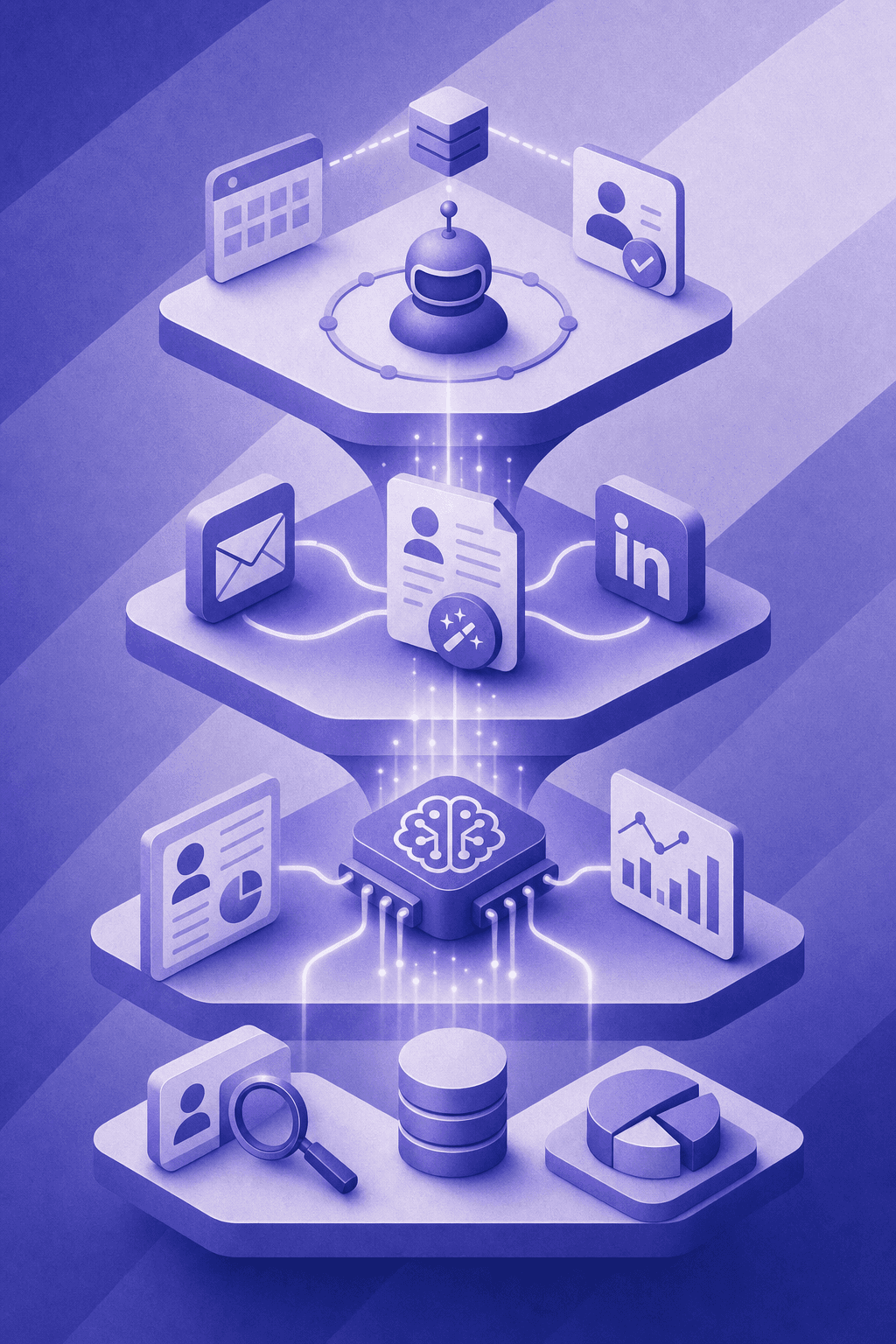
Prospect research and scoring, pulling data from sources like LinkedIn, intent signals, and firmographic databases to rank leads by fit and timing
Personalized outreach generation, writing emails and follow-ups calibrated to each prospect's role, company context, and behavior
Multi-channel sequencing across email, LinkedIn, and sometimes phone, without requiring manual coordination at each step
Meeting scheduling and CRM logging, so that when a prospect responds, handoff to a human rep happens without dropped context
The underlying mechanics rely on LLMs for message generation and data enrichment APIs for lead intelligence.
Key Tasks AI BDRs Can Automate
Prospect research, outreach sequencing, follow-up scheduling, and CRM updates are the core tasks that consume BDR hours without requiring human judgment. AI BDRs handle all of them automatically.
Prospect research and list building: AI BDRs scan signals like job changes, funding rounds, and intent data to identify and qualify leads continuously, without manual list pulls.
Personalized outreach at scale: Each message is generated based on prospect-specific context, so sequences feel individualized even when running across thousands of contacts.
Follow-up and timing optimization: AI tracks engagement signals and sends follow-ups at statistically better moments, removing the guesswork from cadence management.
CRM logging and enrichment: Activity data, contact details, and interaction history are written back automatically, keeping records current without rep intervention.
What AI BDRs Cannot Do (Yet)
AI BDRs handle high-volume, repeatable outreach well, but they hit real walls in complex selling situations.
They struggle to read emotional subtext in replies, pick up on political dynamics within a buying committee, or adjust messaging when a deal requires genuine relationship capital. When a prospect pushes back with nuance, or a conversation moves into negotiation territory, AI hands off to a human or drops the thread entirely.
There are also data dependency issues. An AI BDR is only as good as the signals it receives. Weak enrichment, stale CRM data, or misconfigured intent feeds produce bad targeting, and no amount of LLM sophistication fixes bad inputs upstream.
AI BDR vs. Human BDR: Cost and Performance Comparison
The cost gap between AI BDRs and human BDRs is real and worth analyzing carefully before you commit either direction.
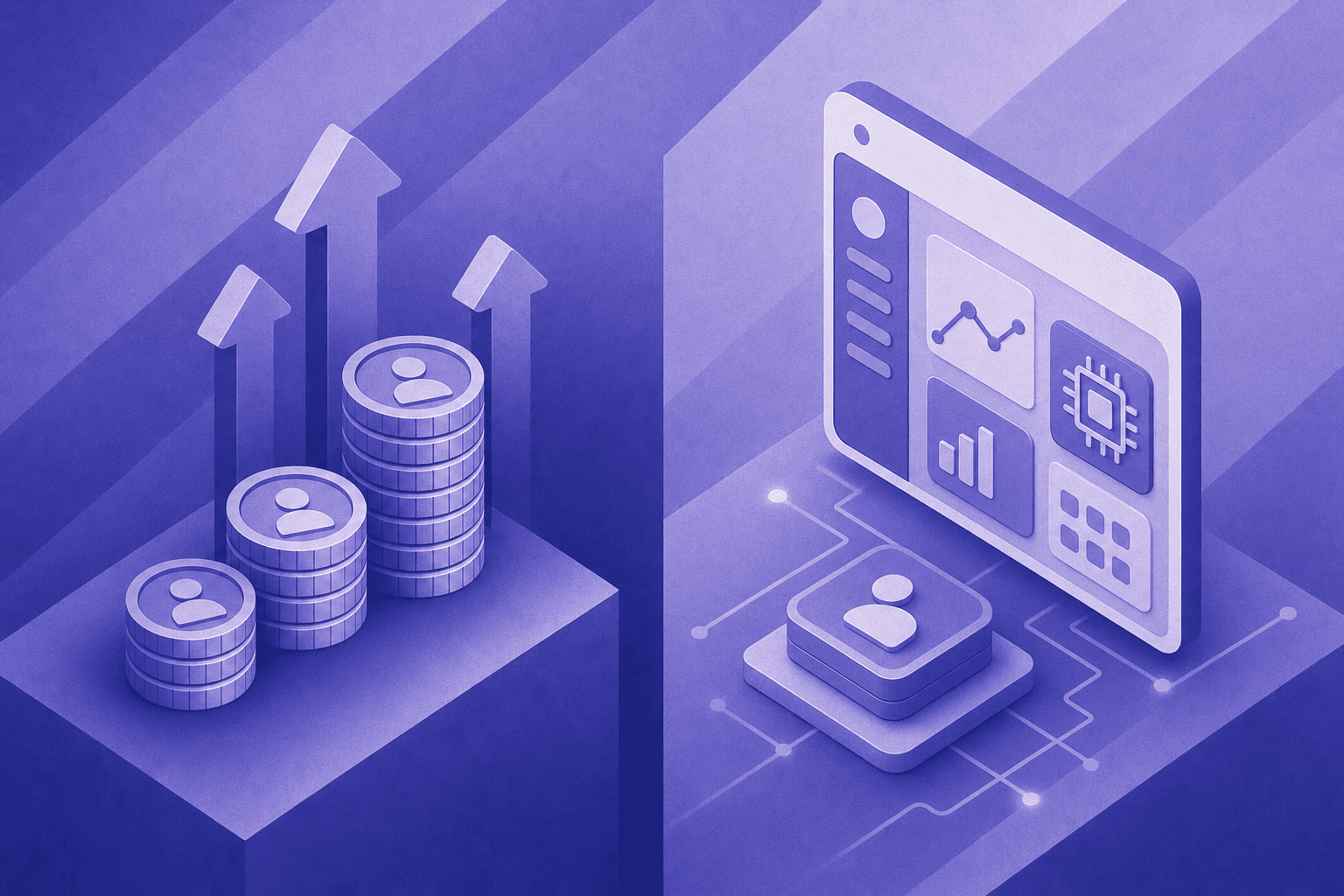
A human BDR in the U.S. typically costs $60,000 to $80,000 in base salary, plus benefits, commissions, management overhead, and ramp time that can stretch three to six months before they're producing at full capacity. BDR OTE ranges from $83K to $90K when accounting for total compensation. An AI BDR subscription costs a fraction annually, with no ramp period and no turnover risk.
Where Human BDRs Still Win
Raw volume favors AI. But complex, high-ACV deals with multiple stakeholders often require the judgment and adaptability that human reps bring. If your ICP requires managing political dynamics or highly tailored value propositions, a human BDR's contextual reasoning still outperforms any AI agent today.
The smarter question isn't which to choose, it's which workload belongs to each.
Top AI BDR Tools in 2026
The AI BDR space has consolidated around a handful of tools that take meaningfully different approaches to pipeline generation. 41% of enterprise teams run AI SDRs in production, reflecting rapid adoption across the category. Here is a quick breakdown of the leading options in 2026.
How the Leading AI BDR Tools Compare
Tool | Core Strength | Best Fit |
|---|---|---|
End-to-end outbound automation with a branded AI persona | Teams wanting a fully autonomous SDR replacement | |
Clay | Data enrichment and waterfall enrichment workflows | Ops-heavy teams building custom outbound infrastructure |
Warmly (acquired by HubSpot) | Person-level website intent and inbound AI agent workflows | HubSpot-native teams wanting intent data baked into their CRM |
Qualified (acquired by Salesforce) | Conversational AI for inbound pipeline, now part of the Salesforce ecosystem | Enterprise teams already deep in Salesforce infrastructure |
Breakout | Multi-channel AI SDR that acts on any handraise signal, with no complex setup or onboarding | Fast-growing B2B teams that want to skip lengthy onboarding and run outreach immediately |
Each tool trades off control for automation in different ways, and two major acquisitions have reshaped the category in 2026. Warmly, known for person-level website intent, is now part of HubSpot, tying its roadmap to HubSpot's broader CRM ecosystem. Qualified's inbound AI moved inside Salesforce after its April 2026 acquisition, making it a strong fit for enterprise teams already running on Salesforce but less flexible for teams that aren't. Clay gives you more configurability but requires considerable technical setup to run. Ava automates more but limits how much you can adjust the underlying logic. Breakout takes a different position: it gets revenue teams live in minutes, not months, runs multi-channel AI SDR outreach on any handraise signal, and you can start for free without a credit card.
How to Implement an AI BDR Successfully
Start with your data sources, not your tech stack. The most common implementation failure is deploying an AI BDR before your CRM data is clean enough to act on. Garbage in, garbage out applies here more than anywhere else in the sales pipeline.
Here is a practical sequence to follow:
Audit your contact and account data first, so the AI has accurate firmographic and intent signals to work with before it sends a single message.
Define your ICP tightly, because AI BDRs perform best when targeting parameters are narrow and deliberate, not broad and hopeful.
Set sequencing rules that reflect your buyer's actual behavior, including reply handling, opt-out logic, and escalation paths to human reps.
Run a controlled pilot on one segment before scaling, so you can measure reply rates and meeting conversion without risking your full addressable market.
Adoption also requires internal alignment. Sales teams often resist AI BDR rollouts because reps worry about job displacement. The teams that see the best results reframe the AI as handling early-stage volume so human reps can focus on qualified conversations, not cold outreach.
How Breakout Runs Multi-Channel AI SDR Outreach on Any Signal
Breakout is built for fast-growing B2B teams that want a full AI SDR running in hours, not after weeks of onboarding, complex configuration, or ongoing playbook maintenance. There is no lengthy setup cycle. You install the pixel, connect your CRM, and Breakout starts identifying who is on your site and acting on every signal that indicates buying intent.
Where most AI BDR tools focus on cold outbound lists, Breakout acts on handraises: any signal that tells you a prospect is showing interest right now. A website visit is one signal. Job change alerts, intent data spikes, form submissions, and content engagement are others. When any of those signals fire, Breakout runs full multi-channel AI SDR outreach across email and LinkedIn, personalized to each prospect's context, without requiring a rep to manually trigger anything.
For Series B+ teams managing high inbound volume, that speed of response matters. Breakout connects intent signals directly to your CRM and sequences, so your team focuses on conversations that are already warm instead of chasing prospects who have gone cold. Getting started is free with no credit card required, so you can see how it works on your own traffic before committing to a paid plan.
Final Thoughts on AI BDRs and Your Pipeline
AI BDRs don't replace judgment, they replace repetition. The workflows that eat up hours without requiring nuance are exactly where automation delivers ROI, freeing your team to focus on conversations that actually need a human. Two of the biggest players in this category moved in 2026: Qualified is now inside Salesforce, and Warmly has joined HubSpot, making both tools more powerful within those ecosystems but more narrowly positioned for teams outside them. If your bottleneck is inbound speed and you want a full AI SDR that acts on any handraise signal across email and LinkedIn without a months-long setup, Breakout is free to get started with no credit card required. Start with a controlled pilot on one segment, measure conversion, and scale what works instead of automating everything at once.
FAQ
What is an AI BDR?
An AI BDR is a software agent that automates the prospecting and outreach tasks traditionally handled by human business development representatives, including account research, personalized email generation, multi-channel sequencing across email and LinkedIn, and lead handoff to your sales team. These agents run continuously without ramp time or turnover risk, making them a cost-effective alternative to human BDRs for high-volume outbound workflows.
AI BDR vs AI SDR: what's the actual difference?
AI BDRs focus on outbound prospecting: sourcing new accounts, building lists, and running cold outreach sequences. AI SDRs handle inbound qualification: routing warm prospects who already visited your site or filled out a form to the right rep. If your pipeline gap is generating net-new leads, you need an AI BDR; if your bottleneck is responding to inbound signals fast enough, an AI SDR solves that problem instead.
Can an AI BDR replace my entire BDR team?
No, not for complex, high-ACV deals that require managing buying committee politics or adapting messaging based on relationship capital. AI BDRs handle high-volume, repeatable outreach exceptionally well but struggle with emotional subtext in replies and complex negotiations. The smarter deployment is using AI for early-stage volume so your human reps can focus on qualified conversations that require judgment and adaptability.
What should I fix before implementing an AI BDR?
Audit your CRM and contact data first: AI BDRs only perform as well as the firmographic and intent signals they receive. Clean your account records, tighten your ICP definition, and set up proper sequencing rules for reply handling and opt-out logic before you deploy. Running an AI BDR on stale or inaccurate data produces bad targeting that no amount of AI sophistication can fix.
How much does an AI BDR actually cost compared to hiring a human?
A human BDR typically costs $60,000 to $80,000 in base salary plus benefits, commissions, management overhead, and three to six months of ramp time before they're producing at full capacity. AI BDR subscriptions generally run a fraction of that annually with no ramp period and no turnover risk, but the ROI comparison depends on whether your deal complexity requires the contextual reasoning that human reps still provide better than any AI agent available today.