All Blogs
A quick look at better options than Best.

Evan Marshall
Senior Growth AI Strategist
Published On

If you're digging into Artisan reviews, you're past the stage of believing product pages at face value. You need to know how the tool performs when your sequences are live, what breaks when volume scales, and whether support shows up fast enough to matter when something goes wrong. The feedback that tells that story lives in G2 threads, Reddit discussions, and independent reviews where users describe what happened after the sales cycle ended. We synthesized those patterns to show you where Artisan works well, where it creates friction, and which alternatives revenue teams consider when those trade-offs don't fit their workflow.
TLDR:
Artisan automates outbound prospecting with an AI SDR but locks you into its full stack, creating friction if you already run a CRM or sequencing tool.
User reviews flag deliverability issues, weak personalization for segmented campaigns, slow support, and pricing that scales unexpectedly.
Breakout is built for fast-growing teams that want a full AI SDR live in days with no onboarding fees or complex setup — it activates on any hand-raise signal and runs multi-channel outreach across email, LinkedIn, and rep routing automatically.
Clay handles data enrichment but requires a separate tool for execution; Apollo offers database access but lacks AI personalization depth.
What Is Artisan and How Does It Work?
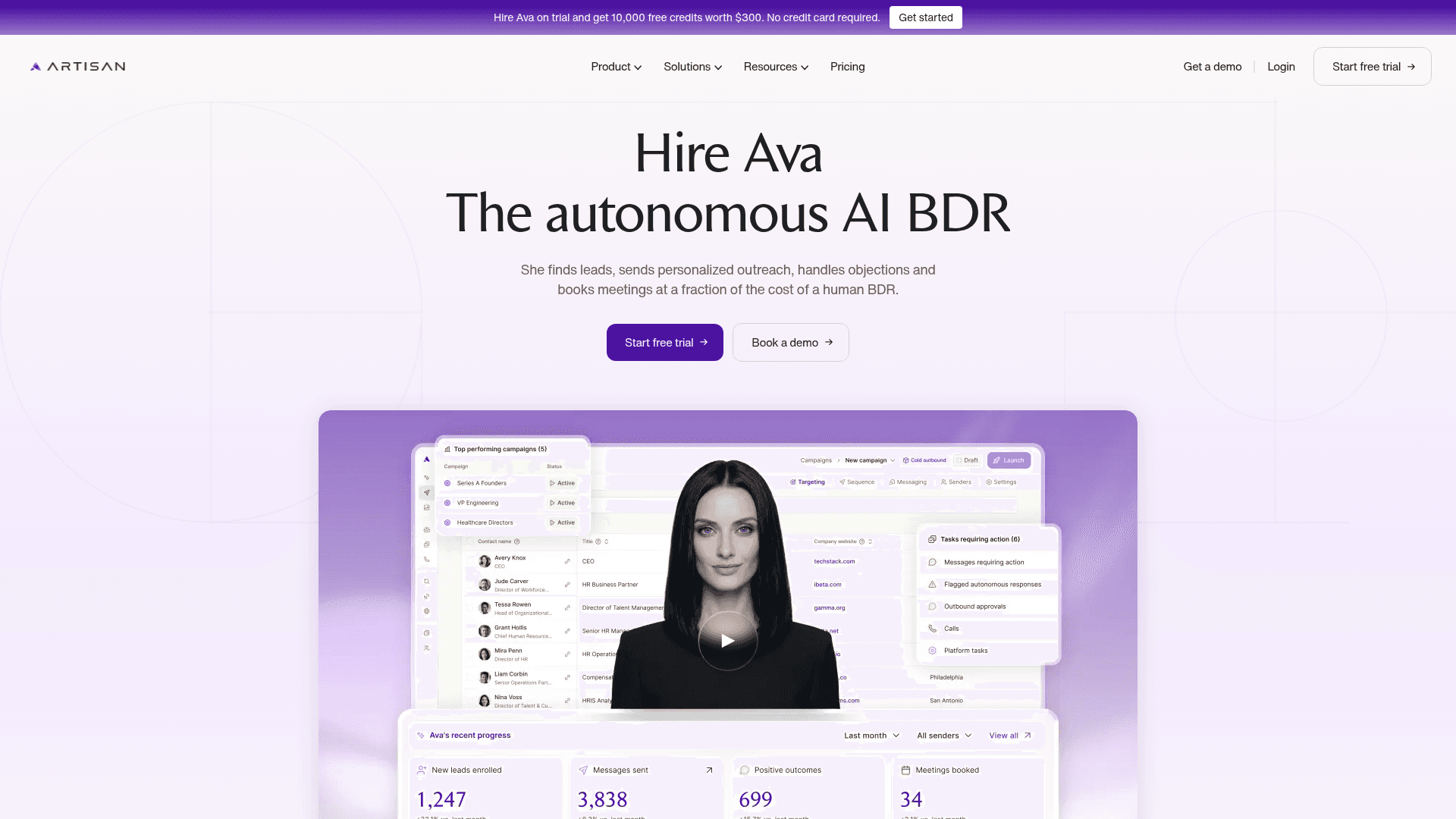
Artisan is an AI sales assistant built around a virtual SDR named Ava. The product automates outbound prospecting by handling lead research, email personalization, and follow-up sequencing without requiring a human rep to manage each step.
The core workflow runs in three stages. Ava pulls contact data from Artisan's built-in B2B database, which the company reports contains over 300 million contacts. She then generates personalized email copy using AI and sends sequences on a schedule you configure. Replies and engagement signals feed back into the system to adjust follow-up timing and messaging.
Artisan positions this as a way to run outbound at scale with a smaller headcount, and the setup is designed to get campaigns running within a few days of onboarding.
Where the Architecture Gets Constrictive
The all-in-one structure means Artisan owns the full stack: data, sequencing, and inbox management all live inside the same system. That works well if your outbound motion is straightforward, but it creates friction if you already have a CRM or sequencing tool you rely on. You cannot, for example, pull Artisan's contact enrichment into your existing workflow without rebuilding around their system. Teams with mature sales infrastructure often find that replacing working tools is a harder sell internally than the product's simplicity suggests.
Why Consider Artisan Alternatives?
Artisan has carved out a recognizable name in AI sales automation, but user feedback collected across G2 reviews, Reddit, and independent review threads tells a more complicated story. The concerns that come up repeatedly are worth taking seriously before you commit budget.
Several patterns surface in Artisan reviews:
Deliverability inconsistencies that reviewers say require manual intervention to manage, which adds overhead that undercuts the value of automation in the first place.
Personalization that works well for high-volume, uniform outreach but struggles when your sequences need meaningful variation across audience segments or deal stages.
Customer support response times that users describe as slow relative to the pace that outbound campaigns actually require when something breaks mid-sequence.
Pricing that scales in ways that catch teams off guard, with costs climbing as contact volume grows beyond initial estimates.
For a Series B company with a functioning sales motion, these friction points have real consequences. Slow support during a broken sequence means lost send windows. Personalization ceilings mean your SDR team is still manually editing messages that were supposed to write themselves. And opaque pricing means budget conversations get harder as you try to scale.
Artisan isn't necessarily the wrong choice for every team. But if any of the above constraints map directly to your workflow requirements, the alternatives below are worth a serious look.
Best Artisan Alternatives in June 2026
If you're weighing Artisan against other options, a few tools come up consistently in the same conversation. Each takes a meaningfully different approach to AI-assisted sales outreach, so the right fit depends on what your team actually needs.
Breakout
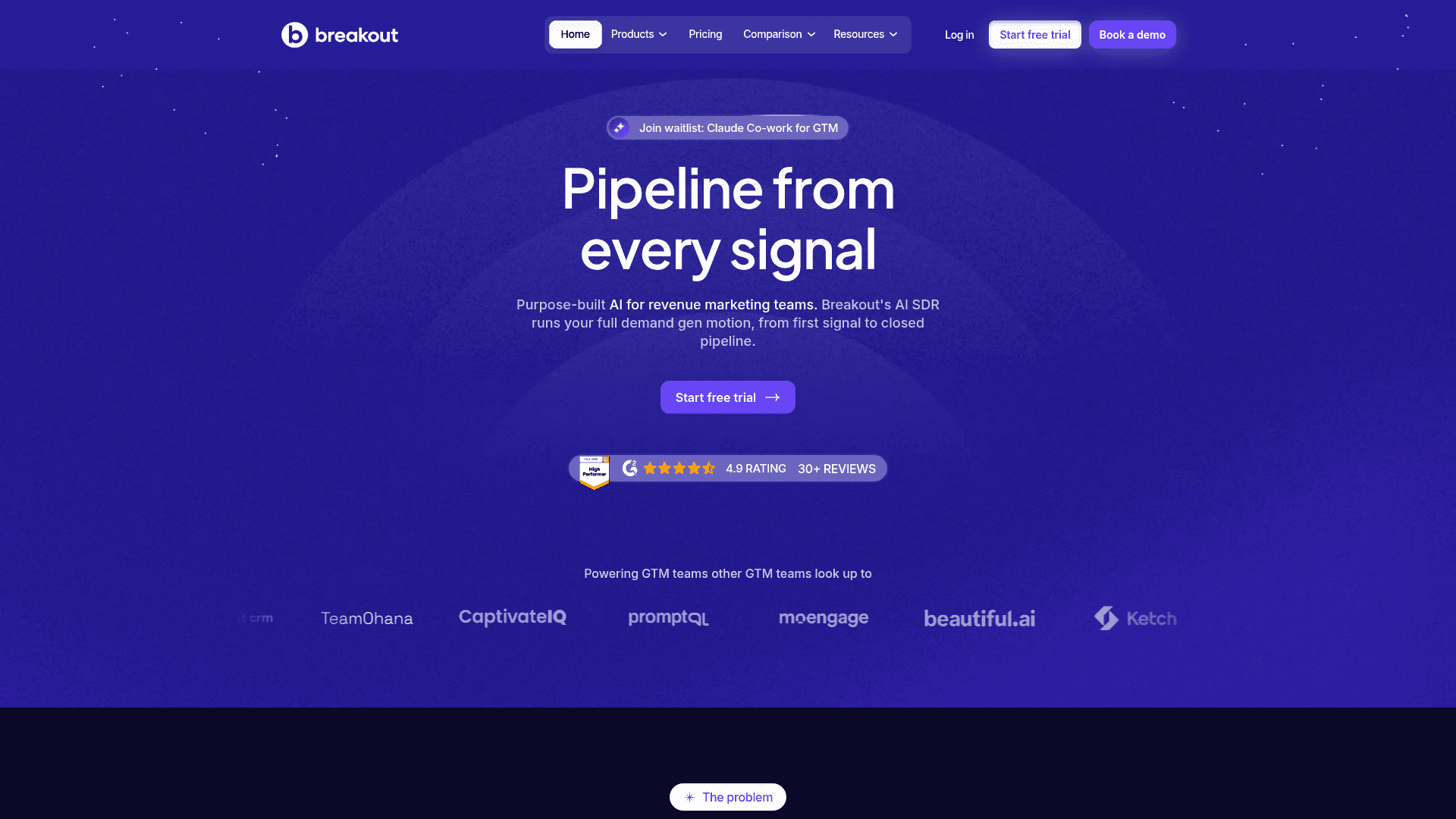
Breakout is an AI SDR built for fast-growing teams that want to skip the weeks of onboarding, complex configuration, and ongoing maintenance that come with most sales automation tools. From the moment a hand-raiser shows intent — whether that is a website visit, a form fill, a content download, or event attendance — Breakout triggers a full multi-channel outreach motion: email sequences, LinkedIn follow-ups, and direct routing to the right rep or AE, all without a human queuing up the next step. Most teams are live within days, with no mandatory onboarding fees and no need to rebuild their existing workflow around a new system.
Clay
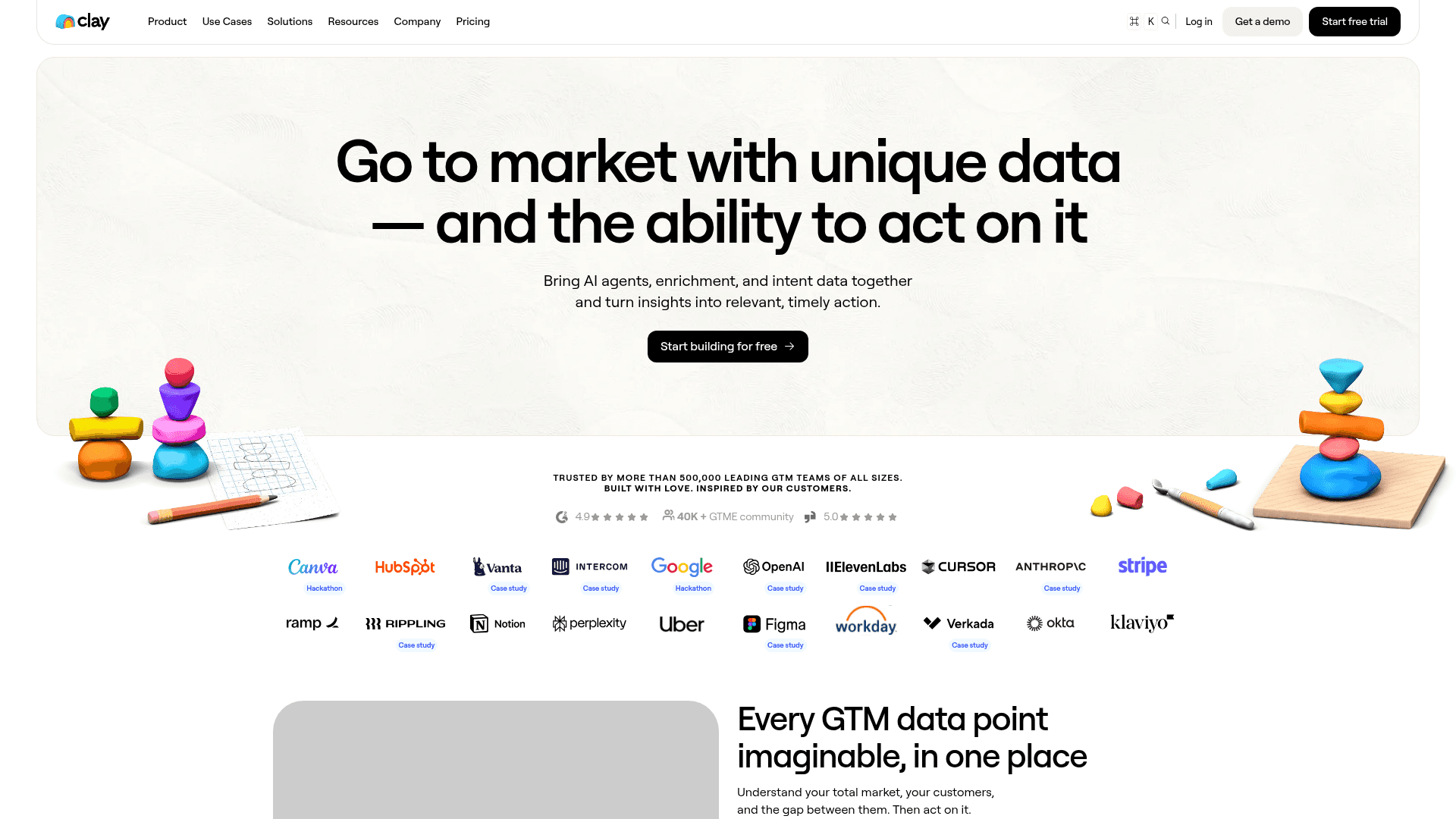
Clay is a data enrichment and workflow tool that pulls from dozens of sources to build highly customized prospect lists. It gives you deep control over how contacts are built and segmented, which makes it a strong choice for teams with complex audience logic. The trade-off is that Clay is a research and enrichment layer, not an execution layer, so you still need a separate tool to send and manage outreach.
Apollo.io
Apollo combines a large B2B contact database with sequencing and light CRM functionality. It covers a lot of ground in one subscription, which is appealing for early-stage teams watching per-seat costs. The downside is that the breadth comes at the cost of depth: the sequencing is functional but lacks the AI-driven personalization that higher-volume outbound requires at Series B and beyond.
Smartlead
Smartlead is a cold email infrastructure tool built for sending at high volume while protecting deliverability. Its strength is inbox management: unlimited mailbox rotation, automated warmup, and reply handling that keeps large sending operations out of spam folders. The trade-off is scope. Smartlead has no AI SDR agent, no built-in contact database, and no AI-driven personalization, so it covers the sending layer but leaves prospect research, list building, and message customization to other tools. That makes it a fit if your bottleneck is purely deliverability at scale, but a poor match if you want one system to source, personalize, and send.
Feature Comparison: Artisan vs Top Alternatives
Here is a feature comparison table across the tools most commonly compared alongside Artisan:
Feature | Artisan | Breakout | Apollo.io | Clay | Smartlead |
|---|---|---|---|---|---|
AI SDR agent | Yes | Yes | No | No | No |
Outbound email sequencing | Yes | Yes | Yes | Yes | Yes |
Contact database | Yes | Yes | Yes | No | No |
AI-driven personalization | Basic | Advanced | Basic | Advanced | No |
CRM sync (native) | Limited | Yes | Yes | No | No |
LinkedIn outreach | No | Yes | No | Yes | No |
Multichannel sequencing | Email only | Email + LinkedIn | Email + calls | Email + LinkedIn | Email only |
Pricing transparency | Low | High | Medium | Medium | High |
Best fit | SMB autopilot | B2B revenue teams | Sales prospecting | Data enrichment | High-volume email |
A few patterns worth knowing about these tools (and for a deeper evaluation framework, this AI SDR buying guide covers what predicts long-term success):
Artisan consolidates outreach into a single AI agent, which works well if your sequences are relatively uniform. The trade-off is that this architecture limits per-contact customization depth, a constraint that shows up repeatedly in user reviews. Teams that segment heavily by persona or industry tend to hit that ceiling quickly.
Breakout takes a different approach: it activates on any buyer signal — website visit, form fill, content download, intent data — and runs multi-channel outreach across email, LinkedIn, and rep routing without requiring a dedicated implementation project. Native CRM sync with Salesforce, HubSpot, and Marketo is included from the start, so there is no data reconciliation and no lag between signal and action.
Apollo and Clay serve fundamentally different jobs. Apollo is strong on database coverage and prospecting volume. Clay excels at data enrichment workflows. Neither is a direct substitute for an AI SDR.
Why Breakout Is the Best Artisan Alternative
Breakout is built for fast-growing teams that need a full AI SDR running without a long implementation cycle or a dedicated ops resource to keep it running. Where Artisan locks you into its closed system and requires you to centralize your workflow around its agent, Breakout plugs into your existing CRM and sales tools and goes live in days — no onboarding fees, no multi-week setup, no fragile configurations to maintain as your team scales.
Here is what sets Breakout apart based on how revenue teams actually use it:
Any hand-raise signal triggers the full outreach motion. Website visits are one input; so are form fills, content downloads, event attendance, and intent data. Breakout activates the same AI SDR workflow regardless of which signal fires, so you are not dependent on a single channel for pipeline.
Outreach runs across email, LinkedIn, and direct rep or AE routing from a single trigger. You do not need separate tools wired together to cover each channel — Breakout executes the full multi-channel sequence and routes high-intent prospects to the right human at the right moment.
Setup takes days, not weeks. There are no mandatory onboarding fees, no complex configuration requirements, and no implementation team needed to get campaigns running. Fast-growing teams can go from signup to live outreach without a dedicated ops resource managing the rollout.
You control the strategy; Breakout handles execution. Targeting criteria, messaging tone, and audience segmentation stay in your hands, while the AI handles prospect research, outreach, follow-up, and qualification autonomously. Every sequence is reviewable before it sends.
Native CRM sync with Salesforce, HubSpot, and Marketo means no manual exports, no data reconciliation across systems, and no lag between what a prospect does and what your sales team sees.
For a Series B+ organization running outbound at volume, the core trade-off is clear: Artisan asks you to rebuild your motion inside its closed system, which takes time and creates ongoing maintenance. Breakout skips that entirely — it is live in days, activates on any signal your buyers send, and runs full multi-channel outreach without asking your team to manage the machinery behind it.
Final Thoughts on Finding the Right Artisan Alternative
Artisan reviews surface real constraints around personalization depth, CRM flexibility, and support speed that matter more as your outbound volume grows. The alternatives above split along clear lines: some optimize for database size, others for enrichment control, and a few for AI-driven execution that fits into your existing stack. If you need a full AI SDR that goes live fast, activates on any hand-raise signal across channels, and routes the right prospects to the right rep without a complex setup, Breakout is where that evaluation ends.
FAQ
Why do teams look for alternatives to Artisan?
Based on user feedback collected across G2 and independent review platforms, teams report deliverability inconsistencies that require manual fixes, personalization limits when campaigns need variation across segments, support response times that lag behind live campaign needs, and pricing that scales unexpectedly as contact volume grows beyond initial projections.
When should you consider switching from Artisan to a different AI SDR?
Consider switching if you're manually editing messages the system was meant to personalize, if your team segments heavily by persona or industry and you're hitting customization ceilings, or if you need native CRM integration without rebuilding your sales workflow around a new system.
What features matter most when comparing AI SDR alternatives?
Focus on how the tool handles personalization depth across different audience segments, whether it integrates with your existing CRM and sequencing infrastructure, if it supports multichannel outreach beyond email, and whether pricing scales predictably with your contact volume and campaign complexity.
How does an inbound AI SDR differ from an outbound tool like Artisan?
Inbound AI SDRs engage website visitors and hand-raisers who already show buying intent, where response speed is the success factor. Outbound AI SDRs conduct cold outreach through lead sourcing and sequence management, where deliverability infrastructure and personalization quality determine results.
Can you use Artisan's contact enrichment with your existing sales tools?
Artisan owns the full stack with data, sequencing, and inbox management inside the same system, which creates friction if you need to pull enrichment into your existing CRM or workflow without rebuilding around their architecture.