All Blogs
AI SDR use cases for B2B teams: visitor deanonymization, inbound qualification, outbound outreach, and automated handoffs so reps inherit qualified pipeline, not cold contacts.

Evan Marshall
Senior Growth AI Strategist
Published On

The gap between when a buyer shows intent and when a rep actually follows up is where most pipeline quietly dies. AI SDRs are closing that gap, but the use cases go well beyond just faster response times. From deanonymizing site traffic to automating post-event outreach, here's how B2B revenue teams are actually using them to move more deals forward.
TLDR:
AI SDRs handle prospecting, qualification, and meeting booking autonomously, handing off to reps only after a meeting is confirmed
Engaging leads within one hour makes you nearly 7x more likely to qualify them, a window human SDR teams rarely hit consistently
In-conversation scheduling captures intent at its peak, removing the calendar-link drop-off that kills inbound conversions quietly
The clean rep handoff passes the full transcript, scoring rationale, and enriched contact record to the CRM automatically, so reps never re-qualify
Breakout runs three agents covering deanonymization, inbound qualification, and outbound campaigns inside a single deployment with native CRM sync
What Is an AI SDR?
An AI SDR is software that handles prospecting, outreach, qualification, and meeting-booking work traditionally done by a human Sales Development Representative. Where a human SDR manually researches accounts, writes emails, follows up across channels, and logs CRM activity, an AI SDR does all of that autonomously, around the clock.
The distinction from a chatbot matters. A chatbot waits for someone to say hello. An AI SDR identifies who is on your site, assesses ICP fit, engages them in a personalized conversation, handles objections, and books a meeting without a rep touching it. Some AI SDRs also run outbound motions, pulling intent signals like job changes or funding rounds to trigger personalized sequences before a prospect ever visits your site.
In a B2B sales motion, AI SDRs sit at the top of the funnel, covering volume-heavy work that would otherwise require a large SDR team, handing off to human reps only once a prospect is qualified and a meeting is confirmed.
AI SDR Use Cases vs. Traditional SDR Workflows
A traditional SDR workflow is linear and slow: research an account, write a personalized email, wait for a reply, follow up, qualify on a call, log the activity, book a meeting. Each step requires a human decision, and most of that time is spent on tasks that don't require human judgment at all.
AI SDRs compress or eliminate those gaps. The table below maps where the shift actually happens:
Workflow Step | Traditional SDR | AI SDR |
|---|---|---|
Account research | Manual, 20-40 min per account | Automated, real-time signal pull |
First outreach | Human-written, sent in batches | Personalized, triggered by intent signals |
Follow-up | Scheduled manually | Multi-channel, automatic |
Qualification | Discovery call with a rep | Conversational AI, pre-meeting |
Meeting booking | Separate scheduling step | In-conversation, no handoff |
CRM logging | Manual entry | Native sync, automatic |
Human reps still matter, but the use cases where AI SDRs perform best are the ones where speed, volume, and consistency outweigh complex judgment. The sections below break down each of those use cases.
Website Visitor Identification and Deanonymization
Most B2B website traffic leaves anonymously. A prospect from a target account spends twelve minutes on your pricing page and disappears without filling out a form. Without identification, that signal dies.
Website visitor deanonymization is the foundational use case that makes everything else possible. AI SDRs use IP resolution, cookie matching, and enrichment waterfalls to match anonymous sessions to company records and, increasingly, to specific individuals. The output is a named contact, their LinkedIn profile, their role, and a confidence score.
Company-level IP matching is becoming less reliable as more buyers browse from home instead of corporate networks, which is why person-level identification has grown more strategically important. AI SDRs run waterfall enrichment, cycling through sources like Clearbit, ZoomInfo, and Rb2b until a confident match is returned, producing a named, enriched visitor record that feeds directly into engagement and routing logic downstream.
Real-Time Inbound Lead Engagement and Qualification
Identified visitors are only valuable if someone engages them before they leave. A 2011 Harvard Business Review study found that firms contacting leads within an hour were nearly seven times more likely to qualify them than those who waited even sixty minutes, a benchmark that has held up across subsequent speed-to-lead research. Most human SDR teams cannot hit that window consistently without dedicated speed-to-lead software, especially outside business hours.
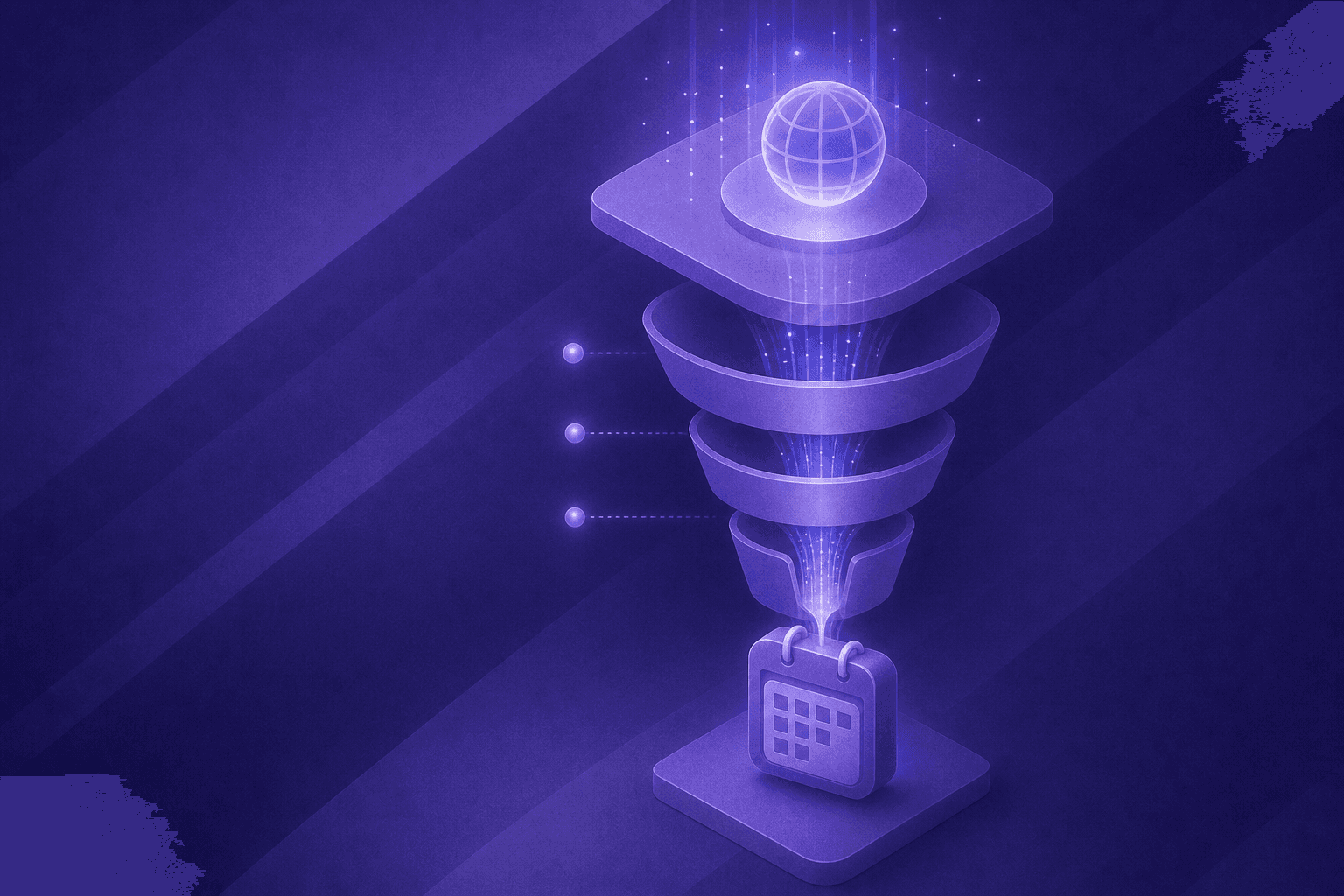
AI SDRs close that gap by engaging the moment a high-intent visitor lands, running a qualification conversation inside the chat without requiring a form fill. They handle objections, surface relevant content, and confirm intent, all before a rep is ever involved, a pattern typical of the best inbound AI SDR platforms. The rep enters only after the meeting is booked.
Outbound Prospecting and Personalized Outreach at Scale
Outbound AI SDRs pull live signals like job changes, funding announcements, and hiring activity to identify when a prospect is in a buying window. Instead of a rep spending thirty minutes researching an account before writing one email, the AI reads company news, LinkedIn activity, and product updates to construct a message that references something specific and timely.
That research layer feeds directly into sequencing. The AI queues multi-touch outreach across email and LinkedIn, adjusts follow-up timing based on engagement, and handles replies without a rep manually configuring each campaign. The same workflow runs across thousands of prospects simultaneously, with each message reflecting individual context instead of a batch template.
Human oversight still matters here. The strongest outbound AI SDR setups let revenue teams define targeting criteria and review sequences before they send, not hand full autonomy to the AI. That pre-send review step is the difference between scaled personalization and scaled noise.
Multi-Channel Follow-Up After Buyer Signals
When a buyer visits your pricing page, downloads a whitepaper, or attends a webinar, they are signaling intent. The problem is that by the time a rep notices the signal, logs it, and decides how to follow up, the window has often closed.
AI SDRs monitor these signals continuously and trigger follow-up the moment they fire. A pricing page visit at 9 PM launches a warm email by 9:01. A webinar attendance record syncs and kicks off a LinkedIn connection request the next morning, without waiting for a rep to check a dashboard.
Channel mix matters too. Email alone misses buyers who are active on LinkedIn but not in their inbox. AI SDRs run coordinated sequences across both, adjusting timing and messaging based on what the prospect actually did, so follow-up referencing a specific downloaded asset reads differently than a cold touch.
ICP Scoring, Lead Routing, and Rep Handoff
Not every inbound contact is worth a rep's time. AI SDRs apply ICP scoring to each one, measuring fit against criteria like company size, industry, geography, and role before any routing decision is made.
Scoring logic is customer-defined, not generic. A mid-market SaaS company's routing rules look nothing like an enterprise hardware company's. Once a lead crosses the fit threshold, automated lead routing kicks in, with territory, account ownership, segment, and rep availability all factoring into which queue the lead enters.
The handoff is where most tools lose the context they built. A clean AI SDR handoff passes the full conversation transcript, scoring rationale, engagement signals, and enriched contact record directly into the CRM so the rep sees everything before making contact. No re-qualifying. No asking questions the AI already answered.
Conference and Event-Based Outreach
Conference and event attendees are warm contacts, but most post-event outreach is generic and slow. By the time a rep sorts through an attendee list, decides who to contact first, and writes a contextual follow-up, the shared-event window has closed.
AI SDRs handle this differently. Upload a conference attendee list, and the AI monitors for when those contacts visit your site or match an outbound trigger. When one of them lands on a pricing page three days after the event, the AI fires a follow-up that references the conference by name, with no rep manually connecting those two signals.
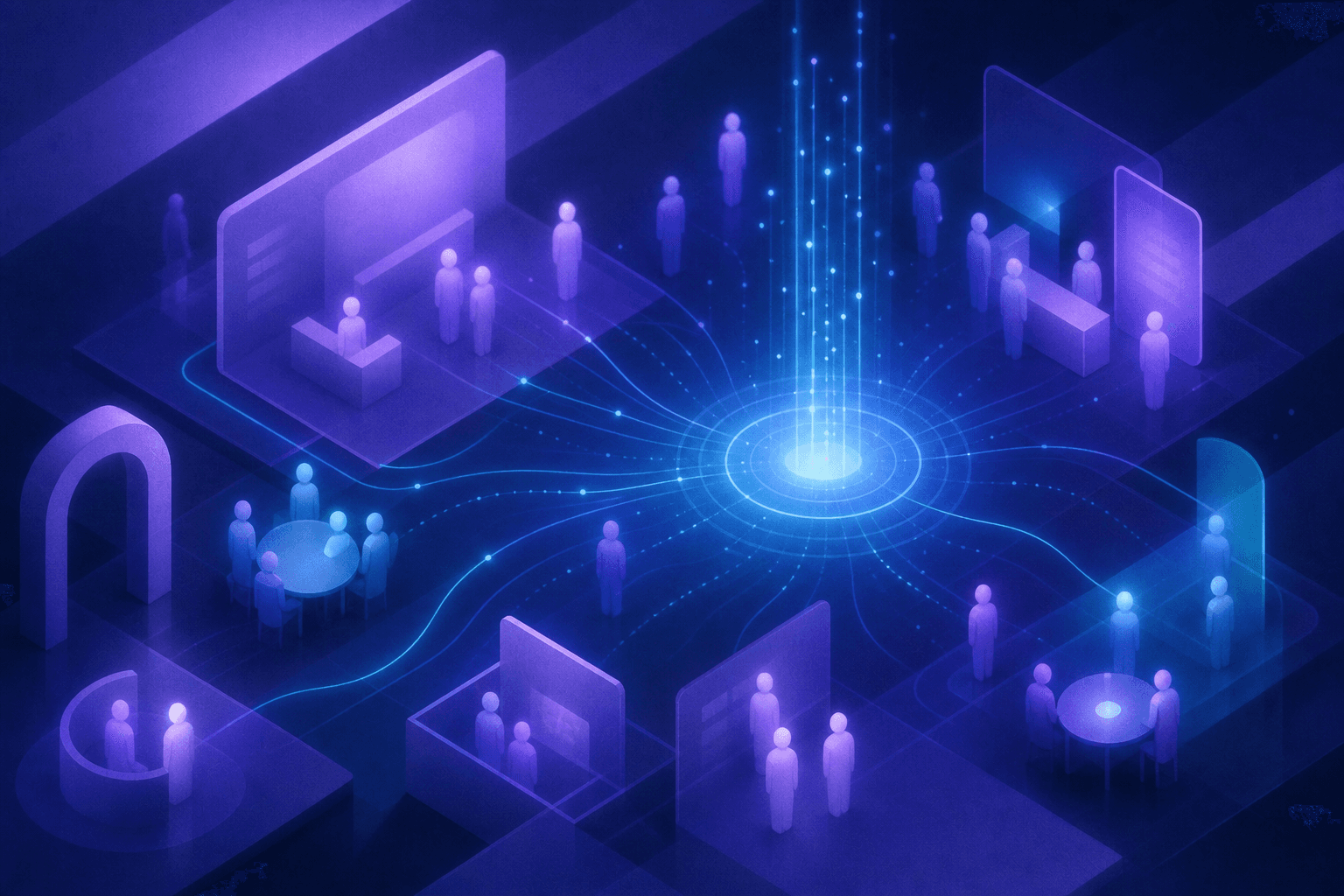
The same logic applies to webinars. Attendee records sync into the AI SDR's targeting layer, so anyone who attended a session enters a distinct follow-up track instead of a generic nurture sequence, with messaging that reflects what they saw.
For demand gen teams running multiple events per quarter with limited post-event bandwidth, this is where AI SDRs create real advantage: high-intent contacts, a natural conversation opener, and an engagement window that closes fast.
Automated Scheduling and Meeting Booking
Scheduling is where a lot of inbound conversions die quietly. A buyer finishes a qualification conversation, gets handed a calendar link, and never books. The intent was real; the friction was just high enough to kill it.
In-conversation scheduling eliminates that gap by embedding calendar booking inside the qualification flow itself. Once the AI SDR confirms intent, it surfaces available times and locks in the meeting without sending the buyer to a separate tool or form. Qualification and booking happen in a single continuous interaction.
That architectural difference matters. A bolt-on calendar link requires the buyer to context-switch and complete a separate action after the conversation ends. In-conversation scheduling captures the moment when intent is highest, instead of asking the buyer to remember to follow up later.
The exception is visitors who are already qualified before they arrive: returning users, warm referrals, or contacts who have been through a prior nurture sequence. For that narrow segment, a direct "Book a Meeting" call-to-action that opens the calendar immediately can skip the conversational intake step without the drop-off risk, because the qualification work has already been done. That is a different scenario from the cold calendar-link problem described above, and conflating the two is where inbound architecture decisions tend to go wrong. It is also worth understanding alongside how an AI BDR differs from this role.
CRM Sync, Data Enrichment, and Workflow Automation
Every qualified conversation an AI SDR completes is only as useful as the data it hands downstream. If enriched contact records, scoring rationale, and engagement history don't land in the CRM automatically, a rep ends up re-qualifying leads the AI already worked through, and RevOps ends up resolving record discrepancies manually.
Native CRM sync means the full record writes itself: contact created, activity logged, lead score attached, source data preserved. When a prospect books a meeting, that event should trigger downstream sequences in your marketing automation tool automatically, stopping nurture emails the moment a meeting is confirmed.
Data enrichment runs in parallel. Instead of a rep inheriting a bare contact record from one of the many lead routing tools on the market, the AI SDR attaches role, LinkedIn profile, buying committee context, and engagement history before the handoff happens, removing the manual enrichment step that typically sits between inbound capture and CRM entry.
How Breakout Puts These AI SDR Use Cases Into Practice
Breakout is built around three agents that each own a distinct layer of the use cases covered above.
The Signals Agent handles deanonymization, matching anonymous sessions to company records and individuals using waterfall enrichment and Rb2b's API for LinkedIn profile data and confidence scoring. The Inbound Agent runs real-time visitor engagement, qualification conversations, objection handling, ICP-aware routing, and in-conversation scheduling, syncing natively to Salesforce, HubSpot, Marketo, and GongEngage. The Campaigns Agent (Spoc) covers the outbound layer, running recurring GTM tasks across Apollo, Clay, and Smartlead without manual orchestration between tools.
The architecture is both CRM-agnostic and traffic-agnostic, a factor worth weighing when you choose AI SDR platforms, so pipeline generation does not pause when inbound traffic slows. Both motions run inside a single deployment.
The funnel gaps are real: the average B2B site converts just 0.50% of visitors to a demo, the average time to book a meeting runs 8 to 12 weeks, and 99% of buyers drop off during the research phase alone. Breakout's design targets exactly that compression, with no mandatory onboarding fees and most implementations going live quickly.
Final thoughts on How AI SDRs Handle the Modern Sales Funnel
Speed, consistency, and context are the three things traditional SDR workflows struggle to deliver at scale. AI SDRs cover those gaps across identification, outreach, qualification, and handoff, so your reps inherit conversations instead of cold contacts. Getting the architecture right matters more than picking the most feature-rich tool, and the use cases above are a good starting point for figuring out where your funnel actually leaks. Start with Breakout to uncover site intent.
FAQ
How do I reduce my B2B website's visitor-to-demo conversion rate without hiring more SDRs?
The drop-off happens in two places: anonymous visitors who leave without engaging, and identified visitors who fill out a form but never book. Fixing the first requires visitor deanonymization so high-intent accounts get engaged before they exit; fixing the second requires removing the gap between qualification and calendar booking by handling both inside a single conversation. The average B2B site converts 0.50% of visitors to a demo, so even modest improvements in either gap produce measurable pipeline gains without adding headcount.
What tools can automatically enrich, qualify, and route inbound leads from a B2B website?
The short answer is that most teams are stitching together three to four separate tools to cover what should be one connected workflow: a visitor identification layer (Demandbase, Rb2b, and Clearbit), an enrichment layer (Clay, ZoomInfo, and Apollo), a routing layer (LeanData, Chili Piper), and a CRM (Salesforce, HubSpot). Breakout collapses those layers into a single motion: waterfall enrichment, ICP scoring, qualification conversation, and CRM sync run in sequence without manual handoffs between tools. If your team already has a mature stack and wants to keep each layer best-of-breed, Clay plus a dedicated routing tool is a reasonable path; if you want the full workflow in one deployment, an AI SDR purpose-built for inbound is the faster route.
How does AI-powered website visitor deanonymization work, and why is IP-based identification becoming less reliable?
Deanonymization works by matching an anonymous session to a company or individual using a waterfall of signals: IP resolution, cookie matching, form-fill history, and third-party enrichment APIs. IP-based company identification is losing accuracy because most buyers now browse from home instead of corporate networks, so the IP no longer maps reliably to an employer. Person-level identification tools like Rb2b's API solve this by returning LinkedIn profile data and confidence scoring tied to the individual instead of the office IP, making the resulting visitor record more actionable for routing and outreach.
Breakout vs. Qualified vs. Warmly: which AI SDR use cases does each tool actually cover?
Qualified is built exclusively on Salesforce and covers inbound chat routing for teams whose entire stack runs on that CRM. It was acquired by Salesforce, making that dependency structural and not merely architectural. Warmly was acquired by HubSpot in 2026 and is being absorbed into HubSpot's Smart CRM, which means it carries a hard HubSpot dependency and an independent roadmap that is no longer actively developed. Breakout is CRM-agnostic, running natively on Salesforce, HubSpot, and Marketo, and covers both inbound visitor conversion and outbound prospecting in a single workflow without requiring a platform migration, or mandatory onboarding fees.
How should a B2B SaaS team set up an automated inbound sales motion that converts website visitors into pipeline?
Start with visitor identification so you know who is on the site before they fill out a form, then layer in ICP scoring so routing decisions are based on fit instead of self-reported data. From there, real-time engagement needs to fire within minutes of a high-intent visit. As noted earlier, speed-to-lead research consistently shows that engaging within the first hour dramatically increases qualification rates. The final piece is in-conversation scheduling: qualification and meeting booking should happen in the same interaction, because handing a buyer a calendar link after a conversation ends is where a large share of inbound intent quietly dies.