All Blogs
Compares top Intercom alternatives for B2B revenue teams in 2026—Breakout, Drift, Qualified, Chili Piper—with key takeaway: only Breakout offers CRM-agnostic AI SDR pipeline generation.

Evan Marshall
Senior Growth AI Strategist
Published On

Your team's situation right now probably falls into one of two buckets: you outgrew Intercom's support focus, or you're not willing to bet your inbound motion on a product now owned by Salesforce. Either way, the right replacement depends on what job you're actually trying to get done, and the options look pretty different once you map them against that.
TLDR:
Intercom rebranded to Fin and now focuses on support resolution at $0.99 per outcome, not pipeline generation.
Salesforce completed its acquisition of Fin for ~$3.6 billion in June 2026, folding Fin's technology into Agentforce and creating structural lock-in risk for non-Salesforce stacks.
Drift and Qualified both carry Salesforce-ecosystem dependency; Chili Piper only engages visitors after a form is filled.
None of the alternatives except Breakout identify visitors before a form fill, qualify autonomously, and follow up via email and LinkedIn.
Breakout is a CRM-agnostic AI SDR that runs the full inbound motion from anonymous visit to booked meeting.
What Is Intercom and How Does It Work?
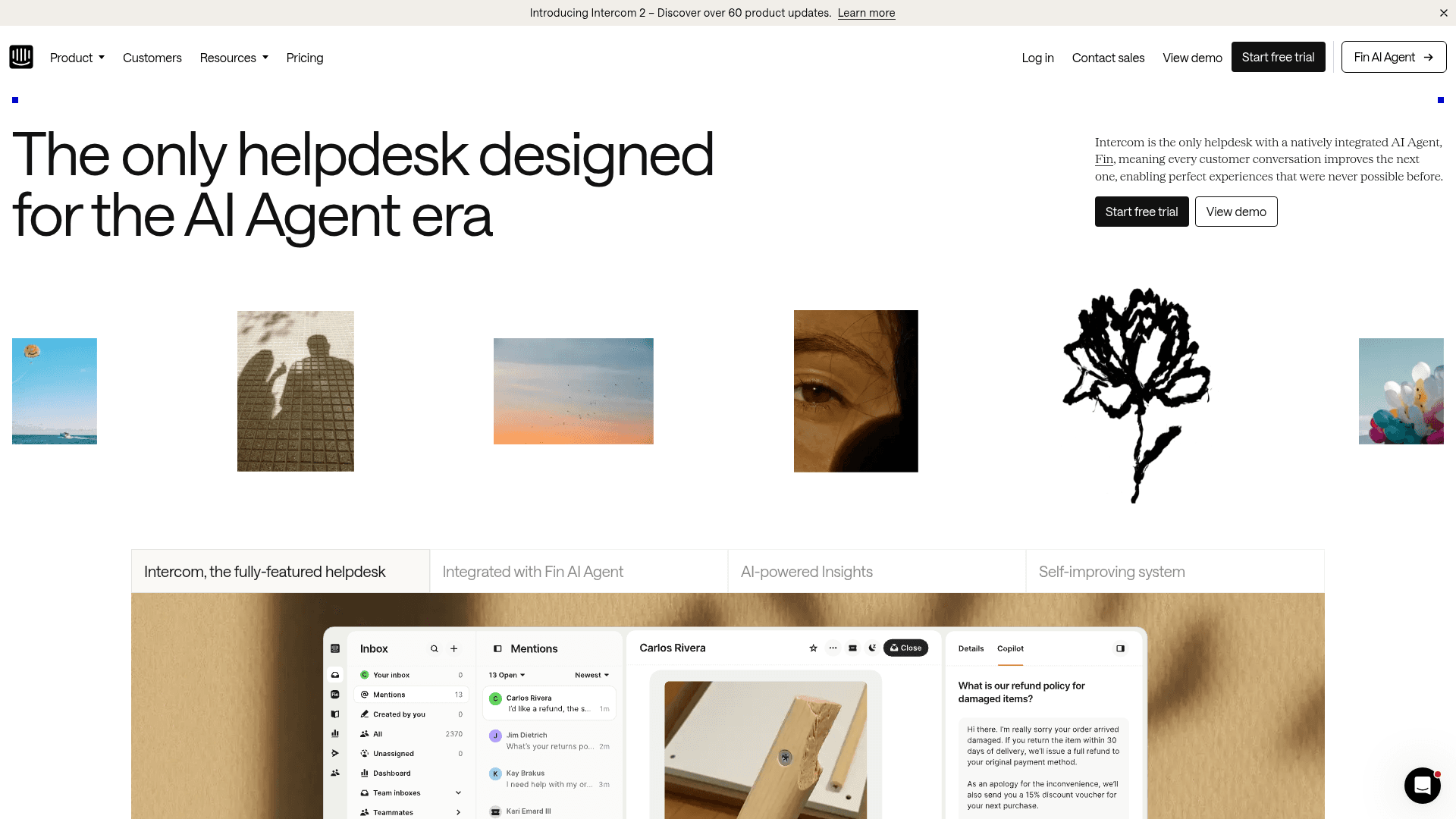
Intercom has been a fixture in customer messaging for over a decade, but the product looks quite different today than it did when most teams first adopted it. As of mid-2026, Intercom rebranded itself entirely to Fin, a signal of how completely the company has repositioned around its AI agent. Fin is Intercom's AI customer service agent, built to answer and resolve customer questions directly across channels like live chat, email, WhatsApp, SMS, phone, and Slack before a human rep ever gets involved.
The pricing model reflects that shift. [Intercom pricing in 2026 runs $0.99 per outcome, layered on top of seat-based plan tiers, meaning costs scale with resolution volume instead of headcount alone. Historically, Intercom also served sales and marketing teams through in-app messaging, onboarding flows, and website chat. That chapter is largely over. The product's current focus is customer service resolution, and Intercom renamed itself to Fin, making the strategic bet explicit.
For support teams handling high query volumes, that focus makes sense. For revenue teams who need pipeline generation, visitor engagement, or sales automation, Fin is solving a different problem than the one they have.
Why Consider Intercom Alternatives?
Intercom's pivot to support AI makes sense as a product strategy. For customer service teams drowning in ticket volume, the Fin agent delivers genuine value. But revenue teams assessing Intercom for pipeline generation are looking at a product built for a fundamentally different job.
The most urgent structural concern is ownership. Salesforce acquired Fin in June 2026, and Fin's technology is now being folded into Agentforce. If your team runs HubSpot, Marketo, or any non-Salesforce CRM, you are now committed to a Salesforce-owned product on a roadmap driven by Salesforce's platform priorities. Roadmap constraints, pricing changes tied to Salesforce packaging, and hard Salesforce dependency are no longer future risks; they are the current reality.
Beyond the acquisition, there are product-level gaps that matter regardless of who owns the company. Intercom's architecture is built around reactive support resolution, with no website visitor deanonymization, pre-form visitor engagement, or multi-channel outbound follow-up across email and LinkedIn. For revenue teams who need to identify anonymous site visitors, qualify inbound hand-raisers, and convert high-intent traffic into booked meetings, those are not minor omissions.
Most SaaS companies under $5M ARR (per GAX Online's 2026 Intercom review) find Intercom alternatives for B2B teams worth considering, and per-outcome billing compounds that math quickly at volume, making cost forecasting harder as resolution volume grows. That unpredictability is a structural problem for revenue teams that need to model pipeline spend quarter over quarter. When the cost of a tool scales with conversation volume instead of headcount, a successful campaign can produce a budget surprise instead of a win.
If support deflection is your primary goal and you are already committed to Salesforce, Intercom may still be a reasonable fit. For everyone else weighing pipeline generation, inbound sales conversion, or CRM-agnostic deployment, these gaps are worth taking seriously before signing.
Best Intercom Alternatives in August 2026
Breakout
Breakout is one of the best inbound AI SDRs built for revenue teams that need to convert website visitors into qualified pipeline. Where Intercom handles reactive support resolution, Breakout runs the full inbound motion: visitor deanonymization before any form is filled, autonomous AI-driven qualification and objection handling, in-conversation meeting scheduling, and multi-channel follow-up via email and LinkedIn.
It integrates natively with Salesforce, HubSpot, Marketo, and GongEngage, with no mandatory CRM dependency and no mandatory onboarding fees. Deployment typically takes days, not months.
Breakout is built for Series B+ B2B SaaS revenue teams that need a proactive pipeline engine, not a reactive support widget. The platform's three-agent architecture separates the work clearly: the Signals Agent deanonymizes visitors at both the company and person level before a form is ever submitted, the Inbound Agent engages those identified visitors with AI-driven conversations that handle qualification and objections in real time, and the Campaigns Agent (Spoc) executes multi-channel follow-up across email and LinkedIn once a visitor leaves without booking. Unlike tools that require a dedicated RevOps team to manage Salesforce routing rules or a months-long configuration runway, Breakout deploys in days with no mandatory onboarding fees and no single CRM dependency. For revenue teams running simultaneous inbound and outbound pipeline motions, the unified workflow means you are not managing separate tooling for each pipeline source; qualification, routing, scheduling, and follow-up all run through a single connected layer. The practical output is a qualified, routed meeting, not a raw form submission or a support ticket closed.
Drift
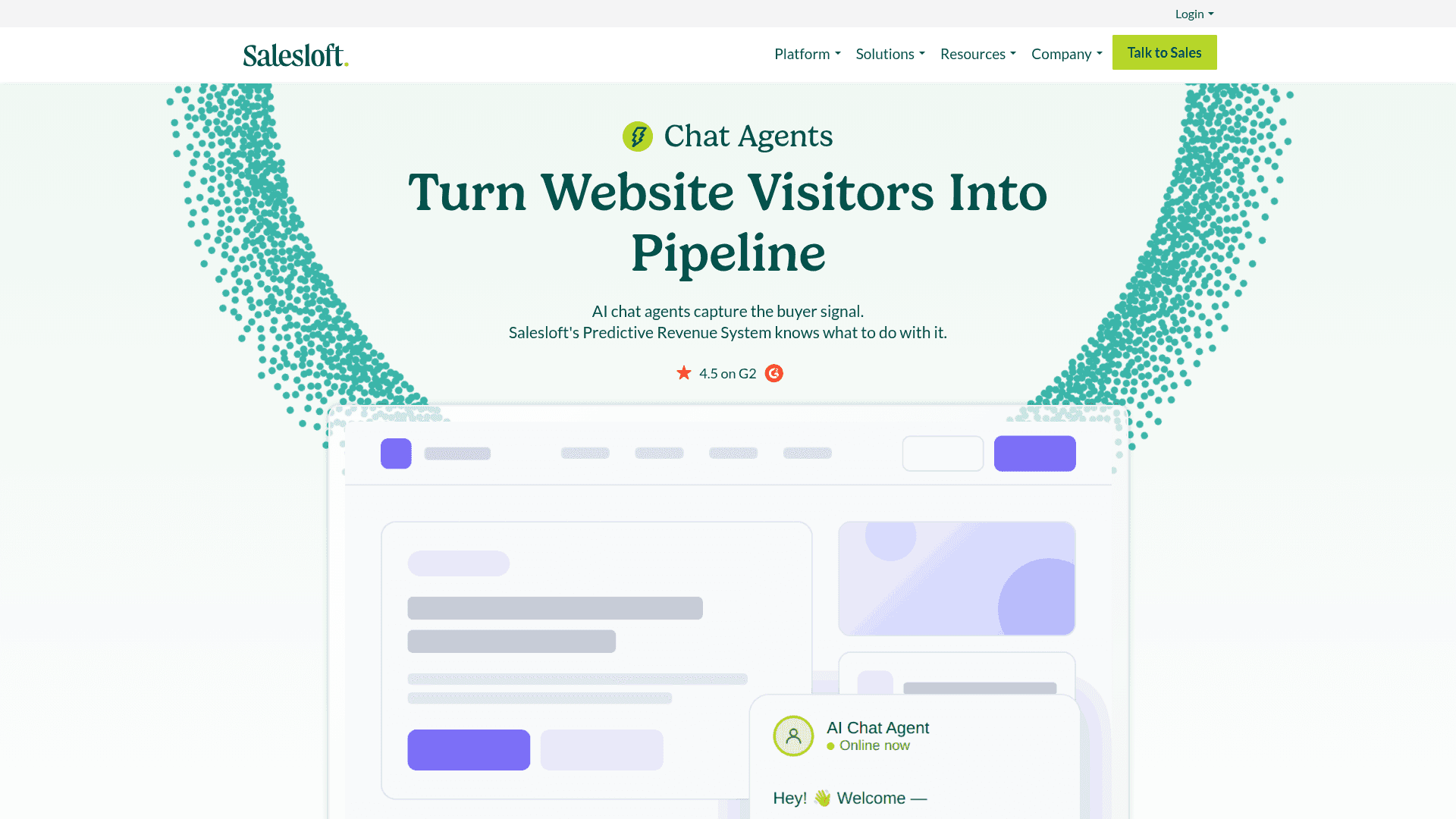
Drift is a conversational marketing tool within the Salesloft Revenue Orchestration ecosystem. It offers AI-powered on-site chat, lead routing, and meeting booking tightly coupled to Salesloft workflows. Teams already running Salesloft as their primary engagement layer will find the native connection useful.
The core constraint: Drift is text-only, rule-based, and limited to on-site conversations with no visitor deanonymization or off-site follow-up. Complex journey configuration also requires ongoing maintenance overhead most lean RevOps teams would rather avoid.
Qualified
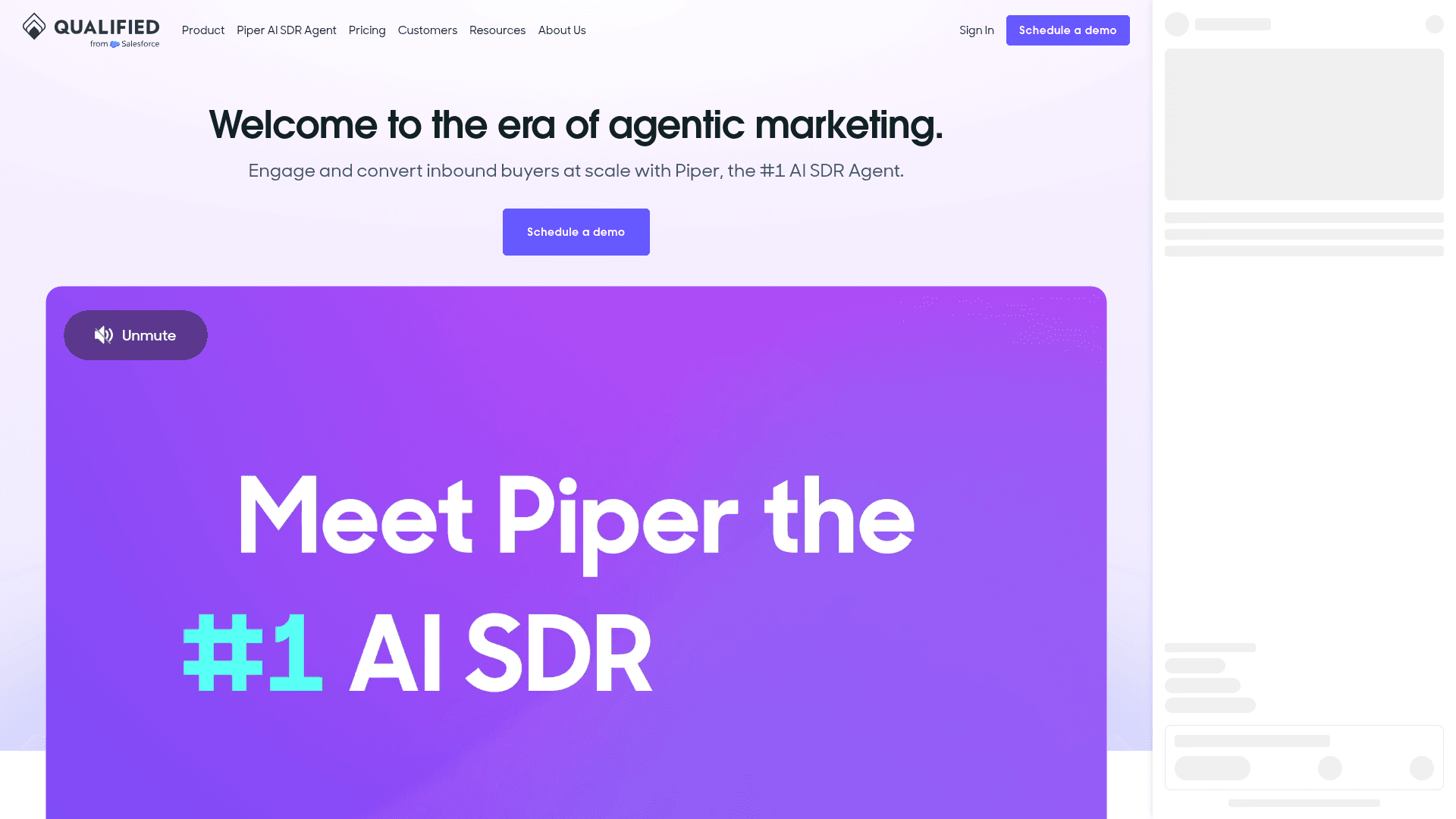
Qualified pioneered real-time website visitor routing to live sales reps, and its Piper AI SDR layer added on-site autonomous qualification. Teams researching top Qualified alternatives in 2026 often cite the Salesforce dependency as the deciding factor. For enterprises fully committed to Salesforce with dedicated RevOps support, the native Salesforce data personalization and routing depth are genuine strengths.
The hard constraint is the Salesforce dependency. Qualified cannot operate with HubSpot, Marketo, or any other CRM, and setup runs months-long. Post-acquisition by Salesforce, that dependency is now structural at the ownership level.
Chili Piper
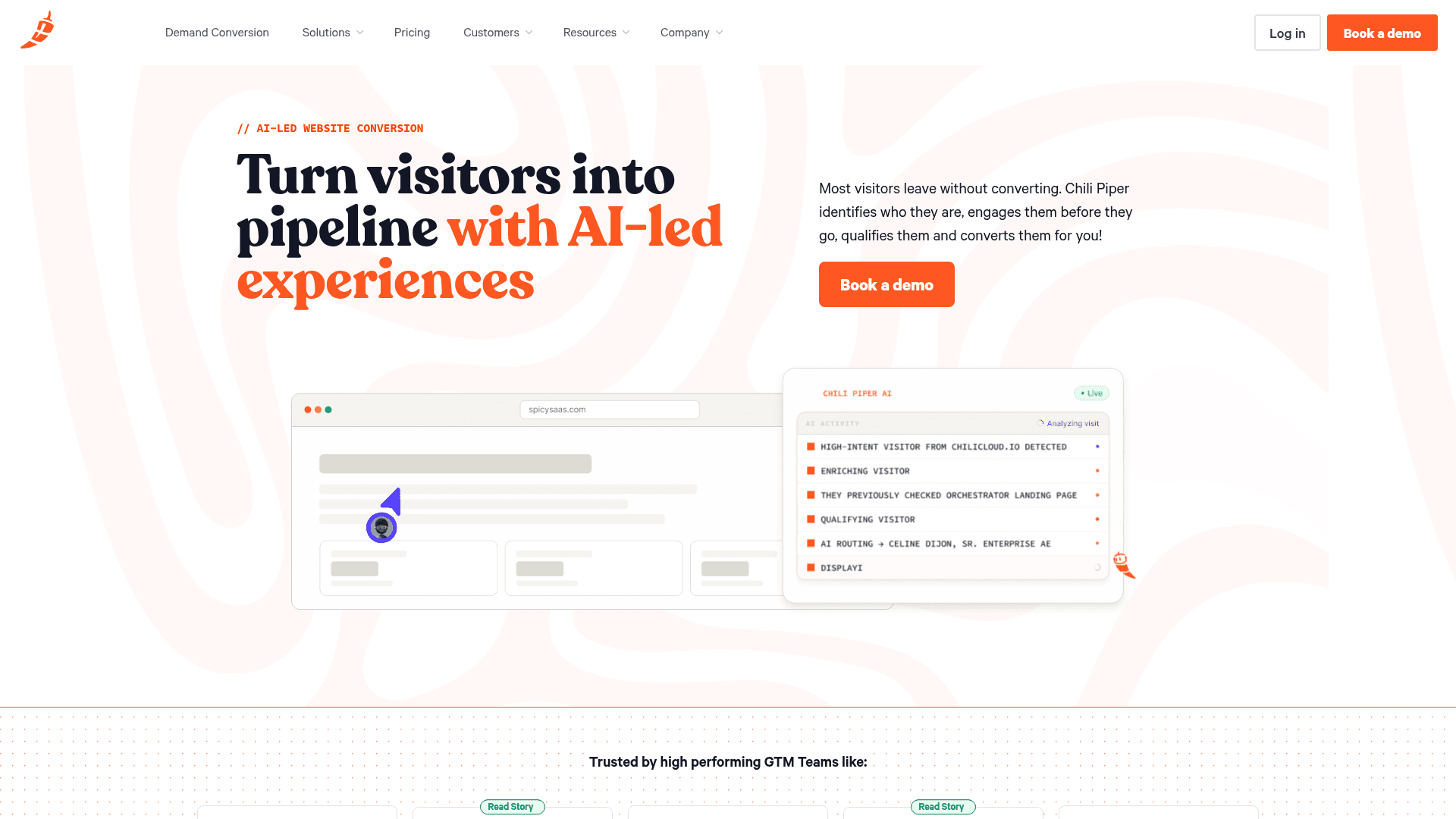
Chili Piper alternatives for inbound marketing are worth comparing alongside Chili Piper itself, which handles instant meeting booking, round-robin routing, and territory-based assignment from inbound form submissions. For teams with high form-fill volume and a dedicated RevOps team managing Salesforce routing rules, it covers post-form conversion well.
The gap is everything before the form. Chili Piper has no visitor deanonymization, no pre-form engagement, and no outbound prospecting from website signals. Given that the majority of B2B website visitors never fill a form, that leaves a large share of high-intent traffic entirely unaddressed.
Feature Comparison: Intercom vs. Top Alternatives
Capability | Intercom (Fin) | Breakout | Drift | Qualified | Chili Piper |
|---|---|---|---|---|---|
Website Visitor Deanonymization | No | Yes (company and person level) | No | Company level only (IP-based) | No (form fill required) |
Pre-Form Visitor Engagement | No | Yes (engages before any form is filled) | No | No (requires chatbot initiation) | No (post-form only) |
AI SDR Qualification (Autonomous) | No. Focused on support resolution | Yes. Autonomous, 24/7 | Partial. Rule-based routing | Partial. Relies on rep availability | Partial. Defers to live reps |
Multi-Channel Outbound Follow-Up (Email + LinkedIn) | No | Yes | No | No | No |
Native CRM Integrations | Salesforce (via integration) | Salesforce, HubSpot, Marketo, GongEngage | Salesloft-native | Salesforce only | Salesforce-first; HubSpot with limitations |
Acquisition / Lock-In Risk | Yes. Acquired by Salesforce, June 2026 | No. Independent, CRM-agnostic | Yes. Salesloft-owned | Yes. Salesforce-owned | No |
Pricing Model | Per resolution ($0.99) + seat fees | Usage-based with free 30-day trial | Custom enterprise pricing | Custom enterprise pricing | Module-based; Concierge and Distro sold separately |
A few things stand out in this comparison worth flagging for your evaluation. Intercom's Fin charges per resolution, which means costs scale with conversation volume in a way that can be difficult to forecast at budget time. Qualified and Drift are both Salesforce-ecosystem products, which introduces acquisition and roadmap risk if your stack is not Salesforce-first. Chili Piper requires a form fill before any engagement begins, so anonymous high-intent visitors pass through without any touchpoint, a gap that B2B website visitor identification tools are built to close. Breakout is the only tool in this set that identifies visitors before a form is filled, runs autonomous qualification around the clock, and follows up across both email and LinkedIn without deferring to rep availability.
Why Breakout Is the Best Intercom Alternative
Intercom was built to resolve customer support tickets. That is a specific job, and Fin does it well. But for revenue teams who landed on Intercom hoping to generate pipeline from website traffic, the product-market fit was always thin, and the completed Salesforce acquisition narrows it further. A Salesforce-owned tool with a roadmap focused on support deflection is a poor foundation for an inbound sales motion.
Breakout is built for the job Intercom was never designed to do, namely the kind of proactive pipeline generation that AI SDRs drive revenue through. It is CRM-agnostic, integrating natively with Salesforce, HubSpot, Marketo, and GongEngage, so your existing stack does not determine whether you can deploy it. There are no mandatory onboarding fees and no months-long configuration runway. Most teams are live within days.
The architectural difference is most visible in what happens before a visitor fills a form. Intercom waits for initiation. Breakout identifies who is on the site, engages them with AI-driven conversations that qualify intent and handle objections in real time, schedules meetings directly inside that conversation, and follows up via email and LinkedIn if they leave without booking. A Feedback Management dashboard lets your team audit AI conversation quality and refine the logic over time. That full motion, from anonymous visit to qualified meeting, is what a pipeline engine looks like. Intercom does not offer it, and teams researching Qualified alternatives for SaaS teams will find the same Salesforce dependency gap applies there as well.
Final Thoughts on the Best Intercom Alternatives for Pipeline Generation
Intercom does what it was designed to do, but generating inbound pipeline was never the design. With the Salesforce acquisition now complete, teams outside that ecosystem are committing to a product that is locked into Salesforce's roadmap and pricing decisions. The clearest way to pressure-test any alternative is to look at your own funnel: find where the drop-off happens and match the tool to that gap instead of the other way around. Breakout offers a free 30-day trial if your data points to the pre-form engagement problem.
FAQs
Why are revenue teams looking for Intercom alternatives in 2026?
Intercom's rebrand to Fin signals a full pivot toward AI-powered customer support resolution, leaving revenue teams without the visitor deanonymization, pre-form engagement, and outbound follow-up they need to generate pipeline. The completed Salesforce acquisition compounds this: teams running HubSpot, Marketo, or any non-Salesforce CRM are now on a Salesforce-owned product whose roadmap and pricing are driven by Salesforce's platform priorities, with no path back to an independent tool.
What capabilities should you focus on when comparing Intercom alternatives for pipeline generation?
Look for visitor identification before any form is filled, autonomous AI qualification that runs outside business hours, native CRM integration with your existing stack, and multi-channel follow-up across email and LinkedIn. Per-outcome pricing models like Intercom's $0.99-per-resolution structure can make cost forecasting unreliable at volume, so transparent usage-based pricing is worth weighing against module-by-module billing.
When does switching from Intercom to Breakout make sense for a B2B revenue team?
If your team needs to convert anonymous site traffic into qualified meetings, run inbound and outbound pipeline motions from a single workflow, and deploy without a months-long configuration runway or mandatory onboarding fees, Breakout is built for that job where Intercom is not. The clearest signal to switch is when your primary goal is pipeline generation, not support ticket deflection.
How does Breakout handle visitor engagement differently than Intercom's Fin agent?
Intercom waits for a visitor to initiate contact before any interaction begins. Breakout identifies who is on your site before a form is filled, engages them with AI-driven conversations that qualify intent and handle objections in real time, schedules meetings directly inside that conversation, and follows up via email and LinkedIn if they leave without booking.
Does Breakout require Salesforce to operate, unlike Qualified and the post-acquisition Intercom?
No. Breakout integrates natively with Salesforce, HubSpot, Marketo, and GongEngage without requiring any single CRM as a hard dependency. Qualified is exclusively Salesforce-dependent, and Intercom is heading toward Salesforce ownership, making both tools structurally inaccessible to teams on other CRM stacks. Breakout's CRM-agnostic architecture means your existing stack determines nothing about whether you can deploy it.