All Blogs
A guide to AI SDR tools for B2B buyers: how they work, inbound vs. outbound motions, 2026 market shifts, and how to choose the right platform.

Evan Marshall
Senior Growth AI Strategist
Published On

Most AI SDR buying decisions go sideways because the buyer and the vendor are describing different things. Before you assess any tool, read our AI SDR explainer to get clear on what the category actually includes and where the real distinctions live.
TLDR:
An AI SDR automates the full top-of-funnel motion, from signal detection to booked meeting, across hundreds of accounts simultaneously.
Responding to a lead within five minutes makes qualification 21x more likely; the average human SDR takes 42 to 47 hours to respond.
97 to 98 percent of B2B visitors leave without filling out a form, so form-fill conversion alone hides most buyer intent from your team.
Qualified (acquired by Salesforce) and Warmly (acquired by HubSpot) are no longer CRM-agnostic, forcing many teams to reconsider their options now.
Breakout runs three agents covering visitor identification, inbound qualification, and outbound campaign execution across 200+ GTM tools.
What an AI SDR Is (and What It’s Not)
An AI SDR is software that handles the top-of-funnel work traditionally owned by a human Sales Development Representative: researching prospects, sending outreach, qualifying leads, and booking meetings. The goal matches what a human SDR does, but execution happens automatically, at a scale and speed no human team can match.
A few things it is not. An AI SDR is not a chatbot that responds to visitor questions, a contact database like ZoomInfo or Apollo, or a sales engagement tool like Outreach or Salesloft. Those tools play supporting roles, but none owns the full SDR motion from signal to booked meeting.
There is also a meaningful split within the category. AI-assisted SDR tools augment human reps by surfacing leads or flagging intent signals, but a person still drives execution. Autonomous AI SDR agents go further, running research, writing outreach, qualifying prospects, and booking meetings end-to-end without manual intervention. Which type fits your team depends on how much of the SDR workflow you want to hand off entirely versus keep under rep control.
How AI SDRs Work
The workflow runs across several layers that operate simultaneously.
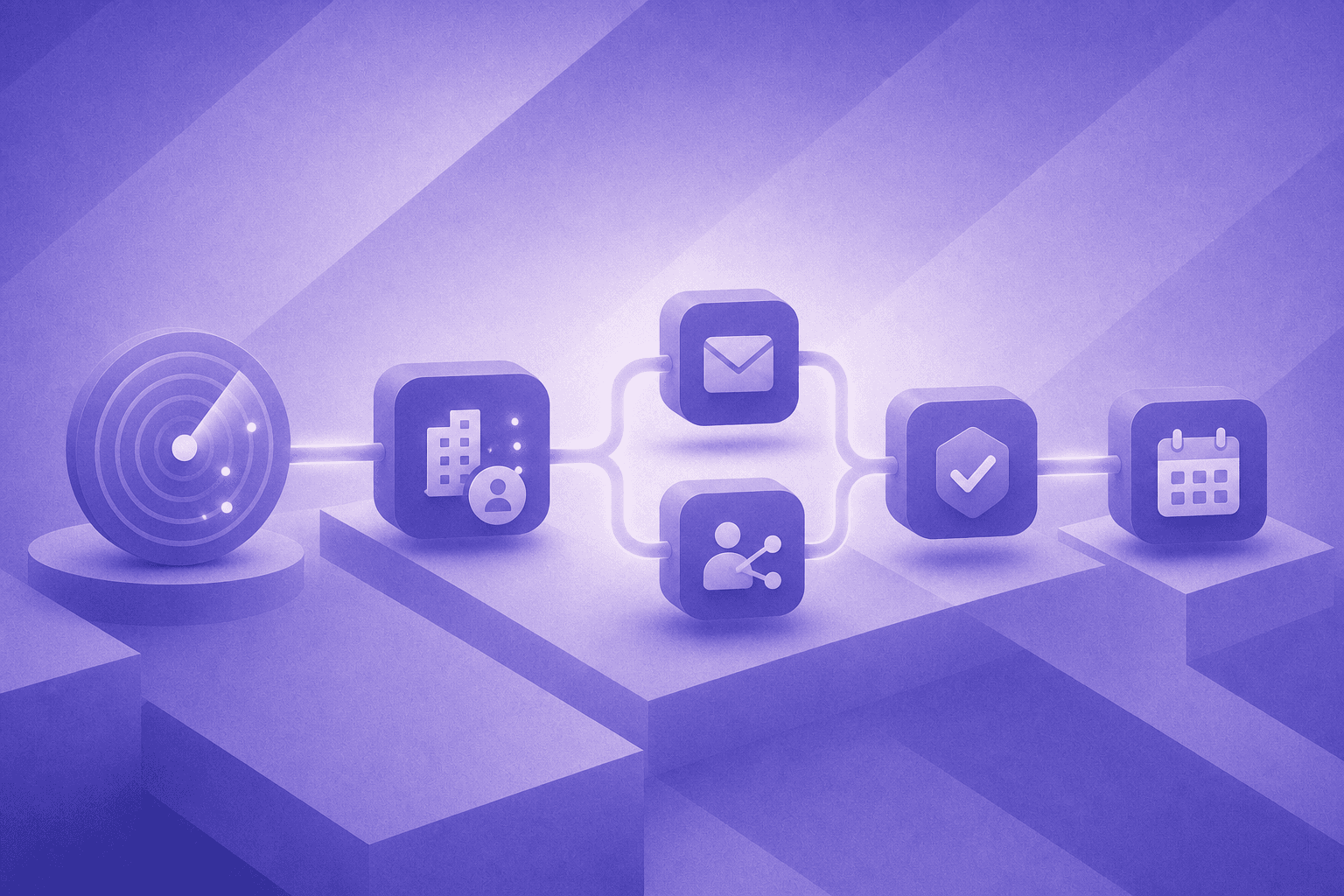
The system first detects signals: a website visit, form submission, content download, job change, or intent data trigger. It then enriches that signal with company firmographics, contact data, and buying committee mapping before a human rep ever sees the lead.
From there, the AI drafts and sends personalized outreach across email, LinkedIn, and chat, with messaging built from the specific signals that triggered engagement. As prospects respond, the AI qualifies them against your ICP criteria, handles common objections, and moves toward scheduling a meeting directly inside the conversation. Once a meeting is booked, the record syncs to your CRM with full context attached.
Human reps work a finite number of accounts in sequence. An AI SDR runs this entire loop across hundreds of accounts at once, continuously.
Inbound vs. Outbound AI SDRs
The distinction matters more than most buyers realize before they’ve made a purchase decision.
Inbound AI SDRs engage prospects who have already signaled buying intent. A website visit, a content download, a form submission, or event attendance are all triggers indicating a prospect is somewhere in the research process. The primary success variable here is speed: the window to engage a hand-raiser closes fast, often within minutes. Tools in this category are built around identity resolution, real-time engagement, and qualification before a rep gets involved.
Outbound AI SDRs initiate contact with cold prospects who haven’t raised their hand yet, handling list building, cold email sequencing, and LinkedIn outreach at scale. Success depends less on speed and more on deliverability infrastructure and personalization quality. Artisan is the most recognized name here, focused on prospecting and cold outreach from a static or enriched list.
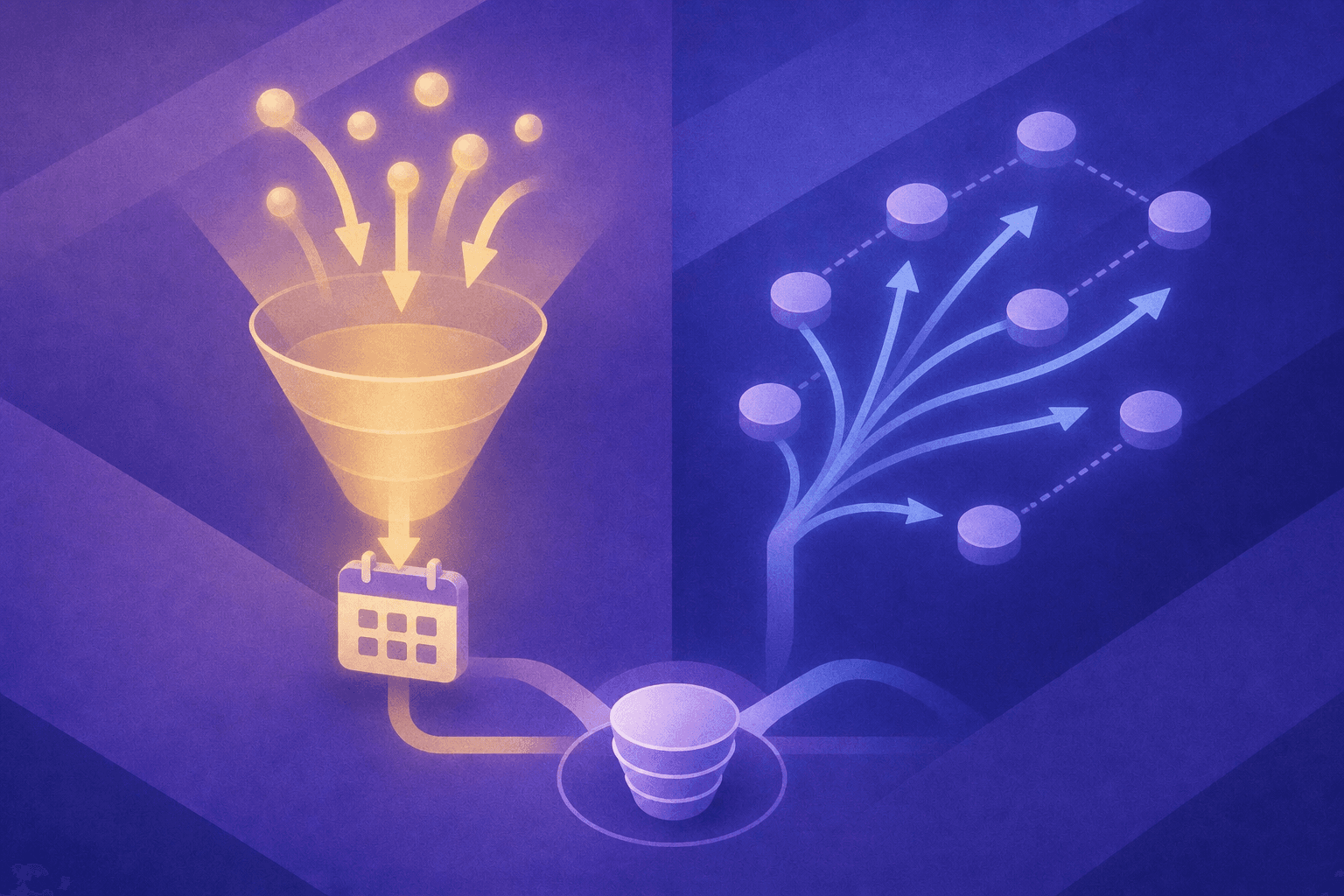
A third category is gaining ground: combined inbound-outbound tools that run both motions inside a single workflow. These tools activate on any buyer signal, whether from a cold account just added to a target list or a warm visitor who landed on your pricing page, so pipeline generation stays active regardless of whether inbound traffic is strong or slow that week.
Knowing which motion drives most of your pipeline is the fastest way to narrow your evaluation. Outbound-first tools fit if most qualified leads start as cold prospects. If most start as website visitors or hand-raisers, inbound coverage matters more. If you run both simultaneously, a tool handling only one motion will require a second system to fill the gap.
AI SDR vs. Human SDR
Responding to inbound leads in under 60 seconds, running qualification logic consistently across thousands of accounts simultaneously, and never going offline are structural advantages AI SDRs hold by default. Research cited across multiple 2026 analyses shows that responding within five minutes boosts qualification 21x than waiting 30 minutes. The average human SDR takes 42 to 47 hours to respond to inbound leads.
Where human SDRs hold ground is complexity. Multi-stakeholder enterprise deals, ambiguous buying signals, and high-ACV relationships built over months still require a rep’s judgment in ways AI handles poorly.
The dominant deployment pattern in 2026 reflects this split: AI owns high-volume structured tasks like prospecting, qualification, and initial outreach, while human reps own discovery and closing. This shift explains AI SDRs replacing traditional SDR teams at many organizations.
AI SDR vs. AI Chat Agent
The interface looks the same: a chat window sitting in the corner of a webpage. What runs underneath it determines whether you have a contact form with a personality or a system that actually generates pipeline.
A basic chat agent is reactive. It waits for a visitor to type something, then follows a scripted or rule-based path to a response. It has no idea who the visitor is until they tell it, and when they leave without booking, nothing happens. The conversation ends with the session.
An AI SDR does four things a chat agent cannot:
Identity resolution: it knows who is on your site before a single message is typed, surfacing company, firmographics, and CRM match in real time.
Genuine qualification: it runs multi-turn conversations that handle objections and confirm intent, not a decision tree that breaks when a prospect phrases something unexpectedly.
Multi-channel follow-up: when a visitor leaves without booking, it fires a personalized email and queues a LinkedIn outreach within minutes.
In-conversation scheduling: it books the meeting directly inside the conversation, without a separate form or handoff step.
The CRM write is what separates a convenience tool from a revenue system. A chat agent logs a transcript at best. An AI SDR pushes a fully enriched, qualified lead record into Salesforce or HubSpot with engagement context attached, so the rep who picks it up already knows what the prospect cares about.
Turning Anonymous Website Visitors Into Pipeline
Roughly 97 to 98 percent of B2B website visitors leave without filling out a form, which means form-fill conversion alone hides the vast majority of buyer intent from your sales team.
Closing that gap requires layered identification. B2B website visitor identification via IP-based resolution matches company-level data for 30 to 65 percent of B2B visitors, while person-level pixel tracking and identity graphs add individual contact data at realistic match rates of 5 to 20 percent. Behavioral scoring on top of that, based on pages visited and time on site, separates casual browsers from active buyers.
A few practices narrow the scope further:
Focus on high-intent pages like pricing, integrations, and competitor comparisons, where visit patterns signal purchase consideration.
Filter internal traffic so your team isn’t chasing employee sessions.
Route identified accounts to sales within a five-minute window, because that’s when qualification probability drops fastest.
Real-Time Prospect Discovery and Handoff to Human Reps
When a high-intent signal fires, the clock starts. A prospect landing on your pricing page, downloading a case study, or submitting a form is in an active evaluation window that narrows by the minute. The gap most teams miss is what happens between signal detection and a rep engaging that prospect with enough context to be useful.
An effective handoff workflow runs five steps in sequence: the AI detects the signal, performs website deanonymization, qualifies through conversation, routes to the right rep, and delivers a structured summary before the rep says hello. That summary should include contact details, qualification answers, objections raised during the AI conversation, urgency signals, and an already-updated CRM record.
Where Handoffs Break Down
The failure modes here are specific and costly:
Handoffs without qualification context force reps to re-ask questions the AI already answered, signaling disorganization to a prospect who just spent five minutes providing them.
CRM records requiring manual cleanup after the AI conversation add overhead that competes directly with response time.
Routing logic that ignores rep availability or geographic coverage sends high-intent leads to reps who are offline or covering the wrong territory, which is why choosing the right inbound sales routing tools matters.
Real-time alerting is what keeps the window from closing. Slack notifications and browser alerts that fire the moment a target account goes active let reps respond while the prospect is still on the site. Location-based filtering matters too: a rep covering EMEA accounts should not receive alerts for a visitor browsing from Austin. Every minute past five lowers qualification probability sharply.
What to Look For in an AI SDR Tool
Six evaluation criteria separate tools worth shortlisting from ones that will cost you months of lost pipeline to undo.
Personalization quality: does the best AI SDR software for inbound generate messaging from real-time signals like page visits, funding rounds, or job changes, or does it populate variables into a fixed template? The former adapts to each prospect’s context; the latter is mass email with a first name.
Qualification depth: generic lead scoring applies industry-average models. What you need is scoring against your actual ICP criteria, the specific firmographic and behavioral thresholds your sales team uses to decide whether a lead is worth a rep’s time.
CRM integration quality: bidirectional sync, deduplication logic, and lead-to-contact conversion matter. A tool that writes enriched records into Salesforce or HubSpot with engagement context attached saves rep time. One that pushes raw data requiring manual cleanup defeats the purpose.
Human-in-the-loop controls: fully autonomous outbound tools like Artisan execute sequences without rep review. That speed has a cost if messaging goes off-brand or targets the wrong account. Pre-send review capability keeps AI output without surrendering oversight.
Deployment speed: weeks-long implementations delay time-to-value and create transition risk. Tools that go live in days give you signal before you’ve committed fully.
Pricing transparency: per-seat, per-conversation, and outcome-based models carry very different cost curves at scale. If a vendor won’t publish pricing before a discovery call, budget forecasting is guesswork from day one.
Tool | Primary Motion | CRM Dependency | Current Status | Deployment Speed |
|---|---|---|---|---|
Breakout | Inbound + Outbound | CRM-agnostic (Salesforce, HubSpot, Marketo) | Independent | Days; no onboarding fees |
Qualified | Inbound | Salesforce required | Acquired by Salesforce (April 2026) | $10,000 to $30,000 implementation cost |
Warmly | Inbound | HubSpot-dependent | Acquired by HubSpot (June 2026) | No longer independent |
Artisan | Outbound only | CRM-agnostic | Independent | Not specified |
11X | Outbound only | CRM-agnostic | Independent | Not specified |
1mind | Inbound (chat) | CRM-agnostic | Independent (official Drift successor) | Not specified |
Amplemarket | Outbound only | CRM-agnostic | Independent | Not specified |
The Consolidation Problem You Should Know About
The mid-2026 market looks materially different from even twelve months ago. Qualified was acquired by Salesforce in April 2026, making it structurally inaccessible to teams not on Salesforce. Warmly alternatives have become a pressing topic since Warmly was acquired by HubSpot in June 2026 and is no longer an independent tool, its roadmap now subordinated to HubSpot’s product priorities.
Teams displaced by these acquisitions are now vetting independent, CRM-agnostic alternatives under time pressure. The independent, CRM-agnostic category has narrowed sharply. If your stack runs HubSpot, Salesforce, or anything else, vendor independence and CRM-agnostic deployment are now criteria worth weighting explicitly, not assumptions you can make about any tool you consider.
How Breakout Approaches the Full AI SDR Motion
Breakout is built around three agents that map to the layers covered above. The Signals Agent deanonymizes visitors in real time, surfacing company, contact, and CRM match data before any conversation starts. The Inbound Agent engages those identified visitors with personalized qualification playbooks, handles objections, and books meetings directly inside the conversation. The Campaigns Agent (Spoc) connects to 200+ GTM tools and executes downstream automation, from outbound sequences in Smartlead to event follow-up in Luma, running scheduled tasks autonomously without manual orchestration.
The pipeline problem Breakout targets is specific: industry-wide, the average website visit-to-demo conversion sits at 0.50 percent, with 99 percent of visitors dropping off during an 8 to 12 week research phase. Most of that drop-off happens before a rep ever sees the lead. The three-agent architecture is built to intercept that loss at the moment it occurs, not after a form gets submitted.
Breakout integrates natively with Salesforce, HubSpot, and Marketo out of the box. Teams vetting the top inbound AI SDRs will find that CRM-agnostic deployment is a meaningful structural differentiator given that Qualified now requires Salesforce as a hard dependency and Warmly is being absorbed into HubSpot’s product. for teams that want to avoid migration overhead.
Deployment takes days, with no mandatory onboarding fees. Competitors like Qualified charge $10,000 to $30,000 in implementation costs before the first conversation runs. Breakout’s Signals plan starts at $500/month with a free 30-day trial and no credit card required.
Final thoughts on AI SDR Tools and the Full SDR Motion
The tools that generate real pipeline aren’t the ones with the most features. They’re the ones that intercept buyer intent before it disappears, qualify in real time, and hand off to your reps with enough context to actually close. Given how many independent tools have been acquired or shut down in the past year, checking for vendor independence is now a practical part of any evaluation. It’s a hard requirement.
Run a 30-day pilot and benchmark your current setup against Breakout’s visit-to-pipeline conversion rate.
FAQs
What is the difference between an AI chat agent and an AI SDR for inbound lead qualification?
An AI chat agent is a reactive tool: it waits for a visitor to type something and follows a scripted path, with no identity resolution and no follow-up when the visitor leaves. An AI SDR identifies who is on your site before any message is typed, runs genuine multi-turn qualification conversations that handle objections, fires personalized email and LinkedIn outreach when visitors leave without booking, and writes a fully enriched lead record into your CRM with engagement context attached. The practical gap is the difference between a contact form with a personality and a system that generates pipeline from anonymous traffic.
What are the best AI SDR tools for converting website visitors into qualified leads in 2026?
The strongest options depend on which pipeline motion you run. Breakout handles both inbound visitor conversion and outbound sequencing in a single workflow, with native Salesforce, HubSpot, and Marketo integrations and no mandatory onboarding fees. Artisan and 11X focus on cold outbound but have no inbound visitor conversion capability. For teams on any CRM stack who need both motions covered, the independent options have narrowed sharply.
How do AI SDR tools handle real-time prospect discovery and handoff to human sales reps?
See the five-step handoff workflow covered above, from signal detection through CRM-ready summary delivery. That summary should include contact details, qualification answers, objections raised during the AI conversation, urgency signals, and an already-updated CRM record. Handoffs break down when qualification context is missing, forcing reps to re-ask questions the AI already answered, or when routing logic ignores rep availability and geographic coverage, both of which cost response time in a window where every minute past five minutes drops qualification probability sharply.
What is an AI SDR agent, and how is it different from AI-assisted SDR tools?
An AI SDR agent runs the full SDR motion autonomously (prospect research, outreach, qualification, objection handling, and meeting booking) without a human driving each step. AI-assisted SDR tools surface leads or flag intent signals but still require a rep to execute. The distinction matters for budget and headcount planning: AI-assisted tools reduce rep workload but don’t replace the rep’s role in top-of-funnel execution, while autonomous AI SDR agents like Breakout handle the structured, high-volume work end-to-end so reps focus on discovery and closing.
What is the best way to send Slack alerts to sales reps when a high-value account visits your site?
The most reliable setup combines a visitor identification layer that deanonymizes site traffic in real time with Slack alert routing filtered by ICP criteria, geographic coverage, and internal traffic exclusions. Breakout’s approach fires Slack notifications the moment a target account goes active, with location-based filtering so EMEA reps don’t receive alerts for Austin visitors, and internal domain filtering so employee sessions don’t generate false signals. The five-minute response window is where qualification probability drops fastest, so the alert system needs to fire with enough context (company, contact, pages visited) for a rep to respond with relevance immediately.