All Blogs
Compares 7 Apollo.io alternatives for scaling B2B sales teams, covering data quality, sequencing, and pricing trade-offs to help you find the right fit.

Evan Marshall
Senior Growth AI Strategist
Published On

Scaling your outbound motion and finding that Apollo keeps getting in the way is a pretty common frustration at the growth stage. Whether it's data quality in non-US markets, sequencing logic that hits a ceiling, or pricing that jumps at the worst time, the friction adds up. Here's what teams are switching to and why.
TLDR:
Apollo.io works for early-stage teams, but data accuracy, sequencing limits, and per-seat pricing create friction at scale.
Teams outside North American markets report consistent data quality degradation with Apollo's 275M+ contact database.
The 7 alternatives span use cases from GDPR-compliant prospecting to custom enrichment workflows and enterprise sales engagement.
Breakout identifies and engages site visitors in real time via an AI SDR, then runs autonomous outbound follow-up for prospects who don't convert on-site.
What Is Apollo.io and How Does It Work?

Apollo.io is a sales intelligence and engagement tool built around a B2B contact database of over 275 million contacts. You can search that database by firmographic and technographic filters, then push records into sequenced outreach campaigns without leaving the app.
The appeal is consolidation. Instead of paying separately for a prospecting database and a sequencing tool, Apollo bundles both under one subscription, which made it a popular choice for early-stage teams watching headcount and budget closely.
That said, the product carries real trade-offs. Data quality varies by region and industry vertical. Sequence customization has limits that frustrate teams running complex, multi-channel campaigns. And pricing scales in ways that catch growing teams off guard. If you want a broader view, see our roundup of Apollo.io alternatives for pipeline growth.
Why Consider Apollo.io Alternatives?
Apollo.io built its reputation as an all-in-one prospecting tool, and for many teams it still earns that reputation. The contact database is large, the sequencing features cover the basics, and the pricing is accessible enough that early-stage teams can get it approved without a lengthy procurement process.
That said, several patterns surface consistently in reviews from revenue operations leaders and sales teams at growth-stage companies. Data accuracy degrades on contacts outside North American markets. Sequence customization hits a ceiling quickly for teams running more complex, multi-touch outreach. And as teams scale, the Apollo.io per-seat pricing model creates budget pressure that makes Apollo harder to defend in quarterly planning conversations.
If any of those friction points sound familiar, the alternatives below are worth a serious look.
Best Apollo.io Alternatives in August 2026
Apollo.io works well for teams that need affordable prospecting with a large contact database. But as your go-to-market motion grows more complex, you start running into real friction: data quality gaps, limited workflow customization, and a pricing model that scales faster than your results do.
The alternatives below were assessed across data accuracy, AI-powered outreach capabilities, CRM integrations, pricing transparency, and overall fit for revenue teams at the Series B stage and beyond.
Here is a quick comparison before we get into the details:
Tool | Best For | Starting Price |
|---|---|---|
Breakout | AI-led outbound for scaling teams | Custom |
Clay | Data enrichment workflows | Free tier available |
Seamless.AI | Real-time contact search | $147/mo |
Cognism | GDPR-compliant prospecting | Custom |
Lemlist | Multichannel outreach sequences | $59/mo |
Outreach | Enterprise sales engagement | Custom |
Salesloft | Revenue workflow orchestration | Custom |
What they offer:
Apollo.io is a solid choice for outbound-heavy sales teams that need a large contact database paired with built-in sequencing. It gives reps a single place to prospect, enrich, and reach out without switching between tools.
That said, it shows its limits as your go-to-market motion grows. Data accuracy complaints are common among users, the interface can feel cluttered as workflows scale, and pricing jumps noticeably once you move beyond entry-level tiers. Teams running more sophisticated segmentation or multi-channel campaigns often find themselves working around Apollo instead of with it.
The alternatives below cover a range of use cases, from outbound AI SDR platforms to intent-based outreach, so you can match the right tool to how your team actually operates.
Feature Comparison: Apollo.io vs Top Alternatives
Apollo.io covers a wide range of prospecting features, but depth and pricing vary considerably across alternatives. Here's how the top options stack up on the capabilities that matter most to revenue teams.
Tool | Data Coverage | AI Sequencing | CRM Integration | Free Tier | Best For |
|---|---|---|---|---|---|
Breakout | B2B + buying signals | Yes | Native | No | Signal-based outbound |
Apollo.io | 275M+ contacts | Basic | Native | Yes | High-volume prospecting |
Enterprise-grade | Limited | Native | No | Enterprise data | |
Outreach | Sequence-focused | Yes | Native | No | Sales engagement |
Cadence-focused | Yes | Native | No | Coached selling | |
Clay | Flexible enrichment | Via integrations | Via integrations | Limited | Custom workflows |
Lemlist | Email-focused | Yes | Via integrations | No | Personalized email |
Instantly | Inbox-first | Basic | Limited | No | Cold email volume |
Clay: Best Apollo.io Alternative for Custom Data Enrichment Workflows
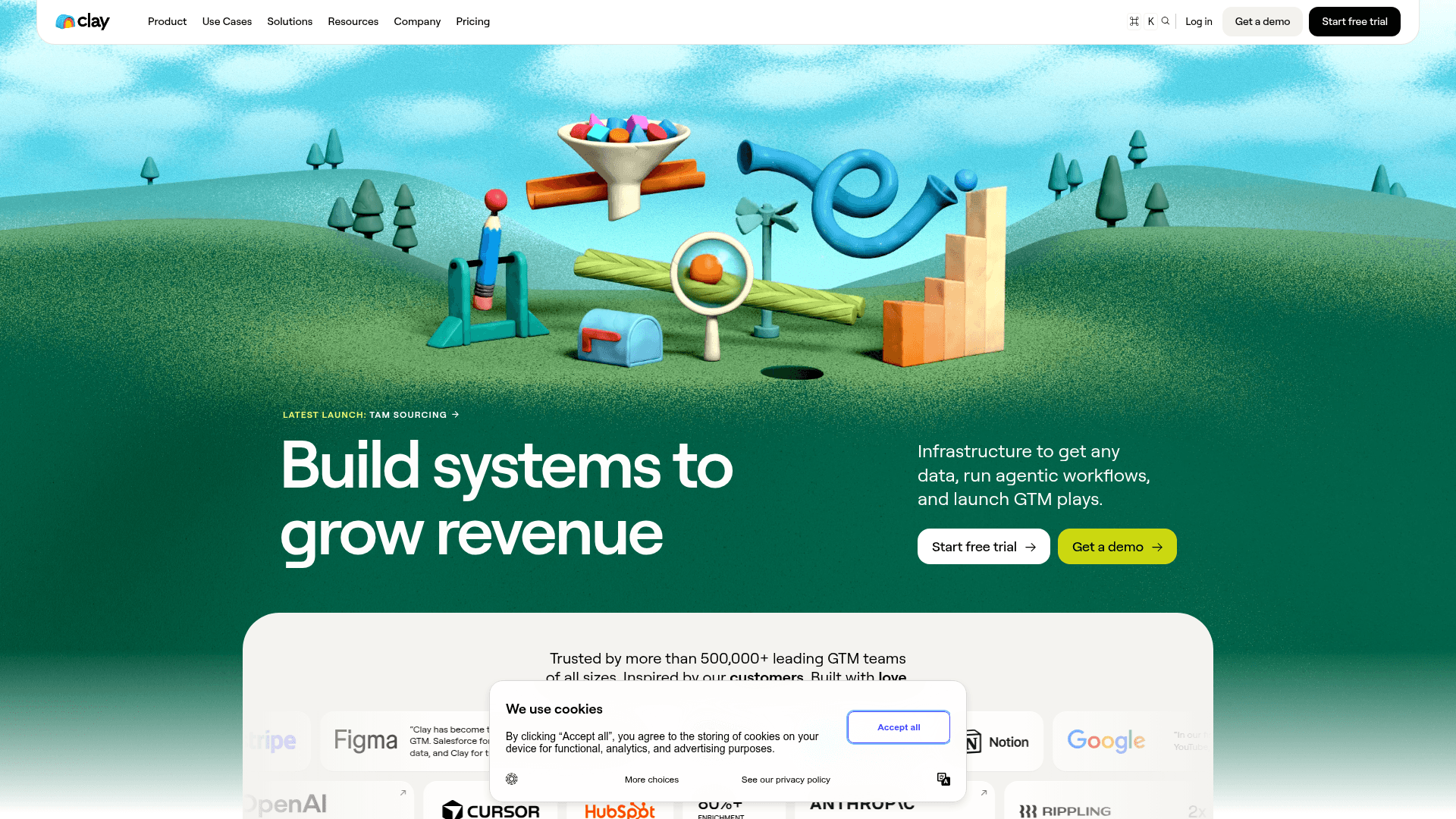
Clay is a data enrichment and workflow automation platform that connects over 75 data providers, including Apollo, ZoomInfo, Clearbit, and LinkedIn, into a single spreadsheet-style interface. Instead of committing to one data source and accepting its coverage gaps, you waterfall across providers in sequence, pulling the best available record for each contact and enriching it with signals like recent funding, job changes, or hiring activity.
That architecture makes Clay genuinely powerful for revenue operations teams that need custom enrichment logic. You can build precisely the list-building and scoring workflow your ICP requires without being locked into a single vendor's database. Independent reviews note that Clay's waterfall enrichment can triple data coverage compared to relying on a single provider. The trade-off is real: Clay is not a sequencing tool. It stops at enrichment and list delivery, which means you still need a separate sending platform like Smartlead or Outreach to execute outreach. For teams that want a fully integrated prospecting-to-sequence motion, Clay requires stitching two or more tools together and maintaining the connections between them.
The other consideration is the learning curve. Clay rewards teams with a technical RevOps function or a dedicated growth engineer who can build and maintain the workflows. Teams without that resource often find themselves with a powerful but underutilized tool. If custom enrichment is your primary bottleneck and you have the technical capacity to operate it, Clay is difficult to beat. If you need an end-to-end motion, you will be assembling a stack instead of buying one.
Best for: Revenue operations teams at Series B+ companies that need flexible, multi-source enrichment and have the technical capacity to build and maintain custom workflows.
Starting price: Free tier available; paid plans start at $149/month.
Seamless.AI: Best Apollo.io Alternative for Real-Time Contact Search
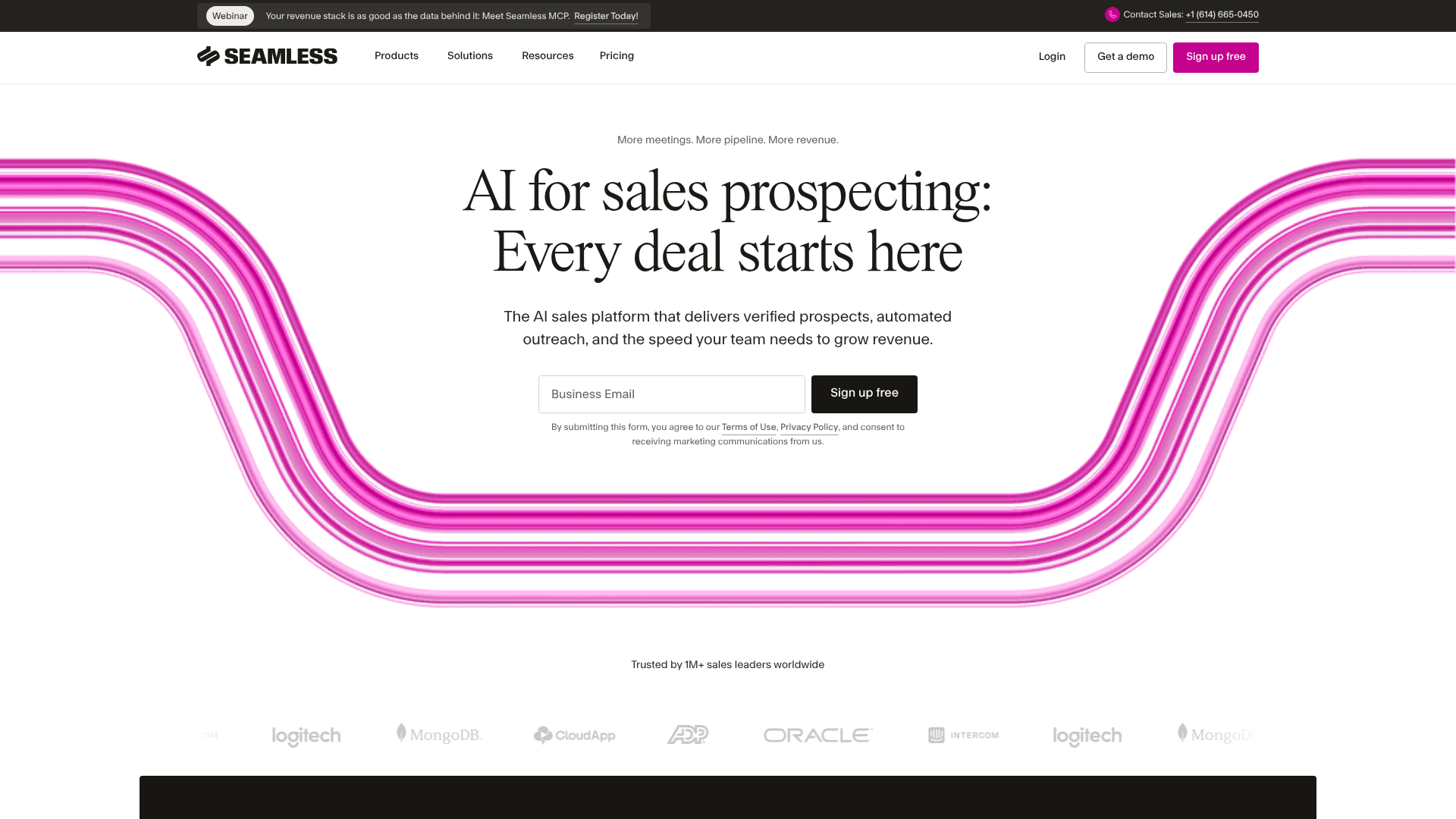
Seamless.AI positions itself as a real-time contact search engine, meaning it attempts to verify and deliver contact data at the moment of search instead of serving records from a static, pre-built database. In theory, this reduces the stale-data problem that plagues larger databases where records can be months or years out of date by the time a rep accesses them.
In practice, the accuracy experience is mixed. User reviews on G2 cite a meaningful rate of invalid emails and phone numbers despite the real-time verification premise, which creates a disconnect between the product's positioning and the day-to-day experience of reps building lists at volume. That said, the interface is straightforward, the Chrome extension integrates with LinkedIn prospecting workflows, and the starting price is transparent, which puts it ahead of Apollo on pricing clarity for teams doing initial budget comparisons.
Where Seamless.AI consistently draws criticism is in its sales process. Users report aggressive upsell tactics and difficulty canceling subscriptions, which is worth factoring into the evaluation if procurement control and vendor relationship predictability matter to your team. The product works for teams that need quick access to contact data in North American markets and are comfortable managing around data quality variability. Teams with strict SLA requirements on data accuracy or operating in European markets should run a pilot before committing.
Best for: Outbound-heavy sales teams in North American markets that want a straightforward contact search tool with a transparent entry price.
Starting price: $147/month.
Cognism: Best Apollo.io Alternative for GDPR-Compliant Prospecting
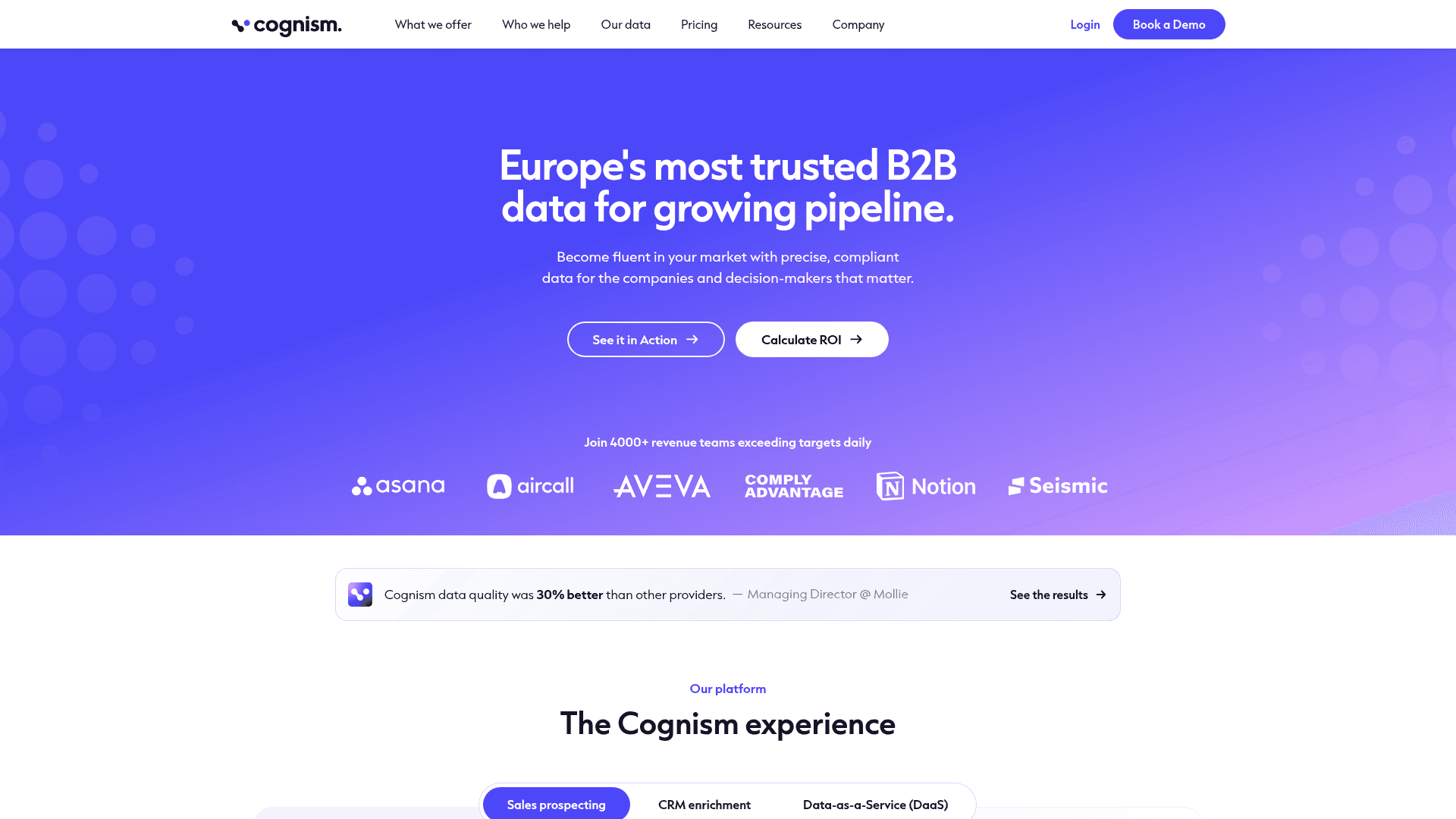
Cognism is the clearest answer to one of Apollo's most persistent limitations: data quality outside North American markets. The platform specializes in GDPR-compliant, phone-verified B2B contact data with particularly strong coverage in the UK and EMEA, where Apollo's database degrades noticeably. For revenue teams running multi-region outbound or managing European pipeline, that coverage difference is not marginal. It directly affects connect rates, deliverability, and legal compliance.
Cognism's Diamond Data tier goes further than most competitors on verification by phone-checking mobile numbers before delivery, instead of relying exclusively on algorithmic validation. This matters most for teams running call-heavy outbound, where a high rate of disconnected numbers is a direct drag on SDR productivity. The compliance framework is also built in, not bolted on: Cognism screens against 15 national do-not-call lists across EMEA, more than most B2B data providers, which reduces the compliance overhead your legal and operations teams would otherwise carry manually.
The trade-off is pricing and depth. Cognism is custom-priced and typically positions in a higher tier than Apollo, which means it is easier to defend when your outbound motion is already mature and the ROI of better data is measurable. Teams still validating their ICP or running early-stage prospecting experiments may find the investment harder to defend. It also does not include a native sequencing layer, so you will need a separate engagement tool such as Outreach, Salesloft, or Lemlist to execute the outreach campaigns you build from Cognism data.
Best for: Revenue teams running outbound in European and EMEA markets where GDPR compliance and verified mobile data are non-negotiable requirements.
Starting price: Custom pricing.
Lemlist: Best Apollo.io Alternative for Multichannel Outreach Sequences
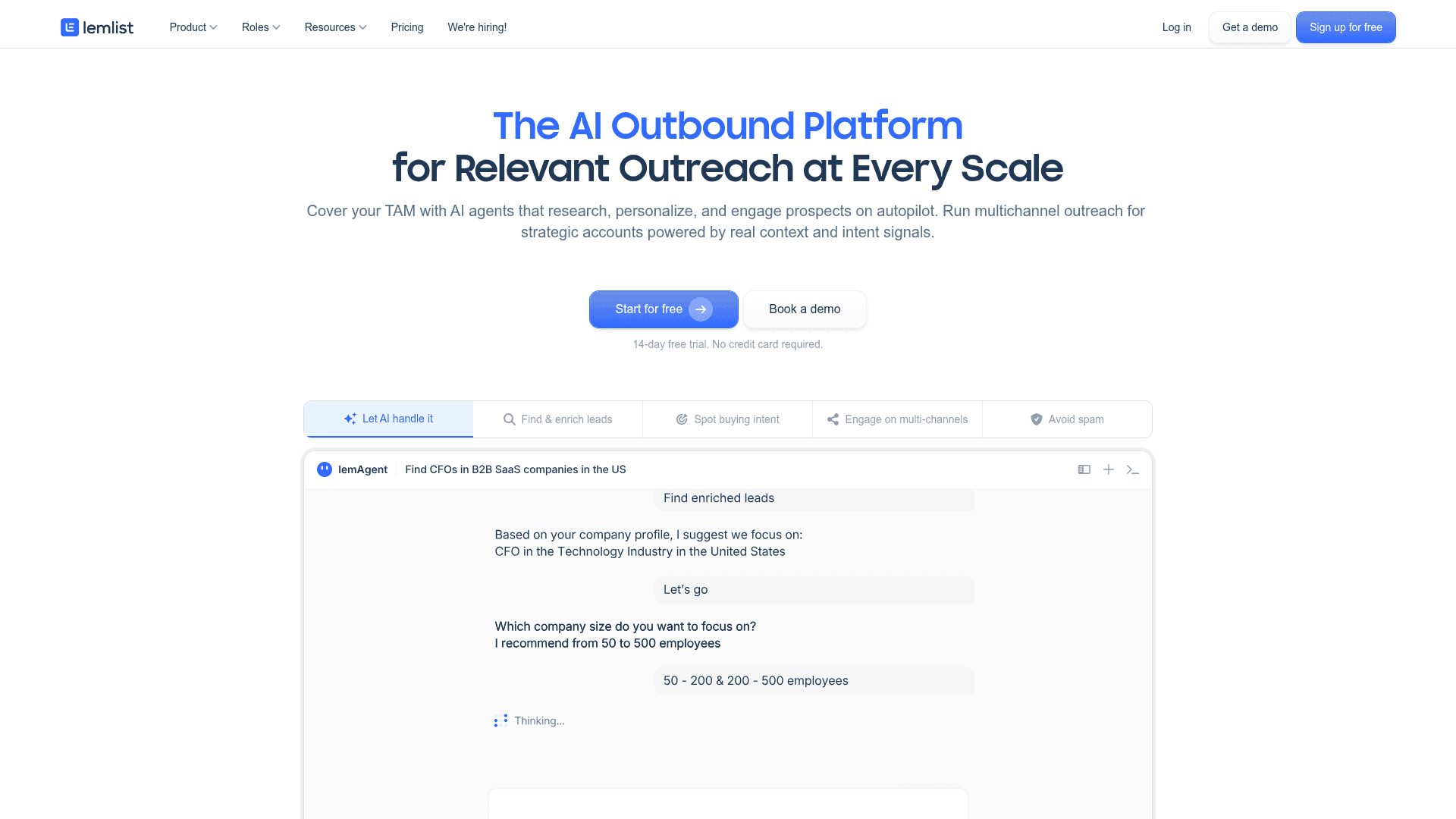
Lemlist is a sales engagement platform built around multichannel outreach, combining email sequences with LinkedIn steps, cold calling, and direct mail in a single campaign workflow. The product is designed for teams that have moved past purely email-based outbound and want to coordinate touchpoints across channels without managing separate tools for each one.
The differentiation inside the email layer is personalization depth. Lemlist pioneered rich image personalization, embedding a prospect's name, company logo, or LinkedIn photo into email visuals, and has since expanded that capability to include personalized video thumbnails and icebreaker generation. For teams that rely on creative personalization to break through inbox saturation, this is a meaningful feature that Apollo's sequencing does not match. The built-in email warm-up tool (Lemwarm) also handles deliverability directly, which matters if your domain is newer or your sending volume has recently scaled.
The gap is on the data side. Lemlist does not maintain a large proprietary contact database comparable to Apollo's 275 million records. You will either import your own lists or use its built-in lead finder, which draws on third-party sources and is not the platform's primary strength. Teams that need both a high-volume prospecting database and rich sequencing capabilities in one tool may find Lemlist requires pairing with a data provider like Cognism or Clay. For teams that already have clean lists and need better execution, Lemlist delivers meaningfully more flexibility than Apollo's built-in sequencer.
Best for: Sales teams that put multichannel outreach personalization first and need more sequencing flexibility than Apollo provides, especially teams already managing their own prospect lists.
Starting price: $59/month.
Outreach: Best Apollo.io Alternative for Enterprise Sales Engagement
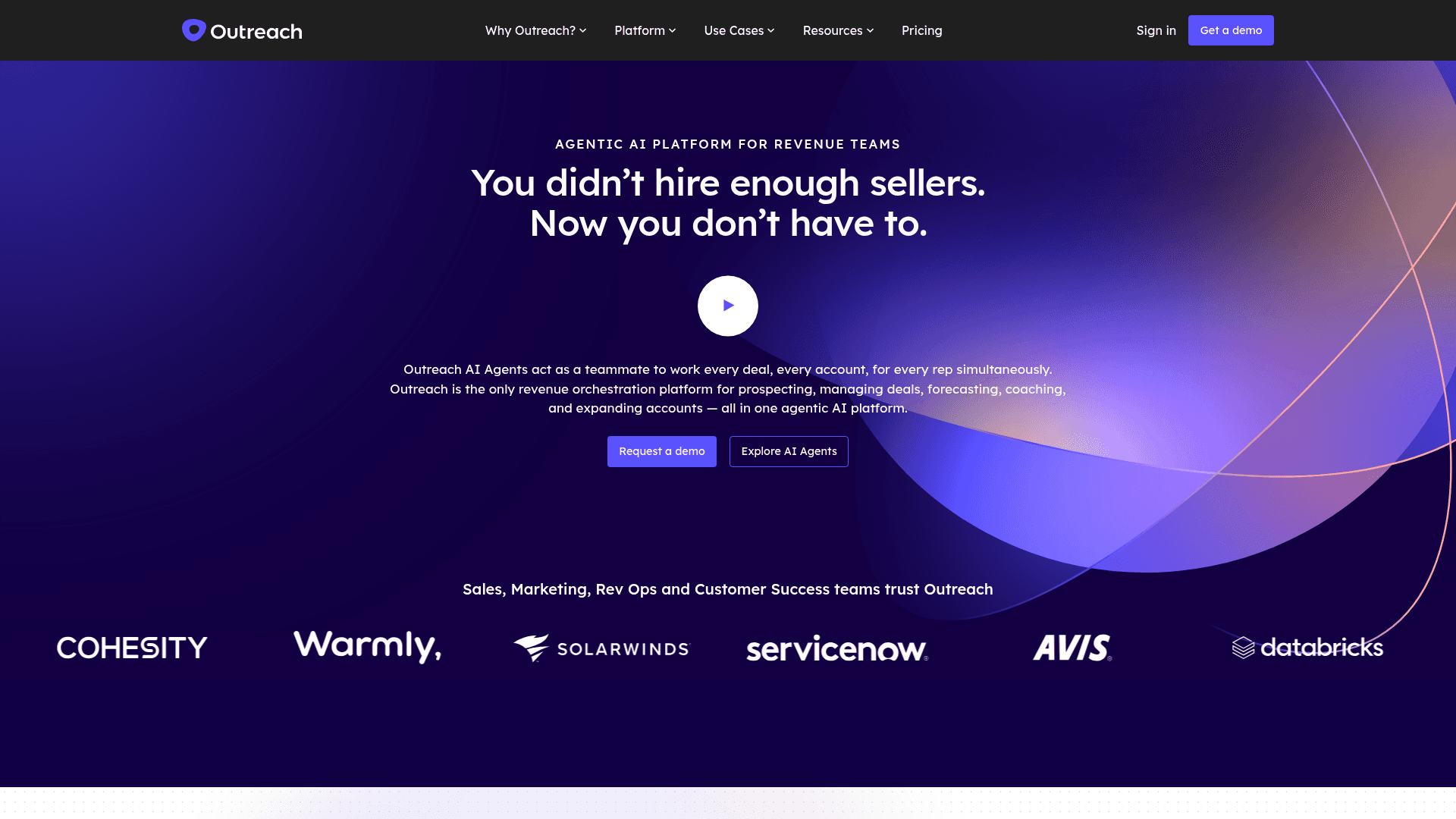
Outreach is the incumbent enterprise sales engagement platform, and it earns that position through the depth of its sequencing, reporting, and deal management capabilities. Where Apollo's sequencing handles the basics, Outreach is built for teams running complex, multi-touch campaigns with conditional branching, A/B testing at scale, and detailed funnel analytics that show exactly where sequences are losing momentum. If your RevOps team needs to diagnose which step in a 12-touch sequence is causing drop-off, Outreach gives you that visibility. Apollo does not.
The platform also covers the full sales cycle beyond prospecting. Outreach's deal management layer tracks pipeline health, flags at-risk opportunities, and surfaces coaching signals for managers reviewing rep performance, which makes it a credible option for organizations that want a single platform spanning SDR outreach and account executive deal management instead of separate tools for each function.
The trade-off is cost and complexity. Outreach is custom-priced and typically lands in a considerably higher tier than Apollo, with an implementation timeline that reflects that complexity. Teams in the early phases of building their outbound motion will likely find the onboarding overhead hard to defend. The platform is designed for organizations that have already validated their process and need infrastructure that scales reliably with it, not for teams still figuring out their ICP or testing sequence structures. If your team is post-Series B with a defined sales motion and a dedicated RevOps function, Outreach is the right ceiling. If you are still at the experimental stage, the overhead will slow you down before it helps you.
Best for: Post-Series B organizations with mature outbound motions, dedicated RevOps, and the need for enterprise-grade sequencing analytics and deal management in a single platform.
Starting price: Custom pricing.
Salesloft: Best Apollo.io Alternative for Revenue Workflow Orchestration
Salesloft is a revenue workflow platform that has expanded considerably beyond its original cadence-based roots. The product now covers the full revenue lifecycle, from SDR outreach and account executive pipeline management to forecasting and conversation intelligence, under one platform. For organizations that want a single system of record for sales activity from first touch to close, Salesloft is one of the few platforms that credibly covers that span.
The conversation intelligence layer (acquired from Drift's assets and native Salesloft Conversations) is a genuine differentiator for teams investing in coaching at scale. Managers can review call recordings, surface objection patterns across the team, and use those insights to refine messaging in active sequences without switching between tools. That closed feedback loop between what reps hear on calls and what the next sequence iteration says is harder to build when your conversation intelligence and sequencing tools are separate.
The pricing model warrants scrutiny before you commit. Salesloft is custom-priced, and teams regularly report that the total cost of ownership grows considerably once you add the forecasting, Conversations, and coaching modules to the base cadence platform. This is worth modeling explicitly against your current Apollo spend before treating Salesloft as a cost-neutral replacement. Salesloft is the right call if your organization is ready to consolidate SDR, AE, and forecasting workflows into a single platform and has the procurement bandwidth to support that kind of migration. If you are switching to solve a specific Apollo pain point such as data quality, pricing, or sequencing limits, the full Salesloft stack may be more platform than the problem requires.
Best for: Revenue organizations that want to unify SDR outreach, AE pipeline management, forecasting, and conversation intelligence in a single platform, particularly teams investing in systematic coaching and rep development at scale.
Starting price: Custom pricing.
Why Breakout Is the Best Apollo.io Alternative
Apollo works for what it was designed for. The free tier keeps early-stage teams in the game, the contact database is genuinely large, and basic email sequencing handles outbound for teams not yet running complex campaigns.
The gap shows at scale. Apollo is built to send outreach at volume against a credit-gated database, but it cannot engage demand already sitting on your website, follow up autonomously with visitors who browse and leave, or run that full motion without resetting against a monthly credit allotment.
Breakout covers both sides. We identify and engage site visitors in real time through a conversational AI BDR, then execute outbound follow-up autonomously for any prospect that does not convert on-site, running on the best AI SDR tools for outbound. Pipeline generation is not gated by traffic volume or credit consumption. With usage-based pricing, no onboarding fees, and native integrations across Salesforce, HubSpot, and Marketo, Breakout fits the motion of a revenue team that has moved past what a database-and-sequencer can do.
Final Thoughts on the Best Apollo.io Alternatives
Apollo.io earns its spot for early-stage teams, but the tools that outgrow it tend to do so fast. Data accuracy, sequencing flexibility, and pricing predictability are the three areas where the alternatives in this guide pull ahead. Match the tool to your actual friction point, and go beyond the feature checklist. If signal-based outbound sounds like the right direction, Breakout is worth a look.
FAQs
Why do revenue teams switch away from Apollo.io as they scale?
The most common friction points are data accuracy outside North American markets, sequencing logic that lacks behavioral triggers and conditional branching, and a per-seat pricing model that creates budget pressure at growth-stage headcount. Teams running complex, multi-channel campaigns tend to hit Apollo's ceiling faster than its entry-level pricing suggests they will.
What should you focus on when assessing Apollo.io alternatives for a Series B go-to-market motion?
Focus on data accuracy in your target geographies, CRM integration depth with your actual stack (Salesforce and beyond), and whether the tool handles outreach execution end-to-end or stops at list building. If your team is managing both inbound and outbound pipeline simultaneously, also assess whether the tool requires separate sequencing infrastructure for each motion.
How does Breakout differ from Apollo.io for outbound pipeline generation?
Apollo.io is a database-and-sequencer built for high-volume list-based outreach, while Breakout runs outbound research, personalization, and sequencing autonomously across both cold prospects and warm site visitors in a single workflow. Apollo cannot engage visitors already on your website or follow up autonomously with prospects who browse and leave, which means pipeline generation stops when credit limits are reached or traffic slows.
When does switching from Apollo.io to a tool like Breakout make sense for your team?
The switch makes sense when your team is losing deals in the gap between initial interest and first meeting, when manual steps between signal detection and outreach are slowing response time on high-intent visitors, or when your outbound campaigns require tighter audience segmentation and conditional logic than Apollo's sequencing tools support.
Can Breakout integrate with your existing CRM without replacing your current sales workflows?
Yes. Breakout integrates natively with Salesforce, HubSpot, and Marketo out of the box, with no mandatory onboarding fees and a deployment timeline measured in days. Qualified prospects identified through Breakout's AI SDR sync automatically into your existing CRM workflows, so your sales team works from the same systems they already use without adopting a new platform.