


Key Takeaways
Demandbase doesn't publish its pricing. You'll need to contact sales for a custom quote.
Most customers pay around $65,000 to $70,000 per year. Total costs can range from $18,000 to more than $300,000, depending on your deployment.
Costs add up quickly. User licences, implementation, professional services, and integrations can increase your total investment.
Advertising is priced separately. Media spend is not included in the platform fee, so your total cost can be much higher than the software licence.
If you don't need enterprise ABM advertising, consider Breakout. It starts at $500/month and helps B2B SaaS teams turn anonymous website visitors into qualified pipeline using AI.
Disclaimer: This guide is based on publicly available information from Demandbase's website, third-party sources, and customer-reported pricing. The figures shared here are estimates and should be used as directional benchmarks, not official pricing. Your actual quote may vary based on your requirements.
Demandbase is one of the leading account-based marketing (ABM) platforms, but figuring out what it actually costs isn't easy.
Like many enterprise SaaS vendors, Demandbase doesn't publish its pricing.
Instead, every customer receives a custom quote based on factors such as the products they buy, team size, data usage, and contract terms.
On top of the platform licence, you'll also need to account for advertising spend, implementation costs, integrations, and ongoing administration, which can significantly increase your total investment.
In this guide, we'll break down everything you need to know about Demandbase pricing in 2026.
You'll learn what businesses typically pay, what's included in each product, the hidden costs buyers often overlook, and how Demandbase compares with leading alternatives. By the end, you'll know whether it's the right fit for your GTM strategy.
How Much Does Demandbase Cost in 2026?
Demandbase doesn't publish pricing for most of its products.
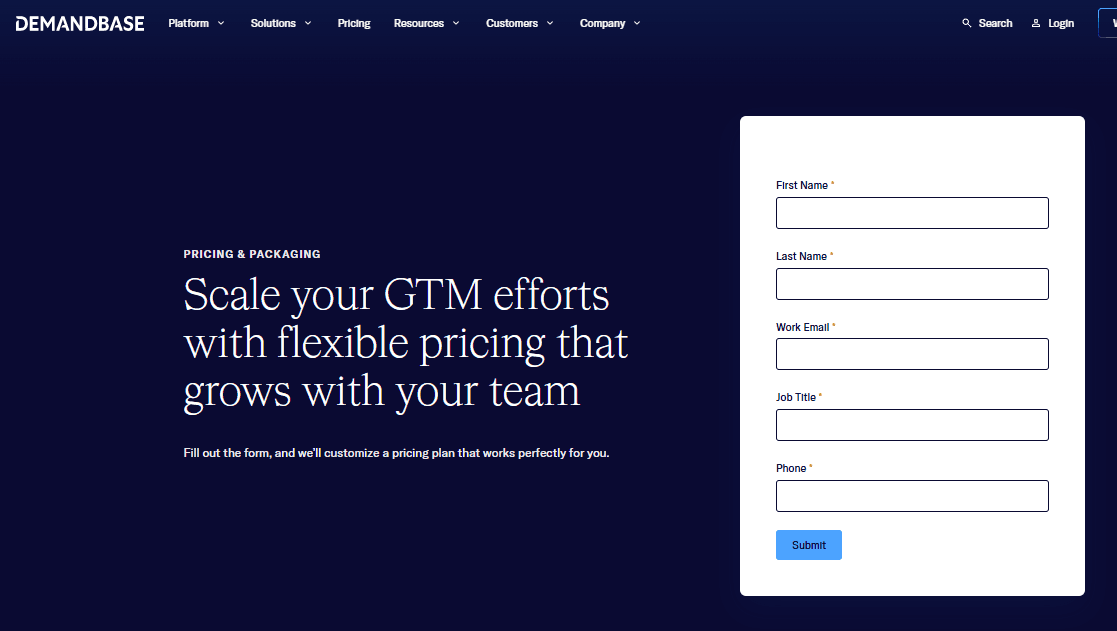
Instead, every customer receives a custom quote based on their business size, products purchased, advertising budget, number of users, and contract terms.
While there's no official pricing page, third-party contract data provides a good benchmark.
According to Vendr, the average Demandbase contract value is $68,591 per year, with buyers negotiating an average 13% discount from the initial quote.
Reported deals range from around $18,000 for smaller deployments to more than $300,000 per year for enterprise organisations with multiple products and large advertising budgets.
One exception is Demandbase One for Sales, which is publicly listed on the Salesforce AppExchange at $150 per user per month.
While this doesn't reflect the full cost of the Demandbase platform, it provides one of the few publicly available pricing reference points.
Estimated Demandbase Pricing:
Deployment | Estimated Annual Cost |
Demandbase One for Sales | $150/user/month |
Small teams | $18,000–$50,000 |
Mid-market | $60,000–$120,000 |
Enterprise | $150,000–$300,000+ |
Average contract value (Vendr) | ~$68,600 |
The wide pricing range reflects Demandbase's flexible packaging.
Your final quote depends on the products you buy, the number of users, advertising spend, implementation requirements, and the length of your contract.
What a Demandbase Contract Actually Costs by Team Size
The number on your Demandbase quote is only part of the story.
Your total investment also includes user licences, onboarding, integrations, advertising spend, and the internal resources needed to manage the platform. That's why two companies buying the same product can end up with very different total costs.
The examples below use publicly available contract data and industry benchmarks to estimate what businesses typically spend in their first year.
Small Teams (10–15 Sales Reps):
Cost Component | Estimated Year 1 Cost |
Platform licence | $18,000–$35,000 |
Additional user licences | $6,000–$12,000 |
Implementation & onboarding | $5,000–$10,000 |
Advertising spend | $15,000–$30,000 |
CRM & sales tool integrations | $3,000–$8,000 |
Estimated Total | $47,000–$95,000 |
Mid-Market Teams (25–30 Sales Reps):
Cost Component | Estimated Year 1 Cost |
Platform licence | $50,000–$75,000 |
Additional user licences | $27,000–$54,000 |
Implementation & onboarding | $10,000–$20,000 |
Advertising spend | $40,000–$80,000 |
CRM & sales tool integrations | $8,000–$15,000 |
RevOps administration | $15,000–$30,000 |
Estimated Total | $150,000–$274,000 |
Example: 25-person sales team
Let's assume your team purchases Demandbase One for Sales at the publicly listed $150 per user per month.
25 users × $150/month = $3,750/month
Annual seat cost = $45,000
Add a $60,000 platform licence
Budget $15,000 for onboarding
Allocate $50,000 for advertising campaigns
Add $10,000 for integrations
That brings your estimated first-year investment to around $180,000 before any optional products or contract add-ons.
This simple calculation makes it easier to estimate your own budget. Replace the number of users, adjust your advertising spend, and add your platform quote.
Enterprise Teams (50+ Sales Reps):
Cost Component | Estimated Year 1 Cost |
Platform licence | $100,000–$180,000 |
Additional user licences | $90,000–$180,000 |
Implementation & professional services | $20,000–$50,000 |
Advertising spend | $150,000–$500,000+ |
CRM & data integrations | $20,000–$40,000 |
Dedicated RevOps & platform administration | $60,000–$120,000 |
Estimated Total | $440,000–$1,070,000+ |
The Cost Most Buyers Underestimate
The software licence is rarely your largest expense.
For many companies, advertising budgets, user licences, and operational costs eventually exceed the platform fee itself.
That's why comparing Demandbase quotes based only on licence pricing can be misleading. Before signing, estimate your total first-year investment, not just the number on the proposal.
Hidden Costs and Fees to Plan For
The platform licence is only part of your Demandbase investment.
Before signing a contract, account for these additional costs that can significantly increase your total cost of ownership.
Implementation (up to ~$29,000)
Enterprise deployments often require onboarding, CRM configuration, data mapping, and user training. Complex implementations can approach $29,000 before your team starts using the platform.
Professional services
Custom dashboards, workflow automation, data migrations, and strategic consulting are often billed separately from your software licence.
Premium support and Customer Success
Basic support is usually included, but dedicated Customer Success Managers, technical account management, and premium support tiers may come at an additional cost.
Data and API usage
High-volume data enrichment, API calls, and custom integrations can increase costs depending on your contract and usage.
Advertising spend
Running campaigns through Demandbase requires a separate media budget. While Demandbase doesn't publish official benchmarks, many organisations spend 50–200% of their annual platform fee on advertising, depending on campaign scale. Treat this as a directional estimate rather than a fixed rule.
Annual price increases (3–5%)
Enterprise contracts commonly include annual renewal increases. Ask for a cap of 3–5% during negotiations to avoid larger price jumps at renewal.
Most of these costs don't appear on the initial pricing page or sales quote. Estimating them upfront gives you a much more accurate picture of what Demandbase will actually cost over the life of your contract.
What Real Buyers Have Actually Paid
Because Demandbase doesn't publish standard pricing, the best way to estimate your budget is to look at real customer contracts.
While every deal is different, publicly available sources provide useful reference points.
Source | Reported Cost | What It Shows |
Vendr | $24,000–$164,379/year | Reported customer contracts across different company sizes, with an average contract value of around $68,591. |
AWS Marketplace | ~$215,000 for a 12-month Demandbase One contract | Illustrates what a large enterprise deployment can cost before additional services or advertising spend. |
Forrester Total Economic Impact (TEI) | ~$48,000 SaaS licence + $100,000 advertising spend + onboarding and support | A modelled customer example showing that software is only part of the total investment. |
These figures shouldn't be treated as official price lists.
Every Demandbase quote is negotiated based on your products, users, advertising budget, and contract terms.
However, they do highlight an important pattern:
The platform licence is often only one part of the total cost, with advertising, onboarding, and ongoing services adding significantly to the final investment.
Contract Terms to Watch Before You Sign
The quoted price isn't always what you'll end up paying. Before signing a Demandbase contract, review these clauses carefully to avoid unexpected costs later.
1. Auto-Renewal Clauses
Many Demandbase contracts renew automatically unless you provide written notice within a specific window, often 60–90 days before renewal.
What to do: Confirm the cancellation deadline and set a reminder as soon as the contract is signed.
2. Annual Price Increases
Some contracts allow annual price increases without a defined cap.
What to do: Negotiate a maximum increase of 3–5% or tie renewals to the Consumer Price Index (CPI).
Sample redline:
Annual renewal price increases will not exceed 5% or the annual CPI, whichever is lower.
3. Platform Fees vs. Advertising Spend
Demandbase often bundles software and advertising into a single commercial proposal. That makes it difficult to understand what you're actually paying for.
What to do: Ask for separate pricing for the platform licence, advertising spend, implementation, and professional services so each item can be negotiated independently.
Sample redline:
Platform subscription, advertising budget, implementation, and professional services must be itemised as separate line items.
4. Seat Definitions
Not every user needs a paid licence. Clarify whether CRM users, sales engagement users, or embedded users count towards your seat allocation.
What to do: Ensure the contract clearly defines which users require paid seats and how additional seats are priced.
5. Professional Services
Implementation, training, and consulting are often quoted as a single fee, making it difficult to evaluate what you're paying for.
What to do: Ask for a detailed statement of work and remove or negotiate any services that aren't essential.
Before You Sign:
Don't negotiate only the platform price. Review renewal terms, pricing escalators, seat definitions, advertising commitments, and professional services just as carefully.
A few changes during contract negotiations can save tens of thousands over the life of your agreement.
Top 5 Demandbase Alternatives To Look For
Demandbase is designed for enterprise account-based marketing, but that doesn't mean it's the best fit for every GTM team.
If you're looking for lower costs, faster implementation, or a more focused solution, these alternatives are worth considering.
1. 6sense
Best for: Enterprise revenue intelligence
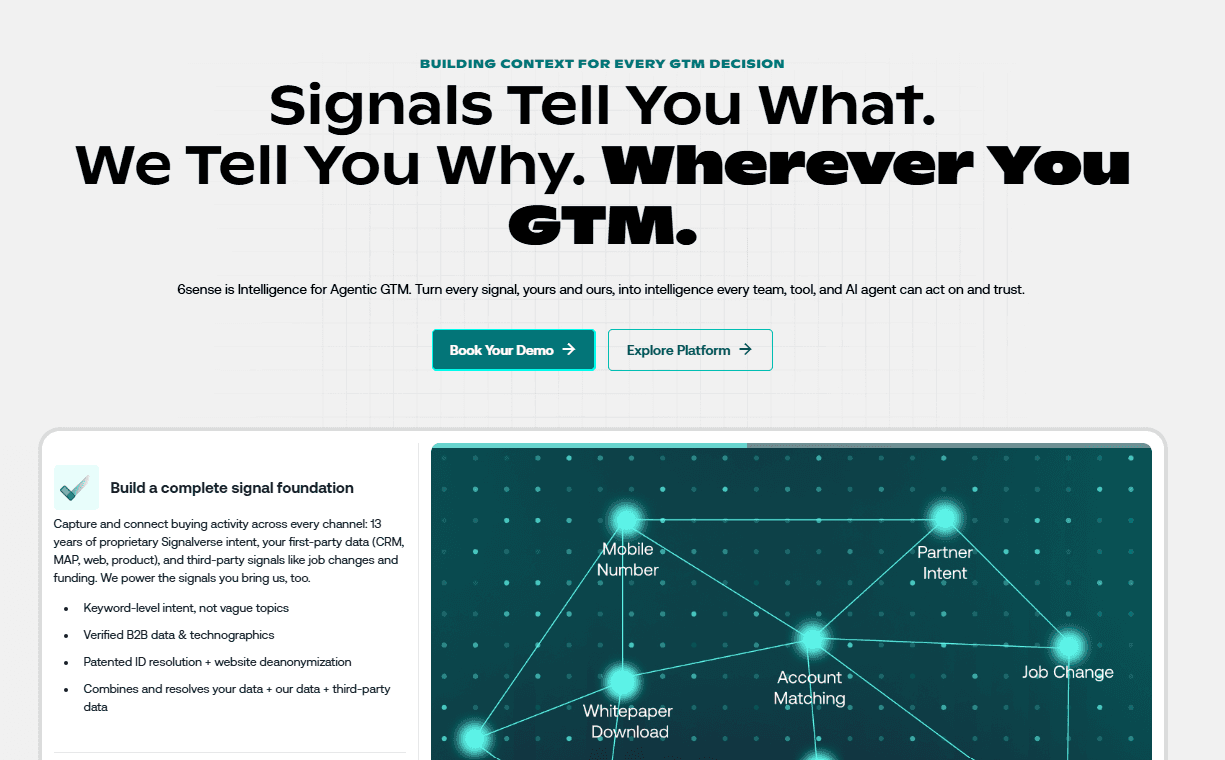
6sense is Demandbase's closest competitor. It combines predictive AI, intent data, account intelligence, and sales orchestration into a single platform.
Pricing: Custom quote only.
Like Demandbase, expect enterprise pricing, implementation costs, and additional charges for data and platform usage.
2. Breakout
Best for: AI-powered inbound pipeline generation
Breakout isn't a direct competitor to Demandbase.
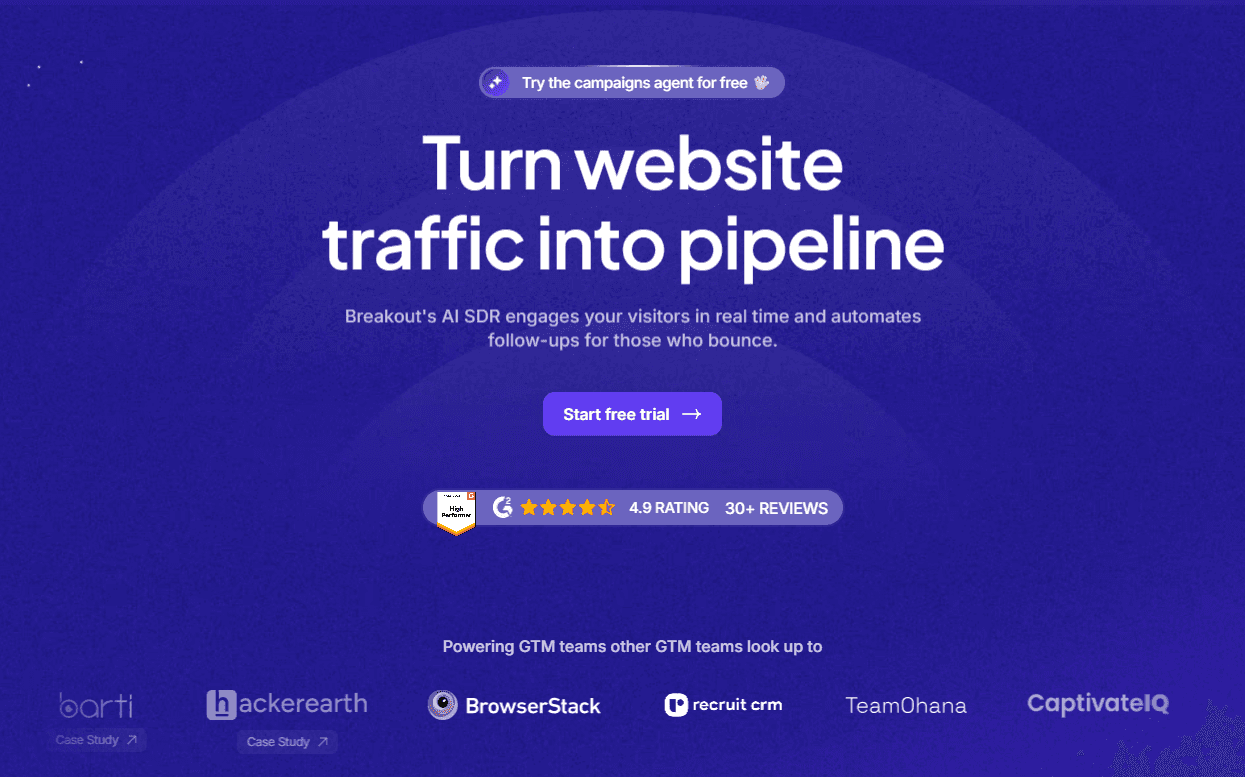
Instead of helping teams run enterprise ABM programmes, it helps B2B SaaS companies convert anonymous website visitors into qualified pipeline using AI.
Pricing: Starts at $500/month for Signals and $2,000/month for growth, with custom enterprise pricing.
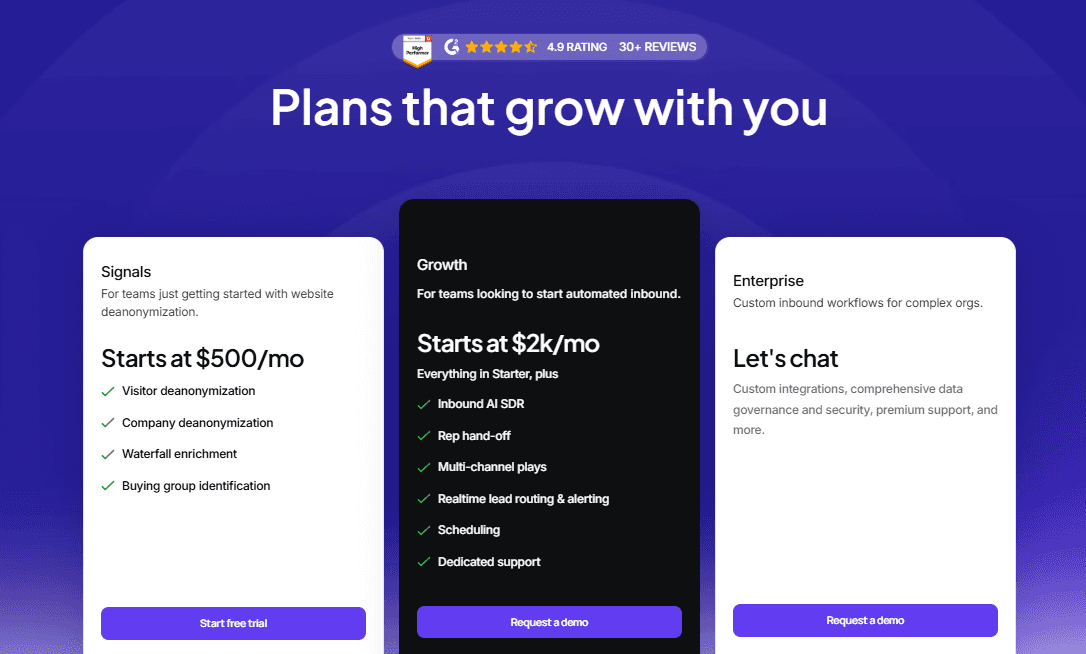
If your priority is generating more pipeline from your existing website traffic, Breakout is the best choice. It offers transparent pricing, faster implementation, and a lower total cost of ownership than a traditional ABM platform.
3. ZoomInfo
Best for: Sales intelligence and contact data
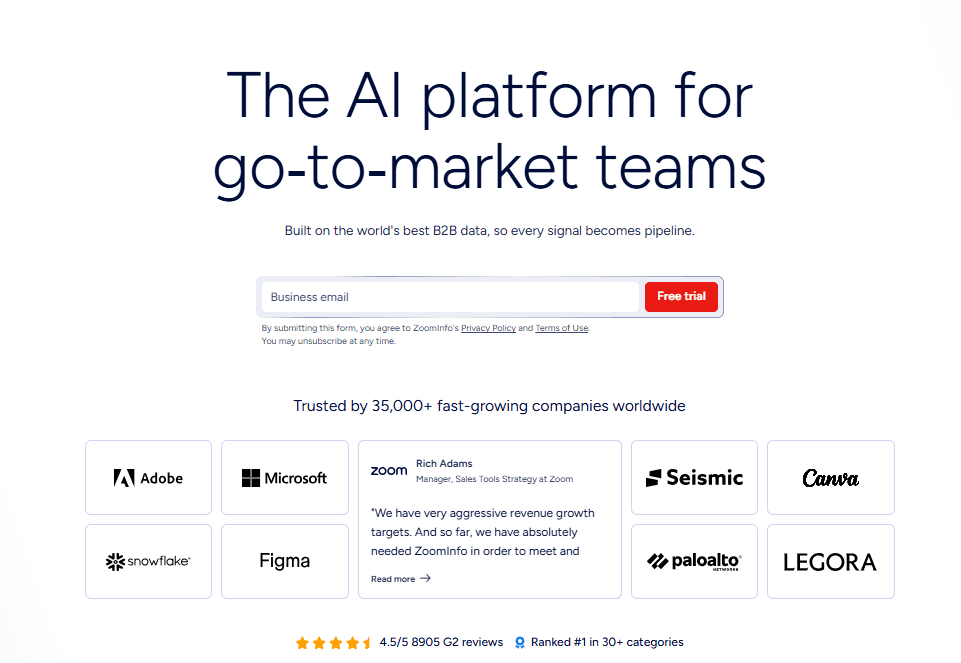
ZoomInfo helps sales teams find decision-makers, enrich CRM records, and identify buying intent for outbound prospecting.
Pricing: Custom quote only.
It's a better fit than Demandbase if your primary need is contact data and sales intelligence rather than enterprise ABM.
4. HubSpot Marketing Hub
Best for: Marketing automation and inbound growth
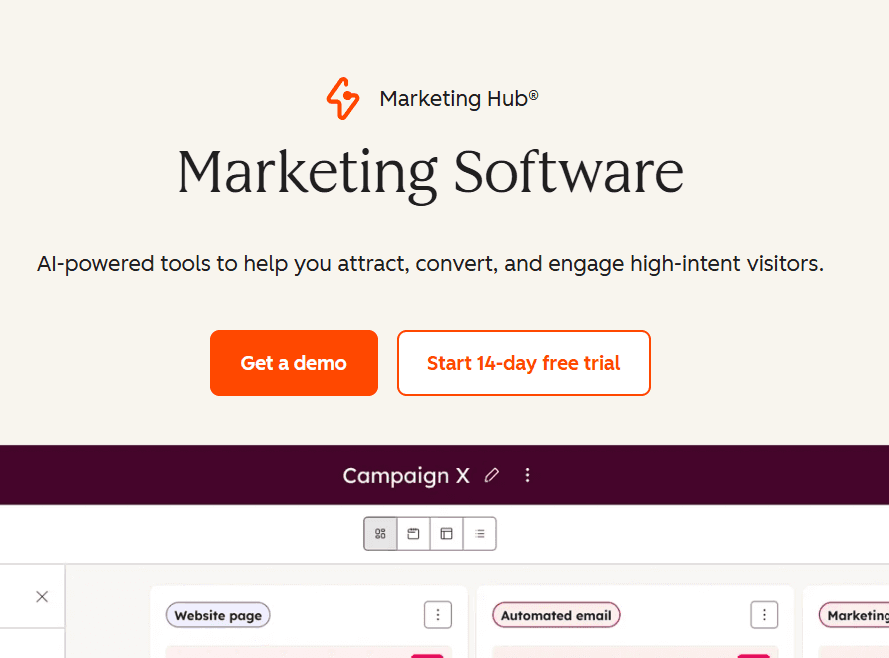
HubSpot Marketing Hub combines email marketing, landing pages, automation, reporting, and CRM into one platform.
Pricing: Public, tiered pricing based on your plan and contact volume.
It's a strong alternative for businesses investing in inbound marketing rather than account-based advertising.
5. Apollo.io
Best for: Cost-effective outbound prospecting

Apollo.io combines a B2B contact database, sales engagement, enrichment, and prospecting tools in a single platform.
Pricing: Public pricing, including a free plan and affordable paid tiers.
If you're focused on building outbound pipelines without the cost and complexity of an enterprise ABM platform, Apollo.io is one of the best-value alternatives available.
Is Demandbase Worth the Cost for Your Business?
Demandbase is built for enterprise ABM. If your strategy depends on account-based advertising, intent data, and campaign orchestration, it's a strong investment.
But that's not what every GTM team needs.
If your goal is to identify high-intent buyers, engage website visitors, and generate more pipeline, you may be paying for advertising capabilities you'll never use.
That's where Breakout is different.
Breakout doesn't try to replace your entire GTM stack. It helps B2B SaaS companies turn anonymous website visitors into qualified pipeline.
It identifies visitors, enriches them with buying signals, engages them with AI, qualifies intent, routes leads to the right rep, and books meetings automatically.
The result is a simpler platform, faster implementation, and a lower total cost of ownership.
If you're evaluating Demandbase, don't just ask whether it's the best platform. Ask whether you actually need an enterprise ABM suite or a better way to convert website traffic into revenue.
Want to see Breakout in action? Book a demo and learn how to turn more website visitors into pipeline.
FAQs
1. How much does Demandbase cost?
Demandbase doesn't publish its pricing. Most customers receive a custom quote based on company size, products purchased, number of users, and contract length.
Total annual costs typically range from $18,000 to over $300,000, depending on your deployment.
2. Is Demandbase worth the investment?
Demandbase can deliver strong ROI for enterprises running mature account-based marketing programmes.
However, if your primary goal is identifying buying signals and generating pipeline rather than running ABM advertising, a simpler platform may provide better value.
3. What does Demandbase sell?
Demandbase sells an account-based go-to-market platform that includes account intelligence, website visitor identification, intent data, sales intelligence, advertising, journey orchestration, and AI-powered insights.
It's designed to help B2B revenue teams identify, engage, and convert target accounts.
4. How does Demandbase work?
Demandbase combines first-party and third-party data, website visitor identification, intent signals, AI, and account intelligence to help sales and marketing teams prioritise accounts, personalise outreach, and measure pipeline performance.
5. What are the best Demandbase alternatives?
The best alternative depends on your goals:
6sense for enterprise revenue intelligence
Breakout for AI-powered inbound pipeline generation
ZoomInfo for sales intelligence and contact data
HubSpot Marketing Hub for inbound marketing
Apollo.io for affordable outbound prospecting
6. What is the difference between 6sense and Demandbase?
Both platforms offer account intelligence and intent data. Demandbase has a stronger focus on account-based advertising, while 6sense is known for predictive AI and revenue intelligence. The better choice depends on whether your GTM strategy prioritises advertising or sales.
7. What is the difference between ZoomInfo and Demandbase?
ZoomInfo focuses on contact data, company intelligence, and outbound prospecting. Demandbase is a broader ABM platform that combines account intelligence, intent data, advertising, and campaign orchestration.
8. Who are Demandbase's main competitors?
Demandbase's biggest competitors include 6sense, ZoomInfo, Bombora, Apollo.io, HubSpot Marketing Hub, and Breakout, depending on whether you're evaluating account intelligence, sales intelligence, inbound pipeline generation, or ABM capabilities.
9. Does Demandbase use Bombora?
Yes. Demandbase offers a native integration with Bombora, allowing customers with a separate Bombora licence to import Company Surge® intent data into Demandbase for account scoring, segmentation, and campaign targeting.
10. What is Demandbase Sales Intelligence?
Demandbase Sales Intelligence helps sales teams identify target accounts, uncover buying signals, find key stakeholders, prioritise outreach, and enrich CRM records using AI-powered account data and intent insights.
11. How much revenue does Demandbase generate?
Demandbase has stated that its annual revenue exceeded $200 million in 2024, with double-digit growth in annual recurring revenue (ARR) from its core Demandbase One customer base.
12. Is there a Demandbase alternative without the $65K platform fee?
Yes. Several platforms offer lower-cost alternatives. If you need enterprise account intelligence, 6sense is the closest competitor.
If your goal is turning website visitors into qualified pipeline, Breakout starts at $500/month and focuses on AI-powered inbound pipeline generation without the cost and complexity of a traditional enterprise ABM platform.