All Blogs
A plain-English look at 11X and Artisan so you can see which one fits better.

Evan Marshall
Senior Growth AI Strategist
Published On
Your team is comparing 11X vs Artisan because outbound is eating budget and your SDRs can’t keep up with quota. Both platforms promise to automate prospecting, sequencing, and follow-ups without human involvement. Before choosing between them, understand how an AI SDR works across inbound and outbound. The decision isn’t as simple as picking the tool with better AI. 11X optimizes for sending as many messages as possible, which works until your bounce rate spikes and your domain gets flagged. Artisan takes a quality-first approach, verifying contacts and layering intent signals before outreach, but that means lower volume and less control over how the AI makes decisions. Let’s compare how they actually perform when your pipeline mix includes both cold outbound and warm inbound leads.
TLDR:
11X runs $45,000 annually with volume-first outbound, while Artisan starts at $999/month with data quality focus.
Both tools struggle with reply handling and lack support for multi-threaded enterprise conversations.
Neither tool handles inbound leads well, routing warm prospects through cold outbound logic.
Responding within five minutes makes contact 100x more likely than waiting 30 minutes.
Breakout is free to try for 30 days, deploys in days with no complex setup, and runs multi-channel AI SDR outreach triggered by any buyer signal.
What 11X Does and Their Approach
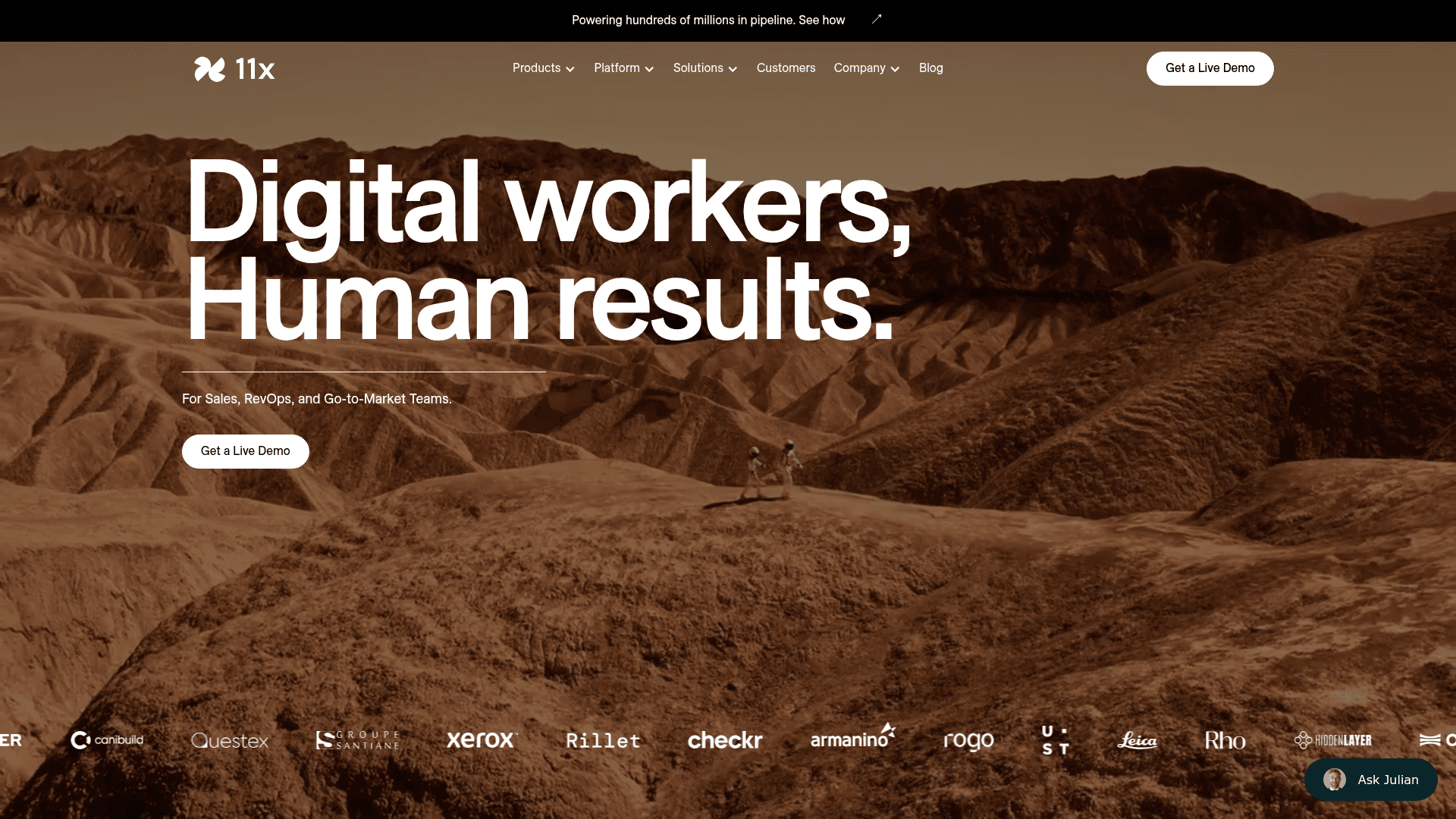
11X positions itself as a fully autonomous AI SDR, built to run outbound sales without human involvement. Their flagship agent, Alice, handles prospecting, personalized outreach, follow-ups, and meeting booking across email and LinkedIn.
The core promise is a “hire an AI employee” model. Rather than giving your team a tool, 11X sells you a digital worker with a quota. Alice researches prospects, crafts messages, and manages sequences end-to-end.
What 11X Focuses On
Autonomous outbound execution with minimal rep oversight, designed for teams that want to reduce headcount instead of augmenting it.
Multi-channel sequencing across email and LinkedIn with AI-generated personalization at each touchpoint.
A managed deployment model where onboarding and optimization are handled largely by the 11X team, not your ops staff.
The tradeoff is control. Teams that want to inspect, edit, or override AI decisions at each step may find the autonomous model limiting.
What Artisan Does and Their Approach
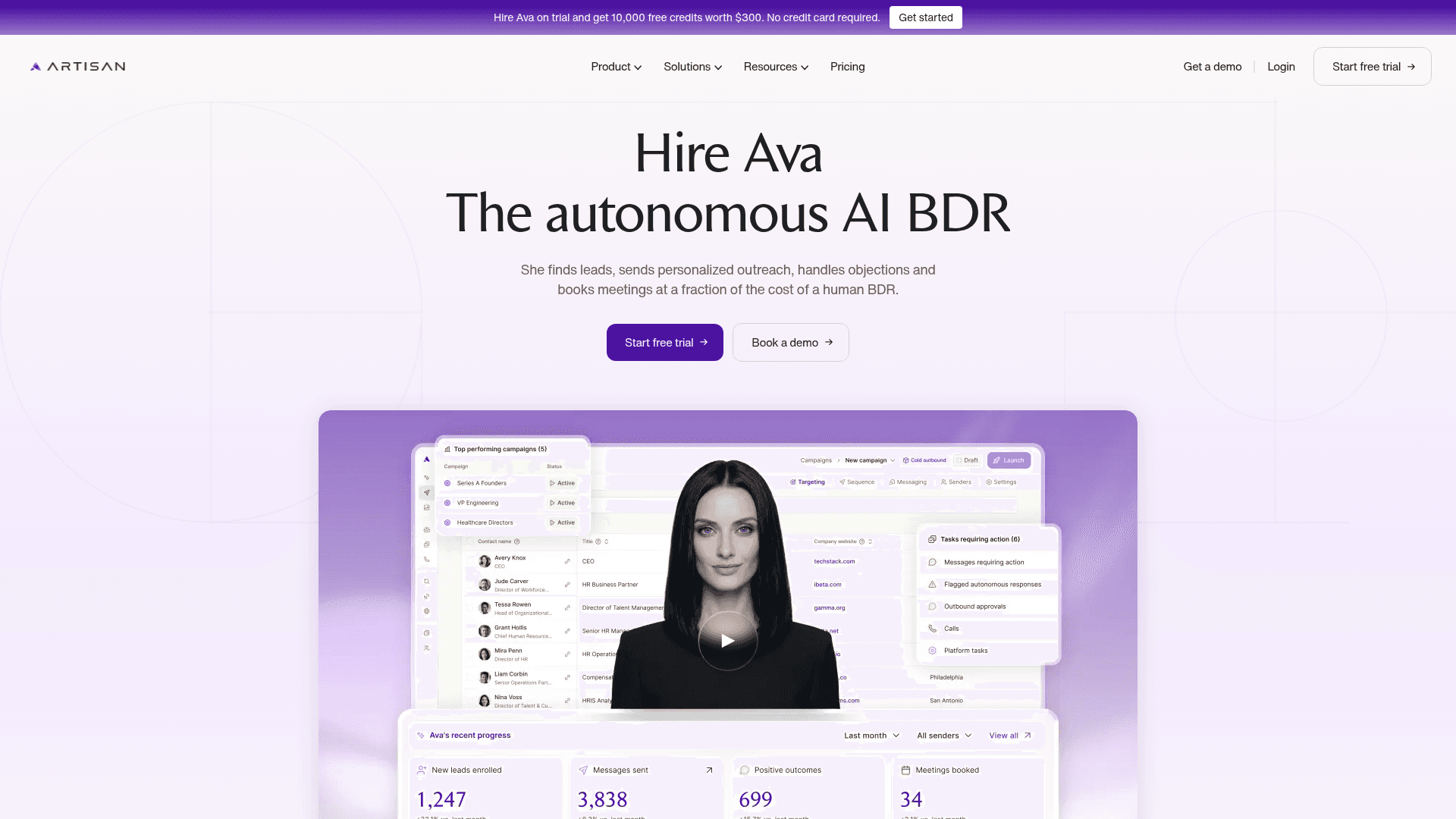
Artisan positions itself as a full “AI employee” company, with its flagship product Ava serving as an AI SDR. Rather than offering a point solution, Artisan packages prospecting, outreach, and deliverability tooling into one self-contained system.
Ava can autonomously research prospects, build contact lists, and send personalized email sequences without requiring human input at each step. The product targets teams that want to reduce headcount dependency on early-stage outbound work.
Here’s what defines Artisan’s approach:
Ava pulls from a database of over 300 million contacts, giving teams broad prospecting coverage without needing a separate data enrichment tool.
The AI SDR runs intent-based outreach by reading buying signals and timing messages accordingly, which is meant to improve reply rates over static sequences.
Artisan includes built-in email warmup and deliverability management, so teams aren’t stitching together separate tools to protect sender reputation.
The “AI employee” framing means Ava is designed to operate with minimal oversight, handling list building, sequencing, and follow-ups as a background process.
Artisan appeals most to leaner sales orgs that want consolidated outbound tooling instead of a modular stack they have to configure themselves.
Pricing Differences Between 11X and Artisan
Neither 11X nor Artisan publishes rates publicly, requiring a sales call before you see any numbers.
The cost gap between them is real. Per Vendr data, the median 11X contract runs $45,000 annually, with reported deals ranging from $39,750 to $65,640 per year. On a monthly basis, 11X is quoted above $5,000, placing it squarely in enterprise budget territory. Artisan enters lower, with starting rates near $999 per month, making it more accessible for smaller teams running early-stage outbound experiments.
Third-party reviewers have consistently flagged that both tools require a demo before you get a real number, which adds friction for anyone trying to compare costs without entering a full sales cycle.
Tool | Starting Price | Core Focus | Control Level |
|---|---|---|---|
11X | Median $45,000 annually, with contracts ranging from $39,750 to $65,640 per year | Volume-first outbound with thousands of weekly touches and autonomous execution | Minimal rep oversight with fully autonomous AI decision-making |
Artisan | Starting near $999 per month with lower entry barriers for smaller teams | Data quality and enrichment before outreach using 300 million contact database | Hands-off AI employee model with intent-based timing and built-in deliverability |
Breakout | Free 30-day trial, no credit card required; paid plans from $500/month with usage-based billing | Multi-channel AI SDR outreach triggered by any buyer signal (website visits, form fills, intent data, event attendance) with no complex setup or onboarding fees | Full transparency with reviewable sequences and inspectable AI decisions before sending |
Outbound Volume Approach vs Data Quality Trade-offs
11X prioritizes sending as many messages as possible, with some users reporting their AI SDR “Alice” dispatches thousands of outbound touches per week. The appeal is obvious: more volume means more pipeline opportunities. But this approach carries real risks. When speed outpaces data accuracy, you get higher bounce rates, spam complaints, and domain reputation damage that can quietly sabotage deliverability for months.
Artisan takes a more deliberate stance. Its AI SDR “Ava” focuses on data enrichment before outreach, pulling from over 300 million contacts to verify and layer in firmographic and intent signals. The result is smaller send volumes paired with higher relevance per contact.
Which approach fits your team?
The right answer depends on your go-to-market motion. High-velocity, low-ACV products may benefit from 11X’s volume-first model. Enterprise-focused teams selling complex solutions typically see better results from Artisan’s quality-first methodology, where a single well-timed, well-researched email to the right buyer outperforms a hundred generic blasts.
Neither approach is universally superior. The trade-off is straightforward: breadth versus precision, and the wrong choice for your use case can mean wasted budget regardless of which tool you pick.
Reply Handling and Conversation Limitations
Both 11x and Artisan handle inbound reply detection, but neither excels at true conversation management. When a prospect replies with an objection or a complex question, both tools tend to either pause the sequence for human review or send a templated follow-up that misses the context.
11x routes complex replies to a human rep by default, which keeps quality high but defeats the purpose of full automation. Artisan attempts to handle more replies autonomously, but sales teams report that its responses to objections can feel generic and off-topic.
Neither tool currently supports multi-threaded conversations, meaning they struggle when multiple stakeholders from the same account engage simultaneously. For enterprise deals with buying committees, this is a real gap.
If reply handling quality matters to your team, you will want a purpose-built AI SDR that treats conversation continuity as a first-class feature, not an afterthought bolted onto a sequence tool.
The Fundamental Problem: Both Are Built for Outbound, Not Inbound
Both 11x and Artisan are built around the same core assumption: that outbound prospecting is the primary growth lever for B2B sales teams. They automate cold outreach, sequence management, and follow-ups at scale. That focus works well for some teams, but it leaves a critical gap.
Neither tool is designed to work with the pipeline you already have. Warm leads, inbound sign-ups, and high-intent website visitors get routed through the same cold outbound logic, which means slower response times and generic messaging for buyers who are already interested.
For Series B+ companies where inbound volume is growing and deal quality matters more than raw outreach volume, this tradeoff gets expensive. Research shows that responding to leads within five minutes makes contact 100x more likely compared to waiting 30 minutes. Outbound-first tools are not built to move at that speed for inbound buyers.
That gap is worth keeping in mind as you weigh which tool fits your actual pipeline mix.
Why Breakout Takes a Different Approach
Breakout is built for fast-growing revenue teams that want a full AI SDR running multi-channel outreach without months of setup, complex configurations, or dedicated ops resources to maintain it. Where 11x and Artisan require lengthy onboarding cycles and managed deployment models, Breakout goes live in days, with no implementation fees and no dedicated setup team required.
The core difference is how Breakout fires. Any buyer signal counts as a handraise: a website visit, a form submission, a content download, event attendance, or intent data from third-party sources. When a signal fires, Breakout runs a full multi-channel AI SDR motion across email and LinkedIn, with every sequence reviewable before it sends. You get the speed of AI prospecting with the accountability your brand requires.
What Breakout Handles Differently
Breakout goes live in days with no mandatory onboarding fees or complex implementation, so fast-growing teams start running AI SDR outreach without waiting weeks to see results.
Any buyer signal triggers outreach (website visits, form submissions, content downloads, event attendance, intent data, job changes, and funding events), so your AI SDR fires at actual buying moments across your full pipeline instead of relying on cold list logic alone.
Every outreach sequence is reviewable before it sends, which means your team can catch off-brand messaging before it reaches a prospect’s inbox.
Breakout connects directly with your CRM, keeping pipeline data clean and reducing the manual reconciliation work that slows revenue teams down.
Pricing is transparent and scales with usage, without the opaque seat-based models that make budgeting difficult at the Series B stage and beyond.
Final Thoughts on Comparing 11X and Artisan
Neither 11X nor Artisan solves the core problem for revenue teams with mixed pipeline sources: they are built for cold outbound, not warm follow-up or inbound response. You end up routing interested buyers through the same slow sequences as cold prospects, which kills conversion on your best leads. The automation you need depends on whether you value speed to respond or volume to send. If you want both without sacrificing control, Breakout gives you a full multi-channel AI SDR that fires on any buyer signal, deploys in days without complex setup, and is free to try for 30 days with no credit card required.
Breakout is free to try for 30 days, no credit card required. Start your free trial and see how a multi-channel AI SDR built on buyer signals and live in days performs against tools that take months to set up.
FAQ
Which tool is better for teams with limited outbound experience?
Artisan offers a lower entry point starting near $999/month and includes built-in email warmup and deliverability management, making it more accessible for teams new to outbound. 11X requires a higher investment (median $45,000 annually) and a managed deployment model that may be overkill if you’re just testing outbound motions.
What’s the main difference in how 11X and Artisan handle message volume?
11X focuses on high-volume outbound with thousands of touches per week, which can generate more opportunities but risks deliverability issues if data quality suffers. Artisan focuses on data enrichment first, sending fewer messages to better-researched contacts, trading breadth for precision.
Can either tool handle inbound leads effectively?
No. Both 11X and Artisan are built for cold outbound prospecting and treat warm leads with the same generic logic as cold contacts. If you have growing inbound volume from website visitors or demo requests, neither tool is designed to respond within the critical five-minute window that makes contact 100x more likely.
How much control do you have over messaging before it sends?
Limited with both platforms. 11X operates autonomously with minimal rep oversight, making it difficult to inspect or edit AI decisions before outreach goes live. Artisan runs similarly hands-off, which can work for volume plays but creates brand risk if you need approval workflows or message-level control.
Do 11X and Artisan publish their pricing upfront?
Neither tool lists rates publicly. Both require a sales call before you see pricing, with 11X contracts typically ranging from $39,750 to $65,640 annually and Artisan starting around $999/month. The lack of transparent pricing adds friction if you’re comparing costs across multiple tools without entering full sales cycles.