All Blogs
Compares top Clay alternatives for revenue teams, covering data quality, pricing transparency, and workflow depth — with Breakout as the top pick for skipping ops overhead.

Evan Marshall
Senior Growth AI Strategist
Published On

Running Clay at scale usually means one of three things: a dedicated ops person, unpredictable credit costs, or both. If you're weighing whether there's a better fit for how your team actually works, this breakdown maps out the strongest alternatives available right now and what each one is built for.
TLDR:
Clay's credit-based pricing is hard to forecast because costs scale with enrichment complexity, beyond contact volume alone.
Teams most likely to switch have a single ops person maintaining Clay workflows, creating a fragile dependency that breaks when that person leaves.
Compare alternatives across four factors: data coverage, workflow depth, pricing transparency, and setup complexity.
Apollo and ZoomInfo offer proprietary databases with predictable subscription fees, but you trade multi-provider data flexibility to get there.
Breakout is built for teams that want to act on inbound buyer signals in real time, not just enrich a contact list. Its AI SDR identifies website visitors, maps the buying committee, and runs automated multi-channel follow-up without a manual handoff step.
What Is Clay and How Does It Work?
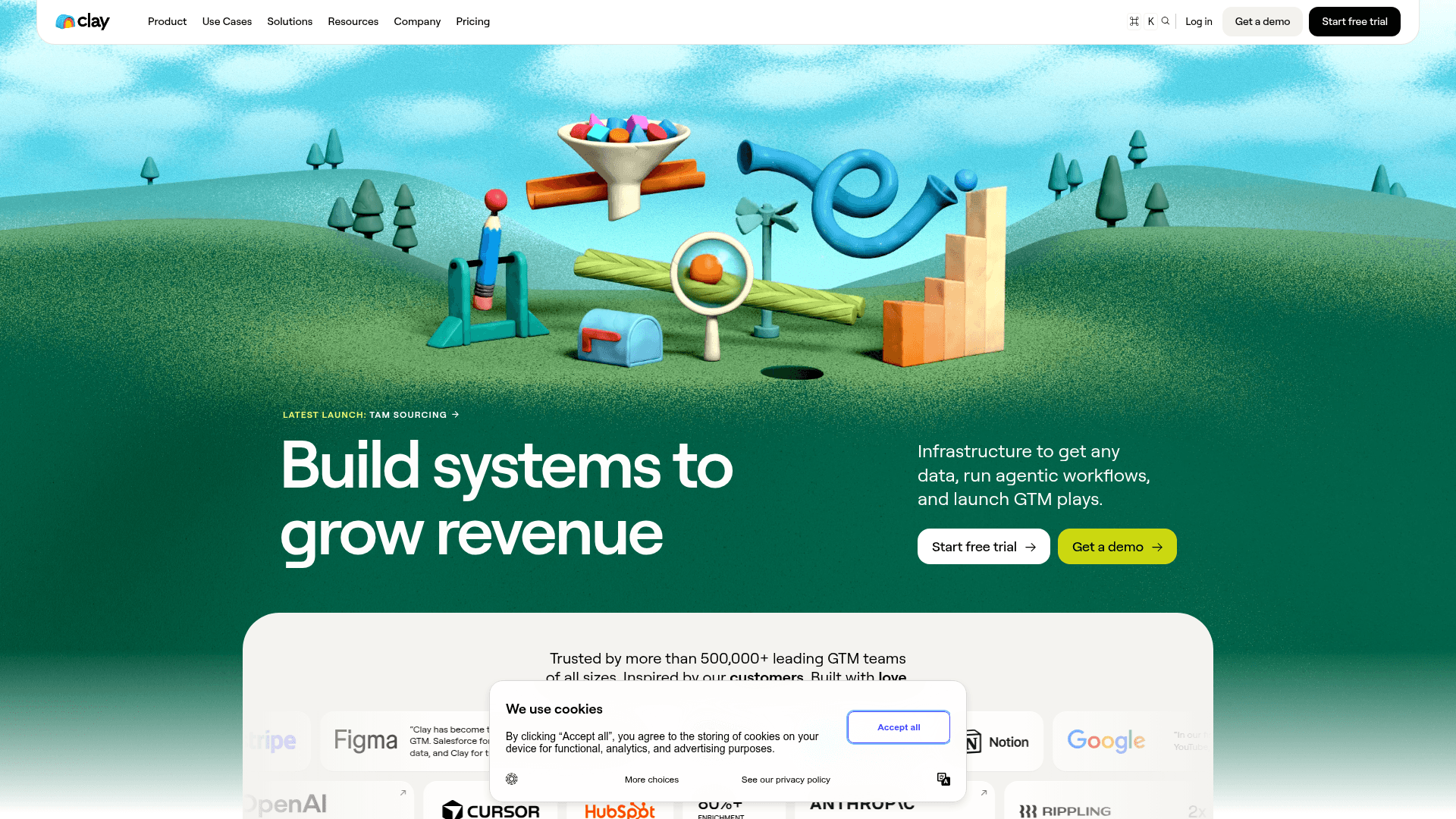
Clay is a data enrichment and sales prospecting tool built around the idea that go-to-market teams should be able to pull from dozens of data sources simultaneously without stitching together separate subscriptions. You feed it a list of companies or contacts, and it runs them through a waterfall enrichment process, checking provider after provider until it fills in the fields you need.
The product is genuinely flexible. You can build custom tables, write AI-powered research prompts, and connect to over 100 data providers through a single credit-based pricing model. For technical GTM teams that want to build bespoke prospecting workflows, Clay delivers real depth.
The friction shows up when you move beyond the setup phase. The waterfall logic requires ongoing maintenance, credit costs compound quickly as lists scale, and the tool assumes a level of technical fluency that most marketing and sales ops teams have to hire or train for. Clay's credit-based pricing is notoriously hard to forecast because credits get consumed at different rates depending on enrichment complexity, which makes budget planning unreliable quarter to quarter.
That combination, genuine power paired with steep execution overhead, is why so many revenue teams start looking for alternatives. The question is never whether Clay can do the job. It usually can. The question is whether your team has the bandwidth to run it without a dedicated operator keeping the workflows intact.
Why Consider Clay Alternatives?
Clay built its reputation as a go-to data enrichment and prospecting tool, pulling from dozens of sources to help revenue teams build targeted outreach lists. For a certain type of workflow, it works well. But as teams scale, a few friction points tend to surface repeatedly.
Pricing is the most common trigger. Clay's credit-based model can be difficult to forecast, especially when enrichment volume fluctuates month to month. Teams running high-volume prospecting campaigns often find costs climbing faster than expected, with limited visibility into where credits are being consumed. Independent cost breakdowns show a full enrichment workflow can burn 30+ credits per contact, and top-up credits are priced at a premium when you exceed your plan's allocation.
Beyond cost, the setup and maintenance overhead is real. Clay rewards users who are comfortable building and debugging waterfall enrichment flows. If that expertise lives with one person on your team, you have a fragile dependency that breaks the moment that person changes focus or leaves. According to independent B2B enrichment platform reviews, Clay users consistently report weeks of setup time before achieving useful results, and actual credit costs running 2x to 3x higher than projected.
There's also the question of scope. Clay is built around data enrichment and list building. If your goal is to take enriched contacts and move them through a buying journey with AI SDR-powered personalization, automated sequencing, or account-level signal tracking, you'll need to stitch together additional tools to fill those gaps. That means more integrations to maintain, more failure points to monitor, and more time syncing data across systems instead of acting on it.
These are the situations where switching to an alternative makes sense.
Best Clay Alternatives in August 2026
Clay is a widely used data enrichment and lead research tool, but it has real limitations that push revenue teams toward alternatives. The workflow setup is technical enough that most teams need dedicated ops support to build and maintain it. Pricing scales quickly as data credits stack up across multiple enrichment providers. And the product is built for enrichment first, meaning outreach, CRM sync, and pipeline visibility often require bolting on additional tools.
If your team has outgrown the setup overhead, the credit-based cost model, or the need to stitch together a fragmented stack, the options below cover the strongest alternatives available in 2026. Each serves a different buyer profile, so the right choice depends on where your biggest friction sits today. Teams also comparing outbound AI SDR platforms will find meaningful overlap with several of these options.
How to Read This List
These alternatives are assessed across four dimensions that matter to revenue ops and marketing leaders at growth-stage companies:
Data quality and coverage, including how fresh the underlying contacts and company signals are
Workflow depth, meaning whether the tool handles outreach and CRM sync or stops at enrichment
Pricing transparency, since unpredictable credit consumption makes budget forecasting unreliable
Setup complexity, because a tool your team cannot maintain without a dedicated ops hire creates fragility the moment that person leaves
No single tool wins across all four. The right pick depends on your stack, your team's technical capacity, and whether enrichment alone solves your problem or you need the full workflow handled in one place. For a structured framework, see the guide on how to choose AI SDR tools for your GTM stack.
The Top Clay Alternatives, Broken Down
Here is what each alternative actually does, who it is built for, and where its limits show up in practice. The goal is to give you enough context to rule options in or out before spending time on a demo or trial.
Apollo.io — a sales intelligence and engagement tool with a proprietary B2B database and built-in sequencing, best for teams that want one subscription covering prospecting and outreach.
ZoomInfo — a large enterprise data platform with intent signals and compliance infrastructure, best for high-volume teams on annual contracts.
Lusha — a lightweight contact lookup tool for verified phone numbers and emails, best as a quick-access complement to an existing stack.
Smartlead — a cold email sending infrastructure tool with mailbox rotation and warmup, best when deliverability at volume is the bottleneck.
Breakout: an inbound AI SDR that identifies website visitors, maps the buying committee, and runs automated multi-channel workflows based on live buyer signals, best for teams that want to act on intent rather than build a richer contact list.
1. Apollo.io

Apollo.io is a sales intelligence and engagement tool built around a proprietary database of 275+ million B2B contacts. You search for prospects, build lists, and run email and call sequences within a single subscription, removing the need to stitch together a separate data source and outreach tool. Tiered pricing is listed publicly, which removes the credit-burn unpredictability that makes Clay hard to budget quarter to quarter.
Best fit: Teams that want one subscription covering prospecting and sequencing, and whose target buyers are well-represented in Apollo's database. The self-serve pricing tiers work well for growth-stage teams that need cost visibility without going through a contract negotiation.
Trade-offs: Apollo pulls data from its own database only. If your ICP sits in a segment where Apollo's coverage is thin, you have no fallback option. Clay's waterfall model draws from multiple providers to fill those gaps. The sequencing tools are functional for volume sending but aren't built for deep account-level personalization tied to live buying signals. Before committing, review Apollo.io pricing in 2026 to confirm the tier matches your volume.
2. ZoomInfo
ZoomInfo is one of the largest B2B data products, with a proprietary contact and account database, technographic and firmographic filters, and buying intent signals powered by its own data partnerships. Enterprise teams use it for deep account intelligence with data governance infrastructure built in.
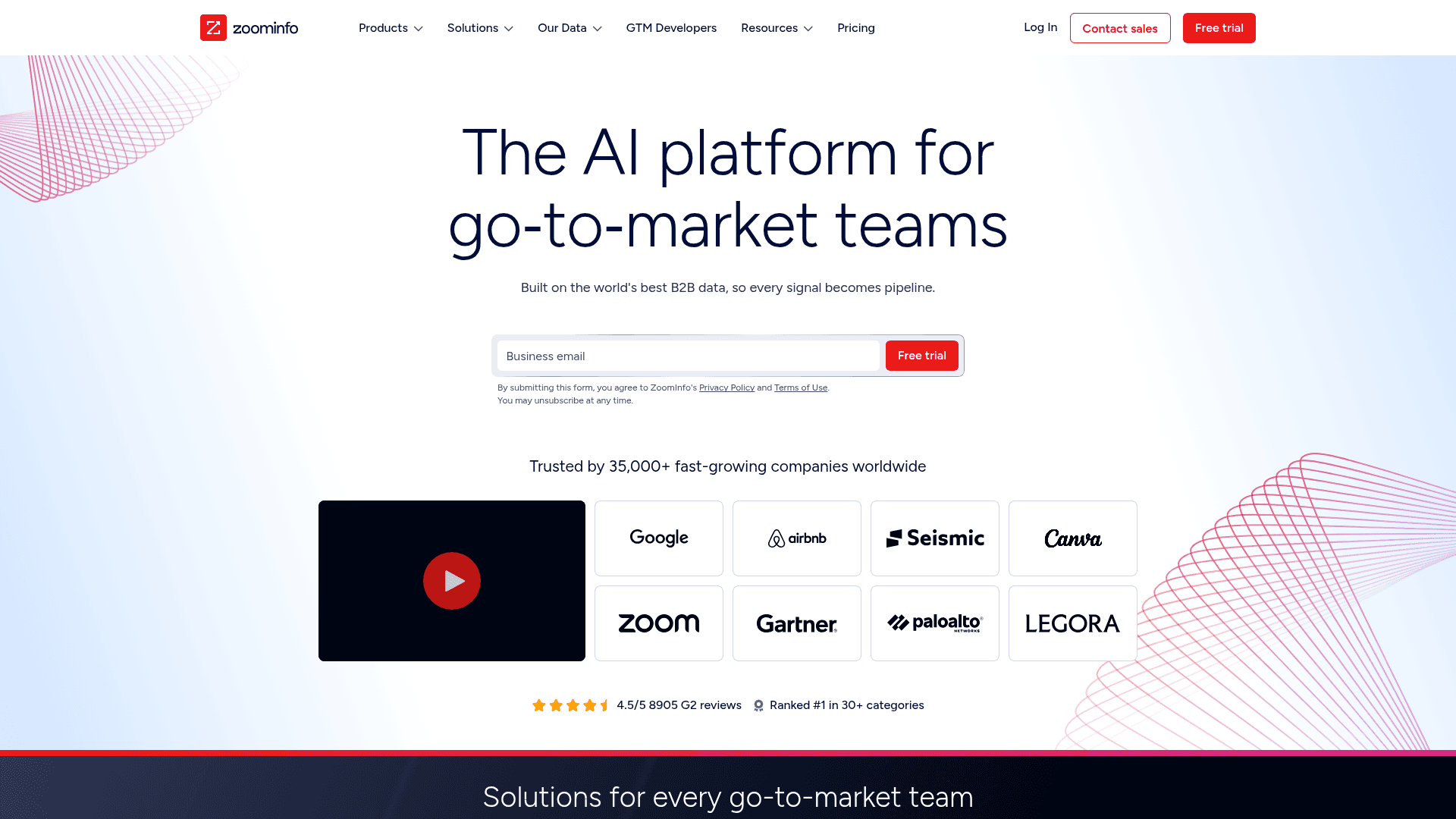
Best fit: Organizations that need broad database coverage, compliance requirements met at the enterprise tier, and intent-signal context layered over a target account list. It works best when volume justifies the contract size and your team has the internal capacity to act on the data.
Trade-offs: ZoomInfo operates on annual contracts with negotiated pricing, making budget forecasting difficult before you're deep into a sales conversation. The product is most cost-effective when prospecting volume is high. Growth-stage teams often find the cost-to-value ratio hard to defend at the entry tier, and the setup process is longer than most alternatives. For context on what other GTM teams use instead, see the roundup of ZoomInfo alternatives for GTM teams.
3. Lusha
Lusha is a contact intelligence tool focused on verified direct-dial phone numbers and business email addresses. A browser extension surfaces contact data as you browse LinkedIn or company sites, making it fast to pull individual contact details without managing a full prospecting session.
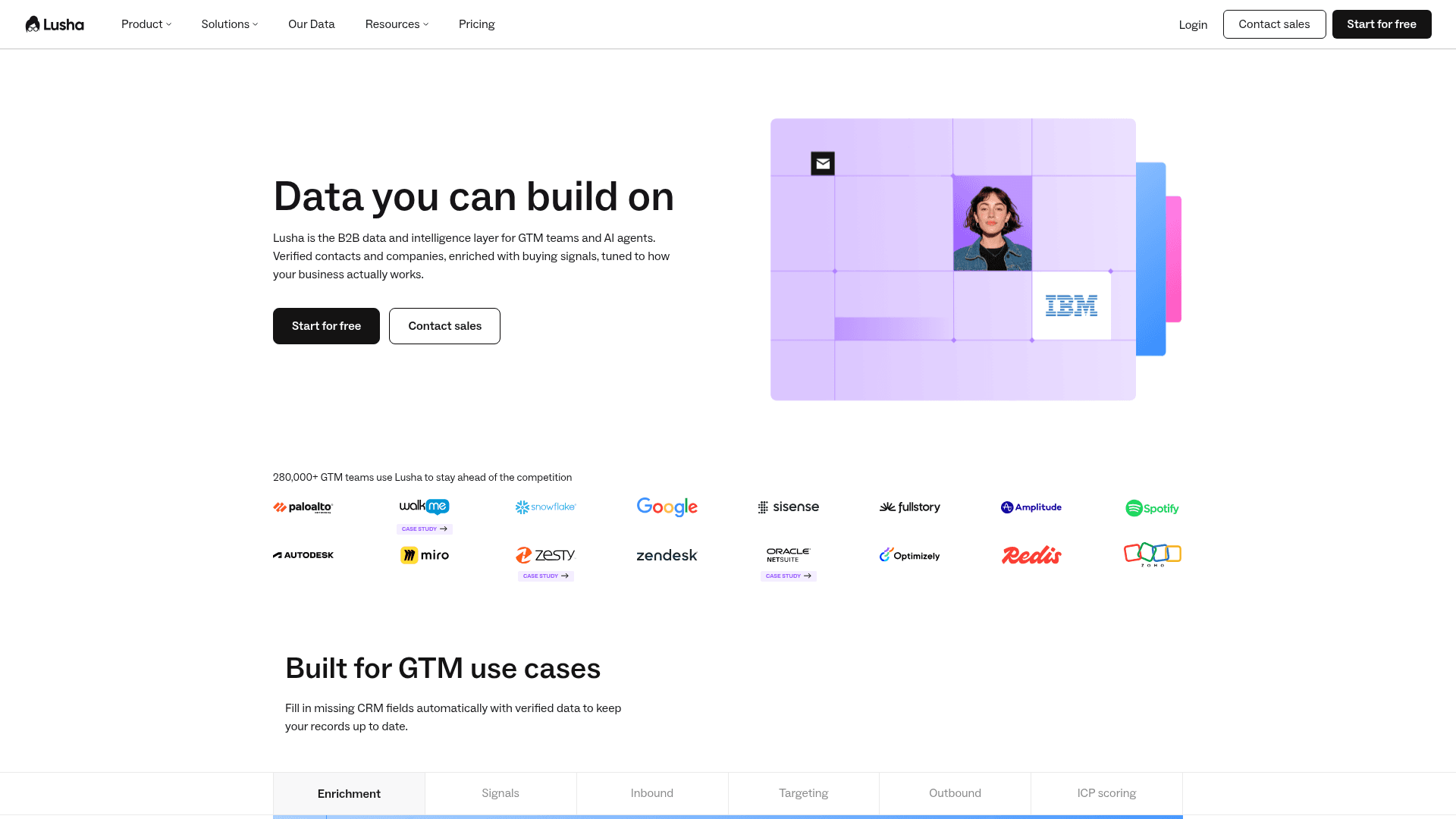
Best fit: Individual reps and small teams that need quick access to verified contact information without a full prospecting workflow. The tiered subscription structure keeps it accessible at early-stage team sizes, and the free tier is a low-friction starting point.
Trade-offs: Lusha's automation is minimal. It is a data lookup tool, not a sequencing or workflow product. If your reason for leaving Clay is enrichment overhead or the gap between enrichment and outreach, Lusha doesn't close either of those gaps. Coverage gets narrower, not broader, and you still need separate tools for sequencing and CRM sync. Think of Lusha as a lightweight complement to an existing stack, not a full Clay replacement.
4. Smartlead
Smartlead is a cold email infrastructure tool built for high-volume sending. It handles mailbox rotation, automated warmup, and reply management with a focus on inbox placement at scale. It connects with external data sources, so enriched lists from other tools can feed directly into Smartlead campaigns.
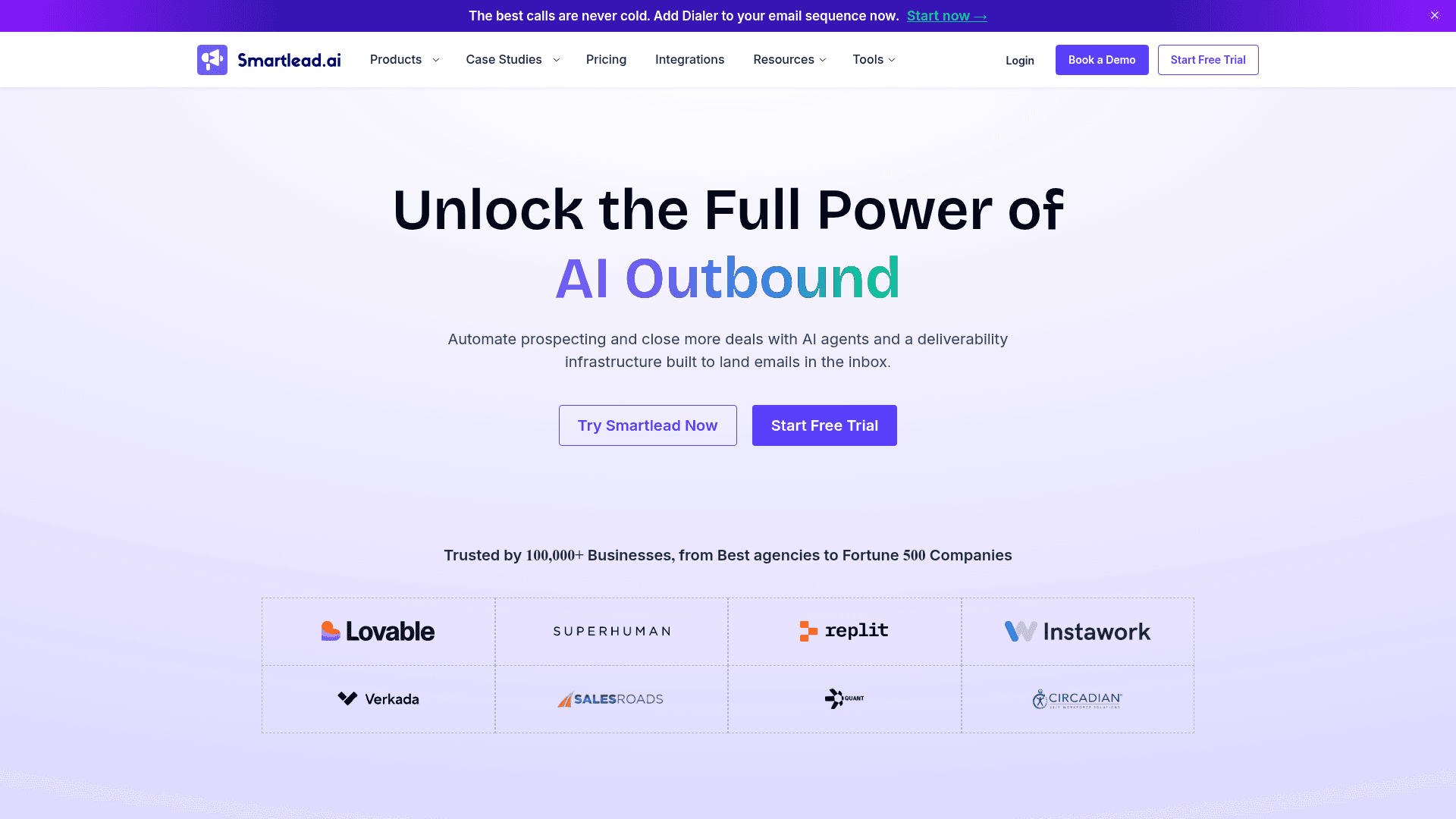
Best fit: Teams whose primary bottleneck is sending capacity and deliverability at volume, not data discovery or enrichment. If you already have a clean, enriched contact list and your challenge is getting those emails reliably delivered, Smartlead solves that specific problem.
Trade-offs: Smartlead has no contact database and no AI-driven personalization layer. It covers the sending layer only, leaving prospect research, list building, and message customization to other tools. If your frustration with Clay is the enrichment overhead or the manual handoff between data and outreach, Smartlead doesn't solve either of those problems. You'd be adding a dedicated sending system on top of whatever enrichment workflow you still manage separately.
5. Breakout
Breakout is a different kind of tool than the others on this list. Where Clay, Apollo, and ZoomInfo are built around sourcing and enriching contact data, Breakout is an inbound AI SDR that responds to buyer signals in real time. Instead of starting with a list you build and enrich, it starts with buyers who are already showing intent: website visitors, form submitters, event attendees, and other hand-raisers who have already identified themselves.
When a prospect visits your site, Breakout's Signals Agent deanonymizes the visitor at both the company and person level, identifies other members of the buying committee, and triggers automated multi-channel outreach across email and LinkedIn without any manual handoff. The AI SDR handles qualification, objection handling, and meeting scheduling in a single continuous workflow, with native sync to Salesforce, HubSpot, or Marketo throughout.
Best fit: Teams that want to act on real-time buying intent rather than enrich cold lists. If your inbound traffic generates leads your reps are too slow to follow up with, or if enriched contact lists still require a rep to manually prioritize and reach out, Breakout replaces that reactive process with an automated signal-to-meeting workflow.
Trade-offs: Breakout is not a Clay replacement for teams whose primary need is building cold outbound lists from a firmographic profile. If your goal is to source a list of target companies and enrich it with contact data before any buyer signal fires, Clay is better suited for that job. Breakout's value shows up after intent is visible, not before it is.
For more on how this fits a signal-led GTM motion, see the signal-led GTM fit breakdown below.
Feature Comparison: Clay vs Top Alternatives
A raw feature comparison helps cut through vendor claims and gives you a clearer basis for evaluation. The table below maps each tool across the dimensions that matter most to revenue teams: data sourcing, AI capabilities, workflow automation, CRM integration, and pricing transparency.
How the Top Clay Alternatives Stack Up
Tool | Data Sourcing | AI Capabilities | Workflow Automation | CRM Integration | Pricing Model |
|---|---|---|---|---|---|
Breakout | Waterfall enrichment across 50+ providers | AI agent research, scoring, and outreach | Full pipeline automation, no code required | Native Salesforce, HubSpot sync | Transparent, usage-based |
Clay | 75+ data provider waterfall | AI-assisted copywriting | Moderate; requires manual setup | CRM push via integrations | Credit-based, can escalate quickly |
Proprietary database | Basic AI suggestions | Limited sequencing | Native CRM sync | Tiered subscription | |
Large proprietary database | AI intent signals | Moderate | Native CRM sync | Contract-based, opaque | |
Lusha | Contact-focused database | Minimal | Minimal | Basic integrations | Tiered subscription |
Smartlead | N/A | AI copy variants | Strong email sequencing | Limited | Subscription-based |
The standout trade-off here is between data flexibility and pricing predictability. Clay's waterfall approach gives you breadth, but the credit model means costs can grow faster than your pipeline does. Teams relying on ZoomInfo face a similar dilemma; see the roundup of ZoomInfo alternatives for GTM teams for context. Tools like Apollo and ZoomInfo offer proprietary databases with more predictable subscription fees, though you sacrifice the multi-provider flexibility that waterfall enrichment provides. Before committing, review Apollo.io pricing in 2026 to understand what each tier covers. Breakout sits in a different category by pairing waterfall enrichment with full pipeline automation, so you get data breadth without managing the orchestration overhead separately.
Why Breakout Is the Right Fit for Signal-Led GTM Teams
Breakout solves a different problem than Clay. Clay helps you build and enrich a contact list so you can reach people who have not heard from you yet. Breakout is built for the moment a buyer signals intent: a website visit, a form submission, a content download, or any hand-raiser event that tells you someone is already in the market.
When that signal fires, Breakout's AI SDR identifies who the visitor is, maps the full buying committee at their company, and runs personalized multi-channel outreach across email and LinkedIn without waiting for a rep to notice the activity. Qualification, objection handling, and meeting booking all happen autonomously in a single continuous workflow. When the conversation closes, the record syncs natively to Salesforce, HubSpot, or Marketo with no manual export step.
Where Breakout Fits in a Signal-Led GTM Stack
For revenue leaders at Series B+ companies managing both inbound traffic and outbound campaigns, here is where Breakout adds the most value:
Your inbound traffic generates leads, but rep response time is too slow to catch high-intent visitors before they move on. Breakout engages in real time, within the visit window, before the buyer's attention shifts elsewhere.
Your enriched lists exist but outreach still relies on reps to manually prioritize and send. Breakout's AI SDR removes that manual step, running the full follow-up motion from signal to booked meeting autonomously. For context on how this inbound category compares, the best inbound AI SDRs breakdown covers the key differences.
Your pipeline is tied to paid media or organic traffic volume. Breakout's combined inbound and outbound motion keeps the pipeline engine active regardless of traffic fluctuations, running outbound-triggered sequences alongside visitor-triggered ones in a single workflow.
You want full visibility into why a prospect was selected and what triggered outreach. Breakout surfaces the reasoning behind each AI decision, so your team can audit and adjust without guesswork. Teams also managing website visitor identification tools may want to review Leadfeeder alternatives for B2B teams for context on the signals layer.
The honest trade-off: if your entire motion is cold outbound sourced from firmographic filters and you have no inbound signal layer, Clay is the more appropriate tool. Breakout's architecture is built for intent-triggered execution. When buying signals are present, it acts on them automatically. When they are not, a different tool fits better.
Final thoughts on Picking the Best Clay Alternative for Your Revenue Team
Your clearest indicator is where work is getting stuck today. If it is enrichment quality or data coverage, Clay may still be the right call. If the gap is between knowing who is in-market and actually reaching them in time, that is a different problem. Breakout is built for teams that want to act on buyer signals the moment they appear, replacing the manual step between intent and outreach with an automated workflow that runs from first visit to booked meeting.
FAQs
Why do revenue teams switch away from Clay to alternatives like Breakout?
The most common triggers are unpredictable credit costs that compound as enrichment volume scales, and the maintenance overhead of keeping waterfall enrichment workflows running, work that requires dedicated technical resources to build and debug. When that expertise lives with one person, the entire prospecting motion becomes fragile.
What should you focus on when comparing Clay alternatives for a Series B+ GTM team?
Focus on four factors: how predictably the pricing scales with your contact volume, whether the tool handles outreach and CRM sync or stops at enrichment, how much technical capacity your ops team has to maintain custom workflows, and whether data coverage matches your ICP without requiring you to layer in additional providers.
When does Breakout make more sense than Clay for outbound prospecting?
Breakout is the stronger fit when your team needs to move from enriched contact to personalized outreach without a manual handoff step, and when you do not have a dedicated Clay operator to maintain enrichment tables and waterfall logic. If your goal is pipeline generation and not building a custom data architecture, Breakout's AI agents handle research, scoring, and sequencing in a single workflow.
Can Breakout integrate with your existing CRM stack without requiring a platform migration?
Yes. Breakout offers native integrations with Salesforce and HubSpot out of the box, with no mandatory CRM dependency. This is a direct contrast to tools like Qualified, which requires Salesforce as a hard prerequisite and cannot function with HubSpot or other CRM stacks.
How long does it take to run your first campaign after switching from Clay to Breakout?
Most teams go live within days using Breakout's no-code setup, compared to the weeks of configuration Clay typically requires before a first campaign is ready. Breakout's Growth and Enterprise plans include always-on support, and the platform does not charge onboarding fees, which removes the implementation cost barrier that delays time-to-value with competitors.