All Blogs
7 ZoomInfo alternatives for B2B revenue teams, compared by data accuracy, intent signals, and pricing. Best picks: Breakout for AI pipeline, Cognism for EMEA, Clay for enrichment.

Evan Marshall
Senior Growth AI Strategist
Published On

Your data quality problem and your budget problem might be the same problem. ZoomInfo's contract structure tends to front-load commitment before you can validate whether the contacts you're paying for are even accurate in your target verticals. These seven alternatives each take a different approach, and a few of them are worth a close look depending on how your team runs outbound.
TLDR:
ZoomInfo's opaque pricing, rigid contracts, and stale data create real pipeline risk for Series B+ revenue teams
The right alternative depends on your motion: Cognism for EMEA compliance, Clay for enrichment workflows, and Apollo.io for budget outbound
Assess any alternative on contact verification frequency, intent data granularity, and CRM sync before committing
Breakout pairs real-time verified contacts with AI-native buying signals and usage-based pricing in one workflow
What Is ZoomInfo and How Does It Work?
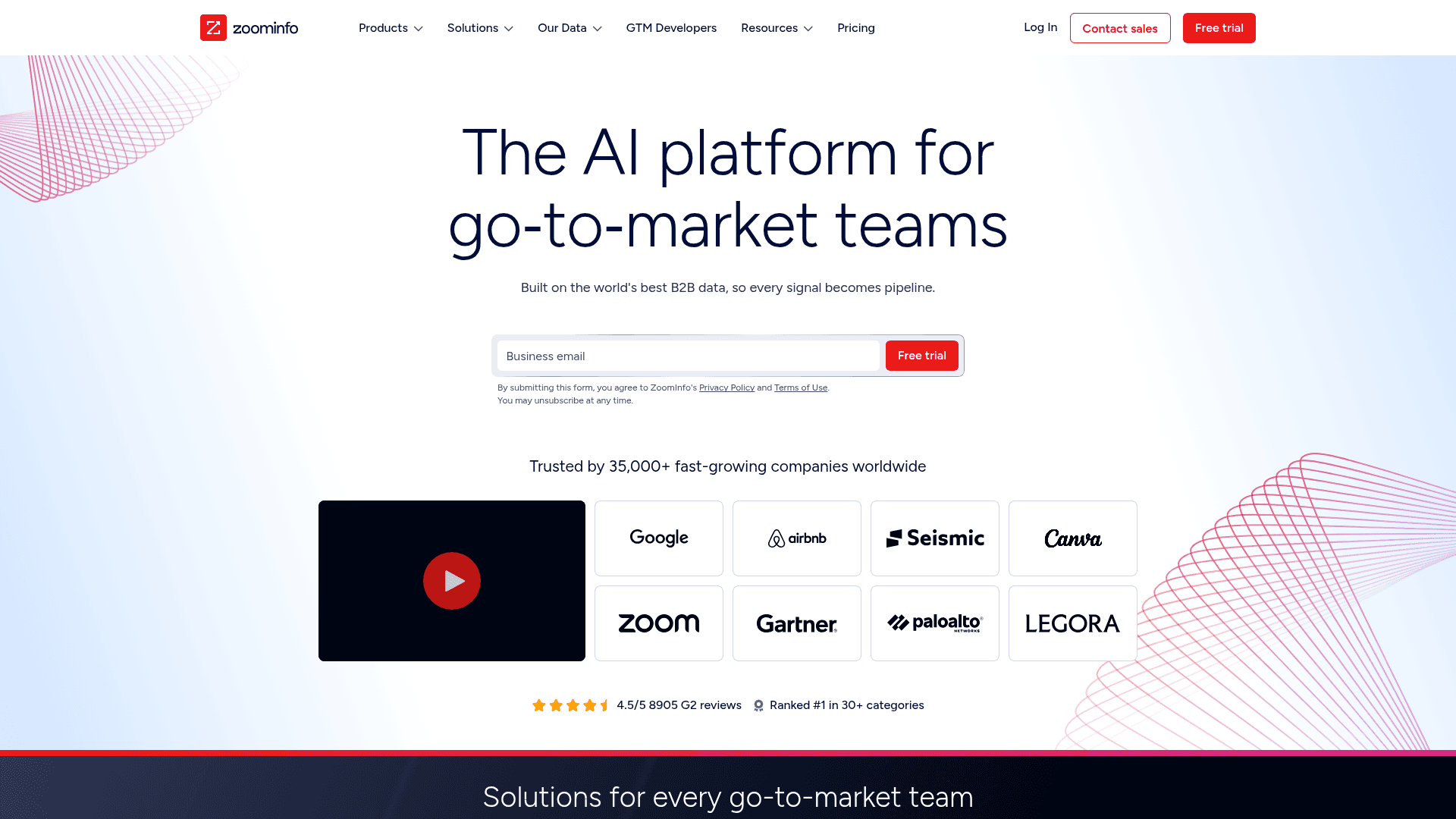
ZoomInfo is a B2B intelligence database that helps sales and marketing teams find contact and company data. It aggregates information like direct dials, email contacts, firmographics, and technographics, then packages that data into searchable profiles you can use to build prospecting lists.
The core workflow is straightforward: you search by filters like job title, industry, company size, or tech stack, export a list of contacts, and push them into your CRM or sequencing tool. Some teams use it for intent data as well, targeting accounts showing buying signals based on content consumption patterns.
It works best for high-volume outbound motion where list-building speed matters more than account-level depth or relationship context.
Why Consider ZoomInfo Alternatives?
ZoomInfo has long been the default choice for B2B contact data, but cracks have started to show. ZoomInfo pricing scales aggressively as your team grows, contracts lock you in before you can validate data quality, and many users report that contact accuracy has declined in certain verticals and geographies.
For revenue teams at Series B+ companies, stale data and unpredictable spend create real pipeline risk. A bad contact record wastes a rep's time and skews your conversion metrics, distorting the forecast models your CFO relies on. Independent reviews of ZoomInfo competitors and alternatives consistently point to data verification frequency and built-in validation as the top factors separating high-accuracy tools from those that simply offer volume.
The market has responded with serious ZoomInfo alternatives that offer fresher data, more transparent pricing, or capabilities ZoomInfo simply was not built to deliver.
Best ZoomInfo Alternatives in August 2026

The alternatives below each serve a distinct use case, so instead of ranking them by a single score, we've organized them by the job they do best.
Here's a quick comparison before we go deeper:
Tool | Best For | Standout Feature | Starting Price |
|---|---|---|---|
Breakout | AI-powered pipeline generation | Real-time buying signals | Free trial available |
Prospecting on a budget | Massive contact database | Free tier available | |
GDPR-compliant outreach | Phone-verified mobile numbers | Custom pricing | |
Lusha | Quick individual lookups | Browser extension simplicity | Free tier available |
Clay | Custom data enrichment workflows | Multi-source waterfall enrichment | From $149/mo |
Marketing data enrichment | CRM and MAP integrations | Custom pricing | |
Kaspr | European market prospecting | LinkedIn-native contact capture | Free tier available |
Each tool listed here has a legitimate reason to exist. The right pick depends on your team's size, your go-to-market motion, and whether you need compliance coverage, enrichment depth, or raw prospecting volume.
Key capabilities to know:
Data enrichment depth, contact accuracy rates, and CRM integration quality tend to separate tools in this category faster than any other factor.
Here are the capabilities worth assessing closely across any ZoomInfo alternative:
Contact and company data accuracy, including how frequently records are verified and what the provider's stated match rates are against your target accounts
Intent data coverage, including whether the tool tracks buying signals at the account level and how granularly it can surface in-market behavior
CRM and sales tool integrations, since a contact database that requires manual exports creates reconciliation overhead and breaks real-time sync between sales and marketing
Pricing transparency, because opaque seat-based or credit-based models make budget forecasting unreliable and often result in surprise overages
AI-driven workflow features, such as automated prospecting, lead scoring tools, or outreach sequencing built into the tool instead of requiring a separate product
Feature Comparison: ZoomInfo vs Top Alternatives
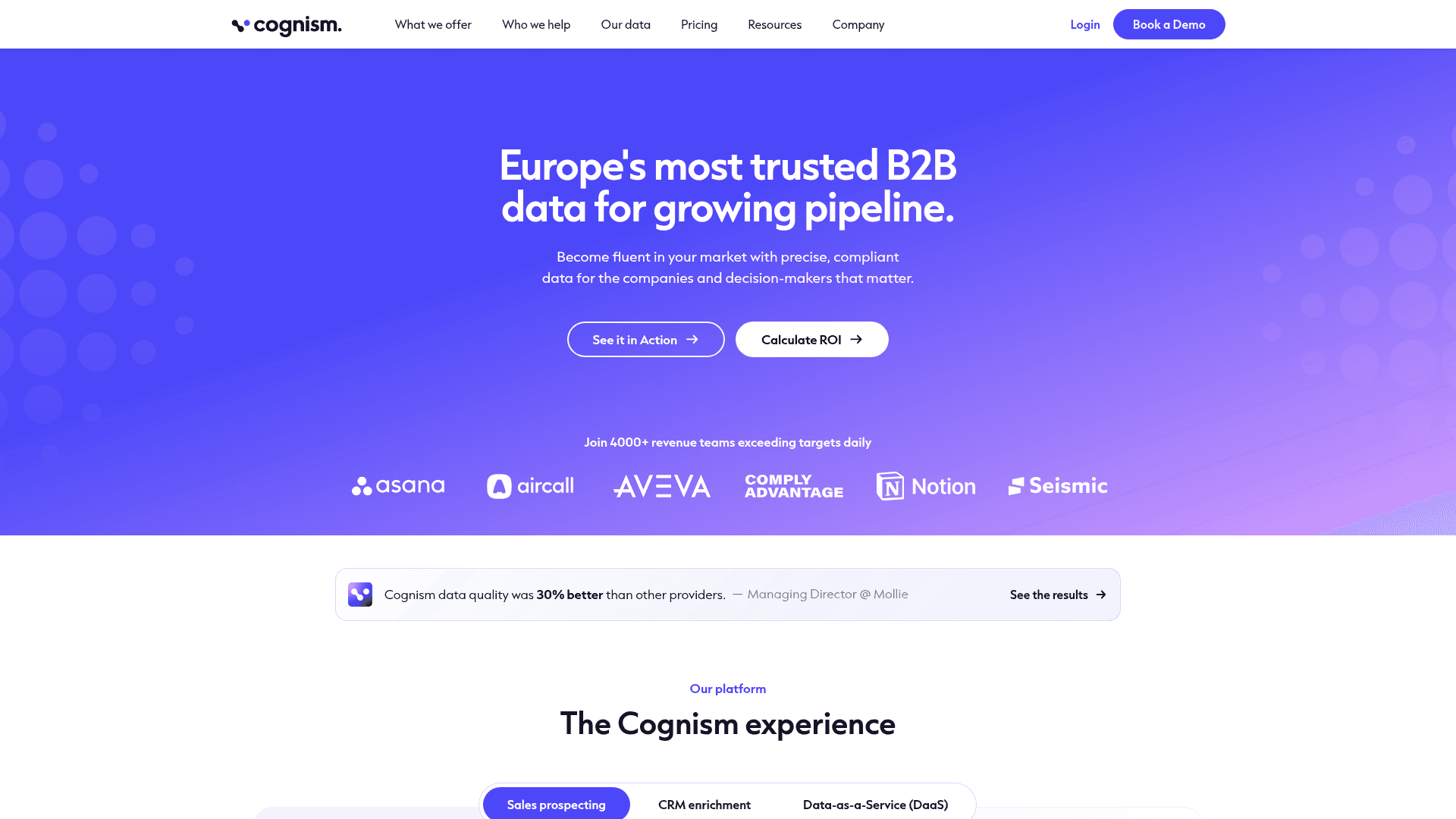
Here's a comparison table of ZoomInfo against the top alternatives across the features that matter most to revenue teams at growing companies.
Tool | Data Coverage | Intent Data | AI Signals | CRM Sync | Best For |
|---|---|---|---|---|---|
ZoomInfo | Global, 300M+ contacts | Yes (Streaming) | Basic | Yes | Enterprise data scale |
Breakout | SMB to mid-market focus | Yes | Yes, AI-native | Yes | AI-driven pipeline at speed |
Apollo.io | 275M+ contacts | Yes | Limited | Yes | Budget-conscious outbound |
Clay | Enrichment-first | No native | Yes | Via Zapier | Custom data workflows |
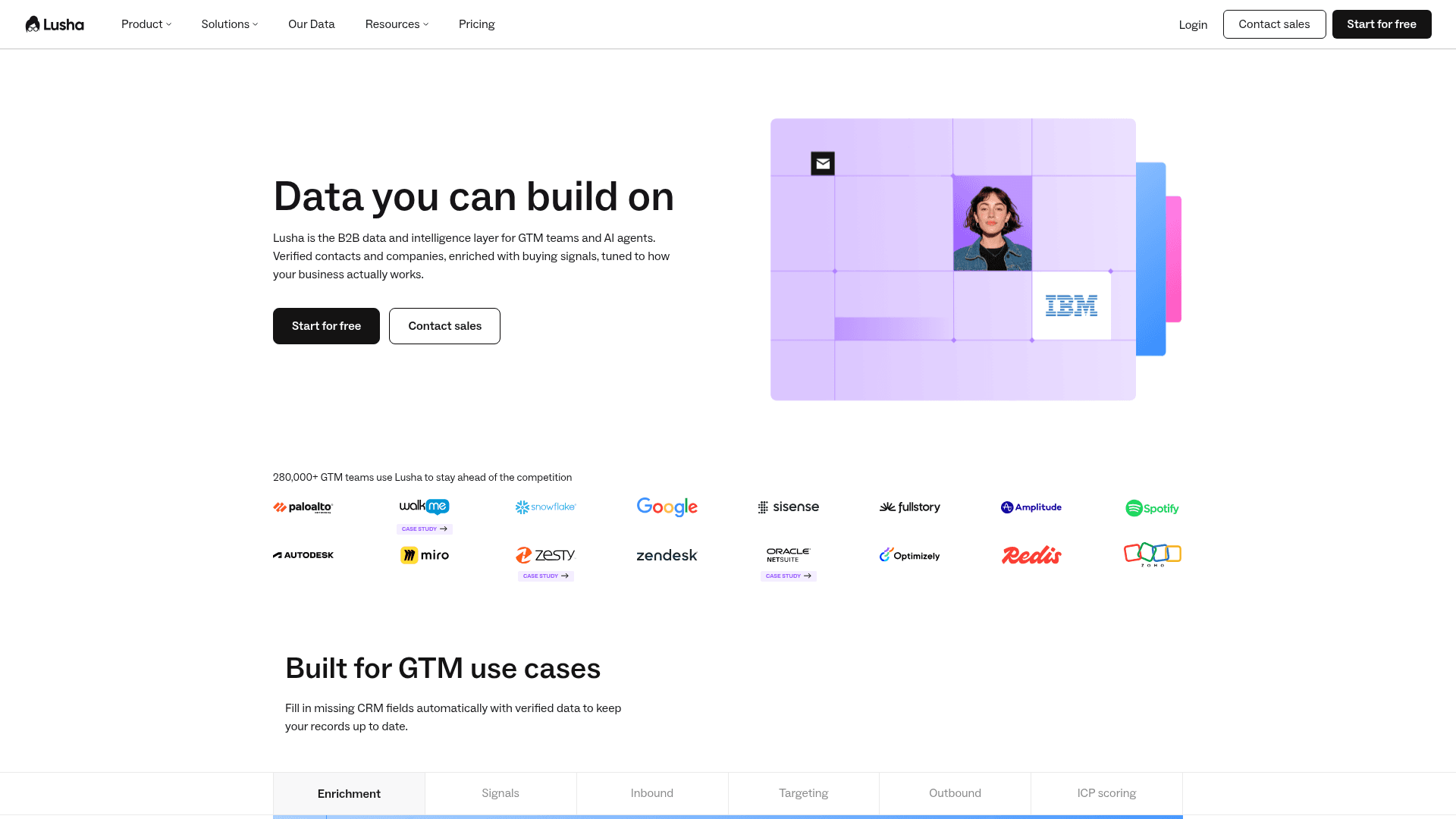
Lusha | 45M+ contacts | Limited | No | Yes | Quick prospecting lookups |
Cognism | EMEA-strong, GDPR-verified | Limited | No | Yes | European market compliance |
LinkedIn Sales Nav | LinkedIn network | No | Limited | Partial | Relationship-led selling |
RocketReach | 700M+ profiles | No | No | Limited | Email and phone lookup volume |
What This Table Reveals
Coverage numbers alone rarely tell the whole story. ZoomInfo leads on raw contact volume, but several alternatives outperform it on specific dimensions: Cognism alternatives exist for EMEA compliance needs, Clay wins on enrichment flexibility, and Breakout wins on AI-native signal processing that surfaces buying intent without requiring a dedicated ops team to configure it.
Why Breakout Is the Best ZoomInfo Alternative
Breakout is built for revenue teams that need verified contact data paired with AI-driven outreach, without the enterprise pricing overhead that makes ZoomInfo a tough sell for growing companies.
Where ZoomInfo excels at raw database scale, it often prices smaller teams out and delivers data that requires heavy manual cleaning before it's usable, a pattern also seen with Apollo.io alternatives seekers facing similar constraints. Breakout takes a different approach: real-time verified contacts, intent signals, and AI-generated outreach sequences that adapt to prospect behavior, all in one workflow.
What Sets Breakout Apart
Real-time contact verification means you're not burning outreach budget on stale emails or disconnected phone numbers that ZoomInfo's periodic refresh cycle misses.
AI-generated sequences adapt messaging based on intent signals, so your reps engage prospects at the right moment instead of following a static cadence, a core feature of leading warm outbound tools.
Transparent, usage-based pricing gives revenue operations leaders predictable cost forecasting instead of the opaque seat licensing that makes ZoomInfo renewals a quarterly negotiation.
A unified workflow connects prospecting, enrichment, and outreach in one place, eliminating the manual exports and cross-tool reconciliation that erode rep productivity.
For Series B+ teams scaling pipeline without scaling headcount, Breakout is worth a close look.
Final Thoughts on Choosing a ZoomInfo Alternative
The best move is to pull your pipeline data before you pick a tool. Look at where deals stalled, where contacts bounced, and where your reps spent time on manual cleanup instead of outreach. That tells you more about what you need than any feature comparison table. If the data points to signal quality and outreach speed as your biggest gaps, Breakout is worth testing against what you have today.
FAQs
Why do revenue teams at Series B+ companies look for ZoomInfo alternatives?
The most common triggers are pricing that scales unpredictably as headcount grows, annual contracts that lock teams in before data quality can be validated, and contact records that go stale between quarterly refresh cycles. For ops leaders whose forecast models depend on clean data, those gaps create genuine pipeline risk that goes well beyond minor inconveniences.
What features should you focus on when comparing ZoomInfo alternatives?
Contact verification frequency, intent signal coverage at the account level, and native CRM sync with Salesforce or HubSpot are the three capabilities that separate high-performing tools from those that simply shift the manual work. Pricing transparency matters just as much: seat-based or credit-based models with hidden overages make budget forecasting unreliable, which is often the original complaint that started the search. For teams selling into Europe, GDPR compliance requirements add another layer: your data provider must be able to document data sources and honor data subject rights, or you're carrying regulatory risk alongside the pipeline risk.
When should you consider moving away from ZoomInfo to a tool like Breakout?
If your reps are spending meaningful time cleaning exported lists before sequencing, or if your outbound motion requires intent signals and automated follow-up in addition to raw contact data, a dedicated AI SDR tool like Breakout handles more of the workflow end-to-end. ZoomInfo remains a defensible choice for pure database scale at enterprise volume, but teams that need prospecting, enrichment, and outreach connected in one motion will hit its limits quickly.
How does Breakout differ from other ZoomInfo alternatives like Apollo.io or Clay?
Apollo.io covers prospecting volume at a lower price point but offers limited AI-driven sequencing. Clay excels at custom enrichment workflows but requires heavy technical configuration and ongoing maintenance. Breakout connects real-time contact verification, intent signals, and AI-generated outreach sequences in a single workflow, so revenue teams get the full motion without assembling separate tools, or building custom logic to make them talk to each other.
Can Breakout work with your existing CRM stack without replacing your current tools?
Yes. Breakout integrates natively with Salesforce, HubSpot, and Marketo, with write logic that syncs qualified prospects directly into your existing workflows without manual exports or data reconciliation. For teams displaced by the Qualified-Salesforce or Warmly-HubSpot acquisitions, this CRM-agnostic architecture means you can deploy a full AI SDR motion without being forced into a single vendor's ecosystem.