All Blogs
A plain-English look at Breakout and Unify so you can see which one fits better.

Evan Marshall
Senior Growth AI Strategist
Published On
When you're comparing Breakout vs Unify, the sales decks will show you similar capabilities: intent monitoring, visitor identification, CRM sync. What they won't tell you is how long your team spends between seeing a signal and actually reaching the buyer. One tool makes you build that bridge yourself with sequence logic and workflow mapping. The other automates the entire motion: research, personalization, multi-channel outreach, so your reps engage prospects while the opportunity is still hot.
TLDR:
Unify aggregates intent signals but requires your team to act on them separately
Breakout connects visitor ID to automated outreach in one workflow without manual handoffs
Setup timelines differ: Unify takes 2-4 weeks to configure, Breakout activates within days
Unify prices on data volume and seats; Breakout ties costs to pipeline activity and usage
Breakout writes intent signals and engagement scores directly into your CRM fields
What is Unify?
Unify is an outbound-focused intent orchestration tool built around one core idea: aggregate buying signals from multiple data providers, then trigger automated email sequences when those signals fire. It pulls intent data from sources like G2, Bombora, and LinkedIn, stitches them together, and hands off to email workflows designed to reach warm prospects before competitors do.
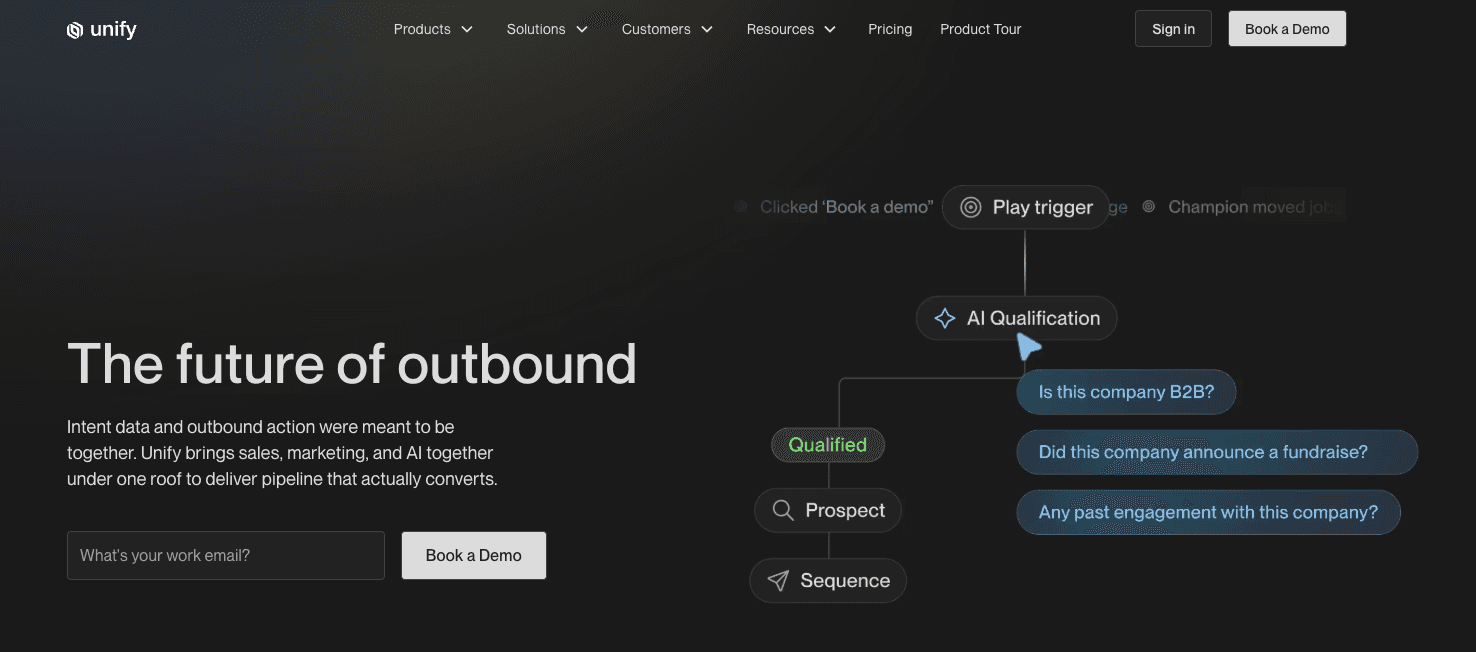
The product is built for growth-stage B2B companies running high-volume warm outbound programs. If your revenue ops team lives in spreadsheets, loves building signal logic, and wants a system that scales outbound motion, Unify was designed with that profile in mind. It assumes you already have the people and infrastructure to act on the signals it surfaces.
That last point matters. Unify is a data and sequencing layer, not an engagement layer.
What is Breakout?
Breakout is an AI-powered pipeline generation tool built for revenue teams that need to move fast. It combines account intelligence, buyer signal tracking, and automated outreach into one coordinated workflow, so your team spends less time researching and more time selling.
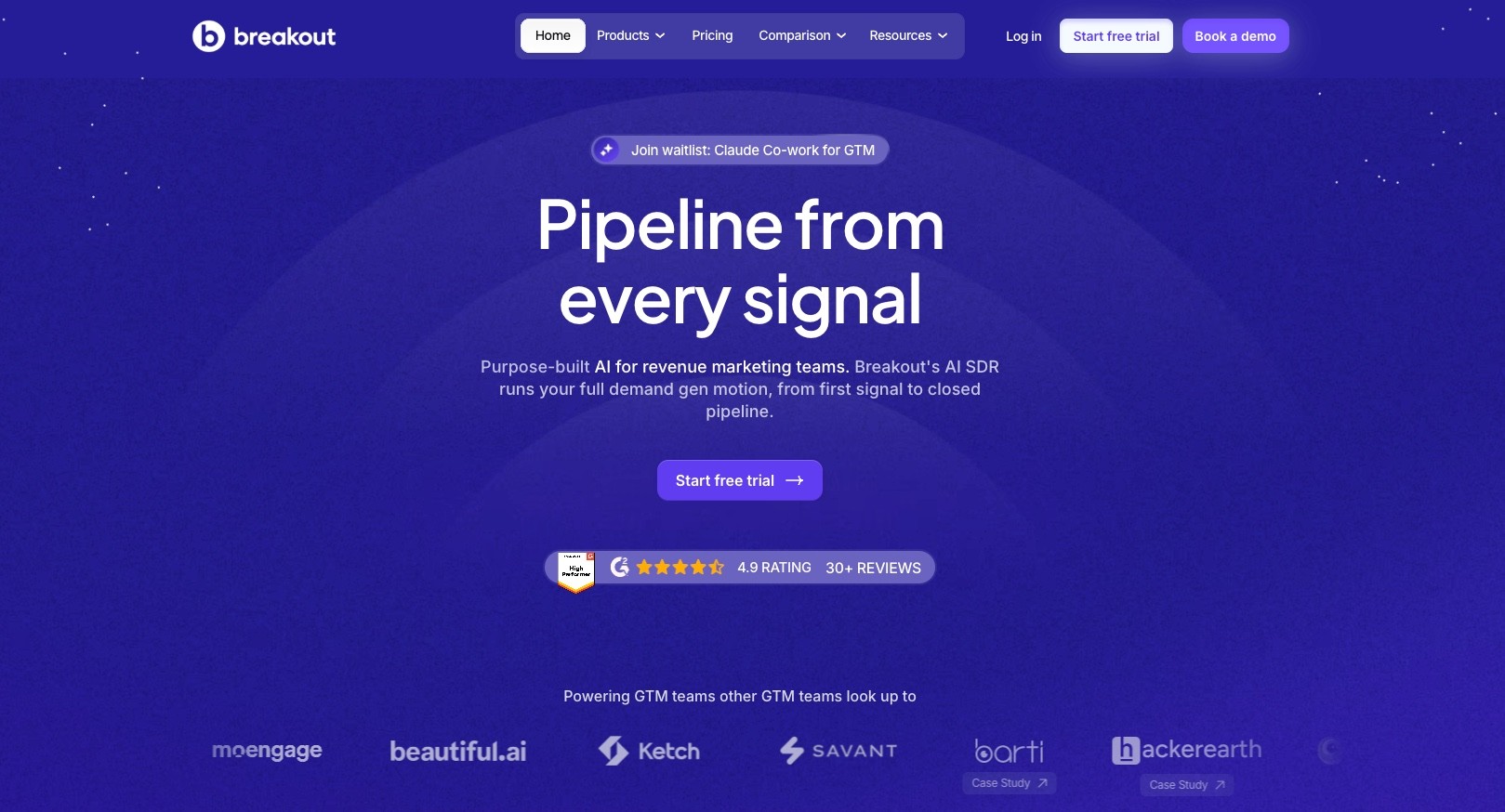
At its core, Breakout identifies in-market accounts by monitoring intent signals across the web, then surfaces the right contacts and triggers personalized outreach at the right moment. The result is a system where your go-to-market motion runs on real buying signals rather than guesswork.
Breakout is designed for Series B and beyond, where pipeline generation can't rely on manual prospecting alone. It gives revenue teams a repeatable, signal-driven process for filling pipeline without adding headcount, making it a strong fit for growth-stage companies looking to scale outbound intelligently.
Breakout vs Unify: Key Differences
Feature | Breakout | Unify |
|---|---|---|
Pipeline Generation Approach | Proactive AI-driven outbound sequences that identify and engage ideal customer profiles before they raise their hand | Inbound-led growth using intent signals and product usage data to surface warm accounts that already showed interest |
Workflow Automation | Pre-built inbound workflows activate within days, connecting visitor identification directly to automated personalized outreach | Requires 2 to 4 weeks to configure Plays by mapping audiences, defining signal logic, and building sequences |
CRM Data Integration | Writes intent signals, engagement scores, and pipeline stage updates directly into CRM fields for complete account visibility | Syncs enriched contact data into existing CRM records at a surface level |
Pricing Model | Ties costs to pipeline activity and usage for predictable expenses aligned with go-to-market motion | Prices on data volume and seat count, which scales quickly as team or ICP expands |
Best Fit | Series B+ revenue teams needing to generate pipeline from scratch without adding headcount | Growth-stage B2B companies with dedicated revenue ops capacity and existing inbound volume to optimize |
Inbound vs. Outbound Focus
Breakout and Unify take meaningfully different approaches to where pipeline comes from. Unify leans heavily into inbound-led growth, using intent signals and product usage data to surface warm accounts that have already shown interest. This works well for PLG companies with an existing user base to mine.
Breakout is built for teams that need to generate pipeline from scratch. Rather than waiting for inbound signals, it runs AI-driven outbound sequences that identify and engage your ideal customer profile before they ever raise their hand. For Series B+ companies under pressure to hit aggressive pipeline targets, that proactive automated outreach matters.
The distinction is straightforward: if you have strong inbound volume, Unify helps you work it smarter. If you need to build pipeline from the ground up, Breakout was designed for exactly that job.
Website Visitor Identification and Engagement
Knowing which accounts are actively visiting your site is where pipeline generation starts. Breakout uses AI to identify anonymous website visitors and match them to firmographic data, so your team can act on intent signals before a prospect ever fills out a form. Unify takes a similar approach, layering waterfall enrichment across multiple data providers to surface visitor identity and contact details.
Where the two diverge is in what happens next. Breakout moves identified visitors into automated outreach without requiring manual handoffs. Unify surfaces the data but leans on your existing workflow tools to act on it, which adds steps between signal and action.
For revenue teams that want identification and engagement in one connected motion, Breakout closes that gap faster.
Workflow Automation and Setup Requirements
Unify's "Plays" require genuine configuration before they produce results. Teams typically spend 2 to 4 weeks mapping audiences, defining signal logic, building sequences, and testing. The Growth plan caps users at 2 Active Plays, which gets restrictive quickly across multiple ICPs or verticals. Scaling beyond that requires upgrading to a higher tier.
Breakout ships with pre-built inbound workflows that activate shortly after setup. The AI SDR identifies, qualifies, and routes leads without custom sequence-building from scratch. Native Marketo integration means qualified leads sync directly into your marketing automation workflows. Teams needing custom inbound logic beyond standard routing can access that through the Enterprise plan.
Speed to Value
The core difference here is how fast each tool pays off. Unify rewards teams with dedicated revenue ops capacity who can absorb weeks of configuration. Breakout is built for teams that need pipeline movement within days.
Pricing Structure and Total Cost
Pricing for pipeline generation tools tends to be opaque, and both Breakout and Unify lean into custom enterprise quotes over published rate cards. That said, the cost structures differ in ways that matter for budget planning.
Unify prices primarily on data volume and seat count, which means costs scale quickly as your team grows or your ICP expands. Early-stage companies often find the entry point accessible, but Series B+ teams running high-volume outbound programs can hit ceiling tiers faster than expected.
Breakout takes a more outcome-focused approach, tying pricing to pipeline activity and usage instead of raw data consumption. This tends to favor revenue teams that want predictable costs tied to actual go-to-market motion.
Neither tool publishes pricing publicly, so getting a direct quote from both vendors before committing is worth the time investment.
CRM Integration and Data Flexibility
Both tools connect to CRMs, but the depth of that connection varies. Unify syncs with Salesforce and HubSpot at a surface level, pushing enriched contact data into existing records. Breakout goes further, writing back intent signals, engagement scores, and pipeline stage updates directly into your CRM fields so your revenue team always has the full picture without leaving their workflow.
On data flexibility, Unify leans on its own proprietary data graph, which limits how much you can layer in your own first-party signals. Breakout is built to ingest your CRM history, product usage data, and third-party intent sources together, giving your GTM team a single, unified view of account readiness rather than fragmented snapshots across disconnected tools.
Why Breakout is the Better Choice
Breakout is built specifically for pipeline generation at scale, and the results speak for themselves. While Unify focuses on routing and enrichment, Breakout goes further by combining AI-powered research, personalized outreach, and multi-channel execution into a single workflow.
Here is what sets Breakout apart:
Breakout's AI agent conducts deep account research before any outreach begins, so your reps engage prospects with context that actually moves conversations forward.
Automated personalization runs across email, LinkedIn, and phone, meaning your team reaches buyers where they are without manually juggling separate tools.
Built-in pipeline analytics give revenue leaders visibility into what is working at every stage, so you can make decisions backed by data rather than instinct.
Breakout is designed for Series B+ go-to-market teams that need to move fast without sacrificing quality or adding headcount.
For CMOs and VPs of marketing who need a solution that connects research, outreach, and reporting in one place, Breakout removes the friction that slows pipeline down. Unify may handle enrichment well, but enrichment alone does not fill a pipeline. Breakout does.
Final Thoughts on Breakout and Unify for Pipeline Growth
Your choice between these tools depends on where your pipeline comes from and how fast you need to move. Unify rewards teams with dedicated ops capacity who can spend weeks configuring plays, while Breakout ships with pre-built workflows that activate in days and lets you test AI-driven outbound without committing to a long implementation cycle. Make sure the tool matches your team's actual go-to-market motion, beyond what sounds good on paper.
FAQ
How do I decide between Breakout and Unify for my revenue team?
The choice comes down to your pipeline generation strategy. Breakout is built for teams that need to create pipeline from scratch through proactive outbound, while Unify works best for companies with strong inbound volume and product-led growth models that need to work those existing signals smarter.
What is the main workflow difference between the two tools?
Breakout connects visitor identification directly to automated, personalized outreach without manual handoffs, moving prospects from signal to action in one motion. Unify surfaces the data and signals but requires your team to build out separate sequences and workflows to act on them, which typically adds 2 to 4 weeks of configuration time.
Who is each tool best suited for?
Breakout is designed for Series B+ revenue teams that need to generate pipeline at scale without adding headcount, especially when aggressive targets demand a proactive outbound motion. Unify fits growth-stage B2B companies with dedicated revenue ops capacity who can invest weeks into configuring signal logic and already have strong inbound flow to optimize.
Can I expect hidden costs as my team scales with either tool?
Unify prices on data volume and seat count, which means costs can climb quickly as your ICP expands or your team grows. Breakout ties pricing to pipeline activity and usage, giving you more predictable costs aligned with actual go-to-market motion, though both require custom quotes to understand your specific investment.
How long does it take to start seeing pipeline results from each tool?
Breakout ships with pre-built inbound workflows that activate within days of setup, allowing your AI SDR to identify, qualify, and route prospects immediately. Unify requires 2 to 4 weeks of audience mapping, signal configuration, and sequence building before your first Play goes live, making it better for teams with time to invest upfront.