
All Blogs
HubSpot's Warmly acquisition adds CRM-native AI SDR for B2B teams, but lock-in risks mean non-HubSpot stacks should weigh a standalone alternative like Breakout.

Evan Marshall
Senior Growth AI Strategist
Published On

A lot of B2B teams have been watching the AI SDR space and waiting for something to actually click into place. HubSpot’s Warmly acquisition strategy might be that moment, at least for teams already inside the HubSpot ecosystem. The play is straightforward: fold intent signals and autonomous outreach into the CRM so that HubSpot’s agentic system can act on buyer behavior the second it happens. But before you assume this changes everything for your team, it’s worth looking at what the move actually does and what it doesn’t.
TLDR:
HubSpot acquired Warmly in June 2026 to act on intent signals in real time, without a human SDR in the loop.
Warmly’s two agents split the funnel: one triggers outreach when known accounts hit your site, the other surfaces ICP-fit accounts before they ever do.
CRM-native AI SDR produces better decisions because prospect history, deal context, and outreach activity all live in one system.
Consolidating into HubSpot’s agentic vision carries real trade-offs: proprietary data lock-in and a slower product roadmap post-acquisition.
Breakout connects AI SDR capabilities to Salesforce and existing outbound workflows for Series B+ teams outside the HubSpot ecosystem.
The Warmly Acquisition at a Glance
In June 2026, HubSpot acquired Warmly for an undisclosed sum, bringing the AI-powered revenue orchestration startup into its core product suite. Warmly had built a reputation for identifying anonymous website visitors, routing them to the right rep in real time, and triggering automated outreach sequences without human intervention, making it one of the more closely watched Warmly alternatives targets in the AI GTM space.
For HubSpot, the acquisition filled a specific gap: the ability to act on intent signals the moment they surface, without requiring a human SDR to monitor a dashboard and manually queue up outreach.
What Warmly’s Inbound Agent and TAM Agent Actually Do
Warmly’s two core AI agents each handle a distinct part of the revenue funnel, which is what made the acquisition strategically coherent for HubSpot.
The Inbound Agent watches site visitors in real time, identifies which known contacts or accounts are active, and triggers personalized outreach the moment intent signals appear. The TAM Agent works the opposite direction, scanning your total addressable market to surface accounts that match your ICP before they ever hit your site.
Together, they give HubSpot a way to act on both reactive and proactive demand signals inside a single connected workflow.
HubSpot’s Agentic Customer System Vision
HubSpot’s public framing of the Warmly acquisition positions it as a step toward what the company calls an agentic customer system: a system where AI agents act autonomously across the full customer lifecycle, from first touch to closed revenue, without requiring manual handoffs between tools.
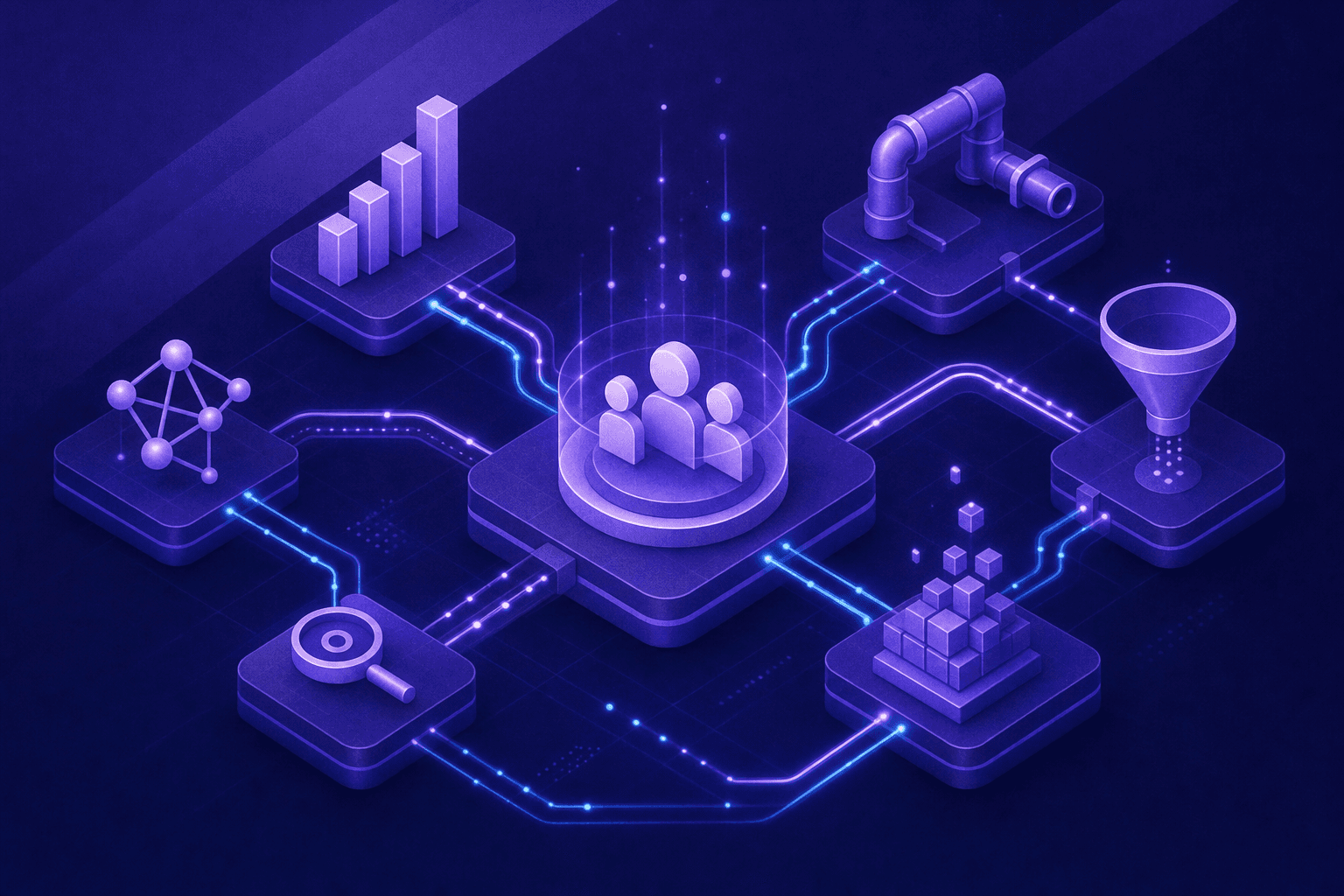
The core idea is that HubSpot’s CRM data, combined with Warmly’s intent signals and autonomous outreach capabilities, lets AI agents decide when to engage a prospect, which message to send, and when to escalate to a human rep.
For B2B revenue teams, this signals a shift in how HubSpot sees its role: less of a data-of-record system and more of an autonomous execution layer.
HubSpot’s Acquire-Not-Build Pattern
HubSpot has a well-documented pattern of acquiring category-defining point solutions instead of building them from scratch. Clearbit for data enrichment, The Hustle for content distribution, and now Warmly for AI-powered sales signals. Each acquisition follows the same logic: buy the best-in-class tool in an adjacent category, fold it into the CRM, and reduce the reasons customers have to shop for competitors.
The Warmly deal accelerates HubSpot’s push toward agentic selling, where an AI SDR takes autonomous action on buyer signals without waiting for a rep to log in.
The Strategic Case for CRM-Native AI SDR
The argument for CRM-native AI SDR work goes beyond convenience. When prospect data, engagement history, and pipeline context all live inside the same system your AI BDR is operating from, the agent can make genuinely better decisions: sharper, more contextual ones, and faster ones too.
Consider what breaks when AI SDR tooling runs outside the CRM. Every handoff between systems introduces latency, data loss, or misalignment. A rep picks up a lead that the AI has already worked, but the CRM shows nothing because activity lived in a separate tool. That gap quietly erodes the trust sales teams need to act on AI-sourced leads.
HubSpot’s acquisition of Warmly points directly at closing that gap.
The Case Against: Lock-in, Slower Product Iteration, and CRM Dependency
Consolidating your GTM stack into HubSpot’s AI SDR vision carries real trade-offs worth weighing before you commit.

The tightest risk is CRM lock-in. Once your contact records, deal history, and AI training signals all live inside HubSpot, switching costs become steep in ways that aren’t obvious until you’re already deep. Outreach behavior, intent scores, and sequence performance all accumulate as proprietary data that doesn’t export cleanly, which is a key consideration in any Breakout vs. Warmly evaluation for pipeline.
There’s also a pace-of-development concern. Acquisitions slow product iteration. Warmly’s roadmap now answers to HubSpot’s release cycle, which means features that would have shipped in weeks may take quarters.
Salesforce Is Running the Same Playbook
HubSpot is not alone in this move. Salesforce has been building toward the same outcome through its Agentforce rollout, acquiring companies like Tenyx (voice AI) and Own Company (data protection) to fill gaps in its agentic layer. The pattern is consistent: CRM incumbents are buying their way into autonomous sales execution instead of building it from scratch, a trend the Qualified vs. Warmly debate makes plain in the conversational AI space. For B2B revenue teams, the AI SDR conversation has shifted away from point solutions. It’s now about which CRM ecosystem you’re already locked into, and whether that ecosystem’s agentic bets align with how your team actually works.
What Changes for B2B Teams Already on HubSpot
For HubSpot customers, the Warmly acquisition reshapes what the CRM is expected to do. HubSpot has long handled contact records, nurture sequences, and pipeline reporting well. What it historically lacked was the ability to act on intent signals in real time, without a human in the loop.
That gap is now closing. With Warmly’s visitor identification and AI agent layer folded into the suite, HubSpot moves closer to a system that can identify an anonymous website visitor, match them to a known account, and trigger an outreach sequence before a rep ever opens their inbox.
For B2B teams already embedded in HubSpot, the practical question is whether to wait for native feature rollouts or supplement now with inbound AI SDR software designed for that specific workflow.
How B2B Teams Not on HubSpot Should Respond
HubSpot’s move signals a clear direction: agentic AI is becoming the default expectation in B2B sales tech, and teams not building toward it will feel the gap. If your stack runs on Salesforce, Outreach, or any non-HubSpot CRM (where lead engagement tools like those compared in Warmly vs. Chili Piper are common alternatives), the question worth asking is whether your AI SDR tooling operates with the same degree of coordination that HubSpot is now promising natively.
The bar has shifted. Buyers interacting with HubSpot-powered teams will increasingly experience real-time, context-aware outreach. That raises expectations across every deal they’re in, regardless of what your team is running.
Vendor | AI SDR Approach | CRM Dependency | Key Acquisition | Best Fit |
|---|---|---|---|---|
HubSpot | CRM-native agentic AI (intent signals + autonomous outreach) | HubSpot CRM required | Warmly (Inbound Agent + TAM Agent) | Teams already embedded in HubSpot |
Salesforce | CRM-native agentic AI (Agentforce) | Salesforce CRM required | Tenyx (voice AI), Own Company (data protection) | Teams already embedded in Salesforce |
Breakout | CRM-agnostic AI SDR (inbound + outbound) | Works across Salesforce, HubSpot, Marketo | Purpose-built (no acquisition required) | Series B+ teams with existing, mixed CRM stacks |
How Breakout Fits for Teams Outside the HubSpot Ecosystem
Breakout is built for revenue teams that operate outside HubSpot’s ecosystem entirely. If your stack runs on Salesforce, or if you work with a more fragmented set of sales tools, HubSpot’s agentic approach won’t extend to you regardless of how well-designed it is.
Breakout, ranked among the best inbound AI SDRs, connects AI SDR capabilities directly to your existing CRM and outbound workflows without requiring you to rebuild your stack around a single vendor. Agents research accounts, rank and sequence outreach, and hand off qualified conversations to your reps inside the tools your team already uses.
For Series B+ teams with a mature sales infrastructure already in place, that’s often the more practical path forward.
Final Thoughts on HubSpot’s Agentic Customer System Bet
HubSpot is betting that owning the full loop, from intent signal to outreach to rep handoff, inside one connected system, wins the next era of B2B sales. That bet may pay off for teams already deep in the HubSpot ecosystem, but it leaves everyone else to figure out their own path. If your team runs on Salesforce or a mix of tools, Breakout handles AI SDR work inside your existing stack so you’re not stuck waiting on someone else’s roadmap.
FAQ
What does HubSpot’s acquisition of Warmly actually mean for B2B teams already running on HubSpot?
HubSpot’s Warmly acquisition closes a real gap: the ability to identify anonymous site visitors, match them to known accounts, and trigger outreach before a rep manually queues it up. The practical trade-off is that your contact records, engagement history, and AI signal data increasingly consolidate inside one vendor, which raises switching costs in ways that aren’t obvious until you’re already committed.
HubSpot agentic system vs. standalone AI SDR tools: which makes more sense for a Series B team?
If your stack is already built around HubSpot and your team has no plans to move off it, waiting for native rollouts from the HubSpot agentic system is defensible. If you run Salesforce, Marketo, or a fragmented GTM stack, a standalone AI SDR like Breakout connects to your existing CRM and outbound workflows without requiring you to rebuild around a single vendor’s ecosystem.
Can I run an AI SDR motion if my team isn’t on HubSpot or Salesforce exclusively?
Yes. Tools like Breakout are built to operate across Salesforce, HubSpot, and Marketo without a hard CRM dependency, so you can run visitor identification, inbound qualification, and multi-channel outreach without consolidating your stack into one vendor. The key question is whether your AI SDR tooling has native write access to your actual CRM, and not merely a webhook integration that creates a data sync lag.
How does HubSpot’s Warmly acquisition strategy compare to what Salesforce is doing with Agentforce?
Both are running the same playbook: acquire point solutions to fill gaps in their agentic layer instead of building from scratch. HubSpot bought Warmly for intent signals and autonomous outreach; Salesforce bought Tenyx and Own Company to round out its agentic execution capabilities. For revenue teams, the signal is consistent: CRM incumbents are moving toward autonomous sales execution, and your AI SDR decision is increasingly tied to which CRM ecosystem your team is already inside.
What is an agentic customer system and why does the HubSpot AI SDR strategy depend on it?
An agentic customer system is one where AI agents act on buyer signals autonomously across the full customer lifecycle, deciding when to engage, what to send, and when to route to a human, without manual handoffs between tools. HubSpot’s AI SDR strategy depends on this architecture because Warmly’s intent signal layer only produces value when it’s connected to a CRM that can act on those signals immediately: the two systems have to share the same data context, or the speed advantage disappears at the handoff point.


