

Long gone are the days when dropping a chat widget on your homepage counted as inbound pipeline generation. Buyers move fast, and if your first touch comes 48 hours after they visited your pricing page, you've already lost most of them. The B2B pipeline generation tools worth your budget in 2026 are the ones that act on inbound signals in real time, and this breakdown will help you figure out which ones are actually built for that motion.
TLDR:
Strong pipeline generation tools identify in-market buyers, enrich contact data, and connect signals to action before a rep gets involved.
Tool fit depends on your motion: inbound conversion, account-based outbound, and intent monitoring each require different capabilities.
Qualified's value narrows sharply if you're not on Salesforce, and Warmly's costs scale fast at higher traffic volumes.
Drift is listed but no longer an active product, so factor that into any shortlist evaluation.
Breakout covers the full inbound sequence (visitor identification, AI qualification, multi-channel follow-up, and meeting booking) from a single product.
What Are B2B Pipeline Generation Tools?
B2B pipeline generation tools are software solutions that help revenue teams identify, attract, and convert high-fit prospects into qualified sales opportunities. For SaaS teams in particular, these tools typically cover some combination of buyer intent data, lead enrichment, outbound sequencing, and inbound conversion.
The category has expanded considerably as go-to-market teams have moved away from list-based outbound toward more signal-driven approaches. Instead of prospecting blindly, teams now use these tools to surface accounts showing active buying behavior and route them to sales at the right moment. B2B SaaS lead generation strategies have evolved substantially, and understanding what an AI SDR is helps clarify how these tools fit into that motion.
At their core, strong pipeline generation tools do three things well:
They identify who is in-market before a prospect fills out a form.
They enrich contact and account data so reps spend less time researching and more time selling.
They connect signals to action, whether that means triggering a sequence, alerting an AE, or personalizing an inbound experience in real time.
How We Ranked These Tools
Rankings here are based on publicly available information, published pricing, documented feature sets, and verified user feedback from review sites. No vendor paid for placement.
Each tool was assessed across six criteria that matter most at a Series B+ SaaS company:
AI autonomy and qualification depth: can the tool act independently, or does it flag signals for reps to chase down manually?
Website deanonymization tools: how accurately does it resolve anonymous traffic to real people and companies?
Multi-channel engagement: does it extend beyond chat to email and LinkedIn outreach?
CRM and sales stack integrations: does it sync natively, or does it require manual exports and reconciliation?
Time-to-value: how quickly can a lean team get it running without a lengthy implementation?
Pricing transparency: is the cost structure clear before you have to book a demo to find out?
Best Overall B2B Pipeline Generation Tool: Breakout
Breakout is built for inbound pipeline generation, designed for SaaS teams that need to convert website visitors into qualified pipeline before those visitors leave. Where most B2B pipeline generation tools focus on outbound prospecting or manual follow-up, Breakout identifies who is on your site in real time and routes them to the right conversation immediately.
The core use case is speed-to-lead. Breakout connects inbound intent signals with AI-driven qualification and instant meeting booking, so your revenue team engages high-intent buyers at the exact moment interest peaks. See how it compares to other inbound AI SDRs in the category. For Series B+ SaaS teams running paid acquisition or content-driven inbound, that timing gap between a visitor arriving and a rep responding is where pipeline leaks.
What Makes Breakout Stand Out
Real-time visitor identification surfaces company and contact data the moment someone lands on your site, giving your team actionable context before a single message is sent.
AI qualification runs automatically, asking the right questions to score and segment leads without requiring a rep to be online.
Instant meeting scheduling removes the back-and-forth that kills conversion momentum, booking demos directly into rep calendars from the chat interaction.
CRM sync keeps your pipeline data clean and current without manual entry, so sales and marketing stay aligned on the same lead record. This approach is central to inbound-led outbound plays that re-engage buyers who bounce.
Breakout is the right fit if inbound conversion is your primary pipeline bottleneck. If your team's gap is outbound prospecting volume or account-level advertising, you will get more from a tool built for those motions.
Qualified
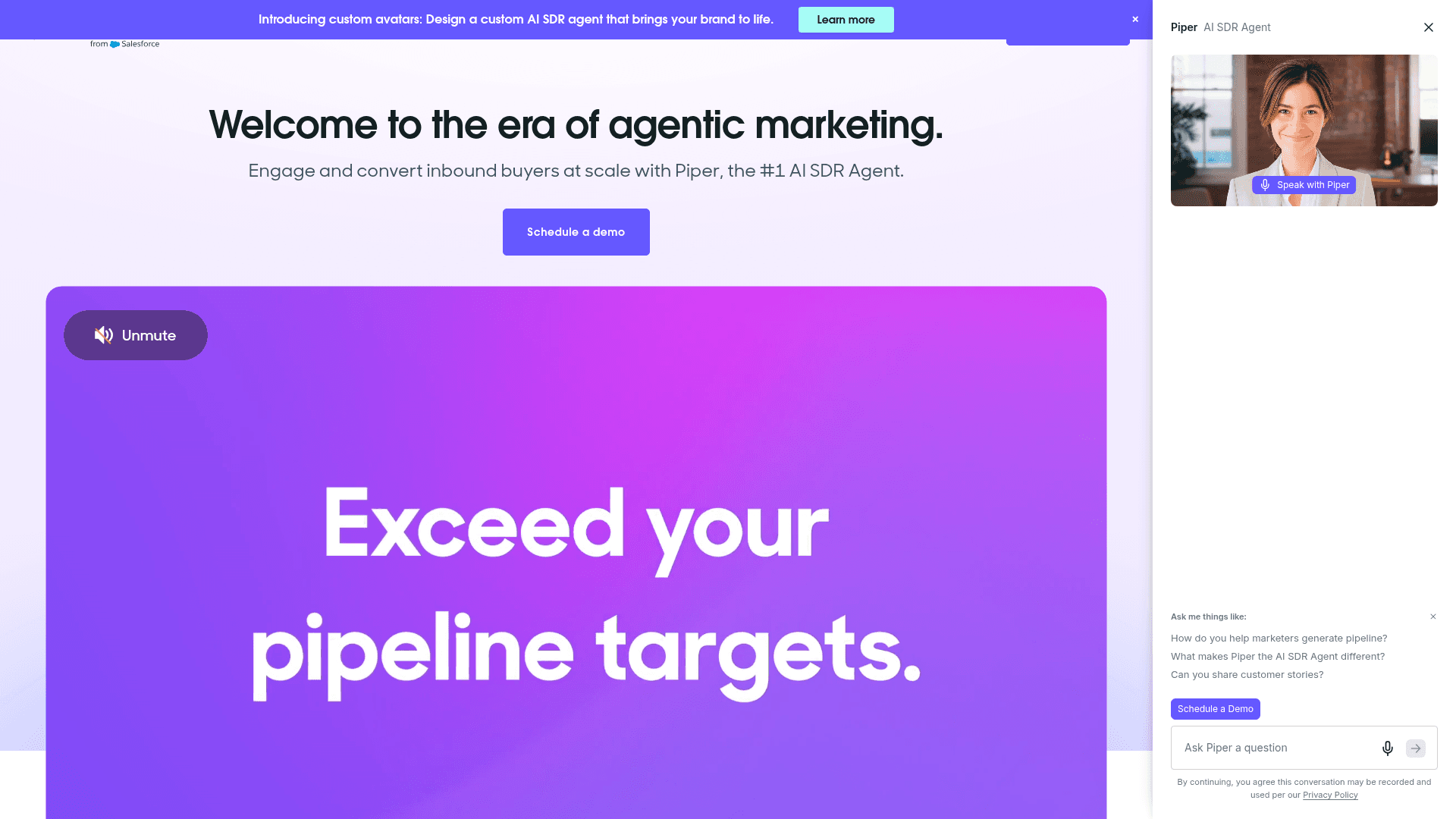
Qualified was built around the "Pounce" model, routing website visitors to live reps in real time. Salesforce's acquisition deepened its native CRM capabilities, and Piper, its AI SDR agent, now handles on-site conversations autonomously. That tight Salesforce integration is its clearest strength and its most obvious constraint. See a full Breakout vs. Qualified breakdown for teams running a different CRM who will find the value proposition thinner, and the pricing reflects an enterprise budget assumption that may not fit a Series B organization still building out its go-to-market motion.
Warmly
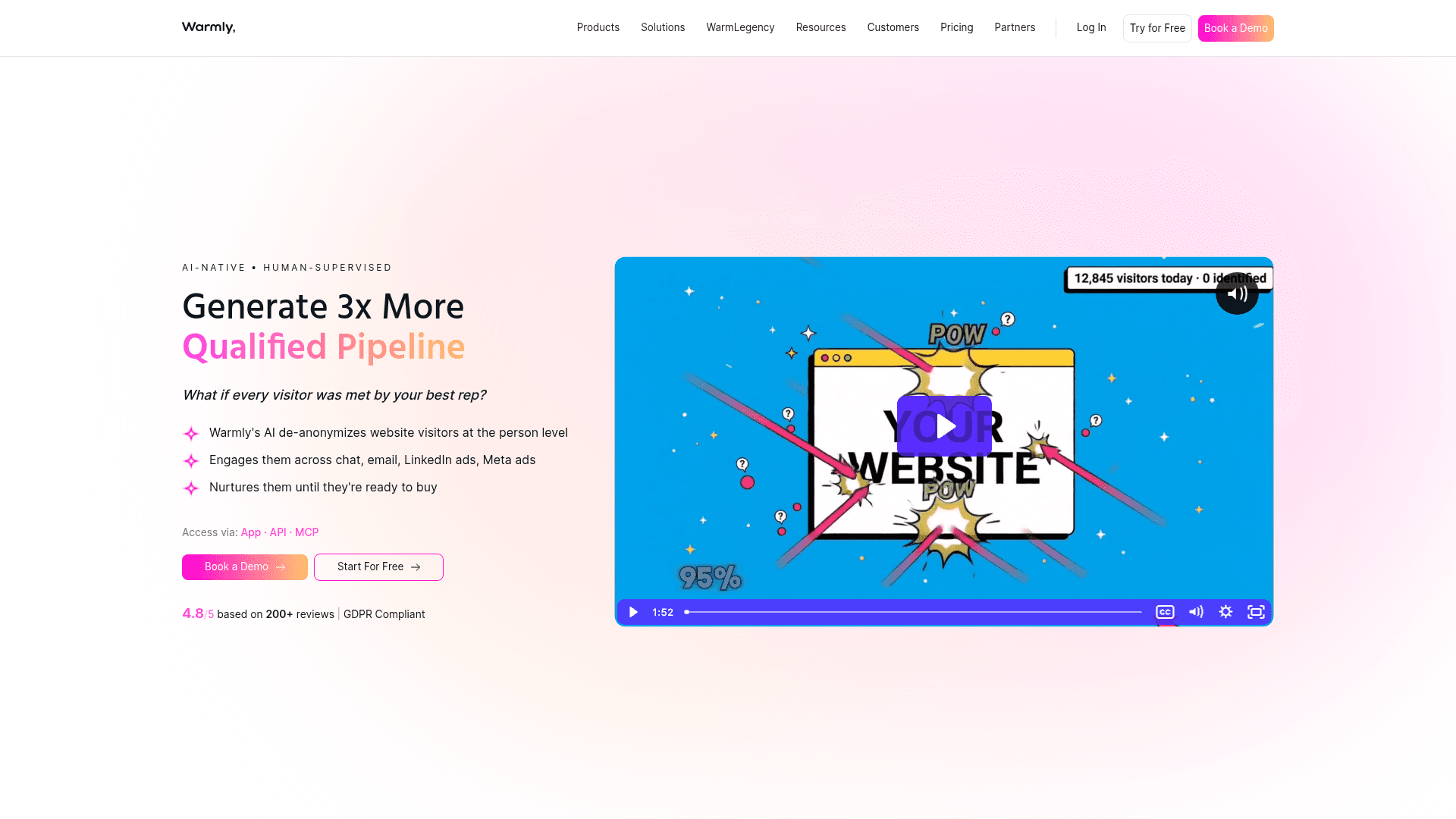
Warmly is a revenue intelligence tool built for SaaS teams that want to act on website intent signals before prospects ever fill out a form. It identifies anonymous visitors using IP resolution and behavioral data, then routes those accounts to sales reps based on territory, account ownership, or engagement score.
The product works best for teams that already have meaningful site traffic. If your inbound volume is low, the visitor identification layer loses much of its value. For teams with healthy traffic and a defined ICP, though, Warmly surfaces buying signals that would otherwise go unnoticed in a standard analytics tool. Read the full Breakout vs. Warmly comparison to see which fits your motion.
Pricing scales with identified contacts, so costs can rise quickly at higher traffic volumes. Teams comparing Warmly alternatives often cite this scaling cost as a factor.
Unify
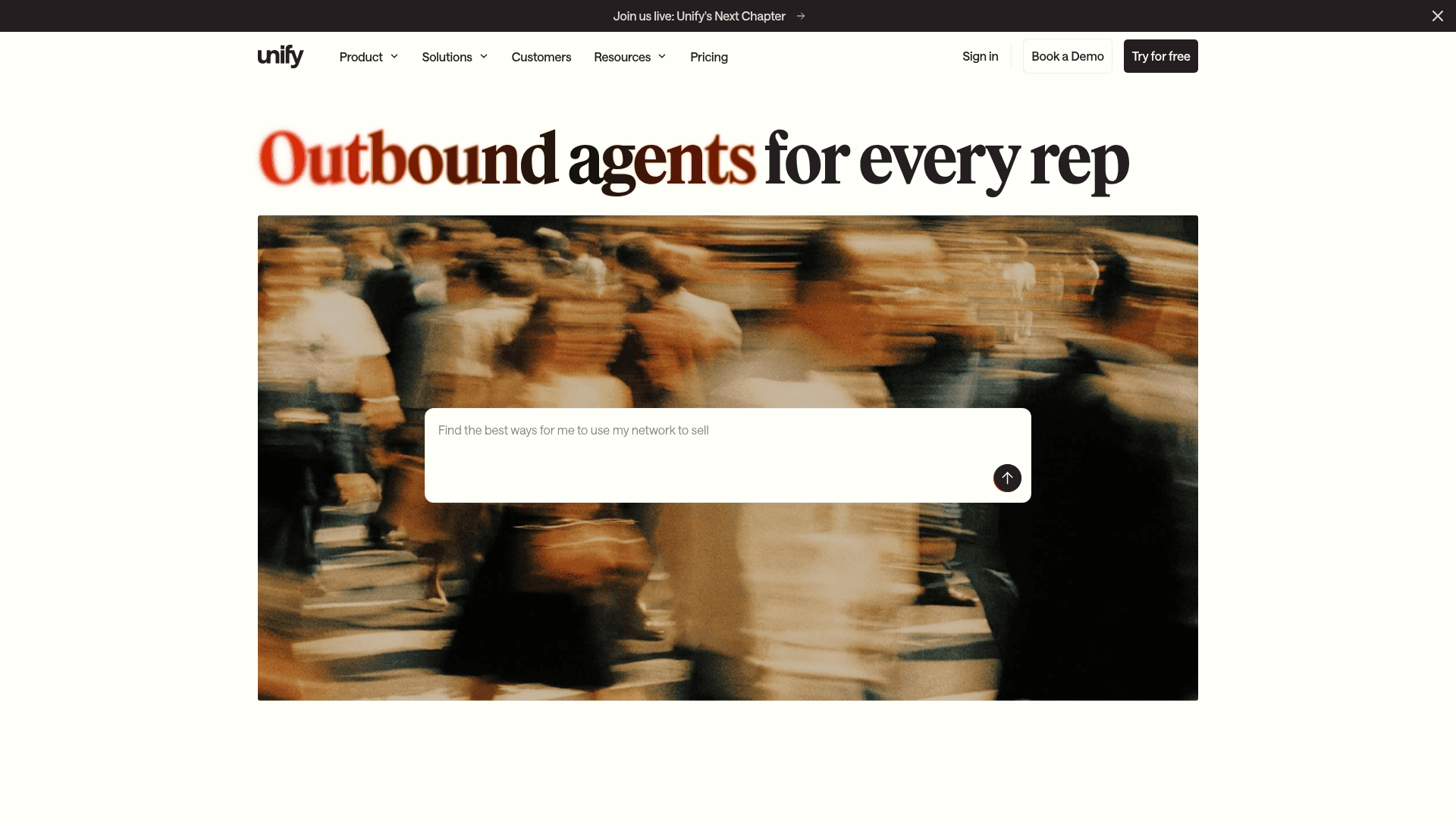
Unify is a go-to-market tool built around buyer intent signals, pulling data from sources like G2, LinkedIn, and web activity to surface accounts that are actively researching solutions in your category. Instead of waiting for a form fill, it identifies warm accounts earlier in the research cycle and routes them to the right rep automatically.
Where Unify stands out is in its workflow automation layer. You can build "plays" that trigger personalized outreach the moment an account crosses an intent threshold, cutting the lag between signal detection and first touch. For SaaS teams running account-based motions, that speed matters.
The trade-off is depth of contact data. Unify reviews note that it excels at account-level intelligence but relies on third-party enrichment for contact-level details, which can introduce gaps if your target personas are underrepresented in those data sources.
Drift
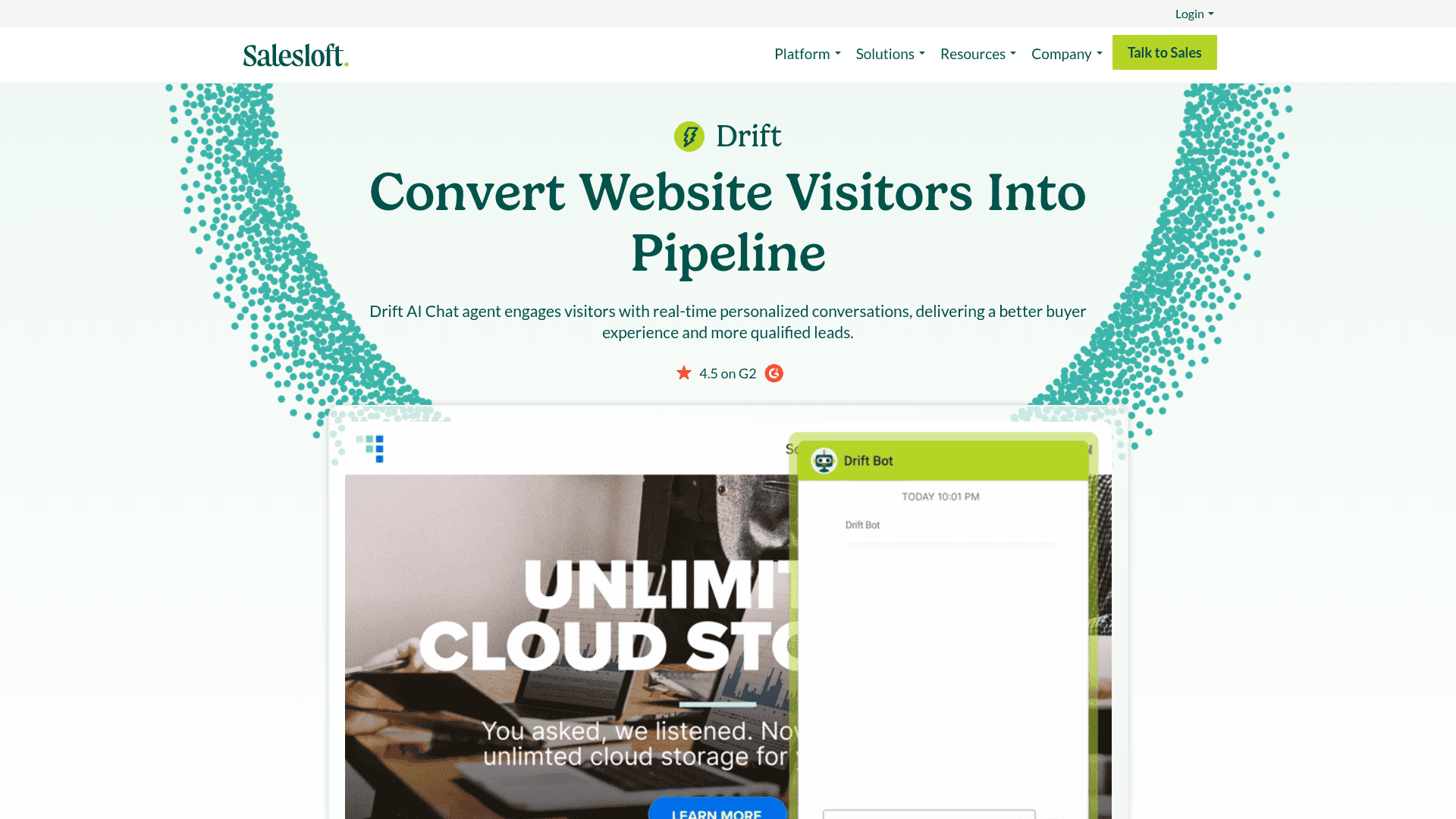
Note: Drift has been sunset. This section is retained for reference only.
Drift pioneered conversational marketing and remains a recognized name in B2B pipeline generation. It works best for teams that want to qualify and engage inbound leads through real-time chat and AI-powered bots directly on their website.
Where Drift Works Well
Website visitors get routed to the right rep or booking flow instantly, reducing the lag between intent and conversation.
AI bots handle qualification outside business hours, so leads don't go cold overnight.
Where It Falls Short
Drift's pricing sits at the enterprise tier, making it a difficult fit for growth-stage SaaS teams watching budget carefully.
Heavier implementations often require dedicated ops support to maintain routing rules and bot logic as your funnel evolves. Drift reviews and alternatives cover these trade-offs in depth.
Feature Comparison Table
Here is how the five tools stack up across the capabilities that matter most for a SaaS revenue team assessing inbound pipeline generation.
Capability | Breakout | Qualified | Warmly | Unify | Drift |
|---|---|---|---|---|---|
Inbound AI SDR | Yes | Partial (rep-dependent) | No | No | No |
Person-level visitor deanonymization | Yes | No | Yes | Yes | No |
Multi-channel outreach (email and LinkedIn) | Yes | No | Partial | Yes (email only) | No |
CRM integrations beyond Salesforce/HubSpot | Yes | No | No | No | No |
Real-time on-site engagement | Yes | Yes | Yes | No | Yes |
Free trial available | Yes | No | No | No | No |
Active product (not sunset) | Yes | Yes | Yes | Yes | No |
Why Breakout Is the Best B2B Pipeline Generation Tool for SaaS Teams
Breakout runs the full inbound pipeline generation motion from a single product: it identifies who is on your site, qualifies them with a real AI SDR, follows up across email and LinkedIn, and books the meeting, all without a rep needing to be online. For Series B+ SaaS teams, the compounding advantage is that you're converting demand you've already paid to generate, getting more from the traffic and content investment already in place. No other tool in this comparison covers that complete sequence on its own. Teams researching Qualified alternatives (2025) often land on Breakout for exactly this reason.
Final Thoughts on Finding the Best B2B Pipeline Generation Tools
Your budget and your ICP should drive this decision, not feature lists alone. If inbound conversion is the bottleneck, the tools built for outbound prospecting won't move the number that matters. Breakout's free trial is a low-risk way to find out what you're leaving on the table.
FAQ
How do I choose the right B2B pipeline generation tool for my SaaS team?
Start by identifying where your pipeline is actually leaking: if high-intent visitors leave your site without converting, you need an inbound-focused tool like Breakout; if your gap is sourcing net-new accounts from cold lists, an outbound prospecting tool is the better fit. The feature comparison table in this post maps each tool's core strengths, so matching your primary bottleneck to the right capability column is the fastest path to a useful shortlist.
Which pipeline generation tool works best for teams without a large SDR headcount?
Tools with full AI SDR automation, such as Breakout, are better suited to lean teams because they qualify visitors, follow up across email and LinkedIn, and book meetings without a rep needing to be available. Tools like Warmly and Qualified are designed to route signals to human reps, so their value scales with the size of the sales team available to act on those alerts.
When should a Series B SaaS team choose inbound pipeline tools over outbound ones?
If you are already running paid acquisition or content programs that drive meaningful site traffic, inbound conversion tools deliver a faster return because they extract more pipeline from demand you have already paid to generate. Outbound tools make more sense when you are building awareness in a market that does not yet know your product exists and need to create demand from scratch.
What is the difference between visitor identification and a full AI SDR?
Visitor identification tools resolve anonymous traffic to company or contact records and alert your team, but the work of outreach still falls to a human rep. A full AI SDR takes that signal and acts on it autonomously, running qualification conversations, sending follow-up sequences, and booking meetings without manual intervention between signal detection and first contact.
Can one tool cover both inbound and outbound pipeline generation motions?
Most tools in this category are purpose-built for one motion or the other, and trying to force a single tool to cover both usually means accepting material trade-offs in each. A more practical approach for most Series B+ teams is pairing a dedicated inbound tool with a dedicated outbound tool, then connecting both to your CRM so pipeline data stays unified without requiring manual reconciliation across systems.