All Blogs
See how AI sales agents resolve prospect identity, score leads against your ICP, and book meetings before reps log in. September 2026.

Evan Marshall
Senior Growth AI Strategist
Published On

The 'AI sales agent' category covers everything from basic lead capture forms to systems that identify anonymous visitors, score them against your ICP, and trigger follow-up before your team even logs in for the day. Knowing where a tool sits on that range is what determines whether it solves your actual bottleneck or just adds to your stack.
TLDR:
AI sales agents resolve prospect identity, score against your ICP, and book meetings before a human rep gets involved.
Responding within five minutes makes you 21x more likely to qualify a lead; the average human SDR takes 42 to 47 hours.
Hybrid human-plus-AI configurations produce 2.3x better conversion than fully autonomous agents running without rep oversight.
Deploy when inbound volume outpaces rep capacity or your SDRs spend more time on research than on conversations.
Breakout runs three sequential agents covering visitor deanonymization, inbound engagement, and post-visit follow-up across email and LinkedIn, writing every outcome back to Salesforce, HubSpot, or Marketo natively.
What an AI Sales Agent Actually Does
An AI sales agent is software that takes autonomous action across the sales cycle. It researches accounts, qualifies prospects, sends personalized outreach, handles objections, and books meetings, with varying degrees of human oversight depending on how you configure it.
The term gets applied loosely. You'll hear it used to describe a basic chatbot that collects a name and email, a prospecting tool that generates cold email sequences, and a full inbound engine that identifies anonymous visitors and follows them across email and LinkedIn. All of those qualify technically, but they solve very different problems at very different levels of sophistication.
One distinction worth keeping: "AI SDR" is a subset of "AI sales agent." An AI SDR handles top-of-funnel work, prospecting, qualification, and meeting booking. An AI sales agent, as a broader category, can extend further into the cycle, including post-demo follow-up, renewal signals, and expansion triggers. When most B2B teams talk about deploying an AI sales agent in 2026, they usually mean the SDR layer, because that's where 87% of sales organizations are currently applying AI.
Human oversight exists on a range. Some teams run fully autonomous agents that send outreach without review. Others keep a human in the loop to approve sequences before they go out. The right configuration depends on your sales motion, your volume, and how much you trust the AI's judgment on your specific ICP.
How AI Sales Agents Work
A signal comes in. That's always where it starts.
The signal might be a website visit, a form submission, a job change at a target account, or a content download. The agent ingests it, then tries to answer the first question: who is this? B2B website visitor identification matches the raw signal to a known contact or company record using IP data, cookie data, email contacts, or third-party enrichment sources. Depending on the tool, this can surface company name, industry, headcount, funding stage, and individual LinkedIn profile before anyone has said a word.
Once identity is confirmed, the agent scores the account against your ICP criteria, comparing firmographics like company size, vertical, and tech stack against your defined targets. Intent signals layer on top, weighting accounts that are actively researching a relevant category. The output is a ranked signal, not a raw lead.
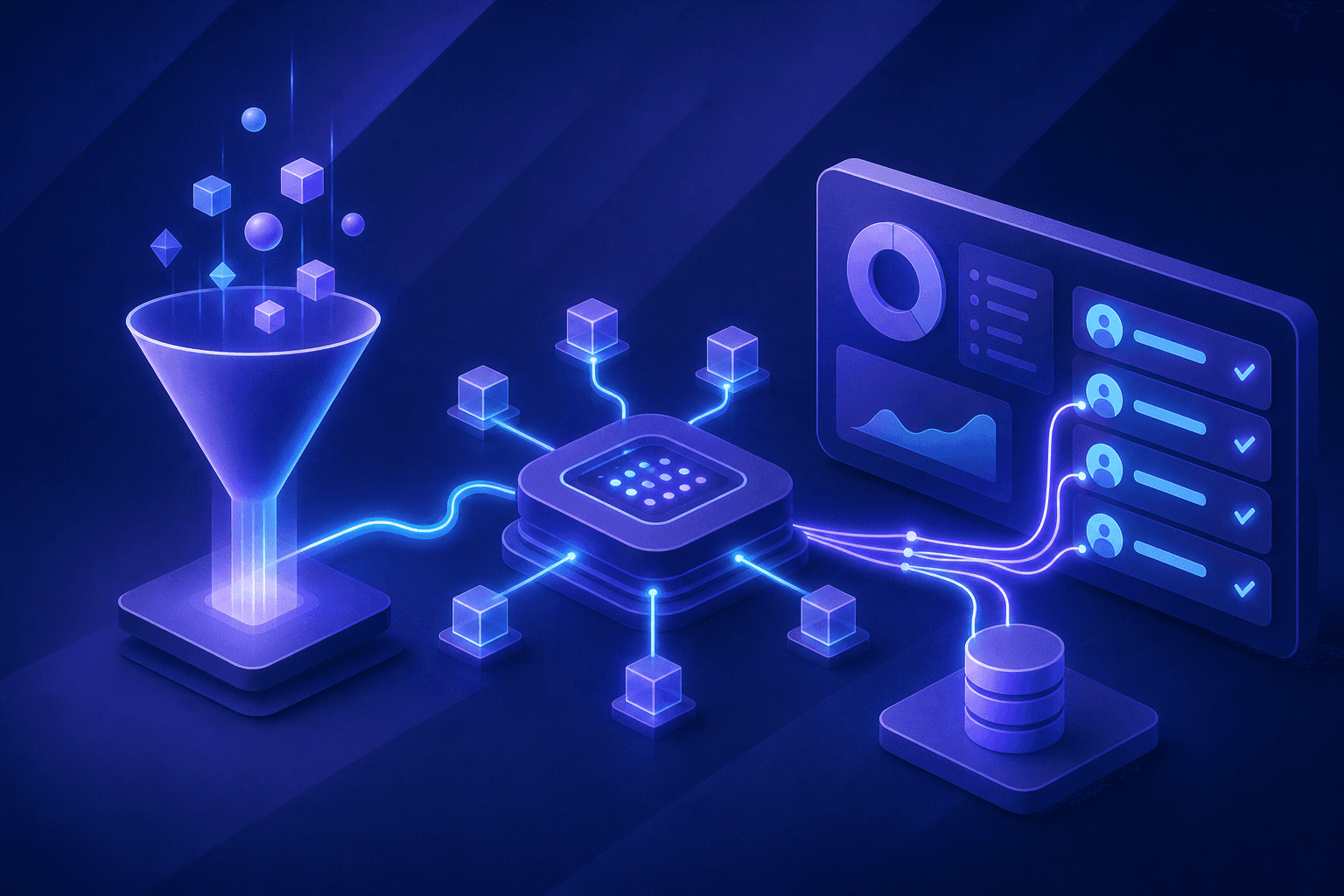
From there, the agent acts. In an inbound context, that might mean opening a personalized chat conversation on the site. In an outbound context, it might trigger a sequenced email or a LinkedIn touch. Either way, the AI constructs outreach using what it knows about the account, your product positioning, and your ICP, drawing on a model trained on your specific sales motion and not on a generic script.
When a prospect responds or qualifies past a defined threshold, two things happen simultaneously: the agent writes the outcome back to your CRM and either books the meeting directly or flags a rep for handoff. That CRM write-back closes the loop, so no qualified signal sits outside your pipeline.
Types of AI Sales Agents
Two splits define the AI sales agent market. Understanding where a tool sits on each axis will tell you more about fit than any feature comparison will.
The first split is autonomy. Fully autonomous agents execute end-to-end without human review: they source prospects, write and send outreach, handle responses, and book meetings without anyone approving each step. Assistive agents queue actions for a rep to review before anything goes out. Fully autonomous setups book more raw meetings but convert worse. According to 2026 controlled tests, hybrid human-plus-AI pods generate roughly 2.3x better conversion than fully autonomous configurations. If your sales motion involves complex enterprise deals or tight brand control, the assistive model is worth the added overhead.
The second split is direction. Understanding inbound vs outbound sales helps clarify the distinction: inbound agents engage visitors who have already signaled intent, think website visitors, form fills, and content downloads. Outbound agents source cold prospects from contact databases, generate sequences, and run campaigns to accounts that have shown no prior intent. Most tools are architecturally stronger in one direction.
Your bottleneck should drive the choice. If qualified visitors are leaving your site without converting, the inbound axis is where you have a problem. If your pipeline depends entirely on reps sourcing cold lists, the outbound axis is where the work lives. Buying a tool optimized for the wrong motion adds overhead without moving the metric that actually matters.
Core Use Cases Across the Sales Cycle
AI sales agents get deployed at specific bottlenecks, not across the entire cycle at once.
Real-time lead qualification: When a high-intent visitor lands on your site, an AI agent qualifies them instantly against your ICP criteria, which is a core part of B2B inbound lead generation. MIT research found that responding within five minutes makes you 21x more likely to qualify the lead, while the average human SDR takes 42 to 47 hours.
Meeting booking without rep involvement: The agent handles scheduling inside the conversation itself, eliminating the gap between buyer intent and a confirmed calendar hold.
Personalized follow-up at scale: When qualified prospects don't convert immediately, the agent triggers sequenced outreach across email and LinkedIn, referencing the specific pages or content they engaged with.
Dormant lead re-engagement: Contacts that went cold get flagged when new intent signals appear, like a return site visit or a job change at the account.
Pre-call account research: Before a discovery call, the agent surfaces recent company news, hiring signals, and funding activity so the rep walks in with full context instead of starting from scratch.
Each of these solves a distinct failure point. Qualification delays lose high-intent buyers before a rep ever touches them. Manual scheduling creates friction that drops conversion. Treating these as one generic "AI outreach" problem is how teams buy tools that fix the wrong thing.
AI Sales Agents vs. Human SDRs
AI SDR tools genuinely outperform human SDRs on speed and coverage. A human SDR cannot monitor inbound signals around the clock and respond within minutes at any volume.
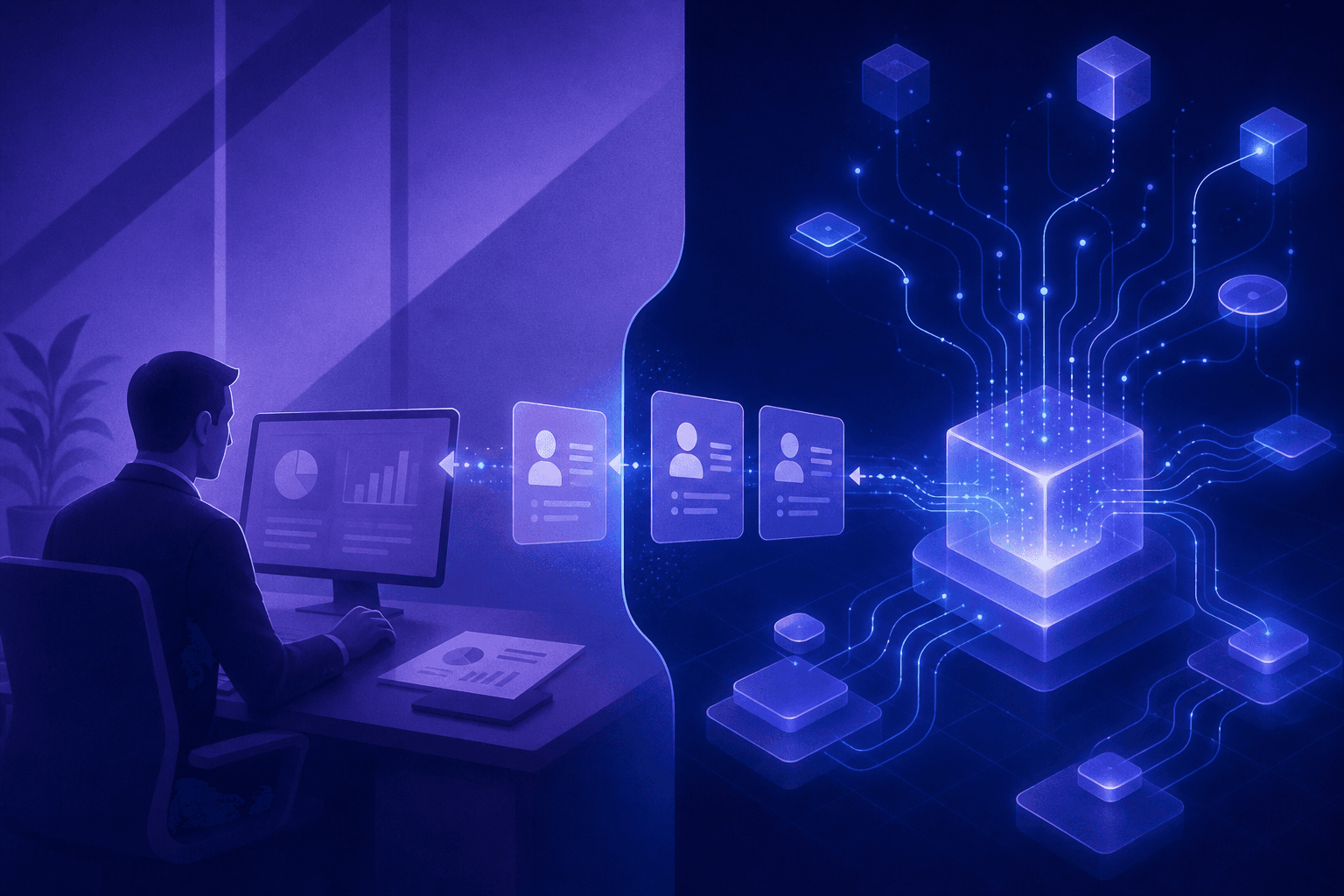
But speed is not the whole job. The teams seeing the most value are using AI to make reps more informed before they get involved, not replacing reps outright.
Dimension | AI Sales Agent | Human SDR |
|---|---|---|
Response speed | Responds within minutes, 24/7 | Average 42 to 47 hours |
Lead qualification likelihood | 21x higher (responding within 5 min) | Baseline; degrades sharply past 5 min |
Inbound volume capacity | Unlimited; no rep headcount required | Limited by team size and hours |
Conversion rate (vs. autonomous AI) | 2.3x better in hybrid human+AI pods | Drives the conversion advantage in hybrid |
Complex enterprise deals | Weak; lacks situational judgment | Strong; owns multi-stakeholder negotiation |
Late-funnel trust building | Limited | Strong; owns commercial terms and relationships |
Pre-call research | Automated: surfaces news, signals, CRM data | Manual: time-consuming and inconsistent |
Human judgment still owns three specific scenarios:
Complex enterprise deals with multiple stakeholders, legal review, and long negotiation cycles where no single message can carry the whole relationship
Late-funnel conversations where the discussion moves from qualification to commercial terms and trust becomes the deciding factor
Strategic accounts where a mishandled AI interaction carries real reputational risk
The hybrid model keeps winning because it allocates work accurately. AI handles the parts that depend on speed, consistency, and scale. Humans handle the parts that depend on judgment and situational reading. Buying an AI sales agent to eliminate your SDR team is the wrong frame. Buying one so your SDRs stop spending their day on manual research and follow-up is a far more defensible use of the investment.
AI Sales Agent vs. AI Chat Agent
The label "AI chat agent" gets applied to tools that operate very differently from a full AI sales agent, and conflating them leads to buying something that handles conversations without generating pipeline.
A basic AI chat agent responds to questions a visitor initiates. It can answer FAQs, collect a name and email, and hand off to a rep, but that is where its role ends. Unlike AI sales assistant software, which handles far more of the pipeline motion, it cannot identify who is on your site before they say anything, score that visitor against your ICP, trigger a follow-up sequence when they leave without booking, or write a qualified lead record back to your CRM. The conversation happens, then it ends.
An AI sales agent runs a different process. Identity resolution happens before the first message. Qualification scoring runs against your defined criteria. If the visitor bounces, automated follow-up fires across email or LinkedIn within minutes. Every interaction outcome writes back to your CRM so nothing qualified disappears into a gap between tools.
Chat agents are built for reactive conversation. AI sales agents are built for proactive conversion. If your goal is moving anonymous site traffic into booked meetings, that architectural difference is what matters.
Real-Time Prospect Discovery and Handoff to Human Reps
The gap between signal detection and rep involvement is where most implementations fail. The AI identifies a high-intent visitor, scores them against ICP criteria, and needs to get the right rep engaged fast without losing context in the transition.
Good handoff architecture has three components: inbound sales routing that fires alerts through the right channel (Slack, browser notifications, or email as a fallback), a clean CRM record capturing who the visitor is, what they engaged with, and what the AI said, and a clearly defined threshold for when a human should take over.
The three failure modes that actually sink implementations:
Broken CRM write-back, where the AI qualifies a prospect but the record never syncs, leaving the lead invisible to the rep
Deliverability damage from over-sending, where autonomous follow-up sequences fire too aggressively and start burning your domain
Context collapse at handoff, where the rep gets a name and company but none of the conversation history, forcing them to re-qualify a prospect the AI already worked
Hybrid configurations outperform fully autonomous ones on what actually matters. The 2.3x better conversion rate for human-plus-AI pods comes from fewer, higher-quality meetings where reps show up informed. Speed gets the meeting. Context closes it.
Challenges and Limitations to Plan For
Data quality is the floor everything else stands on. If your ICP definition is vague, your enrichment sources are stale, or your CRM is full of duplicate records, the agent will score and route leads against bad criteria. Garbage in, garbage out applies more literally here than most places in your stack.
Four limitations worth planning around before you deploy:
ICP drift goes undetected. Agents optimize against the criteria you define at setup. If your ideal customer profile changes and you don't update the scoring logic, the agent keeps chasing the old target while your reps quietly wonder why qualified looks different than booked.
CRM integration gaps create invisible leads. If the write-back logic fails or syncs incomplete data, qualified prospects exist in the agent's memory but nowhere in your sales workflow. Reps never see them. Pipeline never reflects them.
Autonomous outreach can burn your domain. Agents configured to send at high volume without throttling or human review can trigger spam filters, damage sender reputation, and get your domain flagged before anyone notices the deliverability drop. Recovery takes weeks.
Sales team resistance is real and organizational. Reps who distrust AI-sourced leads will deprioritize them, run their own qualification anyway, or ignore handoffs entirely. If the team doesn't believe the agent is working accounts correctly, adoption collapses regardless of the product's actual quality.
None of these are reasons to avoid deploying. They're reasons to deploy with clear configuration standards, defined CRM requirements, throttled sending limits, and a rep onboarding process that shows the team what the AI is doing and why. The implementations that fail tend to underinvest in setup and then blame the product.
When Your Team Actually Needs an AI Sales Agent
Four signals tell you the timing is right.
Inbound volume is outpacing your team's ability to respond quickly, which is the core problem the best inbound AI SDRs are built to solve. If qualified visitors are hitting your site after hours, on weekends, or in time zones where no rep is available, those leads are cooling before anyone touches them. Response speed is what matters most at this stage of the funnel.
Your SDRs are spending more time on research and data entry than on actual conversations. If the job has become maintaining CRM records and building prospect lists, that's a capacity problem an AI agent solves structurally.
Your CRM has a dormant lead problem with no active re-engagement. Contacts that went cold six months ago are still sitting there with no systematic way to detect new intent and trigger outreach.
You have meaningful international or after-hours traffic with no coverage plan. Buyers in EMEA or APAC time zones don't wait for your US team to start their day.
Where it is premature: if you're pre-product-market-fit and your ICP is still shifting, you'll spend more time reconfiguring scoring logic than generating pipeline. If your CRM is disorganized enough that write-back will create duplicate records, fix the data layer first.
75% of B2B sales organizations expect to adopt AI-driven sales development by the end of 2026. For most revenue leaders, the question isn't whether to deploy, it's whether your current conditions make now the right moment.
How Breakout Runs the Full Inbound-to-Pipeline Motion
Industry benchmarks put the average website visit-to-demo conversion rate below 1%. With most visitors dropping off during the research phase and a significant share of booked meetings resulting in no-shows, most inbound traffic never becomes pipeline. That gap is where Breakout operates.
Breakout runs three agents in sequence. The Signals Agent deanonymizes visitors the moment they land, surfacing company name, industry, funding stage, and CRM match before any conversation starts. The Inbound Agent engages those visitors with personalized interactions trained on your ICP and product, handles objections, and books meetings directly inside the conversation. When visitors leave without converting, the Campaigns Agent triggers follow-up across email and LinkedIn within minutes, referencing exactly what they engaged with.
Every outcome writes back natively to Salesforce, HubSpot, or Marketo, with no manual export step and no lag between AI action and rep visibility. Your team can review outbound sequences before they send, keeping brand control intact while the agent handles execution volume.
Breakout is also the primary CRM-agnostic option among AI SDR software for inbound. Qualified requires Salesforce. Warmly sits inside HubSpot. Drift is gone. Breakout works regardless of your existing stack, so there is no migration required to get value from it. If you want to see the full motion running on your site, a free 30-day trial requires no credit card.
Final Thoughts on AI Sales Agents
The teams seeing the most value from AI sales agents are the ones that stopped asking whether AI could replace their SDRs and started asking where the actual drop-off was happening. Speed kills at the top of funnel. Context closes at the bottom. Getting both right is the whole job. If your site is converting below the industry benchmark for visit-to-demo, a free 30-day trial with Breakout shows you what a full inbound-to-pipeline motion looks like in practice.
FAQs
What is the difference between an AI chat agent and an AI SDR for inbound lead qualification?
An AI chat agent responds to questions a visitor initiates: it can collect a name and email, answer FAQs, and route to a rep, but it has no visibility into who is on your site before they speak and no mechanism to act when they leave. An AI SDR like Breakout runs identity resolution before the first message, scores the visitor against your ICP, and triggers multi-channel follow-up across email and LinkedIn if the visitor bounces without booking, with every outcome syncing back to your CRM automatically. The gap between the two is reactive conversation versus proactive conversion, and if your goal is moving anonymous site traffic into qualified pipeline, that architectural difference determines whether you generate meetings or just manage chat logs.
How do AI SDR tools handle real-time prospect discovery and handoff to human sales reps?
The handoff sequence runs in three steps: the AI identifies and scores the visitor, fires a priority alert to the rep through Slack, browser notification, or email, and writes a complete CRM record capturing identity, engagement history, and conversation context before any human is involved. See the handoff failure modes section above for the three most common breakdowns. Hybrid configurations, where the AI handles qualification and the rep takes over post-threshold, produce roughly 2.3x better conversion than fully autonomous setups because the rep arrives informed instead of starting cold.
What are the best AI tools for converting website visitors into qualified leads in 2026?
The category has consolidated sharply: Qualified was acquired by Salesforce in April 2026, Warmly was acquired by HubSpot in June 2026, Drift was sunsetted, and Koala is shutting down at the end of September 2026. Teams on non-Salesforce CRMs are structurally excluded from Qualified, and Warmly's roadmap is now subordinated to HubSpot's platform priorities. Breakout is the primary standalone, CRM-agnostic option remaining; it works natively with Salesforce, HubSpot, and Marketo, deploys in days without onboarding fees, and runs the full motion from visitor identification through meeting booking without requiring a platform migration.
Should a SaaS team use Breakout or Artisan for AI-driven sales development?
Breakout and Artisan solve different problems: Artisan is built for outbound prospecting, running cold sequences from contact databases to accounts that have shown no prior intent, while Breakout is built for the moment a buyer signals intent through a site visit, form submission, event attendance, or content download. If your bottleneck is cold pipeline volume with no inbound motion, Artisan covers that directly. If qualified visitors are leaving your site without converting, or if your SDRs are spending their day on research and data entry instead of live conversations, Breakout is the fit; and unlike Artisan, it keeps a human-in-the-loop review step before outreach sends, so your team retains brand control while the agent handles execution volume.
How do I set up Slack alerts for my sales team when a high-value account visits my site?
Breakout handles this natively: the Signals Agent deanonymizes the visitor on arrival, scores the account against your ICP criteria, and fires a Slack alert to the relevant rep in real time, with filters for visitor geography, corporate email domain exclusion (so internal traffic doesn't generate false alerts), and sound-on browser notifications when the dashboard is not in focus. The alert carries company name, firmographic context, and CRM match before the rep takes any action. The setup requires a pixel install and CRM integration, both of which can go live within the first two days of a Breakout deployment.